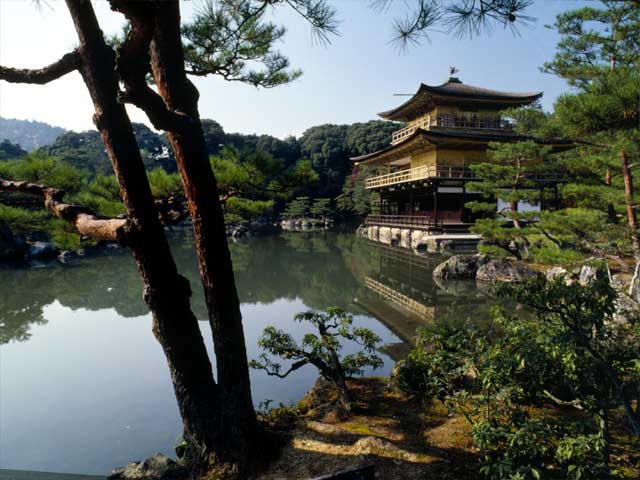
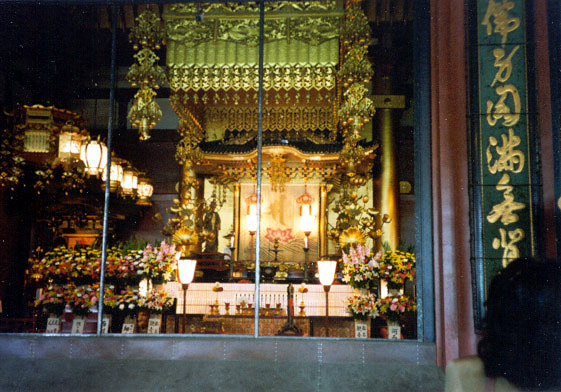
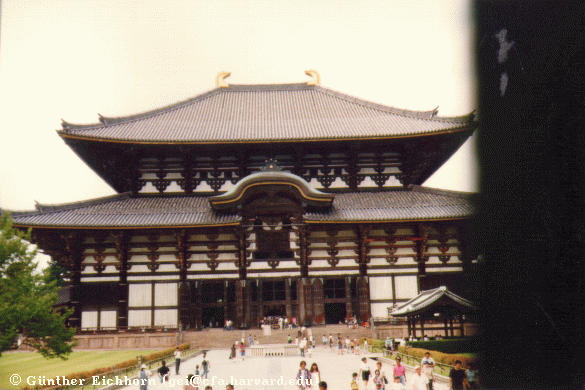
Japan is known as one of the country that was blessed with a beautiful temple. Take a glimpse of the Japanese temple.In April,2002 I spent some time to visit some of the temple in Osaka area for three days, including a day in Nara, the old capital city, then north to the Japanese Alps to Matsumoto. Traffic conditions in Japan are congested - everywhere, all the time. At least that's what it felt like. In reality, it was not so bad once I was a little north from the coast, away from the major cities. Driving through the Japanese Alps was quite scenic.
Japan is full of history. Some of the buildings I saw were from before 1000 AD. The temples and statues are incredible. Nara has some really exciting historical places.
There are two major religions in Japan, Shintoism and Buddhism. It is said that 80% of the Japanese are Shinto, and 80% are Buddhists. This means that many worship in both religions.
The temples of the two religions are distinctly different, especially in their settings. Buddhist temples are generally more in open areas, Shinto Shrines are more in wooded areas, hidden among trees. They have a very different atmosphere. The Buddhist temples seem to be more oriented towards architecture, human endeavors, whereas the Shinto shrines are more oriented towards nature, union with the surrounding natural world. It is difficult to describe, you have to see it to understand it.
I found the Japanese generally friendly, but not as outgoing as people in other countries that I have visited. I had many interesting conversations with Japanese, some of them with a dictionary because they didn't speak English. I had learned a little Japanese, so I managed to get around quite well. I even started to understand some of the written language.
The myth that Japan is extremely expensive is not true. I usually had dinners for around $6 - $10 US. Hotel rooms were around $35 - $55 US. Of course, if you want western food and western hotels, you will have to pay a lot. But why would you want that when you are in Japan? |