Types of Origami
Traditional/classic models
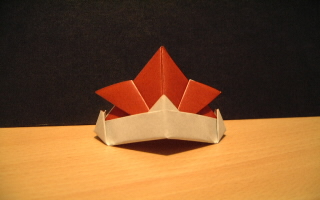
These models are the starting point of this wonderful paper art. It includes models like cranes, ball, jumping frog and the pajarita. These models are most suited for beginners as they usually contained less than 20 folds and basic bases are usually learned from these models.
Unit/Modular models

This type of origami usually involves the folding of a basic unit or module, then by duplicating these basic units, it is possible to form certain geometrical models by assembling the units together thus the name unit or modular. Usually the basic unit is easy to make, the real fun and challenge comes from assembling them. The models are normally only stable when nicely assembled.
Geometric models
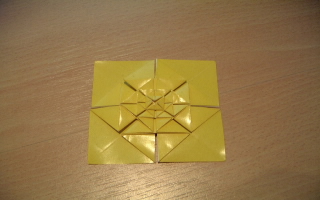
This type of models are usually geometric in nature and are folded from a single piece of paper. Many of them are done by "pleating" the paper, usually paper is divided into parts. Every parts of the square are folded with the same crease patterns repeatedly to get the finished model. Some are also done by modular folding.
Complex models
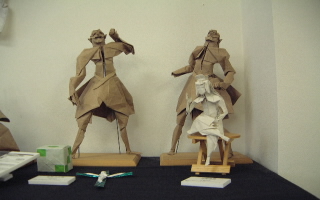
Complex models are those as the name suggests, complicated. For the hardcore folders, where they want to try harder models. These models can range from animals, insects and human figures. The completed models usually are very detailed in features, thus making them very hard to fold.
Compound models
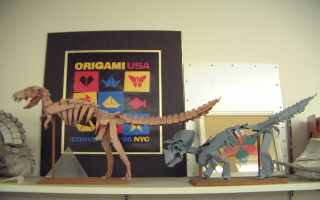
Compound models are different from modular models is that many different units rather than repeated units are folded, then assembled to form the final models. Some rather popular compound models are skeleton of dinosaurs like Tyrannosaurus. Note that the individuals unit that need to be folded are normally not easy, like the ones in modular origami.