Audio clip
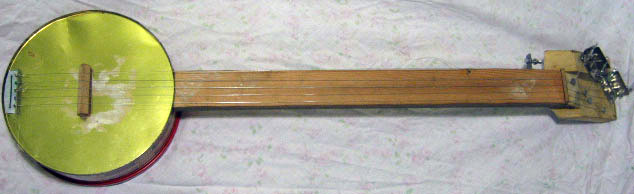
Mixing ideas from Firefox 3, several online sources, and trial and error of course, I finished a fretless cookie tin banjo this past summer (2005).
I didn't buy any materials, except for the cookie tin, which was 20 cents at the Salvation Army.

Besides the fact that there's already a lot of junk in the world, using found materials meant I didn't have to be precious about the banjo, so experimenting was easier.
The bridge and the nut are made of hardwood.
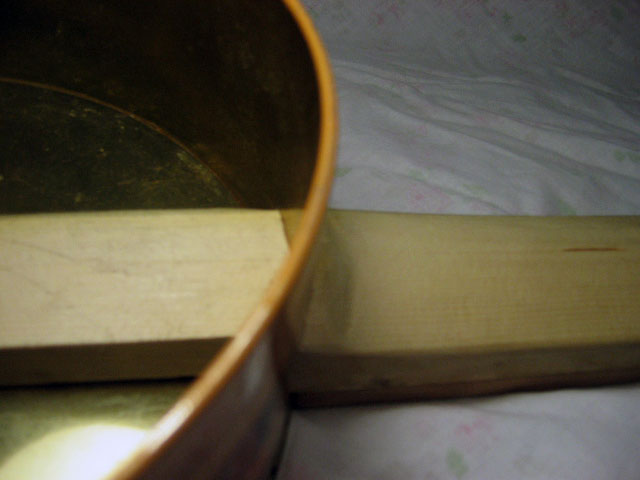
The neck runs through into the tin and butts up against the opposite end, where it is screwed. This part inside the tin must be carved away from touching the tin (as you can see above), so that the tin's diaphragm can vibrate.
Some people suggest making a damper that cushions the diaphragm from the inside to control the amount of the tin's natural fluttery distortion, but I like the fluttery distortion.
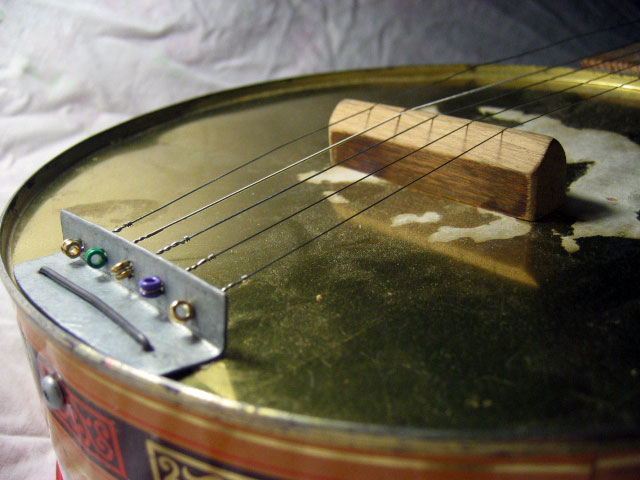
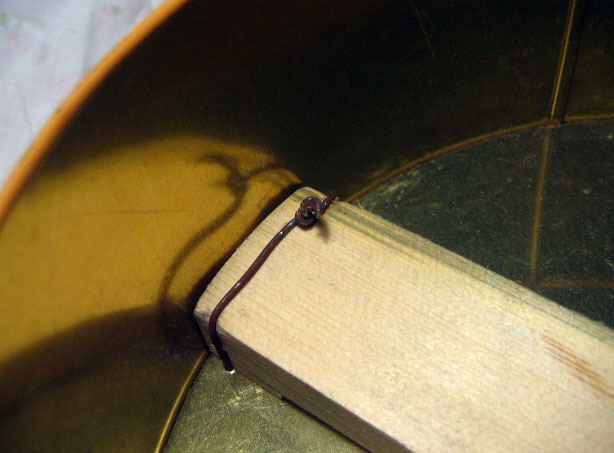
The part of the banjo holding the strings is secured with wire that wraps around the neck inside the tin.
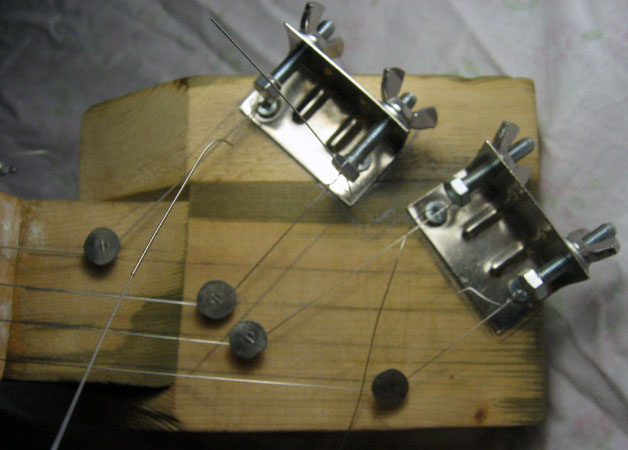
Because I was using found wood, the wood was soft wood (it's difficult to find hard wood thrown out). I didn't want to buy machined tuning pegs, and friction pegs (like those used in violins) require hard wood on hard wood, so I had to devise a peg system for my case.
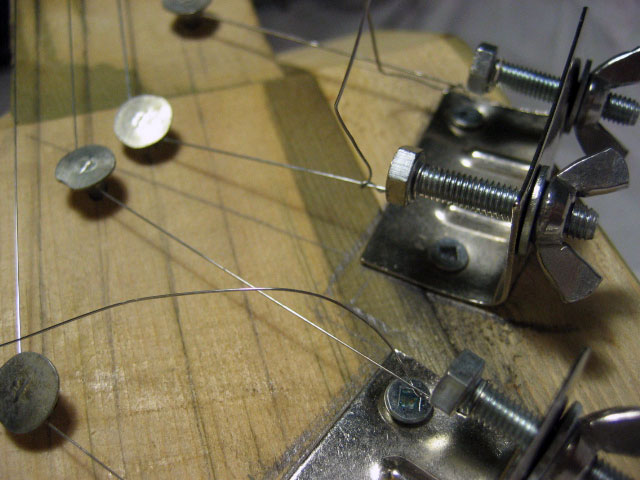
I wrap the strings (taken from other people's guitars) around the head of the bolts... turning the wingnuts pulls the bolt away from the bridge, tightening the string.
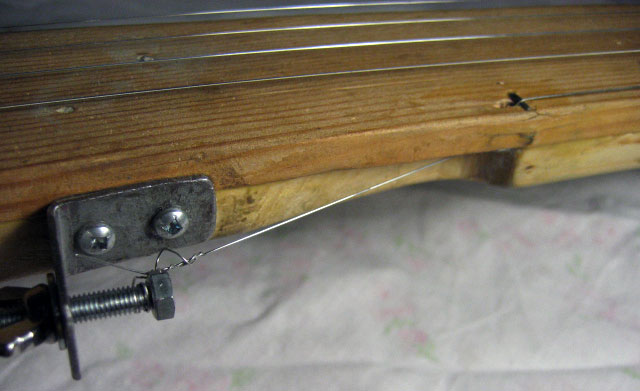
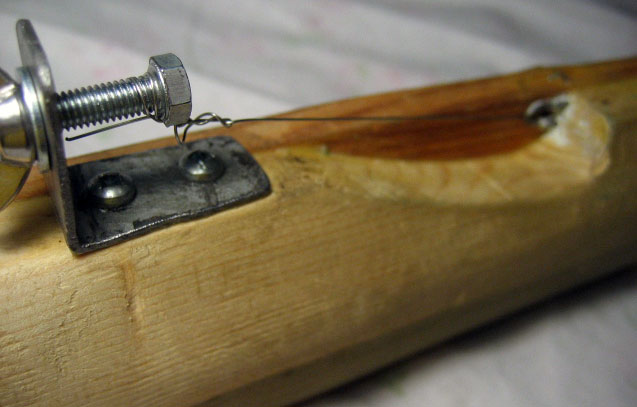
This is the fifth peg for the drone string:
Back
Return home