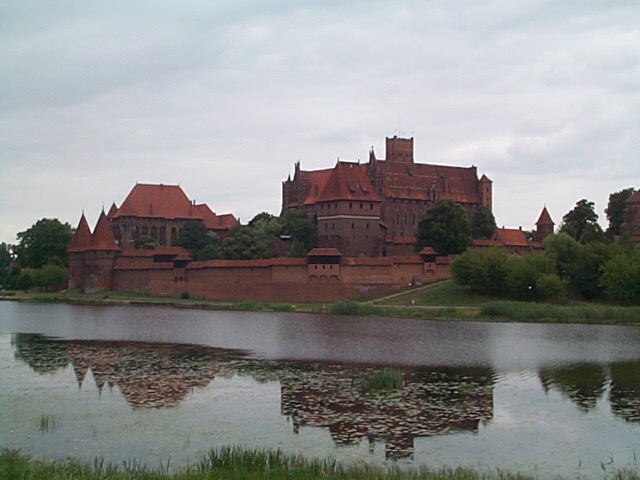
In the 13th century, the Teutonic Order of knights moved its capital from Venice to Malbork after having been invited to Northern Poland by the Konrad of Mazovia in 1225 to fight the pagan Prussians. The order was successful in fighting the pagans and it established a powerful state extending over Northern Poland and parts of the Baltic states. Their stronghold, Malbork castle, is the largest brick castle in the world.
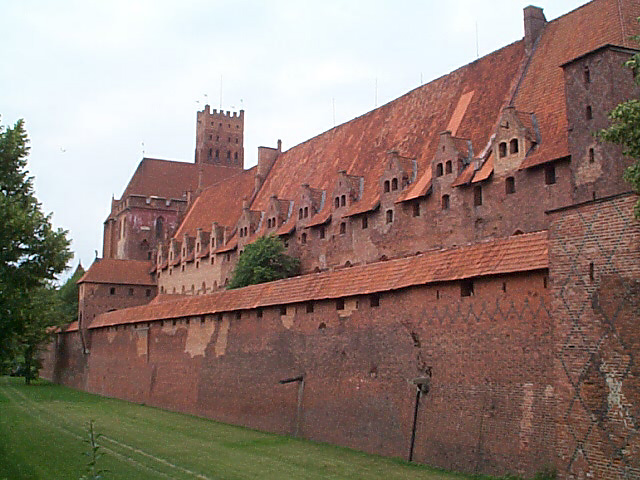
Malbork castle was built in two phases. The older "High Castle" (above) was constructed in the 13th century while the remainder was added in the 14th century.
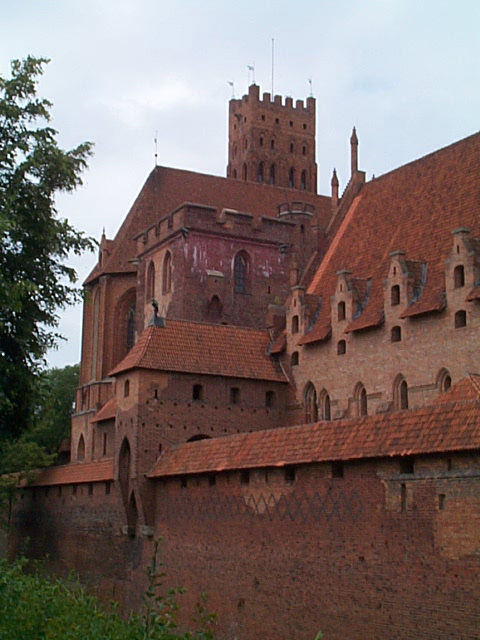
The castle was damaged during the Second World War. The different colors of brick represent two eras of reconstruction; after the war and from the 19th century when Prussian historians took an interest in the castle and reconstructed the parts that had deteriorated over the centuries. Repairs from the war have not yet been completed and the inside of the chapel, for instance, is still covered with rubble and the walls with bullet holes.

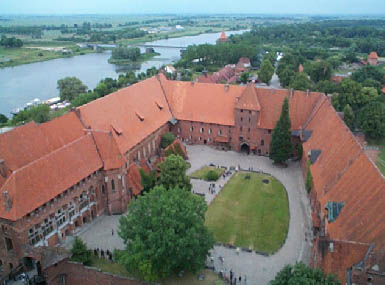
The newer portion of the castle (or the "Low Castle") was used as a residence for the lower ranking members of the Order. It is part of a complex of defensive walls and towers that extend through the town of Malbork.
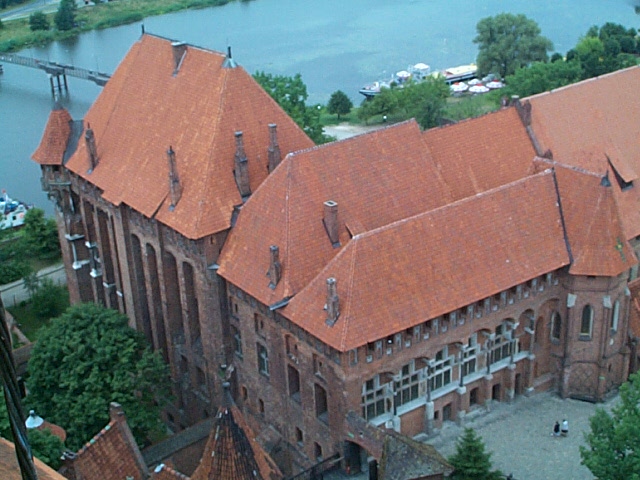
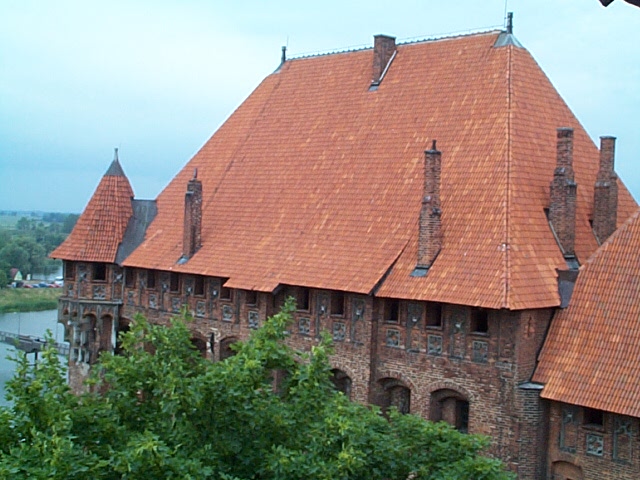
Gothic facade of the Low Castle.
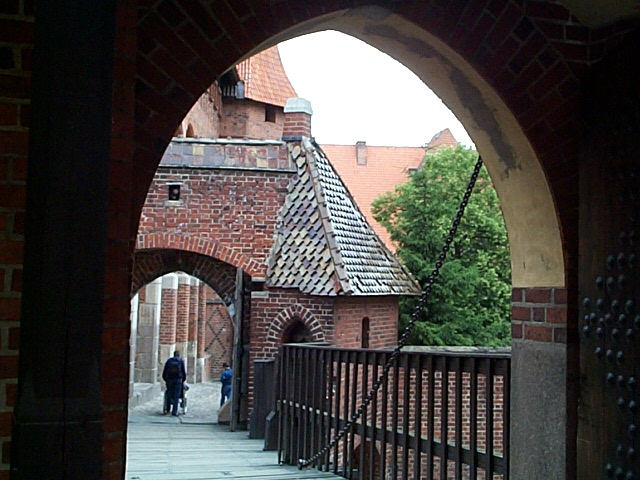
Drawbridge between the High and Low castles.
In the 14th century, the expansionistic policies
of the Teutonic knights resulted in a fluctuating relationship with the
Polish monarchy. The Lithuanians, who had conquered vast regions
of Eastern Europe, were seriously threatened when the Teutonic Order began
slowly dissolving their power over their land. In 1386, when the
Polish throne sat empty after the death of Casimir III, the Polish nobility
convinced queen Hedvig to marry Jagiello of Lithuania. He, in turn,
converted to Christianity and war ensued between the Teutonic order and
the Polish-Lithuanian union. The year 1410 witnessed the battle of
Grunwald, the largest European battle of the Middle ages. Jagiello
amassed a force of about 160000 men, including Poles, Lithuanians and mercenaries
from Russia, Bohemia, Hungary and other countries. The Teutonic Order
fought with about 83000 men. In spite of a lower level of attrition,
the Order was crushed and the Grand Master, Ulrich von Jungingen, was killed.
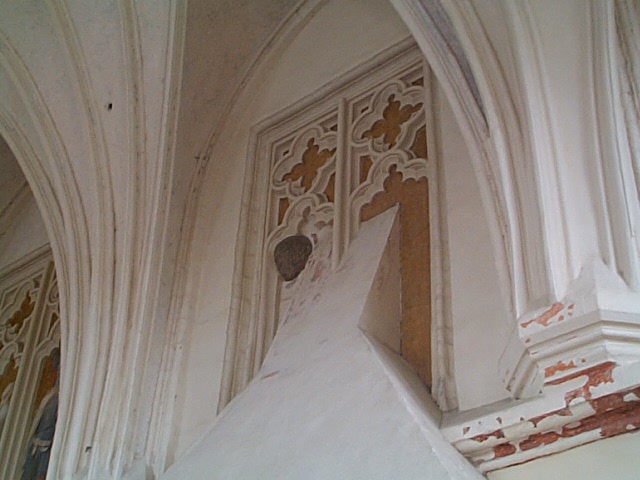
When the Jagiello's knights reached Malbork, they took the castle by bribing
the mercenaries that defended it, but not before placing the cannonball
visible in the above picture in the wall of the grand hall of the Low Castle.
The Teutonic Order retained Malbork for another
56 years until subsequent wars and uprisings forced them into almost total
destruction and a large portion of their territory was ceded to Poland.
Malbork remained Polish until the wars of the Polish Succession in the
18th century when it was ceded to Prussia.
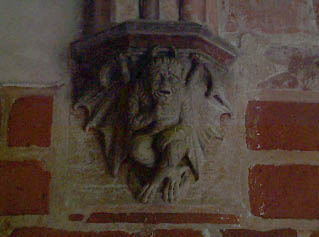
Malbork castle was equipped with a surprising amount of luxuries. It was a very well heated and ventilated castle, and it was also equipped with brick washrooms that allowed the waste to fall directly into the moat. The above grotesque statuette clutches its belly in pain. It is a reminder to the passer-by that the washroom is at the other side of the castle and therefore he has far to go if he has indigestion!
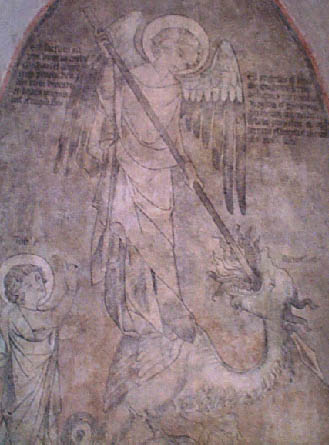
The stern ideology of the Order is depicted in its frescoes, which are still under restoration.
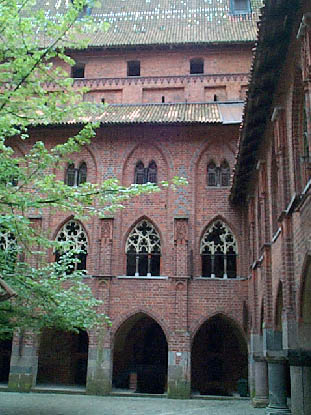
The Gothic courtyard of the High Castle.
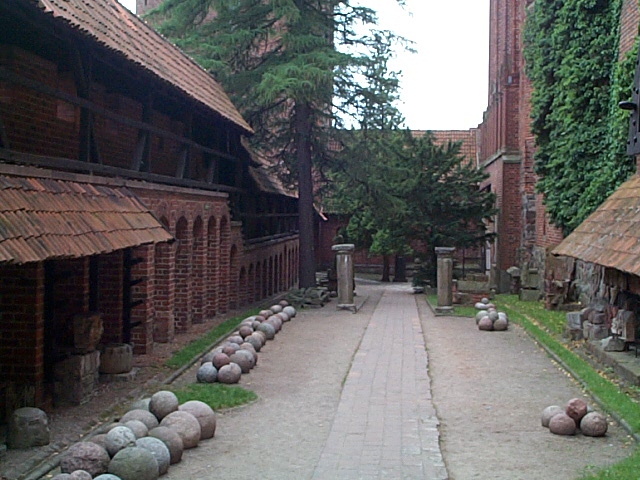
Cannonballs between the main building of the High Castle and its outer walls.