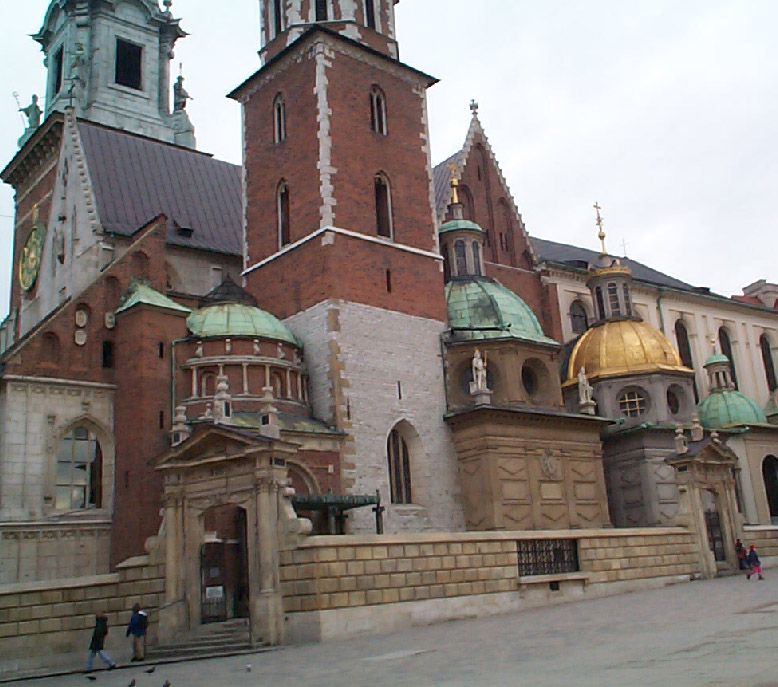
Wawel Cathedral is located on Wawel hill, the oldest part of Krakow. Archeologists believe that two churches stood in its place in the 10th century. When Krakow became capital of Poland in the 11th century, these churches were replaced by a Romanesque cathedral. By the 13th century, Romanesque architecture was considered dated and inadequate for its time, and so a Gothic cathedral was built in its place. By the 16th century this cathedral was also considered anachronistic, but instead of removing the old version, king Sigismund II simply added a new Renaissance era "layer" around the old Gothic structure. Thus a sequence of Renaissance windows now exists (behind the golden dome in this picture) where a sequence of flying buttresses existed during the late middle ages. The 16th century was also the time the twin chapels were constructed.
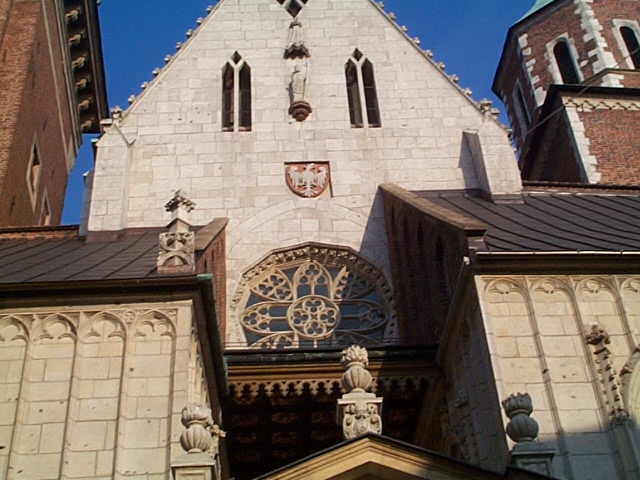
Though Wawel Cathedral is small, it is the most important cathedral in Poland. It contains the graves of most of the country's kings and some important statesmen and writers.
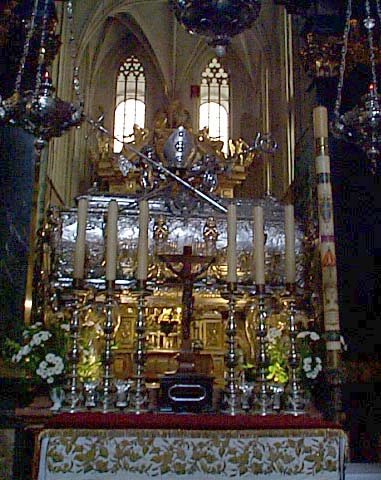
According to legend, St. Stanislaus was murdered by the Polish king in the 11th century. His new baroque coffin resides in Wawel cathedral.
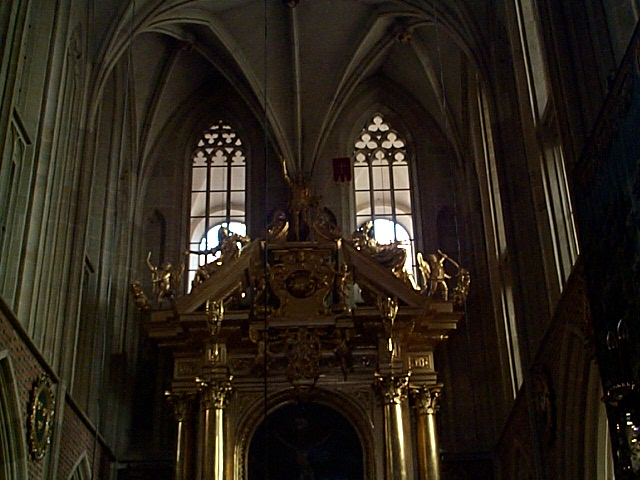
On the inside, the cathedral retains its essential Gothic appearance and resembles similar cathedrals in the West. However, it has since been decorated by later forms of art, such as this golden altar.
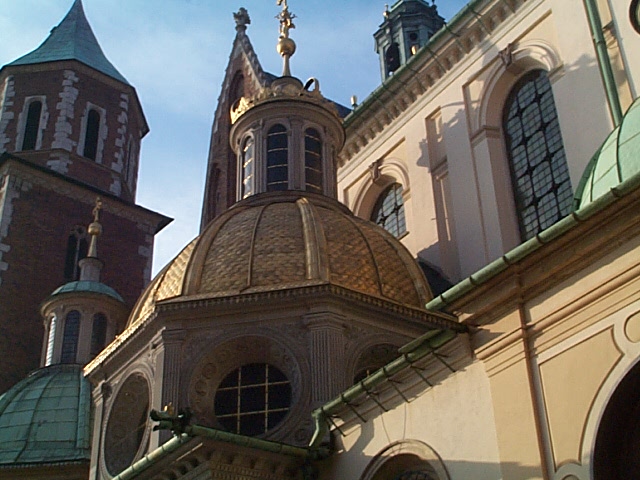
Poland's Renaissance jewel, the Sigismund Chapel has a gold plated dome.
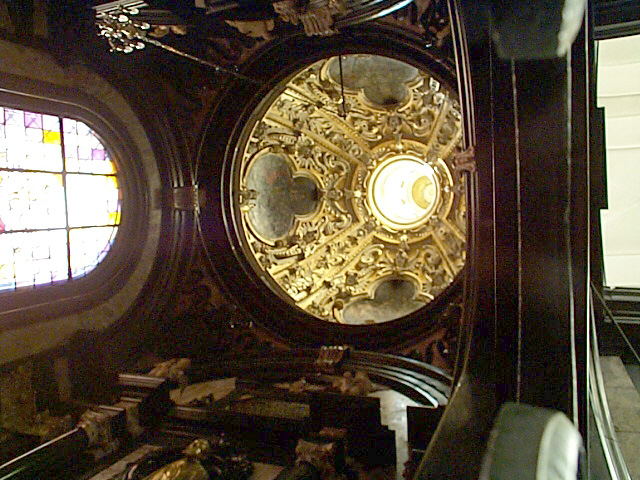
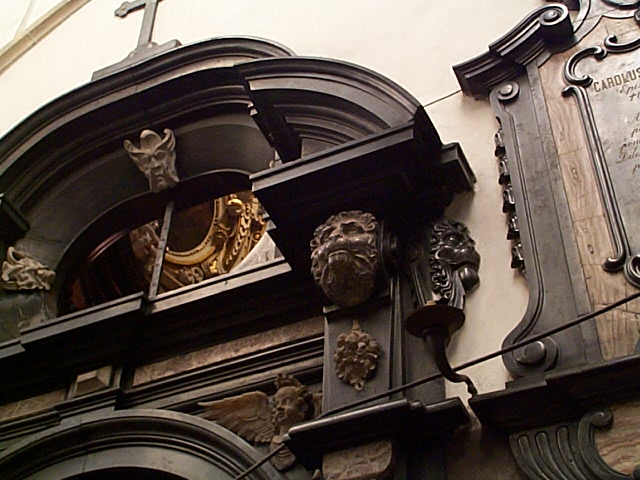
This is the interior of one of the bishops' chapels adjacent to the Sigismund chapel.
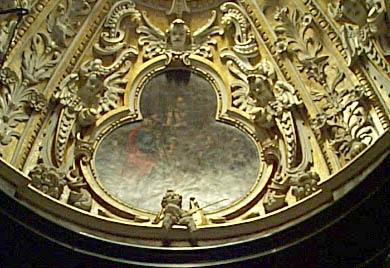
A close-up of the figures above.
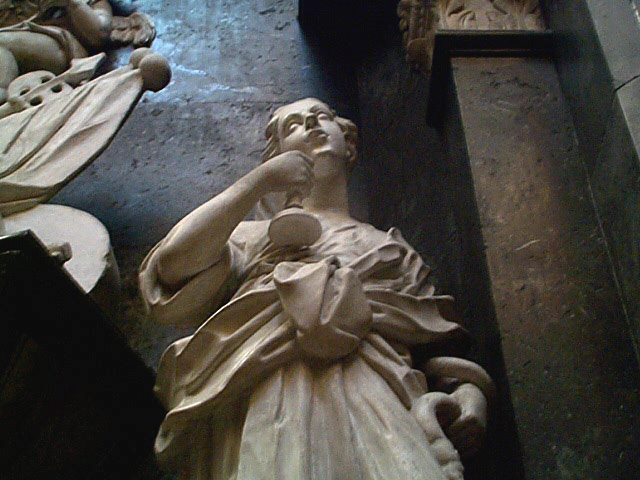
A statue in the rear of the cathedral.
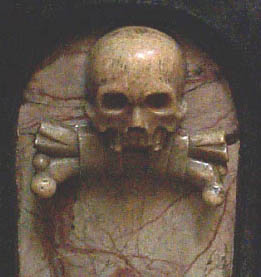
The architects of the cathedral reveal a penchant for the grotesque, especially when pertaining to death. The repeated use of skulls, ram heads, lion heads and other figures gives Wawel an eerie air.
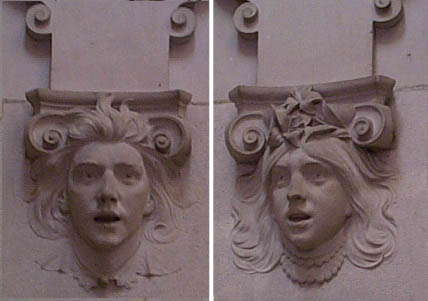
Stone supports for two pillars.
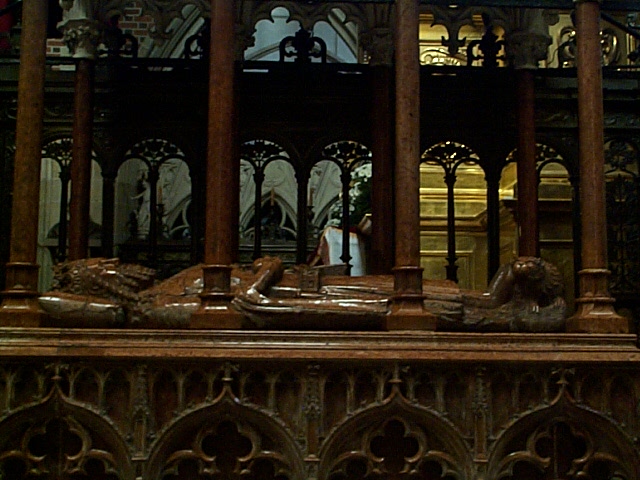
The sarcophagus of Casimir the Great sits just outside the old Gothic cathedral (i.e., in the Renaissance extension).
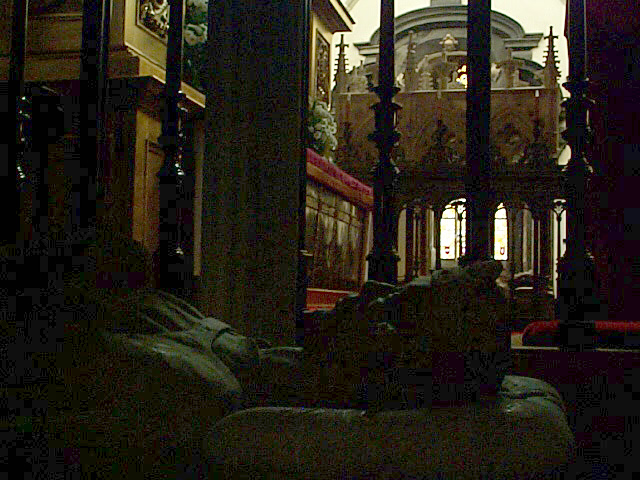
On the other side lies Wladyslaw Lokietek (the "Elbow High"), Casimir's father.
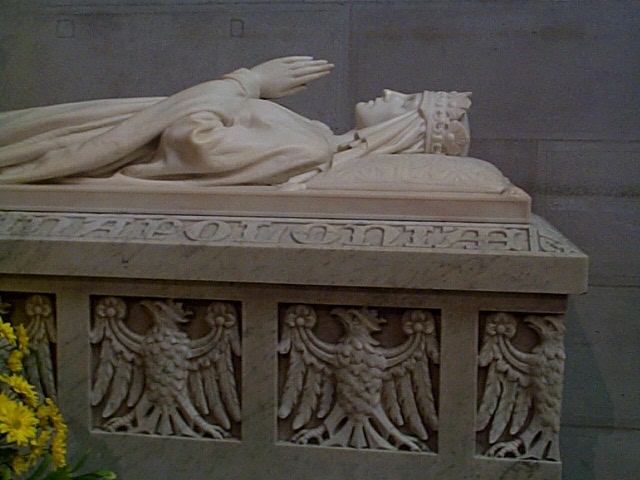
Hedvig was Casimir's niece, but since no male heir to the Polish throne existed at the end of the 14th century she was crowned "king" and later canonized after her death. She was the last ruling member of the Piast dynasty. Her husband, Wladyslaw Jagiello, founded the Jagiellonian dynasty of Polish kings. Jagiello also rests in Wawel cathedral.
According to legend, Casimir the Great was once saved by a peasant when his life was threatened by a bull. As a reward the peasant was given the land of Kazimierz, a suburb of Krakow named after its king. Because of this story, Wawel cathedral is adorned with many grotesque figures of slain bulls.
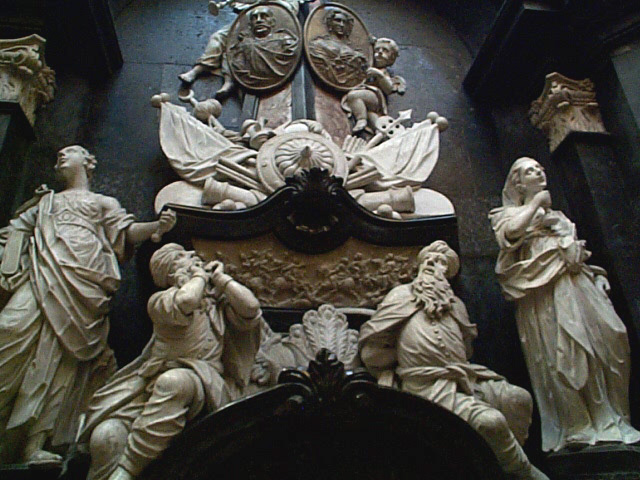
After Sigismund III moved the capital of Poland to
Warsaw, the importance of Wawel castle and its cathedral declined, but
not entirely. Kings, important statesmen, generals and important
writers were buried there and Krakow's bishops continued to use the cathedral.
These statues commemorate the victory of John III Sobieski over the Turks
in the 17th century, considered an important achievement by the church.
See the rest of the Pictures from Poland 2000 Site!