Aquaculture industry is one of the major food industries in the world and it is growing very fast to serve the world food needs. Indian fisheries made notable strides during the past five decades. In 2002, India produced 6.1 million tons of fish and shellfish from both captive fisheries and aquaculture. It ranks 2nd in aqua culture and 3rd in captive fisheries. World demands exceed the production and per capita consumption is steadily increasing. To meet these demands, several issues which were raised in past few years should be answered. One of these issues is the development of high quality fish feed from inexpensive sources and making it free from anti-nutritional factors (ANFs).
The major production of fish is through extensive systems which uses manufactured feeds with added supplements of phosphorous. Fish meal is the major constituent of the fish feed. It serves as a good source of the amino acids, Fatty acids and phospholipids. It is mainly prepared from the fishes caught from wild. The wild sources have already reached their maximum biological limits. The cost and availability of the fish meal encouraged the manufacturers to search for an alternative cheap source such as plant sources. Presence of anti nutritional factors limits the usage of plant based feed in aqua culture. Several anti nutritional factors like Phytic acid, lectins, saponins, phyto-estrogens, anti vitamins, tannins, alkoloids, glucosinolates etc. present in plant based feed. These anti nutrients affect the growth and physiological characteristics of the fishes.
Phosphorous is a critical element and essential for every form of the life including aquatic organisms. Fishes and other aquatic organisms can obtain substantial number of the required elements directly from their rearing water, but phosphorous is one essential element that must be provided in diet. Phosphorous is a component of the teeth, bone, scales and is a precursor of phospholipids, nucleic acids and energy currency of life i.e. ATP. Daily requirements of phosphorous are in the range of 0.3 - 0.9% of diet for various fish species. Fish having the scales needs more Phosphorous in diet than do scale less. In order to fulfill these requirements of fishes, manufacturers add inorganic phosphorous supplements like Mono and Di Calcium phosphates to the feed. Addition of high levels of phosphorous to the feeds causes several problems.
Phytic acid is a friend or foe?
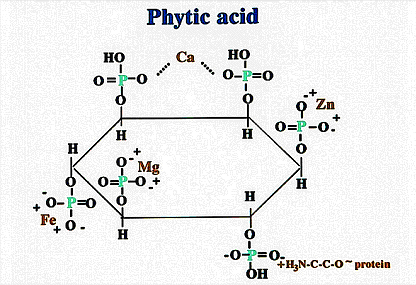
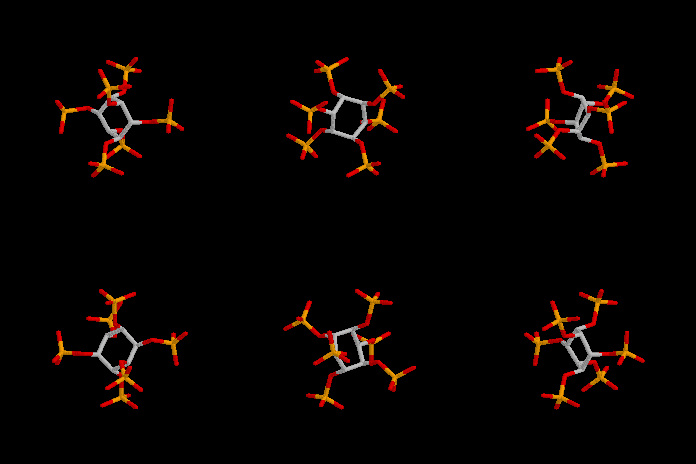
Utilization of oil cakes and other plant materials in the aquaculture feed is limited by the presence of phytic acid and other anti nutritional factors. Phytic acid (Myo inositol 1, 2, 3, 4, 5, 6, hexa kis phosphate) is common in plant seeds and is a principal phosphorous source. Due to presence 6 phosphates groups in it forms chelate complexes with Di valent cations like Zn2+, Fe2+, Cu2+, Mg2+ etc. Since monogastric animals like fishes are not having Phytase activity in their gastro intestinal tract, they can not utilize the phosphorous present in the form of phytic acid and it excreted out undigested. Accumulation of phytic acid and its chelates in the ponds causes the eutrophication. Feed pre treatment methods like dry/wet heating, and solvent extraction to remove anti nutrients have been used successfully but these sometimes shows adverse effects on nutritional quality of the feed. Heat treatment reportedly alters the chemical nature of the feed and decreases the nutritional quality of proteins and carbohydrates (Vander Paul, 1989)