Fun With Friction

Erin places her favorite poetry book (she loves to analyze it all day long) on the table and tries to examine the boundary where the book meets with the table. Mr. Gustafson claims temporary bonds are formed between the two surfaces. Each time Erin moves the book, she needs to break the bonds. When the object is standing still on another surface, the bonds are considered static friction. Mr. G claims these are microscopic bonds and as result, Erin thinks maybe he might be right.
Erin thinks Mr. Gustafson is still a little crazy though. Now he says bonds can be formed when a book is in motion too! This is called sliding friction. These bonds are not as stron because the surfaces aren't in contact for as long. This friction is easier to overcome. Understanding these types of friction helps to explain why it is harder to start an object in motion rather than to keep it moving. It also explains what that imaginary forces that causes an object to slow down and stop for no reason - like when Erin slides the book across the table and it stops!
Erin decides to research this idea. She finds she can disover the Ff (force of friction) is she knows the normal force (Fn which is the weight or gravity's affect on mass, m x g) and the coefficient of friction (�).
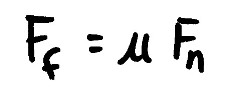
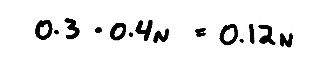
So if 1.3 is the � and the book weighs 0.4N (Newtons), the force of friction is 0.12N.
Home