Phys 2A Generic Course Syllabus
Instructor: Mr. Michael Masuda
Contacts:
(408) 314-9199 (cell phone)
(408) 270-6490 (Math and Science Department, EVC)
email: [email protected]
Yahoo Chat/Messenger: physicsbuddha
Dean Abdie Tabrizi: (408) 270-6490
Course Description: The Physics 2A lecture and lab is an exploration into the study of motion. Topics shall include: vectors, scientific notation, significant figures, basic trigonometry, general motion mechanics, general dynamics (forces) momentum and impulse, rotational motion, gravity, centripetal motion, energy, and (if there is time) wave motion and sound.
Required Materials for class:
q Text: Serway & Faughn: College Physics 6th Edition
q graph paper (National 12 – 188, or 10 squares to the inch)
q Computation Notebook: National 43 – 648. This will be your lab report book. Other books will not be accepted.
q pencil (with a good eraser) and pen
q metric ruler (12 “ long with inches and centimeters marked)
q protractor
q scientific calculator (I recommend the TI-82 or better) – 4 function calculators will not do.
Policy on Attendance and Labs: Class participation will be based on attendance and active participation. There will be approximately twelve (12) to fifteen (15) lab write-ups during the course of the semester – each lab’s work is to be done during the designated lab time. You will be required to complete all of them. Please use caution in the lab and follow the directions of the instructor. There are no makeup labs. The following criteria must be met for each lab write-up:
The main idea of the lab report is to communicate your lab information clearly to the reader. This requires the student to think and explain all details of the lab extensively, so that anyone with a general knowledge of physics (like your peers) can read and understand what the student did and discovered in the lab. Please be very detail-oriented on the lab write-ups.
Use the following seven step outline for lab write-ups:
¨ Title (underlined)
¨ Statement of Purpose of the lab experiment (one sentence)
¨ Description of the experimental set up (with detailed diagram)
¨ Step-by-step Procedure of experiment. Make each step very clear to the reader!
¨ Data (tables) and/or observations
¨ Analysis of data (the thinking part of the lab – what information can you extract from the data? What percent error did you have in the experiment?)
¨ Conclusions (a synopsis of your findings, important comments on how to improve the experiment, percent errors, explanation of error sources)
Note: Many students think that turning in just data is a lab write-up, which is incorrect. The data is essential, but the last two steps (analysis and conclusions) are the most important portions, because it shows the reader that you are thinking about the experiment and what it means, instead of just blindly following orders. Lab write-ups take time—DO NOT WAIT UNTIL THE LAST MINUTE TO DO THEM!
Homework
I will correct one random HW problem per chapter, so it’s in your best interest to do all of them in order to get credit. I encourage you to do extra HW questions on your own – please do not turn in extraneous HW problems, for they will not be graded.
Homework Format:
I encourage the use of the following 5-step method for all math-based homework problems:
1. Given: State all of the items given in the problem (e.g., mass, distance), along with numerical values and UNITS.
2. Find: State what the problem is asking for, followed by an equals sign and a question mark with units in parentheses (e.g., time t = ? (s)).
3. Relationship: State the algebraic formula, equation, or relationship that can be used to solve the problem (e.g., F = ma). There may be more than one equation.
4. Math: Show all of your mathematical work neatly and concisely that leads to the final answer.
5. Answer: Restate what you were looking for followed by an equals sign and the numerical value found in the Math step. Box your answer:
Example: time t = 20.5 s
Note: Please be courteous. If you do not take the time to work out the homework problems clearly, I cannot give full credit. Box your answers and write out every necessary step. Common courtesy, it’s that simple.
Homework will be issued on a weekly basis and is to be turned in one week after the issue date. No exceptions. Late homework will be penalized, so please turn in homework on due date.
Policies on Withdrawal/Drop and Academic Dishonesty (Cheating): Cheating is a breech of trust between the student and the instructor. Refer to the General Policies outlined in the Schedule of Classes and General Catalog. Cheating (copying other people’s work, discussion during exams, letting others copy your work, and/or using the text or unauthorized cheat sheets during exams) is not allowed under any circumstances. Exams are tests of your understanding of course material, not others. Do not copy or plagiarize homework, lab write-ups, or exam answers. Evidence of such behavior will result in no credit for material; further cheating will result in disciplinary action, a meeting with the Dean of Math and Science, and possible expulsion from the San Jose/Evergreen Community College District. Exception: You may share data for lab work, but use your own explanation to evaluate data.
Policy on disruptive behavior: Please use common sense and decency. Do not bring food/drinks or radios/audio players into class. Turn off cell phones and pagers in class. When you need to speak up, please keep it short and have a point. Keep your private discussions to a minimum during lecture time.
Grading Policy:
|
Labs |
20% |
|
Class Participation/Attendance |
5% (note: perfect attendance alone does not yield a passing grade!) |
|
Homework |
20% |
|
3 Midterms (after Ch 3, after Ch 6, after Ch 8) |
35% total |
|
Final |
20% |
Final Exam Date: The last meeting day for the class.
Being an active participant in class will help raise your grade, so stay alert! Ask pertinent questions and participate in the class discussions.
You will be allowed one handwritten 8.5x11 inch sheet of notes (both sides) for the midterms and four handwritten 8.5x11 inch sheets (both sides) for the final.
Opportunities for extra credit:
1. Physics Coupons™! If you participate in a demo in front of the class, or manage to find a mistake made by me on the chalkboard, you are entitled to one Physics Coupon™. Fill out the coupon with the appropriate information, and turn it in with your weekly homework to get additional points for class participation. Up to three coupons will be given out during a class period for mistakes. It is the student’s responsibility to ask for a coupon and fill out the required information on the coupon. Counterfeit coupons, if discovered, will result in disciplinary actions. For mistakes on the board, coupon will go to the first person that courteously points out the mistake (so screaming the answer will not get you a coupon). Arguments about who was first will result in no coupons being given out for the mistake.
2. Physics Poster. For extra credit the student can design and present one poster on a topic pertinent to what is covered in class. The poster should be clear, concise, and articulate, AND MUST convey some knowledge in physics. Artsy paintings of Einstein do not denote a physics poster. A five minute presentation in front of the class is also required (peer and instructor reviewed). Presentations must be scheduled one week in advance or earlier, and only three presentations will be allowed per class meeting.
3. Physics-Related Articles. Bring in a newspaper or periodical article on a physics-related subject, and you will receive extra credit—but there is a catch. You need to write a brief synopsis of the article (one paragraph) to be turned in, and you will need to present it in front of the class. Be prepared to answer questions on the article!
4. The 2 Liter Soda Bottle Rocket. Using an empty 2 liter soda pop bottle (plastic), construct a rocket using only liquid water and compressed air as fuel. The construction of the apparatus and the experiment must be documented with videotape and with a formally written lab write-up. The write-up must include diagrams of the apparatus, procedures, data measurements (time-of-flight, maximum height via triangulation, air pressure), analysis (initial velocity vs. water volume, thrust), and conclusions. A quick search on Google for "pop bottle rocket" will yield diagrams of other people's setups.
5. The Water Balloon Catapult. The catapult cannot use elastic tubing or rubber bands and must be versatile enough to launch the water balloon at any angle (from 0 to 90 degrees) WITHOUT popping the water balloon. The construction of the apparatus and the experiment must be documented with videotape and with a formally written lab write-up. The write-up must include diagrams of the apparatus, procedures, data measurements (time-of-flight, maximum height via triangulation), analysis (maximum height and maximum range vs. angle), and conclusions. A quick search on Google for "water balloon catapult" will yield possible construction ideas.
Additional extra credit may be posted throughout the semester—if you plan to do these, please do them as formal write-ups, complete with (as necessary): data tables, analysis, conclusions, bibliographies and citations, as if they are a term paper. “Scribbled at the last-minute” extra credit assignments will not be accepted nor graded. Extra credit posted before a midterm will be due the day of the next midterm. NO EXCEPTIONS.
Student Grievance Policy: Please refer to the college’s student grievance policy located in the college’s catalog.
Tips on how to do well in this course:
1. This is the hardest thing to do, but if you don’t get it, SPEAK UP! I will do my best to clarify it.
2. Ask pertinent questions. There are no dumb questions.
3. If you see me do or say something wrong, please tell me. I’m only human.
4. I am here to teach you and learn from you as well. It’s a two-way process.
5. If you want me to slow down or speed up the lecture, please tell me.
6. If you are bored, please tell me.
7. Keep notes on what you don’t understand, so that you can ask me or someone else later.
8. Review your algebra and trigonometry.
9. Never take units for granted (kg, seconds, meters, joules, etc.). Recall the 125-million dollar Mars probe disaster of 1999. More students lose valuable points on units more than anything else. Keep track of units.
10. The fundamentals are the toughest things to understand – once you get it, everything is simple.
11. Imagine that you are discovering these secrets of the universe for the very first time!
12. Read the textbook. Watch science shows. Visit some science web sites.
13. HAVE FUN! I will do my best to keep it interesting.
Tips on Midterms:
1. Never leave a question blank. Try to answer the question, because you will not be penalized for guessing.
2. Midterms may consist of the following: “True / False” questions, “fill in the blank” or “circle the correct answer”-type questions or statements, “short answer” questions, and “math-oriented” questions.
3. I look for clarity of thought and conciseness of answer in the “short answer” and “math-oriented” questions. “Fluffing” the answer with impertinent information will cost you some points.
4. It is more important to understand processes than facts. Put useful information such as equations and constants (with units) on your note sheet, along with tips, algorithms, etc., on how to solve different types of problems.
5. I guarantee that HW and exam problems will not be exactly the same. Understand processes instead of memorizing specific problems.
Facts are to science as a dictionary is to literature. Knowing just facts and numbers will get you only so far in the class—the trick is learning how to use them in solving problems. Even though this class will use a lot of math (algebra, trigonometry), this is NOT a math class. Behind each physics problem, there is a fundamental aspect of physical reality that you will address. These concepts can be understood on their own without math, but math makes it more powerful, more practical.
Physics is the study of motion--ALL kinds of motion. This includes the motion of everyday objects, such as cars and baseballs, but also celestial objects (such as planets and stars), microscopic objects (such as subatomic particles) and intangibles (such as energy, heat, fields and waves). It addresses HOW objects move and WHY they move the way they do. For over two thousand years, humans have been trying to unlock the secrets of the physical universe; some ideas worked consistently, others didn’t. The physics textbook that you have is a collective tome of the human exploration of the Universe’s closely guarded secrets, and it is available now for you to learn. You live in a wonderful age. The question is, ARE YOU READY TO ACCEPT THE SECRETS OF THE PHYSICAL UNIVERSE, THE RULES OF NATURE?
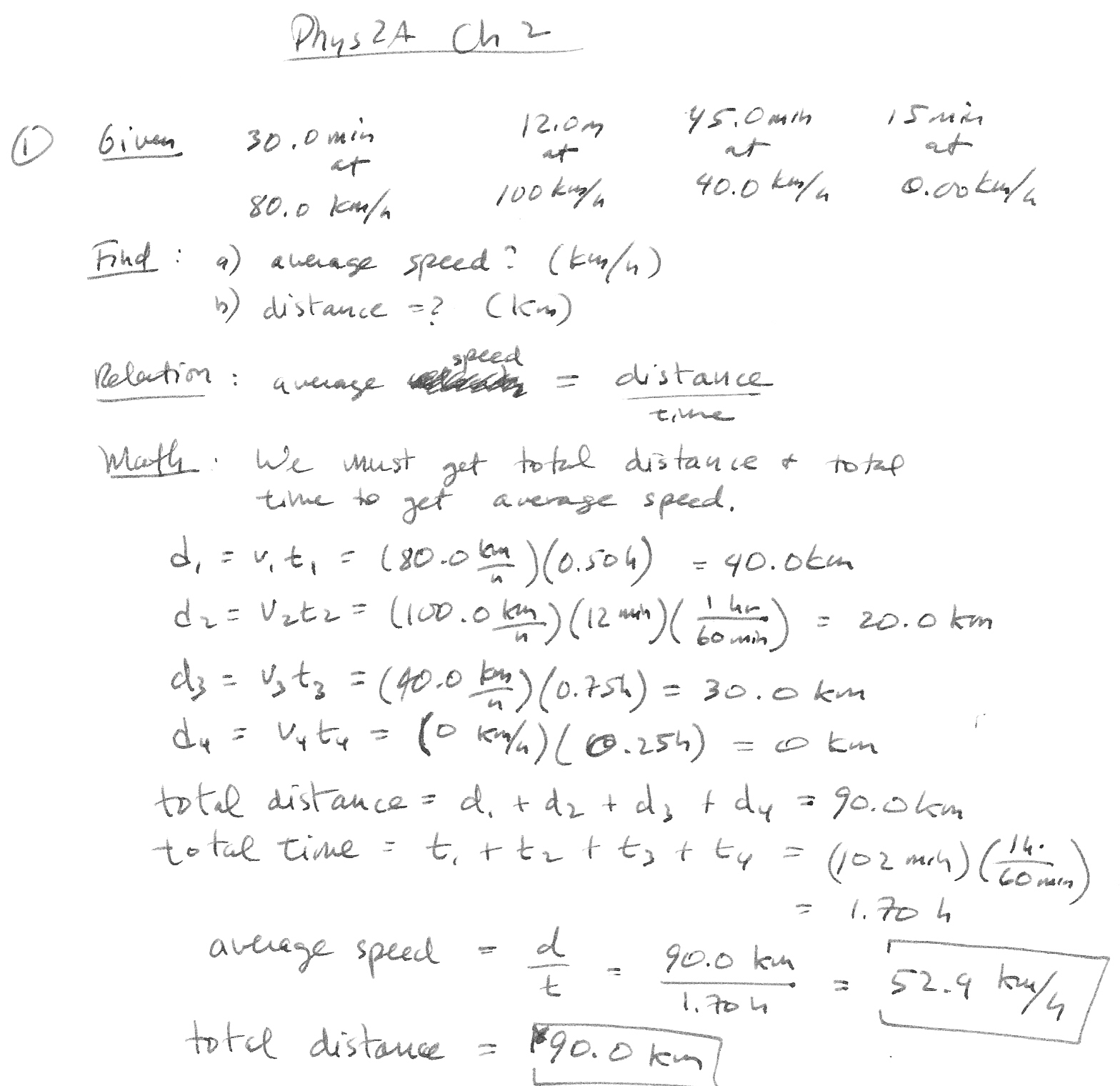
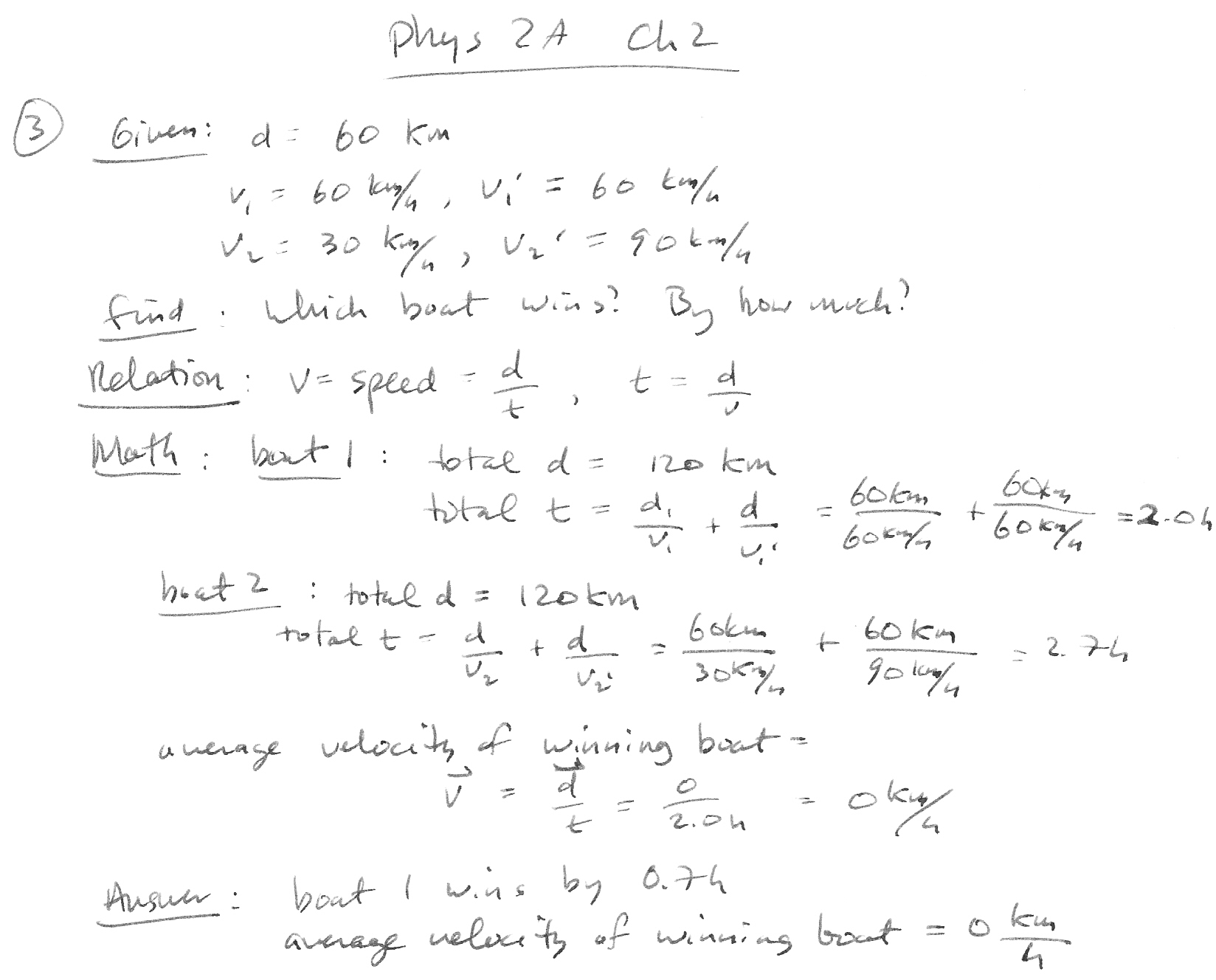
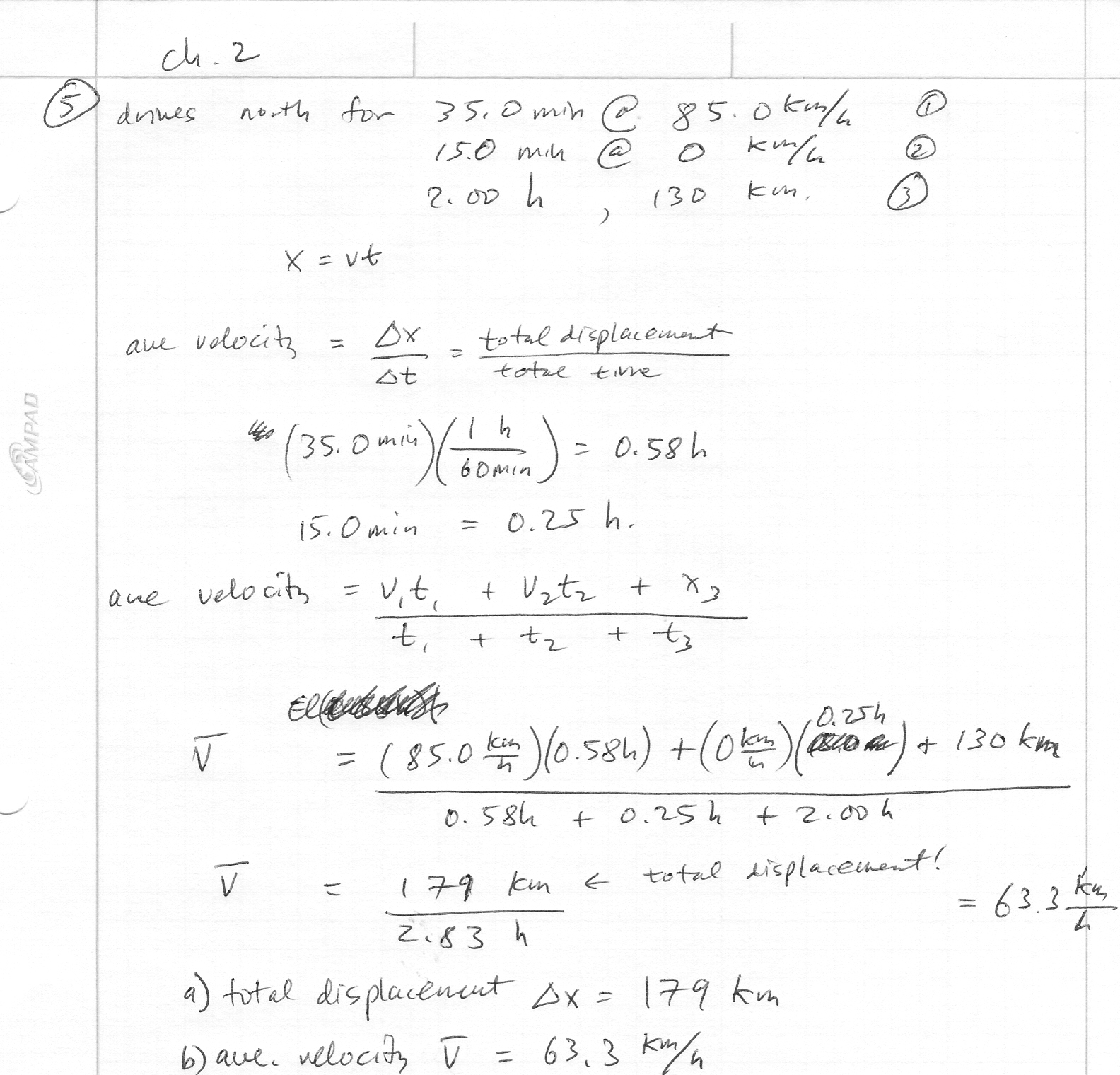
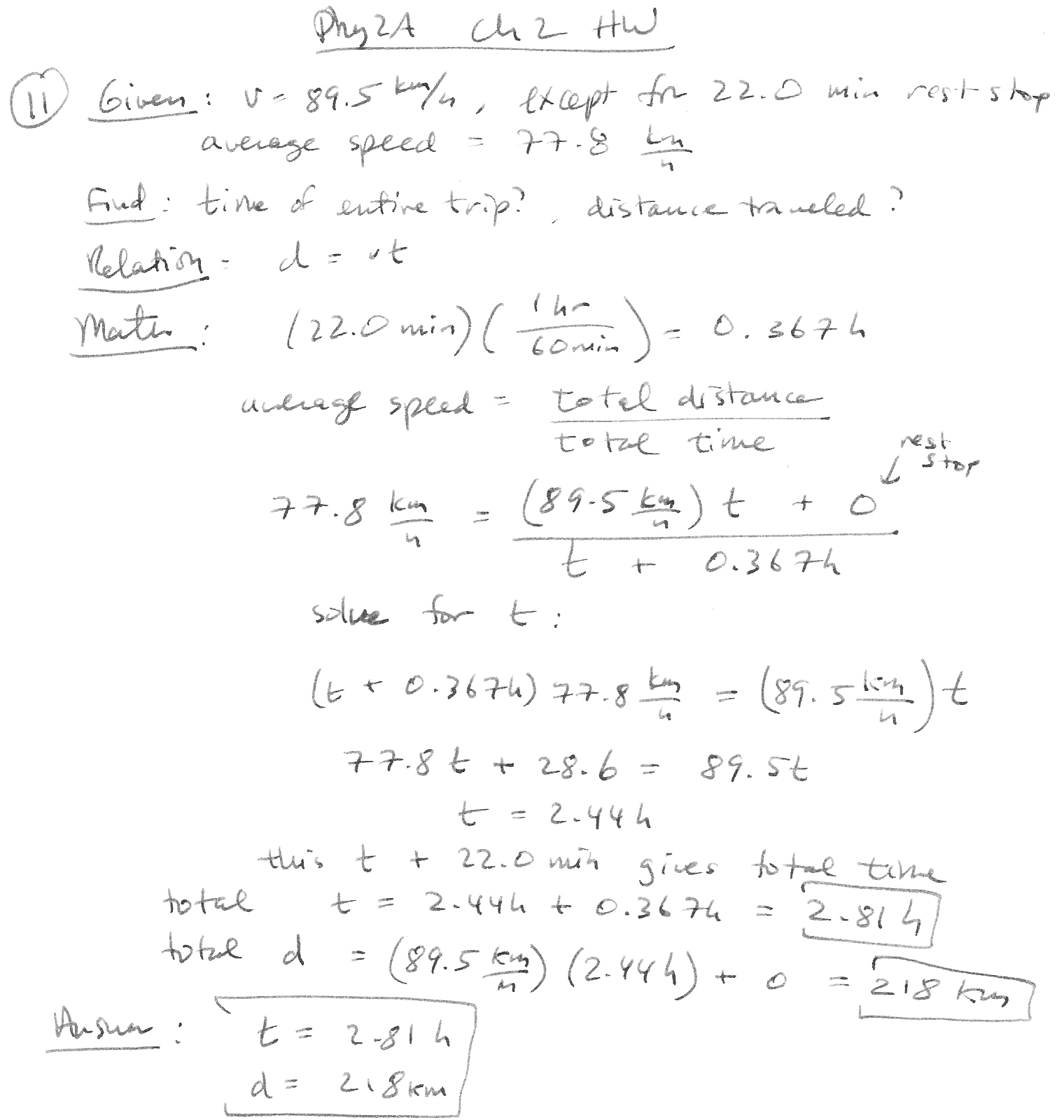
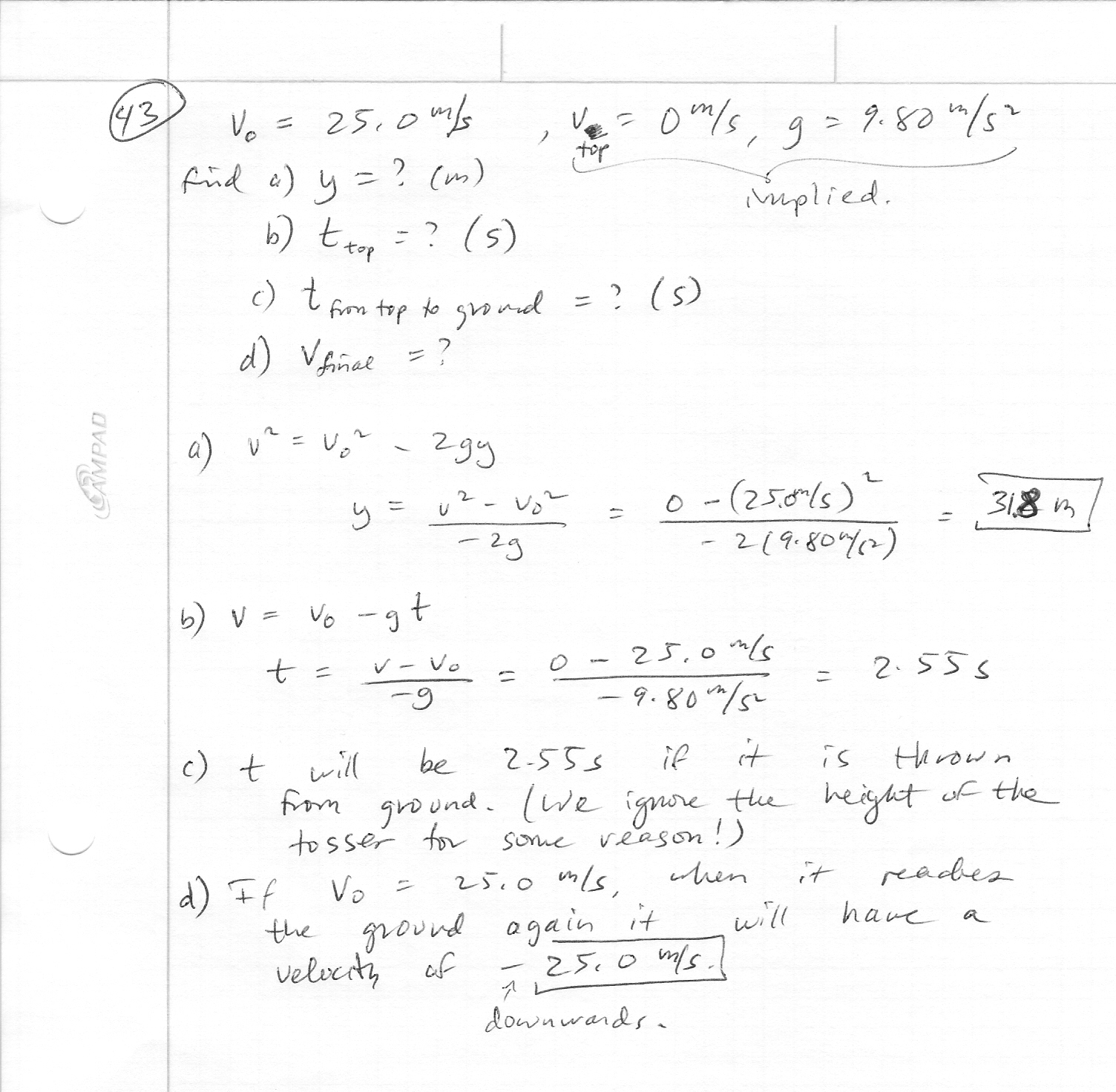
Here are Jpegs of selected Ch 1 HW problems: 1 2 3 4 5
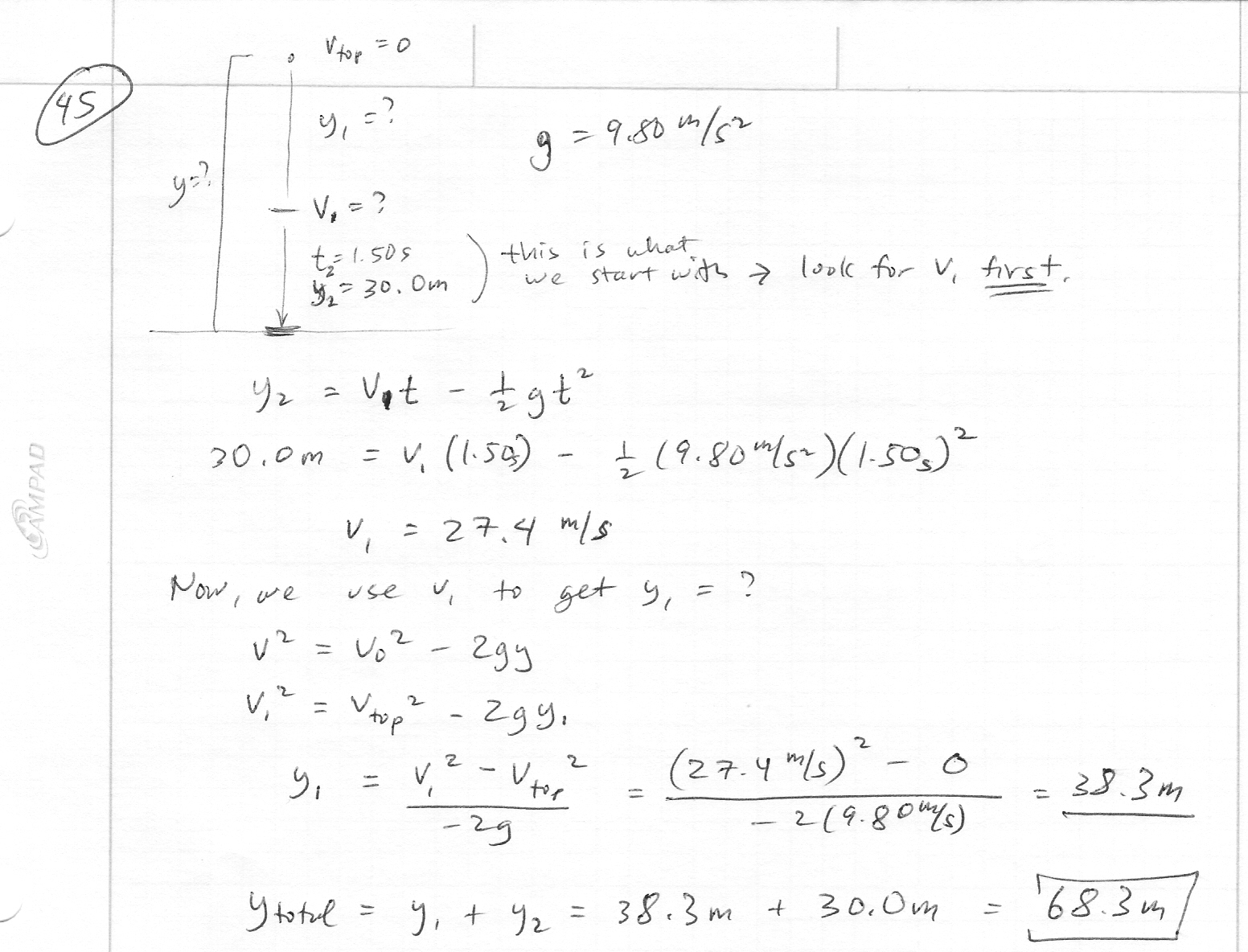
Here are Jpegs of selected
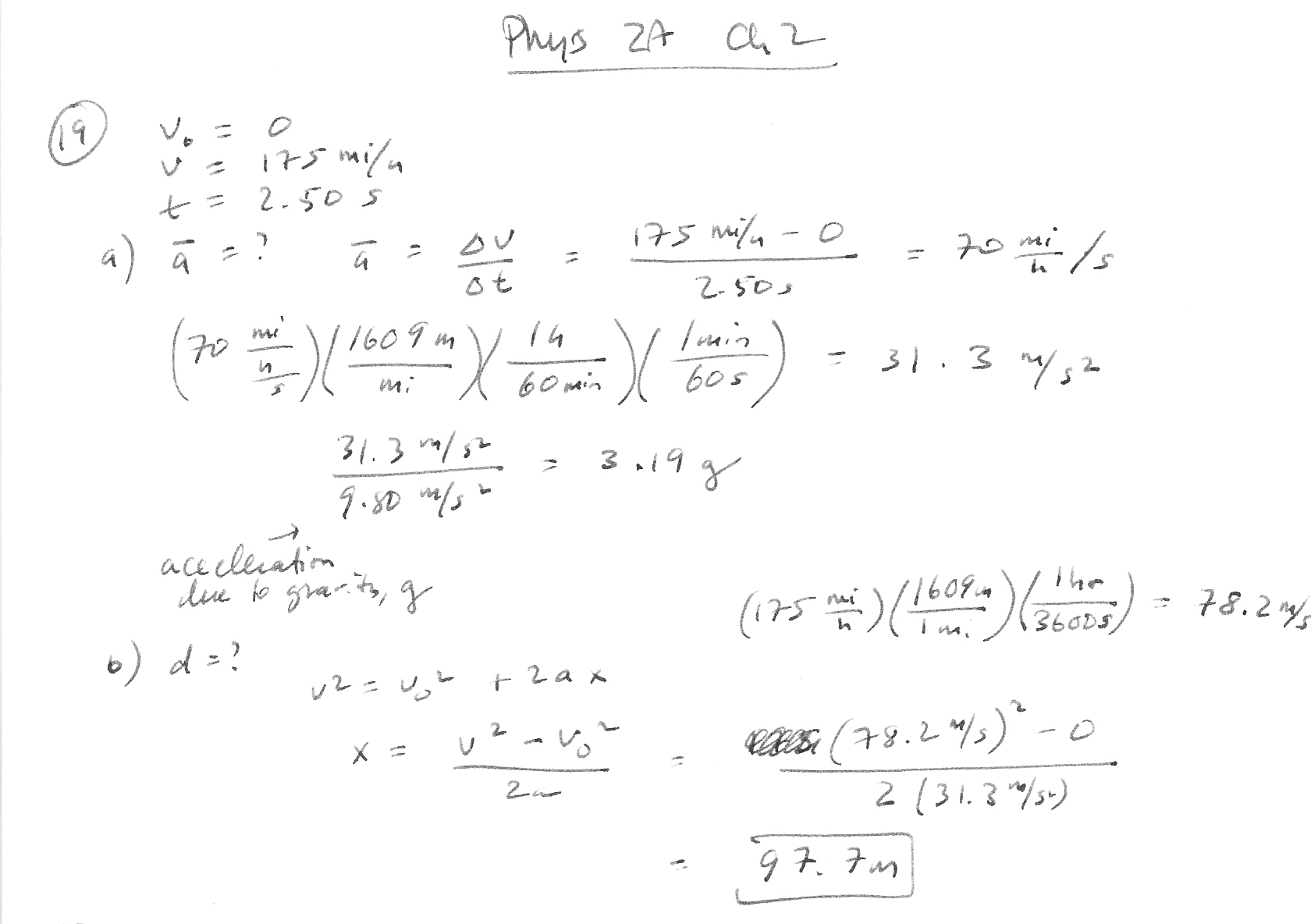
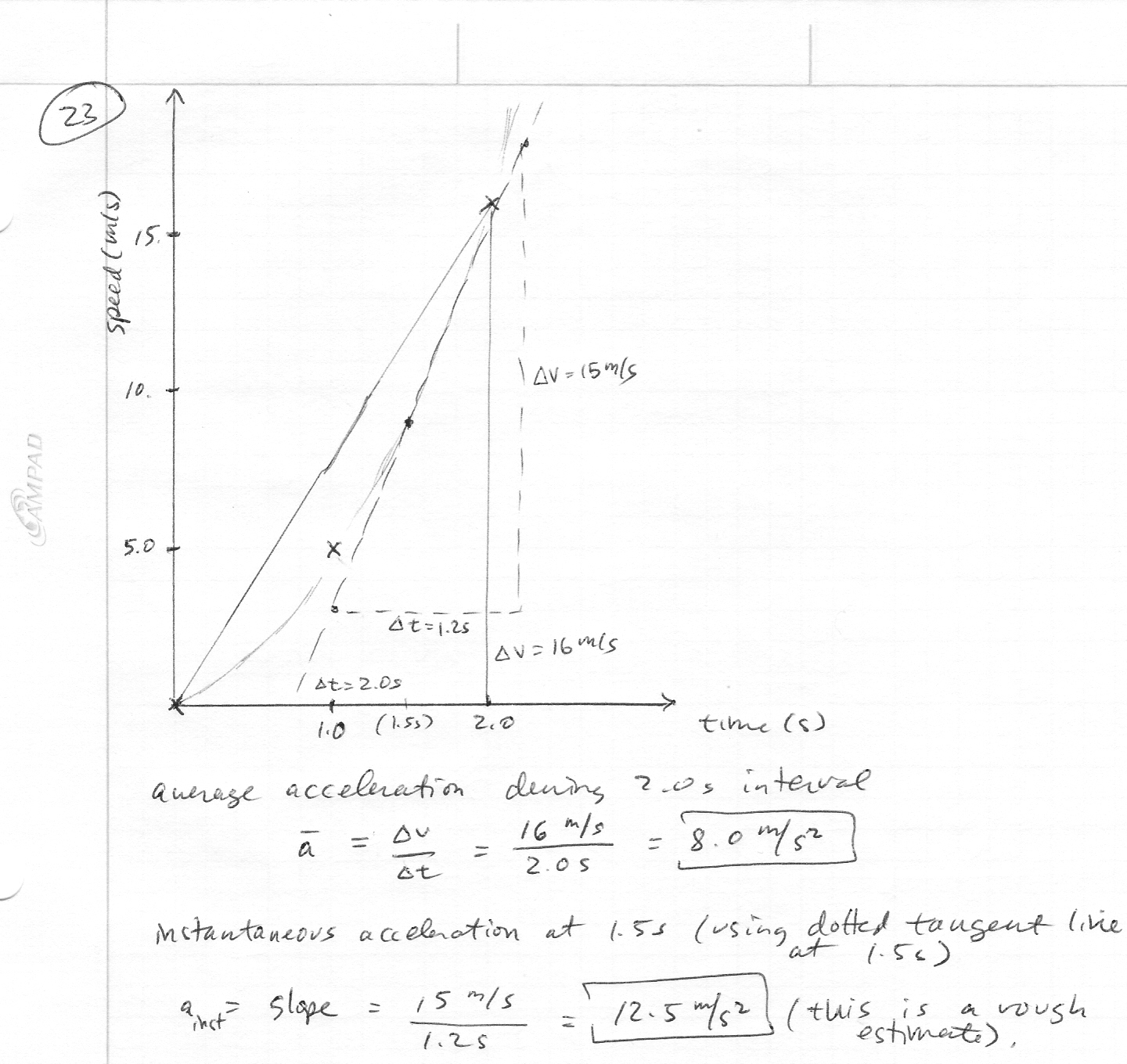
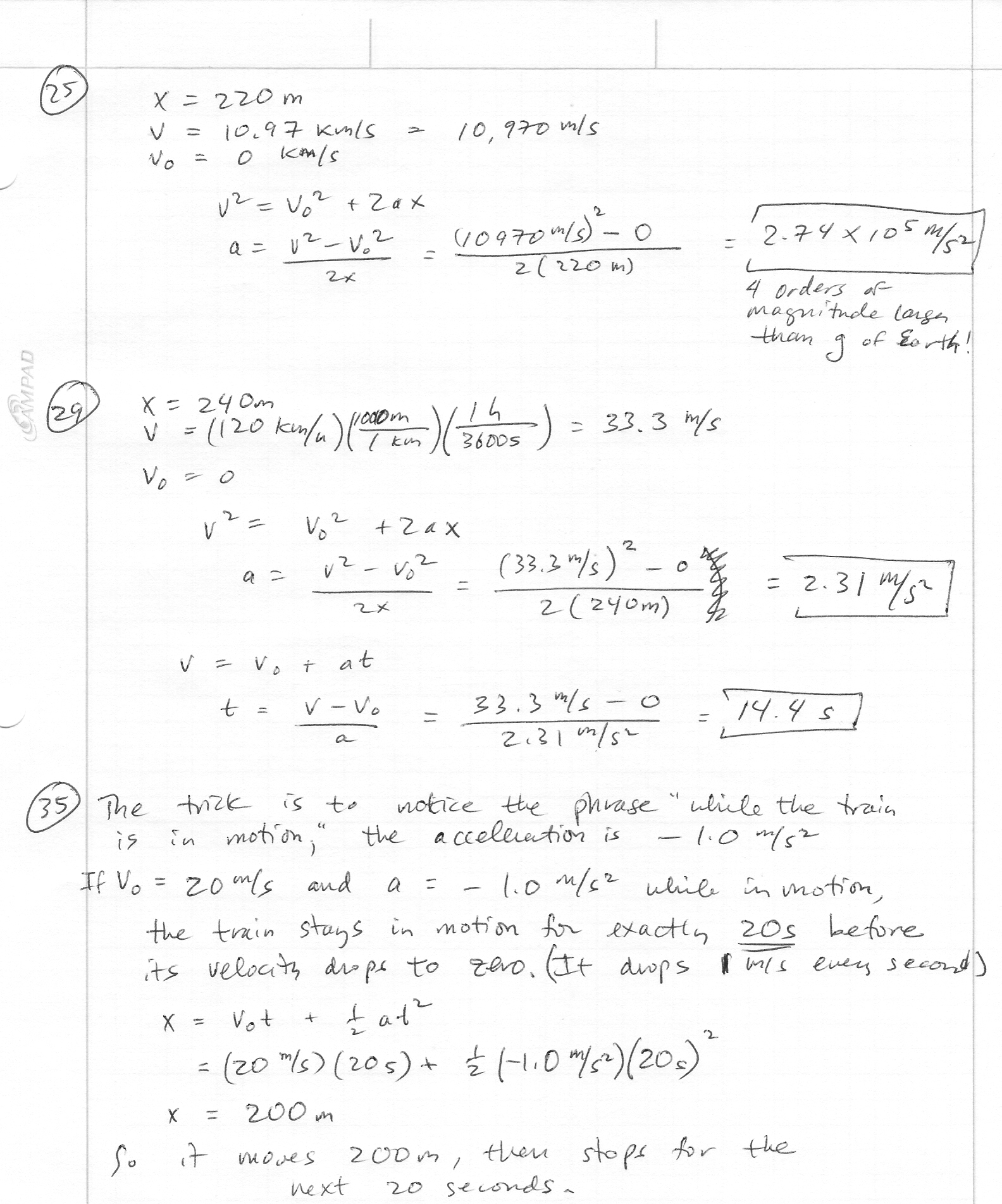
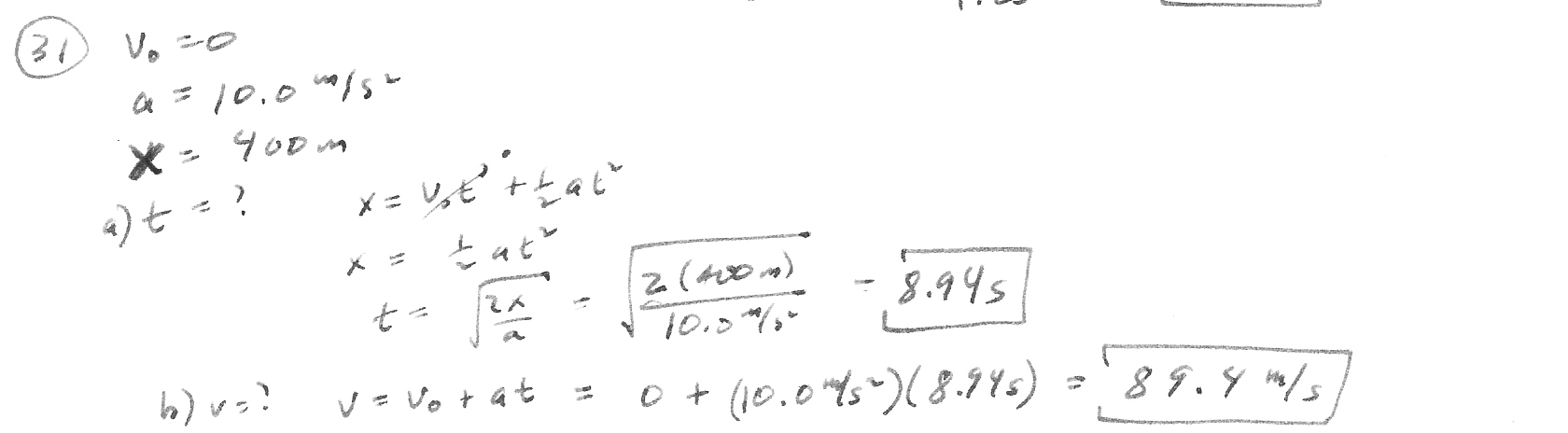
Ch 2 HW problems: 1 2 3 4 5 6 7 8 9 10