 |
|
|
|
|
|
|
|
|
|
|
|
|
|
|
|
|
|
|
|
|
|
|
|
|
|
|
|
|
|
|
|
|
|
|
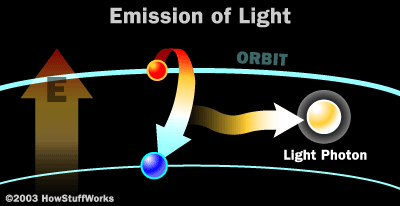
Excited State is what the electrons achieve when they acquire more energy through heat, light or electricity. In the excited state electrons jump to higher energy levels. |
|
|
 |
|
|
|
|
|
|
 |
|
|
|
From www.howstuffworks.com |
|
|
|
Eventually the electrons will need to eliminate excess energy and return to ground state. In doing so it often times releases a photon, which is a particle of light. |
|
|
|
|
|
|
|
|
|
 |
|
|
|
How Lasers Work |
|
|
|
 |
|
|
from www.howstuffworks.com |
|
|
|
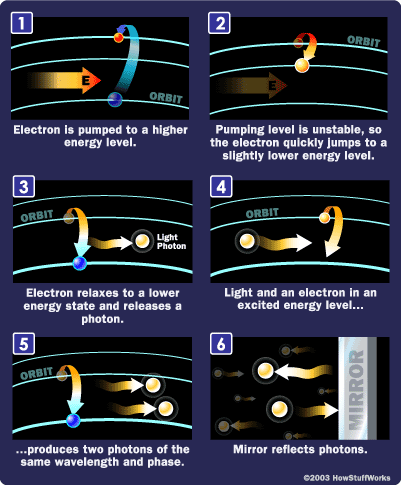
Laser light is different from normal light because it undergoes stimulated emssion, in which photons are not permitted to release randomly.
|
|
|
|
|
|
|
|
|
|
Lasing Medium- gets the atoms into an exited state This can occur with the intense flashes of light or electric surges.
|
|
|
|
|
|
|
|
|
|
The lasing medium must also contain mirrors, which reflect photons so that they travel back and forth through the medium, causing other electrons to leave their exited state and return to their ground state. |
|
|
|
|
|
|
|
|
|
For more information about lasers refer to: www.howstuffworks.com/laser |
|