
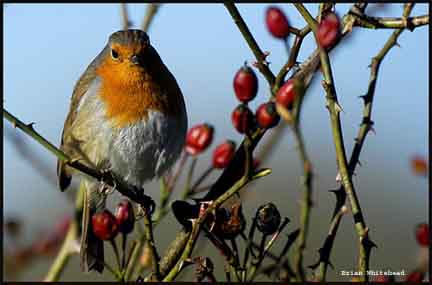
Most of the images were taken on my D100 using a 400mm lens.
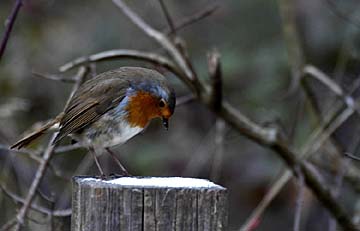
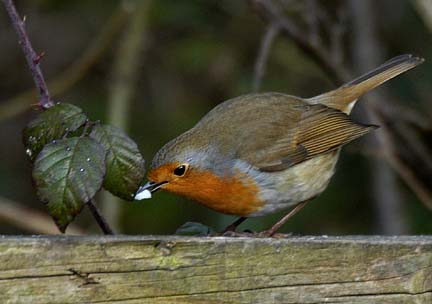
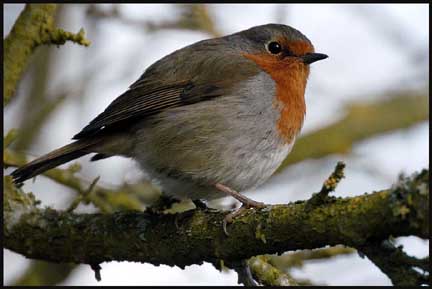
Always chose the highest resolution or picture size on your digital camera, birds are small images so you may have to crop your shots.



|
|
|
|
|
|
|
|
|
|
|
|
|
|
|
|
|
|
|
|
|
|
|
|
|
|
|
|
|
|
|
|
||||||||||||||||||||||||||||||
| PHOTOGRAPHING ROBINS | ||||||||||||||||||||||||||||||
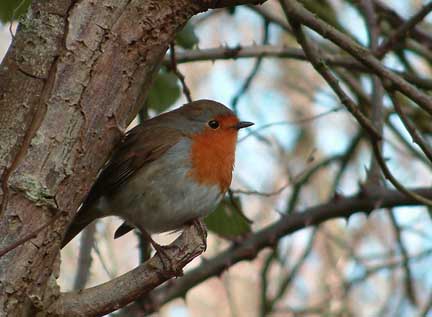
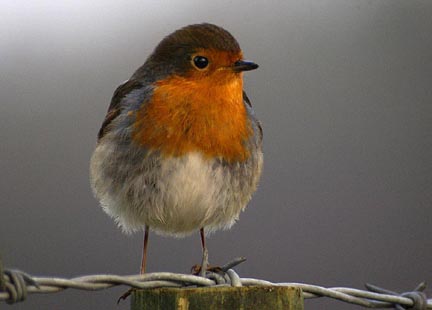
| I have found the Robin to be very attracted to someone carrying a camera, especially if you also have a bag of bird food in your pocket. I usually walk along leaving a handfill of food here and there, then following the same route back these bright terratorial little charactors will brave any passersbye before leaving their newly found meal. Most of the images were taken on my D100 using a 400mm lens. |
||||||||||||||||||||||||||||||
|
||||||||||||||||||||||||||||||
| This one posed in a perfect setting allowing me to get at least 6 images, dont stop shooting once you have your subject, birds move fast and leave many blurs. | ||||||||||||||||||||||||||||||
|
||||||||||||||||||||||||||||||
| just a handfull of oats gives great rewards | ||||||||||||||||||||||||||||||
|
||||||||||||||||||||||||||||||
| some pictures make the effort worth while. | ||||||||||||||||||||||||||||||
| Stay still and wear drap clothes to blend in. If you dont have a long telephoto lens, you can mount the camera on a tripod close to your birdtable or feeding post. Focus it and attach a 3 metre pnuematic extension cable. Its much cheaper than the big lens and can produce some excellent results. Always chose the highest resolution or picture size on your digital camera, birds are small images so you may have to crop your shots. |
||||||||||||||||||||||||||||||
|
|
||||||||||||||||||||||||||||||
|
||||||||||||||||||||||||||||||
|
||||||||||||||||||||||||||||||
| This image is an example of what can be taken on a standard digital camera, this one on a Fuji S602Z | ||||||||||||||||||||||||||||||
|
|
||||||||||||||||||||||||||||||