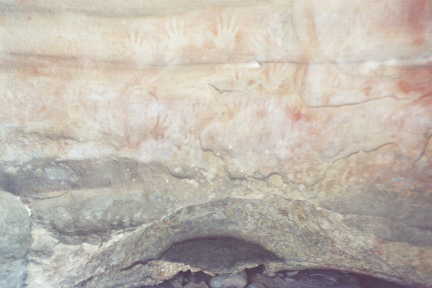
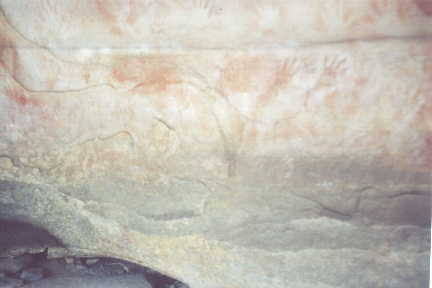
You begin the walk at a large rockshelter near the Glenbrook Creek Causeway. This rockshelter gave the Daruk aboriginines shelter - the black staining on the cave is from their campfire smoke. The walk is 3 hours return and very easy.
The vegtation is interesting and varied - smooth barked apple (Angophora costata) with its pink trunk, yellow bloodwood (Eucalyptus eximia) with its flaky, yellow-brown bark, the turpentine tree (Syncarpia glomulifera) a tall tree with a very straight rough trunk and dark green leaves, water gums (Tristania laurina) and christmas bush (Ceratopetalum gummiferum) as well as many tree ferns.
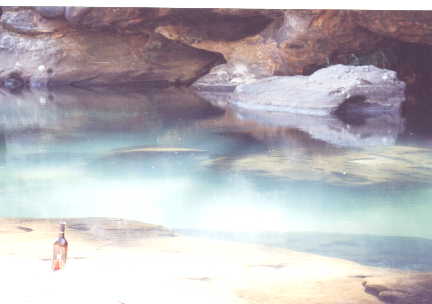
If you look down into the creek you will see many lovely patterns in the sand also along the way you will come to Jelly Bean Pool - this is a magic place - the water is aqua blue (this is caused by suspended particles of clay) - Blue Pool is on the right hand side behind the car park.
There are many lizards, skinks and water dragons and plenty of wombat droppings (I have yet to sight a wombat).
Using the natural ochres found along Campfire Creek the Aboriginies left evidence of their art in the form of hand prints and stencils in Red Hands Cave. If you keep a sharp eye out you will see the gooves that have been worn into the flat rock surface in the creek bed near a shallow pothole. These grooves formed as the Aboriginies sharpened their spear heads and axes. The area is all that remains of a culture which dates back over 12,000 years.
Red Hands Cave and other cave shelters in the area owe their formation to the action of water trickling through the porous sandstone, dissolving iron and silica minerals that cement the sand grains together. Leaching of the iron rich compounds in the rocks gives the creeks in the area their reddish tinge.
All Aboriginal relics found in the area are protected by law. The maximum penalty for destroying, damaging ,defacing or stealing a relic is $5000 and/or six months imprisonment.