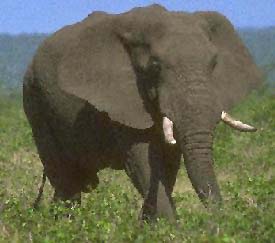
African Elephant
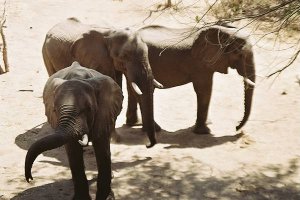
Elephants are recognized by their long nose, or trunk. They use this appendage to smell, drink, eat, and manipulate objects. Just like a human nose, it has nostrils and its tip, but it also has 2 finger like projections that it uses to grab and examine small objects. The Indian elephant has only one of these projections. Though, the elephant uses its trunk to drink, it does not drink through it, rather it sucks water into its trunk and then sprays it into its mouth.
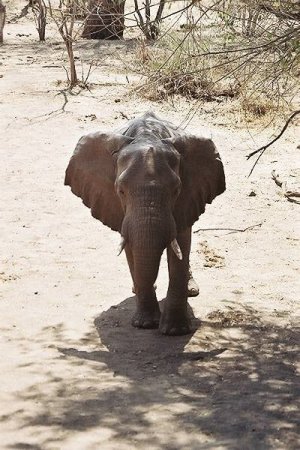
Both sexes of the African species of elephant has tusks, whereas only the male sex of the Indian elephant has them. These tusks are greatly extended incisor teeth that originate on each side of their upper jaw. The longest recorded tusk was 11.5 feet long and weighed 236 pounds! An elephants bones lack a marrow cavity, but instead have a spongy material within their bones that distributes the marrow. The large columnar feet on the elephant allow it to move surprisingly quickly over rough ground, reaching speeds of 25mph at short bursts.
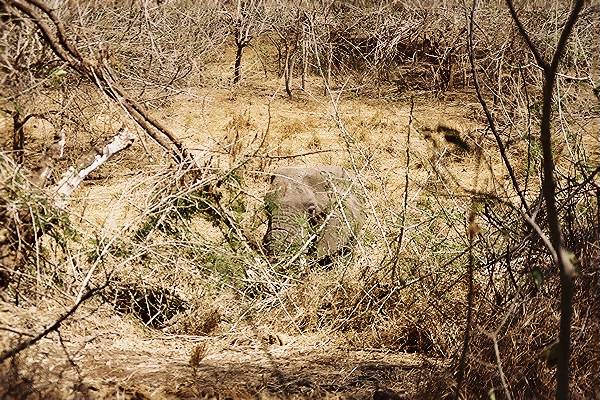
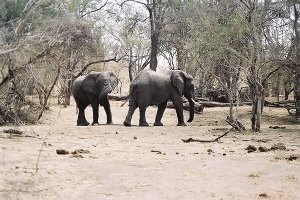
The African elephant lives wild in areas south of the Sahara, however not in the extreme south of Africa. They live in matriarchal herds of 10 to 50 animals. The female has 1 or two young after a gestation period of 19-22 months- this is the longest gestation of any mammals. They can live 60 to 70 years and have the lowest metabolic rate of any placental mammal on earth.
In the past half decade the African elephant has been making a strong population recovery since a ban on ivory was instituted in 1989. The 1980's saw a decimation of African elephant populations. For example in East Africa it was recorded that in 1981 they had a population which topped 1.3 million, but by 1990 their population was only 600 thousand. It will take time to see if this ban as well as the installation of protected game reserves will be effective in saving the African elephants populations.