

Mythological and Historical References in Final Fantasy
VIII
This section covers the various mythological and historical references in Final Fantasy VIII. I in no way make any claims that this is what Square intended with their games. This is only information about where Square MIGHT have gotten its ideas about the GFs, the Character Names, and various other aspects of the game. This is not an official site or list. I do NOT presume to speak for Square.
Phoenix
Character Names
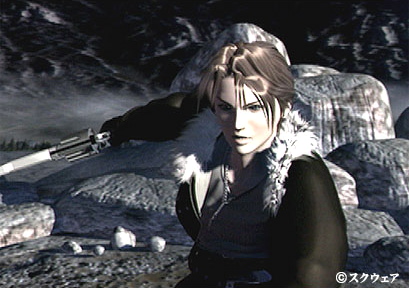
Squall Leonhart: this name actually has two references. Squall is a reference to a type of sea storm. This name was chosen because the character conceptualizer wanted a word that would remind the player of the way that rain falls gently, and roughly, on the water and land. Leonhart is a reference to King Richard the Lionheart. Richard the Lionheart was the King of England from 1189-1199 AD. King Richard the Lionheart was the son of Eleanor of Aquitaine and Henry II. His greatest ambition was to lead the Third Crusade. More information on Richard the Lionheart can be found in the World History section of the Library.
Rinoa Heartilly: her last name is a refernce to her nature. The character Rinoa lets her heart guide her desicions. The word "heart" is part of her last name to reflect her loving nature, and the fact that she "always listens to her heart."
Quists Trepe: her last name is a play on the word "trek" from Star Trek. Her followers at Balamb Garden, "The Trepies" are a humorous reference to Star Trek fans, aka--Trekkies.
Guardian Forces--Their mythological roots
Quezacotl: a refernce to the Aztec god Queztacotl. Queztacotl was a white-faced god in the Aztec pantheon. He dwelt in Tollan and taught the people there all the arts and crafts they now know. The only craft not taught was war. His house was made of silver. The east chamber was gold, the west was set with precious green stones(emeralds, turquoises, adn nephrite stones), the south chamber was made of colored seashells, and the north chamber was made of jasper. All birds of all kinds lived there, and the people of Tollan were happy and prosperous. They were hunter/gatherers. It was Queztacotl who brought them maize. One day, Tezcatlipoca, he-who-can-go-into-all-places, showed up. Queztacotl decided to leave. He would return later, he promised. Tezcatlipoca went to him, and the two played a deadly game. Queztacotl was attacked, and fled. He climbed over mountains, and went east across the sea.
The Church of Jesus Christ of Latter--Day Saints holds that Queztacotl MIGHT have been Jesus Christ who came to teach the Aztecs of salvation through Him.
Shiva: the destroyer part of the Hindu trinity. He drank from the Ocean of Milk mixed with the venom of the serpent Vasuki in order to gain power. His throat turned blue from the posion. Shiva also had four faces. The north, east, and west faces are lovely, but the southern face is terrible. The east face rules the world, the west face delights in all beings, the north face rejoices in the company of Uma, Shiva's wife. The face of the south is the face of destruction.
Ifrit: a class of the jinn noted for their strength and cunning. Male and female, they are enormous winged creatures of smoke. They live underground and frequent ruins. They may be good or evil.
Siren: the mythological women who sang with such hauntingly beautful voices, that sailors would sink their ships trying to reach them. These women were beautiful and graceful. The sound of their voice, however, meant death.
Brothers(Minotuar): A reference to the beast that lived in the Labyrinth of King Minos of Crete. Theseus had to defeat this creature in order to gain his freedom.
Diablos: a Spanish word that is used to describe the devil or a demon. Diablos is often used to describe something or someone who is dark, evil, or mysterious.
Leviathan: A serpent who lives in the oceans. Leviathans are referred to in the Bible, and in superstitions of Europe. Sailors feared that these monsters would eat their ships.
Cerberus: A reference to the three-headed dog that guarded the entrance to Hades' Kingdom. This beast would devour anyone who attempted to pass into the underworld by any means other than death.
Alexander: A reference to Alexander the Great, son of Philip of Macedonia. Alexander conquered Greece, and spread the Hellenistic culture throughout the world.
Eden: A reference to the Garden of Eden and to Eve, the All-Mother, of the Judeo-Christian belief.
Odin: Head of the Norse Pantheon. Odin, the All-Father, gave his sight to attain wisdom. He is among the Norse gods fated to die at the battle of Ragnarok. Odin has two ravens, Thought and Memory, who attend him. Odin is the father of most of the Norse gods. He lives in Asgard, and rules over the humans who dwell in Midgard.
Gilgamesh: King of Babylon. His refusal to mate with the fertility goddess Isthar caused the great Flood. Gilgamesh wandered the world after his friend Enkidu died. He wanted to know why man must die, and how to gain immortality. Gilgamesh eventually ceased his wanderings after meeting Utanupishnum, the man who survived the Flood.
Phoenix: A mythological bird of fire that arises from its own ashes every 5000 years. It travels to a star, drinks the life energy of that star, then returns to renew civilization. The Phoenix was one of the earliest symbols of rebirth and reincarnation.
Other references
Sorceress War: Might be a reference to World War II. Esthar would be Japan and Galbadia would be America. America stood for freedom, and Japan for tradition. Esthar sought to continue its way of life, just as the Japanese sought to continue their form of government after the surrender. America sought freedom and to be left alone, just as Galbadia sought to end the search for a successor to Adel within their borders.
Click here to go to the second page of the Reference section.