
9/17/57
THEY GET THE SAME TREATMENT AT GENERAL HOSPITAL
Canfield, O'Kasick--125 Feet Apart
By VICTOR COHN
Minneapolis Tribune
Staff Writer
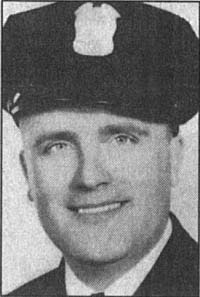
Ward Canfield
On two white beds 125 feet apart at Minneapolis General hospital Monday lay two men with closed eyes and heaving chests, Patrolman Ward Canfield was "still fighting for his life." James O'Kasick, who shot him, was "improving steadily by the hour." AT 3 P.M. the 50th bottle of blood since Aug. 17 flowed into the veins of Canfield in a private room marked "contamination." A little forest of tubing sprouted from his neck, arms, chest and nose. The sign meant strict quarantine to keep his serious infections from spreading to other surgical patients.
His physical condition yesterday, according to his doctor, after six operations and four weeks' combined care by several of this, city's most capable specialists: "His right leg and left arm are paralyzed, from nerves damaged by bleeding and pieces of bone. His thigh and abdomen are infected along the track of the bullet, and he is getting three antibiotics. His chest, crushed by the O'Kasicks' car that ran over him, is not yet fully healed, and he is breathing oxygen under pressure. He gets it through a tube in his throat. His intestines are still in temporary paralysis because, of his surgery and shock, and we are feeding him intravenously, dripping dextrose or sugar and vitamins and saline solution into his blood vessels. HE TENDS to run high fever, so we have him on a cooling rubber blanket, cooled by coils from a refrigeration machine at the foot of the bed."
"But" - the optimistic doctor summed up-"we are hopeful now. We are hopeful he will not develop any further complications, and will have a definite upward course. How long will he be here? Five or six weeks more, I'd say, if it goes well."
Then he described the doctors' and Canfield's - four - week - and - two - day struggle for Canfield's life so far. But first we walked over to see James O'Kasick, At 3 p.m. blood, oxygen and dextrose flowed into him, too, and near his bed, just as near Canfield's, sat an armed police guard. HE, TOO, IS alive because of the combined care of several specialists, and an emergency operation to sew up his ruptured heart Saturday night. It was a rare and dramatic operation, for his heart was untouched, yet damaged, by his suicide attempt bullet. "And you know," his chief surgeon said, "several people, even doctors, have said to me, 'Why did you work so hard saving him like that?' You know, that never entered the mind of anyone in the hospital. And that's how it has to be."
What entered the minds of surgeons, medical men, orthopedists, anesthesiologists and nurses starting on the night of Saturday, Aug. 17, when Canfield came in, then last Saturday night when Canfield was wheeled out of an operating room after an emergency operation, to be followed in minutes later, by James O'Kasick?
ALL THESE things:
Canfield came in bleeding, broken and in deep body shock from the shot in his right thigh and the fractured bones and crushed chest.
Operation No. one was to open his neck and put a silver tracheotomy tube in his windpipe-sterling silver is the metal best tolerated by body tissues -to suck out blood and carry oxygen. X-rays followed. Both collarbones and several ribs were broken. The shot had penetrated his abdomen and shattered his pelvis, His right hip was dislocated, and his right knee broken.Operation No. two at 4 a.m. that Sunday opened his abdomen to take out the bullet and stop internal bleeding. His hip was set, and serious cuts and bruises were sewn. HE WAS wheeled back to bed, where his labored breathing-as his doctor, another surgeon, tells this - "became considerably worse, and we did the third operation right there, putting what we call 'ice tongs' around his breastbone to hold up the chest cage so he could breathe." Another week, and "he developed a bleeding 'stress ulcer,' a common reaction in people with terrific trauma. So we put him on suction."Two weeks ago his worsening infection, an allergy which barred penicillin, his paralysis all made his condition extremely critical. So we called a conference of about seven specialists and went over the case from head to foot. "That's when we wired Upjohn Co. in Kalamazoo, Mich., and got them to open their factory on a Sunday and put some of their new antibiotic Albamycin, not yet on the market, onto a plane. THAT SUNDAY afternoon came Operation No, four to clean out abdominal infection. He improved again and was getting along fine until last Tuesday, Sept. 10. Then a clot sealing the hole in the main vessel in his right leg came loose again." Operation No. five closed the vessel, "and it was touch and go for several days whether the leg would live or become gangrenous and have to be amputated." Then "he was getting along fine until Friday night when this poor, miserable man developed a gall bladder attack." By last Saturday afternoon a gangrenous gall bladder, gangrenous because blood vessels leading to it had been shut off, had to be removed for Operation No. six.
"AND," THIS surgeon continued, "almost as' soon as he got out they made room for O'Kasick in the operating room." O'Kasick's bullet had gone through the left side of his chest, missed the heart and great blood vessels, passed through his lung and come out his side. "But his lung had not collapsed" - his surgeon said-"perhaps because of adhered tissues from a past pneumonia. "A tracheotomy t u b e was put in, and he was really doing nicely. Then suddenly about 11 p.m., I'd gone home and was called when he went into profound shock, and they actually thought for a while his heart stopped. "HE WAS BLUE from the waist up. He was rushed to the operating room, and we opened his chest and found the tough sac - the pericardium- around his heart tense and hard. "When I cut it with a knife, the blood just gushed forth. There was a big rupture in his heart, you see, in the major pumping chamber, and this sac around the heart had just been holding the blood in under pressure, and the heart had practically stopped." The bullet had not touched the heart, yet the zone of destruction, the zone of "impact concussion", had extended well beyond the bullet's path to weaken the heart muscle and make it blow out like a tire.
THE SURGEON sewed up the heart with 10 stitches, a hurried, difficult operation with the heart beating and the blood gushing out. We still have this boy listed as critical," he finished, "because we don't know if there is any further damage, but he's doing well now-much better than Canfield."