November 17, 2003
We certainly enjoyed our month in Cartagena, Colombia. We visited many of Cartagena�s historical and cultural sites, enjoyed an evening at the theater, ate at many of its restaurants, and watched some of the festivities during the November Independence Day celebrations.
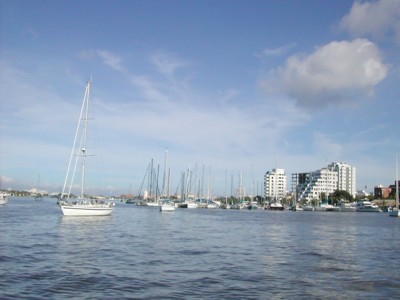
While in Cartagena we anchored off of Club Nautico, the cruisers� marina. Club Nautico, located in the middle class neighborhood of Manga, was about 2 miles from the �old� city of Cartagena. As there was quite a large cruising community in Cartagena during our stay, we spent many hours socializing. In all, there were about 70 cruising boats in Cartagena while we were there with 25 boats anchored out, another 35 boats med moored at Club Nautico, and about 10 boats moored at Club de Pesca, another marina near Club Nautico
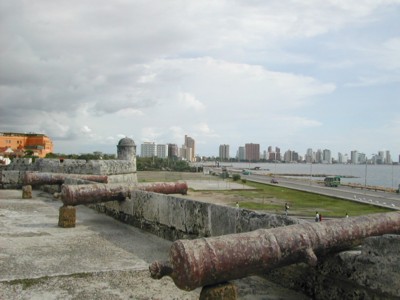
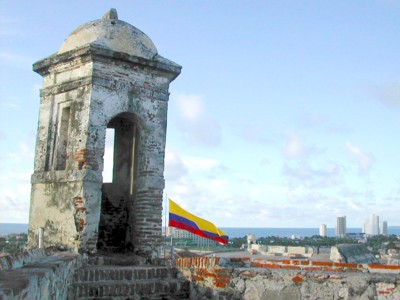
Cartagena was founded in 1533 and named Cartagena de Indias (Cartagena of the Indies) to differentiate it from the Cartagena in Spain. During much of the 17th and 18th centuries, the city flourished as one of Spain�s principal ports in the New World. It was during this period that Cartagena was in its heyday. Thick impenetrable walls and impressive bastions surrounded the elegant city, and more fortresses were built outside the city to protect it and the harbor from outside invaders and pirates. As the city and the harbor were well protected, the majority of Spain�s Fleet of Galleons gathered in Cartagena Bay awaiting to take all the treasures accumulated by the Spanish Crown in its southern colonies of New Granada and Peru back to Spain by way of Cuba. During this time Cartagena was also Spain�s major slave market in the southern continent. Today much of the Spanish-colonial architecture has been restored in �old� Cartagena, most of the thick walls and bastions surrounding this old city still stand, and many of the old fortresses have been restored.
|