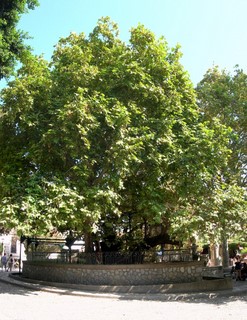
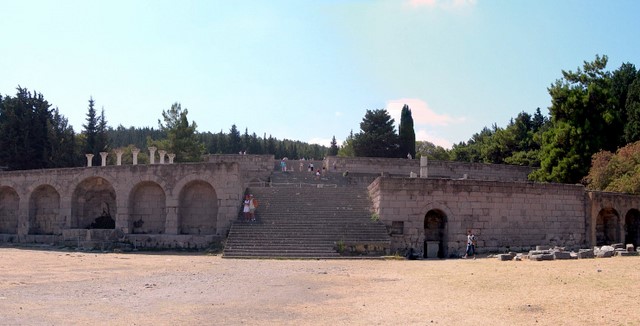
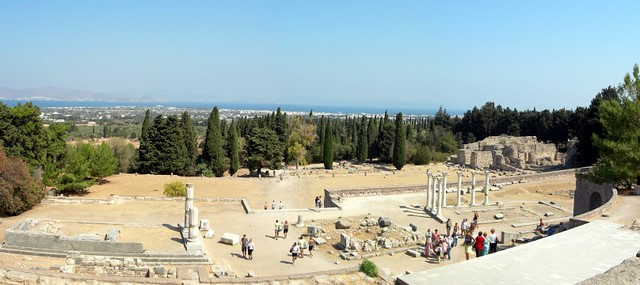
| Since we weren�t flying home from Turkey until November 2, we needed to obtain another Turkish visa as our ninety day limit was soon approaching. Therefore, on Saturday, we took the ferry from Bodrum over to the Greek Island of Kos, the third largest island in the Dodecanese and the birthplace of Hippocrates, the father of medicine. In Kos, we visited the archeological site of Asklipieion and the celebrated �Hippocrates Plane Tree.� Hippocrates lived in the 5th century BC and was said to have taught his pupils under this plane tree. Today, this very old �Hippocrates Plane Tree�, held up by scaffolding, was probably the 6th to 12th generation of the plane tree under which Hippocrates taught. Asklipieion, built after his death in the 4th century BC, consisted of three levels and contained a religious sanctuary to Asklepios, the god of healing, and also a healing and training center which followed the teachings of Hippocrates. For almost 800 years people came here to be healed, making Kos famous throughout the Greek world. Even though now just ruins, the site was still impressive, especially amidst its peaceful surroundings overlooking the town of Kos and the countryside of Turkey. |