We next traveled to Kaymakli to see its underground city. This city was one of 36 known underground cities, but only one of a few that had been extensively excavated. Between 2000 and 1000 BC, the Hittites made Cappadocia the center of their empire, and it was then that these underground cities were started. However, it was in the 7th century AD that these cities gained their present shape when Christian people needed a place to retreat during times of invasion. In peace the people lived above ground, but in times of attack they could survive for up to six months underground. In the Underground City of Kaymakli, a maze of narrow tunnels led down to the different levels. We explored three of the five levels opened and were amazed at what we saw: living quarters, stables, wells, ventilation shafts, food storage rooms, communal kitchens, and troughs for pressing grapes. Especially impressive were the huge stone rolling doors, almost five feet in diameter, that they used to seal off their dwellings from the enemy.
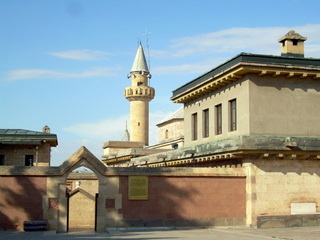
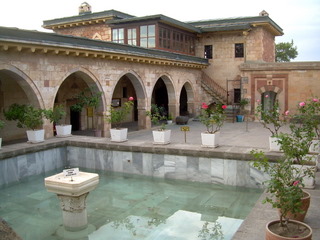
Last, we visited the Haci Bektas Museum. Our guide Mustafa suggested this as we were all interested in learning more about Islam. Haci Bektas Veli was another one of Islam�s great mystic and spiritual philosophers from Turkey and, like Mevlana, lived in the 13th century. Haci Bektas founded the Bektasi dervish sect, and at the Haci Bektas Museum we saw his tomb and the former dervish lodge containing the order�s kitchen, initiation cells, artifacts, and graveyard. Given Mustafa�s wealth of information, our first day in Cappadocia had been an incredible day. |