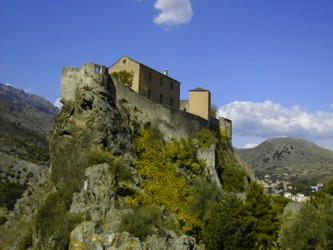
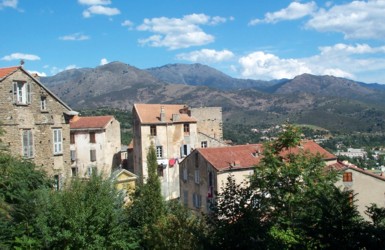
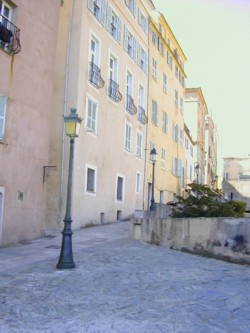
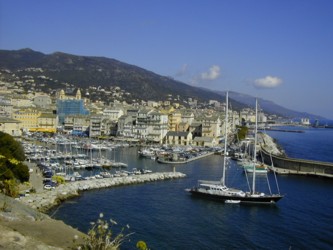
| Sunday, September 11, we drove east to Bastia, situated along Corsica�s northeastern coast and its second largest town. Afterwards, we traveled inland and south to the charming town of Corte. Located in the center of Corsica, Corte was where the Corsican independence movement had its origins, first against the Genoese and then against the French, and this town still maintained a proud spirit of nationalism. Even now, the people of Corsica considered themselves first Corsican, second French. The Corsican language was still spoken throughout Corsica, and as we traveled around the island we noticed the names on many road signs crossed out with the Corsican names written in their place. From an outlook platform in Corte we had excellent views of the town and countryside and of the southern end of the citadel perched high up on a rock. From Corte, we drove south along the eastern coastline to Bonifacio where we enjoyed the evening before returning to our boat in Porto-Vecchio. |