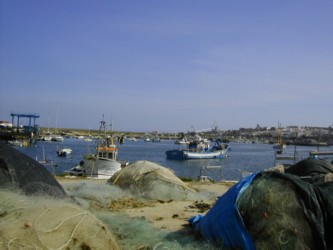
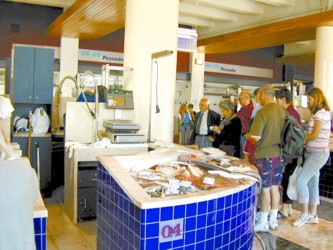
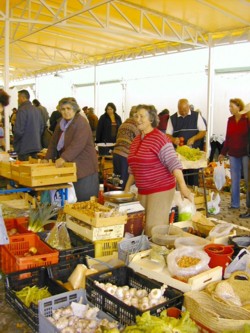
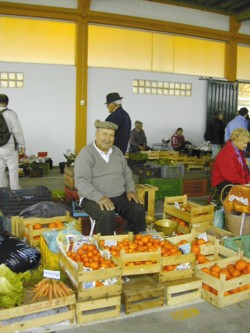
| Amidst the usual town stores, Lagos also had a daily municipal market where one could buy fish fresh off the local fishing boats, a local Saturday farmer�s market, and a Gypsy market held on the first Saturday of the month. Our favorite market was the local farmer�s market held each Saturday morning. At this time we�d pick up our weekly supply of oranges, almonds, olives, and figs plus various other vegetables needed during the week. The Gypsy market was interesting as nowadays the Gypsies came by large white vans. Around thirty vans would be parked in a large circle out in the gravel parking area by the Municipal Stadium, and people from miles around would come to find bargains. |
 |
 |
 |
 |
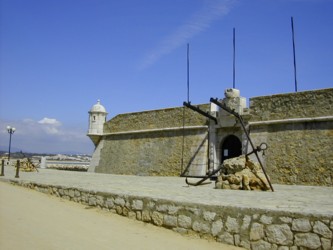
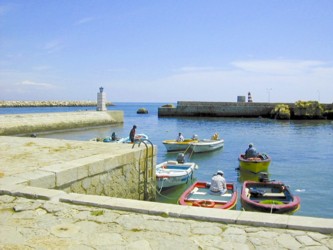
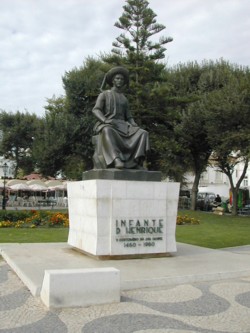
| The town of Lagos was full of much history, and it was fun to walk and explore the narrow streets within its old medieval walls and visit many of the places of historic interest. Noticeable in town were three sculptures/statues of men important in Lagos� history. Of prime importance was Prince Henry, known in Portugal as Infante D. Henrique. During the 15th century with the launching of the Portuguese Discoveries by Prince Henry, Lagos became an important maritime port and trading center. As the operational center of Prince Henry�s voyages overseas, most of the �caravels� during this period departed from and returned to Lagos. These caravels were small, light, easily maneuverable ships with three lateen-rigged sails that pivoted quickly to catch the wind, making them ideal for the early explorations. |
 |
 |
 |
| Page 3 |