Given a good weather report by our weatherman, we departed Astypalaia on Monday, July 14, just after noon, bound for Rethymno on the island of Crete, our next �must see� island. As it was 110 nautical miles to Crete, this was to be an overnight sail. We thought we were to have winds NW 15 to 20 knots our entire way to Crete, making for an easy sail. Instead, we had every type of condition handed to us -- choppy seas, winds off and on, and winds from different directions and different speeds -- making for a very exhausting sail and a long night. To top it off, the winds toward dawn came from the SW, our intended course. In all, we sailed 18 more miles than originally planned. Our sail to Crete was definitely like a �box of chocolates�; we never knew what we were going to get.
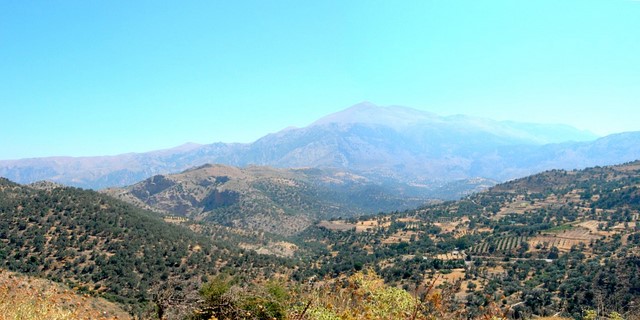
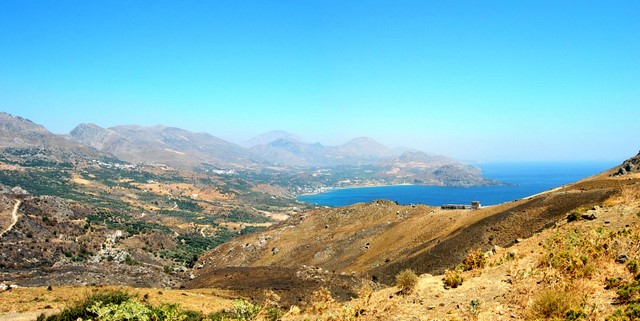
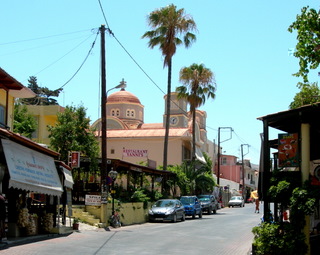
Crete was the largest island in Greece and the fifth largest in the Mediterranean. Its long mountain chain, running from east to west, formed the backbone of the island and consisted of three separate mountain groups interspersed with fertile plains and plateaus. Due to its temperate Mediterranean climate, Crete was perfect for growing grapes and olives; its wine and olive oil were known throughout the Mediterranean. During our stay in Rethymno, we rented a car for two days to explore Crete. The first day we drove inland up into the mountains and along the Amari Valley, enjoying the Cretan specialty of rabbit for lunch in the mountainous village of Spili. Later, we drove along Crete�s southern shore before returning once more to Rethymno on Crete�s northern coastline. |