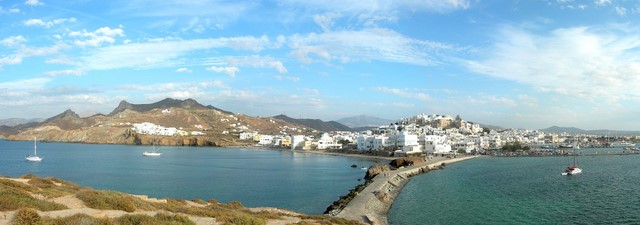
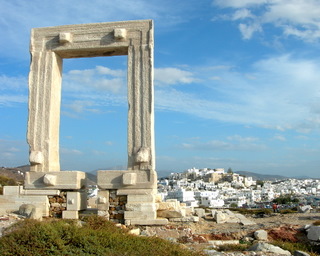
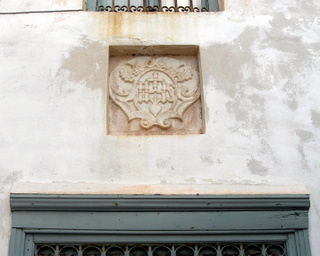
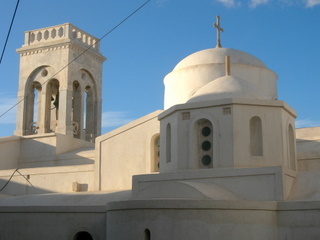
| Naxos, the largest island in the Cyclades, was known in mythology as the island of Dionysus, the god of wine, and also as the place where Theseus abandoned Ariadne, daughter of King Minos of Crete, after she helped him slay the Minotaur. In ancient Greece Naxos reached its peak in the 7th and 6th centuries BC when it dominated much of the Cyclades. Having an abundance of marble, the Naxians left their artistic imprint, particularly in regards to sculpture, at both Delphi and Delos. Today Naxos� most famous landmark was the marble Portara gateway from the Temple of Apollo started at the end of the 6th century BC on Palatia Islet but never finished due to war. Now, Palatia Islet was joined to the mainland by a causeway, and from this islet we had a spectacular view of Naxos and its hilltop old town. This old town was divided into the Venetian Kastro on top, where inside its castle walls the Catholic nobility lived, and the medieval Bourg below, where the Greeks lived. Still above each of the doors of the Venetian houses were the family�s coat of arms; today many of their descendants continue to live there. |