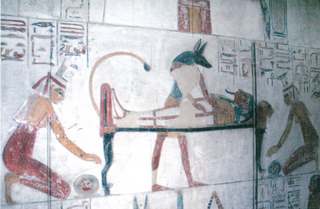
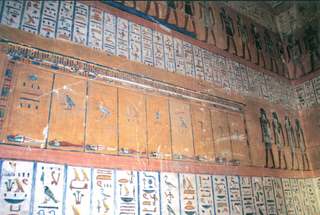
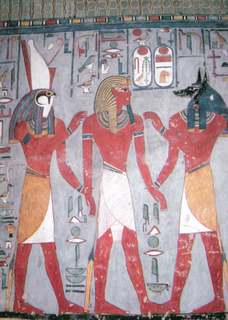
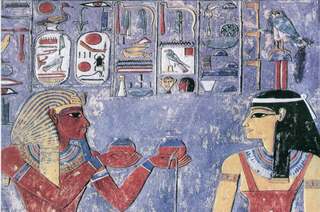
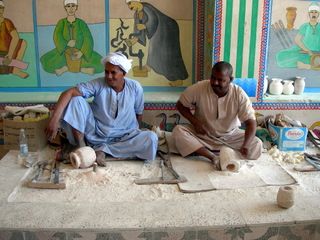
| Although the tombs were empty, many of the scenes decorating the corridors and burial chambers to assist the pharaoh in his journey through the seven gates from life to eternal afterlife were still in reasonable shape, even after 3000 years. Some of the scenes we captured were: Anubis, god of mummification, preparing the mummy for its journey through the afterworld; writings from the Book of the Dead in the tomb of Ramses IV (basically, the Book of the Dead was a �symbolic biography� intended to show the person as good, even if not, in order to be granted eternal afterlife); a painting inside the tomb of Ramses I showing Horus, god of protection, and Anubis, god of mummification, escorting him on his journey; and an offering scene of Ramses I giving essence to Maat, goddess of justice. Before returning to the boat we visited an alabaster workshop. |