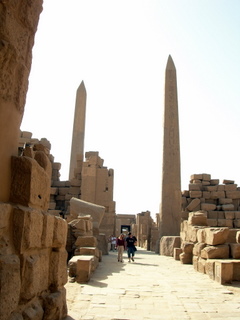
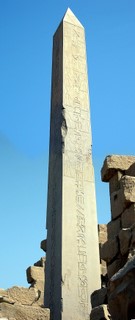
| Once outside, we viewed the obelisks. Each obelisk, just like each statue, had come from one solid piece of granite from Aswan. Originally there were 13 obelisks, but 7 had been taken to Italy. The obelisk standing in St. Peter�s Square actually came from this temple. The tops of all the obelisks were made in the shape of a pyramid and originally faced with silver and gold, mixed so as to catch the sun�s rays. To the ancient Egyptians, an obelisk signified a place of worship. What a sight it must have been to have had the sun�s first rays reflecting off the tops of all these obelisks, especially at this temple of Amun-Ra! |