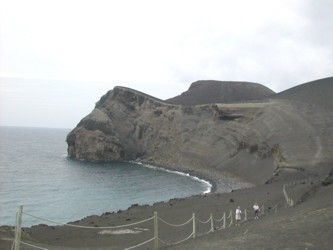
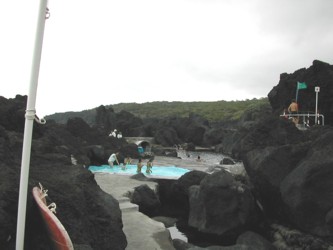
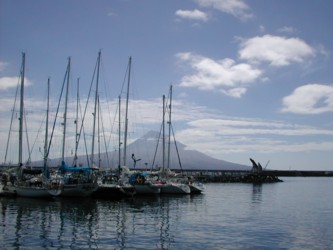
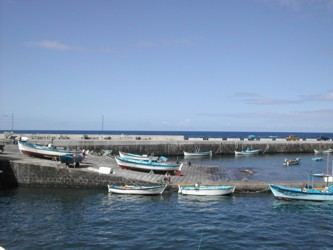
| In our travels that day, we visited the Botanical Garden at Flamengos, the large crater (caldeira) in the center of the island, Ponta dos Capelinhos on the far western tip of the island, and the natural swimming pool at Varadouro. In 1957-1958, eruptions occurred at Capelinhos creating two more square kilometers of land to Faial. A visit to the small museum nearby brought the entire eruption to life. A total surprise was the natural swimming pool we saw at Varadouro. Azoreans loved the water, and as there weren�t many natural sand beaches on the island of Faial, natural swimming pools were created around some of the interesting basalt rock formations lining parts of the island. This one was stunning with its narrow concrete walkways; it was almost like something that one might see at Disneyland. |