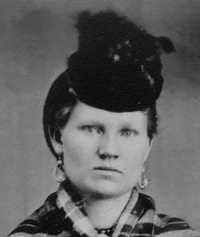
ELIZABETH DOMGAARD
| Birth | 13 July 1854 | Manti, Sanpete County, Utah | ||||||
| Christened | August 1854 | |||||||
| Baptism | ||||||||
| Marriage | 06 July 1874 | Endowment House | Andrew Andersen | |||||
| Endowment | 06 July 1874 | Endowment House | ||||||
| Sealed to Parents | 05 September 1888 | Manti | ||||||
| Death | 23 August 1939 | |||||||
| Buried |
| Children | Parents | ||||||||||
| 1. Andrew Christian Andersen | 30 May 1875 | Ephraim, Sanpete County, Utah | |||||||||
| 2. Niels Peter Arthur Andersen | 26 September 1877 | Ephraim, Sanpete County, Utah | -- Niels Domgaard | ||||||||
| 3. Ella Elizabeth Andersen | 24 August 1880 | Mayfield, Sanpete County, Utah | Elizabeth Domgaard -- | | | |||||||
| 4. Elnora Christena Andersen | 06 April 1883 | Mayfield, Sanpete County, Utah | -- Else Nielsen | ||||||||
| 5. Mary Evelyn Andersen | 05 March 1886 | Mayfield, Sanpete County, Utah | |||||||||
| 6. Ethel Elverda Andersen | 03 March 1889 | Mayfield, Sanpete County, Utah | |||||||||
| 7. Harold Domgaard Andersen | 24 April 1892 | Mayfield, Sanpete County, Utah | |||||||||
| 8. Grace Amberzeen Andersen | 09 April 1896 | Mayfield, Sanpete County, Utah | |||||||||
| 9. Zina (Dee) Andersen | 07 March 1899 | Mayfield, Sanpete County, Utah |
|
Compiled in 1993 by Rae Lou W. Olsen |
| from the writings of Grace A. Madsen, Elnora A. Christiansen and Elizabeth D. Andersen. |
Andrew Christian Andersen was born on March 9, 1853 in the picturesque village of Ulstrup, a suburb of Aalborg, Denmark, on the Isle of Jutland to Anne Christensen and Niels Peter Andersen. His sixth birthday in 1859 was a special day. On that day Anthon H, Lund, a young Mormon missionary called at this home. Andrew's mother had baked a cake for the occasion and Andrew wanted to share it. With his mother's help he served Brother Lund a piece of cake and a glass of wine. The cake was accepted but the wine was refused. Andrew was astonished at this refusal.
Brother Lund took this opportunity to talk about the "Word of Wisdom. " After attending meetings and learning more about Mormonism, Andrew's parents were baptized into the Church of Jesus Christ of Latter Day Saints. In the year 1861 the family boarded a ship and started for America, the land of promise, Andrew was about nine years of age, and clearly remembered the long nine weeks on the ocean. The wind would blow driving the ship forward and backward. At times storms rocked them so violently they felt they would drown.
While he was on the ocean Andrew got lice in his hair. His father took him up on deck to see what could be done to get rid of them. Just as they reached the deck, a big wave came and nearly washed them overboard. He always felt that his fright made his hair stand on end and the lice ran away. At least he never remembered lice after that.
The family reached New York and from there rode on a train to Omaha, Nebraska. Andrew, his brother Niels and his father walked all the way from Nebraska to Ephraim. His mother and his two sisters, Ane Kristine and Christiane, rode in the wagon. When crossing the plains they saw buffalo stampede but they were not molested by the Indians.
Even though Andrew only attended one three month session of school in Ephraim, he could read and figure with most anyone. (Only three months of school was held during the winter.) When he started to school he was taunted by the other boys because he couldn't speak the English language. His school supplies consisted of a slate and slate pencil which his father had secured from the hills. The school house was a one room log cabin with slab benches for seats. His knees were used for a desk. One day an Indian boy chased Andrew home from school and he had to take off his wooden shoes so he could run faster.
Andrew's light curly hair and blue eyes marked him distinctly as coming from Denmark. Later his hair turned dark. He was handsome as a boy and later a fine looking man. Some said he was the best looking young man in Sanpete. He was agile, quick, full of life and made friends easily. (In Denmark a circus manager was so certain he could make an acrobat out of him that he offered to buy him from his parents.)
His early life was spent on the farm helping his father and mother with the daily chores. When his mother discovered that each day a couple of eggs had been picked and the contents eaten she quickly blamed the hens. To stop such an act, she had Andrew hold the hens while she clipped the point of their beaks off. Little did she realize how she was punishing him. He was the one who had been eating the contents of the eggs. After the said operation was completed, his conscience hurt so terribly he confessed.
At the age of fifteen Andrew stood guard during the Black Hawk War. He served under Captain Larsen. One morning early he noticed the wheat waving as if someone were crawling in it. He ran home and told his father. Immediately he and his father returned to the field and found the tracks of Indians. They followed them to the foothills but were unable to find them.
In 1869 father Niels accepted the Law of Polygamy and married Mary Ann Christensen. As in many homes, this caused feelings between Andrew and his father. Andrew loved his mother dearly and couldn't stand another woman sharing his father's love. Words between them caused his father, in an angry moment, to tell him to take his blanket and leave home for there wasn't room enough in the house when he felt as he did. Andrew was seventeen years old at this time.
He left home and for three days traveled on foot without eating. When he reached Salt Lake City he went to the tithing office thinking someone would offer him food, but no one did. He finally went back to Sandy and there he came upon two working men who were eating their lunch. They noticed his pallor and shared their food with him. To Andrew they were good Samaritans. A few days later he reached Bingham and secured work.
Just when things were looking brighter and a few dollars were in Andrew's pocket, he contracted erysipelas. His eyes swelled shut and he was unable to crawl to the water barrel for a drink. He friends went to work every morning expecting to find him dead when they returned. One morning they asked him, "Just in case you die, where shall we send word and to whom?" He answered, "Just drag me out in the brush."
In his heart he knew his mother was waiting for him to come home. He also knew that home was a haven of rest. He decided to return and make things right with his father. He was in a daze when the boss paid him for the days he had worked. He walked for some time and then found his legs would carry him no further, so he lay down and went to sleep. The rays of the sun wakened him and he found he had slept for many hours. He also learned by counting his money that his boss hadn't paid him enough.
On his way home he passed a wagon going to Salt Lake City loaded with wheat to be exchanged for clothing and other goods. Riding in the wagon were two girls, Elizabeth Domgaard and Christena Madsen, who were going to the city to work. Andrew stayed as far away from the wagon as possible because of his unkept clothing and sickly pallor. Little did he realize that Elizabeth would later become his wife.
The welcome he received at home was never to be forgotten. His father and mother greeted him with open arms. Life became a joy and satisfaction because he worked by the side of his father bringing logs from the mountains to make furniture for both families. On these trips, to pass the time away, father Niels would recite poems in Danish, which told about the beauty of their native land. A younger brother, Erastus often accompanied them.
The logs brought from the canyon were from thirty to forty feet long. On one of these trips Andrew accidently cut his foot just above the toes with an ax. It looked for a while as if he would bleed to death. He used the only remedy he had at that time to stop the bleeding. He placed a chew of tobacco in the hole and tied it up with a red handkerchief. After a day or so he had to seek medical help. The doctor cut the proud flesh out with a pocket knife, poured some alcohol in the cut and told him it would get well. The scar was large and plainly seen all of his life.
At the age of seventeen Andrew worked in the deep snow for the railroad at Promontory Point. When he was returning home in the company of George Thompson (later his brother-in-law) they became very hungry. They were too proud to beg for food, but when they reached a small farm near Lehi, they saw a lady put a dripper of biscuits in the oven of her stove that stood in the open a short distance from her shack. When the biscuits were done Andrew ran up the incline, opened the oven and poured the biscuits into his handkerchief and made his get-away. Andrew promised himself that when he went that way again he would stop and pay the lady. However, when he did, the place was deserted.
Elizabeth Domgaard was born in Manti, Utah on July 13, 1854. She was the first girl born to Danish parents in Sanpete County. Her parents, Else Kirstine Nielsen and Niels Peter Domgaard, had arrived in Manti from Denmark the preceding December. Her father was a blacksmith and she was born in the shop. The partition between the anvil and her mother's bed was the fireplace and bellows. The shop had a dirt roof. When she was a couple of days old it rained hard and her father had to hold a covering up to keep the new mother and baby from getting too wet. In time a house was built to live in.
Elizabeth's first recollection of the shop was going there to get her father to come to supper. At times she went with him to work. As she sat by the fireplace and watched the sparks go up the chimney she thought they made the stars.
Elizabeth was baptized in the creek on Manti's main street in 1862. by Bishop Moffit and was confirmed the next day, a Sunday, by Brother Lowry. When telling about her baptism she said, "I was filled with great faith concerning the gospel."
Elizabeth's first school teacher was Mary Lowry. The school children got the itch and school was canceled. Next she went to Mary Bishop's school and helped tend the teacher's two children while she had class. That lasted six weeks and they studied the best they could. She went to John Reid's school for three months and John Bench's for two months. That was the total of Elizabeth's school days.
Elizabeth saw the incident that started the Black Hawk War. John Lowry pulled an Indian off his horse. The next day the Indians killed Peter Lowry, and also killed and wounded others. Many cattle were stolen. Elizabeth's father lost ten head. They lived in fear of the indians. Whenever trouble of any kind took place in Manti it was customary to beat the drums. They called the people to the center of town. Elizabeth said that as children they were very frightened and would go upstairs to hide. There was much crying, but when a big fellow said, "Don't cry, I'11 chop off their heads if they come," the others felt assured no harm would come to them.
Elizabeth had several close calls when she was growing up. Following she tells about two of them in her own words:
"When I was eight years old, I fell in the Big Creek. I crossed it to pick berries. The water was the highest in June. I went half a block. In the turn of the creek, the water must have pushed me to the edge and I got hold of some willows. My sister Elsie, five years old, and Rency Andersen, seven years old, got to the edge and helped me out. Mother couldn't see how I ever got out.
"Another time, in the winter, I got in a water hold to my waist. There was a fence across the creek, and I got hold of it but couldn't get my feet on the bottom, so I hung there for some time. I called and cried for someone. No one heard me. Then Anna Marker came after a bucket of water and got me out. I was about to give up. It was New Year's night and it was dark and cold."
Elizabeth helped with many jobs at home. She dipped candles in a keg of tallow. The candles provided the only light they had. She made soap using lime and saleratus. She had to card and spin yam, then dye the yarn different colors and weave it into cloth for their clothing. She cherished a pillow for which she had spun the yam when she was nine years old. She scrubbed the wooden floors using saleratus and wheat straw instead of scrubbing brushes.
Elizabeth had no living brothers, so she helped with many farm chores. (Her only brother died soon after the famiiy left Denmark and was buried in Liverpool. England.) She raked and bound the grain that had been cut with a cradle. She spent many days weeding the black seed out of the wheat. She helped drive grasshoppers into places where they could be killed in order to save the wheat. She saw times when grasshoppers were su thick that when they started to fly the sun couldn't be seen (in the middle of the day). She helped make nails, picked up potatoes, made molasses, milked cows and made butter to send to Salt Lake City.
Elizabeth helped wash the sheep before they were sheared. Her father and other men had made a platform and four flumes. Water from the Warm Springs ran on the sheep to clean them. The children helping quite enjoyed this, even though they got as wet as the sheep. Their woolen dresses kept them from feeling too cold.
Elizabeth was vaccinated fur smallpox in a very unusual way. One lady had been vaccinated by a doctor. She scratched the arms of Elizabeth and two other girls, took some of the infection from her arm and put it on the arm of each girl. After the usual length of time they were immunized.
When Elizabeth was about thirteen she was in the field helping her father water. The horse was staked down at the bottom of the land. Elizabeth pulled the stake, planning to take the horse to her father. When the horse found out he was loose he headed for home. She tried to hold on to the rope, but couldn't. The rope some how wound around her leg (she wore shoes but no stockings) and dragged her up the length of ten acres and across for ten acres before she got loose. Her father thought she was killed. Although she had severe rope burns on one leg, once again she had survived an accident.
When Elizabeth was sixteen years old she was invited to a Sunday night party at a friends house. She looked lovely in her printed calico dress with mutton leg sleeves, a full skirt and infant waist. The Andersens from Ephraim, and their two sons, Andrew and Niels, were visiting at this home. The young people played the game of "Smut." Elizabeth was loser and had to have black soot from the stove put on her nose as a penalty. Niels was very anxious to do the deed, but Andrew protected her and wouldn't let him. This pleased Elizabeth. She thought he was very nice and good looking. They met again at conference and also once when Elizabeth was hunting cattle. She was still sixteen when Andrew asked to take her home for the first time. Her father and mother approved of him. When Andrew returned home that night, he made this remark, "Elizabeth is going to be my wife someday."
In 1870 Elizabeth went to Salt Lake to work. She lived with and worked for President Wilford Woodruff's family for six months. She often mentioned how kind they were to her. One day President Woodruff opened a box and showed Elizabeth a red handkerchief the Prophet Joseph Smith had used in Nauvoo when he administered to the sick. When Elizabeth saw it she felt as if she were looking at something sacred and holy. All her life she treasured a picture President Woodruff gave to her of himself.
Elizabeth returned home for a few months, then went to Salt Lake with the Kempton family to help them. She came home again by ox team with friends. It was a slow ride. When they reached Salt Creek Canyon, southeast of Nephi, it started to rain, thunder and lightening. It really poured. They had to sit up all night as only one wagon was covered. This journey to Manti took five days. in October of 1871 she again went to the city to work in the Salt Lake Laundry. In January 1872, she came home with Bishop Moffit and three other men. It was cold and snowing. The men had goods from the stores, so they had to keep going. When they got a chance they camped in the canyon. The snow was so deep on the divide (Nephi) that they had to put two span of horses on the wagon, go a little way and then change again. It took them all day to get to Fountain Green. They were about frozen when they made it to a house and had supper. The next day they arrived in Manti. She stayed home that summer and spun for her folks.
When Elizabeth was eighteen she and Andrew started to go steady. In two years they made plans for their marriage. When Andrew asked Elizabeth's father for her hand, he said, "yesl I've been expecting it for a long time. Elizabeth worked on her trousseau. Everything was her own work. She had six quilts, five pairs of pillow cases, sheets, and a straw tick for the bed she had purchased. Elizabeth's wedding dress was of white mull (dotted). It had a full skirt, full sleeves and a beautiful lace collar.
In the summer of 1874 Elizabeth and Andrew traveled by horse and wagon to Salt Lake City to be married in the Endowment House. Christiane, Andrew's sister and George Thompson accompanied them. They were also going to be married. The journey took four days, but every hour was filled with fun, laughter and happiness. On July 6, 1874 President Wilford Woodruff performed the ceremony. Andrew said he married the loveliest girl in the world.
When they returned to Ephraim, Andrew filed on 160 acres of land and built a two room log house on it. On May 30, 1875 their first child, Andrew Christian was born. Elizabeth's mother walked all the way from Manti to see her new grandchild and spent a few days. Elizabeth was happy to have her there. On the 26th of September 1877, their second son, Niels Peter Arthur was born.
They lived in Ephraim until December of 1877 when they went to Mayfield, Utah to visit for the holidays. After a few days Elizabeth was ready to return to Ephraim. However Andrew, after talking with the men decided Mayfield would be a good place to live. Elizabeth put up some sound arguments but to no avail. Because of a storm she didn't even get with when Andrew went back to Ephraim to get their belongings. (See story at end.)
Andrew bought a lot and by May had built a one room log house on it. (Present address is 180 North Ist West.) To finish the house on the inside, willows were used for lath and mud was used for plaster. The mud was white-washed with lime to make the room light and clean. A large fireplace was built in the north end. Although the cabin was just one room in the beginning, it became a home by Elizabeth's artistic furnishing. She had pink and blue cambric shams on the red four-poster bed which was strung with rope. The rope held up a straw tick on which a feather bed was placed with blankets or sheets and quilts on top. She covered her pillows with cases that showed her crochet work. At the windows she hung handmade curtains. Handmade rugs were scatted on the floor. In this new house she had a trundle bed for her two children, five chairs. a rocking chair, a table and a cupboard. She scrubbed the floor with saleratus for two years. By then she had enough rags to have a carpet woven. Every fall fresh straw was placed under the carpet. The carpet was retacked close to the wall against the baseboards. In 1879 a lean-to was added to the cabin.
Andrew then bought five acres of land. Soon after he purchased sixteen acres from Chris Thompson and pasture land from Charles Whitlock. When the ditch that irrigated the land was dug, Andrew's land happened to he on the end of the line. so he had to put in more days of ditch digging than any one else. Later he bought thirty more acres of some of the best land in Mayfield.
As soon as it was possible to break the ground in the spring, Andrew prepared it for a garden. Elizabeth worked by the side of her husband in planting their garden, hushes and trees. Not many years passed until they had currant and gooseberry hushes. raspberry plants, a large strawberry patch and an orchard. The orchard contained five kinds of plums, five varieties of apples, peach and pear trees. Fruit was made into jams and preserves and the vegetables were stored in the cellar for winter use.
Even though pioneering was difficult many things were enjoyed. They had lots of good times with friends at parties and dances. On June 22, 1878 Andrew, Elizabeth and their two boys joined the different towns in Sanpete for a celebration at Funk's Lake. The people enjoyed riding on a boat. Andrew and his oldest son had their turn. When it was time for Elizabeth and baby Arthur to have their ride Andrew asked her not to go. However she got on the boat. A still small voice seemed to say, "Get off the Boat." She stepped out of the boat just before it steamed away. A storm arose causing the heat to capsize and many lives were lost. In raising her children, Elizabeth admonished them to always take heed of that "still small voice."
In the year of 1879 a diphtheria epidemic hit Mayfield. Both Andrew Jr and Arthur contracted the disease. Andrew had a very severe form and died February 9, 1880. The disease was so treacherous no one dared to come in the house, so Elizabeth and Andrew had to prepare their five your old for burial. A few men and women come at night and held a short service outside. It was cold and snow was on the ground as the little casket was placed on a wagon and taken to the cemetery. Many children lost their lives at this time.
Elizabeth said giving up her home in Ephraim was hard, but the death of her fine son was about all she could take. She added, "One must go on and live whether you want to or not, and besides, 1 had to think of Arthur and my husband who also were in sorrow. And then, too, I was expecting a new baby in August. "
But Arthur didn't let her forget about Andrew. He was sleeping when they came at night and carried the casket away. Arthur had called the casket a box and knew that Andrew was asleep in it. All during the summer he hunted for Andrew in boxes he would find, and was continually asking for him.
Andrew gave Elizabeth her first sewing machine in May of 1~80 on the anniversary or her deceased son Andrew's birthday. It was used to fashion many clothes and other articles. The machine was given to her daughter Nora.
On August 24, 1880 their first baby girl. Ella Elizabeth, was born. She helped to alleviate some of the sorrow experienced in the loss of Andrew. Elnora Christina arrived on April 6. 1883. Three years later, on March 5, 1886 Mary Evelyn was born.
In the year 1883 a strange man came to Elizabeth's door and asked for something to eat. Dinner time was past and all the bread left was two biscuits. She invited him in and set the table with a clean cloth. The food consisted of the two biscuits, green onions, and the little food that was left from dinner. The man bowed his head as if he were blessing the food. He ate the lunch and as he stood to leave he said, "Thank you. I promise that your table will be spread with plenty of food to supply your family. As soon as he left, Elizabeth and others who were there went outside to see where he had gone, but he had disappeared. They felt very puzzled about it. In Elizabeth's patriarchal blessing she had been promised the same thing. She certainly was blessed that way. Many times she wondered if there would be enough food to fill he; hungry children, but she was always able to supply their basic needs.
Autumn of 1886 came with all of the crops ready to be harvested. Andrew, having shares in the threshing machine, had helped to get it overhauled and ready for use. The threshing machine was wooden and powered by horse power. Six teams of horses traveled in a circle around a power unit. The bundles of grain were carried on a belt of slats up a shoot, with the chaff and straw falling off. The grain, after being separated, came out on the side of the machine.
Threshing time was an interesting time for the children. There were six regular workers with the machine. The helpers, numbering eight or more, were hired and fed by the man for whom the threshing was being done.
This particular fall brought a tragedy to the Andersen home. On this day, October 3, 1886, they were threshing for Niels Andersen, who lived on the north side of the creek. Andrew, as usual, was one of the two men who stood on a platform on the front of the separator. After the first man cut the string from the bundle, Andrew would feed the bundle into the machine. Without stopping the machine it was possible to do the greasing. Andrew was greasing when his right shirt sleeve got caught in the bundle-cogs and the muscles of his right arm were torn off from the shoulder to the wrist. His arm was broken below the elbow. Three mornings in succession, Elizabeth had warned Andrew to be careful while working on the machine. The last morning, after starting for work, he came back and asked her if she had been dreaming. She answered, "Yes, and I want you to be careful."
At ten o'clock (Elizabeth was mixing bread) Andrew was brought home with his arm practically torn off. The men had wrapped it in burlap sacks and when he reached home the sacks were soaked through and blood was running out. When Elizabeth heard the story, it was just as she had dreamed.
Dr. Olston from Manti came and gave first aid, and then Elizabeth and Andrew stayed in Manti for six weeks so he could have the best of care. Elizabeth's sister Sophia came to Mayfield to care for the three older children. Evelyn, just six months old accompanied her parents to Manti.
A few days after the accident, Dr. Olston, without saying a word, brought forth his saw and knives and laid them on the table beside the bed. Elizabeth asked what he planned to do. He answered in his rough manner, "He will die of blood poisoning unless I amputate." She begged the doctor to give her just a few more days before he cut it off. They prayed to the Lord almost continually for two days and exercised their faith to the utmost. Then the doctor dressed his arm and said, "Why you aren't dead I can't understand. " But they understood. They were both very spiritually minded and firm believers in prayer.
For thirteen months Elizabeth dressed Andrew's arm, cared for the children, and with the help of nine year old Arthur, did the farm fork. No doubt she had help from friends and relatives. For five years Andrew was unable to do hard manual labor. Little cash was coming in so it was necessary to sell their cattle, sheep and grain in order to live and pay the doctor.
The break never knitted properly. Many times it slipped out and had to be bandaged to hold it in place. Only his thumb and first finger were able to move. His arm looked as if it were covered with a fine, whitewash silk cloth. He ate left handed all his life.
Andrew was a happy man and could always see the humorous side of life. He was capable of meeting any kind of situation. He had received the traits of kindness, slowness to anger and quickness to forgive from his mother. From his father he received the qualities of honesty, charity and a willingness at all times to perform his duties.
As soon as Andrew came to Mayfield he was asked to be a ward teacher and held that position for many years. He had great faith in prayer and many times was called into homes to administer to the sick. He had the gift of healing and always depended upon the Lord for direction. One different experience Andrew had was administering to a woman who seemed to be possessed with evil spirits. Before the night was over, seven men had to be called in to help hold her in bed. Faith through prayer bought relief to her. The evil influence seemed to leave her body and in a short time she was well and able to care for her family.
On September 22, 1882 Andrew became a citizen of the United States of America. In 1896 his Citizen Certificate was registered in Sanpete County. In 1882 Utah was a territory and in 1896 it became a state.
In 1888 Andrew built a four room adobe house. The log house was pulled to the north and used as a granary. (Later it was sold to be used as a home.) Ethel Elverda was the first child to be born in the new home. She arrived April 24, 1889. In the next ten years three more children were born - Harold Domgaard on April 24, 1892, Grace Amberzeen on April 9, 1896 and Zina on March 7, 1899. Else Christensen was midwife for all the children born in Mayfield, with the exception that Elizabeth Carlsen attended to the birth of Grace.
It was Elizabeth who managed the household affairs, and it was her desire that her children should have an education. This wasn't easy because of the many reverses they faced. As each child became old enough, he or she felt it necessary to obtain a job.
To put over a point to her children, Elizabeth would quote lines from different poets. Also she quoted from the Bible to impress them of their duties to God and mankind. She asked her children never to call any one a fool or a liar.
Babies, work and opportunities of serving in the church filled Elizabeth's life. She did what she could to supplement the income. The butter she made to sell had an excellent flavor. She sold plums, gooseberries, currents and cucumbers. The older girls said that before they picked the gooseberries they would pour water over the bushes to soften the stickers. They'd pick a tub full of berries at a time and sell them for five cents a quart.
Four Nielson brothers lived in Andrew and Elizabeth's home for six years. Each of them paid her two dollars and fifty cents a week for lodging and meals. She washed their clothes and treated them as if they were her sons. They cut ties for the railroad.
Rearing a family of nine would keep any mother busy, but Elizabeth found time to cook for many of the weddings in Mayfield and did a good deal of fancy sewing for the more well to do. She carded wool and knit stockings for all of her family.
Andrew was never too tired to play with his children. When they were small he played on the floor or lawn with them. When they were older they played Pomp, Pomp Pull Away and Steal the Base. He enjoyed many water fights with them. In the winter they played Hide the Thimble, Smutl Muggins. Steal the Pile, Checkers and Karam. In all of the games he created interest by trying so hard to beat the children, but his children almost always won.
Family prayer was held every morning before breakfast. Andrew made sure all of his girls had their hair combed before kneeling before the Lord.
During the month of November in 18YO, Andrew in company with his brother Erastus and five other men drove 500 three and four year old steers out to the East Desert for Cap Whitlock, It was bitter cold. The men started from Chester on horses, but it was so cold they had to walk to keep from freezing to death. The men took turns herding at night. This meant walking and riding both night and day. While in Salina Canyon it snowed and blew all day. That night the men stopped to get some sleep. They built four fires to corral the steers. A spark ignited a dead tree and it toppled over. The noise caused the steers to stampede. Andrew was burned on his arm during the stampede by being pushed into one of the fires, but he gave himself first aid and continued on. The trip to San Rafael and back took about a month. The food was scarce and very poor. Each man received one hundred dollars for the trip.
The year of 1892-93 found Andrew herding sheep for Cap Whitlock, In the summer the herd was feeding up Twelve Mile Canyon by the Forks. He had been smoking and decided this would be a good time to quit the filthy habit. This was hard for him to do, but Elizabeth and the children were so happy they often took dinner up the canyon to him. They also took candy so he could have some when he craved a smoke. When winter came he went with the sheep on the desert. Harold was a baby and had a very sick spell while Andrew was away.
In the fall Elizabeth drew out enough money to pay taxes and decided the rest of Andrew's wages for the year would be used for something special. When the year ended, Cap Whitlock went bankrupt. refused to pay his creditors and left the area. All Andrew received for his vears work was an old cow and a second hand mower.
During the vears of 1906-1907, Andrew freighted to the mining camps in Nevada hauling eggs, flour and hone. He would take supplies to camps for fifteen dollars a load. Then he'd carry lead and silver ore from Hamilton to Eureka and from Cherry Creek to try. He received forty dollars a ton for the ore. He also worked on the railroad in Salina and Price Canyons. acting as "straw boss." He made a trip or two to Nevada to catch wild horses, bring them home and break them to use.
Whenever Andrew met a friend or when Stake Officers came to visit the church meetings he would ask them home to dinner. Very often Elizabeth was unaware of this but she always made the guests feel welcome and set a fine table. She always served her food on a clean table cloth and used bright shiny dishes. She claimed that food served that way was more appetizing and it had the appearance of a more elaborate meal. For many years her knives and forks were made of steel with wooden handles. To polish them ashes were used until Bon-Am-I came on the market. Later in life she had silver.
If there was one thing Andrew prided himself in, it was the idea that if you had a nice hat and nice shoes you were well dressed. One Sunday, when Sacrament meeting was held at 2:00 P.M. Elizabeth put on her best dress andwent to church. Andrew was not home when she left. When meeting had been going about twenty minutes, Andrew came into the meeting and sat down by her. Immediately she could smell a peculiar odor. Her eyes wandered to his shoes and she could practically see her face in them they were polished so brightly. Her face turned scarlet as she realized that he had shined his shoes with stove polish instead of the soot from the stove lid. (Many times soot was used when it was impossible to get shoe polish.)
Andrew was a farmer all his life. Besides his own farm he had Chris Larsen's farm on shares. He owned his own binder and cut other men's grain. But as has been mentioned he did many other things. The Sanpete County Commission appointed him road supervisor and he held that office for fourteen years. Under his guidance hundreds of loads of willows, brush, dirt and chips were hauled onto the road north of Mayfield, through the swamp to make it passable. He supervised the building of the first bridges in Mayfield. He was respected by all men who worked under him and was considered a fine organizer. In his work he always had fine horses.
In Andrew's leisure time he would make shoe and clothes brushes out of horsehair and straw hats out of newly threshed straw. Both hair and straw were soaked in water for several hours before he was able to make the articles. He also re-soled his children's shoes.
Between the years 1914-18 Andrew transported the mail from the train at the Gunnison depot to Mayfield. He traveled with two horses on a buggy. He would travel twelve miles every day. Menand women, whose destination was Mayfield. were taken as passengers by paying a fee of fifty cents.
Andrew took his calling to work in the church seriously. For six years he was president of the Elders' Quorum. Through his leadership the Quorum was very active. One of the projects was to divide the Mayfield cemetery into family plots. He was Superintendent of the Sunday School for nine years. He was loved by all the children and took a special interest in each one. He did some work in the temple for members of his family and relatives. He bore his testimony to the truthfulness of the gospel many times, and named and blessed many babies. He was set apart as a High Priest on November 28, 1908.
Time passed by and on July 6, 1924 fifty years of happy married life were celebrated by Andrew and Elizabeth. On that day they had eight living children, thirty-five grandchildren and three great grandchildren. All were in attendance. Many tributes were paid to them along with beautiful gifts.
Andrew never quit working. In the last years of his life he was water master. In the spring when the water was high at flood stage, Elizabeth would accompany him up to the mouth of the canyon where the water had to be divided. Before going near the divider, she tied a rope around his waist and then around a tree. If he slipped into the water she could pull him out. All their life they pulled together in all problems.
In November of 1927 while repairing a fence, Andrew dropped a pole on his toe. It failed to heal as it should. Arthur took him to the Salina Hospital for a thorough examination. The doctor found he had diabetes. He stayed in the hospital for a month, during which time he had his toe amputated. Soon after gangrene started to go up his leg. The doctor suggested he be taken to Salt Lake City. He was brought home for a night and enjoyed sleeping in his own bed. Early the next morning, in bitter cold and with roads slick as glass, Wilford and Evelyn took Andrew and Elizabeth to the L.D.S. Hospital. Then came days of anxiety and days of prayers, only to learn that his leg would have to be amputated above the knee. He had suffered intense pain and begged to have his leg taken off. With the consent of Elizabeth and their children, the operation took place on January 7, 1928. He was given local anesthetic and then gas while the doctor sawed the bone in two. The doctor and nurses said he was a wonderful patient, never complaining. Elizabeth had a room across from the hospital but stayed with Andrew almost continually until he was released in March just before his birthday on the ninth. On their return to Mayfield they stayed with their daughter Nora and her husband Orson for a time.
For the next nine months he made good improvement, but only Elizabeth knew the hours of heartache he passed through. She gave him all the care and love possible. He was so appreciative and never complained. In time he learned to walk with crutches. He even managed to mount his horse, Old Bab, by climbing on a stand by the west fence and throwing his good leg over the horse. Elizabeth would hold the reins so Bab wouldn't move until he was secure in the saddle. Then he would take a ride around the town.
Andrew was planning to get an artificial leg when gangrene started in his other foot. He tried so hard to ward it off, but on January 10, 1929, he passed away quietly in his sleep. Many prayers had been offered in his behalf. Never once did his faith waiver. He willingly abided the will of the Lord.
At his service many wonderful tributes were paid for his faithfulness to the gospel, his dependability and his honesty. He had requested the song, "I Know That My Redeemer Lives," be sung. It is a summation of his testimony. Though he didn't have riches of monetary value, he was rich in the gospel, and rich in his family and the love that bound them together.
The weather registered below zero on January 13, the day he was laid to rest, yet the many floral offerings and the large crowd in attendance at his funeral spoke of the love and respect that his family and friends had for him.
The last ten years of Elizabeth's life were spent alone. She continued to take care of her responsibilities. She knitted beautiful lace for pillow cases and gave it to her daughters, daughters-in-law, granddaughters and great granddaughters. To each of them it was a symbol of love to remember.
At the birth of her youngest daughter Zina, she had a high fever which caused her to have a "milk Leg. " She suffered off and on the rest of her life with pain, especially when she would get an open sore on the leg. Two or three times she was seriously ill with pneumonia.
Throughout her life Elizabeth was active in the Relief Society. She started out as a visiting teacher in Manti at age sixteen. In the record book of the Mayfield Relief Society in the 1880 and 1890's her name is mentioned in almost every meeting as one who participated with a prayer, lecture or bearing her testimony. Just a sample:
March 6, 1884 "Lizzie Andersen arose, felt well, felt to go ahead with the work, gave a good report of the Second Ward.
May 3, 1886 "Lizzie Andersen made a few remarks, bore a humble and faithful testimony to the truth of the gospel. "
Jan. 2, 1890 "Lizzie Andersen stated her determination to do what is right. "
Dec. 17, 1892 Lizzie Andersen made a donation to the World Fair Club.
June 6, 1895 "Lizzie Andersen gave a lecture on the Doctrine and Covenants.
Dec. 3, 1896 Opening Prayer by Lizzie Andersen.Nov. 4, 1897 "Juvenile (Instructor) reading by Lizzie Andersen titled, 'How to Gain a Testimony.'"
Elizabeth was Head Teacher for many years and had additional responsibilities. When the Relief Society gathered "Sunday Eggs" for funds for their hall, the women from her ward would bring them to her house. By Monday night three buckets or so of eggs would be gathered. When the Relief Society Hall was finished in 1885 it served as chapel, recreation hall, theater and gathering place for many other events until the mid-nineteen twenties when church functions and other entertainment started to be held in the newly built public school.
Elizabeth drove a team of horses on a wagon to help gather wheat to be stored in the Relief Society granary. This wheat was given to people in need. Also, when planting time came, farmers could borrow wheat for planting, then in the fall pay it back with an additional ten percent.
When Elizabeth had completed sixty years of visiting teaching, the Relief Society sisters honored her with a party and a gift - a beautiful cut-glass basket filled with flowers. She was a visiting teacher until she reached the age of eighty years. After that she served on the Sunshine Committee, visiting women who were homebound or ill.
On Sunday, August 20, 1939 Elizabeth attended Sunday School and had planned to go to Sacrament meeting at night, but in the afternoon she had a stroke. She didn't respond to the doctor's treatment and on Wednesday morning August 23, at the age of eighty five she passed away. She was buried August 26, 1939 in the Mayfield cemetery by the side of her husband.
Services were held with the following program given:
"Come, Come Ye Saints" and "0, My Father" were sung by the choir. Erastus Andersen gave the invocation and Edward Bunderson the benediction. The speakers were Clyde Whitlock, Hyrum Olsen and Bishop Lester Hansen. A piano selection was rendered by Erma Christiansen. Solos were sung by Thera Olson and Barbara Madsen. Reed Christiansen dedicated the grave.
Barbara sang, "The End of a Perfect Day. " Truly it was the end of a perfect day and the end of a perfect life as far as Elizabeth could live it here on earth.
Andrew and Elizabeth gave three precious things to their children which can never be duplicated with worldly riches: encouragement, love and a belief in a living God. "
09/16/99