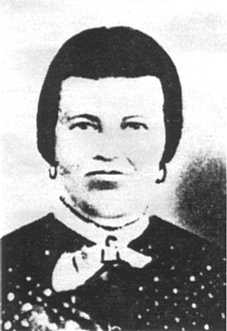
ANNE CHRISTENSEN
| Birth | 05 May 1819 | Hylleborg, Alborg, Denmark | ||||||
| Christened | ||||||||
| Baptism | 1859 | |||||||
| Marriage | 1849 | Niels Peter Andersen | ||||||
| Endowment | ||||||||
| Sealed to Parents | ||||||||
| Death | 23 May 1884 | Ephraim, Sanpete Co., Utah | ||||||
| Buried |
| Children | (Sutrup, Alborg, Denmark) | Parents | ||||||
| 1. Niels Christian | 01 May 1850 | (Sutrup, Alborg, Denmark) | -- Christen Pedersen | |||||
| 2. Ane Kjirstine | 09 September 1851 | (Sutrup, Alborg, Denmark) | Anne Christensen-- | | | ||||
| 3. Andrew Christian | 09 March 1853 | (Sutrup, Alborg, Denmark) | -- Mette Kjerstine Christensen | |||||
| 4. Christiane | 29 May 1854 | (Sutrup, Alborg, Denmark) | ||||||
| 5. Erastus Snow | 06 February 1863 |
(Compiled in 1993 by Rae Lou W. Olsen from the writings of Elnora A. Christiansen and Mrs. Earl O. (Vee) Andersen.)
Niels Peter (Kjaersgaard) Andersen was born October 17, 1819 in the little village of Sutrup, Aalberg, Denmark to Ane Nielsen and Andrew Nielsen Kjaersgaard. The quiet little hamlet had been the dwelling place of Andersens for generations. Niels Peter was raised in a well ordered home strong in the Methodist faith.
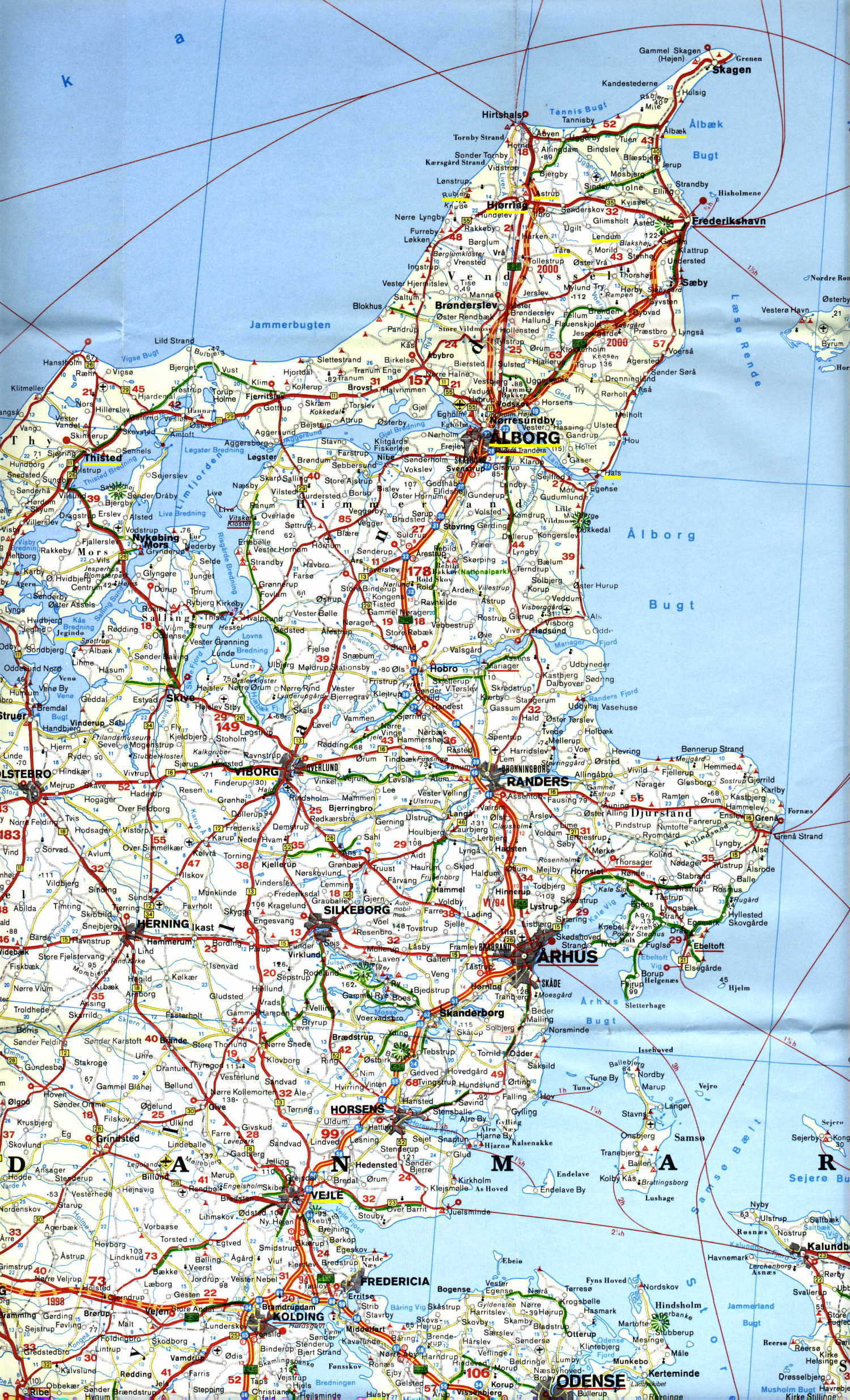
Anne Christensen was born in the nearby village of Hylleborg on May 5, 1819. Her parents were Mette Kjerstine Christensen and Christen Pedersen.
Anne and Niels Peter were married by a Baptist minister in 1849 in her parents home. From all known records they were a happy pair. He endearingly called her "Little Anne. " She adored him and began devoting her life to making him a meticulously clean, hospitable, loving home. She presented him with a son, Niels Christian, born May 1, 1850. (Other records say April 30, 1850) A tiny daughter, Ane Kjirstine, (Anna Christine) came to bless their home on September 9, 1851. Andrew Christian was born March 9, 1853 and daughter Christiane arrived May 29, 1854. All were born in their home in Sutrup, Aalborg, Denmark on the Isle of Jutland.
Niels Peter was a land manager in Denmark. Land, being very expensive and hard to obtain, was mostly owned by the very rich. Very few of the middle class ever owned property. Niels Peter, through his likable personality and his ability, was soon manager of a large "gaard. " Later it was understood that he became owner of that gaard.
As the family was celebrating Andrew's sixth birthday on March 9, 1859 Antone Lund, a Mormon missionary visited with them. They shared the birthday cake with him and offered him some wine. The wine was refused and this gave the missionary an opening to explain the gospel to the family. Erastus R. Snow, another missionary also taught them. Niels Peter was immediately fascinated and his interest grew as he attended the church meetings. Anne, after much study and prayer, accepted the gospel with her husband. They were baptized and became members of the Church of Jesus Christ of Latter Day Saints in 1859.
It was through the advice of Elder Snow that they prepared to leave their home and go to Zion. He counseled them to sell all their possessions, and after two years of planning and saving, Niels Peter, Anne and their four children were among the emigrants to leave Denmark for Salt Lake Valley. Niels Peter's brother Christian and his family were also with this group.
In 1861 the family spent sixty-three eventful days on the ocean. Because of Niels Peter's generosity to the less fortunate Saints, his savings were not enough to purchase first class passage. In those days ocean travel was considered rather hazardous. The trip itself was a liberal education. The sailors cursed so loud and so freely that the women had to hide their faces in their hands with embarrassment, but there were pleasant experiences that they remembered all of their lives.
Anne became very ill while crossing the ocean. Son Andrew told how father Niels Peter came up on the ship's deck and prayed for her. He asked that Heavenly Father would spare her life, but if she had to go, let her live till they reached land. He did not want his wife buried at sea. Anne lived. Finally they reached Ellis Island.
Upon reaching America, Niels Peter discarded the Danish name of Kjaersgaard and took the name of Andersen. He did this to avoid being drafted into the Danish army since that country had the right to draft all able bodied men regardless of where they lived as long as they still retained Danish citizenry.
Niels Peter's brother Christian with his family became disgruntled during the journey at the attitude taken by a number of people to whom he had loaned money. By the time the ship had docked he severed all connections with the converts, went to St. Louis, Missouri and retained the name of Kjaersgaard.
From New York Niels Peter and his family traveled by train, in cattle cars, to Omaha, Nebraska. The family joined Captain William Wooley's company and made preparations to cross the plains. Niels Peter bought two cows, two horses, a wagon, clothing, food and a step stove for cooking. They traveled lightly and planned to reach Salt Lake Valley before winter set in.
Niels Peter and his two sons, Andrew and Niels Christian, walked all the way across the plains. Anne, not being very well, rode in the wagon with her daughters Ane Kjirstine and Christiane. When they needed butter, Anne tied a bottle of cream under the wagon. The sway of the wagon churned the cream into butter. While crossing the plains they saw a buffalo stampede, but they were not bothered by the Indians.
Upon their arrival in Salt Lake, they decided to go directly to Ephraim, Utah where a number of other Danish Saints had settled.
Niels Peter had been a very generous man and had loaned some of his savings to his less fortunate neighbors. Some of the people who had borrowed from him only used the church as an excuse to come to America. After reaching Salt Lake, they "lost their religion" and refused to pay him back. He had been counting on this to help him get established, and all he got back was a very small part of what he had loaned to the saints who were sincere in their faith.
With his savings depleted he had to make other plans. He was able to procure land by exchanging work with the settlers, and since he was an experienced manager of large tracts of land in Denmark, he soon had plenty of employment. He was a valuable addition to the new settlers.
In the spring of 1862, as soon as he had enough land for a farm, he started work on a home for his "Little Anne" and their children. It was constructed of logs hauled from the nearby mountains. It contained three large rooms, each one sixteen feet by sixteen feet. A well constructed cellar was under the house and a granary was built nearby.
The home faced west. The room on the north was used as a spare bedroom and also as a storeroom, holding a table, stove, clothes box and a flour box, The center room was the kitchen, and a huge fireplace occupied one side of the room. A big rock oven was built just outside the kitchen where Anne baked bread. Coals from the fireplace were pulled into the oven and left until the right temperature had been reached to bake the bread. The coals were then pushed back into the fireplace, and the opening between the fireplace and the oven was closed so the bread could bake. The bowl used to mix the bread was made of wood and measured two feet by four feet. This was kept to snowy whiteness. After the bread was baked, it was used as the bread box. Beer yeast was used as a leavening agent, and one half pint was donated by Peter Parsons each baking time. Twelve leaves of bread were baked at one time.
Anne and Niels Peter's last child arrived on February 6, 1863, a year after they had started on their new home. He was named Erastus Snow as a living reminder of the missionary who had brought them to Zion.
"Little Anne" went about establishing the same type of home they had in Denmark, with the same high standards of cleanliness. No shoe entered her door. To sit on her immaculate bed brought calamity down upon the unlucky person. Her pans and utensils hung as gleaming adornments on her walls, and it has been reported by those who knew her that even the rafters were scrubbed to whiteness. The flat stones which formed her floor were polished until they gleamed .
Anne's work was a work of love. She was an excellent cook. Even with the high expectations of cleanliness, her home was one of warmth and companionship. She was courteous and friendly and enjoyed entertaining.
Niels Peter and his boys worked together hauling logs from the mountains. He would recite poems telling about their native home land as they rode to and from their work.
Niels Peter was renown for his physical strength. His quickness and brawn combined made him an opponent difficult to compete with in either work or sports. It is said that he was hard to beat in a standing broad jump. After his boys were grown, he would take on two of them in a scuffle, and was able to keep on his feet against their combined strength. They often wrestled each other and played together.
He was a blue eyed blond with curly hair. He had an alert active mind. He was a happy man and his pleasant personality endeared him to everyone who knew him. It was said that he worked as he played, for the love of doing things to make all who knew him happy.
Niels Peter and Anne's life was very happy, and it is told that they walked to church arm in arm all the years they spent together. He always talked to his "Little Anne" in their native language. This peaceful companionship ended when Niels Peter followed the advice of church authorities and accepted a second wife into his life. He married Mary Madsen (Mariane Madsen or Mariana Christensen) and built her a home across the street from Anne. Anne had a difficult time accepting this and it wasn't long before the happy relationship they had always known ceased to exist. They separated and he went to live with his second wife and raised a family with her.
Anne, a woman that everyone loved and respected, died on May 23, 1884, at the age of 66. It is said that on the Sunday preceding her death, she had gone to church and had come home happily humming a favorite hymn. That night she became ill and passed away the following Thursday with her family at her bedside.
Just eight months later, January 28, 1885, Niels Peter passed away. It is said that he grieved for her companionship. His first love was his last love, and he was laid to rest by his "Little Anne" in the Ephraim cemetery.
08/25/99