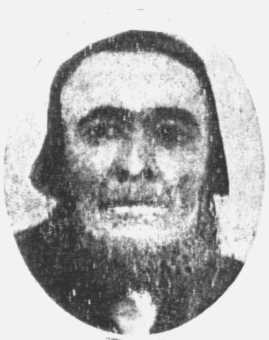
ANDREW (ANDERS) (JENSEN) ANDERSEN
| Birth | 04 April 1812 | Hvidsted, Taars, Hjorring, Denmark | ||||||
| Christened | ||||||||
| Baptism | 1854 | |||||||
| Marriage | 08 October 1833 | Taars, Hjorring, Denmark | Mariane Nielsen (Jespersen) | |||||
| Endowment | 01 August 1868 | |||||||
| Sealed to Parents | ||||||||
| Death | 31 December 1884 | Monroe, Sevier Co., Utah | ||||||
| Buried | ||||||||
| Children | |
| 1. Jens | |
| 2. Niels Peter | |
| 3. Kirsten Marie | |
| 4. Andreas | |
| 5. Maren Johanne | |
| 6. Christen | |
| 7. Johannes (John) Christian | |
| 8. Louis Christian | |
| 9. Christian Anton | |
| 10. Jens Christian | |
| 11. Willard Richard | |
| 12. Andrew, Jr. |
(Compiled in 1994 by Rae Lou W. Olsen, from a history written by Jennie Anderson Rasmusson (Wright), a granddaughter,
and Pioneers and Prominent Men ot Utah, by Frank Esshom, 1913, page 717. )
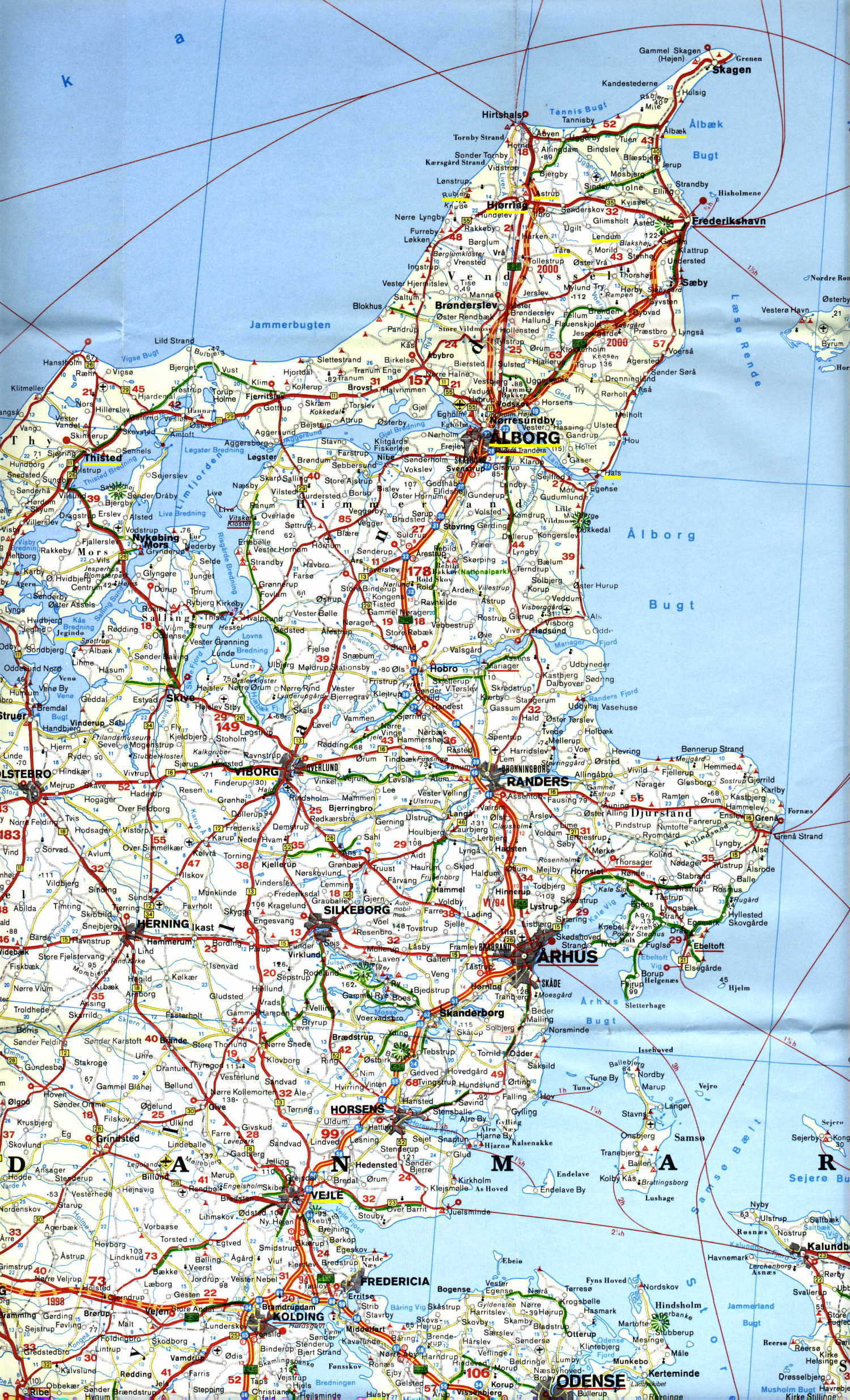
Andrew (Anders) Jensen Andersen was born April 4, 1812 in Hvidsted, Taars, Hjorring, Denmark to Maren Larsen and Jens Andersen. His parents were wealthy farmers. Mariane Nielsen Jespersen was also born in Hvidsted, Taars, Hjorring, Denmark on June 24, 1815. She was the daughter of Kirsten Nielsen and Niels Jespersen. Andrew and Mariane were born in and probably grew up in the same area. They were married on October 8, 1833 in Taars, Hjorring. The records indicate they had twelve children, ten boys and two girls. (There may have been two more children.) Their first two boys were born in Hivdsted, Taars - Jens on January 11, 1834 and Niels Peter on September 16, 1836. They were in Hallund, Taars when Kirstine Marie was born on October 15, 1838.
Their next seven children were also born in Hallund - Andreas on September 8, 1840, Maren Johanne on July 20, 1842, Christen on July 6, 1844, Johannes (John) Christian on September 7, 1846, Louis Christian on May 24, 1848, Christian Anton on January 21, 1850 and Jens Christian on October 30, 1852. Maren and Jens Christian died when they were almost three and Christian Anton died at age one.
Andrew and Mariane listened to the missionaries and were baptized members of the Church of Jesus Christ of Latter Day Saints in 1854. They were back in Hvidsted when Willard Richard was born on June 26, 1855.
The Andersens then made plans to join the Saints in America. Their two oldest sons didn't join the church and remained in Denmark. Andreas, a boy of fifteen, was to go with them, but just as the boat was ready to sail, he ran away and was left behind. However some years later he did come to Utah.
Andrew would have inherited a large estate, but because he joined the Mormon church and left Denmark, it went to a younger brother. The family left the vicinity of Aalborg and sailed from Copenhagen, Denmark on November 29, 1855 under the direction of Elder Canute Peterson. After traveling by steamer and rail they arrived at Liverpool, England and boarded the "John J. Boyd." Their voyage across the ocean began on December 12, 1855.
Andrew, Mariane and their children suffered many hardships on the ocean. Their food consisted of hard sea biscuits, insufficient in quantity and nourishment for the children. Kirstine Marie, their only daughter, was seventeen. Feeling sorry for her brothers, she would slip biscuits into her pocket to give them. For this she was severely reprimanded. (One of the little girls in the company died crying for milk.) Baby Willard Richard was not weaned and this probably saved his life. One source states Andrew and Mariane had a child die while on the ocean.
Daughter Kirstine Marie married Fredrick Julius Christiansen, another convert to the church on January 13, 1856 on board the "John J. Boyd," a month before they reached land. After spending more than nine weeks on the ocean, the "John J. Boyd" arrived at New York on February 16, 1856. Andrew, Mariane and their four boys traveled as far as Burlington, Iowa where they remained for several years. Andrew worked to get enough so they could continue the journey west. He was the presiding elder while there, and worked cutting timber for a Mr. James who was very good to them. Kirstine and her husband had gone on ahead. During this period their son John was taken ill with a fever from which he never fully recovered. (He was later drown, at age seventeen in an old mill race in Nevada in August of 1863.)
In the spring of 1859 the family crossed the plains with the Robert C. Neslen Company. Prior to leaving Andrew became ill, suffering with arthritis, and from that time was never able to do hard work. When the company was ready to leave Iowa, a couple who had no provisions or means of going, wanted to go with them. The company decided to take them along. The couple gathered their belongings and piled them by the side of the road, but all the wagons passed them by. The Andersen family, being last, loaded what they had on their wagon and took them along. The children in the company had to walk most of the way. Louis, a son about ten years old, walked every step of the way bare footed. One night it began to rain. They made beds in the wagon for all but Andrew. He had no room, so he stayed up all night with part of the wagon cover over his head.
The family had several scary experiences. Mother Mariane, while gathering buffalo chips for the fire, was left behind the wagon train. She became lost and remained out all night. The company thought she had been taken by the Indians. The following morning, however, she found her way back to the group.
One time son Louis stopped to catch some fish, as he knew his mother was fond of them. He filled his pockets and the bib of his overalls. Then he noticed it was dark and he was probably a long way behind the company. He could hear wolves howling, so he started to run, but they caught up with him. Not knowing what else to do, he started throwing his fish to them ne at a time. The wolves would stop and fight over the fish and then go after him again. He thought he would never see his folks again, but when the company missed him it stopped. With his last remaining fish, he dashed into the camp and was saved from the wolves.
On reaching Utah, the Andersens went directly to Ephraim, where their daughter Kirstine and husband Fredrick Julius were located. Arriving in the fall of 1859, they spent the winter in Ephraim, and their last child, Andrew Jr, was born January 19, 1860. He was able to wear the baby clothes discarded by Kirstine's little daughter.
When spring came they relocated in Spring City, living there until 1865. Here they made the acquaintance of Orson Hyde, then President of the Stake, who became a life long friend of the family. They cherished his picture until they died. Leaving Spring City, they went to Moapa Valley, known as the Muddy, and settled in Overton, Nevada. They took two wagons and four or five yolk of oxen and a few cows with them. On their way, they milked the cows and put the cream into the churn where it was churned into butter through shaking over the rough roads. Here they built the first house in the area with a board floor. The house was still standing in 1925 when Andrew Jr visited the site. Son Louis dug salt out of the mountain near St. Thomas and hauled it away to trade for lumber used in the building of the home. Some of the Saints never built a house - only sheds of willows - as the climatee was always warm. In the valley they raised cotton, wheat, melons, squash, citron, tomatoes, potatoes and gathered wild grapes from the banks of the creeks. Ships came up the Colorado River to Call's landing, loaded with provisions. Lewis went there purchasing raw coffee, which he took to Parowan and traded for flour. He also exchanged his poor oxen for fat ones and returned to the valley with a load of flour.
In the summer of 1868 Andrew traded oxen for mules and in a covered wagon he and Mariane drove to Salt Lake City for their endowments. One of their sons accompanied them to help with the driving. They received their endowments August 1, 1868 and returned to Overton. In 1871 the Nevada authorities demanded the settlers in the Overton area pay back taxes. This was the first they knew they were in Nevada, thinking all the time they were in Utah. Unable to produce the taxes, Erastus Snow advised the people to leave the valley and go back to Utah.
The Andersens packed their belongings and began the journey with one wagon, four mules and a few cows. Most of their cattle had been stolen by the Indians. When they left, their field of grain stood about six inches out of the ground. Arriving on the Virgin River, it began to snow. Soon snow was so deep they were compelled to chop down trees to get feed for their animals. During their stay they mended a tire on the wagon by splicing a piece on the outer side and fastening it on with bolts. After that, each time the wheel came around to the bump, it felt like going over a large rock. From the Virgin River they went to Pipe Springs. The water was so scarce they had to dip it up with cups into tubs for the cattle to drink. They continued their journey to Panguitch. It was still very cold and they were poorly clad for winter weather. They remained at Panguitch planting a crop, and when it was ready to harvest, they sold it in the shock in the field and left for Monroe, Utah, and then to Ephraim for the winter. In the spring of 1872 they returned to Monroe, where they lived under the United Order.
Andrew received his patriarchal blessing in 1876.
Monroe, Sevier County, Utah - 15 April 1876
"Blessing given by William M. Bride, Patriarch, upon the head of Andrew Jensen Andersen, Son of Jens and Maren Andersen, born Hjorring, Denmark 4 April 1812.
"Brother Andrew, in the name of the Lord Jesus I place my hands upon thy head and by virtue of the Holy Priesthood, I seal upon you a patriarchal blessing: "Thou art of the house of Israel through the loins of Ephraim. Thy calling is to take part in the laying of the foundation of the Kingdom of Zion because thou hast yielded obedience unto this call by obeying the everlasting Gospel and gathering into the valleys of Ephraim and hath performed thy part in the great latter day work.
"The Lord is well pleased with thee. Thou shalt have better health that shall enable thee to enjoy life while thou dost sojourn here upon the earth, for thou art entitled to all the blessings of Abraham, Isaac and Jacob, and in obedience to the New and Everlasting Covenant thou dost lay a foundation for an everlasting inheritance which shall be conferred upon thee in the temple of the Lord and on thy posterity after thee. Thou shalt stand at the head of a numerous family and shall live yet to perform all that thou desirest in thy heart for the salvation and redemption thereof.
"I seal this blessing upon thy head in the name of Jesus Christ, Amen.
Wm. A. Warnock
Recorded in Book A Page 695 Monroe, Utah
When the United Order was abandoned in 1879, Andrew and Mariane secured land to farm on the Sevier River and lived in Monroe. They built a log cabin with a brick fireplace and brick bake oven. Mariane didn't ever have a cookstove, always using the fireplace and oven. Andrew died in Monroe on December 31, 1884, at the age of seventy two. His entire life shows strength of character, honesty and integrity. He was always ready to help someone in need, and would never allow himself to become indebted beyond his ability to pay.
In April of 1893 Mariane and her youngest son Andrew Jr were able to attend the dedication of the Salt Lake Temple.
Mariane had many traits showing strength of character. She lived her religion to the letter and was thrifty and industrious. A son said he never saw her idle a minute in her life. She always had her knitting in hand while either walking or talking. She was a good manager, often trading and selling articles, such as stockings made with her own hands, making it possible to have a little money available at all times. Her business ability was very outstanding.
Mariane died in Monroe, Utah on October 15, 1896 at the age of eighty-three, leaving a large posterity to carry on the Andersen name.
[Note: At the end of Jennie Rasmusson's history it states that Maren (Mary) Johanna died on the ocean. However her death date is April 3, 1845, ten years before the voyage . Son Jens Christian died in 1855, the year they left Denmark for America. Could he have died on the ocean?]
07/02/99