Just a Little History: Vincent Van Gogh ( 1853 - 1890)
First of all, I wasn't there....but here's what all my
art history books say about Vincent Van Gogh and the "ear".
Vincent had a tough life. His father was a minister,
a Dutch Calvinist parson, and so was Vincent's brother Theo. The
pressure for Vincent to do the same was constantly eating at him, and he
did sermons in the beginning of his life. However, Vincent was too passionate
for the church and was dismissed.
Vincent then journeyed to Paris in
1886, where his art transformed from the dark Northern Dutch style to a
new influence....Impressionism ( symbolized by those "crazy marks" or "dots").
Vincent met Toulouse-Lautrec, Degas, Pissarro, Gauguin, and
Bonnard. This is where he got those amazing colors! Van Gogh
caused a revolution in color.
Vince was never "all there", he himself requested hospitalization at the asylum so he could work in peace. He would have sudden epilectic-like seizures periodically.
Gauguin and Vincent were roomies and
they didn't always get along. Gauguin was a womanizer and Vincent was a
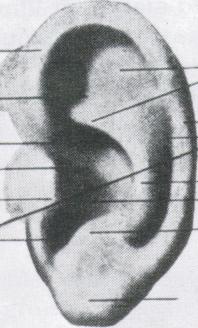
moral man with many convictions. Very early on December 24, 1888, the police
commissioner found Vince in bed with his left ear lobe cut off, see
picture for approximate cut, and took him to the hospital.
WHY?
Vincent's mind gave way during the height of his performance. He worked from early morning to late at night on his art. In 1889, Vincent was in the asylum full time and he was no longer "sane". This is where Vincent's deepest character shined through, with his "seeing madness", like whirling suns. Vincent saw what his colleagues could not, a reflection of the real thing.
Vincent shot himself, so he said, when Dr Gachet found him in bed wounded on July 27, 1890. The next day, Theo arrived and said the doctors were going to save him. Vincent replied, "It's useless...sadness will last a lifetime." Vincent died July 29, 1890 in his brother's arms who had never left his side.
Theo said..."I should not be astonished if my brother was not a great genious and that he will be compared with someone like Beethoven." The future has proved him right.