The Penans in Long Iman
The sound of boat heading towards Long Iman could be heard. It was 11.00am and the sun was high up. The men from Long Iman would have been out hunting or fishing much earlier and would not be back till evening. The women hurried out to display their crafts on the bamboo hut they have built on a high riverbank. Hopefully, they would manage to sell a few items this time to some patronising tourists. But they were not too hopeful.
A group of Japanese tourist stepped out of the long motor boat and climbed the flight of bamboo steps on the riverbank leading to higher ground. Some found it thrilling and were speaking among themselves of this new place. Though, they were some who were wondering whether they should have stepped out of the boat, as they would not want to fall from the bamboo steps into the murky river, but they took the challenge. They then had to avoid chicken droppings scattered on the ground and be greeted by the delegates of hospitable flies.
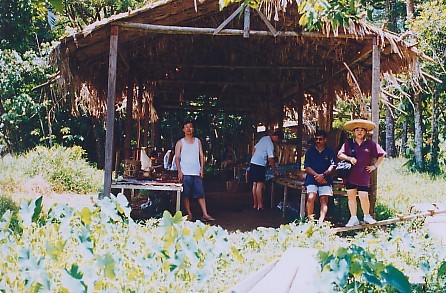
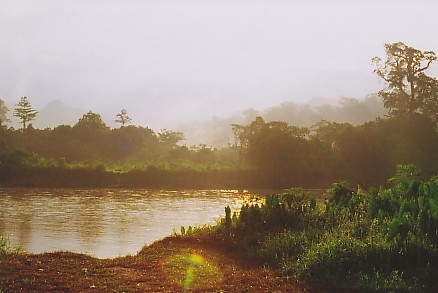
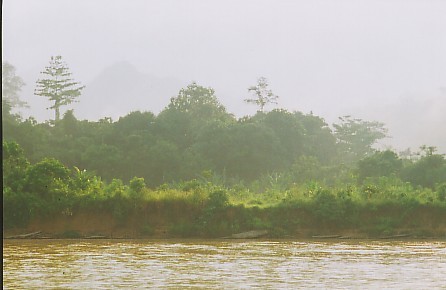
The scene was what they had paid to see, and bearing it for the next 15 minutes would not be too difficult. It is a typical impoverished village scene. Tall coconut trees between long wooden houses and children with tattered clothes playing on the ground. Chickens ran away hurriedly and dogs with sores were looking from a distance as new visitors entered their territory.
The women had their crafts ready but they were still looking intently on the items and meddled each craft constantly, probably to hide their nervousness. The tour guide gathered the group in front of the hut and explained that this was a Penan village. Penans according to him were one of the many indigenous people groups in Borneo. All the smaller tribes in Borneo such as Penans, Berawans and others were grouped under a generic name Orang Ulu.
The Penans hunt for a living. Though, recently with mass deforestation, the men had resorted to other means of living such as working in timber camps and construction sites. A large number of the Penans though, refused to change their way of life and continued to hunt for animals and fish from the river, gathered food from the forest and be contented with the little they have. The Penans used to avoid bathing to have the scent of the forest on them to allow them to hunt better. This made the Penans eccentric compared to the other tribes and they usually shy themselves from the outside world. It was only recently with tourism programmes by the government, that trips were arranged to villages such as Long Iman enabling the villagers to sell their crafts.
The group began to show signs of restlessness under the blazing hot sun. With little shelter and no fans, the weather in Long Iman was surely very different from the summer in the city area. Most tourist would come from developed countries where they had the luxury of airconditioning and good working fans to accompany them anywhere they went.
They adjusted their hats and looked around curiously. The tour guide invited them into the hut and they went ahead to inspect the crafts. Some began to take photos. Some began to ask for the price of the crafts but the women gave them blank looks. And sign languages were exchanged, so that trade can still be carried out. Some of the tourists just decided to forego the purchase, as they were not sure if they were understood. And the Penan women just looked helplessly, hoping that the tourist would be generous and bought something as a souvenir from the place.
Displayed on bamboo platforms were bags and hand bands knitted from leaves. There were various decorative carvings made of wood, flutes, blowpipes, necklaces and various items crafted by the Penans. These items were just displayed casually, surely a big difference to the usual merchandising the tourists were familiar when they shop at designer boutiques. These crafts were taken out every morning and later kept in their homes not too far away from the bamboo hut that displayed them.
After 10 minutes, the tour guide signaled the group to head to the boat. The tourists took their last shot on their camera and began moving towards the bamboo steps. Few bought the crafts. And the Penan women looked discouraged as the group left. They began to keep their crafts, as they did not know when the next group would come.
Sat at a corner of the bamboo platform was Esther Arang. It had been two months since she stopped school and had to settle for the same corner everyday. Esther fell from a coconut tree and broke her thigh. She is a cute girl aged 10 and she went to school in Long Panai, another village 45 minutes away by boat along the river that connected the two villages. Long Panai had classes up till Form Three, and thereafter students will need to travel further to the Marudi town for studies up till Form Six (A levels). Most of the orang asli students will either skip Form Four (after junior high school) and work; or leave their villages to stay for the first time in an urban town.
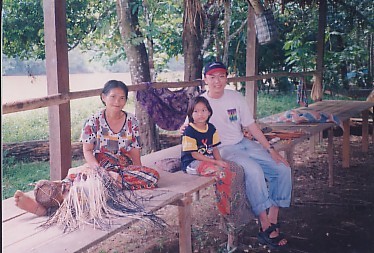
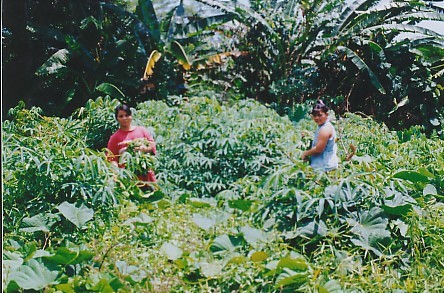
As I stooped nearer to talk to Esther, I realised she spoke fluent Bahasa Malaysia. So, seeing her predicament that she had not been to school for two months, I decided to give her a refresher course in writing essays that afternoon. She began to write about her family and she had 2 other elder siblings in school. Her eldest brother was studying in Marudi. Now, she was with her youngest sister in Long Iman, feeling that all there was to life was to watch the day to day happenings in the quiet village.
<
To be continued > The author of the story above is now a dad in Tokyo. He is more and more convinced that a daddy needs to blog and reflect on parenting. Since most kids these days blog, a dad needs to blog and share his dreams, his experiences as a dad and may he himself learns as well as others and his children on the wonderful experiences http://daddyparentingtips.blogspot.com/ 
 View Page Stats
See who's visiting this page.
Sign Guestbook View Guestbook Archived Old Guestbook 1 2
 Email me at: [email protected]