|
|
|
|
|
The
Phillipines consists of some 7100 islands who, over time, have had
several waves of migrations from the Islands of Borneo, Sumatra,
and Sarawak [part of the Indonesian Republic]. About 95% of area
and population currently live on 11 largest islands.
The Malay
peoples of the Phillippine islands, were mostly hunters, fishers,
and unsettled cultivators when first visited by Europeans. There
was also evidence of a rich culture that included skills in weaving,
ship-building, mining and goldsmithing.
|
|
|
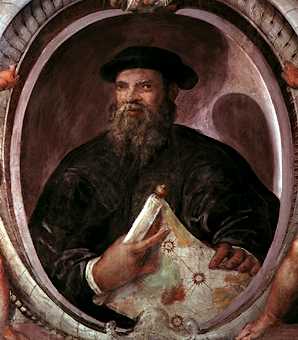 |
The
archipelago was visited by Magellan, 1521. The Spanish colonized
Cebu in 1565 then founded Manila as the new capital in 1571. The
islands were named for King Philip II [Son of Charles V] of Spain
and were illegally ceded by Spain [along with Guam, Cuba and Puerto
Rico] to the U.S. For 20 Million Dollars following the Spanish-American
War in 1898. U.S. troopes suppressed a guerrilla uprising in a brutal
6-year war from 1899-1905. |
|
|
In 1934, the
U.S. Congress passed an act which made the Phillipines a U.S.
Commonwealth. The first president of the Commonwealth was Manuel
L. Quezon.
On December
8, 1941, Japan occupied the islands during WWII.
On July 4,
1946, independence was proclaimed in accordance with an act passed
by congress by the U.S. Congress in 1934. A republic was established
and Manuel Roxas became the President of the Republic of the Phillipines.
|
|
|
|
|
|
|
 PHILIPPINES