|
|


|
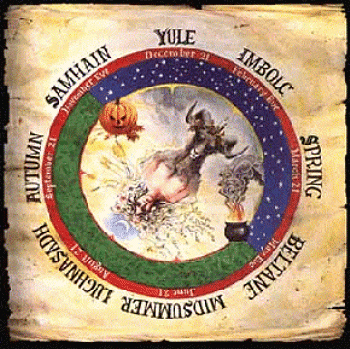
It
is the Witch's belief that By celebrating the natural cycle of the year
through ritual, One can attune oneself to nature and the Divine that is
inherent in all things.
Samhain
(October 31) - Popularly known as Halloween - is the Witches' New Year.
It is the time when the veil between the worlds is very thin, when souls
leaving the physical plane can pass out and reincarnating souls can pass in. Darkness increases and the Goddess reigns as
the Crone, part of the three-in-one that also includes the Maiden and
Mother. The God - the Dark Lord - passes into the underworld to become
the seed of his own rebirth (which will occur again at Yule).
Jack-o-lanterns, gourds and fall foliage are commonly used as
decoration.
Yule (the
Winter Solstice) coincides closely with the Christian Christmas
celebration and represents the rebirth of light. on this - the longest
night of the year - the Goddess gives birth to the Sun Child and hope for
new light is reborn. Yule is a time of awakening to new goals and
leaving old regrets behind. The Christian tradition of a Christmas tree
has its origins in the Pagan Yule celebration: Pagan families would
bring a live tree into their home so the wood spirits would have a place
to keep warm during the cold winter months. Bells were hung on the limbs
to announce a spirit's presence and treats were placed on the
branches for the spirits to eat. a five-pointed star - symbolizing the five
elements - was placed atop the tree. The colors of
the season - red and green - are also of Pagan origin, as is the custom
of exchanging gifts. A solar festival, Yule is celebrated by fire and
the use of a Yule log. A piece of the log is saved and kept throughout
the year to protect the home and is used to light the next year's log.
Imbolc/Candlemas
(February 2) celebrates the banishing of winter and the welcoming of
spring. At this time, the newborn Sun God is seen as a small
child nursing from his Mother. At this phase of the cycle, winter is
swept away and new beginnings are nurtured. this time of year is favored
for initiations into the Craft and traditions include lighting every lamp in
one's home to honor the Sun's rebirth.
Spring/Ostara
(Vernal Equinox) is the time where balance is suspended
just before spring bursts forth from winter. The God and Goddess are
seen as young children at play and holiday festivities use brightly colored eggs
to represent the child within. The Easter Bunny is also of Pagan origin,
as are baskets of flowers. Traditionally, Ostara is a time to collect wildflowers,
Take Nature Walks s and cultivate herb
gardens. It is also the time to free yourself from anything in the past
that is holding you back.
Beltane
(May 1) honors the fertility of the Earth and represents the divine
union of the lord and lady. Celebrations include weaving webs of life
around Maypoles and leaping the Beltane fire for luck. handfastings
(engagements) are also common at this festival. This is a time of
self-discovery, love, union and developing your potential for personal
growth.
midsummer/litha
(summer solstice) -
the longest day - represents the Sun King in all of his glory. it is
a time of triumph when the Oak King - representing the
waxing year - is succeeded by the Holly King - representing the
waning year. The two are one: the Oak King is the growing youth while
the Holly King is the mature man. Healings and love magick are
especially suitable at this time as is communion with the sprites and
faeries of the forest.
Lughnasadh/Lammas (august
1) celebrates the first fruits of the harvest. The Sun King - seen as Dark Lord - gives his energy to the crops to ensure life while the
Mother prepares to give way to her aspect as the Crone. This is the time
to teach what you have learned, to share the fruits of your achievements
with the world. Wheat weaving is
traditional as is the baking of Bread.
autumn/Mabon
(autumnal equinox) celebrates light giving way to increased darkness.
this second harvest represents the
Goddess mourning her fallen consort and emphasizes the message of
rebirth that can be found in the harvest seeds. This is a good time to
walk the forests and gather dried plants for use in herbal magick. Cornbread and cider
Make good additions to mabon festivities
as do decorative fall leaves.
|