
TRAGOPAN TEMMINCKI
SOUTH-EASTERN TIBET
CLICK IMAGE TO ENLARGE.

|
|
|
|
|
|
|
|
|
|
|
|
|
|
|
|
|
|
|
| TEMMINCK TRAGOPAN TRAGOPAN TEMMINCKI SOUTH-EASTERN TIBET CLICK IMAGE TO ENLARGE. |
||||||||||||||||||
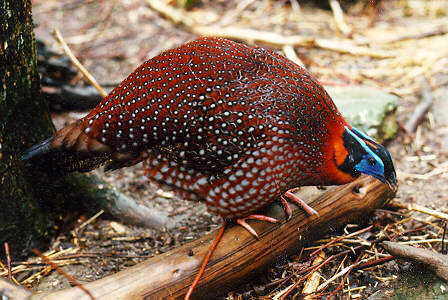
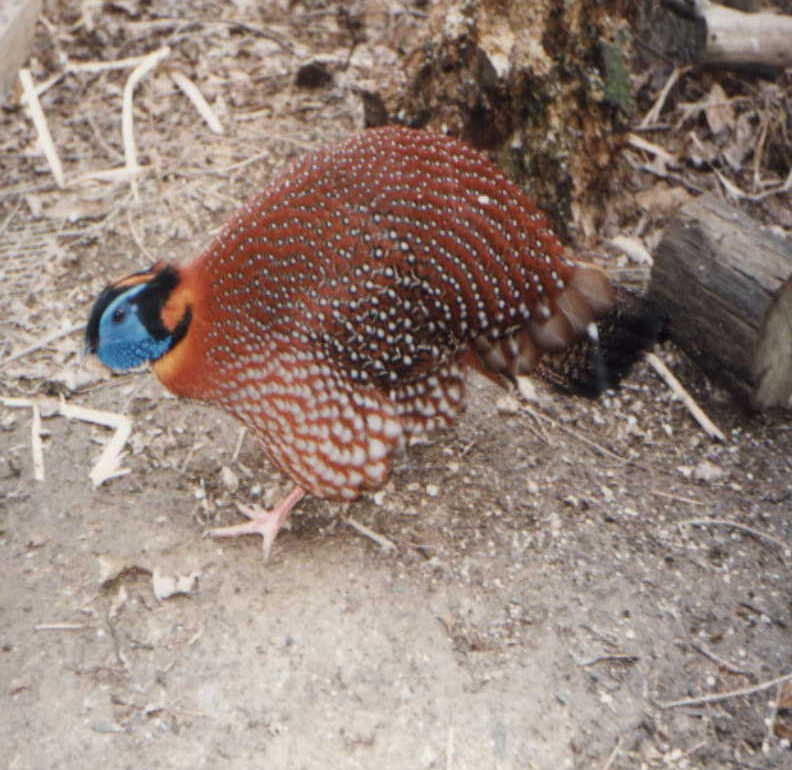
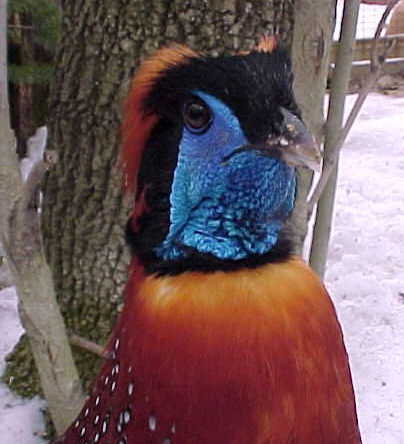
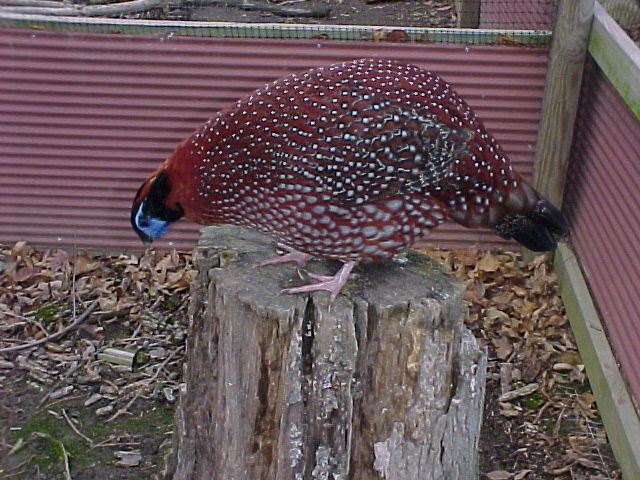
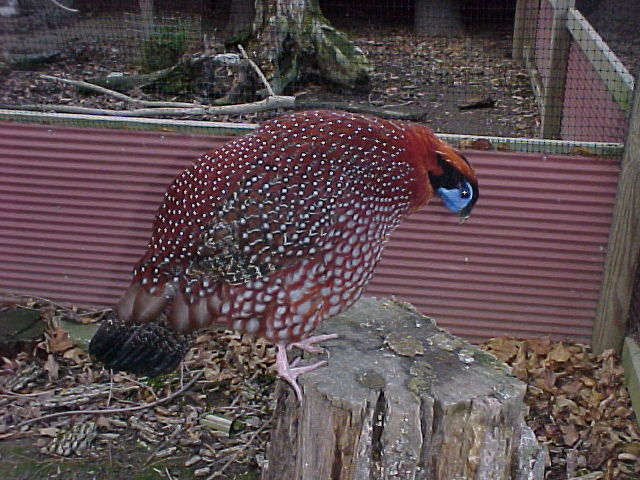
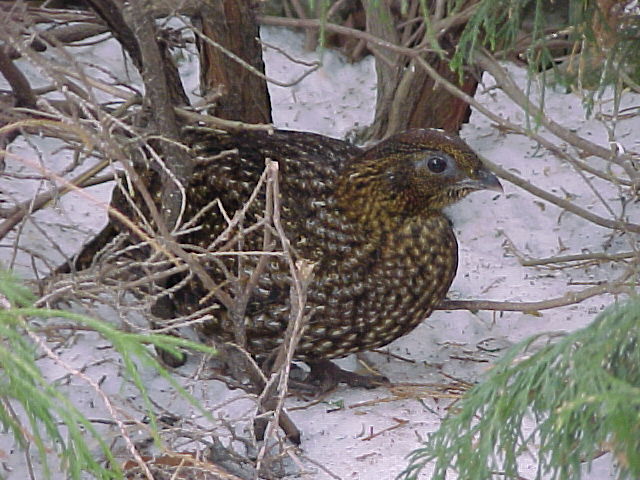
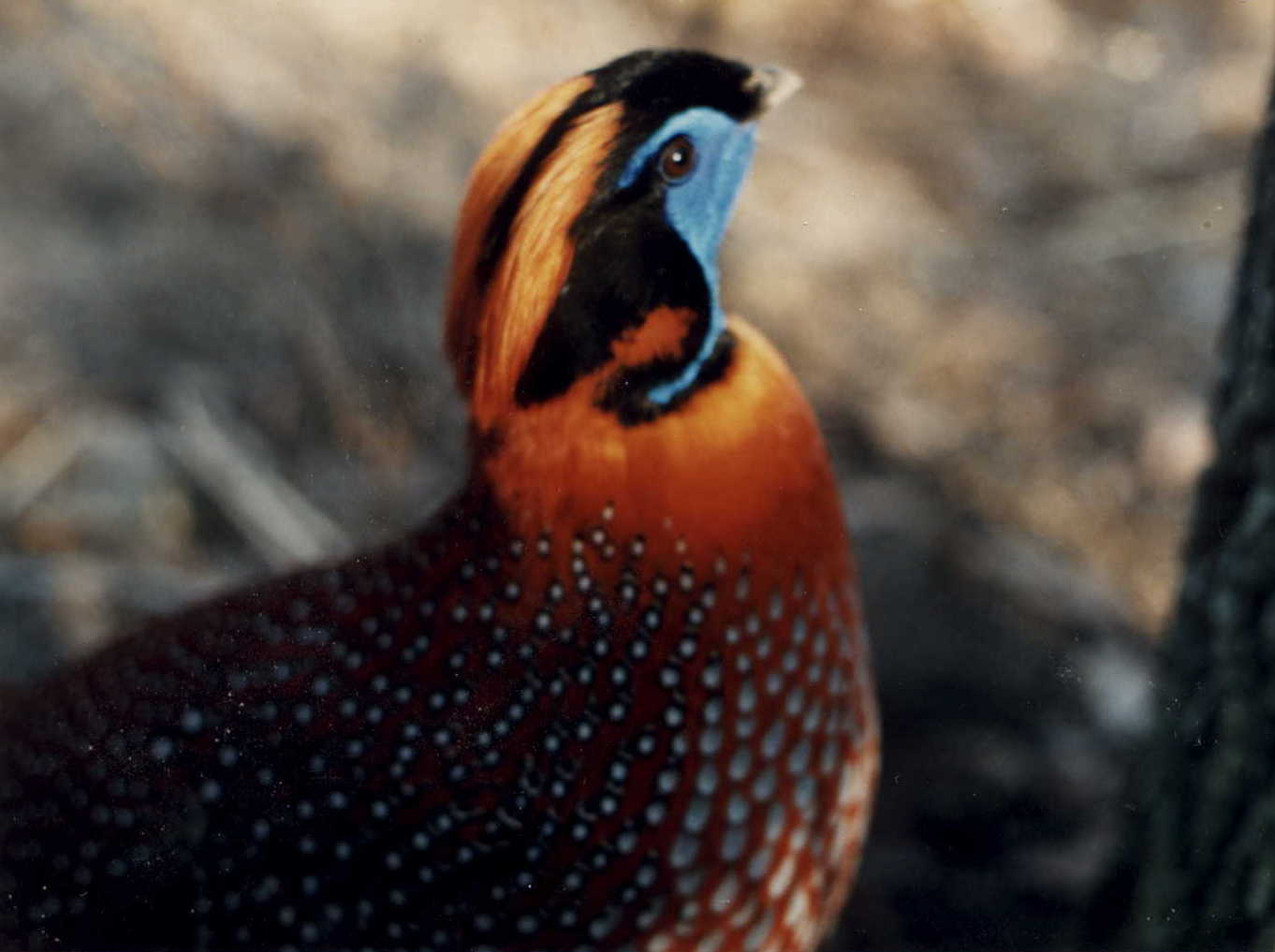
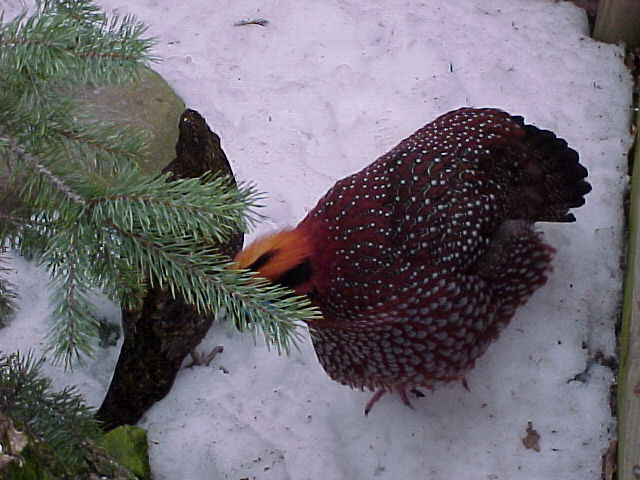
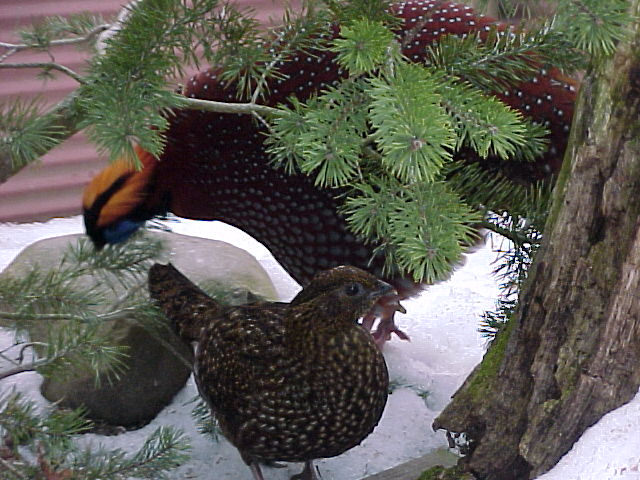
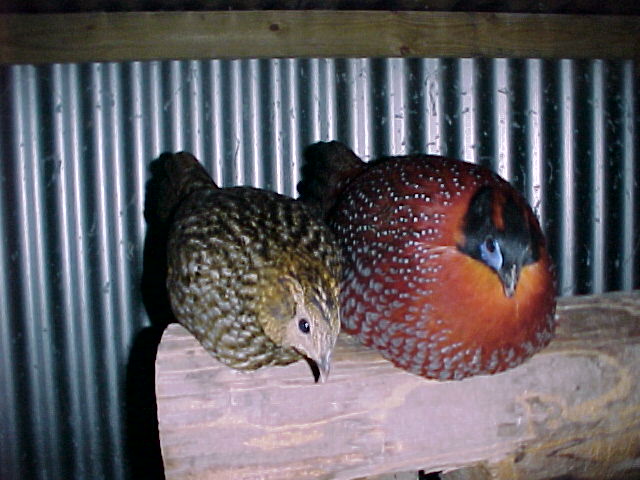
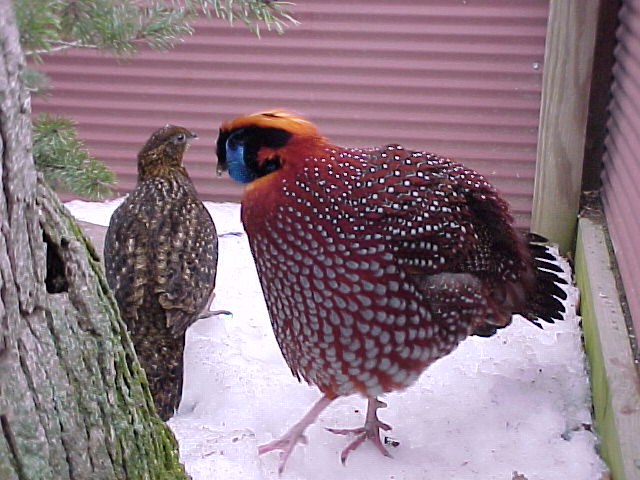
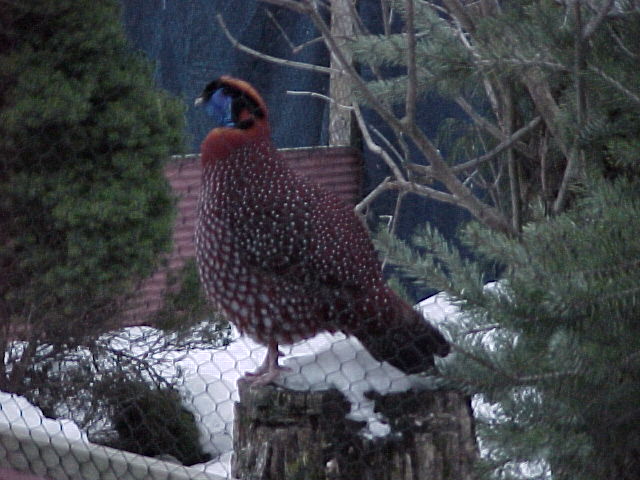
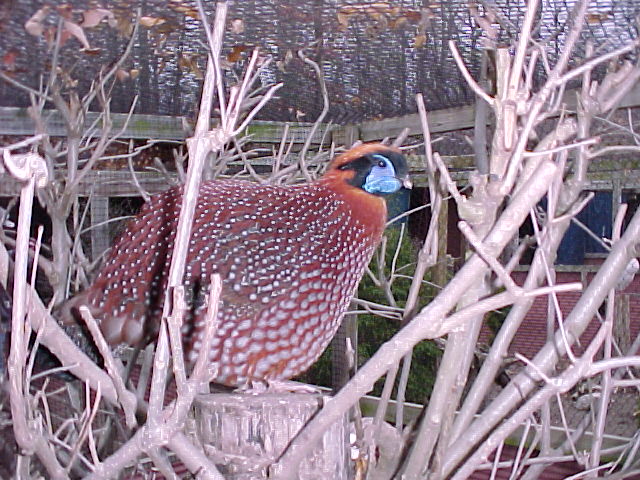
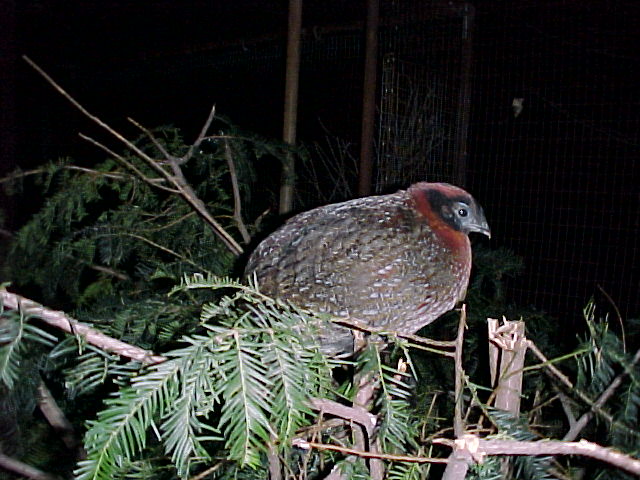
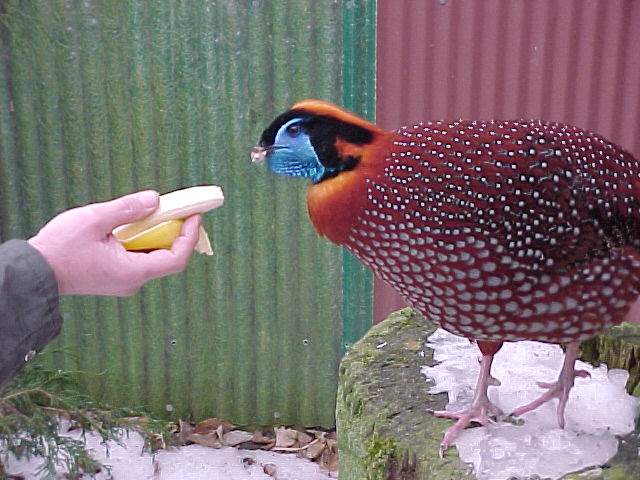
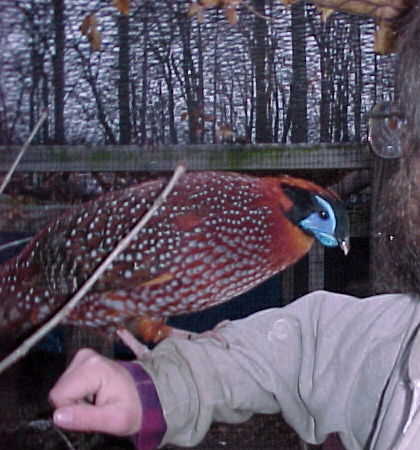
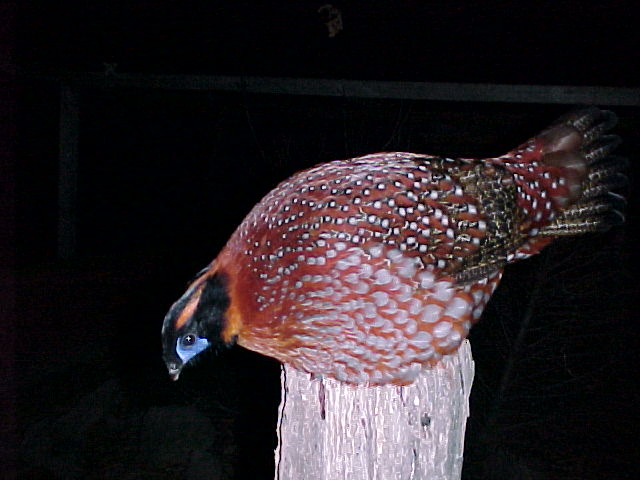
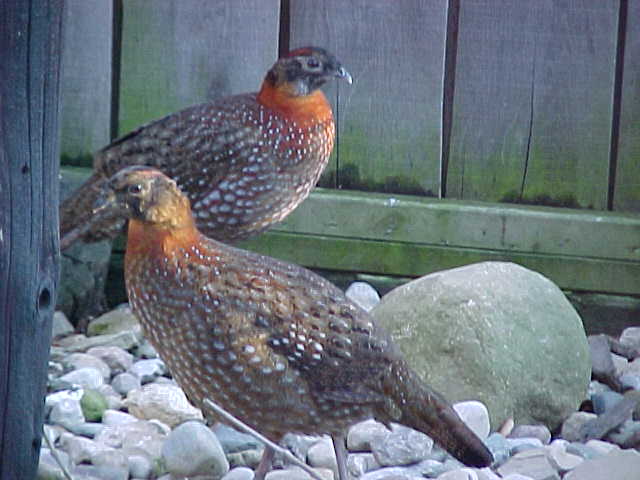
| Of the five in this genus, this is the most popular and least expensive. At least over the last few year the prices have come down. When we got our first pair about ten years ago they were priced in the $600 range plus shipping. Not only colorful to the eye with the reds, blues, and yellow hues and more of the color spectrum. The behaviour of this bird is remarkable. The displays over much of the year show that this guy is a show off and rightly so with his blue fleshy horns and bib so intricately marked, but don't let that fool you-he can be both aggressive and a teddy bear. We have over the years lost hens to these young males, but we have found that it is usually on the first season of a males breeding cycle that they kill their mates. On one occassion, the two year old male in a matter of minutes scalped his hen from the crown of her head to the back of her neck clear down to the skull. We now trim the top mandible, and the flight feathers on one wing of new pairs that we aquire to give the hen a fighting chance and this does work. Once they achieve their third season together, they are more compatiable and the loss maybe only a few feathers. The displays and breeding bring the eggs that both adults will incubate and rear. It's amazing to watch the pair together in the nest box, taking turn on the eggs while the other feeds and rests. We as a rule let these have their second clutch much like we do with other we raise. They have not let us down and easily hatch their own and rear to maturity. These are more "wild" but do grow quicker even though not supplemented with live food as much as incubator hatched chicks. These birds need more protection from the heat then they do winter and require fruit and vegetables in their diet. I believe some of their favorites are grapes, bananas, apples, melons, & tomatoes, oh yes and peanuts used as a bribe. The best lettuce is Romaine which has some food value but Iceburg can also be given along with an occassional slice of bread. Very easily tamed but requiring a large pen with plenty of shade these birds will live a long life. Some keep these in trios, but the hens may battel each other so we always keep them in pairs. They may be kept with other species like the Goldens and there will be no aggression, but the pen must be large. An above ground nest is best for her small clutch of eggs and after hatching them you will be amazed that a day after these young hatch they are able to fly down from the nest and back up to their perch at dusk for the hen to warm them. We sprinkle wild birdseed on the ground for the pair and their clutch which they clean up daily. | ||||||||||||||||||
| A real joy to raise but they must be wormed and checked frequently for lice and other undesirables. Incubation 27-28 days. | ||||||||||||||||||
|
|
|||||||||||||||||
|
||||||||||||||||||
|
||||||||||||||||||
|
||||||||||||||||||
|
||||||||||||||||||
|
||||||||||||||||||
|
||||||||||||||||||
|
||||||||||||||||||
|
||||||||||||||||||
|
||||||||||||||||||
|
||||||||||||||||||
|
||||||||||||||||||
|
||||||||||||||||||
|
||||||||||||||||||
|
|
|||||||||||||||||
|
||||||||||||||||||
|
||||||||||||||||||
|
||||||||||||||||||
|
||||||||||||||||||