
We never ever use any blinders with the plastic arrows as they do more harm than good...First they disfigure the bird for life enlarging the nostril opening and many birds are lost in climates such as ours with winter frost plugging up the nostril opening causing the bird to suffocate...Those that overcrowd their bird pens have this problem and need to act on it before the birds become cannibalistic. In the wild this does not occur, but in captivity with overcrowding it does and good birds are killed foolishly...
Banding or marking your birds is important. Have the separate bloodlines marked and this can be done in various ways...Bands can be purchased in many forms, numerical, wing bands, or just colored bands, but our choice is toe punching, rear toe removal or electrical ties that are UV treated for exposure to light...The clear ties may last a few years but will crack and break...while the UV treated ones last the life of the bird...With toe punching it is a mark in the web of the foot that stays with the bird for life, but unfortunately is difficult to spot while the birds are moving about, so we also put the plastic UV plastic ties on as back-up...
Breeding Pairs:
We like to keep unrelated pairs versus trios or quads like some folks. Not only because we feel the birds do better, but because of the bloodline diversity which is needed in aviculture for conservation purposes. The fertility is most often over 99%, but much less when breeding trios and quads...
Brooders:
We have home made brooder boxes which are made of plywood and they measure 2' x 4' x 20'', a few having dividers as we keep all breeds separate during brooding...The birds are on either cedar shavings or pine shavings and we have never had a problem with them consuming their bedding...We now use light bulbs painted with Ford Red 206 engine enamel...This is much cheaper than buying factory made red bulbs...It is here that the birds are introduced to meal worms...
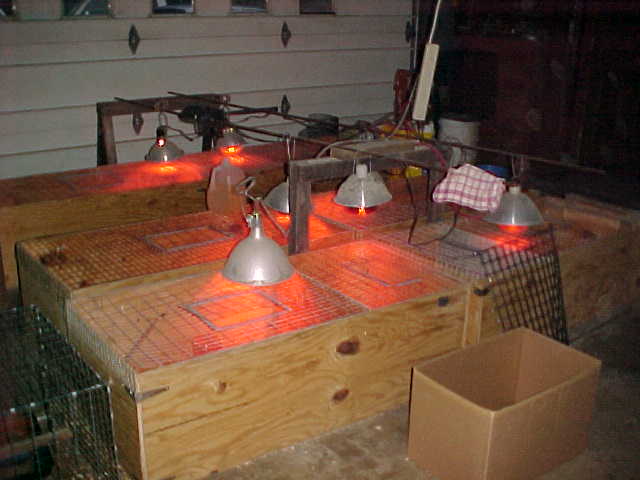
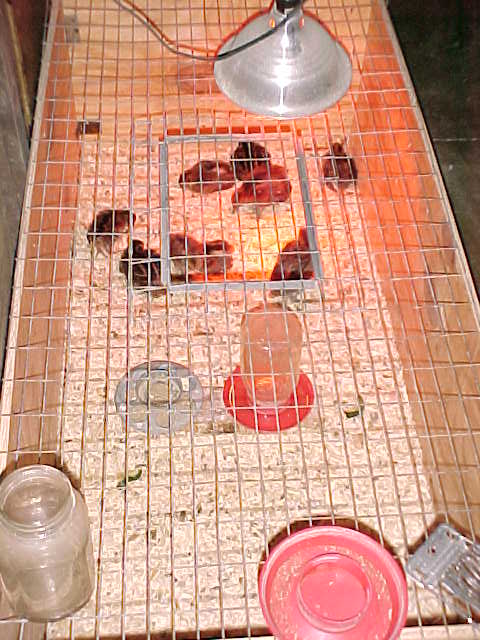
All young hatchling's are fed 28% chick gamebird starter with a grower 22% fed when they are 6-8 weeks old. The grower is fed till late fall or till the birds are 6 month of age. Meal worms are fed while chicks are still in the brooder, starting as early as 5 to 7 days old. When the worm supply runs low beetles and pupae are utilized as feed...This is the best protein along with hard boiled egg slices that they get three times a week and fed till they are adults, but less often...Feed them well and they will grow strong with a varied diet...
Cover:
This is extremely important to the health of the hens at breeding time...With some birds and their aggressive behavior the hen needs a place to rest away from the male...Piles of brush are great with years of old Christmas trees piled year after year, or with limbs...I found some old clay 16" drainage tiles, and they really work great as the male never follows the hen into the shelter...If you grow ornamental grasses, they can be cut in the fall and placed over your brush piles giving the birds greater cover...We also plant native trees, such as Maple, Cherry, Ash and Elm along with Cypress Bushes, Ornamental Grasses, and Rose of Sharon works well for exercise and a place to perch for the night... I have two links with information on poisonous plants listed below...
Toxic Plants
Purdue Toxic Plants
Eggs:
Eggs are gathered twice daily and marked with the date gathered and when they are placed in the incubator....the hatch date along with, which particular breeder pair laid them and when they are to be removed from the incubator and placed in the hatcher. They are marked with a number 2 pencil only, a personal favorite, NEVER use a permanent marker of any sort... A record is always kept on every pair of breeders so a fertility chart can be kept... We use an automatic turner from a Havobader to turn our eggs automatically as they need to be turned often...
Feed:
Depending on the season we use a maintenance (16%) or a breeder (19%) pellet to which we add oats, barley, sunflower seeds, wild bird seed, wheat and cracked corn during the winter months...All this is mixed at the mill, then stored in barrels... We also spoil our birds with the following when in season or what is donated by the local grocery such as, whole wheat bread, apples, oranges, lemons, limes, grapefruit, watermelon, cantaloupe, any and all squash, pumpkins, bananas, grapes, raisins, peanuts, and the list goes on...The best lettuce is the Romaine as head lettuce has no food value, but is readily eaten. We just never feed anything in the cabbage family including cabbage, cauliflower, Brussels sprouts or broccoli as it can affect the bird�s health by dehydration giving the bird a runny stool... One other thing that we do is save all eggs shells from all our hatches along with Saturday's breakfast, let them dry and pulverize them with a 2x4 then adding them to the feed. This is a great source of calcium and only takes little time and space...
Incubation:
Once eggs are placed on the tray of the automatic turner a record is kept in a log book as to the date of the first candling (5-7days)... Some darker eggs are harder to candle by the seventh day, but by the tenth day it is obvious if they are viable or not... Infertile eggs are removed and charted in the log book for the particular pair of breeders. As hatching begins some chicks have difficulty emerging from the shell...We found it is better to loose the chick than help it out of the shell...This is a humidity problem that can be corrected...It is best to let your chicks dry at least 36 hours before placing them in a brooder as they do not require any food up to this time and remember that in the brooder there must be no draft as it will affect your chicks...They chill easily till they start feathering out...
Worming:
Here in Indiana we have a need to worm our birds due to the amount of grubs and night crawlers found in the soil...We do this the hard way doing one bird at a time, but this way we know each bird has gotten his dose and is wormed, versus those that mix the wormer with water. Some birds may not be as thirsty as others and may not get the needed dose or the chemical may not mix well with water like the one we use that is oily in nature...We like to use Ivomec (Ivermectin) 1% sterile solution for cattle and swine as this will kill both internal parasites and external ones (gape worm, fleas, mites, chiggers etc)...We use a 3cc syringe with a 16 gauge needle and put the drops directly on the tongue... (Do not put any down the windpipe)... Birds like Goldens, and Swinhoe we give 4 drops and the larger Impeyan, Blue Eared get 6 drops, repeated after 7 days...There are other products on the market, but we are unfamiliar with them...Some birds like the diggers (Impeyans, Eared) must be wormed 3 times a season because they are more susceptible to worms, others are wormed at least one time in late fall, but before breeding season...It has been suggested to use a small amount of bread injected with Ivomec and giving directly to your birds...This would work well if there are few birds and you can feed them individually...this may or may not work well in your situation...
