
WESTERNISED MIDDLE CLASS KIN OF TARASENKO
related to Ekimov, Klosse, Henkel
All mentioned Tarasenko were children of Georgy and Euphrosine Tarasenko from a Kazak-militia frontier settlement Krasnoselovka in the district of Boguchary in the South of Voronezh Government province. Georgy with all probability was not the first generation Ukrainian in Russia, therefore it is not clear whether he spoke Ukrainian. His wife was a pure Ukrainian, a recent new-comer from Ukrain. At the end of the 19th c. they possessed a big house with garden in the town of Elets. The house exists up today, it has been nationalized after 1917 but its future is not clear.
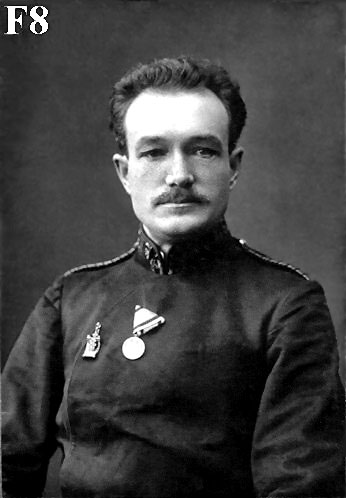
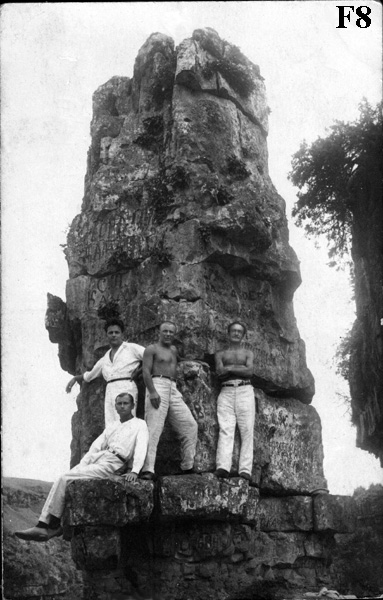
GREGORY TARASENKO (1874-1935), F8, was a high-class viola player, artist of Royal Philharmonic Orchestra.
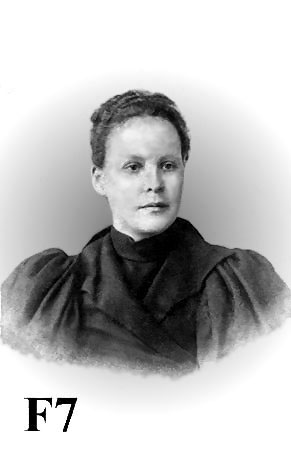
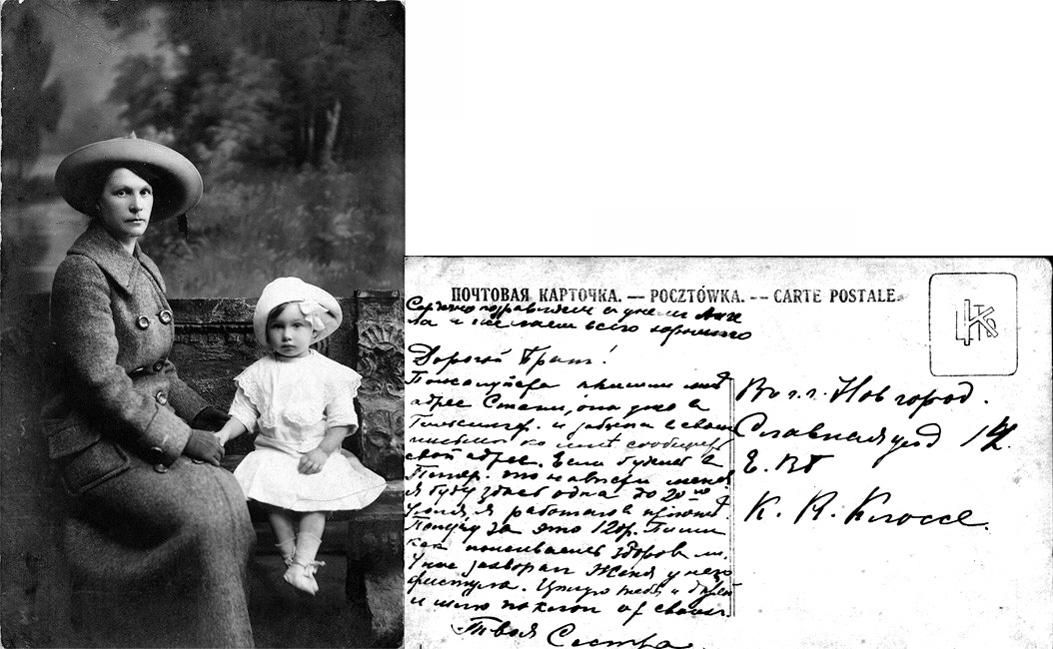
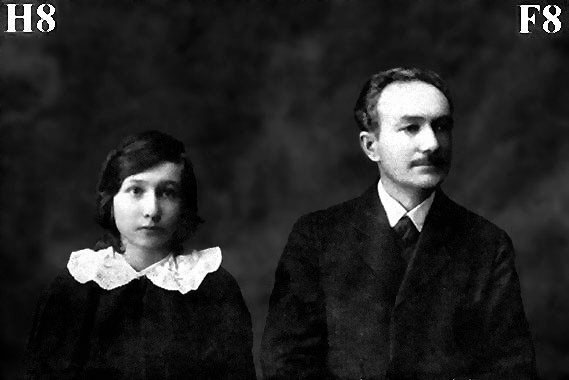
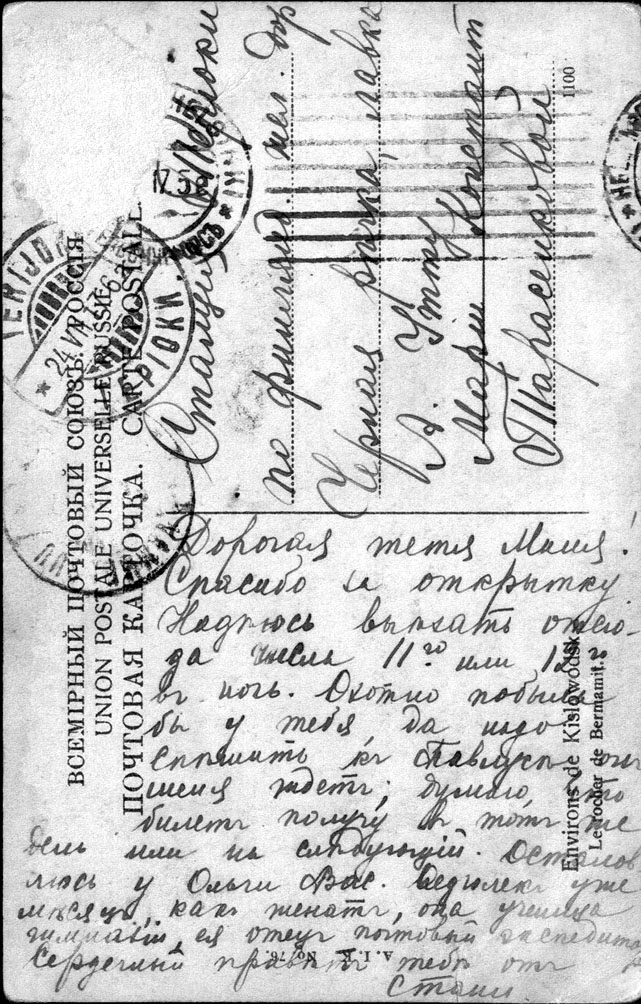
In 1897 he married a Peterbourgian Marie Klosse, F7, with whom he had 3 children: Anatole (1898), N2, Eugen (1900), N3, and Tatiana (1910), H8 (see a postcard of 1912 with photos of F7 and H8 written by F7 to her brother Constantin Klosse in Novgorod, as well as a photo of H8 with her father F8).
In official documents of the Czarist epoch the family name was written in a Russified manner Tarasenkov, although he himself has signed up on his photo of 24 March, 1897, as Tarasenko. These were only children of F8, who restored the Ukrainian form Tarasenko after 1917. F8 preserved the Russianized form of his name up to his death.
F8 was agnostic and pragmatic with no romanticism and very difficult nature, characterized of impulsive paroxysms of furiousness when he could not control himself. He was inclined for pessimism, disappointed in people, having no confidence in them. He used saying in a sarcastic manner: Vse ludi bratya, lublyu s nikh brat ya ("All people are brothers, it is pleasant to profit by them").
The marriage of F8 and F7 was marked with presenting a summer house to the young wife in Terijoki (Teriyoki, today annexed by Russia as Zelenogorsk) in Finnish Karelia to the North-West of Sct.-Peterbourg. Since the address was Uttu Shop, the question arises whether the house (or its part) was only rented, not bought. The family dwelled there in summers when F8 was on duty in Filharmonic Orchestra, but they went to the estate of F7 in Novgorod, 12, Slavnaya Str., when F8 was on a holiday. Alice K�tzberg, G5, close friend of F7 and godmother of H8, was a guest at both summer residences, but Boris Mironenko, the godfather of H8, was a guest at least in Terijoki summer house.
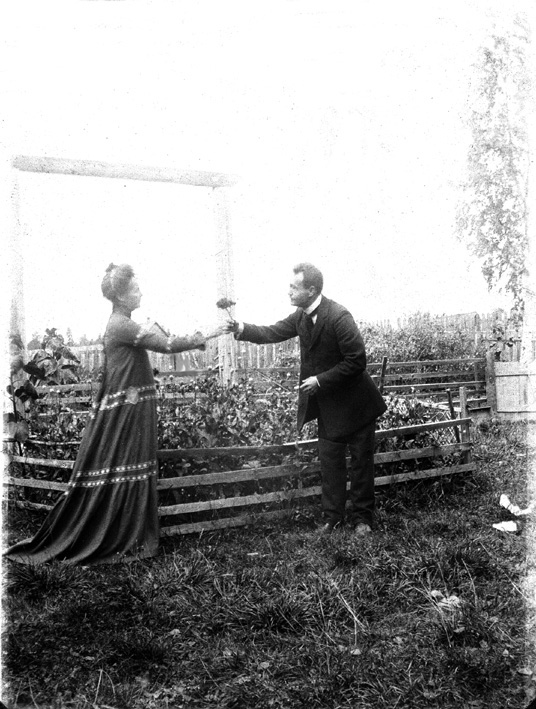
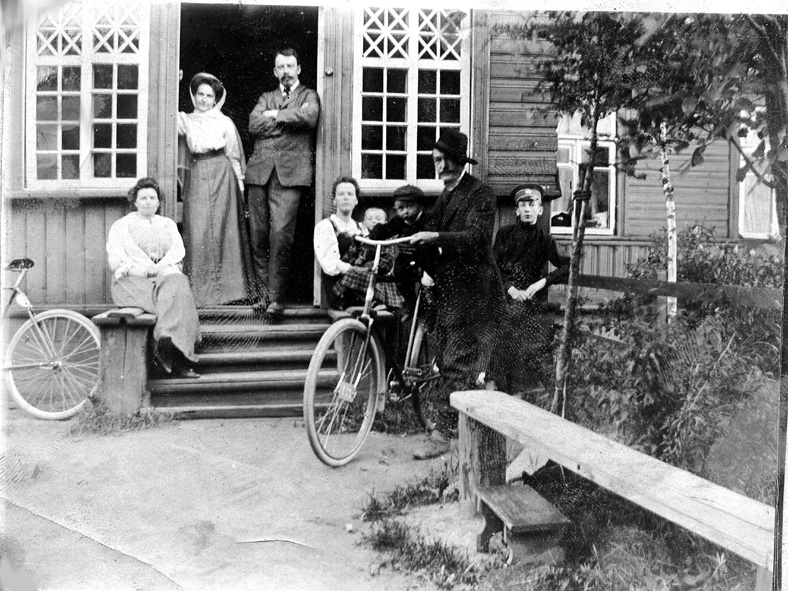
The addresses of F8 family in Sct.-Peterbourg were: 1899 - 63, Nevski str. (then B4 dwelled in the same house, but her son also dwelled there in 1900), 1900 - 27, Kolomenskaya str., 1907 - 12, Dvoryanskaya str., 1908 - 21, Karpovka, 1909 - 3, Plutalova str., 1910 - 7, Malaya Dvoryanskaya str., 1911 - 51, Kronverkski by-str., 1912, 1913 - 7, Alexandrovski ave., 1923 - 4, Sofia Perovskaya's str. (Malaya Konyushennaya). This was 1923, when Basily Tarasenko(v) dwelled on 3, Usachev's by-str.
During the World War I the life of the family constantly grew worse, but after 1917 it became hard and a struggle against starvation began. As a result, F7 died in 1922, but F8 got the tuberculosis. Striving to overcome tuberculosis, in later years F8 spent summers in the South, in Pyatigorsk, Kislovodsk, Anapa. Nevertheless, the disease developed, in the last years F8 coughed up blood. He worked almost up to the end (see one of the last photos, 1935). F8 died on 20 March, 1935.
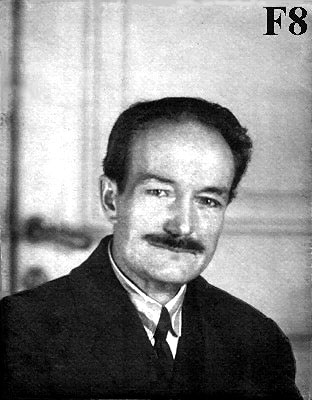
Although F8 himself underwent westernization and entered elitar layers of Peterbourgians, his and his brother Basily's coming to Sct.-Peterbourg conformed with a newer epoch of industrialization with its flow of thousands of new inhabitants from Belarus and Ukraine at the last quarter of the 19th c. Contrarily to earlier Russian workers, who were temporary and season, new invadors consolidated not only as a worker class but also penetrated into the middle class, which was unable to westernise such number of new-comers. Contemporarily, Alexander III's policy sensitively and precisely responded to this and turned away from the West toward the slavophil ideology, which was suicidal not only for Sct.-Peterbourg but for the Gottorps' Dynasty themselves. Similar mistake was done by such people as Maria Klosse, F7, Michael, D5, and Georgy, K6, Ekimov too. The retreat of the Western metropolis began which naturally ended after 1917 in its defeat and transforming its Empire back into Moscow Russia of the pre-Peter epoch.
Thus the kin of Tarasenko appeared on the boundary of this ethno-cultural break as an illustration of it.
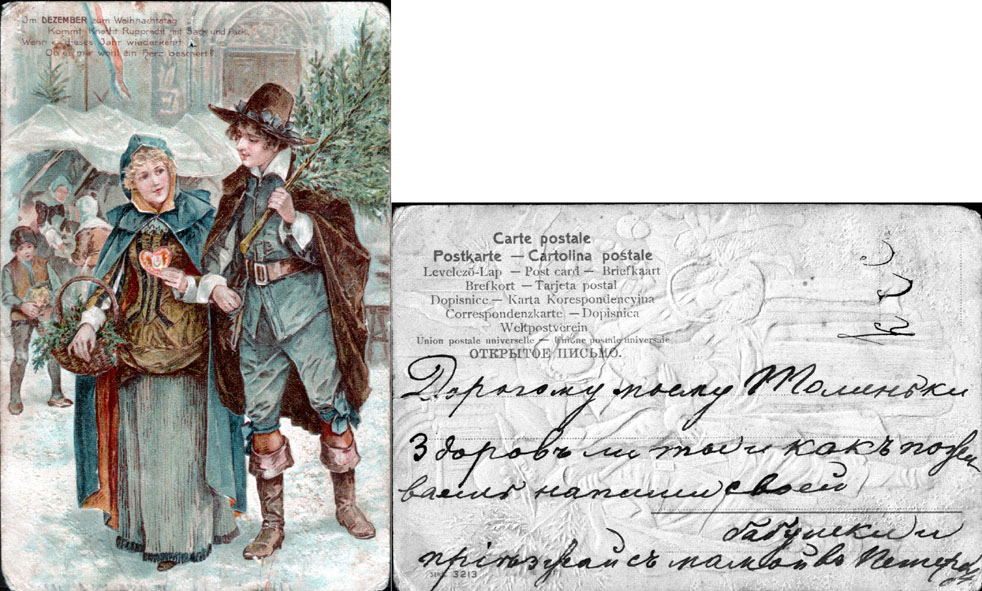
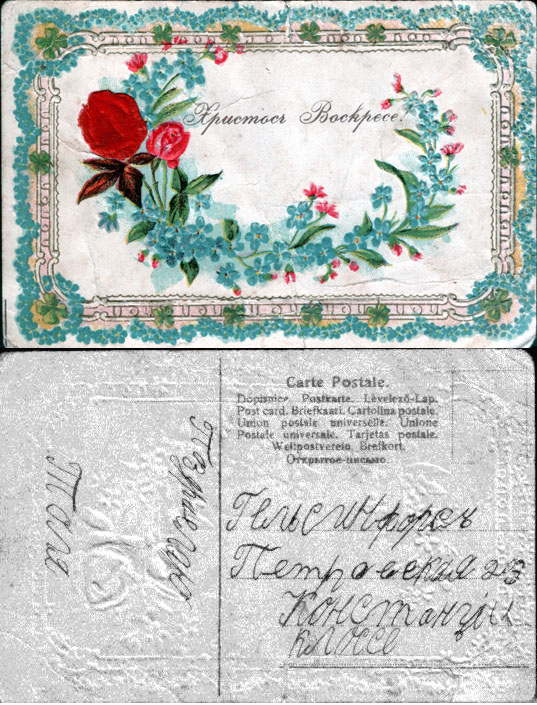
F8 still became Peterbourgian, but his sons did not inherit Peterbourg tradition. ANATOLE, N2, could not inherit it already because of his social state which had been determined by his invalidity. This was Laura Klosse, B4, who, as if compensating her rejection of the illegitimate children of her son Constantin, F2, demonstrated her love to her daughter Marie's children. Her postcard has been preserved, a kind of German ideal dream, which she had sent to her small grandson Anatole, N2. An idyll is depicted on it: a pair of beautiful lovers at Christmas fair on the background of a Gothic church. As for Anatole himself, a postcard, sent by him to his Helsinki cousin Stania (Constance Klosse, M6) has been preserved. Alas, the life of Anatole was a contrast to his grandmother's idyll: without any sweetheart on the background of dirty Bolshevik Russia.
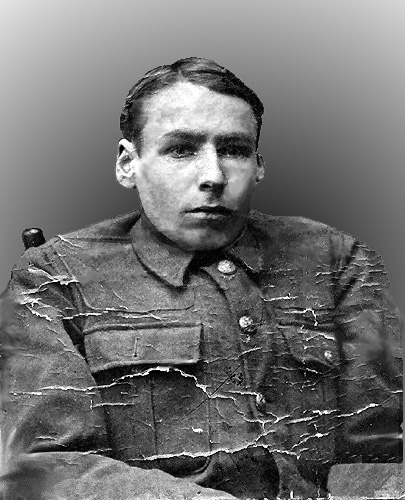
EUGEN, N3, had good possibilities, but he remained alien to Sct.-Peterbourg, although the lack of activity from the side of his father is not excluded either. F8 took notice of his son's good voice and wanted him to enter conservatoire. N3 opposed to his father's will but F8 did not force him. After 1917 N3 became a trumpet mayor at a military orchestra.
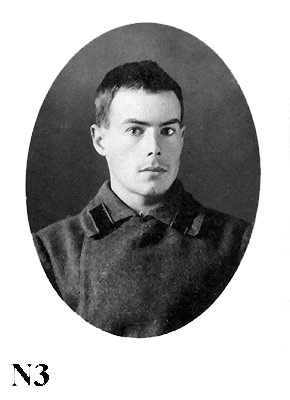
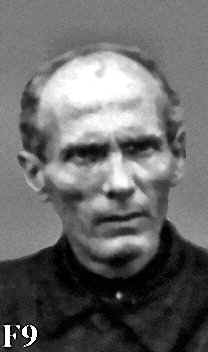
Already before the war he left for Moscow where his uncle IVAN TARASENKO, F9, brother of F8, had settled.
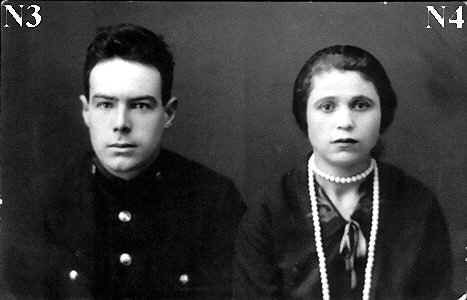
In Moscow N3 first married a Jewish woman, then a common Russian one Maria, N4. He had a daughter Zinaida, U2, of the first marriage (Stepnova to her husband's name, she died in 2001).
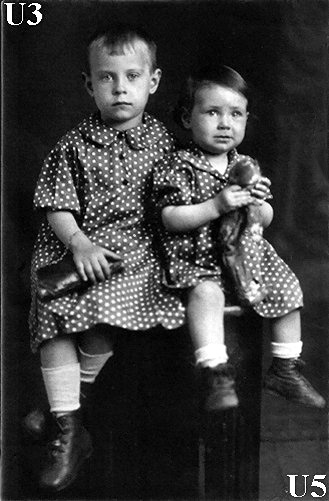
He had daughters Svetlana, U3 (Zakharova in marriage) and Lyudmila, U5, of his second marriage (a photo of 1939).
Eugen Tarasenko, N3, was a very pessimistic and disappointed person. He used to say: Sudba igraet chelovekom, chelovek igraet na trube ("The fate plays with the man, the man plays the fife"). He stayed several years in Dresden in Soviet occupation army after the war and ended his career as a sergeant, ill with the alcoholism (see a photo of 1960).
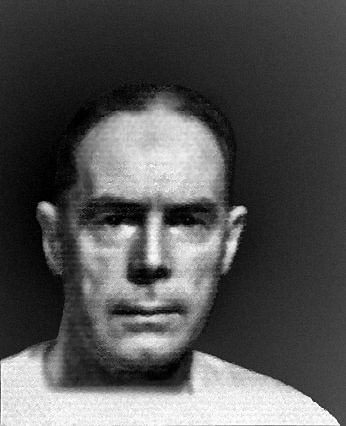
N3 died in Moscow in 1972. Hymn of the U.S.S.R. was performed at his burial by a brass band of his military friends pensioners. Such was the final result of Marie Klosse's, F7, conversion into Orthodoxy (see Klosse).
The kin of Tarasenko is related to that of Klosse through the marriage of F8 and F7.
The kin of Tarasenko is related to that of Ekimov through the marriage of H8 and H7.
> back to SPb-Site >