|
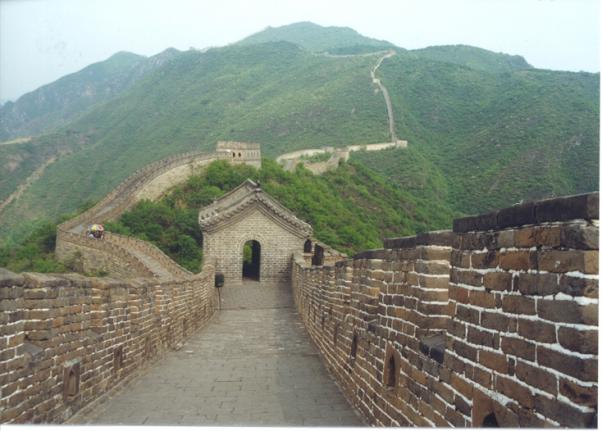
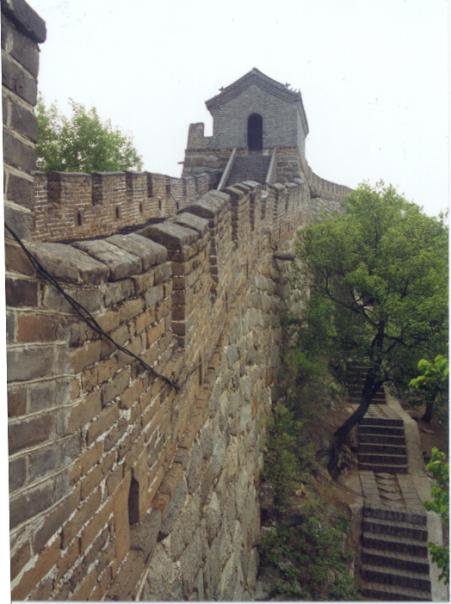
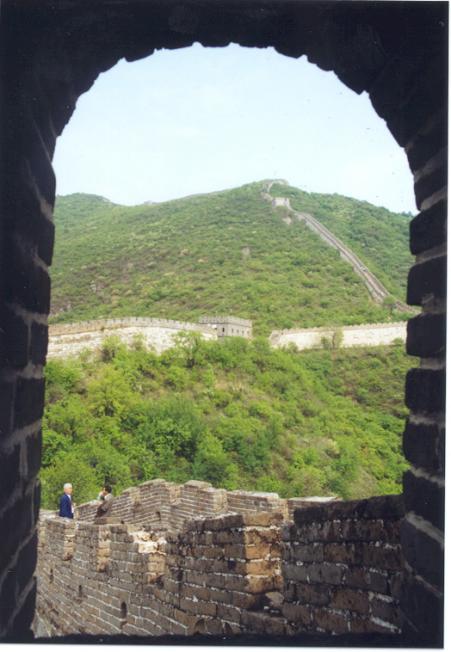
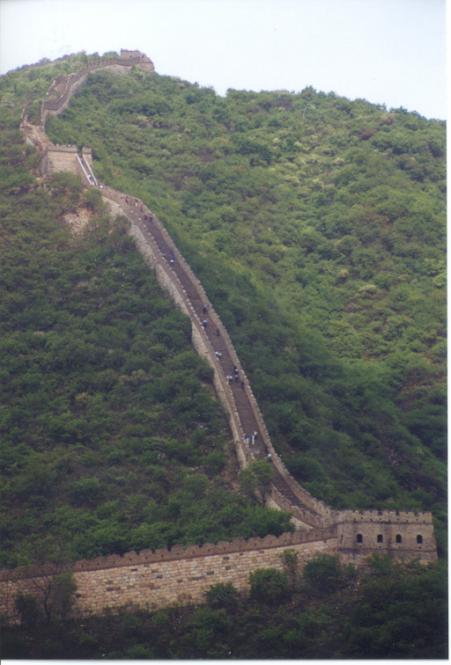
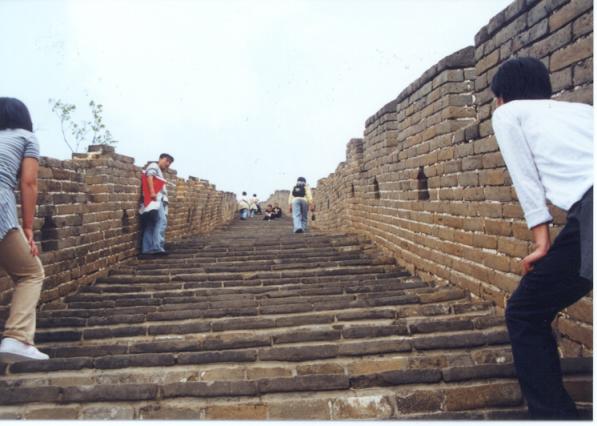
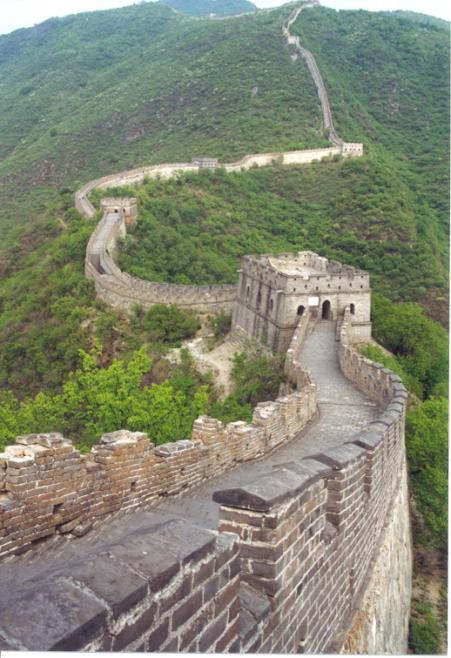
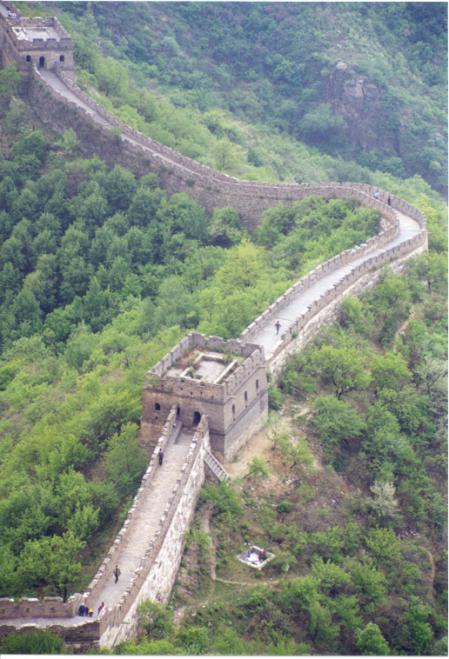
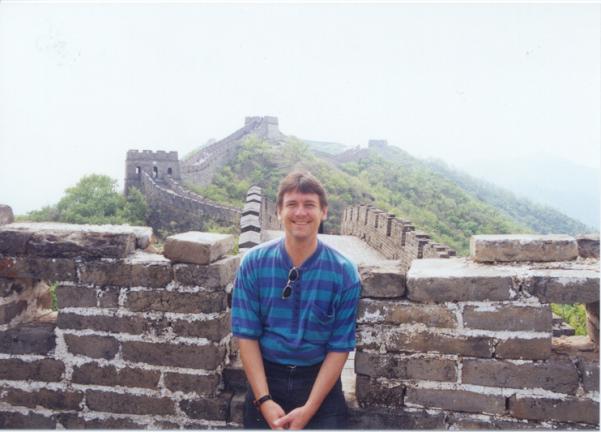
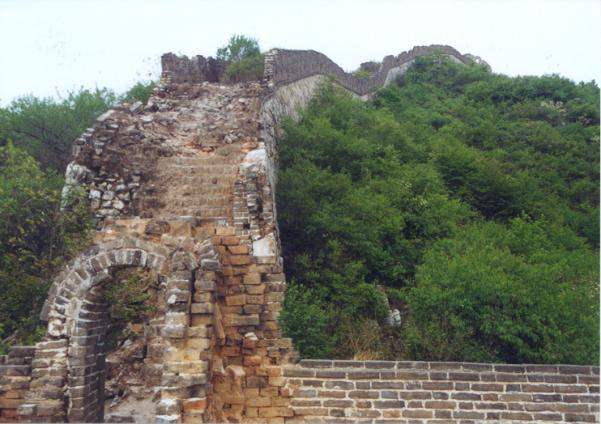
| The Great Wall (Mutianyu, the less touristy part) North of Beijing, CHINA (May 11-14, 2000) To the northwest and north of Beijing, a huge, serrated wall zigzags it's way to the east and west along the undulating mountains. This is the Great Wall, which is said to be visible from the moon. Construction of the Great Wall started in the 7th century B.C. The vassal states under the Zhou Dynasty in the northern parts of the country each built their own walls for defence purposes. After the state of Qin unified China in 221 B.C., it joined the walls to hold off the invaders from the Xiongnu tribes in the north and extended them to more than 10,000 li or 5,000 kilometers. This is the origin of the name Of the "10,000-li Great Wall". The Great Wall was renovated from time to time after the Qin Dynasty. A major renovation started with the founding of the Ming Dynasty in 1368, and took 200 years to complete. The wall we see today is almost exactly the result of this effort. "No body can be a true hero unless he has climbed along the Great Wall" goes the popular saying, and this clearly demonstrates the great importance which the Chinese attach to this unique monument. The Great Wall (in Chinese Wan Li Chang Cheng) today stretches about 6000km/3700 miles in all, from Shanhaiguan Pass in the east to Jiayuguan Pass in the west. It passes through Hebei, Tianjin, Beijing, Shanxi, Inner Mongolia, Ningxia, Shaanxi and Gansu. It averages 6 to 8m/20 to 26ft in height, rising to 16m/52ft in places, and is 6 to 7m/20 to 23ft wide at the top with battlements and watchtowers. Because of the poor condition of much of it only some sections are open to visitors. There are a large number of walls in China with a total length of 50,000km/30,000 miles |