| SPA 24 HRS SALOON RACE |
 |
 |
| It is 1969 our efforts with the Lotus powerunits had begun to get us noticed , Ken Coffey a jovial tyre retailer from Sale in Cheshire rang me to see if we would be interested in building him car for the 24Hr race at Spa- Francorchamps in northern Belgium.. This circuit has been one of the classic places for the sport since early in the 1900s ,Its shape has been constantly modified in the interests of driver longevity as the place has a mistique about it that seems to lead to acts that get to the border of bravery and sanity. Many very talented people have chalenged this place some regretably have perished . During the 60s and on there was amove to promote more long distance races at Spa-Francorhamps especially for saloon cars in multi class format over a full 24Hrs .. |
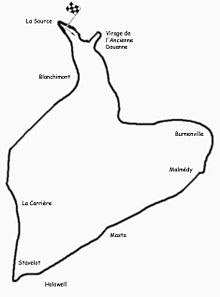 |
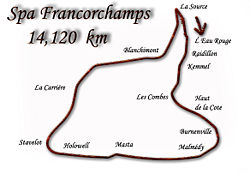
| The early circuit , with hairpin just after Eau-Rouge |
 |
 |
 |
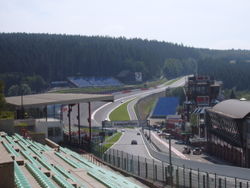
| The View today from the hill near La source down to Eau Rouge (Red -Water) then up the hill to_where Les Combes & Burneville used to run down to Malmedy and on to the Masta Straight, The pit exit road is a new inovation presumabaly to prevent the dificulties at night with cars exiting from the pits on the right, |
| Some of the charm of this event is the relaxed attitude that exists between the competitors and the Gendarmerie at least it was in the late sixties and early seventies. To this end there was no problem driving competeing cars on the road . The event Admin Control was in a park in the town of Francorchamps itself. The park had a smooth surface of compacted treelitter etc quite dry and firm , The RACB had set up scrutineering for both eligability and safety along with a check on the lights we were going to use for the hours of darkness., It was quite interesting to see the diferent teams pass through the technical checks one of whicch I recall a check on ground clearence with loaded vehicle and driver on board. The system to check involved pushing the car and driver over a wooden block embedded in the ground at the required height. any part of the car fouling on the block would mean the car would be rejected for some remedial work.to make it pass over..One of the works Alfas failed this and was hurriedly taken back to the service crew. They just waited untill there was no one watching and sent the car up on their ramp on their big transporter lifted it popped some wooden wedges in the coils of the springs to raise the car and returned the car to the scrutineers, voila!!! passed., just as well as the firt night practice was only a couple of hours away , one of the other Alfas had no cylinder head on it so some rapid spanner work was on its way.yet it still passed scrutineering. |
 |
| This is the circuit in use for the last two events we attended 1971/2 |
 |
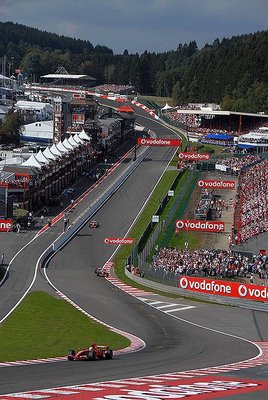 |
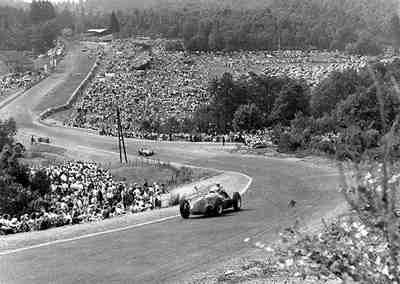
| A very early picture of the start area & of the climb up to Les Coombes with Eau Rouge down in the bottom, The original road to the hairpin is down on the right., It It shows clearly the amount of investment that has gone on between the two pictures the right hand one is I think curent within a couple of years. |
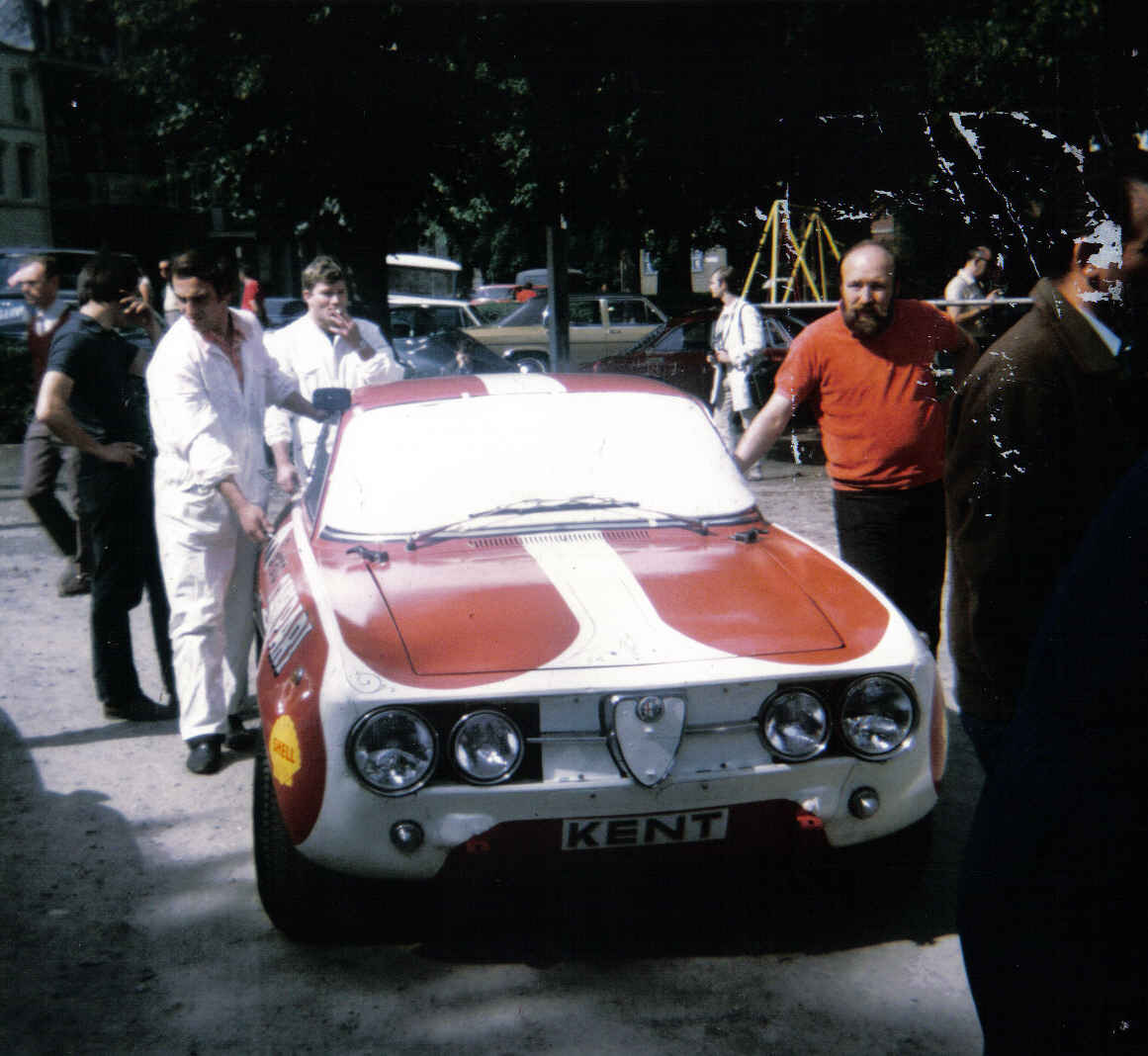
| Works assisted Alfa GTAM in KENT livery |
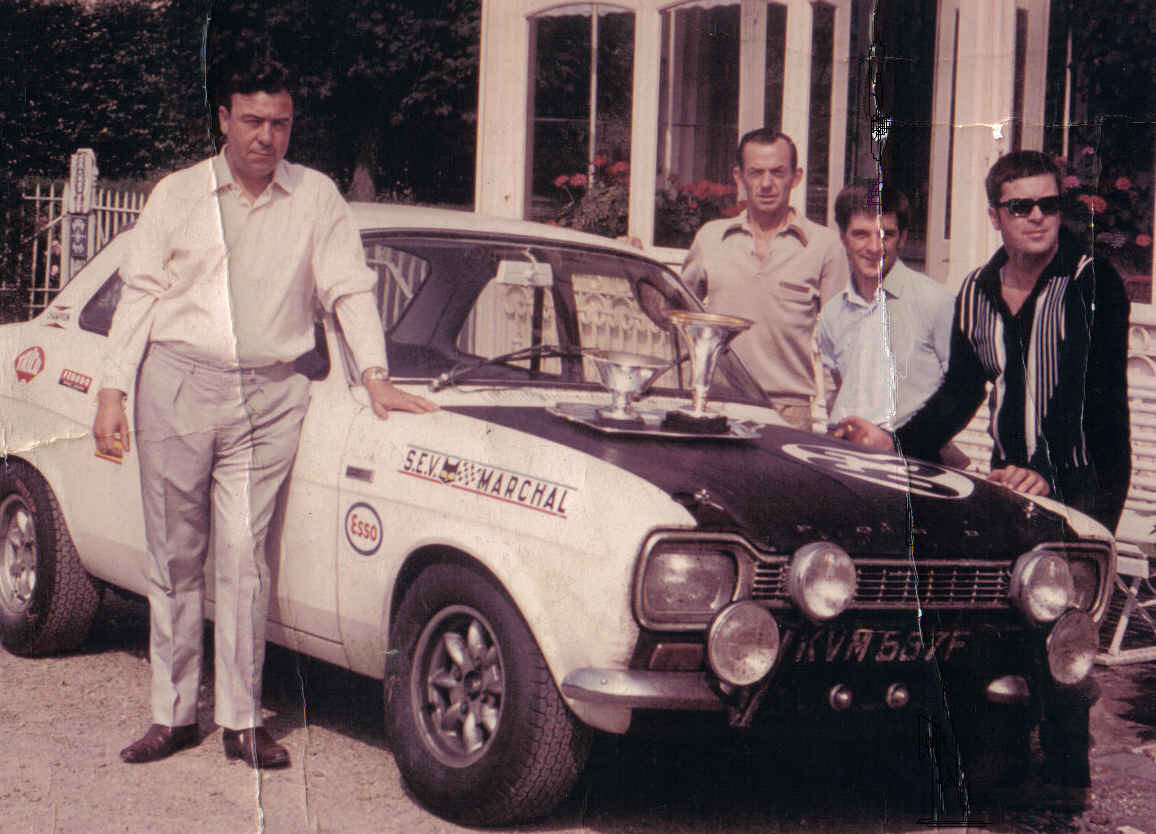
| The 1969 Ken Coffey/Nigel Moores event with Paul Kelly & Bob Brookes on left & me Ken at the drivers door. 12th overall Ist all uk car and crew 3,665km at av of 152 km/hr This car was reworked and prepared for the 1970 event finishing 16th overall 2nd in class 3777km at 157km/hr average spent least pit time of all finishers.drivers were Ken Coffey and John Myerscough. With a repeat performace the next year 1971 with the rally wings fitted , mechanically similar to 1970 with the 1970 drivers John Myerscough and Ken Coffey The cars final event with us was 1973 drivers Ken Coffey and Ted Worswick going well untill aproximatly half distance when we had a half shaft shear out on the circuit , could not be fixed by the driver alone without outside assistance so we DNF and abandoned the event.Regulations !!!!! Events of this nature when funded privately re extremely dificult to prepare for if money has to be spent carefully .Past experience plays a big part in the decisions as to what has to be lifed and what will go again with suitble checks. These four events enabled Ken to sucessfuly apply to join the BRDC which he enjoyed imensly, unfortunately he passed away in 2006 . one of the sports characters. These results bear witness to the standards of preparation put into the car and the very high standard of the drivers ability to keep focused for the whole of their three hour stints through day and night . |
 |
 |
|
 |
 |
 |
| Similar shot as the one on the left the scene as it is today |
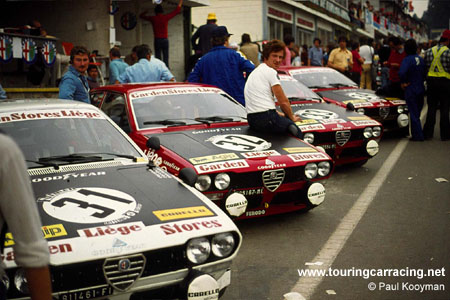
| The waiting Time |
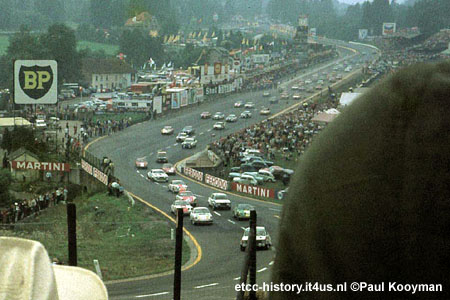
| Scene at the start mid to late 60s |
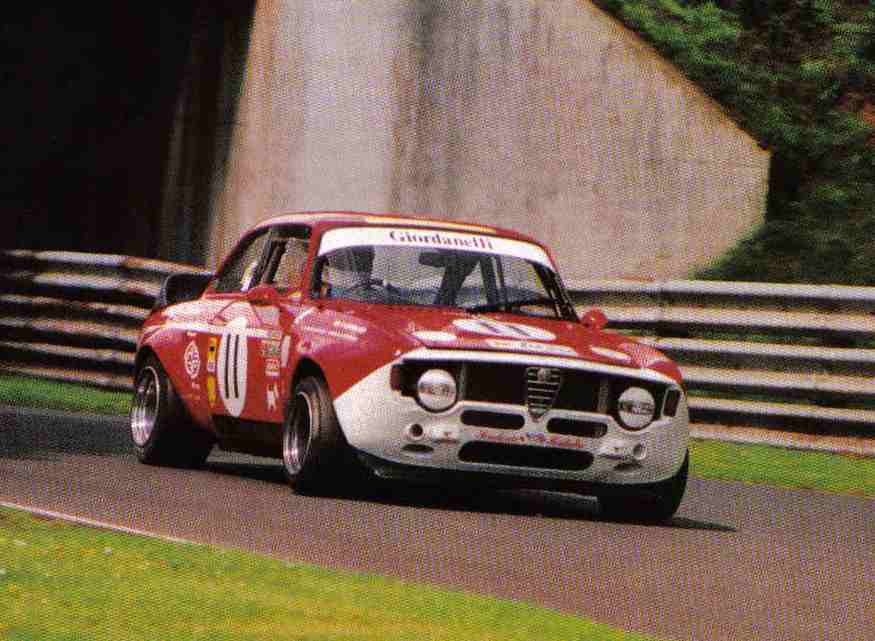
| The Kings of the longdistance race the Alfa GTA/M |
|
 |
 |
 |
 |
|
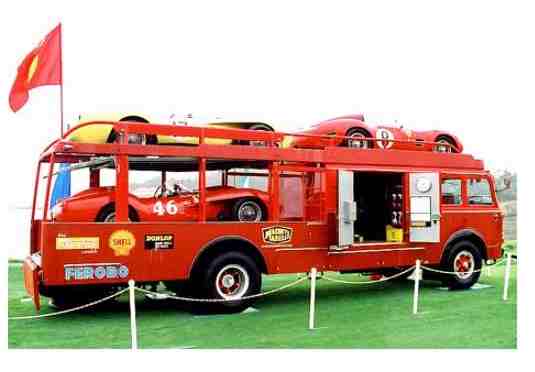 |
| This is the type of Fiat transporter used by the works Alfas for the Spa 24Hrs in the 60s races usually loaded with 3 cars and sometimes one on a trailer . The top deck was extendable rear wards to give an excellent underside working facility. |
 |
| The event typically had a start time of 1500hrs on Saturday afternoon the picture of Paul Kooymans opposite gives an idea as to the traffic density in the opening stages. Afterall this is a distance race not a sprint , although in latter years the pace set by the front runners has been more at a sprint pace than a long distance one. The driving was normally divided between two although not unheard of for three,Driver change times and fuel capacity and consumption had to be co-ordinated as the time in the pits had to be won back on the track . The selection of pit position was important as the pits were on the downhill slope from La-Source to Eau- Rouge this slope was steep enough that any spilled liquids found their way down the hill end made the pit area lower down a sorry place to be after several hours, and a few water and oil leakage problems from work done by the teams higher up the hill, this was usually earmarked by the continental works teams leaving the mucky bit to the Brits.As the race progressed and things settled down patterns began to emerge and it became easier to predict the likely outcome ,enabling pace to be adjusted as required. Towards the end of the 24hrs some of the leaders could be in a position of having five or six laps lead. In those days lap times were around 4to 5 minuites on the 14km circuit so rather than risk disaster with a tired motor they would park up on the exit of La-Source and wait for the clock to rundown , Assembling as a team and as the clock read 3.00 oclock rolled down the considerable slope to finish ,more than once the winning team qualifying for the prestigious Cou-de-Roi (kings cup) finished this way |