This will be the last report until October 11.
9/13/09
According to the World Economic Forum,
The September 21 issue of
Forbes Magazine contains an article (page 86 – Somewhat Socialized Medicine) on
another healthcare model that works – the one in
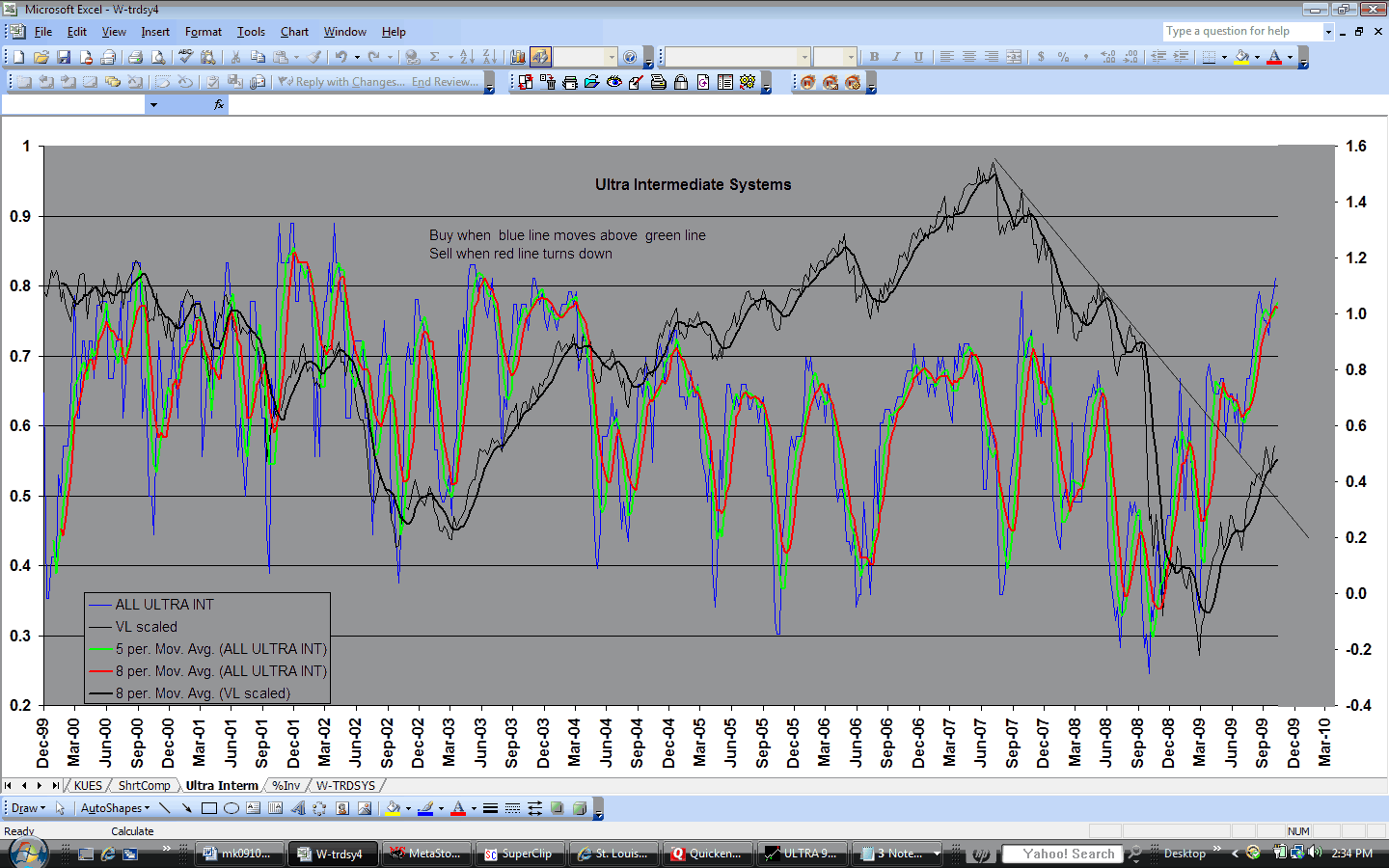
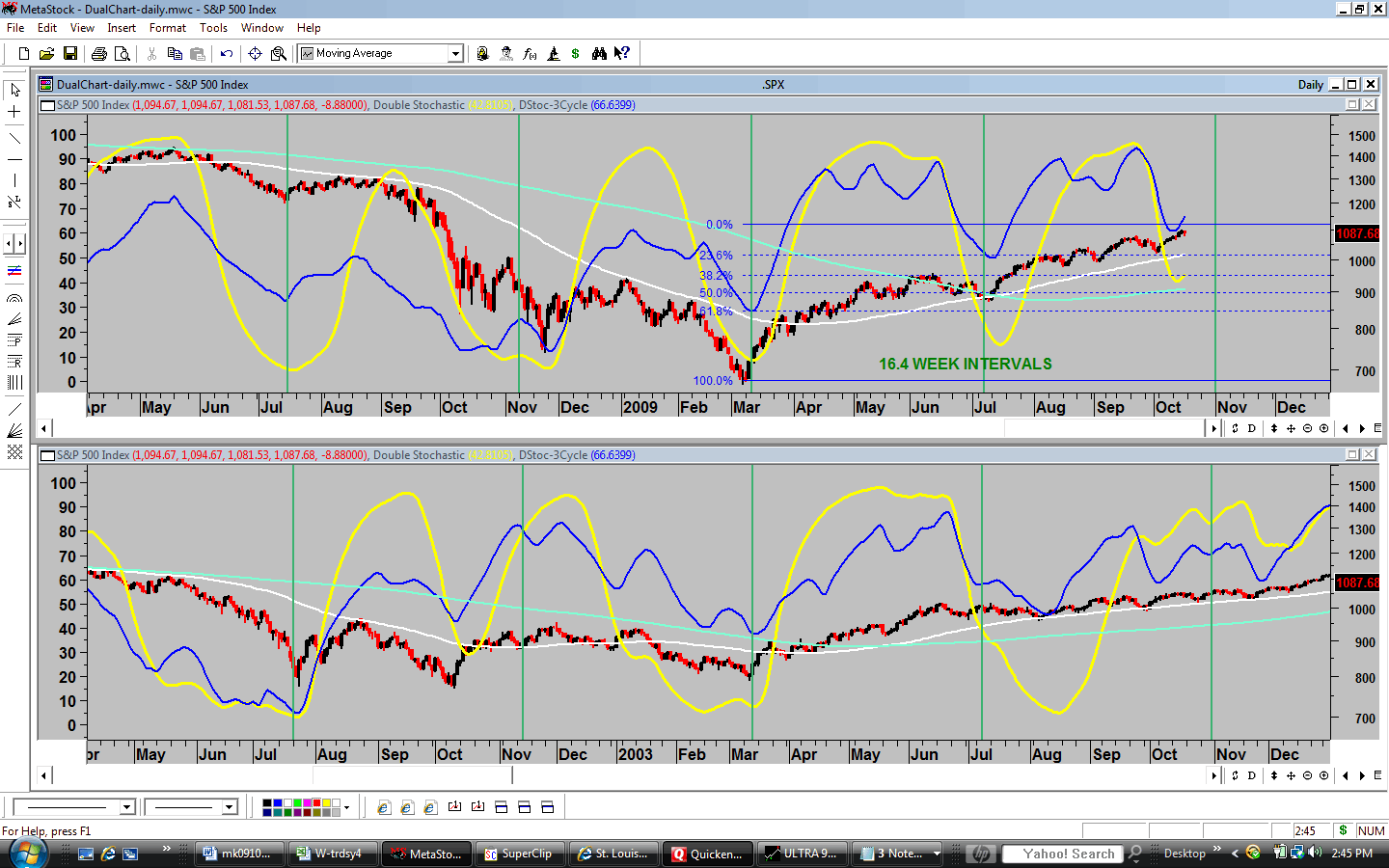
The healthcare feud hasn’t hurt the rising trend of the market. The rising 13-day cycle was able to overcome the aging 26-day cycle with ease last week (http://www.geocities.com/petegersb/MarketCap-Daily.GIF ). All of the indexes (http://www.geocities.com/petegersb/SP500.GIF, http://www.geocities.com/petegersb/NasdaqComposite.GIF) and the advance-decline line (http://www.geocities.com/petegersb/TotalMarket.GIF ) surged to new recovery highs. All of the composites and the DStoc for the 10-week cycle turned up, indicating that September 2 was the bottom of a 10-week cycle that contracted to 8 weeks – half the new norm of 16.4 weeks for the 20-wk cycle. So stocks are now a week into the second 10-week cycle of the current 20-week cycle. And the 2nd 20-wk cycle of the 9-month cycle that began in March is now over 9-weeks old, i.e., middle aged. It very likely will have a right translated peak when the current 10-wk cycle peaks. Assuming that this 10-week cycle will also have a right-translated peak, it should arrive no sooner than the first week of October. Sometime in October, stocks should begin the descent into the 9-month cycle low. The ULTRA Intermediate Composite has taken the first step toward signaling the beginning of such a downturn (http://www.geocities.com/petegersb/UltraIntermediate.GIF ). It has turned down, but has not yet crossed the moving averages as required for an intermediate-term sell signal.
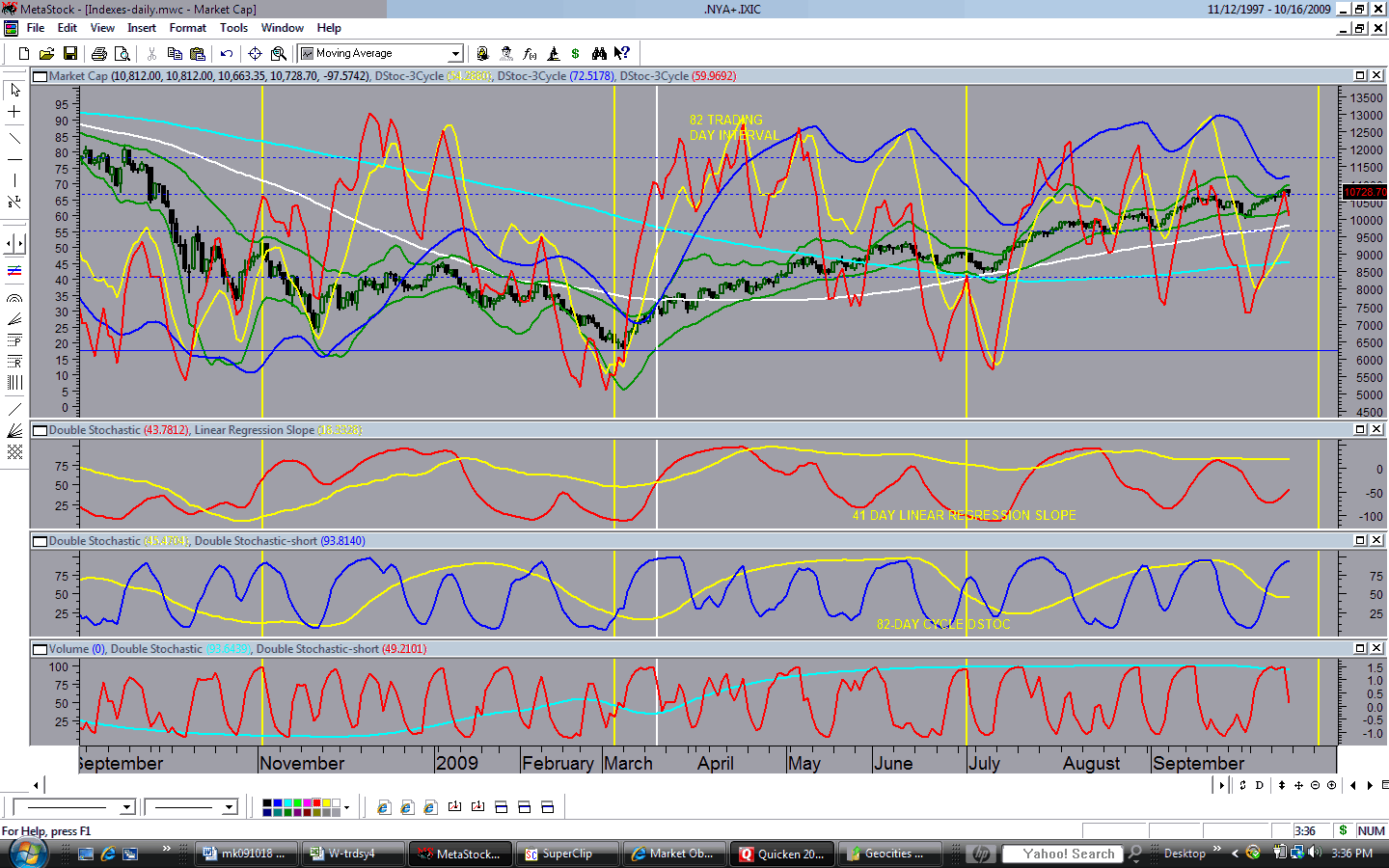
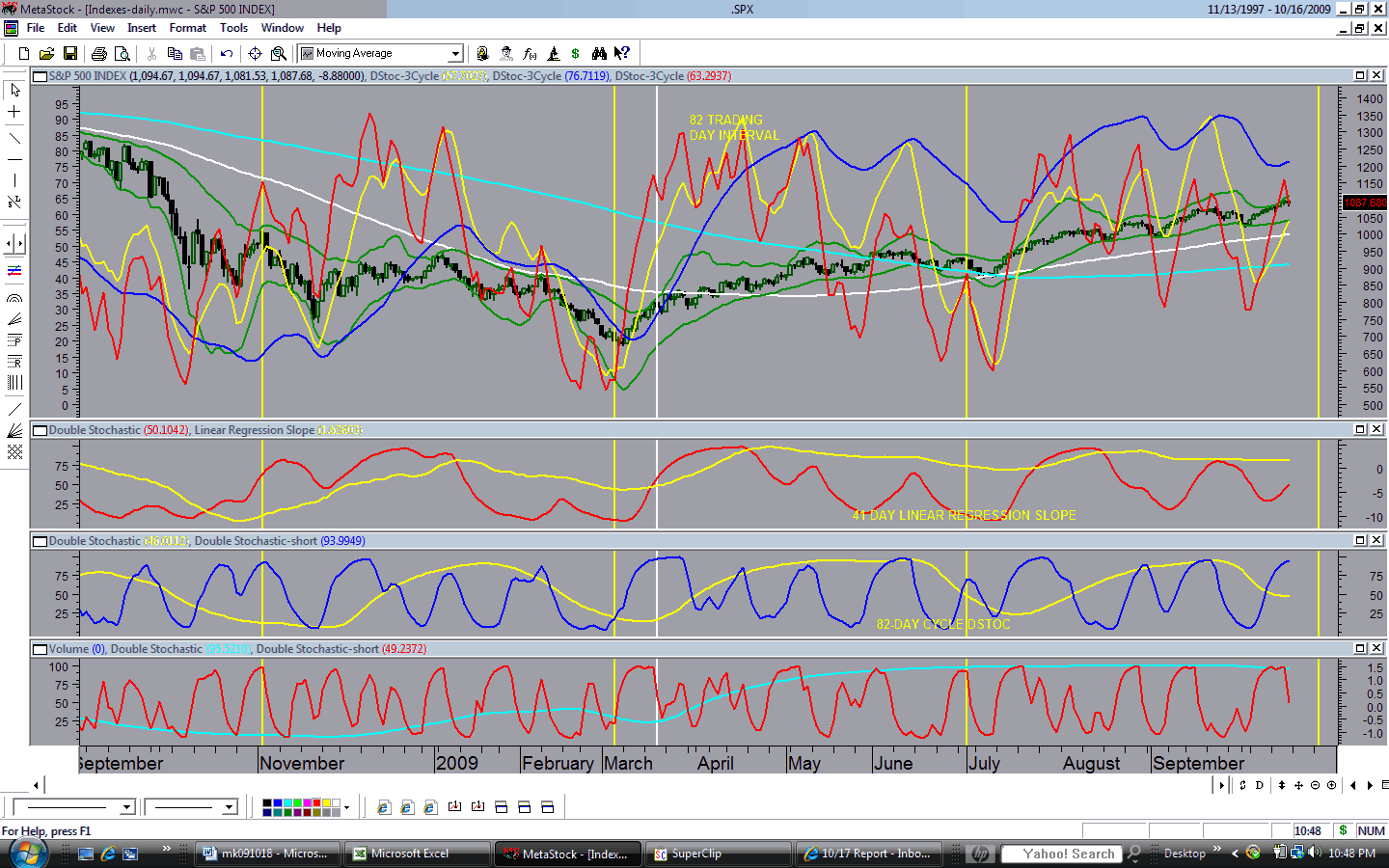
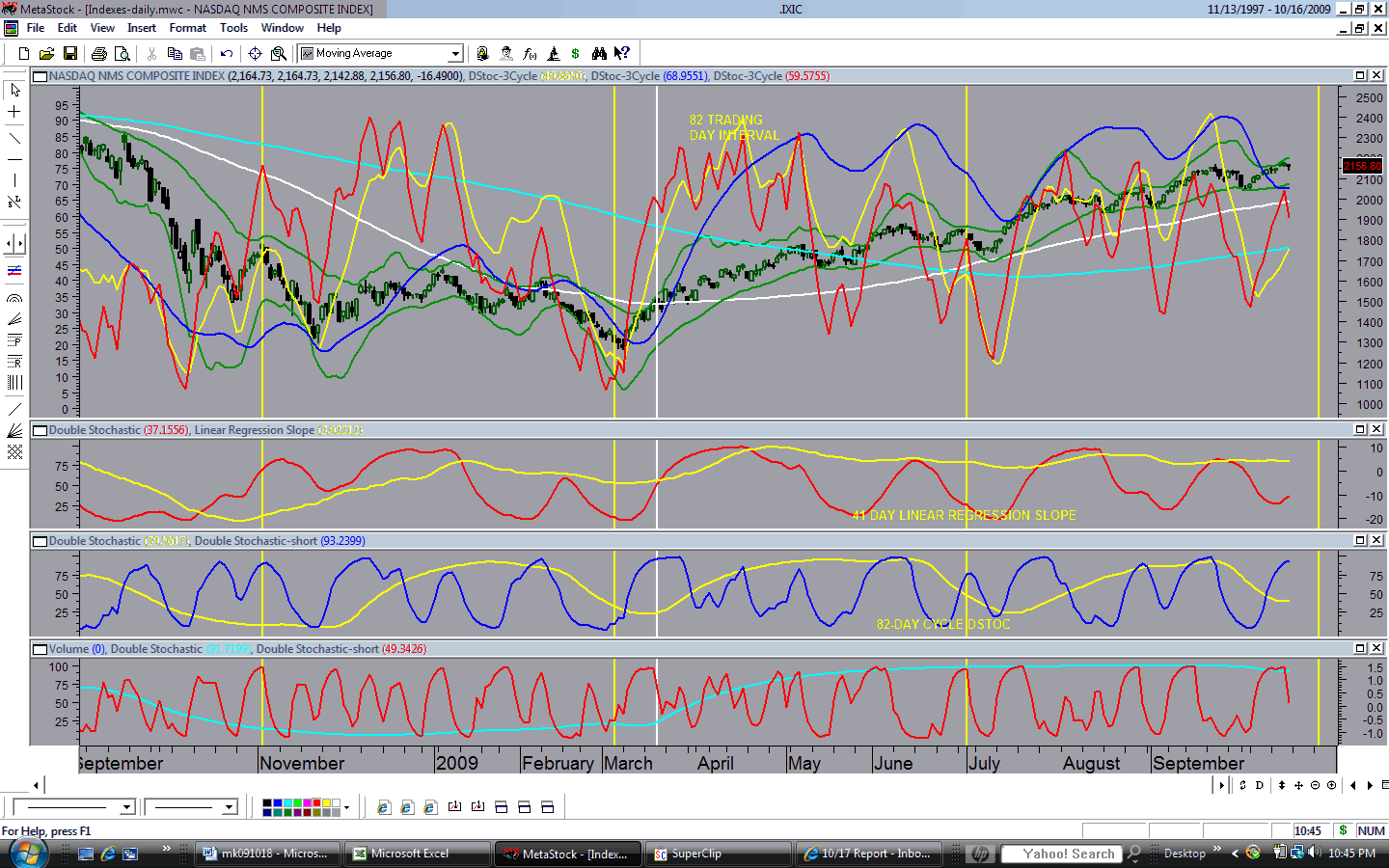
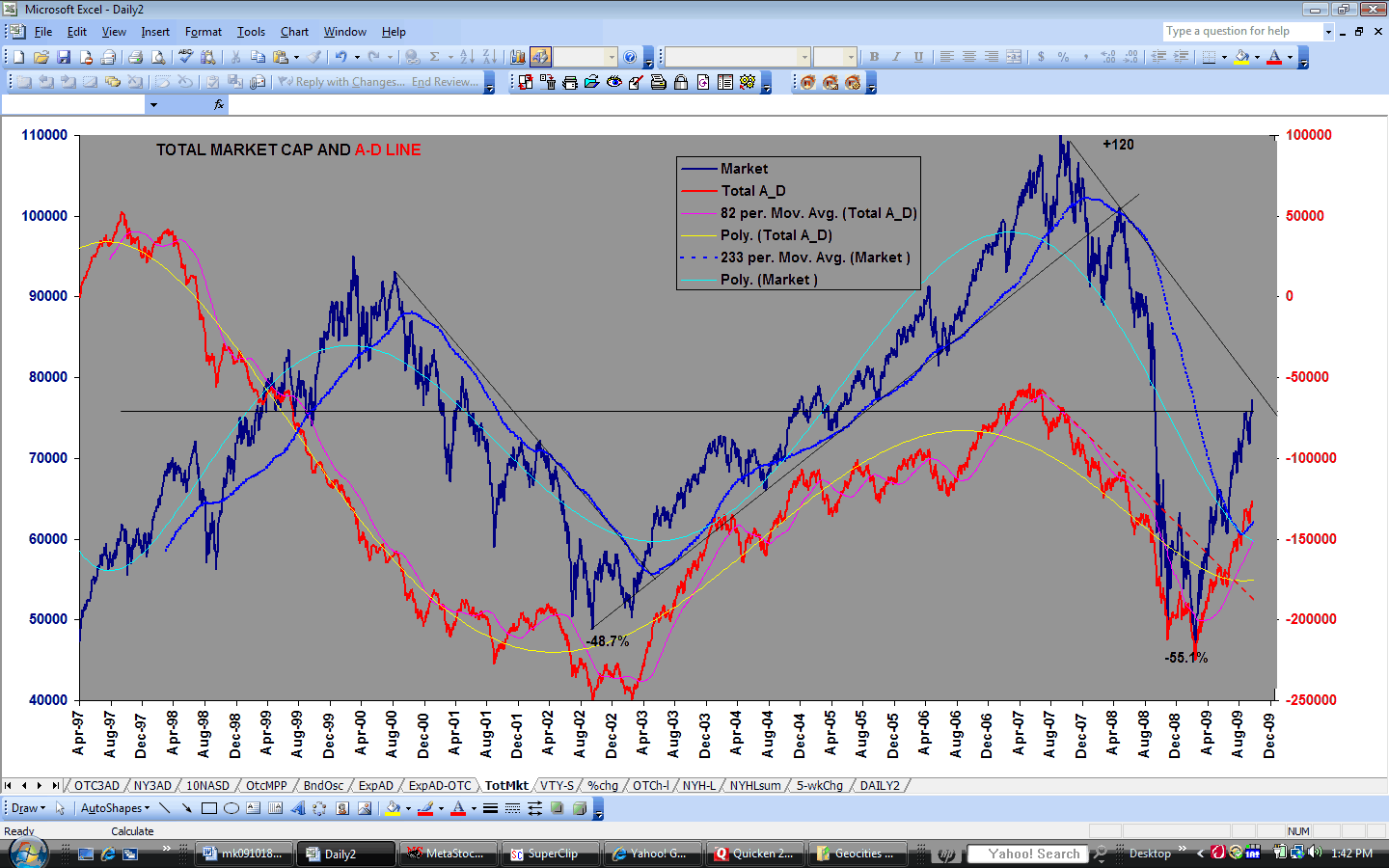
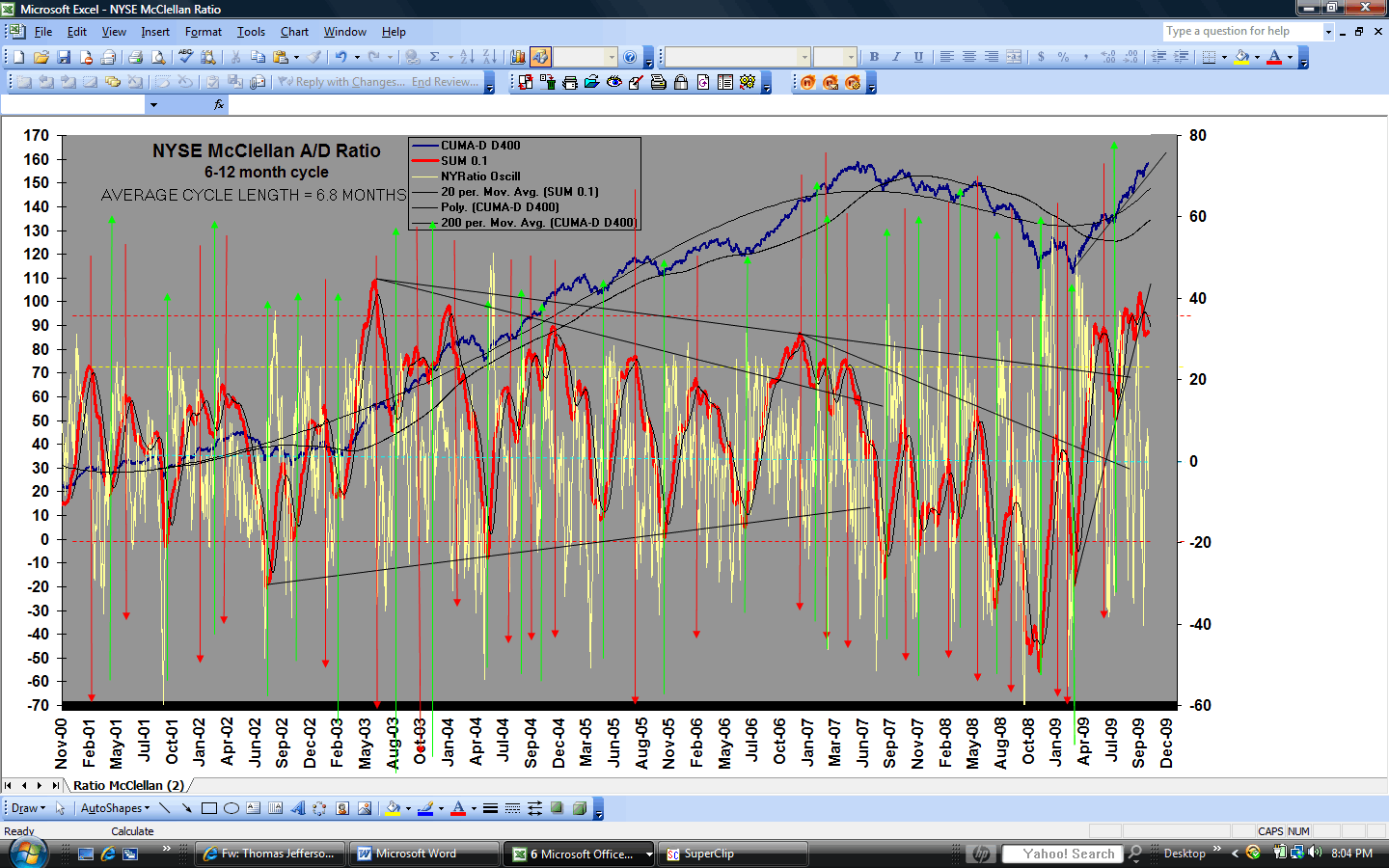
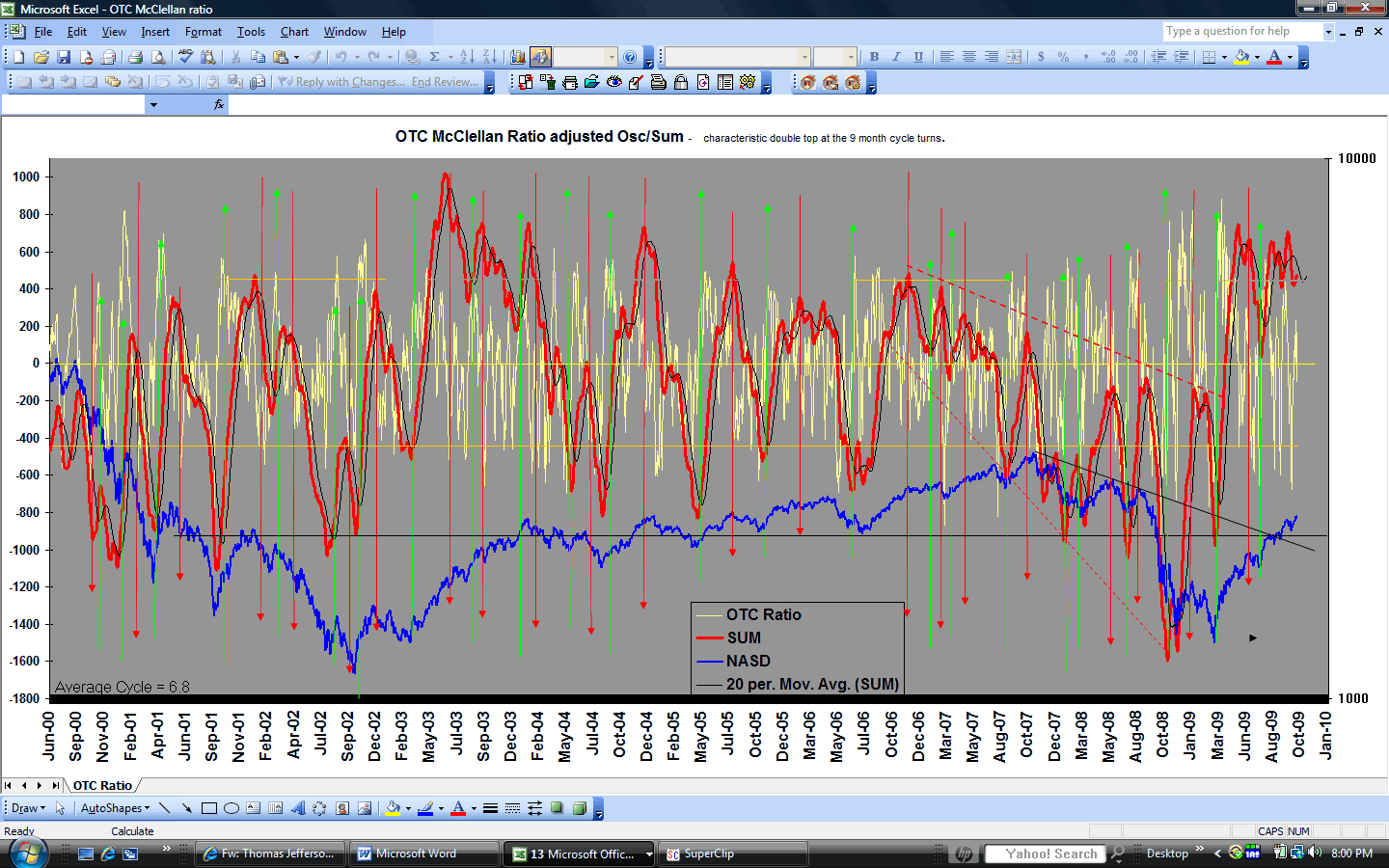
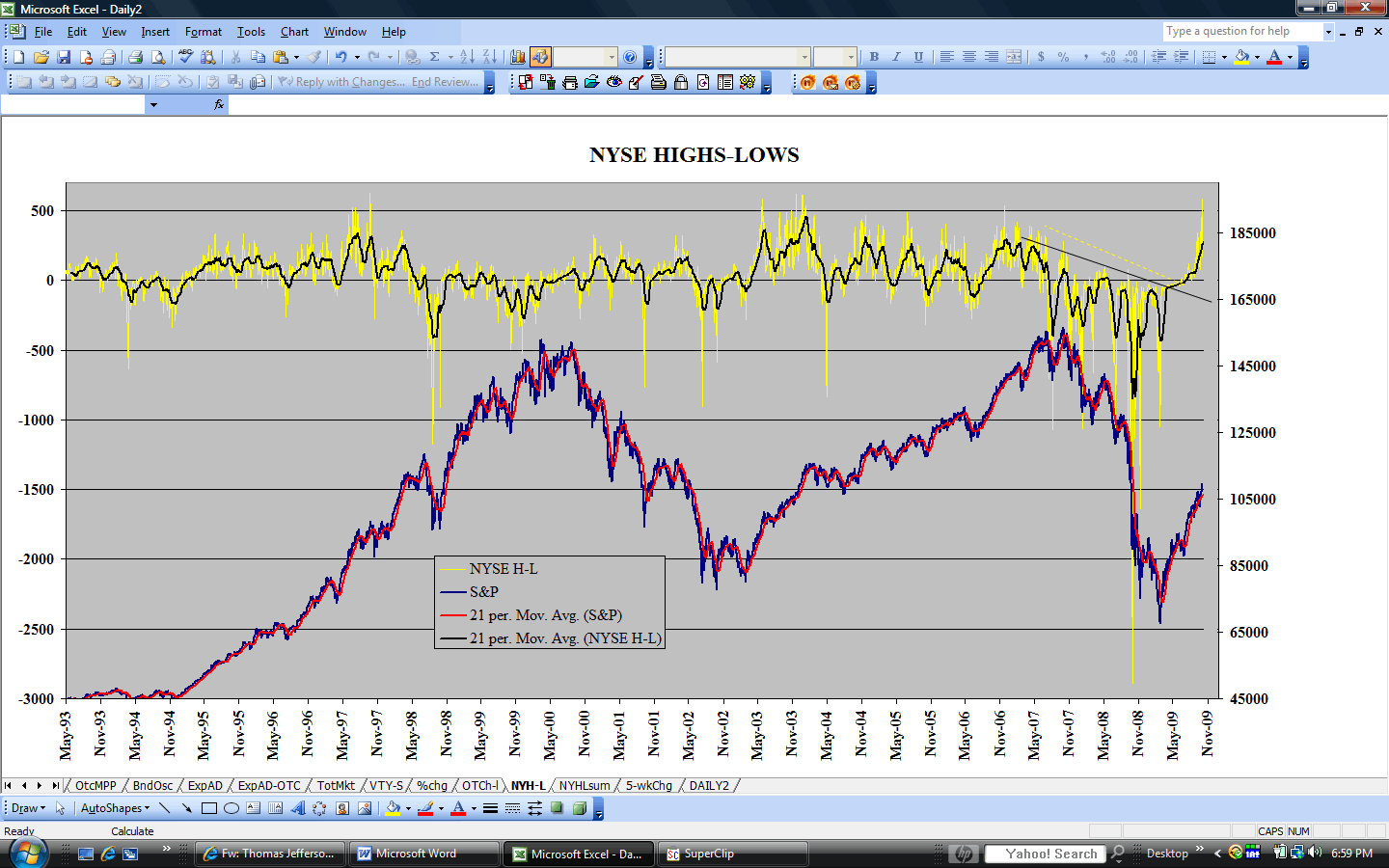
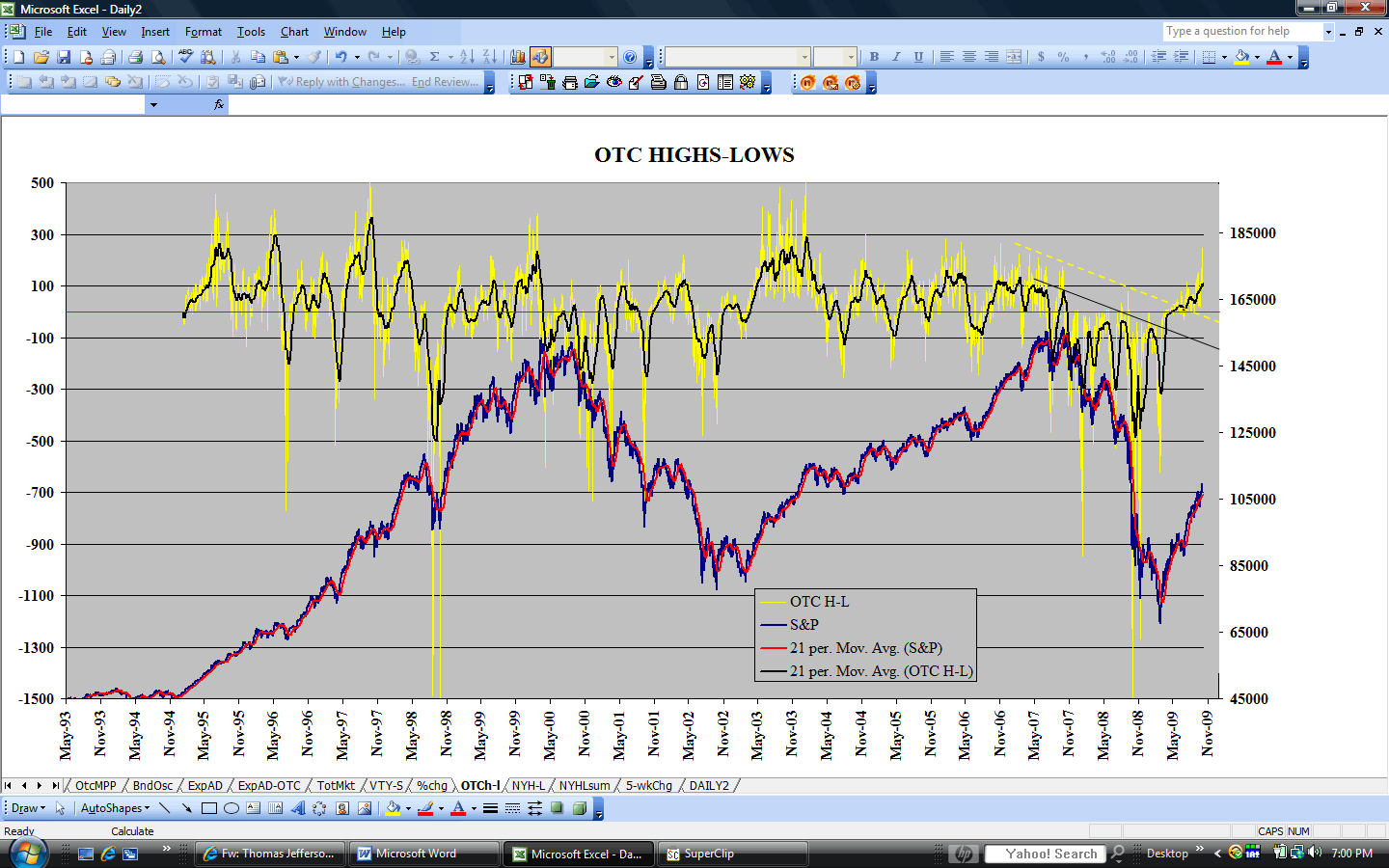
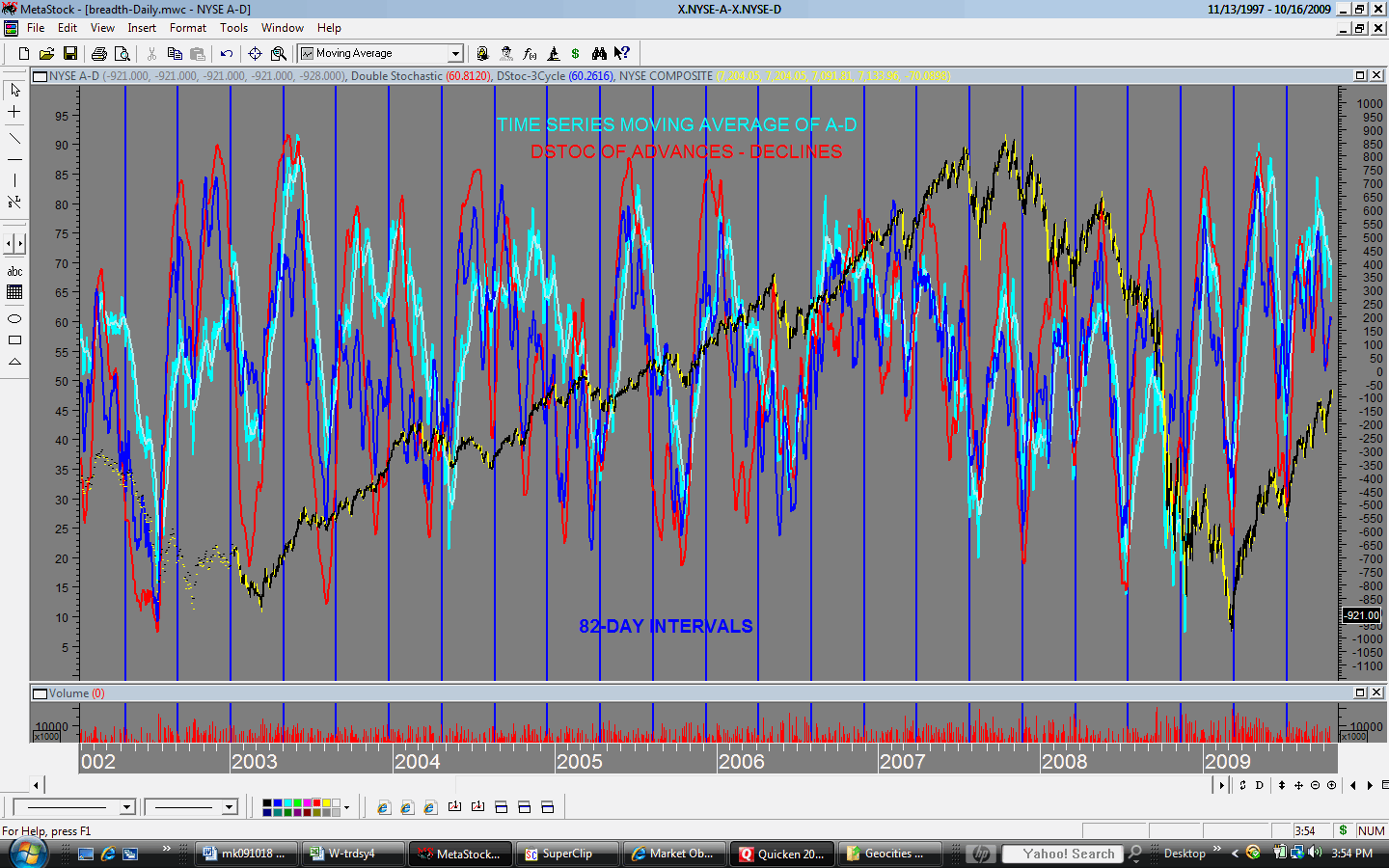
Breadth indicators continue mostly favorable. The Total Advance decline line (http://www.geocities.com/petegersb/TotalMarket.GIF ) again led market capitalization in making a new high (on 9/7 vs. 9/8). And it has recovered to year-ago levels whereas the Market cap remains well below year-ago levels. The McClellan Summation indexes (http://www.geocities.com/petegersb/A-Dsummation-NYSE.GIF , http://www.geocities.com/petegersb/A-Dsummation-OTC.GIF ) remain near extreme highs, but both are rising once again. Many pundits point to the low number of new highs as reason to be concerned (http://www.geocities.com/petegersb/HighLowNYSE.GIF , http://www.geocities.com/petegersb/HighLowOTC.GIF ), but there are mitigating circumstances. The computation is made over a 12 month period and the indexes remain well below year ago levels, so one wouldn’t expect many new highs - despite the strength of the rally. New highs probably will surge in October – just in time to help turn the crowd bullish before the 4th quarter correction. Perhaps the most ominous breadth indicator is the 82-day oscillator chart (http://www.geocities.com/petegersb/A-D_DStoc_NYSE.GIF ) that shows negative divergences in the DStoc of Advances-Declines. On the same chart, the time-series 82-day moving average of A-D continues to show higher highs and lows in the short-term, but it appears to be topping at a lower level than the last 82-day cycle. Furthermore, we are 46 days into this dominant cycle, so it’s probably past middle age and ripe for a decline. But in 2003 (http://www.geocities.com/petegersb/2003_Comparison.GIF ), the rally continued well beyond this point so you don’t want to exit too early. Use stops to protect against riding the coming correction very far down.
Sentiment
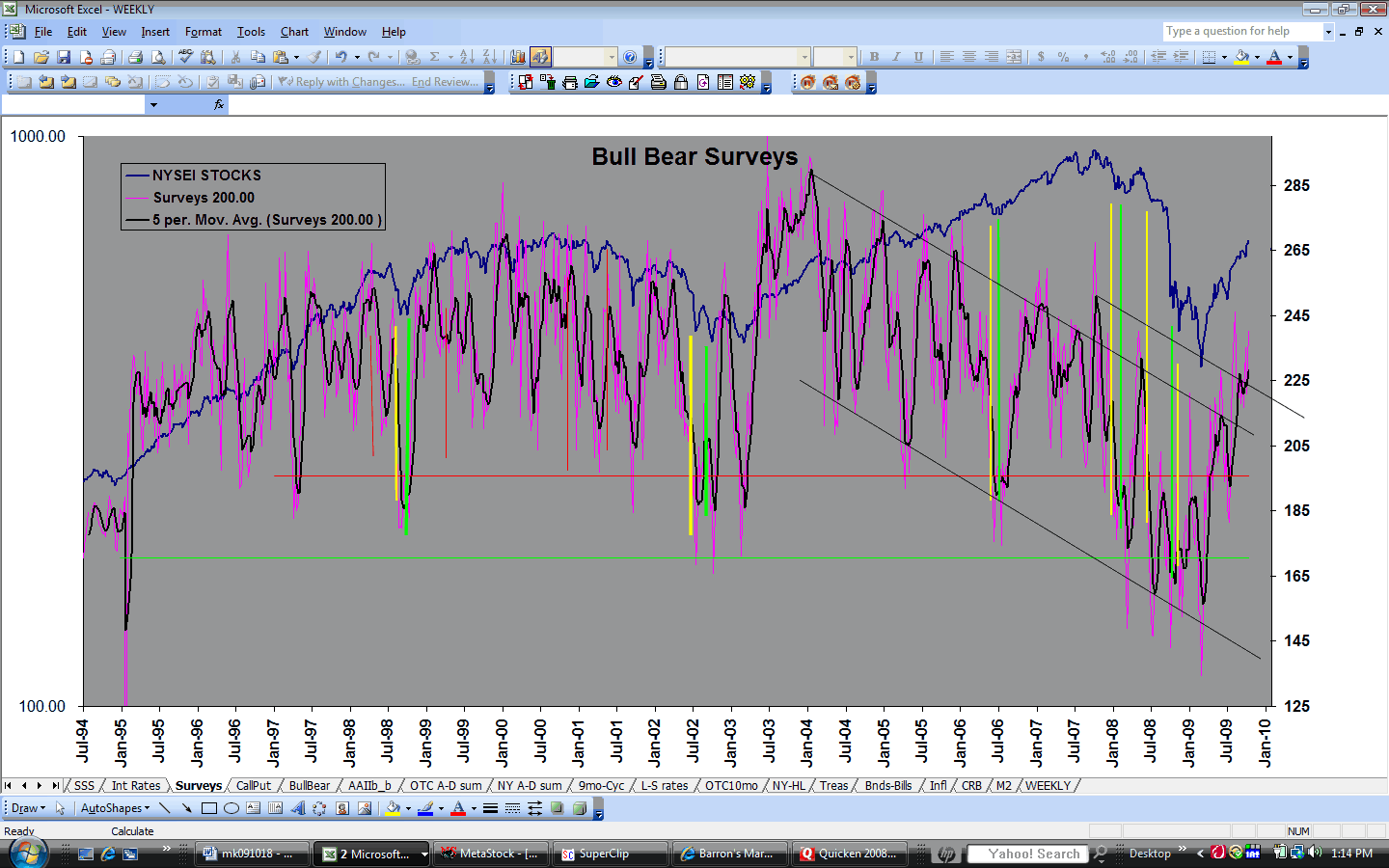
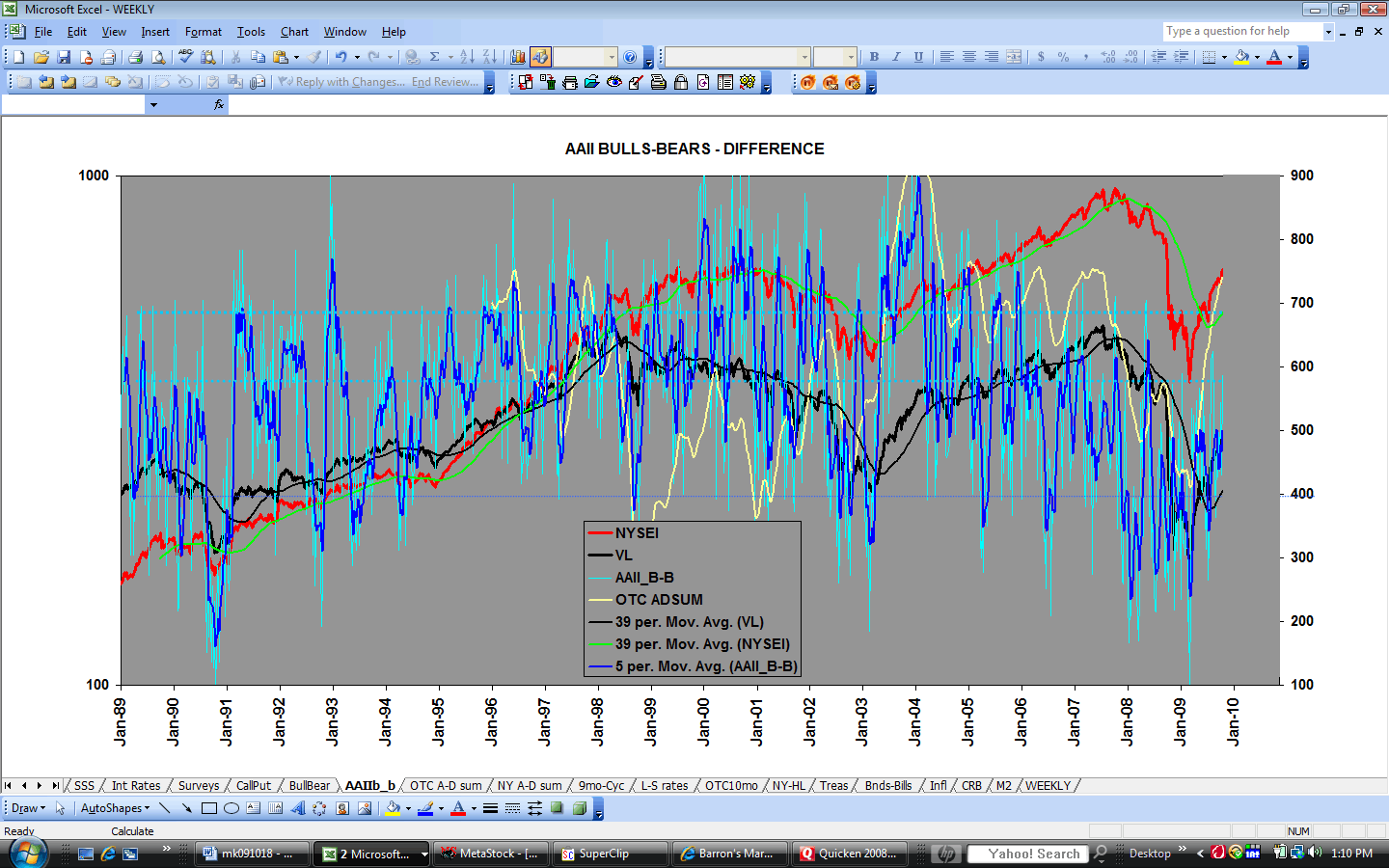
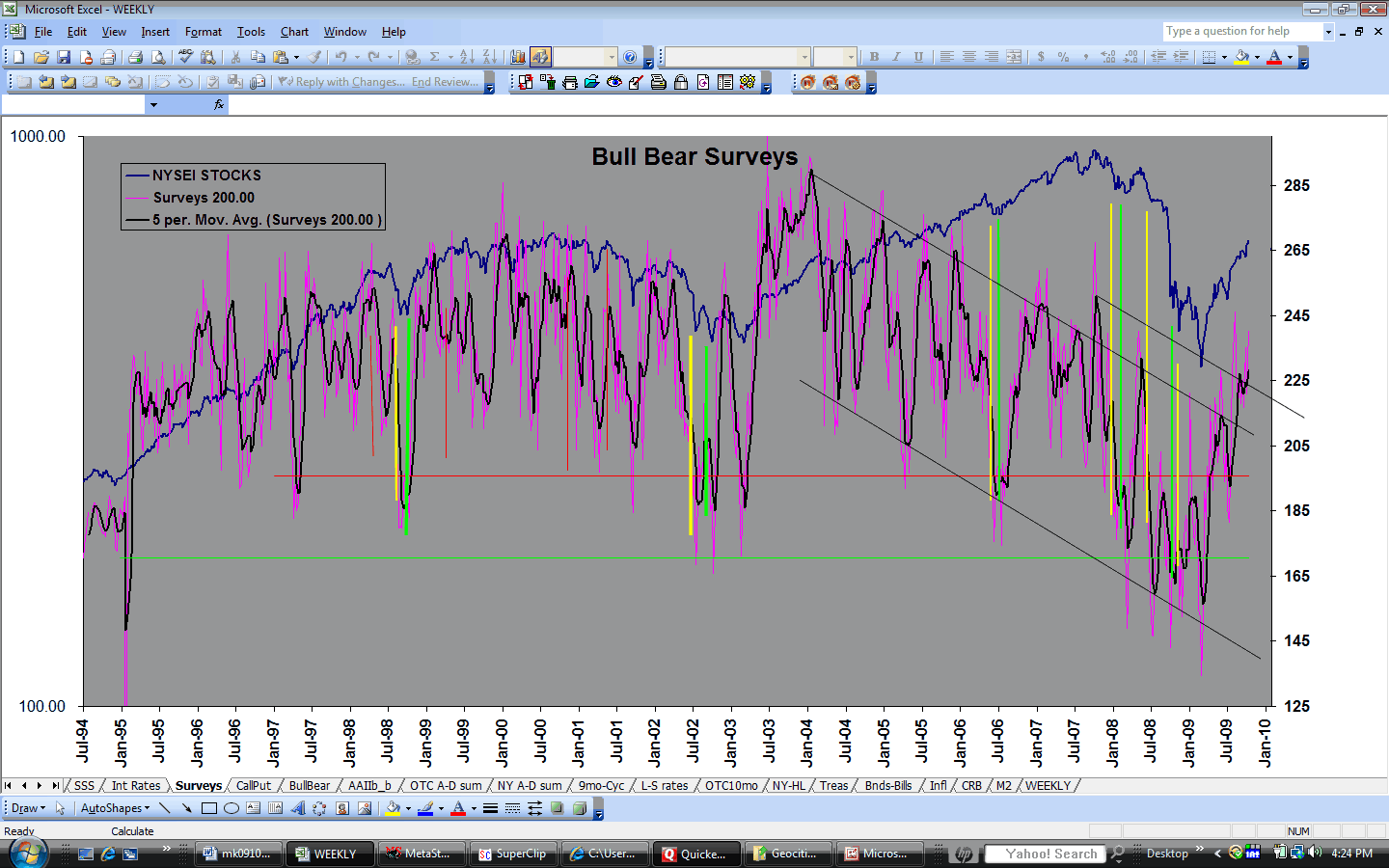
Both Advisory Services (http://www.geocities.com/petegersb/InvestorsIntelligence.GIF ) and Individual Investors (http://www.geocities.com/petegersb/AAIIsentiment.GIF ) were less optimistic in the latest than in the prior week, but will probably change when last week’s strong market is reflected in their opinions. But combined (http://www.geocities.com/petegersb/SurveysCombined.GIF ) the 5-wk moving average has turned down – a sell signal that merits some skepticism due to the lack of optimism among the individual investors.
Fundamentals
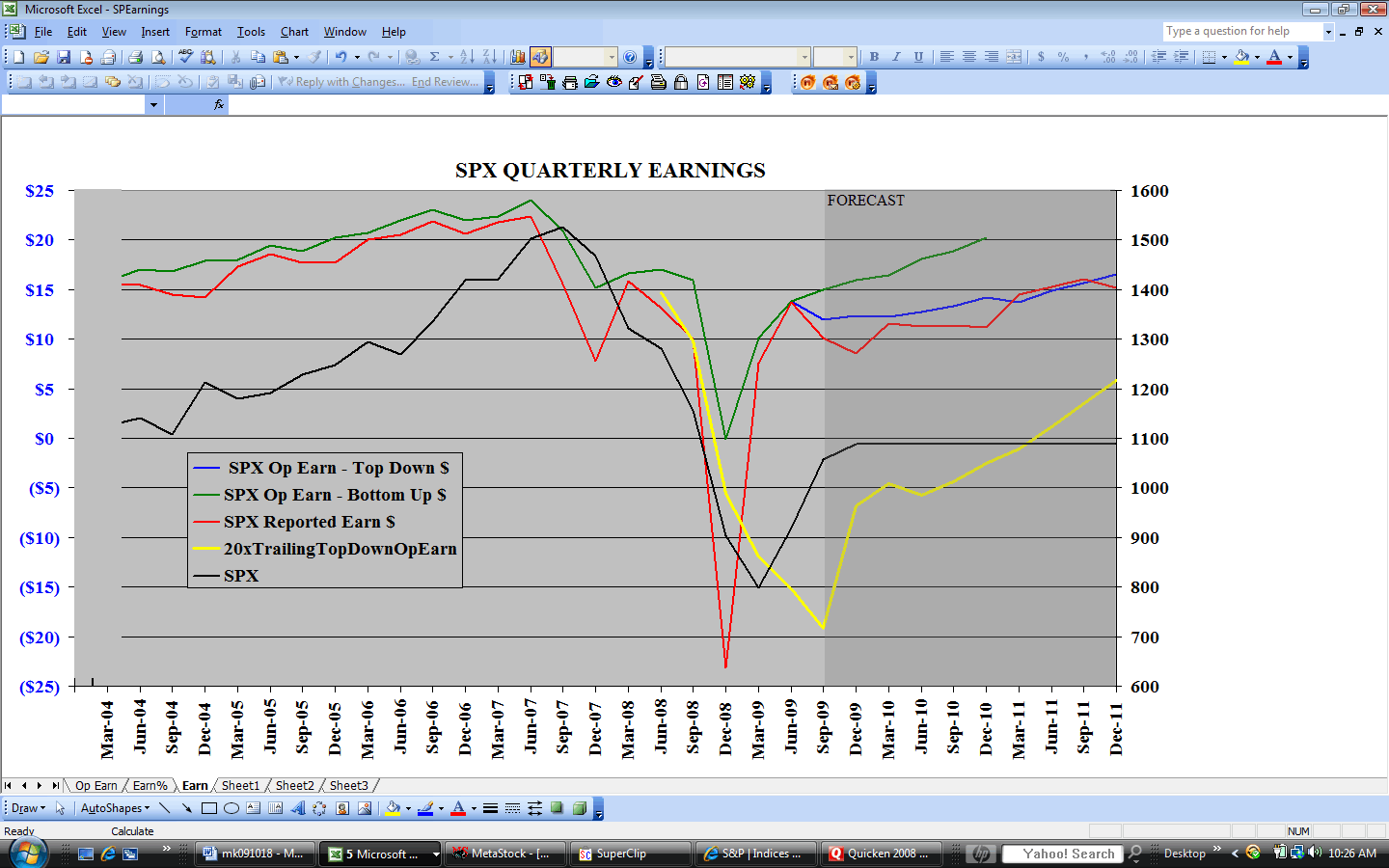
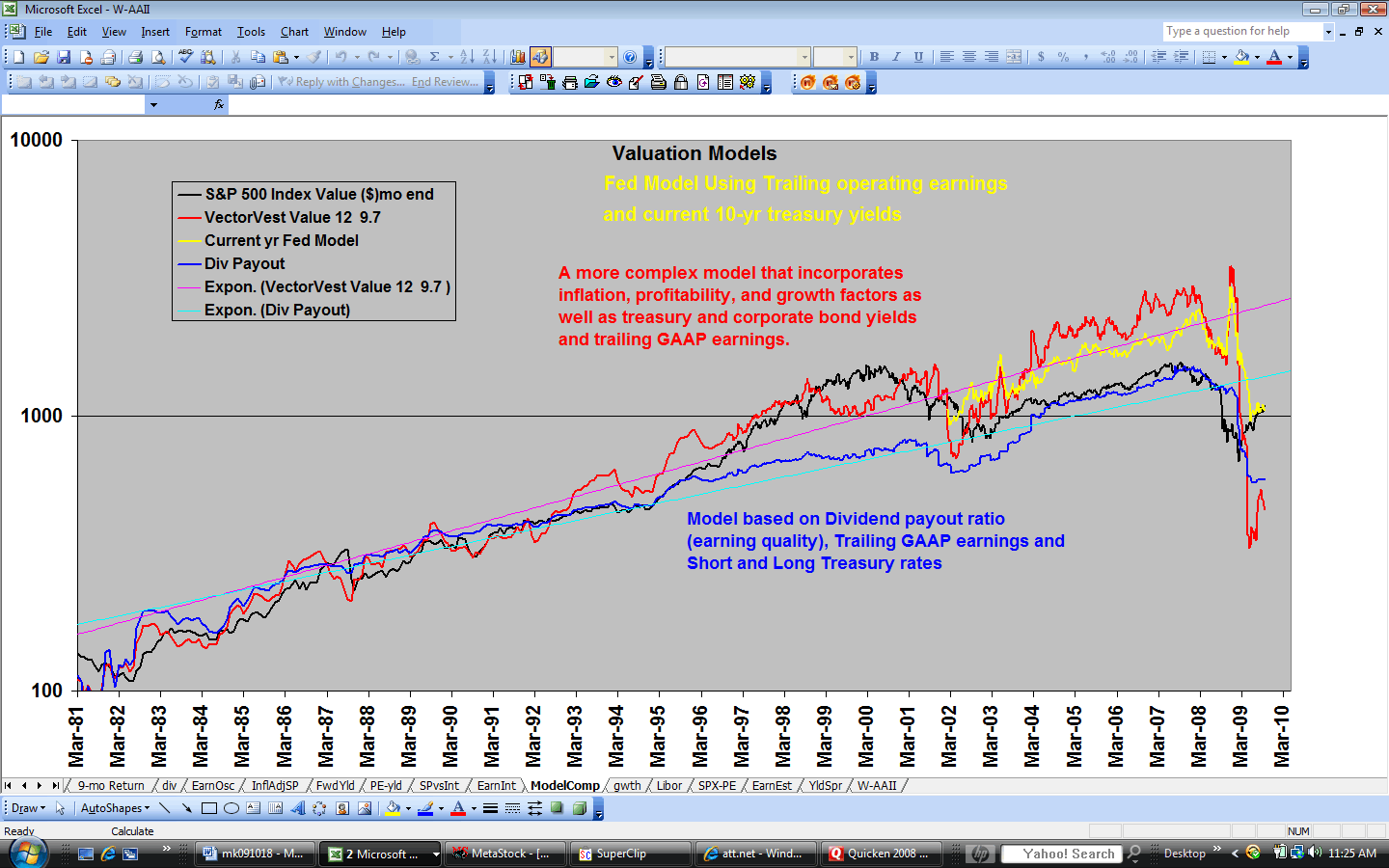
Standard & Poor’s has revised its earnings estimates (http://www.geocities.com/petegersb/EarnY-Y.GIF ). It expects modestly higher operating earnings each quarter through the end of 2010, for P/E’s of 21.7 on this year’s operating earnings estimate of $48.01 and 19.8 on next year’s estimate of $52.63 - >both uncomfortably high valuations. Its bottom-up expectations are considerably higher at $52.10 and $72.98, but those estimates generally decline to meet top-down estimates as time progresses. S&P also expects lower reported earnings in the 3rd quarter of this year, and still lower numbers in the 4th quarter ($9.83 and $8.49 compared to $13.67 in the second quarter). That’s a 26.3 multiple on this year’s reported earnings expectations of $39.62. It’s a 22.7 multiple on 2010 expectations of $45.84. Obviously investors are expecting something much better, or are relying on the Fed Model (http://www.geocities.com/petegersb/ValuationModels.GIF ), which values the SPX at 1065 based on current operating earnings and current interest rates. The other models I track are not so optimistic.
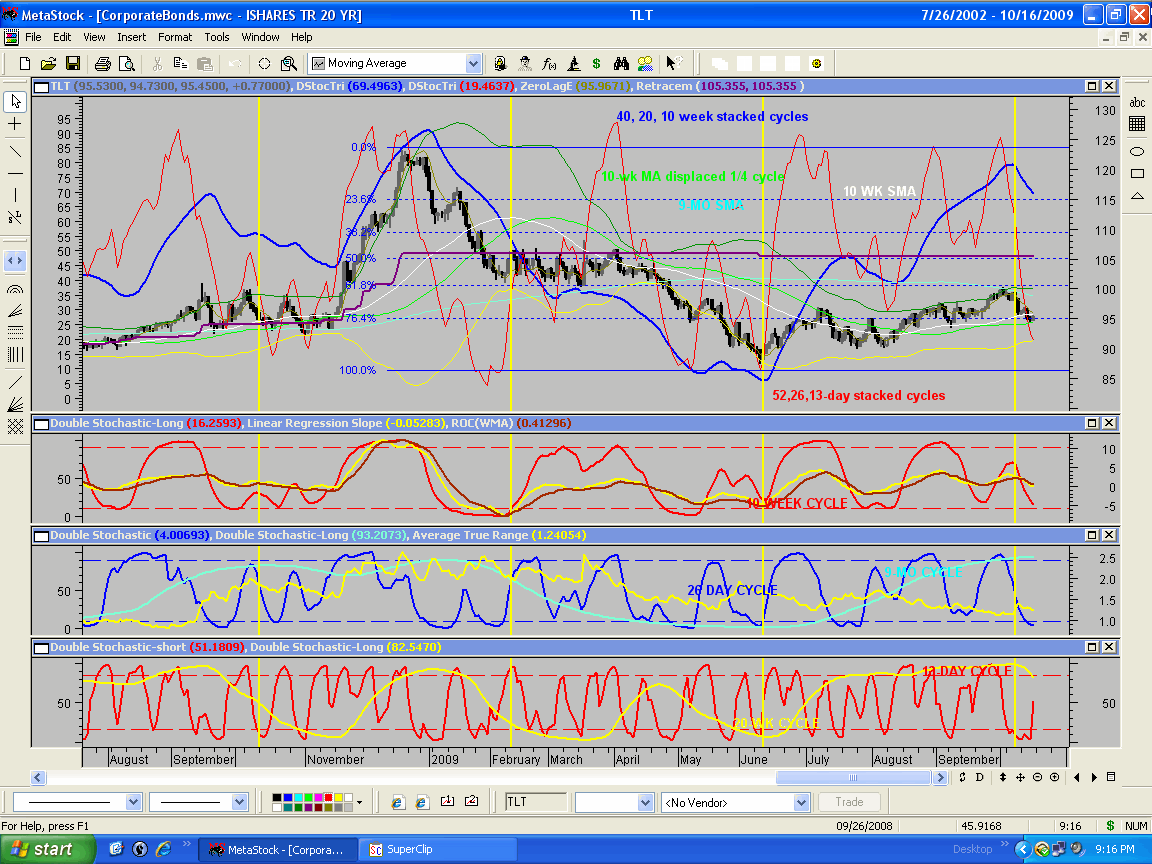
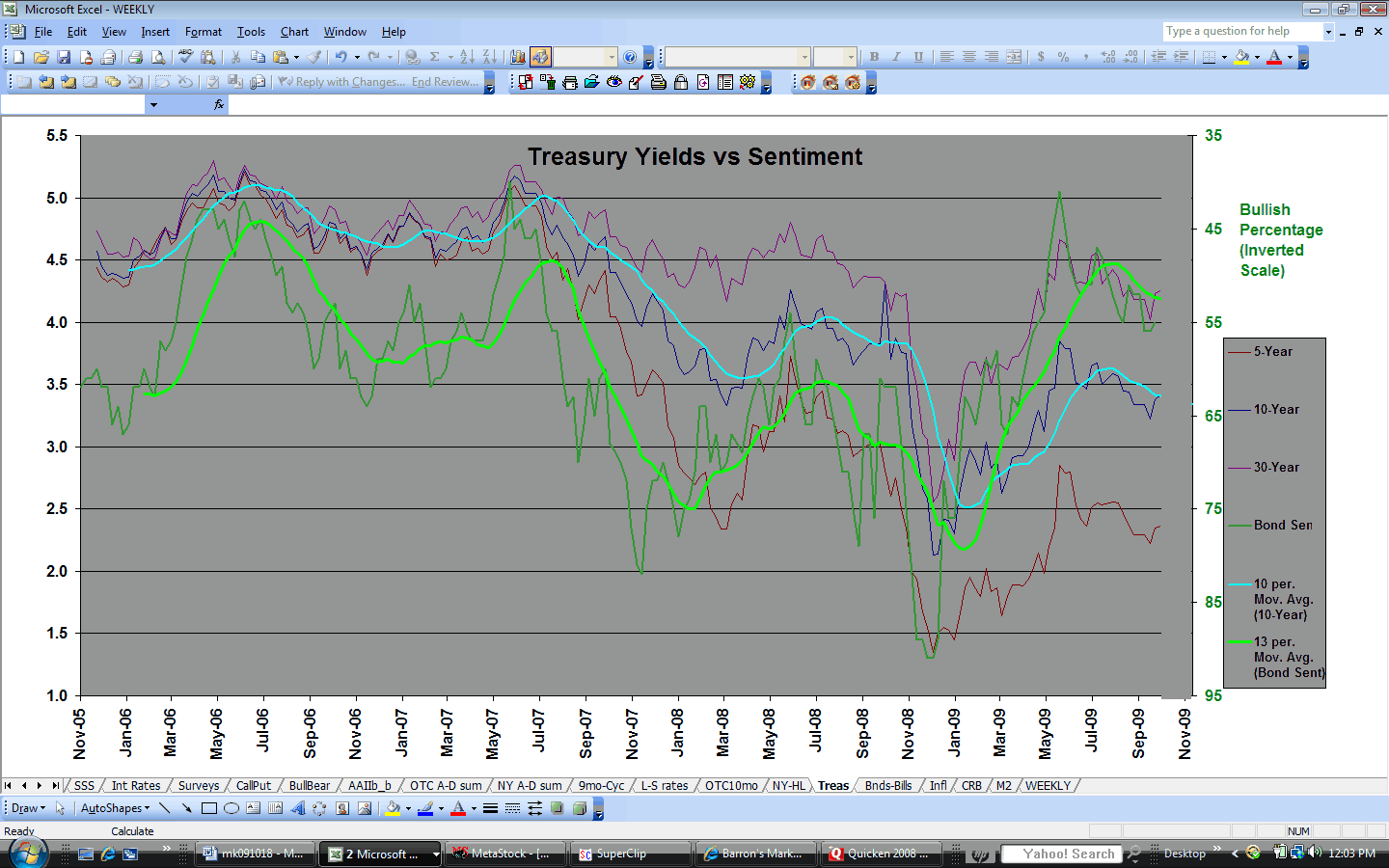
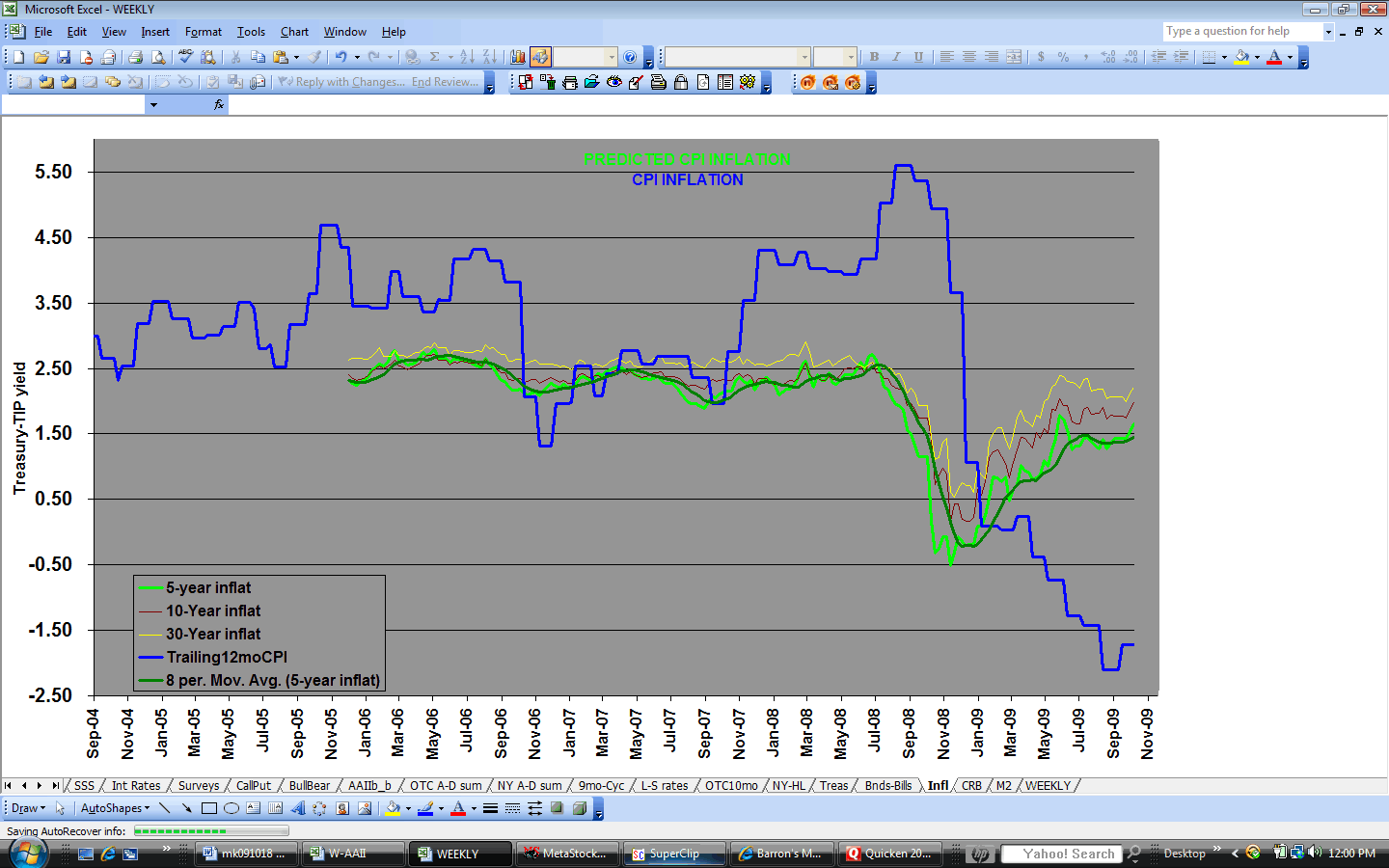
Treasury Bonds (http://www.geocities.com/petegersb/Treasury-20yr.GIF ) rallied back to the recent 10-wk cycle high late in the week on the strength of a 13-day cycle rally. But it backed off again. The intermediate uptrend is intact, but its persistence will depend upon the ability of the favorable 13 and 26-day cycles to overcome the unfavorable 10 and 20-week cycles. Bond Sentiment remains favorable for a further advance (http://www.geocities.com/petegersb/BondSentiment.GIF ). This week’s PPI and CPI http://www.geocities.com/petegersb/CPI.GIF ) numbers may give Treasuries a boost if they come in better than expected. The consensus is for higher inflation, but year-over-year comparisons are not yet difficult.
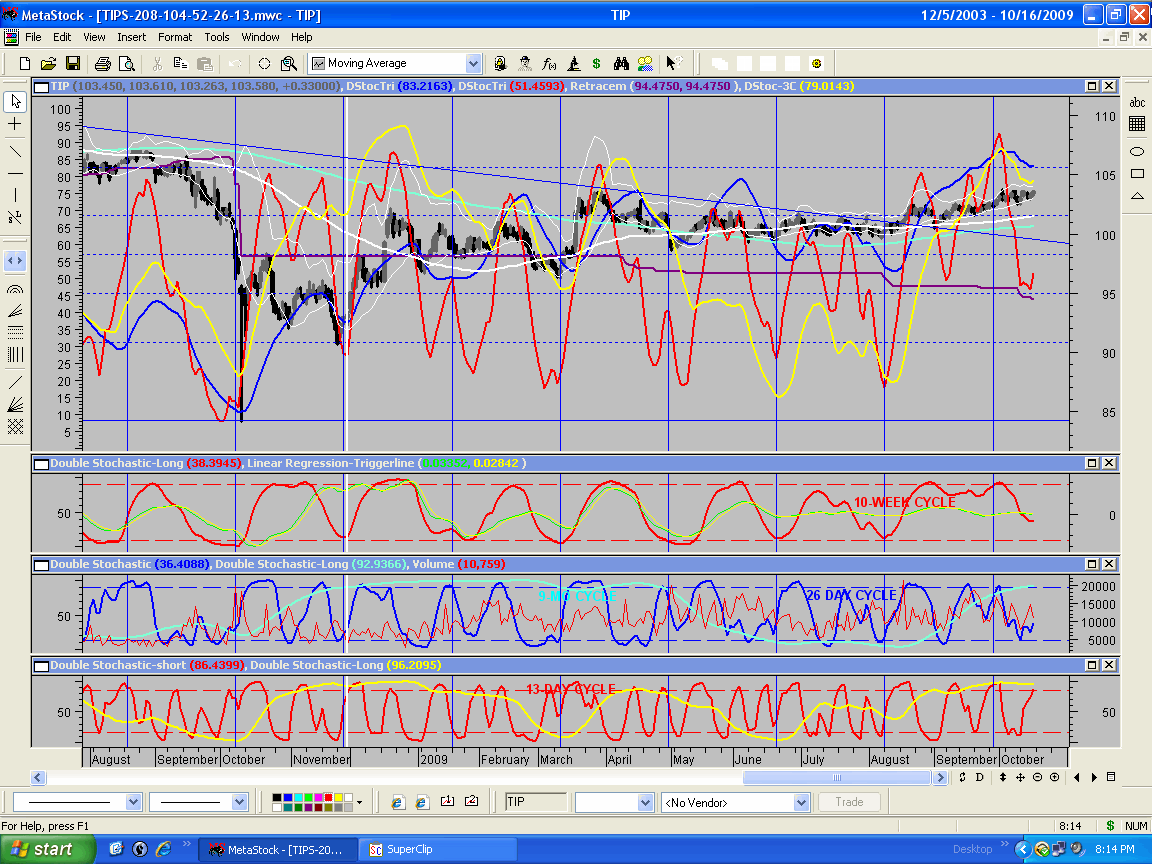
Inflation Protected Treasuries (http://www.geocities.com/petegersb/TIPs.GIF) also rallied as the favorable 13 and 26-day cycles overcame the unfavorable 10 and 20-week cycles. A repeat performance will be more difficult this week, but not out the question. The 13-day cycle is now overbought, so a further advance will depend on favorable 26-day and 9-month cycles.
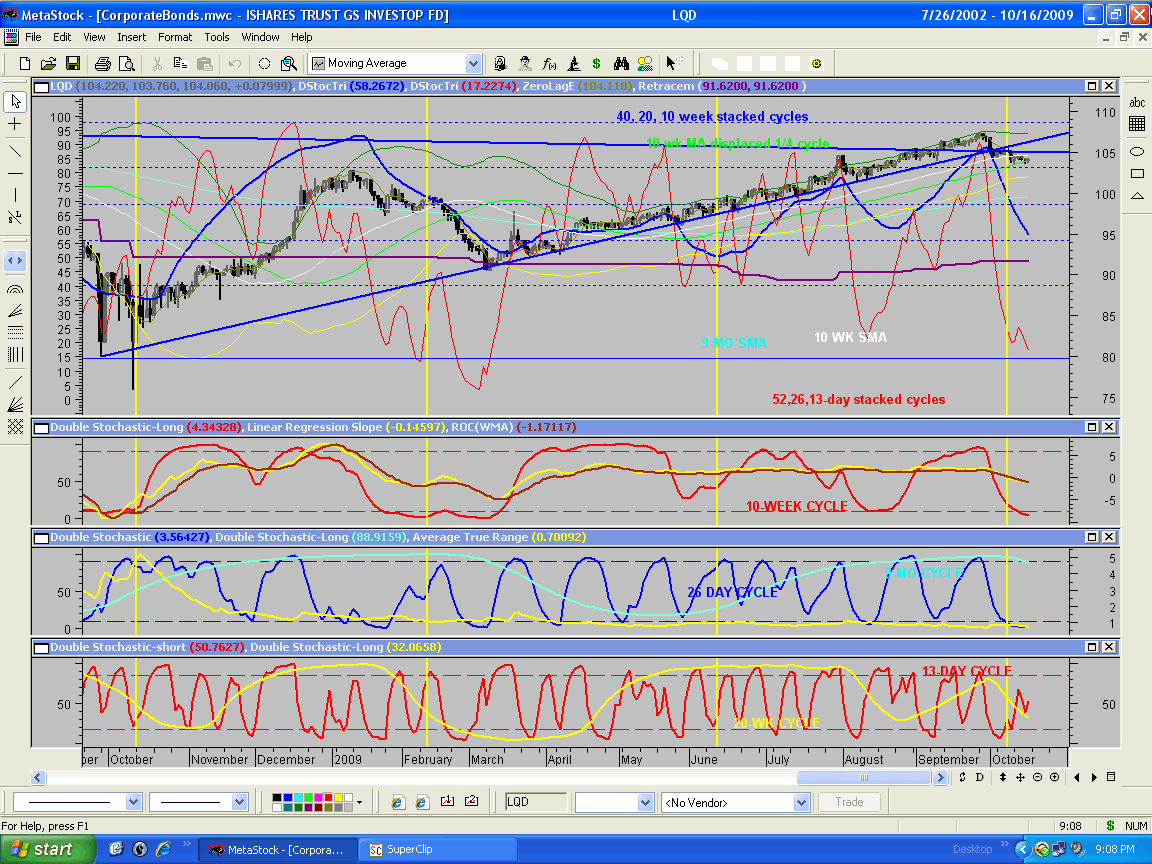
Corporate bonds ( http://www.geocities.com/petegersb/CorporateBonds.GIF ) broke above their 6-year-old downtrend line. Their steady uptrend during the last 6 months is reminiscent of late 2002 and the first half of 2003. Only the 9-month cycle is overbought, and the composites are rising. It looks like prices can continue higher. If not, there is good support about 3% below current levels.
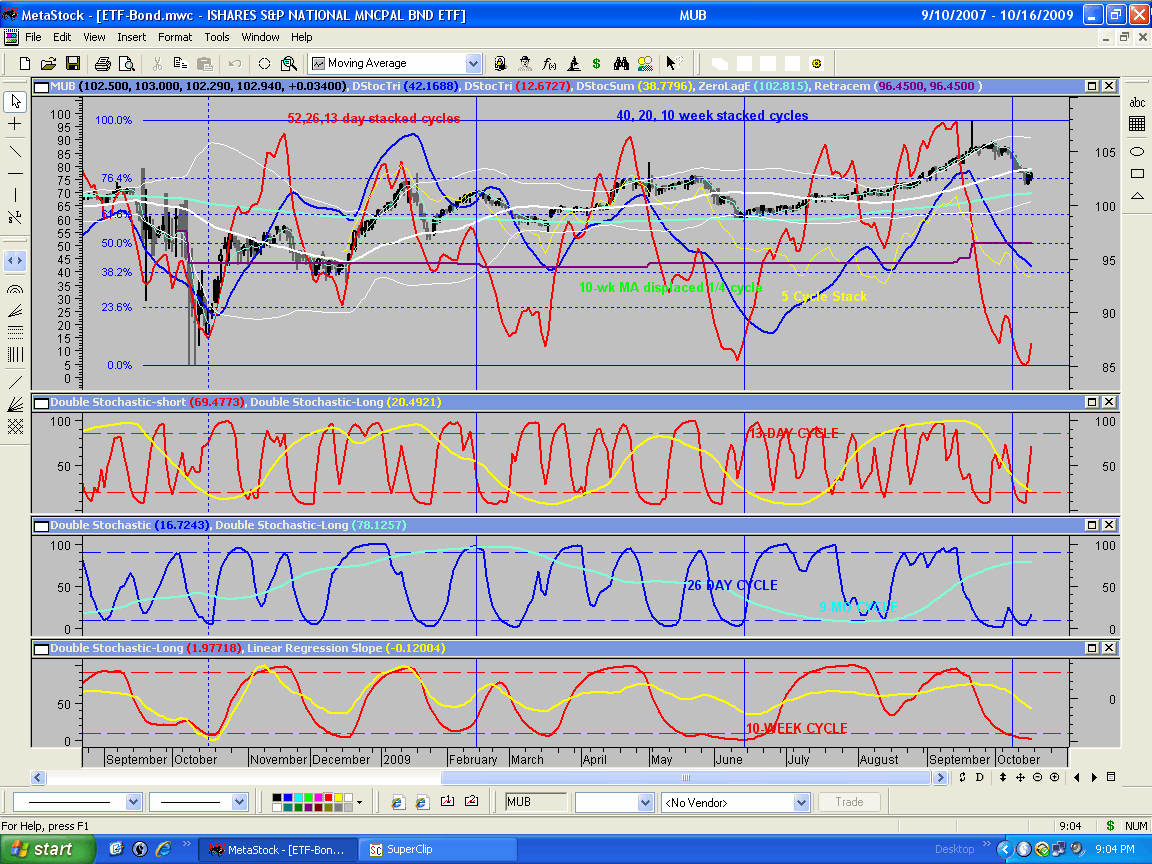
Municipal bond’s (http://www.geocities.com/petegersb/MunicipalBonds.GIF ) had another strong week to move very slightly above the January 2008 high of 104. Despite that, the short-term composite turned down from its most extreme overbought condition in at least the last two years. It’s likely that the rally will at least stall at this level and perhaps establish a 20-wk cycle peak.
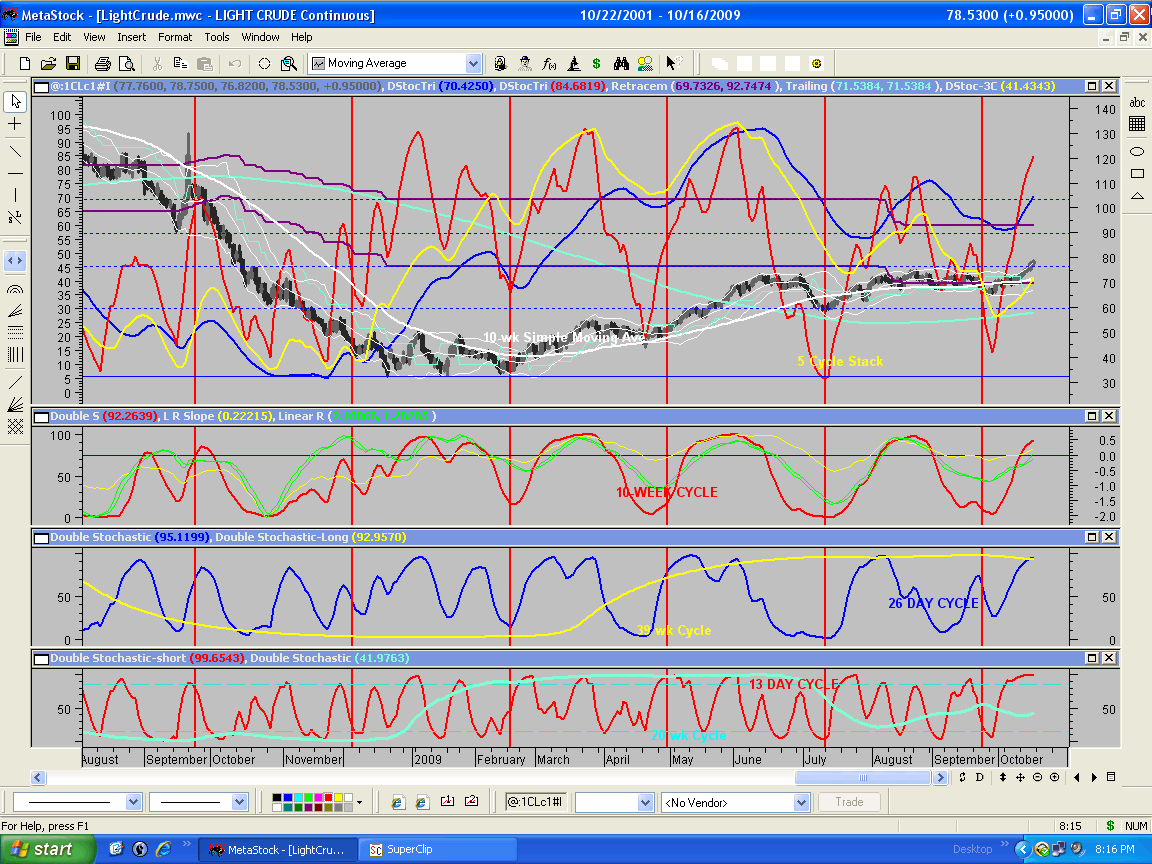
Crude oil (http://www.geocities.com/petegersb/CrudeOil.GIF ) rallied from its 10-wk moving average early in the week, but on Friday plunged to test it once again. It looks like the beginning of the last 13-day cycle decline within the current 10-week cycle, which is now 9 weeks old. With the 13-day cycle now 7 days old, the decline is likely to persist through most of this week and move below the 10-wk moving average. When it bottoms, it should mark the bottom of the 10-wk cycle as well and launch the 2nd 10-wk cycle within the middle-aged 20-wk cycle. The strength of the next 10-wk cycle rally will determine if the 20-wk cycle peak will translate to the right or if it arrived on August 25. Either way, the 20-wk cycle should then lead oil into a 9-mo cycle low in about two or three months.
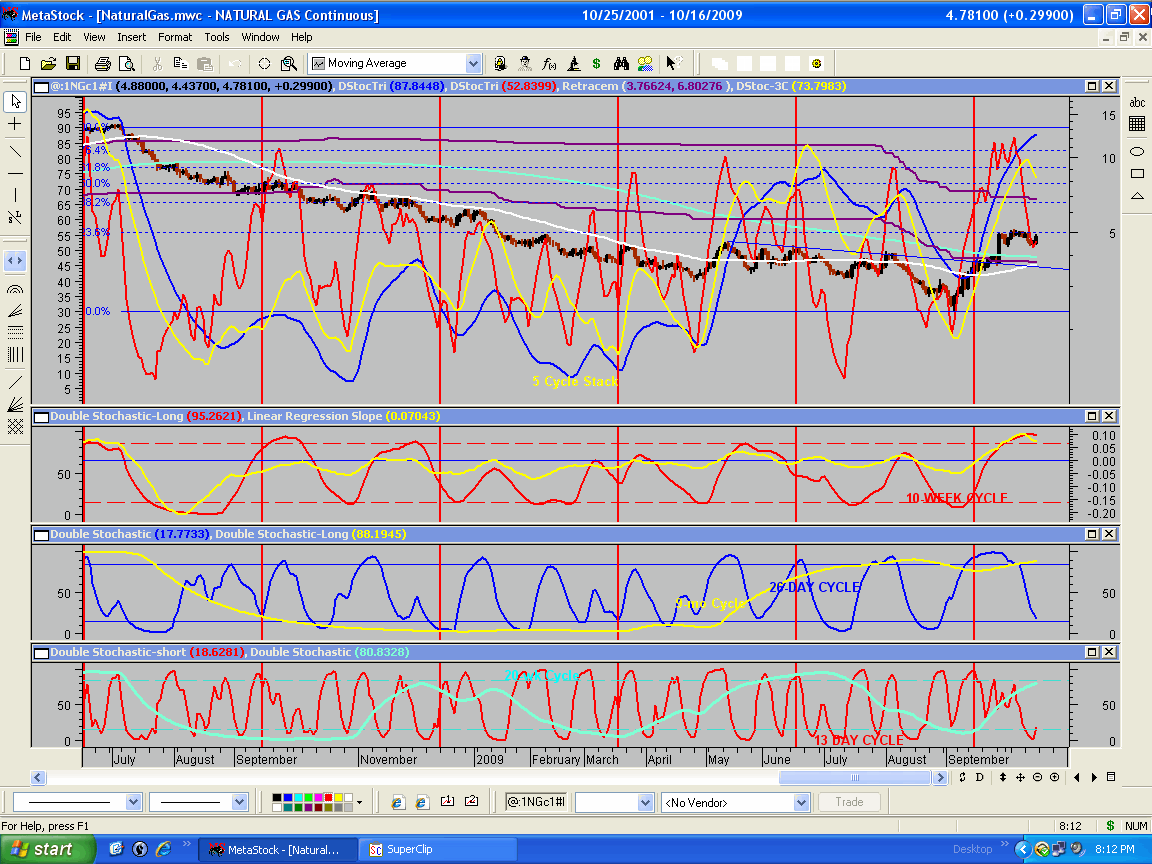
Natural gas (http://www.geocities.com/petegersb/NaturalGas.GIF ) mounted a spirited rally last week up to its 10-wk moving average – until Friday when it plunged along with oil. The strength of the rally along with the upturn in the composites and the 10-wk cycle DStoc suggests it may have been the beginning of a fresh 10-week cycle and 20-week cycle advance. At the initiation of the bounce, the 10-wk cycle was 8 weeks old and the 20-wk cycle was 19 weeks old, so the time was ripe. Still, the steep rejection at the 10-wk moving average, casts some doubt on that conclusion, and all the longer trend indicators continue to decline. I suspect one more 13 and 26-day cycle decline will produce another test of the low. If that test is successful, Natural gas may then be in position for a substantial rally.
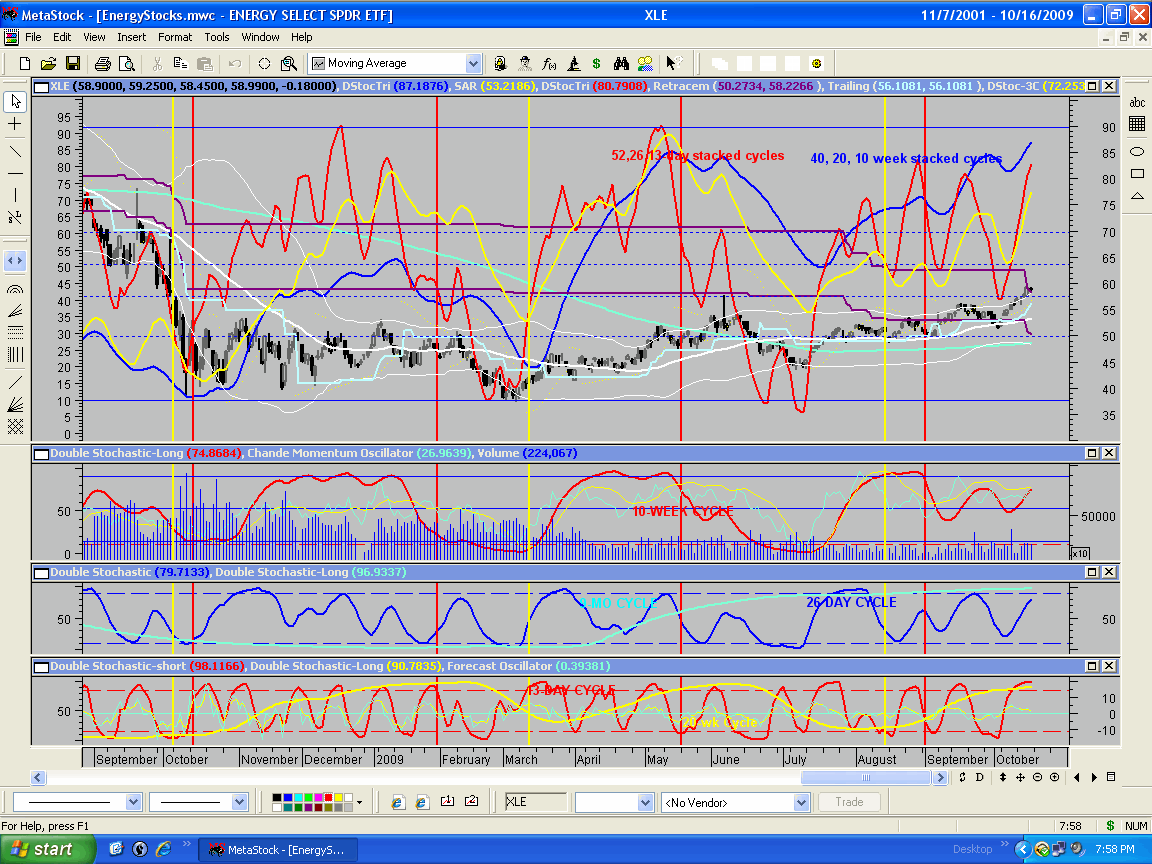
Energy stocks (http://www.geocities.com/petegersb/EnergySPDR.GIF) participated in the rally, but not in Fridays decline in
the underlying commodities. They were the strongest sector for the week. As a
result all of the composites turned up, suggesting a further rally.
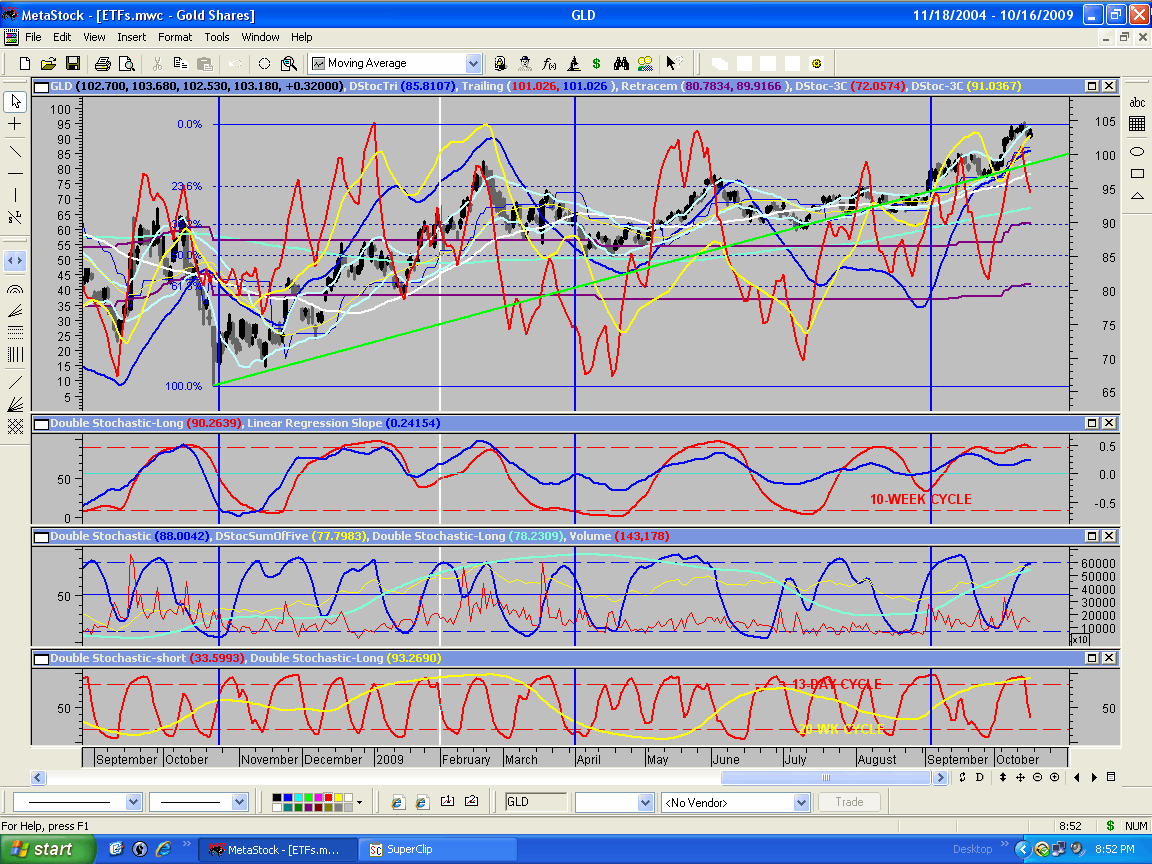
Gold (http://www.geocities.com/petegersb/GoldBullion.GIF) followed through on its break above its 7-month-old
downtrend line a week ago. It moved above $1000 for the 3rd time in
the last 18 months, and achieved an all-time closing high of 1004.90 – exactly its
intraday high in February. However, its intraday high of 1011.90 was slightly
lower than its intraday high of 1014.60 in March of 2008. So is this the third
of a massive triple top spanning 18 months, or is it a breakout of the neckline
of a massive inverted head & shoulders pattern spanning the same period. The rising composites and favorable 9-month
cycle suggest it’s going higher. The 20-week cycle is overbought, but that is a
condition that can persist in a strongly trending market. Seasonality is
favorable and very pronounced.

Although the pattern shows an October dip, and there was a
steep one last year, October produced steep rallies in 2007, 2006, 2004 and
2003. October dips in 2005 and 2008 proved to be great buying opportunities. So,
while 10 and 20-week cycle dips in October appear likely, the favorable 9-mo
cycle should limit any damage. The rising 10-wk moving average, now at 950,
would probably hold. If not, the rising 9-mo moving average, now at 915 would
likely hold. It did so during the pullback from February’s test of 1000, and it
held for 5 months after the first test of 1000 in March of 2008. On the upside,
a normal H&S projection would produce another $300 increase in comparison
with less than a $100 risk if stops are set at the 9-mo moving average and
moved up as it rises.
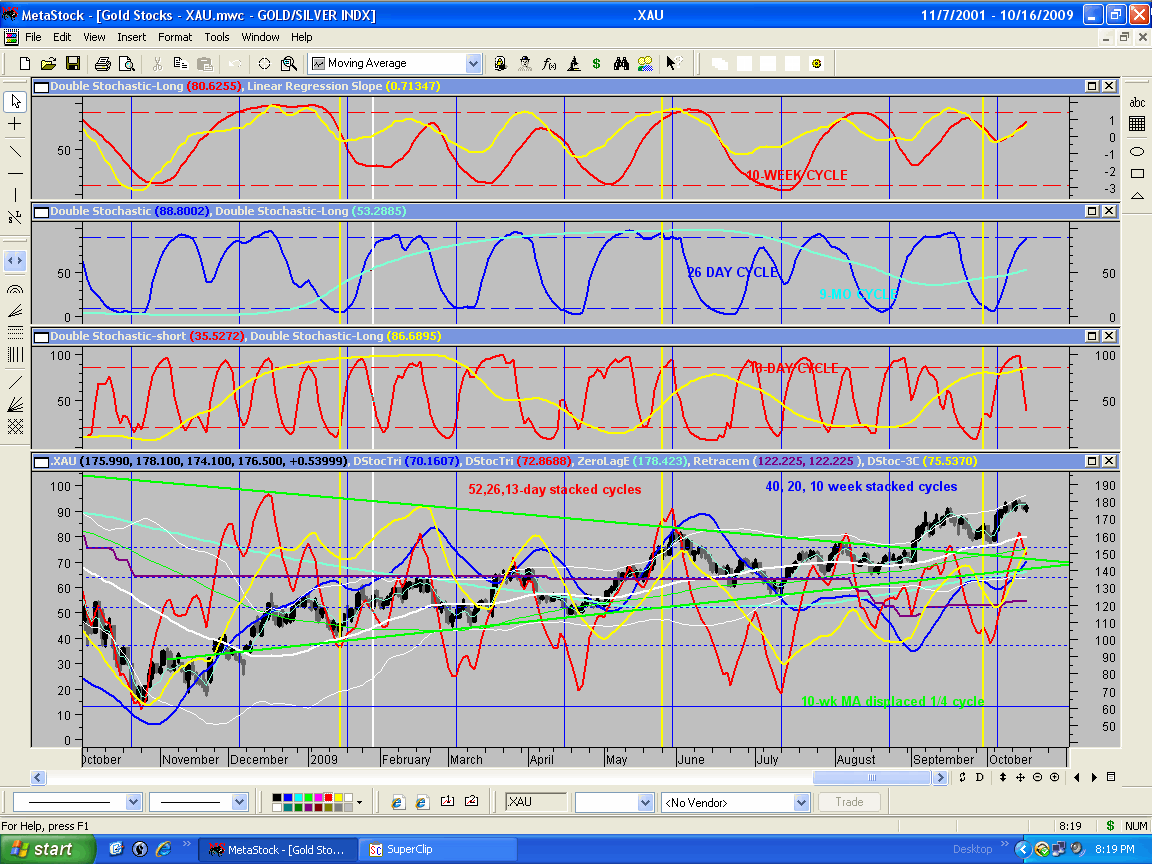
Gold Stocks (http://www.geocities.com/petegersb/GoldStocks.GIF
) also continued to rally last week, but at a much reduced pace. Short cycles
are unfavorable, but intermediate cycles are favorable. The rally appears
likely to stall this week, but should resume with the price holding above the
10-wk moving average.
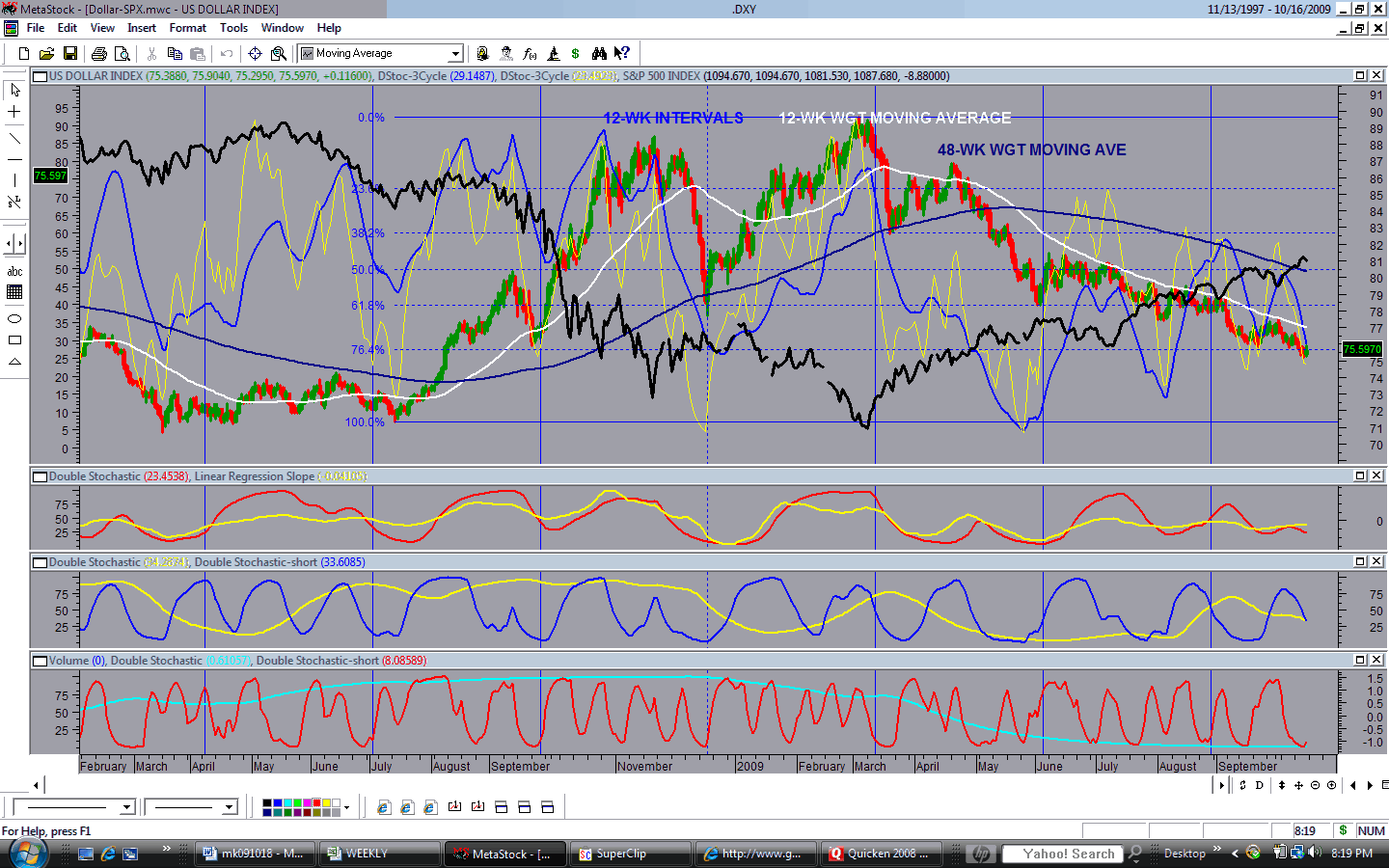
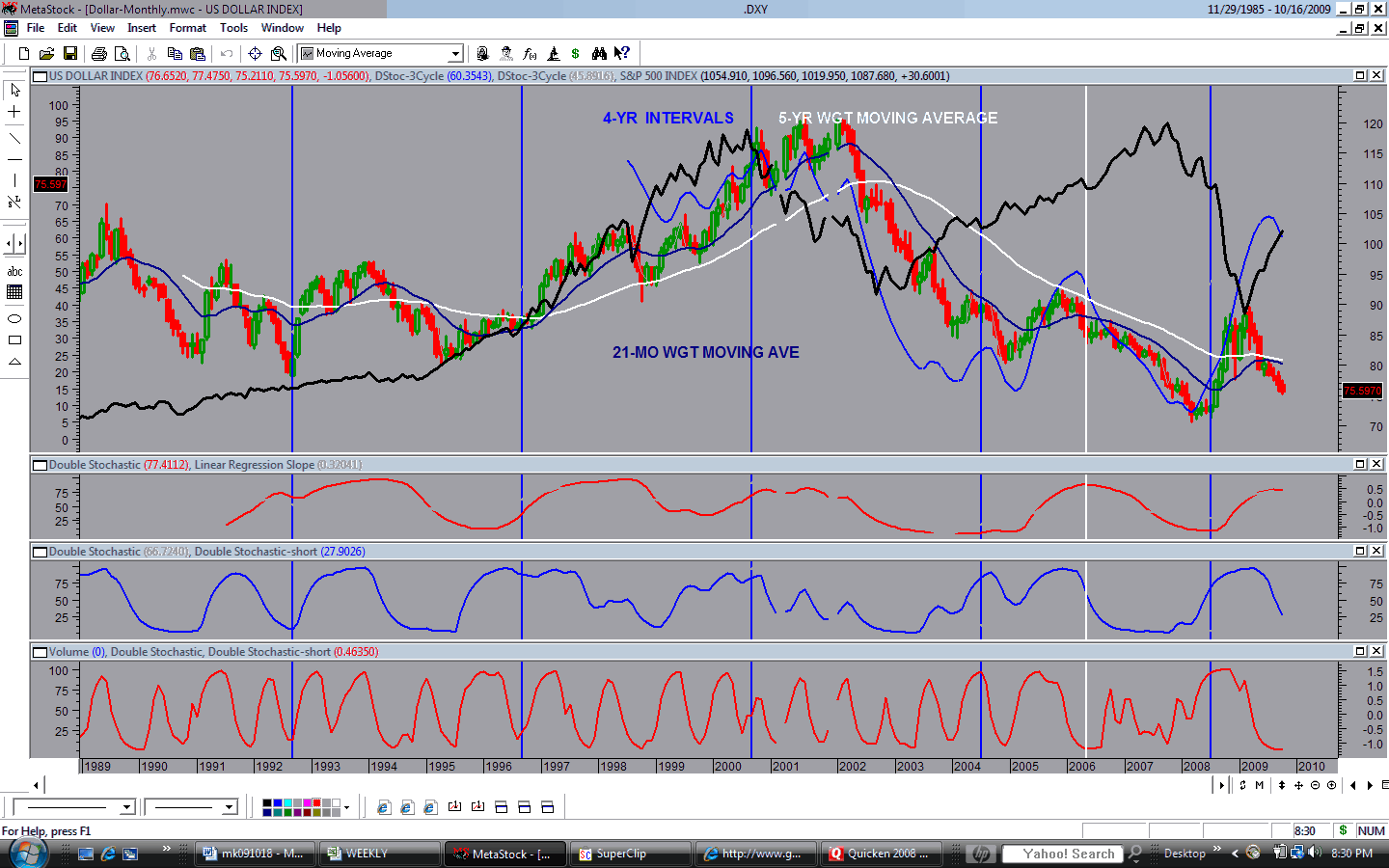
The Dollar (http://www.geocities.com/petegersb/Dollar.GIF) continued lower as it maintained its inverse correlation with gold. All of the composites point lower. The shortest cycles are moderately oversold, but even if they produce a rally, the intermediate cycles appear likely to drive the price still lower for several more weeks. The longer-term monthly chart (http://www.geocities.com/petegersb/Dollar-Monthly.GIF ) also suggests lower prices for the Dollar. The bleak picture for the dollar strengthens the case for gold.