There will be no report next week. Expect resumption on 8/23 or 8/30
8/9/09
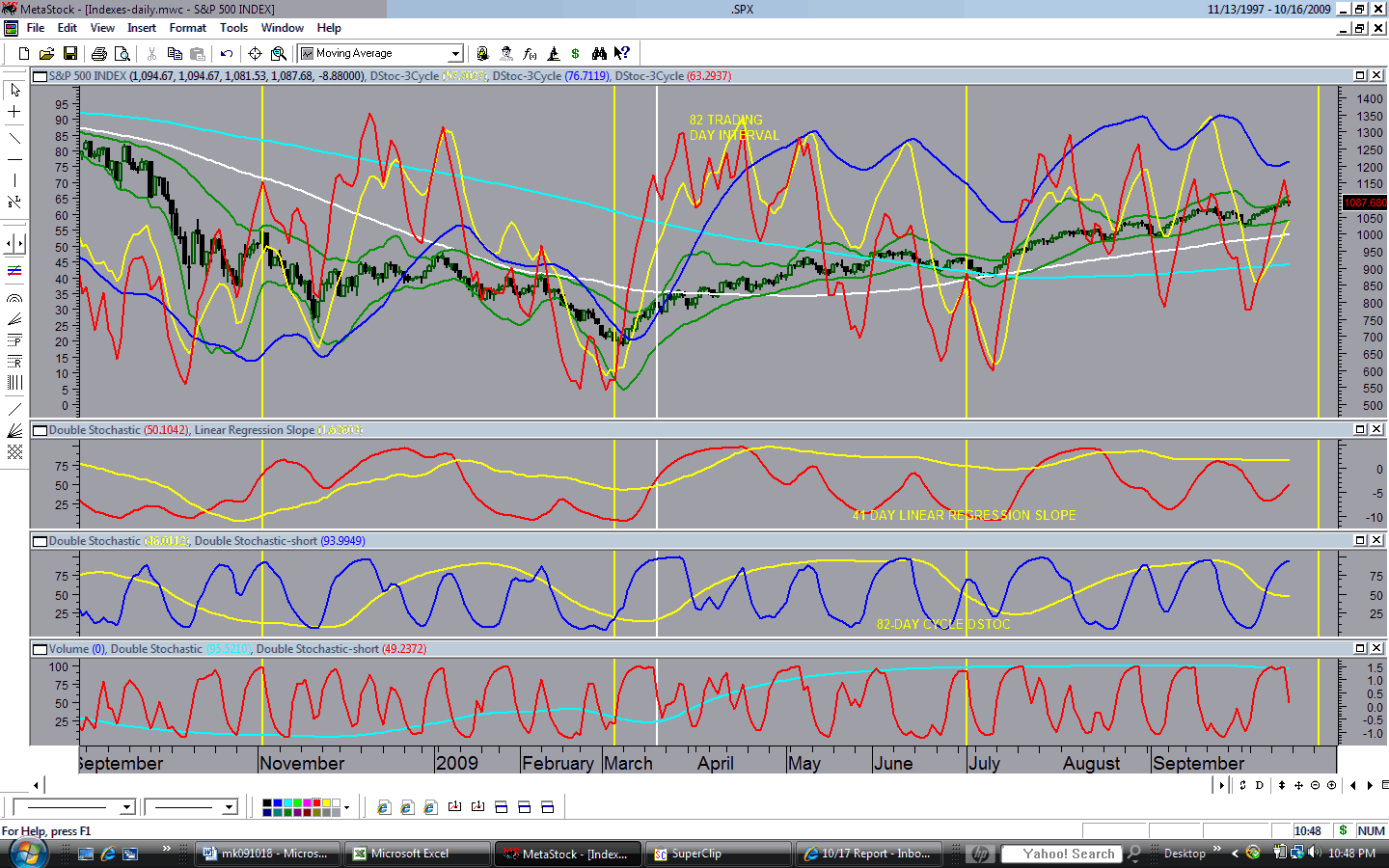
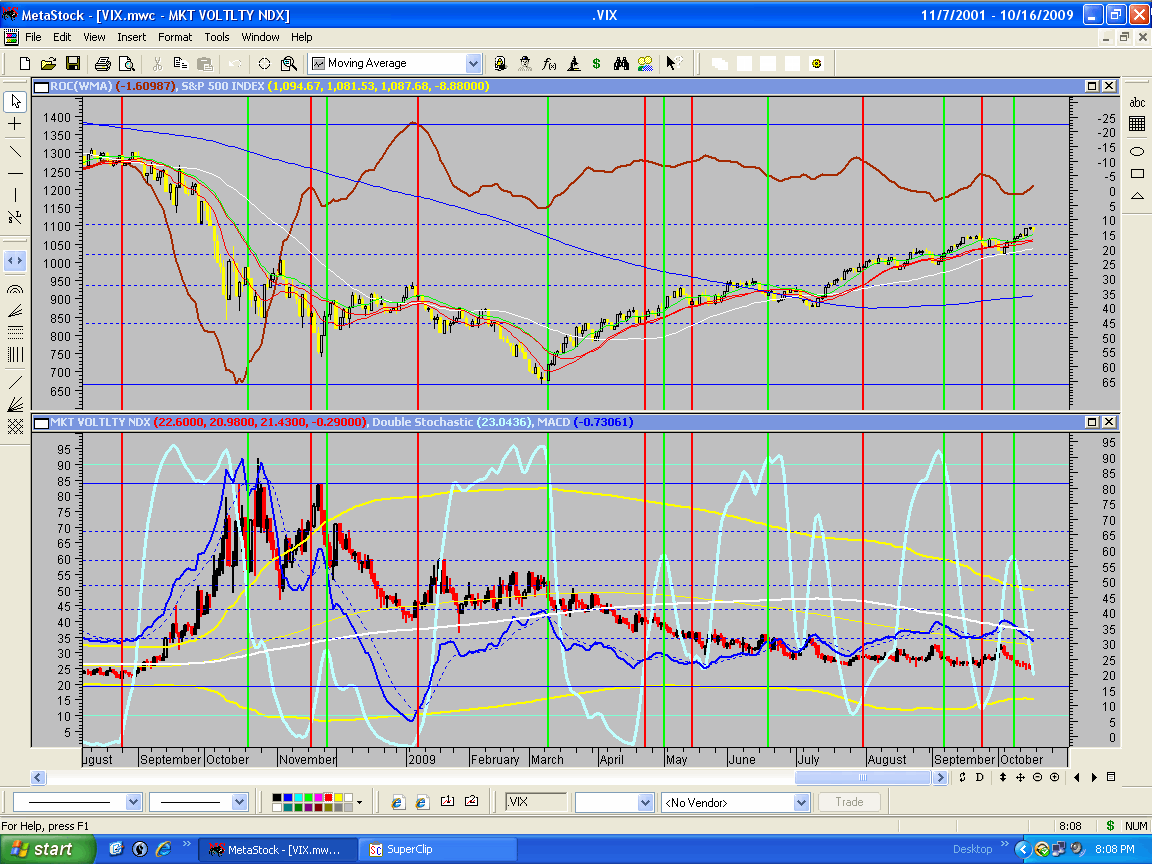
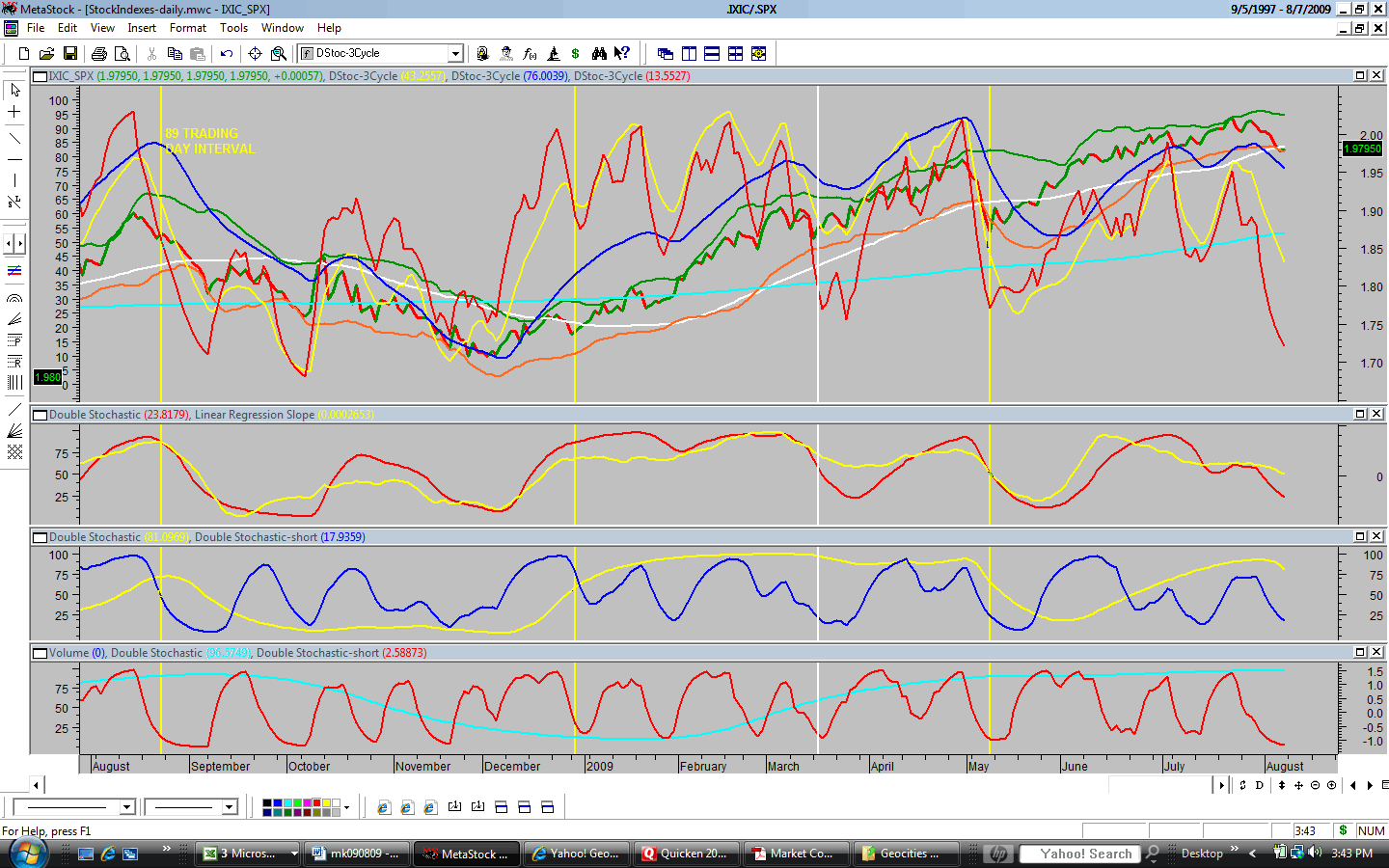
The SPX (http://www.geocities.com/petegersb/SP500.GIF ) briefly met resistance when it marginally breached 1000 on Monday. It then held within 6 points of that level until Friday when a better-than-expected employment report (getting worse more slowly) produced a move past the November high of 1007 and up to the 38.2% Fibonacci retracement of the bear market at 1010, with an intraday high of 1018. The question now is whether this is the breakout that will move the SPX up to 50% Fibonacci retracement at 1115, or whether the much anticipated short-term correction will first drive prices lower. With the series of robust upward moves we’ve seen since the March lows, most of the cycles are overbought, but some are still quite young. The 9-mo cycle is 5-months old and probably past middle age, but in bull markets peaks translate to the right. This 9-mo cycle won’t peak until its second embedded 20-wk cycle peaks. The 20-wk cycle is only 4 weeks old, so its peak should arrive more than 6 weeks into the future – probably substantially later because it’s still working on its first imbedded 10-wk cycle, and the 20-wk cycle shouldn’t peak until the 2nd 10-week cycle peaks. Only the 21-day-old 26-day cycle appears to pose an immediate threat. Its DStoc, and that of its 2nd 13 day cycle, turned down on Thursday, as did the short-term composite. But it’s not a very serious threat, because it should find support near 1000 – the level of the 50-bar moving average on the hourly chart and the 200-bar moving average on the 15-minute chart where the last two pullbacks that lasted more than a day found support. Below that, there is more support at the June high of 956, which is just a little above the current level of the 10-wk moving average. That level more likely will have to wait at least until the 4-wk-old 10-wk cycle corrects – probably in September, but perhaps sooner if the DStoc 10-wk cycle sell signal on the VIX (http://www.geocities.com/petegersb/VIX.GIF ) has it right this time. However, its recent record hasn’t been good.
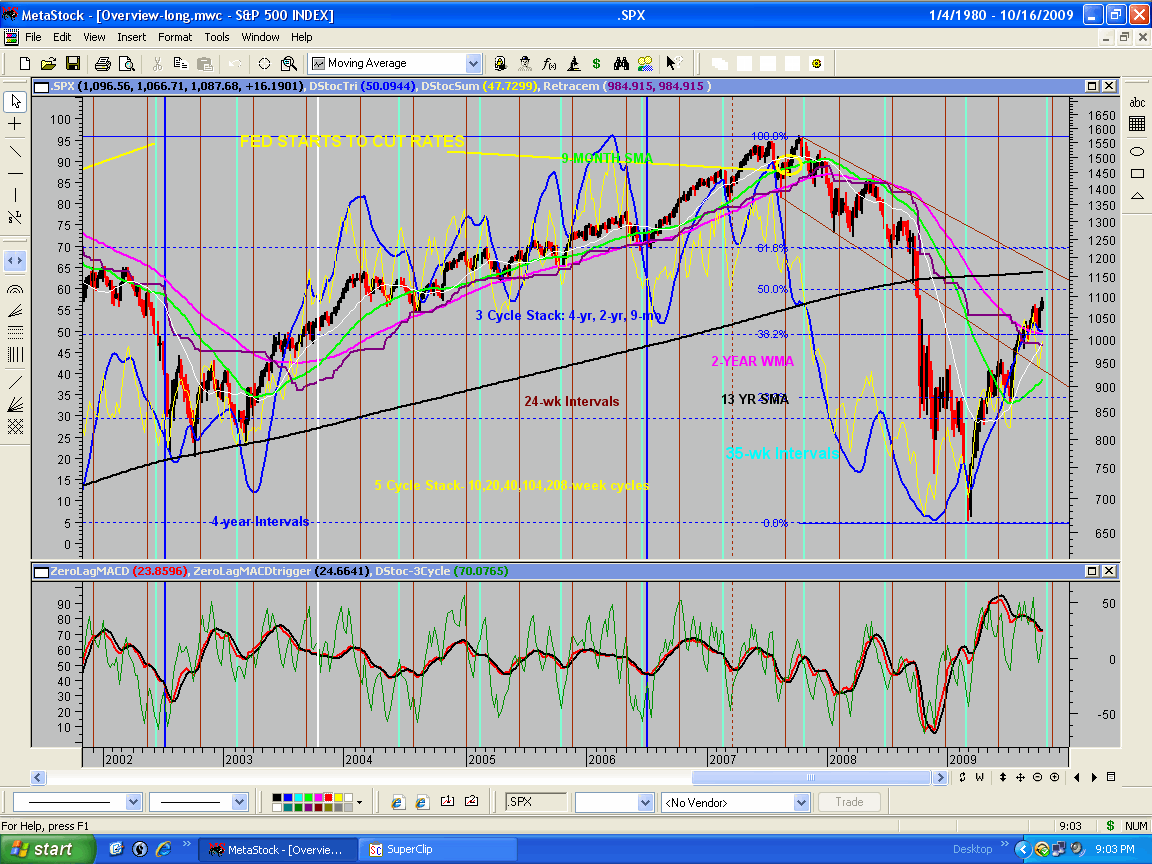
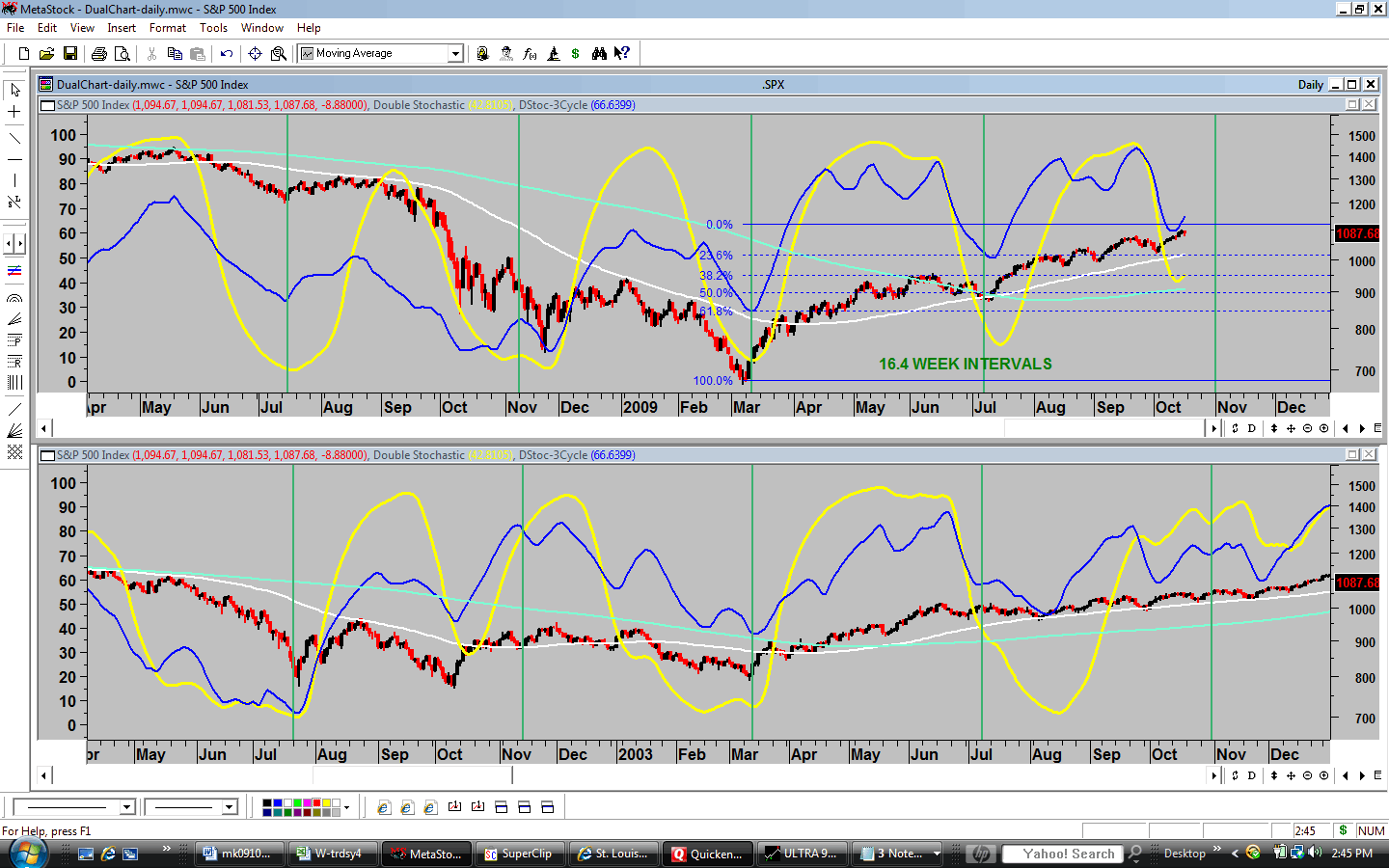
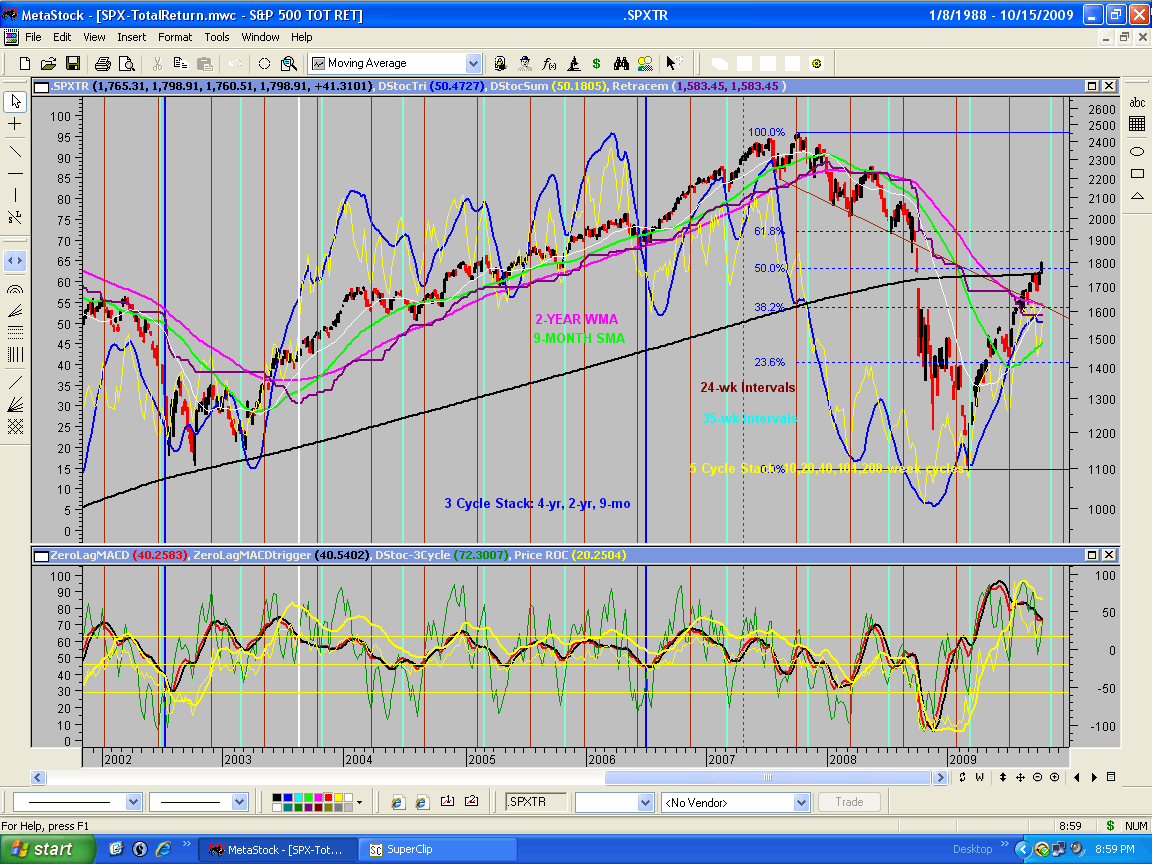
The long-term overview chart (http://www.geocities.com/petegersb/Overview-long.GIF ) suggests that stocks are likely to at least pause in this vicinity, largely because of several nearly coincident resistance levels just above 1000. I’ve already mentioned the round number syndrome and the 38.2% Fibonacci retracement of the latest bear market. It’s also up against the 38.2% retracement of the great bull market that began in 1982. (It hit the 61.8% retracement at the bottom.) In the recovery from the 1st Bush bear market, the rally stalled at this level for 3 months during the summer of 2003 (http://www.geocities.com/petegersb/2003_Comparison.GIF ). The SPX price is also up against two long-term trend indicators that tend to act as support or resistance (usually at 9-mo cycle highs or lows), as well as to show the long-term direction with a typical lag of several months. Both are still trending downward, but they lagged the March 2003 bottom by 6 months so that is not yet a major concern. The greater concern is their good record of producing tops when acting as resistance as they do now. A move above 1030 would be required to breach this resistance level at this time. You see the same potential resistance in the SPX Total Return Index (http://www.geocities.com/petegersb/TotalReturnSPX.GIF ), which incorporates the return from dividends. With no major price changes, these indicators are likely to turn upward in the October-November time frame – fairly near the time we should expect the next 9-mo cycle low.
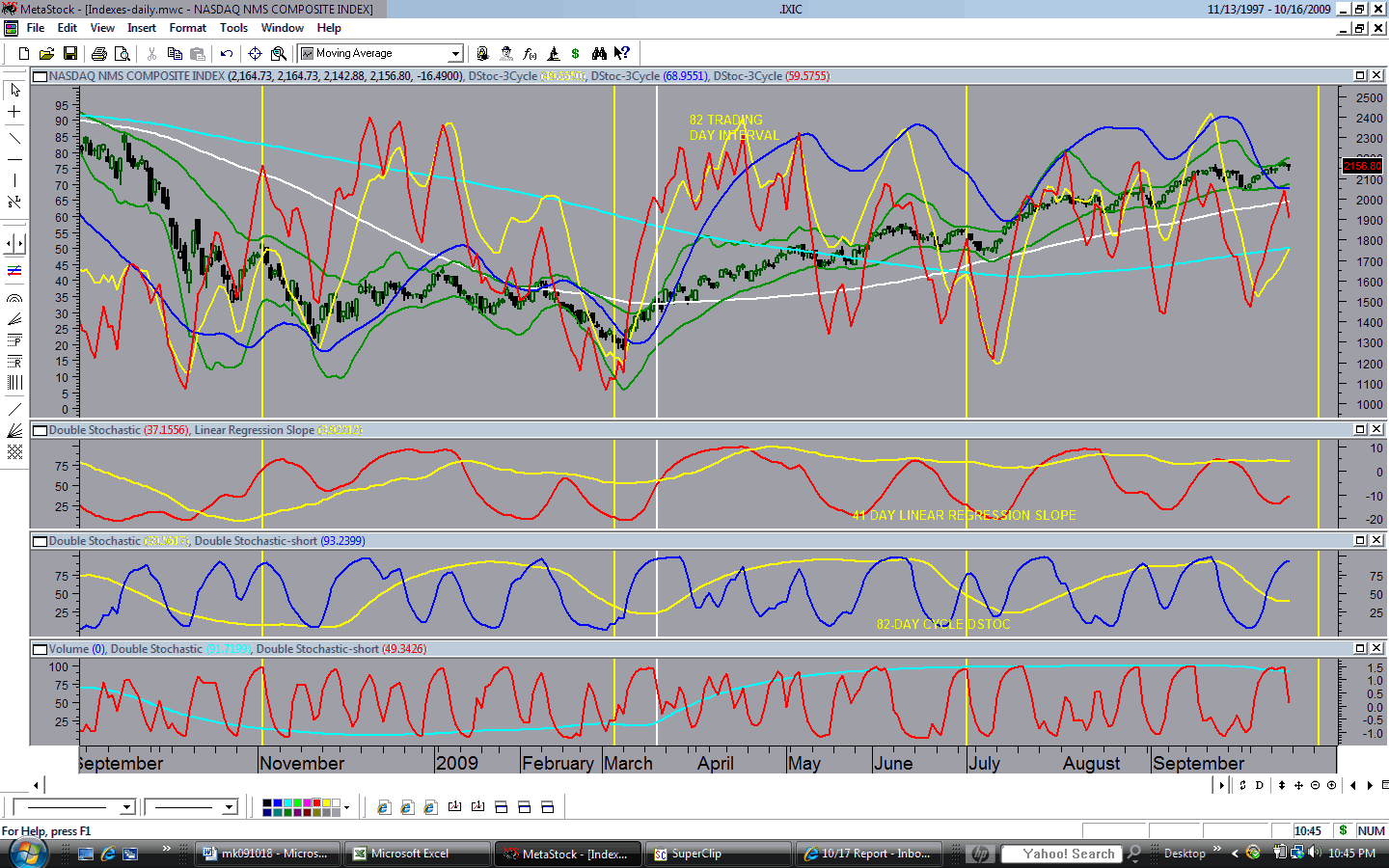
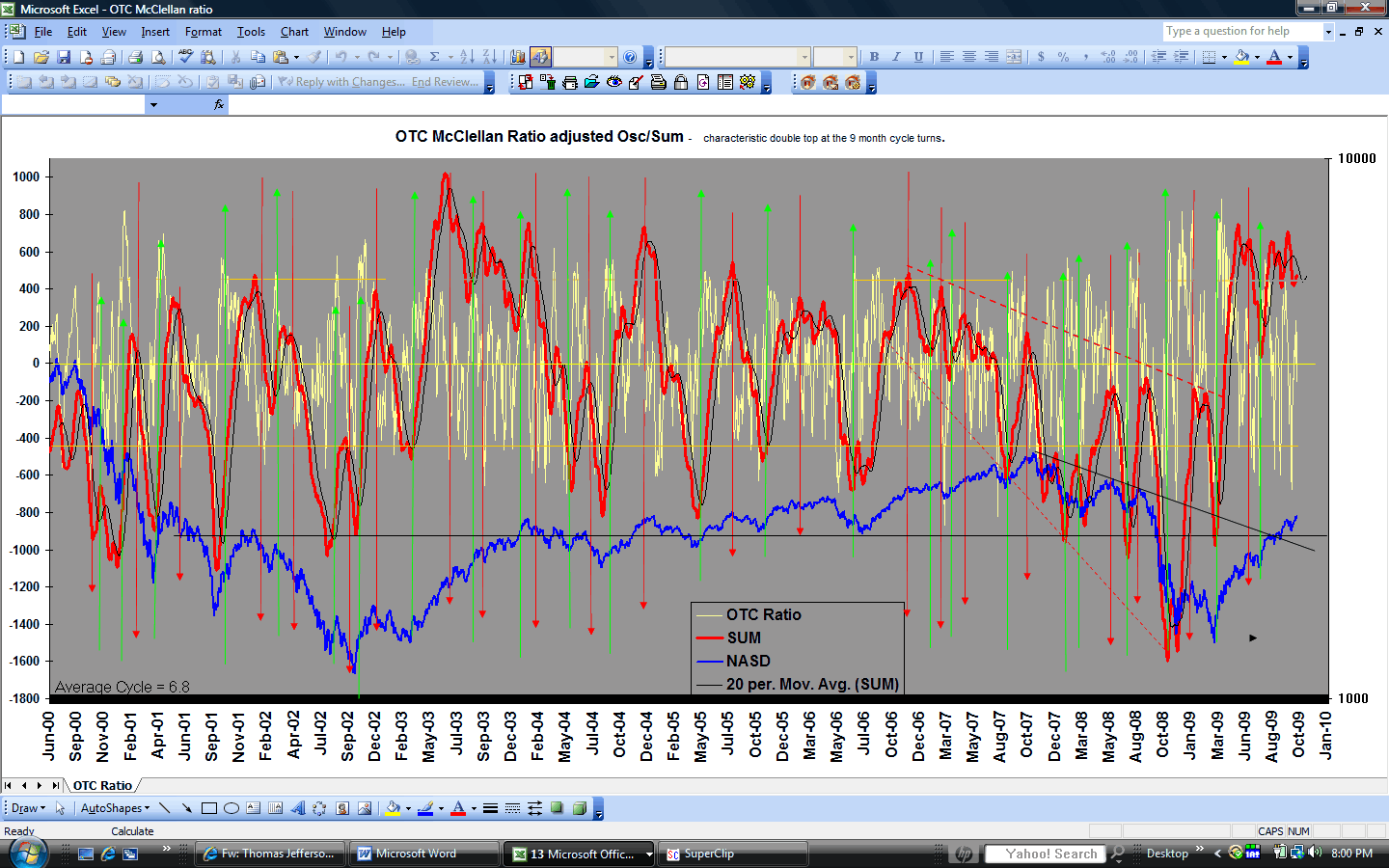
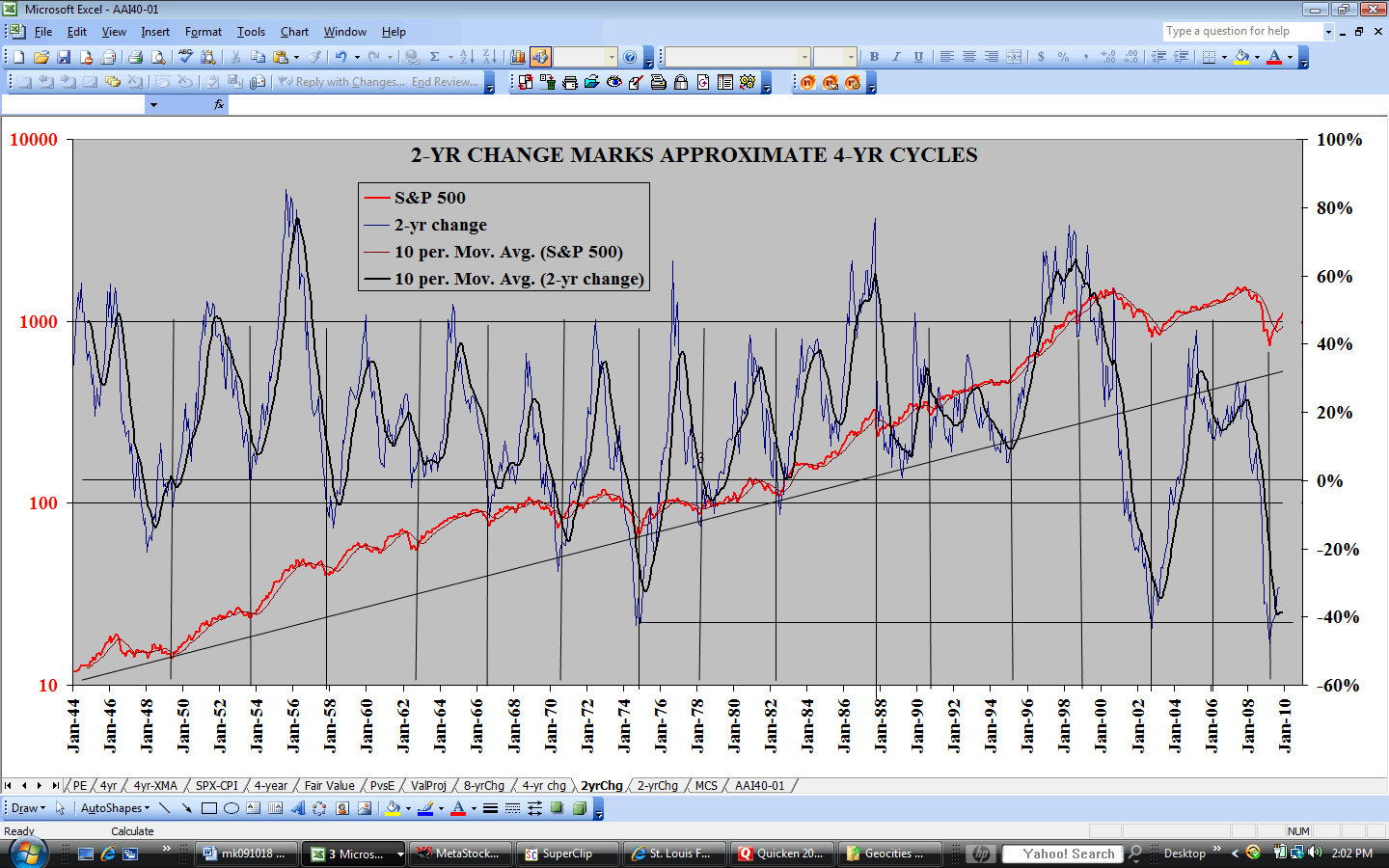
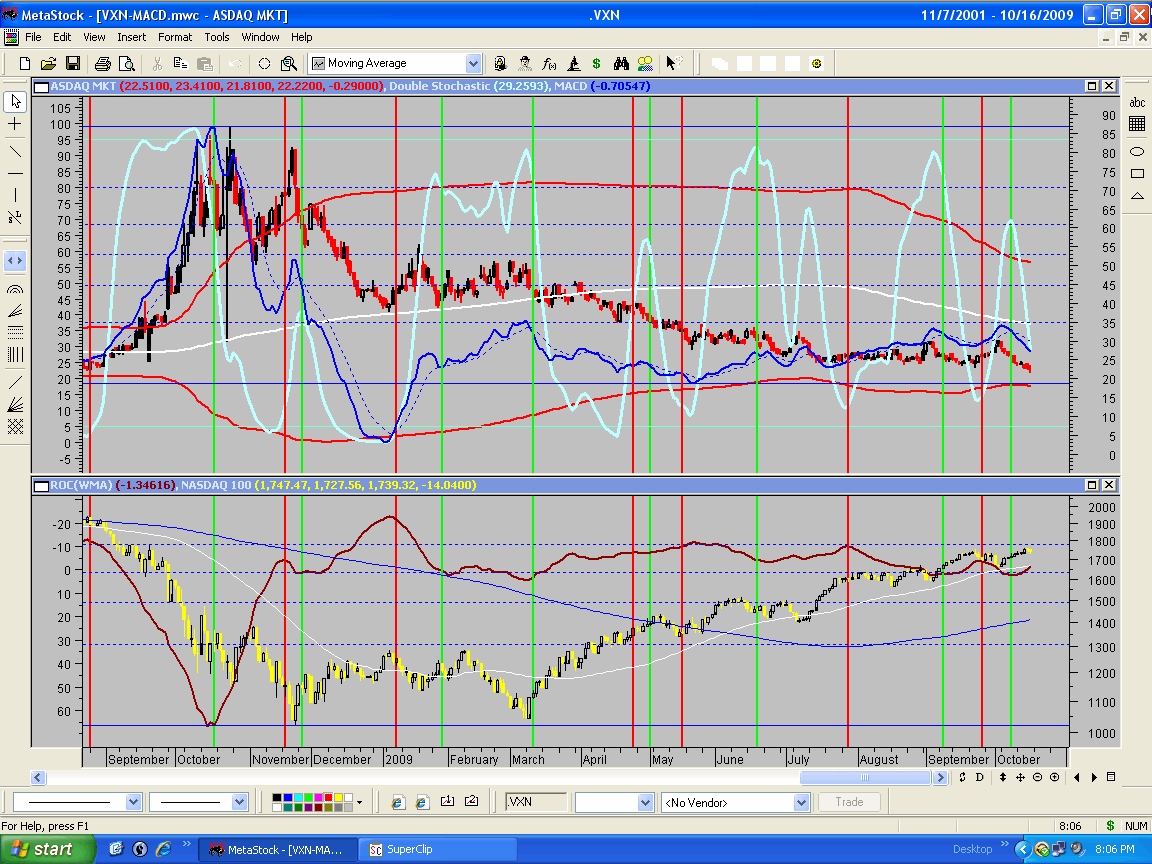
The NASDAQ Composite (http://www.geocities.com/petegersb/NasdaqComposite.GIF ) moved slightly above 2000 for the first time in 11 months. It’s well above the 38.2% retracement, and only 60 points below the 50% retracement, where significant resistance can be expected. But there is also potential resistance at it current level other than the round number phenomenon. The price hit the long-term downtrend line at 2016 early in the week (http://www.geocities.com/petegersb/A-Dsummation-OTC.GIF ), but couldn’t match that level at any time during Friday’s euphoria, much less at the close. And the Nasdaq Summation Index is very overbought. The 2006 low of 2020, which we now have to recognize as a 4-year cycle low (http://www.geocities.com/petegersb/2-YrChange.GIF ), also constitutes a potential resistance level. Since last November, the NASDAQ has led this rally, but last week its relative strength faltered just a bit (http://www.geocities.com/petegersb/RelativeStrength.GIF ), just as it did in early May. That correction didn’t amount to much, and the cycles suggest that the NASDAQ’s period of underperformance is likely reach a short-term bottom this week. If so, it will mark an end to any short-term correction we might see, but the VXN (http://www.geocities.com/petegersb/VXN.GIF ) is suggesting that a 10-wk cycle correction is just beginning.
During the recent period of Nasdaq underperformance, the NYSE Summation Index (http://www.geocities.com/petegersb/A-Dsummation-NYSE.GIF ) reached a third higher high while the Nasdaq Summation Index (http://www.geocities.com/petegersb/A-Dsummation-OTC.GIF ) began forming a potential negative divergence. Both are at very overbought levels. If a short-term correction is severe enough to turn these indicators downward, it may mark an intermediate peak. But it’s worth noting that the NYSE Advance-Decline line has broken significantly above the downtrend line from its 2007 peak. The A-D line tends to lead prices, so this is an encouraging development.
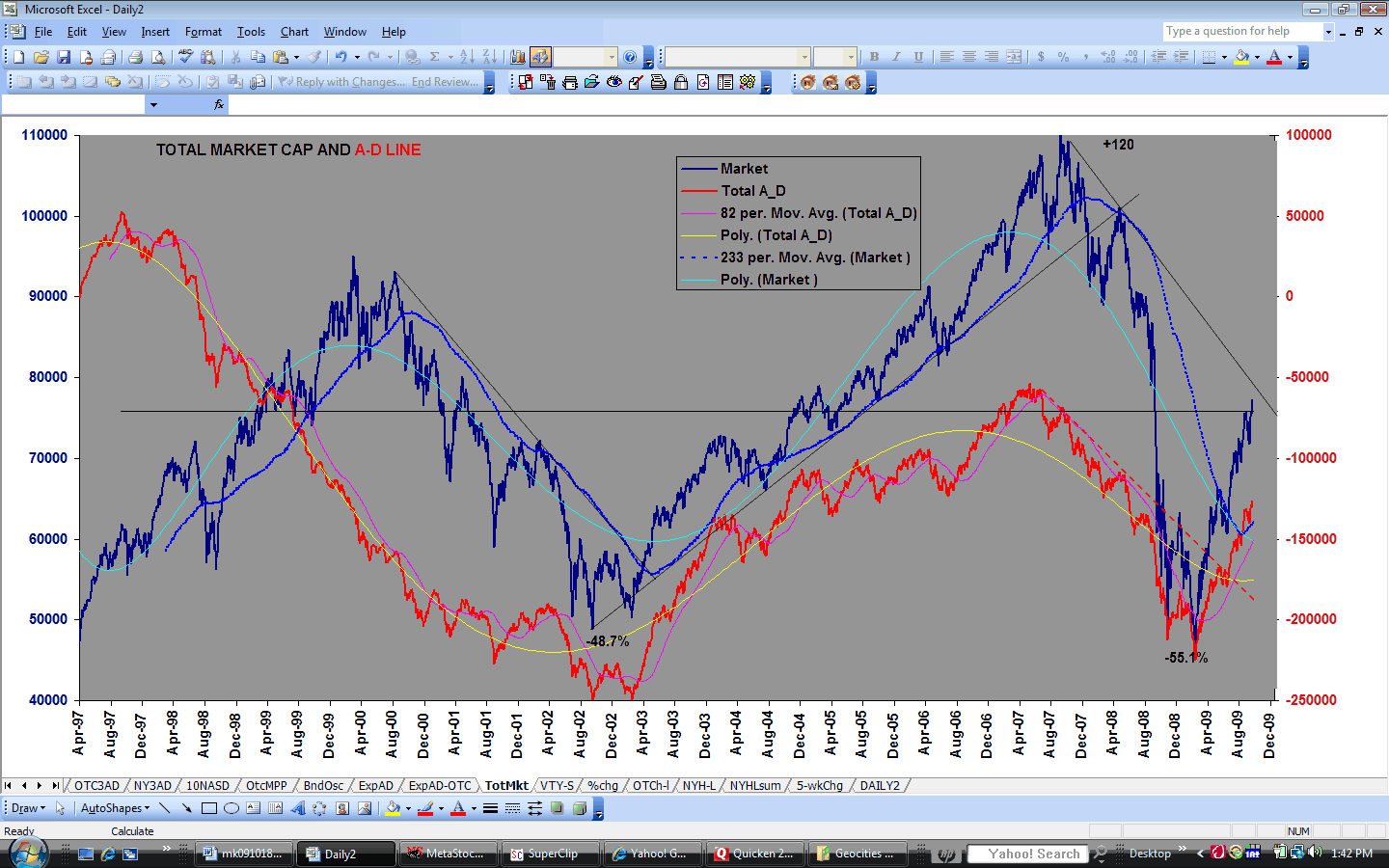
Looking at the total market cap (http://www.geocities.com/petegersb/TotalMarket.GIF ), we see that it is still below but quite close to the 1998, 2002 and 2003 peaks. Although the very long-term trend is still in question, the intermediate trend is undeniably favorable. Those earlier peaks likely will be tested before the intermediate uptrend ends. While total market capitalization is far below its downtrend line from the 2007 peak, the total A-D line has broken well above the corresponding trendline. Market capitalization will probably follow.
In summary, it appears that the market is ripe for a stall or shallow decline very soon; that it will break above current resistance levels before the 20-wk and 9-mo cycles peak; and the correction in those cycles into the end of the year will hold above support levels in the mid-900 range.
Sentiment
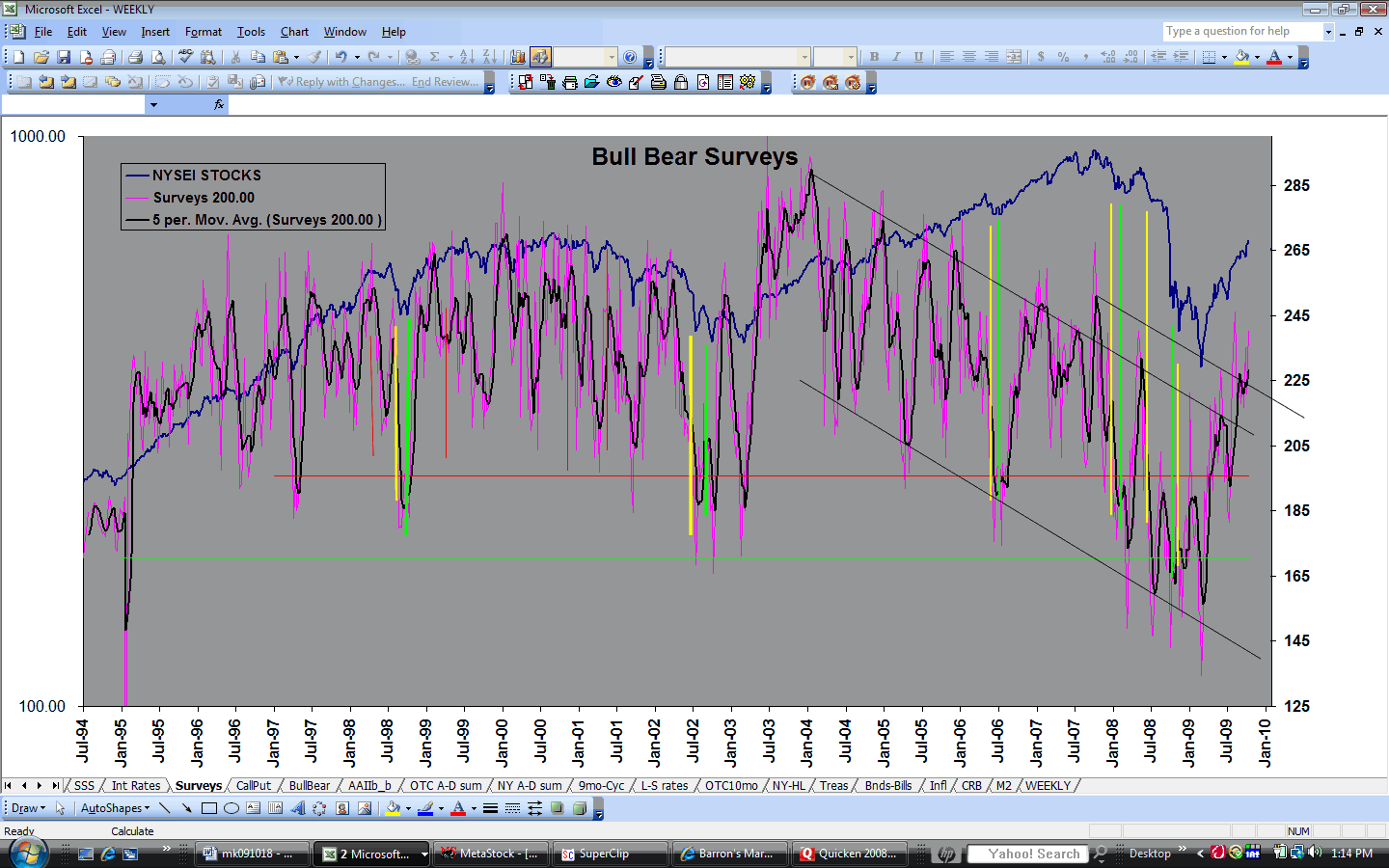
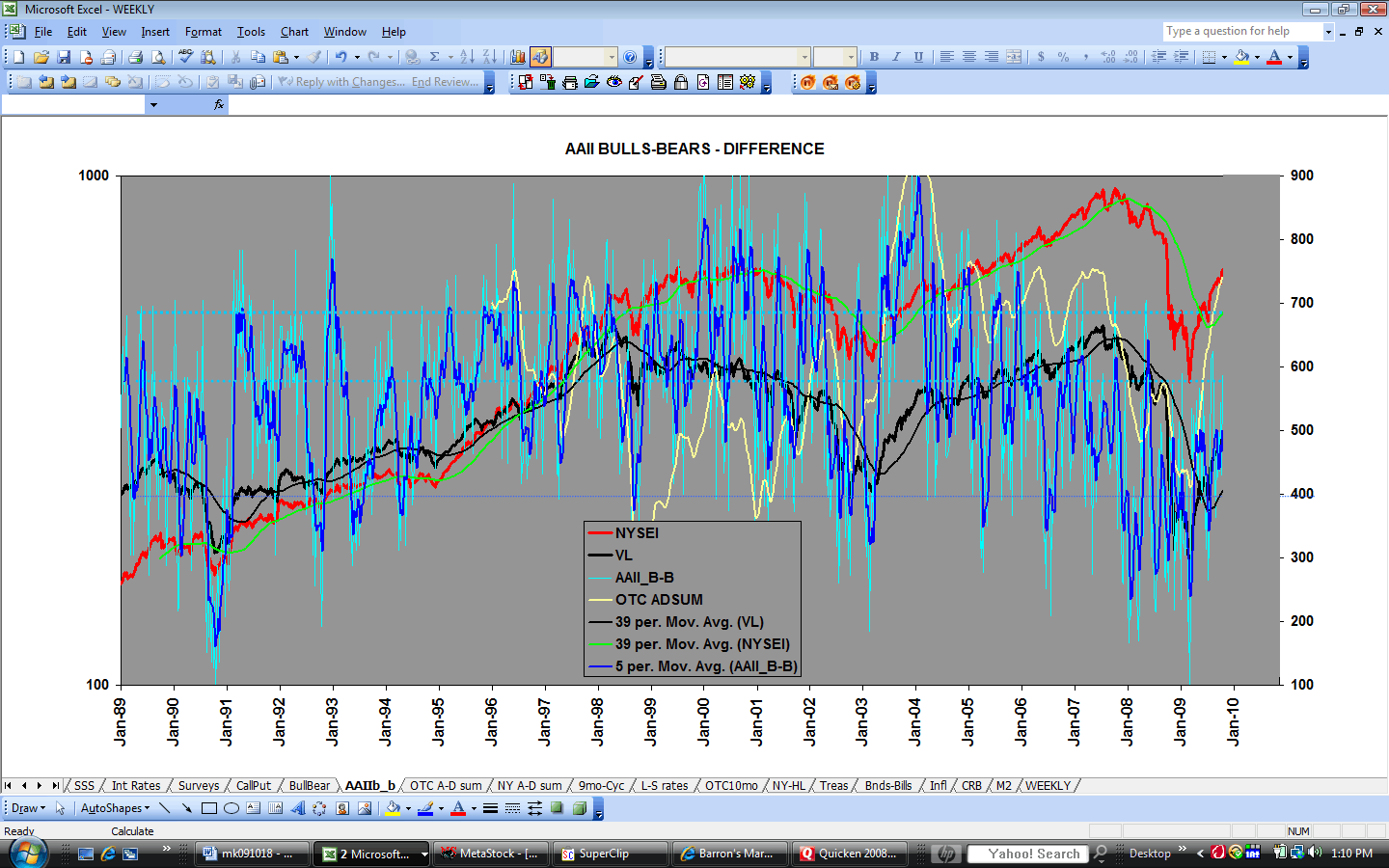
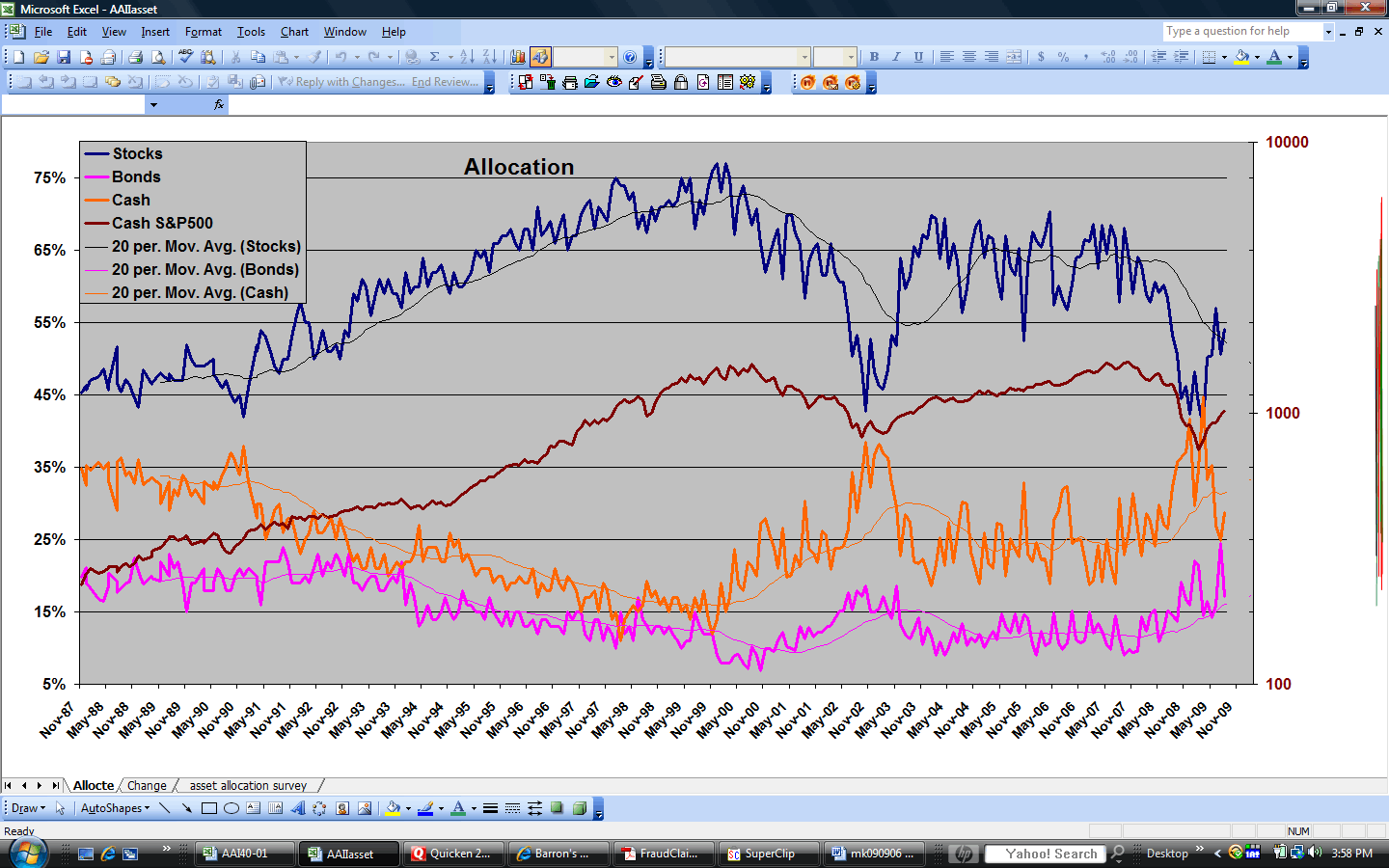
Current Advisory Service (http://www.geocities.com/petegersb/InvestorsIntelligence.GIF ) and Individual Investor sentiment (http://www.geocities.com/petegersb/AAIIsentiment.GIF ) aren’t sending any clear signals, but AAII asset allocation is (http://www.geocities.com/petegersb/AAIIassets.GIF ). At the November and March lows, individual investors had the lowest percentage of their assets allocated to stocks since the October 2002 bottom. Those levels matched the 1990 low, which was also a major bottom. At the same time, their cash allocation spiked to the highest level in my 21-year data base. This adds to the other evidence that stocks made a major bottom in March. Stock allocations are still moderately low (at least by the standards of the last 20 years), and the cash allocation is still moderately high. Until these levels return to high and low extremes respectively, stocks probably won’t begin a major correction.
The interesting shift that has taken place is the now extreme allocation to bonds – the highest in at least 21 years at 25%. It was achieved by the biggest buying surge during July in the 21-year data history. This strongly suggests that bonds are due for plunge, and investors will probably reallocate most of the money they then pull out of bonds into stocks.
Fundamentals
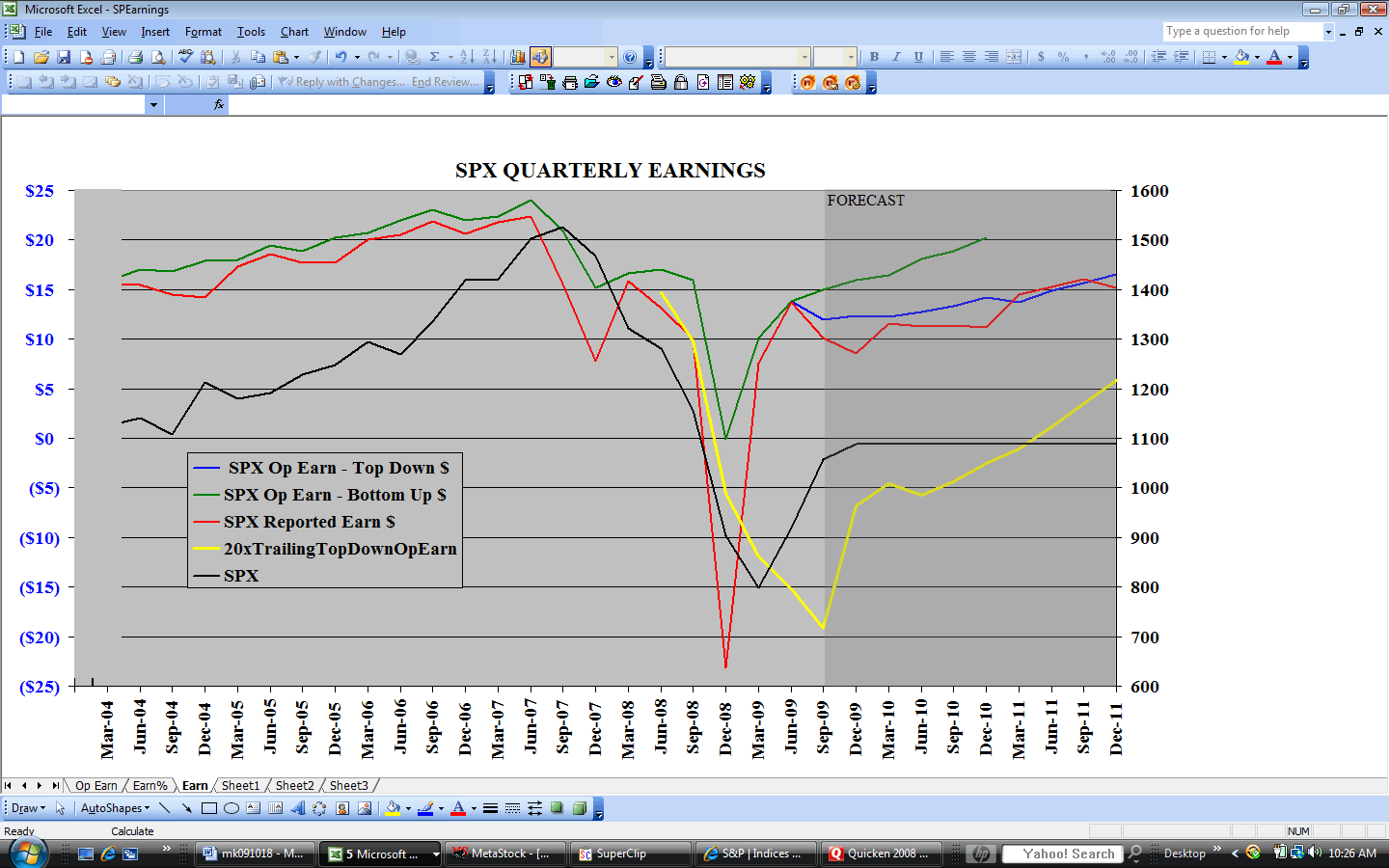
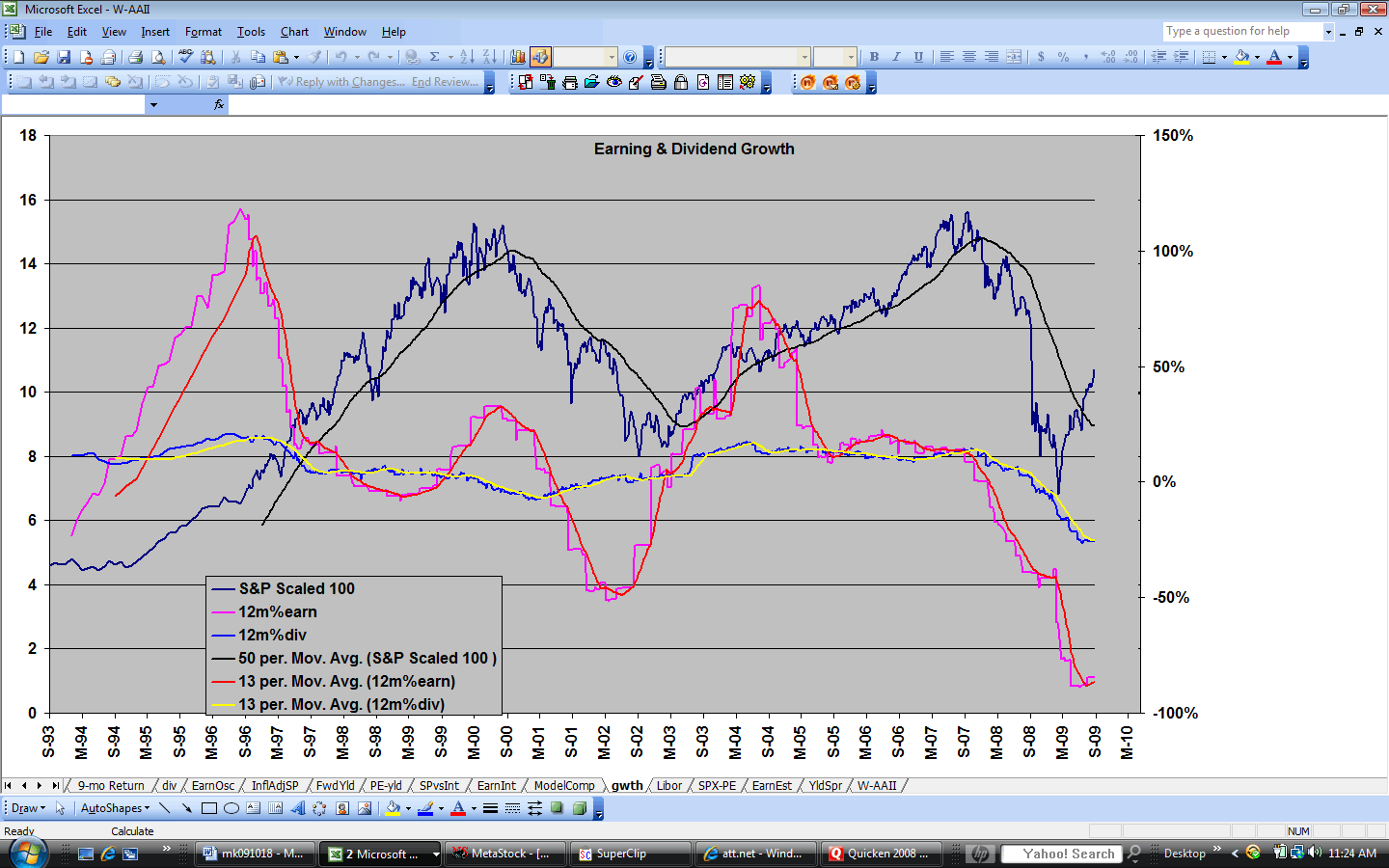
With 88% of companies reporting, S&P made a large upward revision to top-down operating earnings estimates and a small downward revision to bottom up operating earnings estimates for the second quarter to bring them into alignment at $13.82 (http://www.geocities.com/petegersb/EarnY-Y.GIF ). In recent prior quarters both numbers had to be revised downward, so that is an encouraging change - probably due to the better-than-expected second-quarter GDP. Perhaps the better-than-expected employment report is indicative of more good earnings news to come for the 3rd quarter. That would help to sustain the rally, but fairly dramatic improvement would be required to create good value. As the yellow line on the chart illustrates, at current prices the S&P is selling at more than 20 times expected operating earnings through the end of 2010. At current prices, you are paying 28.4 times trailing operating earnings and 22 times top-down estimates for 2010. Clearly market participants expect a rip-roaring earnings recovery rather than the tepid one expected by S&P top-down analysts. Corporate officers seem less optimistic. They are still cutting dividends (http://www.geocities.com/petegersb/Earn_Div_ROC.GIF ), albeit at a slower rate. Insiders have also recently become heavy sellers.
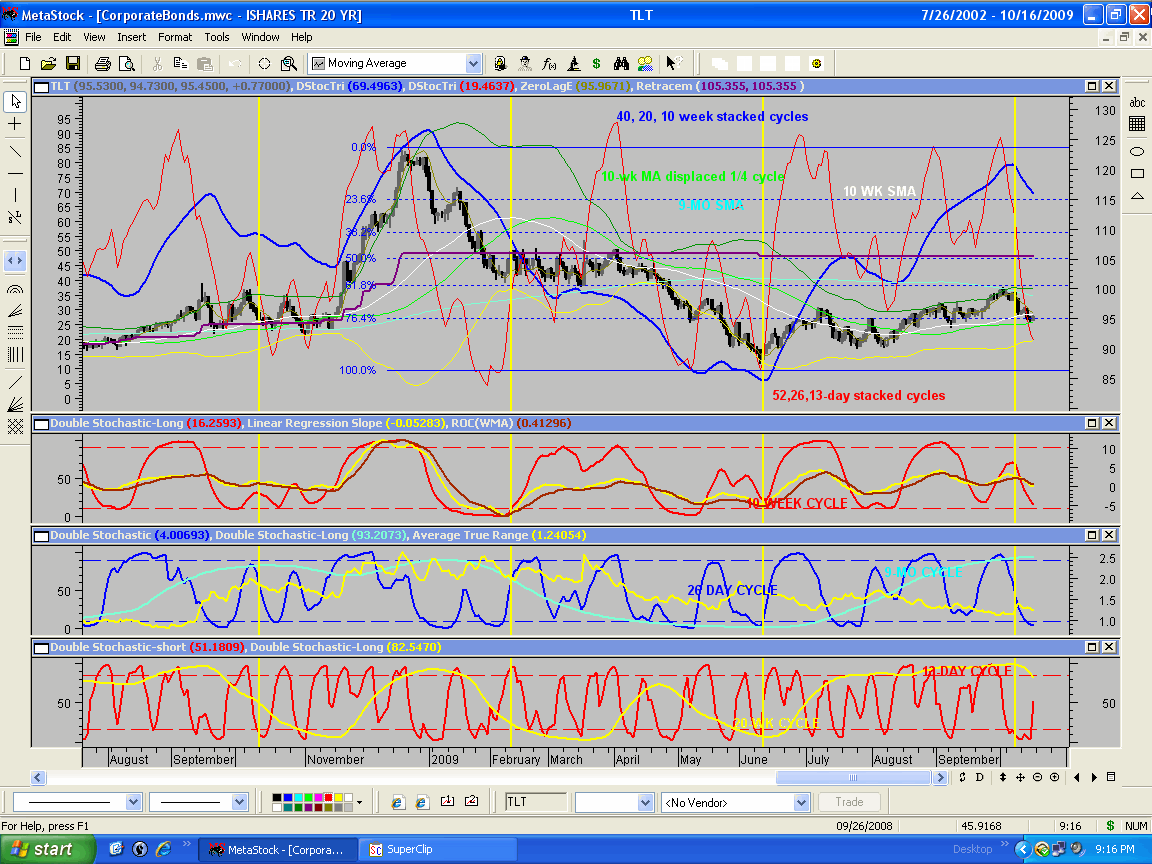
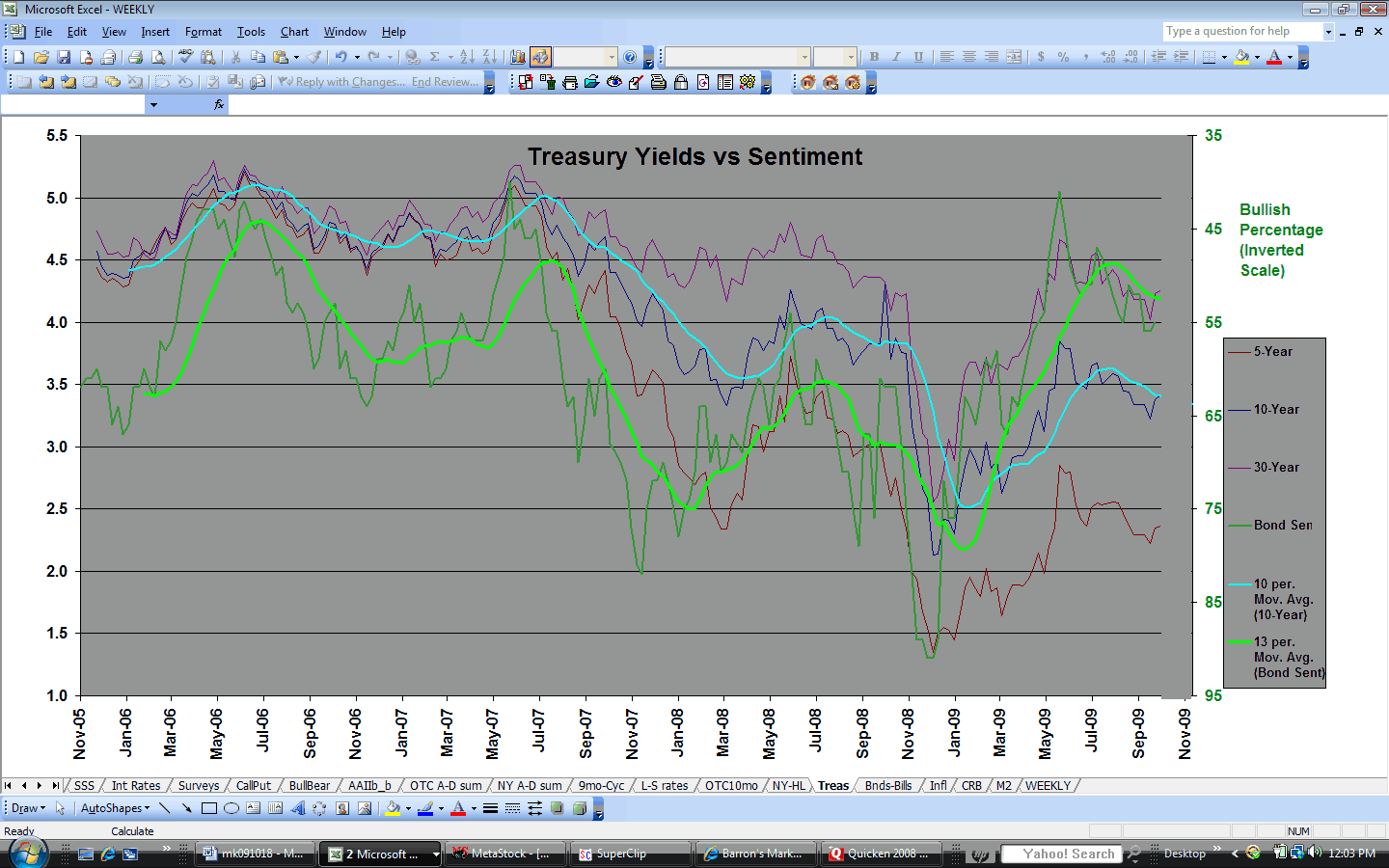
Treasury Bonds (http://www.geocities.com/petegersb/Treasury-20yr.GIF ) declined every day last week and took their biggest hit on the better-than-expected employment news. It now looks like prices will move still lower this week to test June’s 9-mo cycle low while short-cycles complete their corrections. The 26-day cycle has made a third lower peak as befits a bear market in Treasuries. Although the 20-wk cycle DStoc hasn’t yet turned down, the price pattern is now suggestive of a lower left translated top in that cycle. If so, we can expect new multiyear lows as an improving economy and hefty government borrowing would suggest. Bond Sentiment (http://www.geocities.com/petegersb/BondSentiment.GIF ) doesn’t confirm this pessimistic outlook (unless you look at the high AAII allocation to bonds). Reported pessimism is still quite high.
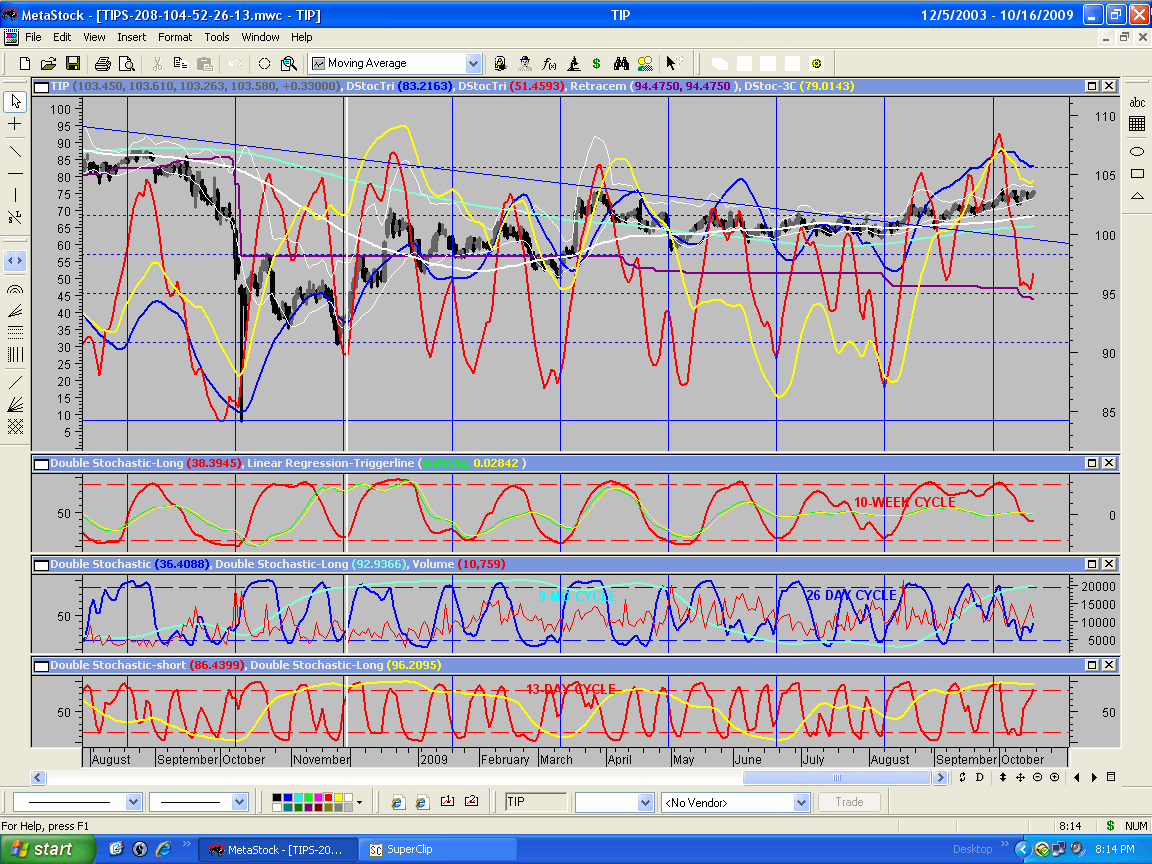
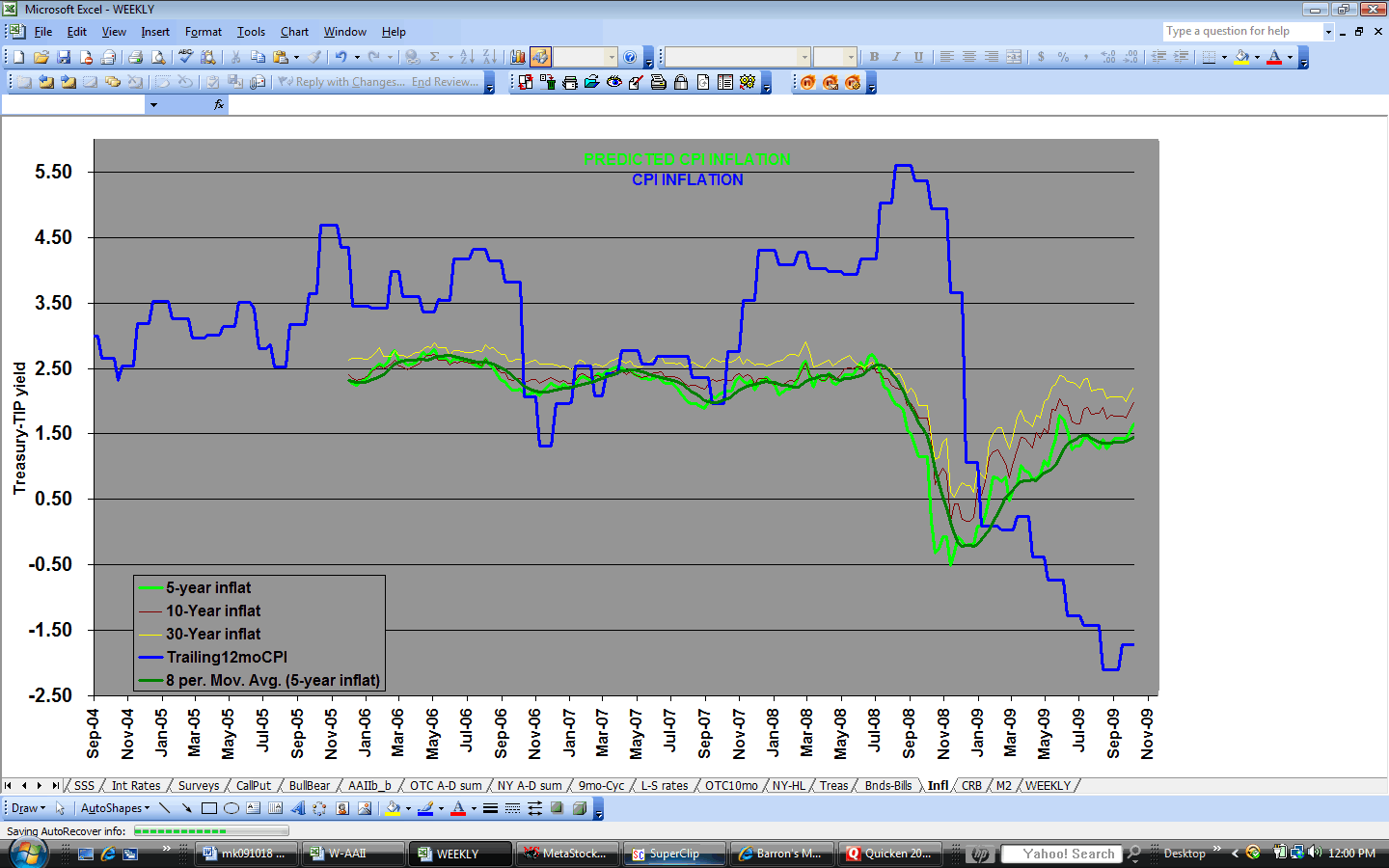
Inflation Protected Treasuries (http://www.geocities.com/petegersb/TIPs.GIF) also were hit hard last week, though not as hard as conventional T-bonds. Unlike conventional T-bonds they remain above the 9-mo moving average, which should provide some support for the oversold short-term cycles. An unexpected hike in this week’s CPI report (http://www.geocities.com/petegersb/CPI.GIF ) could reinforce that support. But since April, TIPs have produce a series of lower left-translated cycle peaks. That’s not healthy for the longer term.
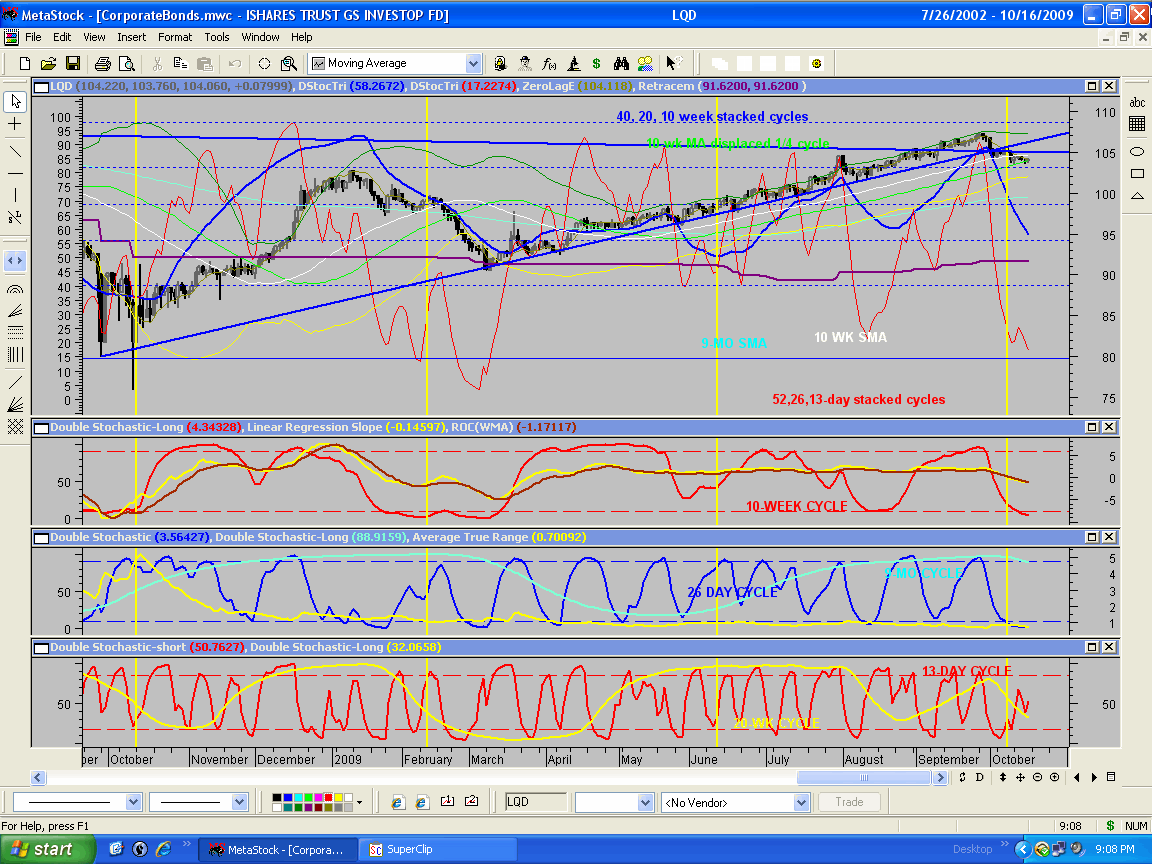
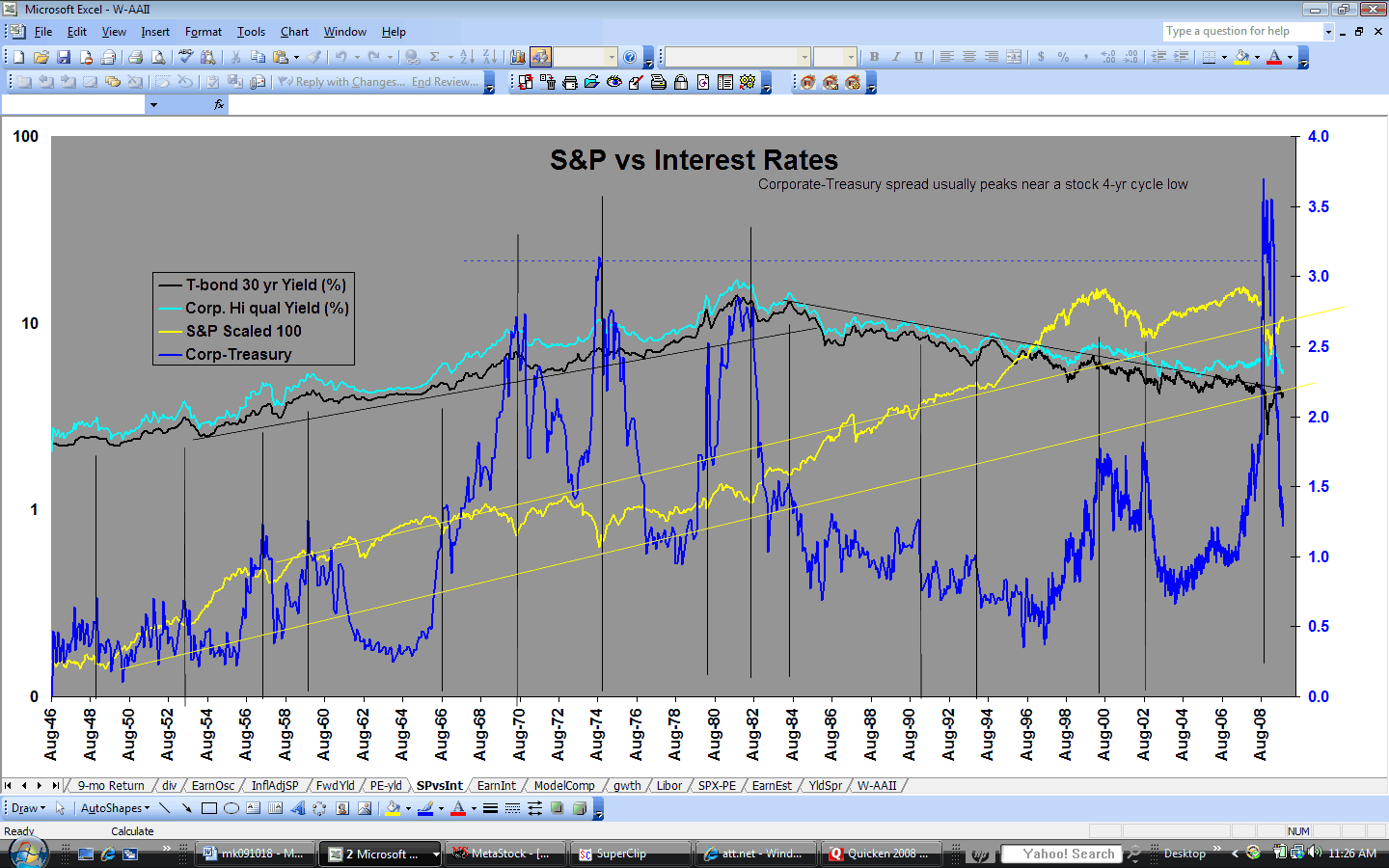
Corporate bonds (http://www.geocities.com/petegersb/CorporateBonds.GIF ) backed off from expected resistance last week. The 20-wk cycle DStoc turned down along with the short and intermediate composites, but no uptrend indicators were violated. In the short term the decline is likely to provide support at the rising 10-wk moving average. In the intermediate term a little lower support at the rising 9-mo moving average appears likely. The spread between Corporate Bond and Treasury yields (http://www.geocities.com/petegersb/Stocks-InterestRates.GIF ), although still high, has contracted to a degree not seen since the beginning of stock rallies off of major lows in 1970, 1974 and 1982 – another stock bull market confirmation.
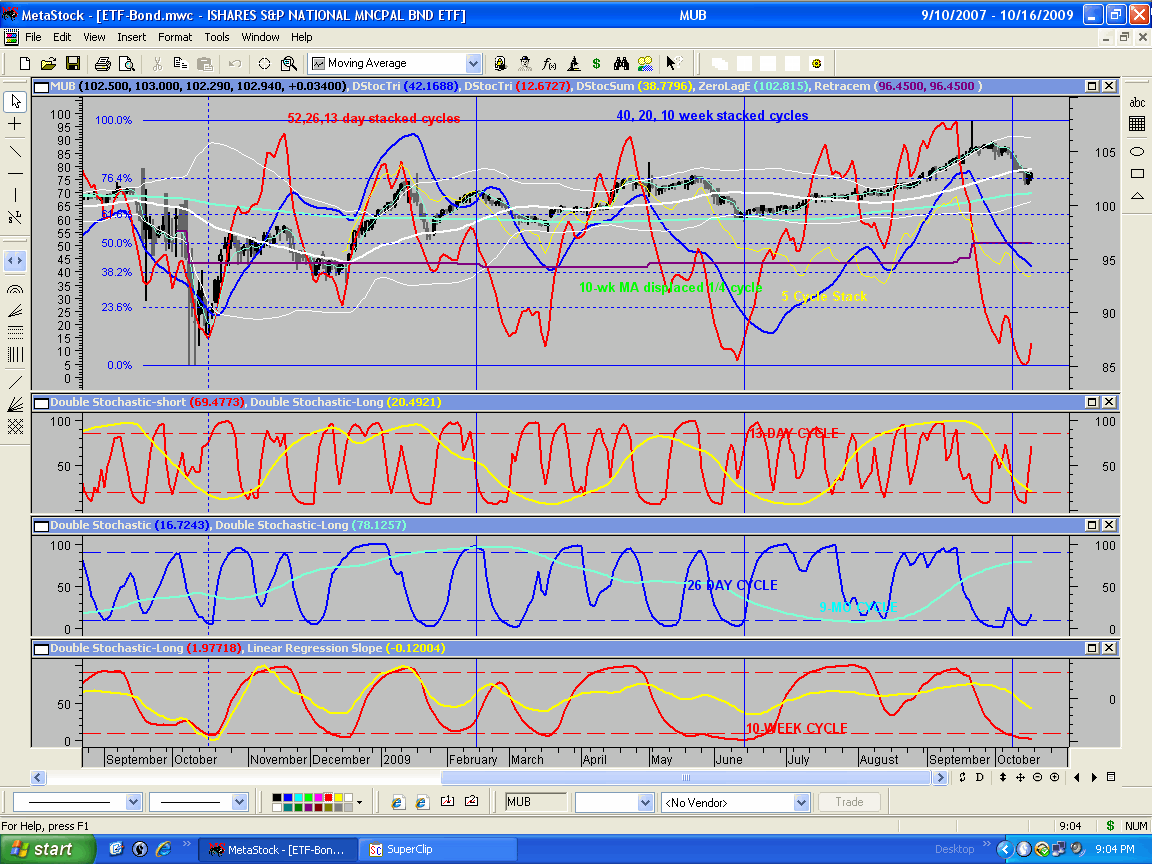
Municipal bond’s (http://www.geocities.com/petegersb/MunicipalBonds.GIF ) were the star of the bond market last week with virtually no price change. They did dip early in the week but found support as expected at the 10-wk moving average. It will probably be tested again as the first 10-week cycle in a continuing 20-wk cycle rally completes its correction.
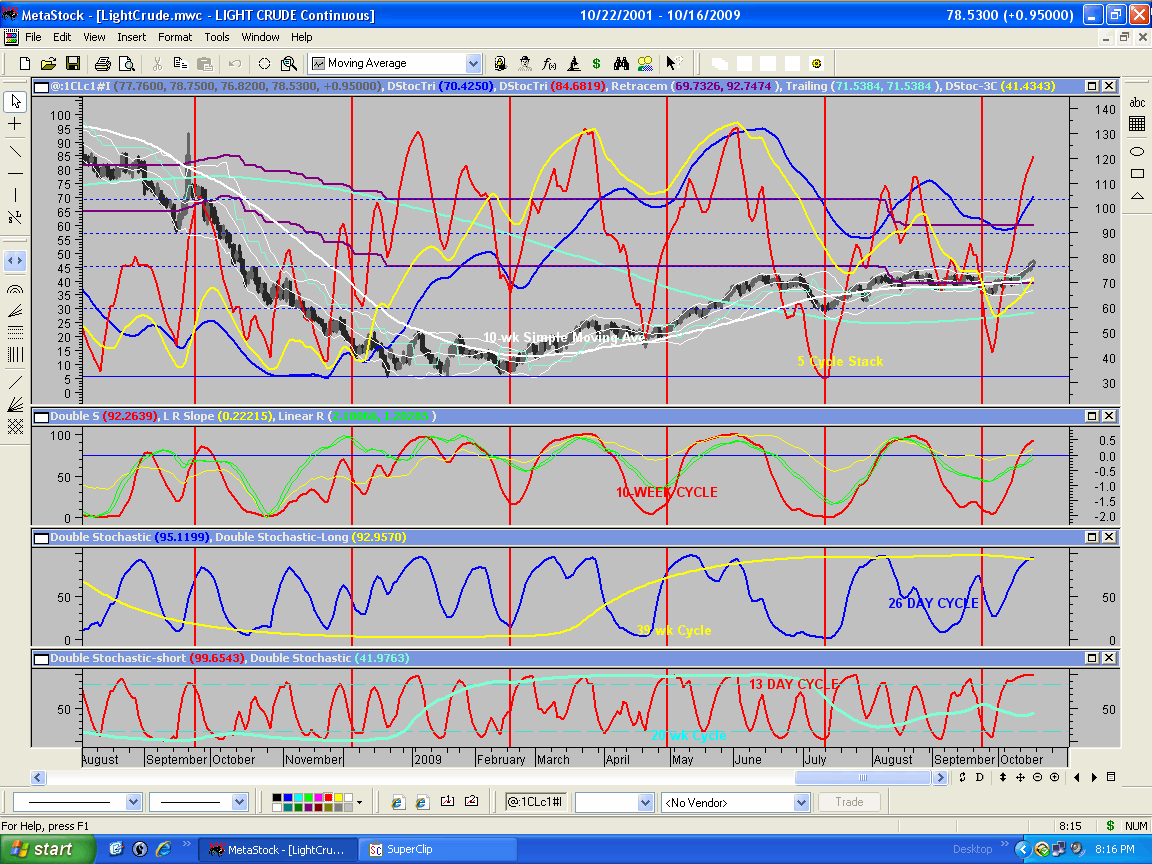
Crude oil (http://www.geocities.com/petegersb/CrudeOil.GIF ) continued its rally, and the intermediate composite turned up as expected. However, the short cycles are overbought and the price backed away from a test of June’s recovery peak. A short-term correction appears likely here, but given the intermediate uptrend, I would expect it to hold in the high $60 range.
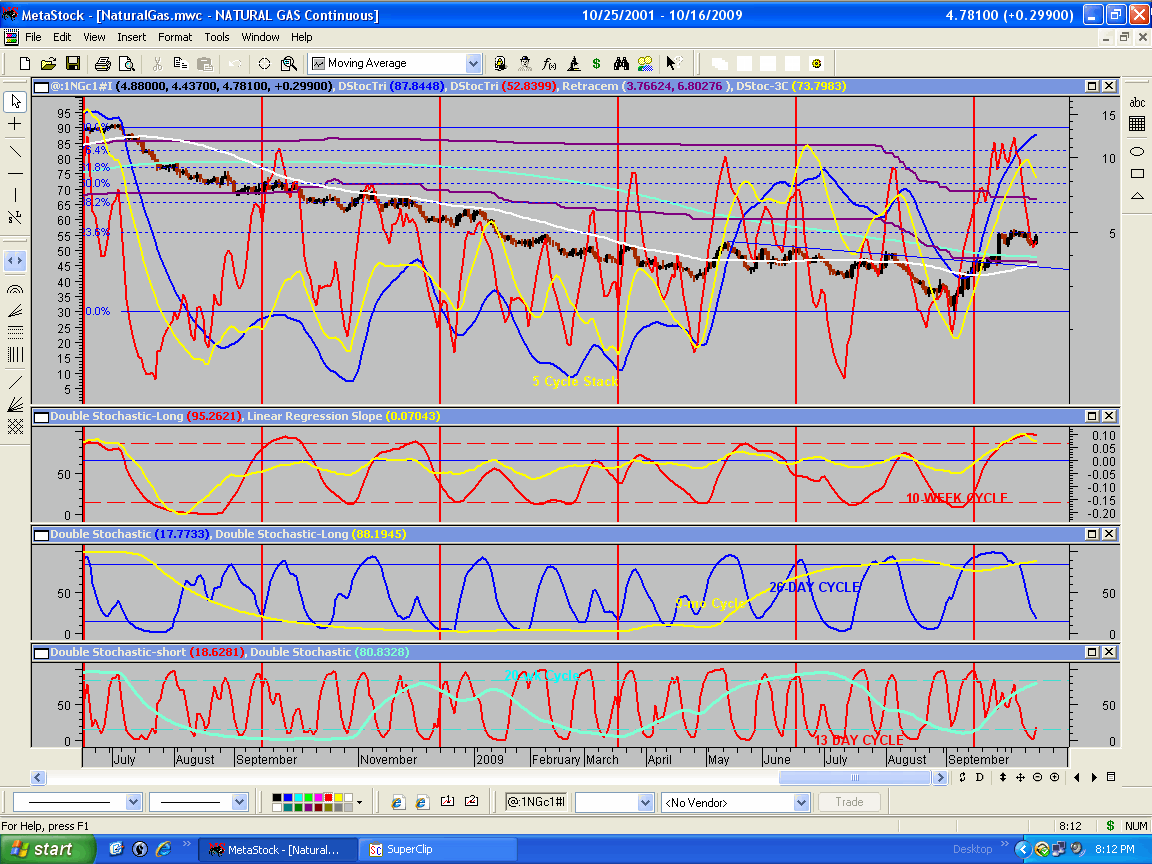
Natural gas (http://www.geocities.com/petegersb/NaturalGas.GIF ) moved up sharply early in the week to penetrate both the 10-wk moving average and the year-old downtrend line. Then it encountered resistance at the short-term downtrend line as the 13 and 26-day cycles peaked. When these short cycles complete their correction, I would expect another attempt at an upside breakout from the 6-month-old trading range. I would expect the attempt to encounter resistance below $4.58, which is both the top of the range and the current level of the 9-mo moving average. If the correction can hold at higher lows for both13 and 26-day cycles, and produce bottoms in both the 4-wk-old 10-wk cycle and 15-wk-old 20-wk cycle, it may mark the beginning of a long-term uptrend.
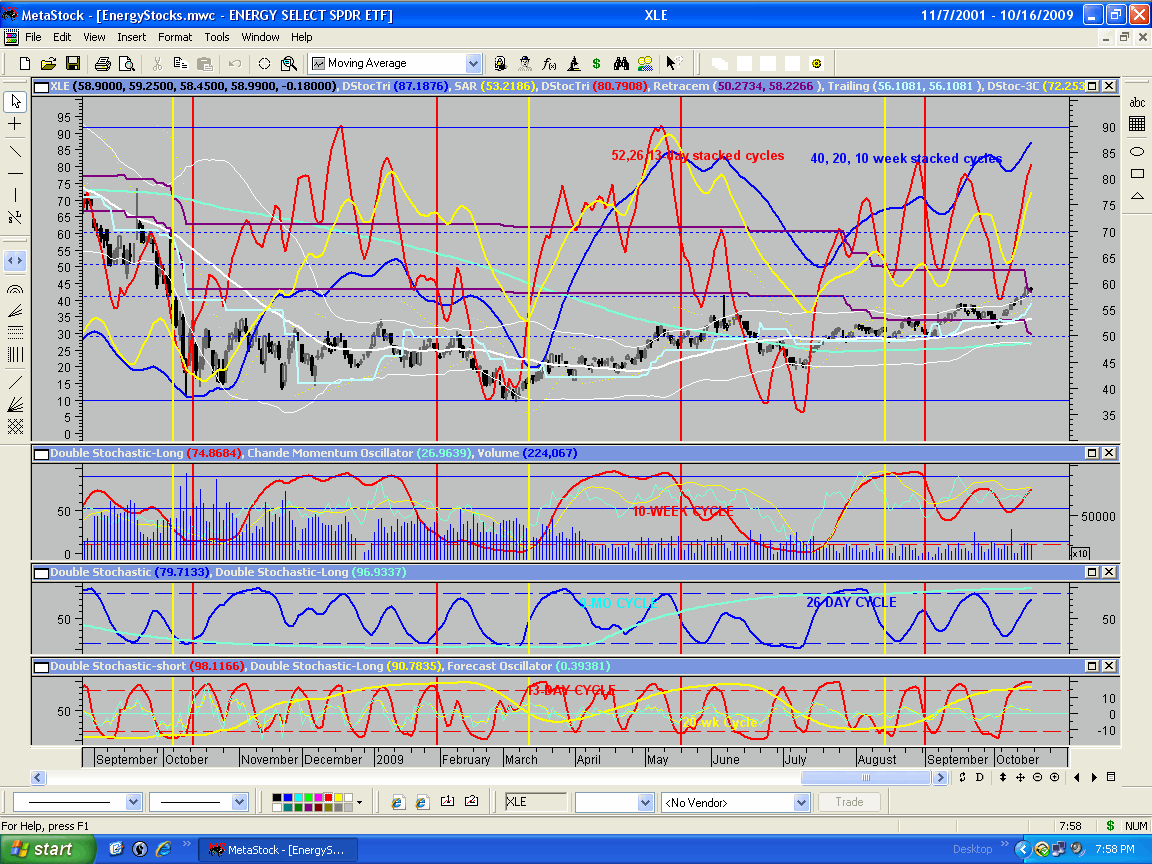
Energy stocks (http://www.geocities.com/petegersb/EnergySPDR.GIF) managed only a miniscule gain last week despite gains in
the underlying commodities. The short cycles probably will produce a decline
this week, but the intermediate trend remains tenuously favorable. A
continuation of the 10-month-old trading range appears likely at least until
the month-old 10-wk cycle finds its next bottom.
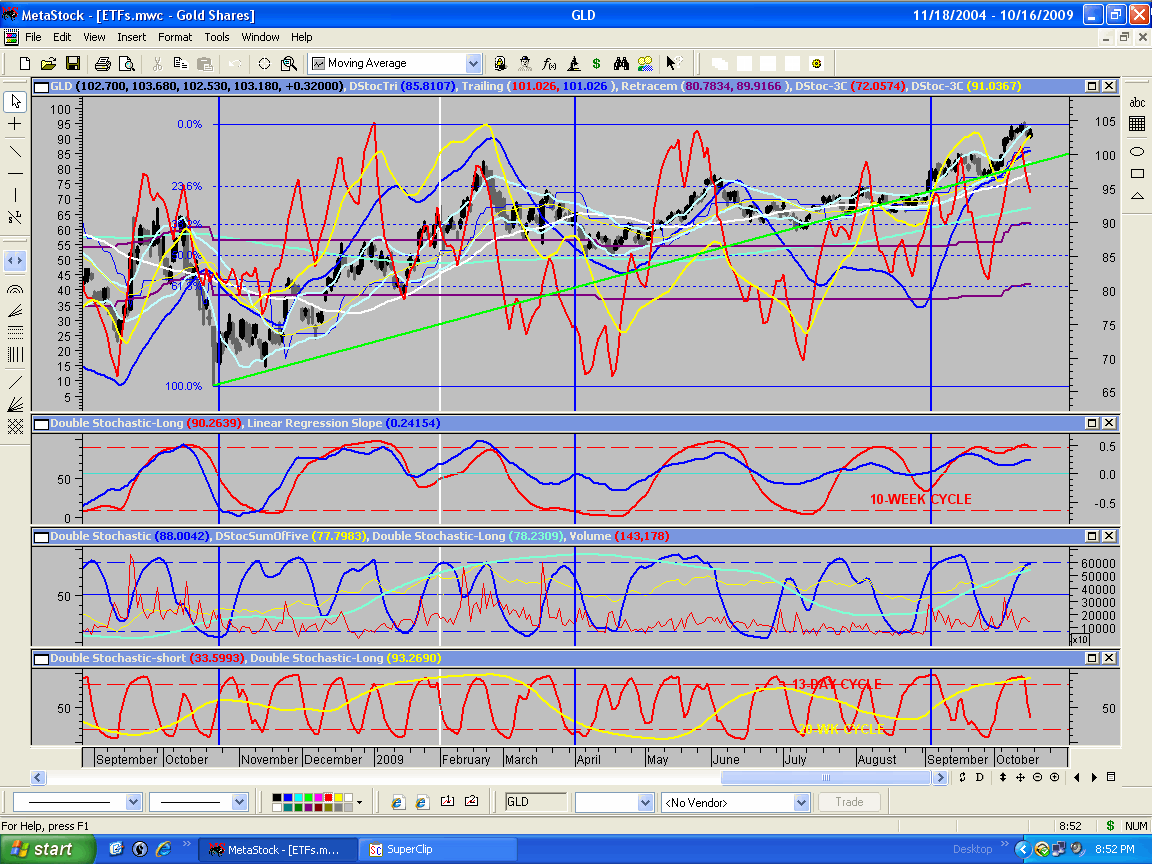
Gold (http://www.geocities.com/petegersb/GoldBullion.GIF) also squeaked out a small gain for the week after
establishing an apparent short-term peak on Thursday right at the declining
tops line from the February peak. Gold is holding up very well considering the
adverse longer cycles. The favorable
10-wk cycle is only a month old, and still in an uptrend. The 7-day-old 13-day
cycle and 20-day-old 26-day cycles should complete their corrections in about a
week. It’s probably worthwhile to hang on to see if they hold potentially
strong support around 920.
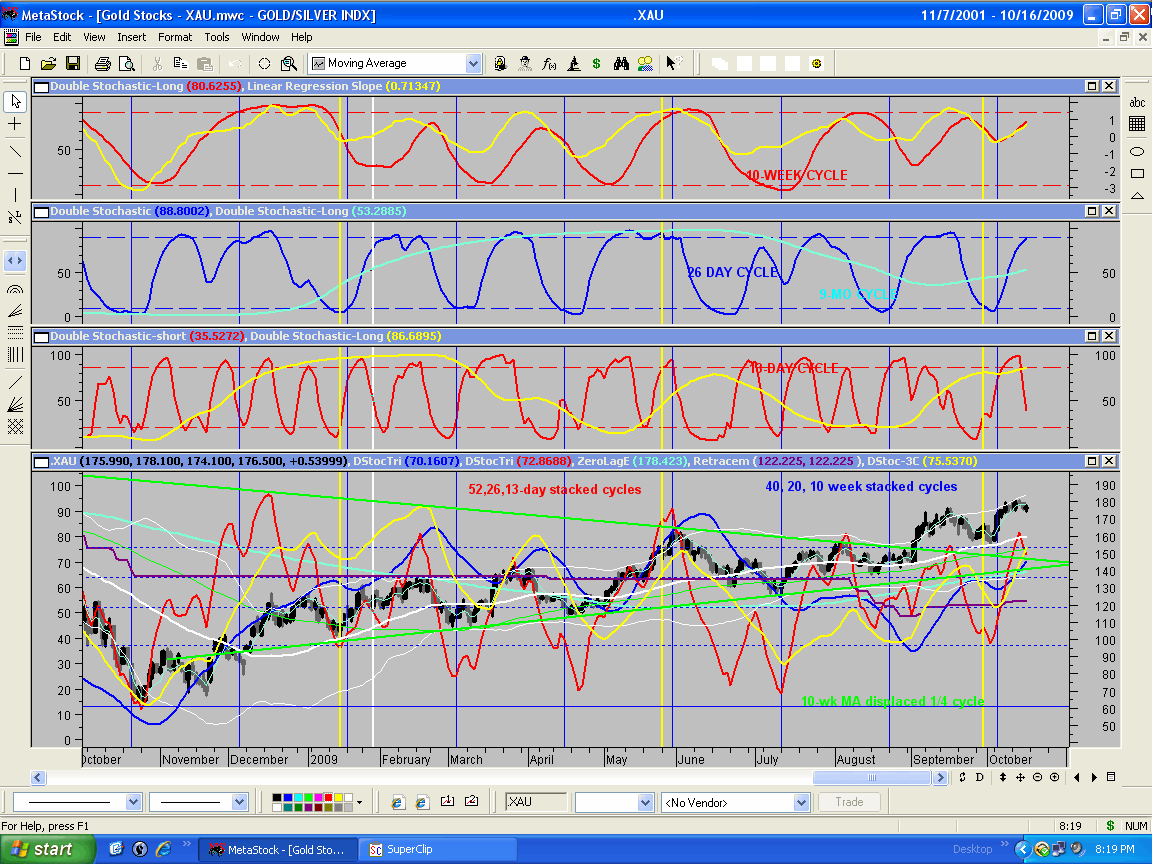
Gold Stocks (http://www.geocities.com/petegersb/GoldStocks.GIF
) cycles are similarly positioned with only the 10-week cycle still favorable
and other cycles declining. Despite that, the intermediate composite remains in
an uptrend. The short-term correction should find support a little lower at the
10-wk or 9-mo moving averages.
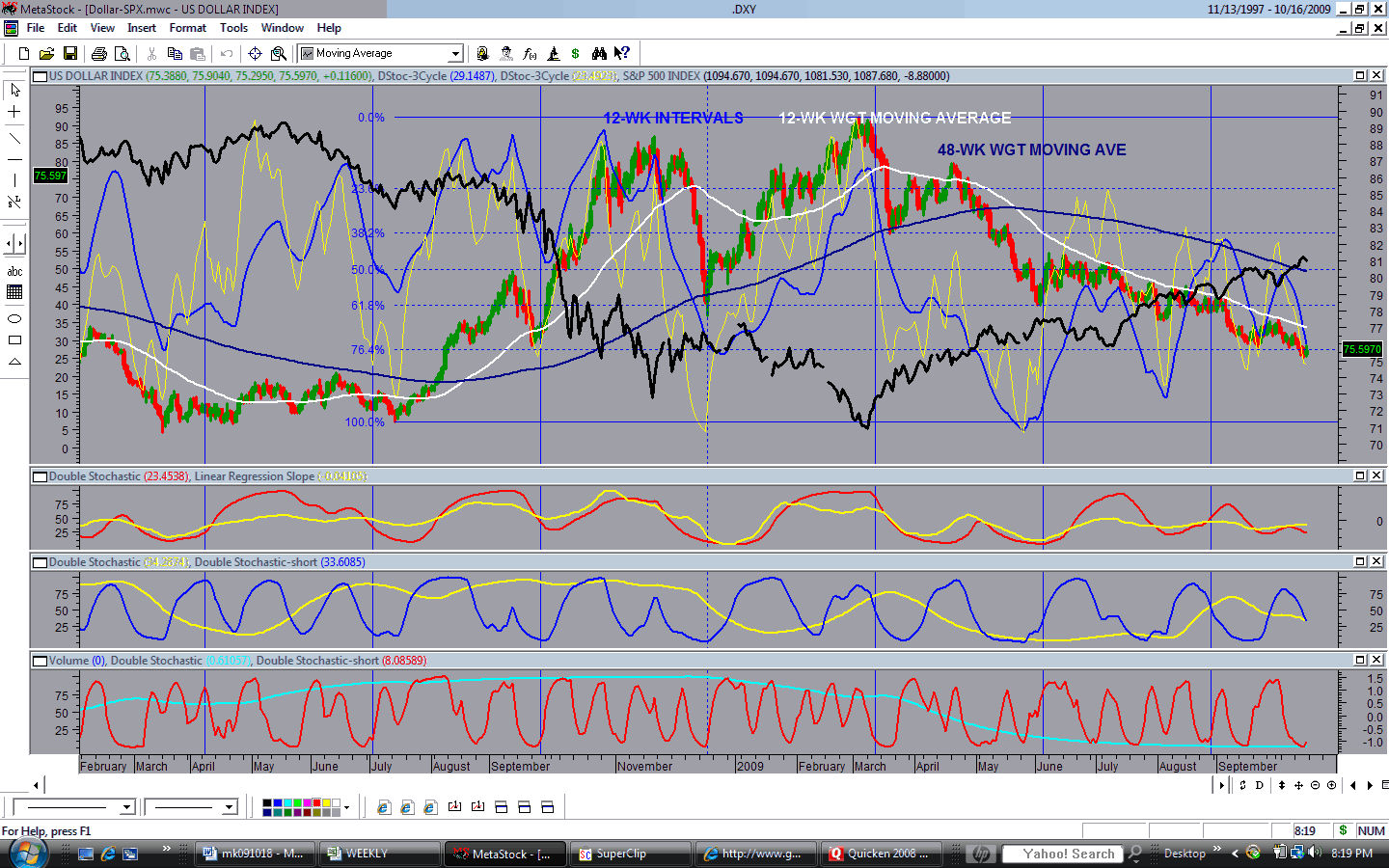
The Dollar (http://www.geocities.com/petegersb/Dollar.GIF) broke below the December and June lows a little earlier than I expected. The short-term rally couldn’t extend beyond 2 days and the declining phase appears likely to continue for a few more days. The longer cycles aren’t scheduled for a bottom for about another 3 weeks. They appear likely to test year-ago lows before reaching a bottom.