This is the last report until July 26 – about the time that I expect stocks to be reaching at least a 20-wk cycle bottom and probably a 9-mo cycle bottom as well.
7/5/09
The first half is a done deal, so it’s time to review how my first half forecast has turned out. It was summarized in the following quote from my December 28 letter: “So I think a target near 700 is appropriate for the first 6 months, with a further decline into late summer before a 4th quarter recovery”. The SPX reached a low of 667 in March so the estimated level was pretty accurate. The timing wasn’t as good, but not too bad. I expected the low in February or in May - dates which straddled the actual low. The expectation of a further decline into late summer now looks like it is unlikely to produce new lows as detailed below.
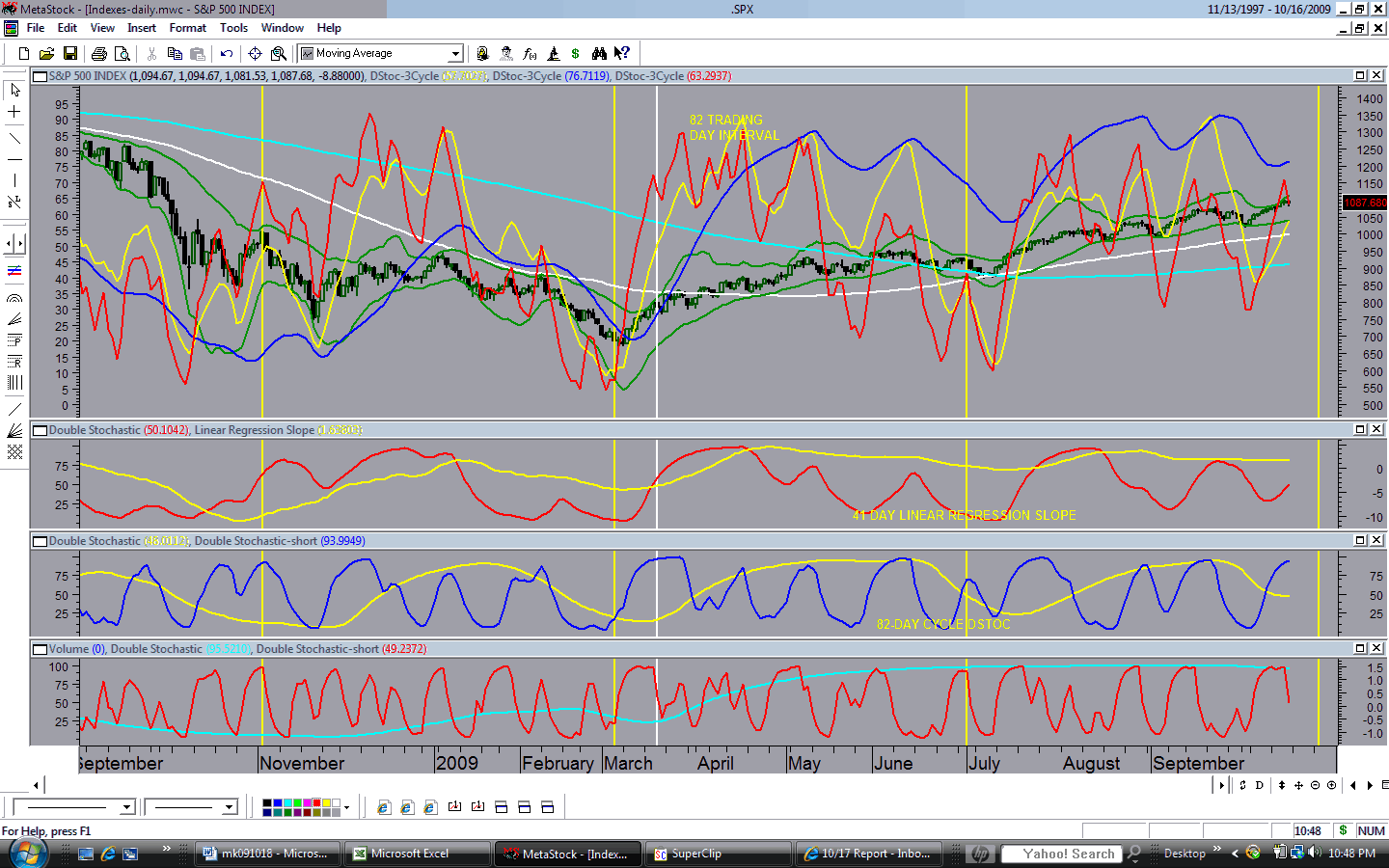
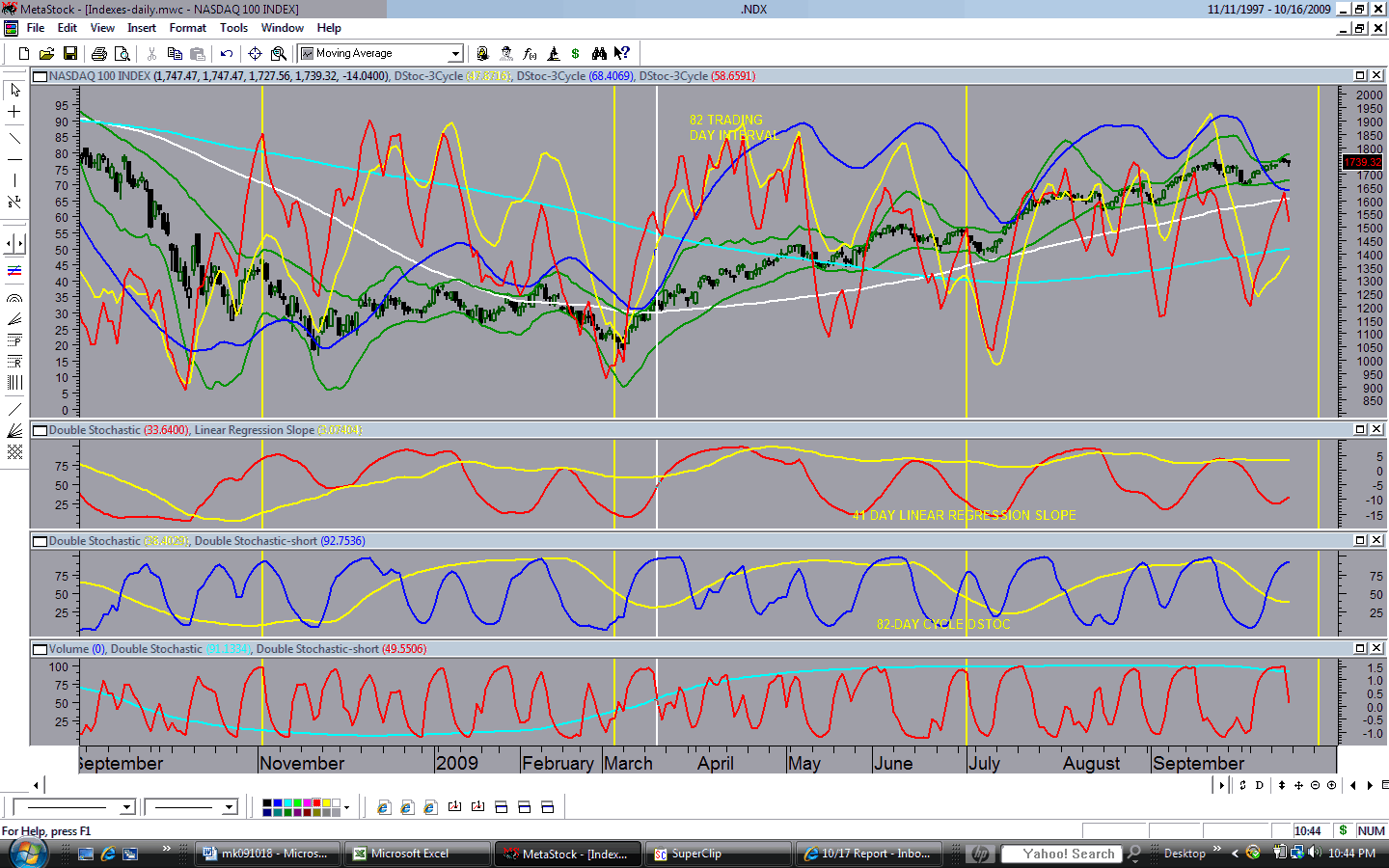
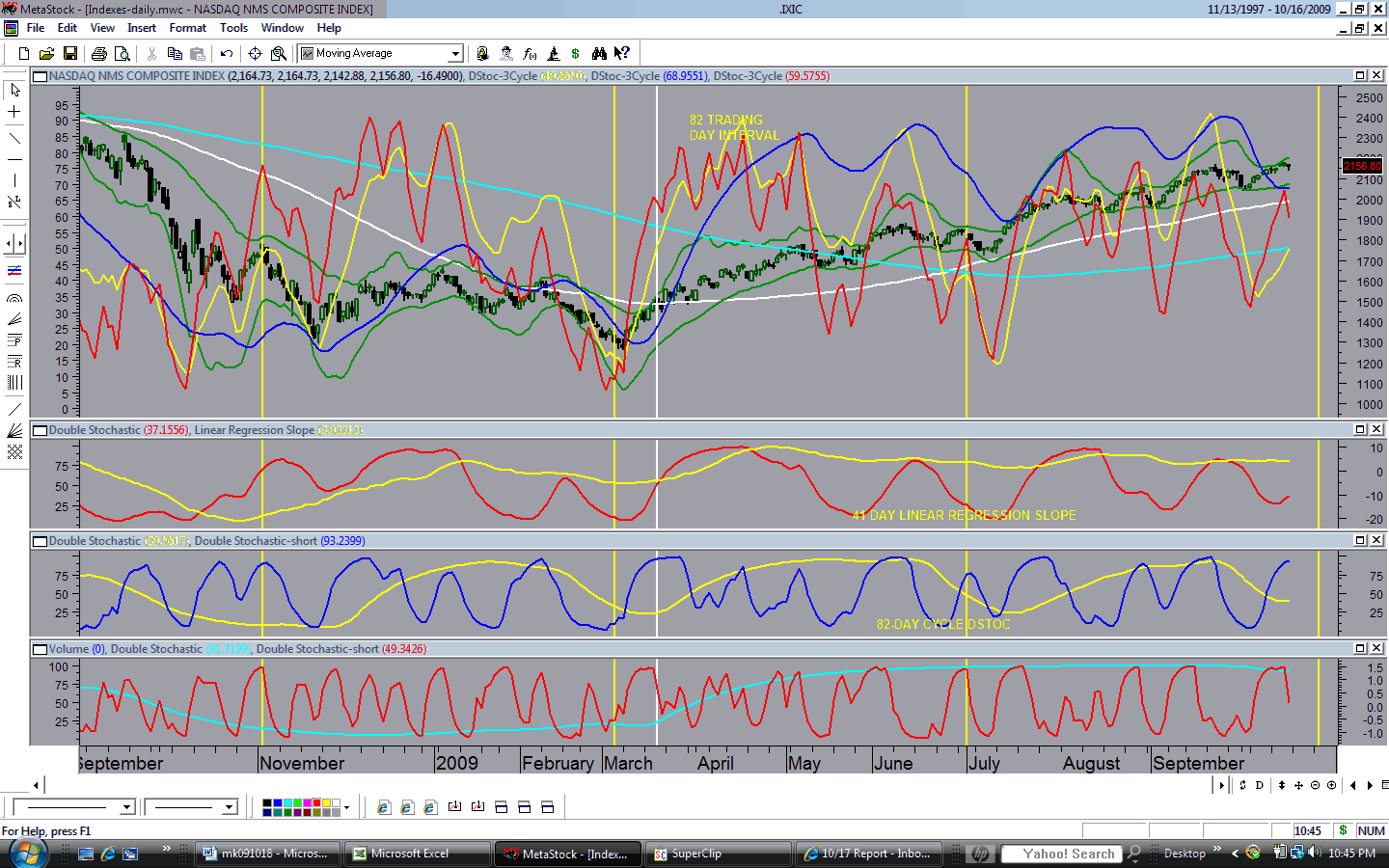
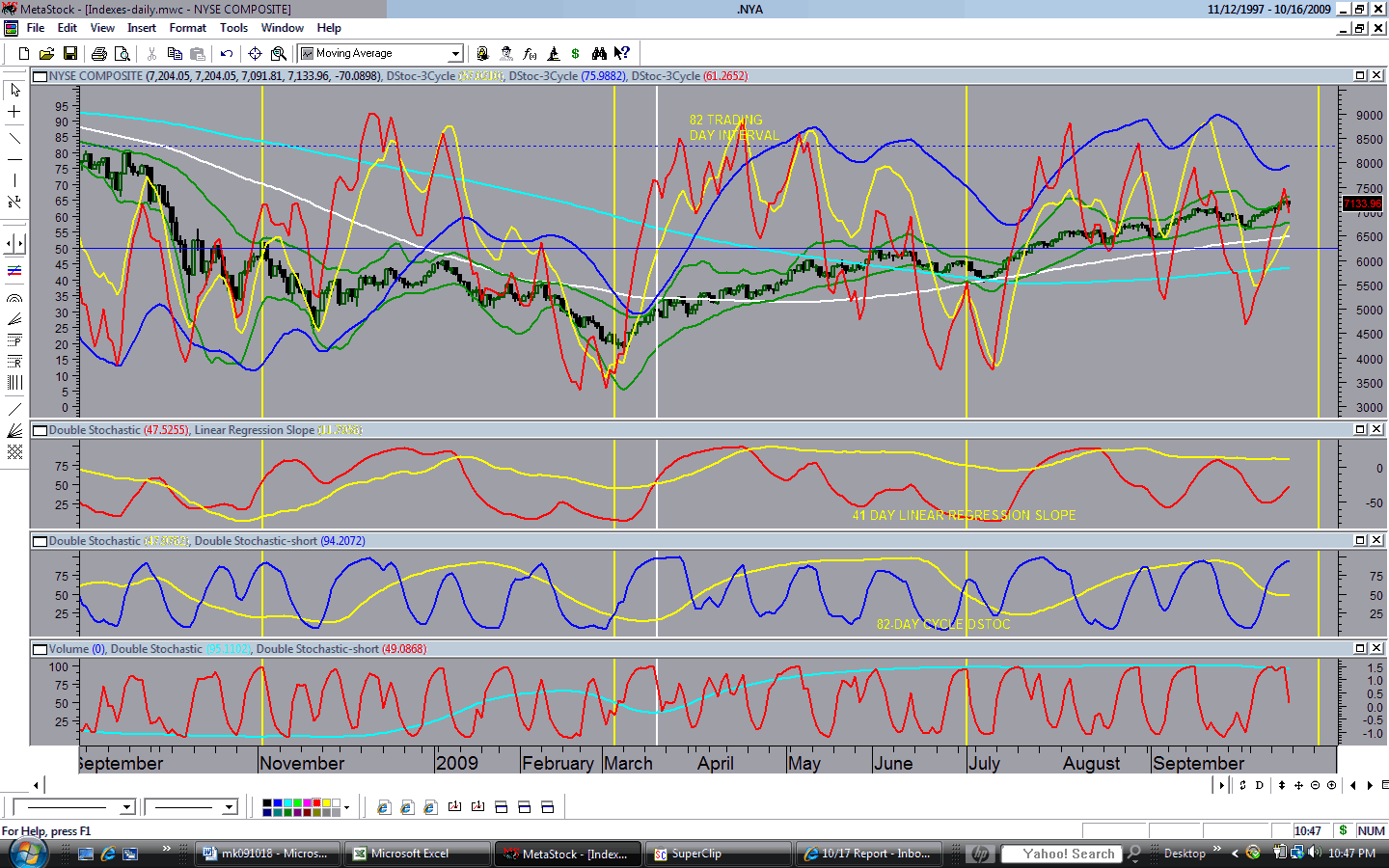
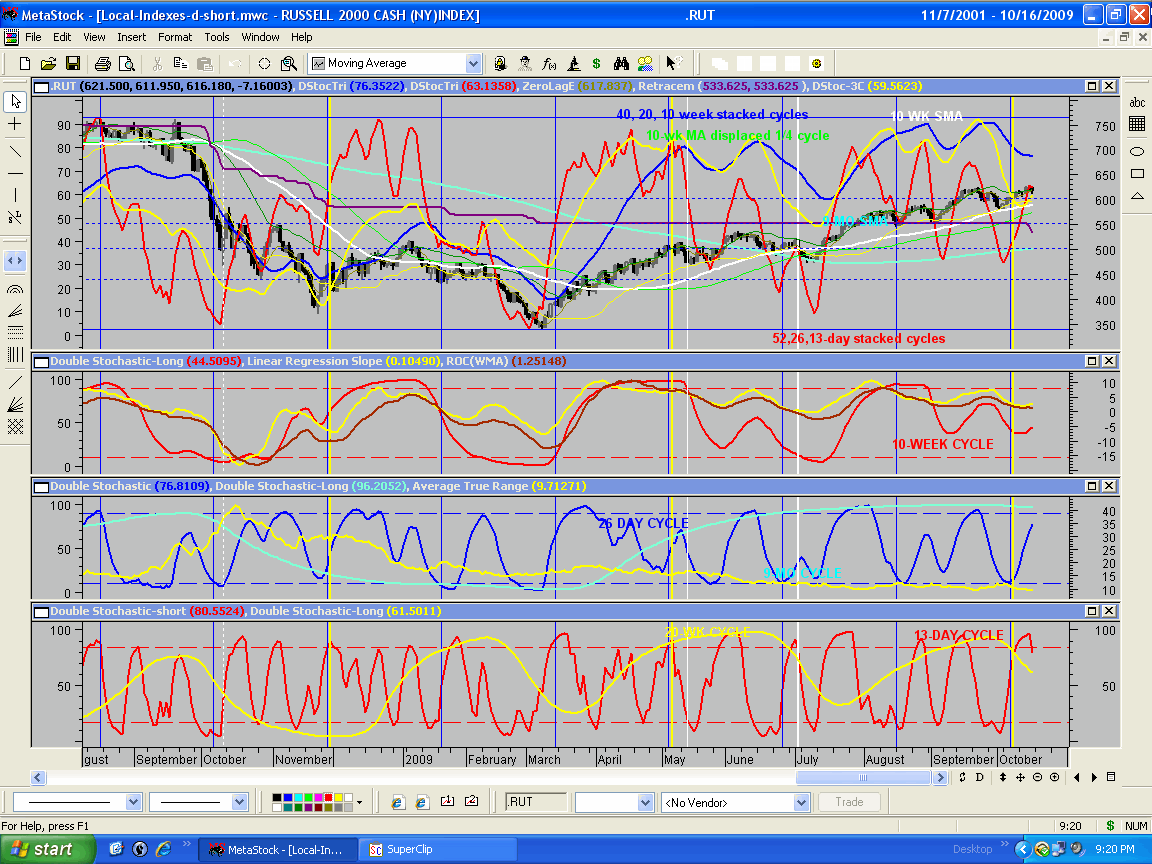
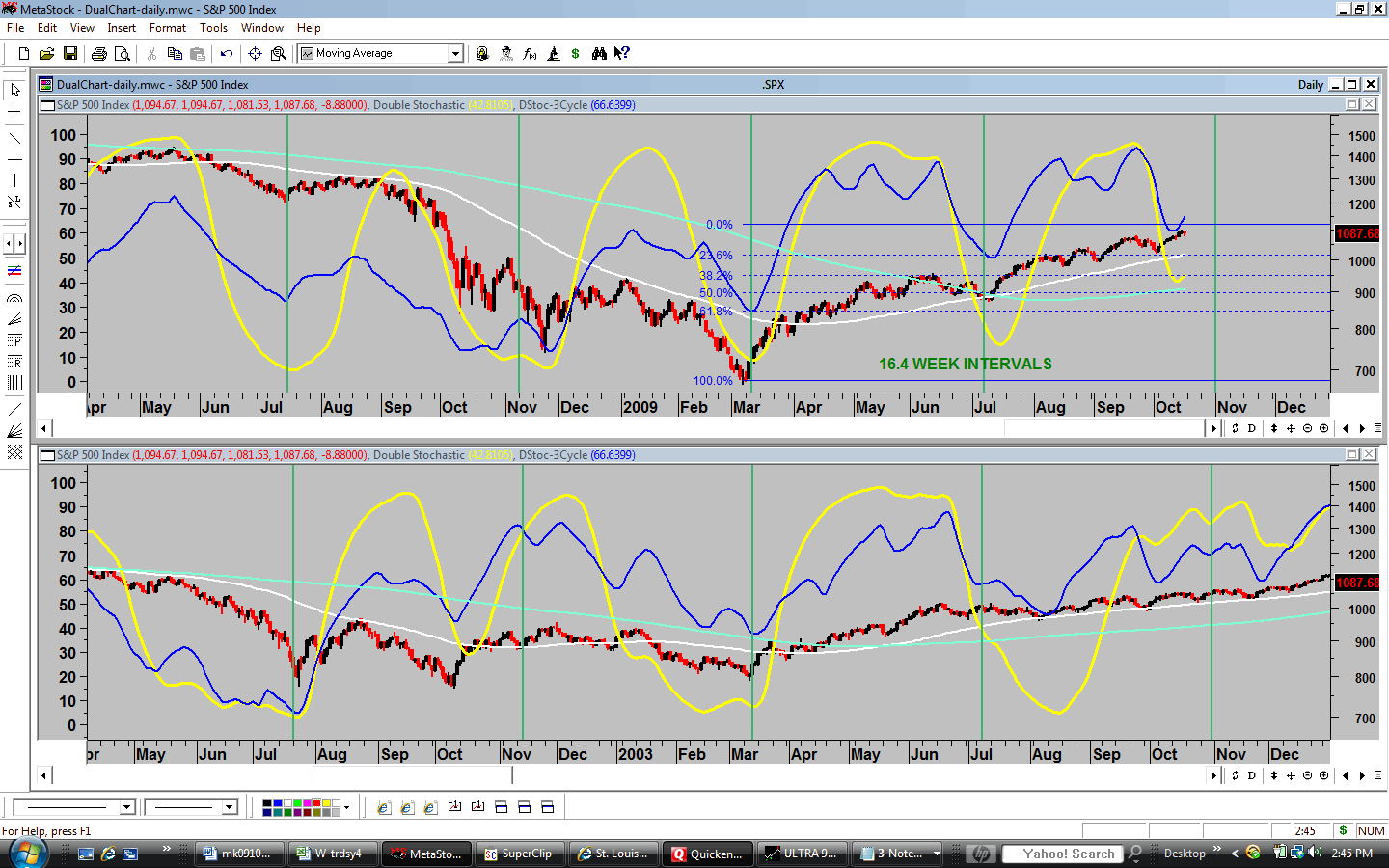
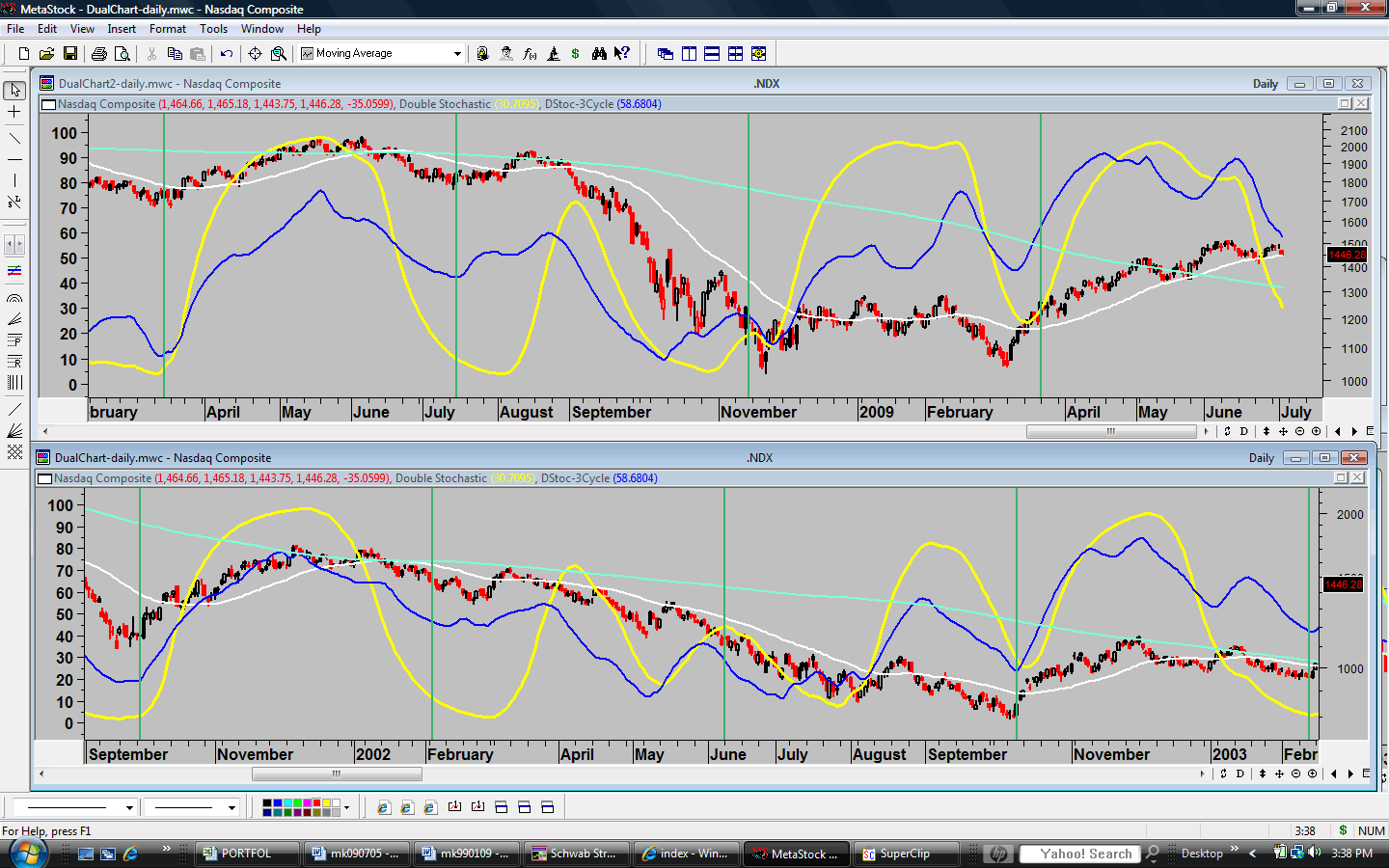
Stocks established a lower 13-day cycle peak on Wednesday (SPX (http://www.geocities.com/petegersb/SP500.GIF ), NDX (http://www.geocities.com/petegersb/NDX.GIF ), NASDAQ Composite (http://www.geocities.com/petegersb/NasdaqComposite.GIF ), (NYSE Composite (http://www.geocities.com/petegersb/NYSE.GIF), Russell 2000 index (http://www.geocities.com/petegersb/Russell2000.GIF ). So this week the 13-day cycle will be reinforcing the downtrends in the 20-wk cycle, which is now 17-weeks old, and in the 10-wk cycle, which is now 7-weeks-old. The 8-day-old 26-day cycle should remain supportive this week, but it’s unlikely to prevail against the aforementioned cycles. With normal life spans, all of these cycles should reach a nested low in 3-4 weeks – 8 months after the November low, which probably was the last 9-mo cycle low. That will be a major buying opportunity if the 4-year cycle low arrived prematurely in March. The preponderance of the evidence now suggests that it did. It’s far more likely that the early June 20-wk cycle peak would have translated so far to the right in a young 4-year cycle advance than in the late stages of a 4-year cycle decline.
But let’s look at the 4 potential scenarios with respect to the 4-year and 9-month cycles:
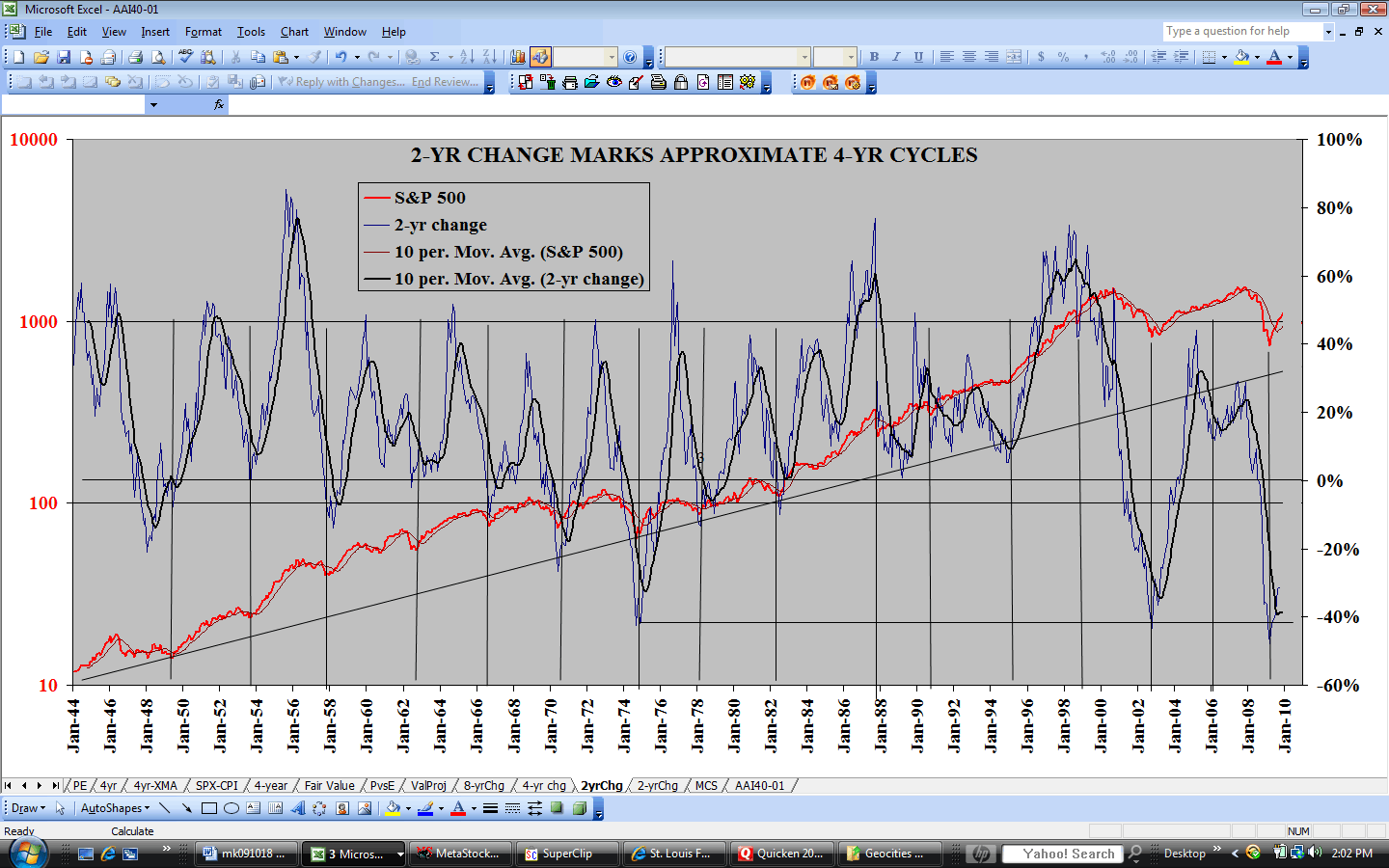
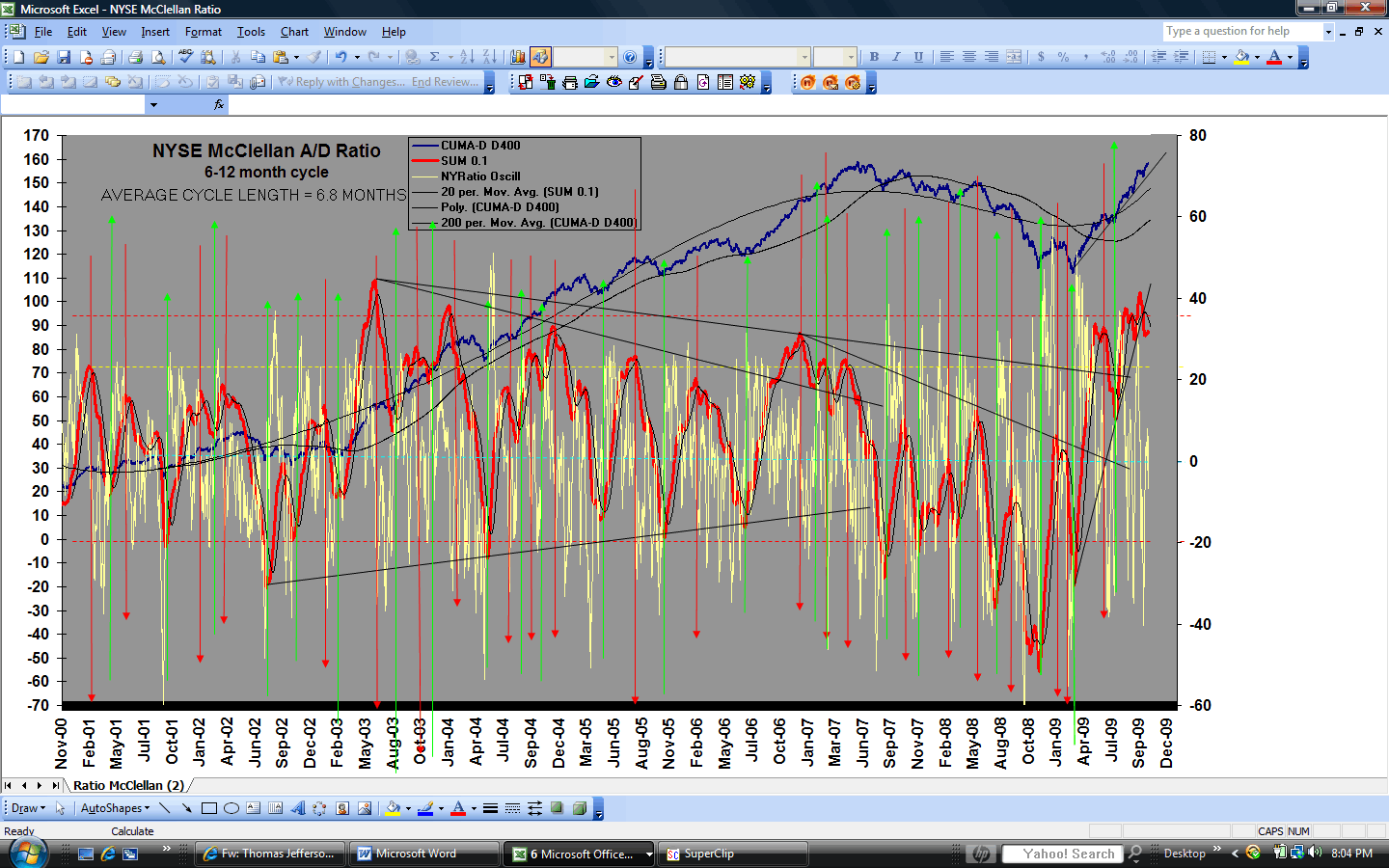
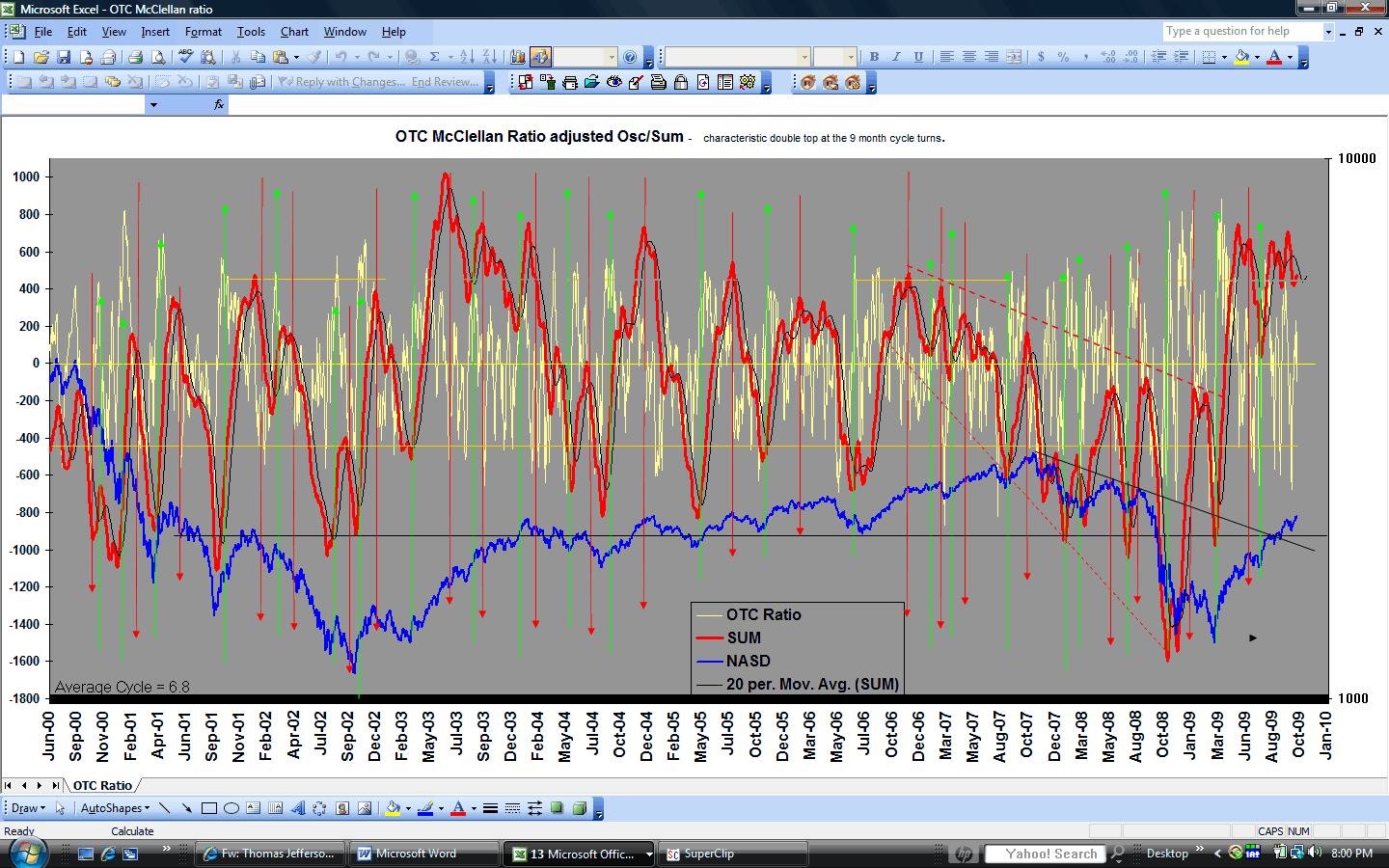
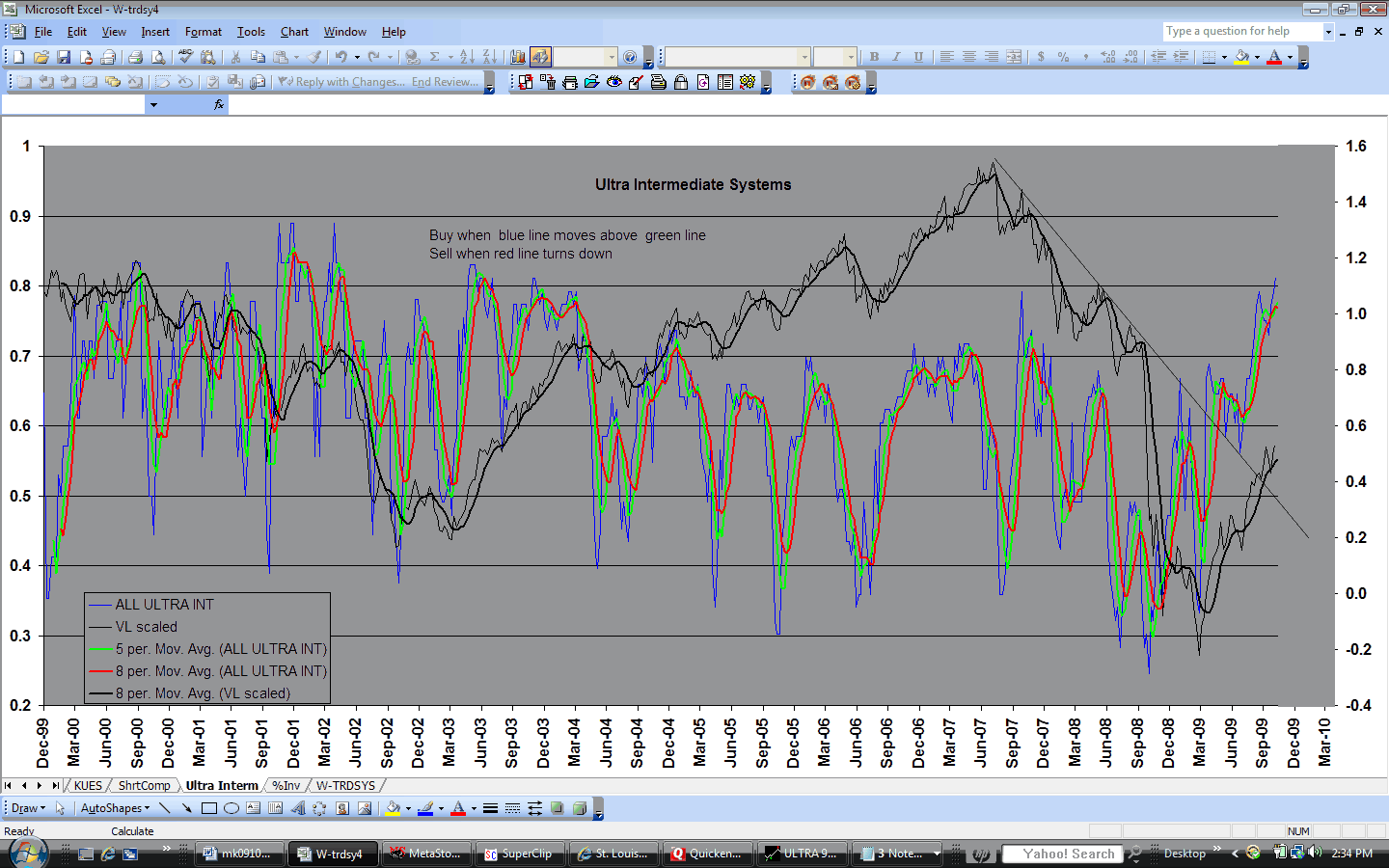
1) If March was both a 4-year and 9-mo cycle low, we would expect a shallow 20-wk cycle dip during July; followed by a rally comfortably above the June highs, and then a steeper decline into a year-end 9-mo cycle low. Both corrections would hold well above the March lows and probably above the November low. The strong recent 20-wk cycle rally into a right-translated peak fits this scenario well, so we have to assign it a relatively high probability despite November having better 9-mo cycle low credentials than March, March being considerable outside the normal time window for a 4-yr cycle low, and the 4-yr cycle oscillator (http://www.geocities.com/petegersb/2-YrChange.GIF ) failing to move above its 10-wk moving average. Furthermore, it’s unlikely that the first 9-mo cycle of a new 4-year cycle would already be in decline as so many indicators suggest (McClellan Summation Indexes (http://www.geocities.com/petegersb/A-Dsummation-NYSE.GIF , http://www.geocities.com/petegersb/A-Dsummation-OTC.GIF ), ULTRA Intermediate Composite (http://www.geocities.com/petegersb/UltraIntermediate.GIF )), so this is not the highest probability scenario.
2) If March was a 9-mo cycle low, but not a 4-yr cycle low, we would expect the July dip to be a little deeper but still hold above the March low. The subsequent 20-wk cycle peak probably wouldn’t exceed the June peak, and we would expect new lows near year-end that may or may not constitute the 4-yr cycle low. Year-end timing would be within the normal time window for a 4-year cycle low, but a nominal 4 year cycle would require yet one more 9-mo cycle extending into the 2nd half of 2010. This scenario appears to have a relatively low probability because it implies we have just seen a bear market rally. While bear market rallies are steep, they seldom culminate in significantly right translated 20-wk cycle peaks as this one did.
3) If March was a 4-year cycle low, but not a 9-mo cycle low, we would again expect prices to hold above the March low, but perhaps threaten those lows. That’s the scenario experienced in 2002-2003 when the first of a triple bottom was followed in 11 weeks by a lower low and in another 20 weeks by a final slightly higher low (http://www.geocities.com/petegersb/2003_Comparison.GIF , http://www.geocities.com/petegersb/2003_Comparison-Nasdaq.GIF ). Now, about 15 weeks elapsed between the November low and the March low, and the end of July is 20 weeks beyond that second low. So the potential for a replay clearly exists, and this scenario is compatible with the right translated 20-wk cycle peak. The current market pattern is stronger than in late 2002 because that rally produced a left-translated peak that was slightly lower than the one 15 weeks prior. This latest 20-wk cycle peak translated right and marginally exceeded the prior peak 22 weeks ago. I think that this is the most likely scenario. If it does occur, we can expect a robust rally off of a successful test of the lows. The 9-mo and shorter cycles would be coming off of fresh lows in a 4-year cycle that is only 5 months old.
4) If March was neither a 9-mo cycle low nor a 4-year cycle, but merely a 20-wk cycle low, we can expect the current decline to culminate in a 9-mo cycle low in about a month, perhaps at new lows. But, although new lows would be the norm for this scenario, given the short time until these lows are scheduled, another panic selloff would be required. This scenario appears to have the lowest probability because significant right translated peaks in the 20-wk cycle, such as we have just seen, rarely if ever occur while both the 9-mo and 4-year cycles are in continuing downtrends – the probable situation if the 9-mo cycle last bottomed in November and the 4-yr cycle hadn’t bottomed March. But if prices do reach new lows this summer, this is the only scenario that would fit. It may or may not produce the 4-year cycle low – a situation to be analyzed when and if new lows materialize.
To summarize: Scenario #1 – Shallowest decline, perhaps 30% probability; Scenario #2 – Deeper decline, perhaps 20% probability; Scenario #3 – Successful test of March lows, perhaps 40% probability; Scenario #4 – New lows, perhaps 10% probability.
While scenario #4 would easily be recognized, it will be harder to distinguish between the other 3 scenarios because all require a higher low. But since all offer the likelihood of a decent rally after the 20-wk cycle low, it’s probably only important to recognize that low quickly and buy it. Distinguishing between them can be deferred until we see the depth of the decline and the characteristics of the rally.
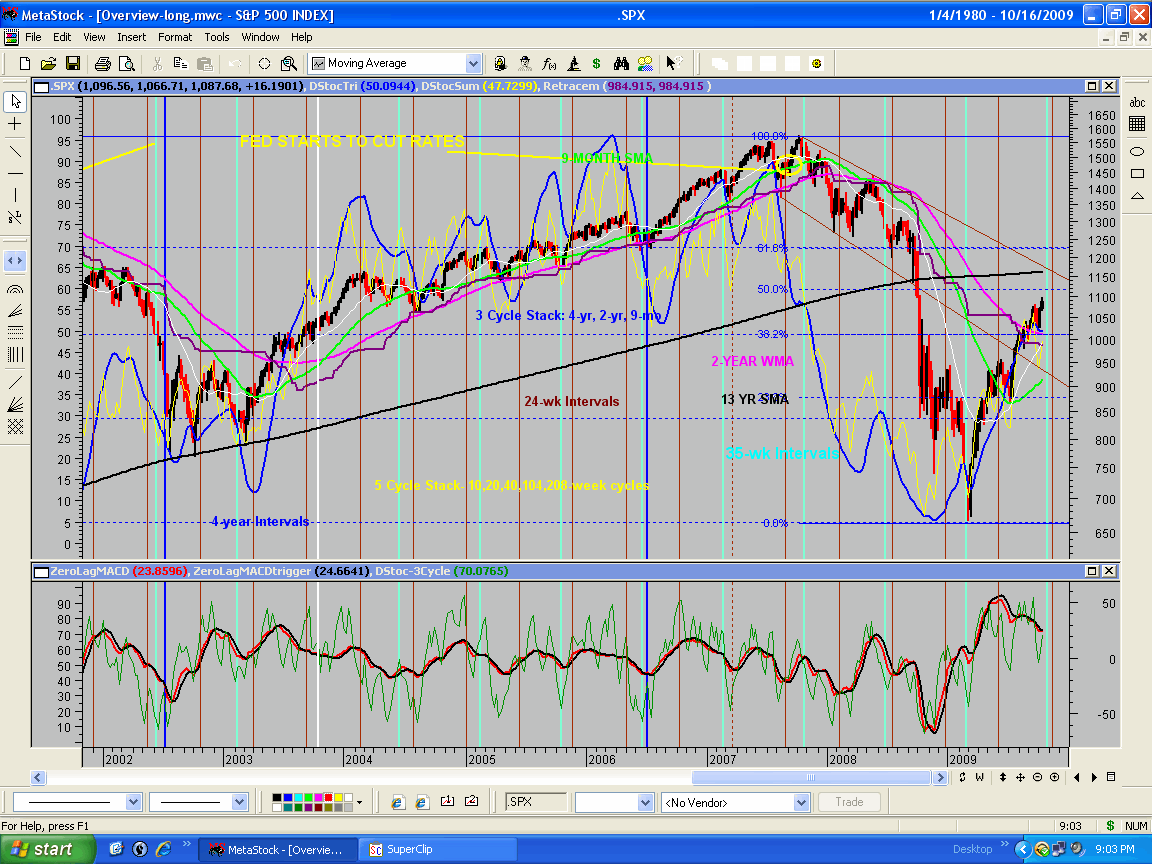
In the meantime I would look for support on the SPX near 850, 805, 780, 740 or 666. The 805 and 740 support levels appear especially strong. 805 is the target for the head & shoulders pattern that seems to be forming, and it coincides with 2 Fibonacci retracements: the 38.2% retracement of the recent rally and the 23.6% retracement of the May 08 to March 09 decline. 741 is the November low and the 76.4% Fibonacci retracement of the recent rally. A rally from that level would set up the potential for a large inverted head & shoulders (http://www.geocities.com/petegersb/Overview-long.GIF ) with a minimum upside target of 1246. That’s very close to the 61.8% Fibonacci retracement of the second Bush bear market.
In 1973 Burton Malkiel wrote “A Random Walk Down Wall Street”, a book that provided at least some of the impetus for the formation of Index funds. He was asked in Barron’s interview this week if there is anything he would have written differently with the benefit of hindsight. Essentially his answer was no, but he did concede that the stock market is not a perfect random walk. He maintains that most investors would be better off in a low cost index fund than in managed funds because prices are so unpredictable that it is extremely difficult to capitalize on the market’s few inefficiencies. He correctly supports that notion with the observation that 2/3 of active managers underperform the indexes. I won’t quarrel that conclusion, but difficult is not the same as impossible. I do quarrel with his assertion that “technical analysis is really useless”. The underperformance by the average money manager is probably attributable to two factors: The fees they extract and, probably more importantly, their tendency to get caught up in the same herd mentality as the average individual investor rather than heed the market’s technical signals. Technical analysis shows quite clearly that advisory services as a group (http://www.geocities.com/petegersb/InvestorsIntelligence.GIF ) are most optimistic at market tops and most pessimistic at market bottoms. Money managers as a group are no different.
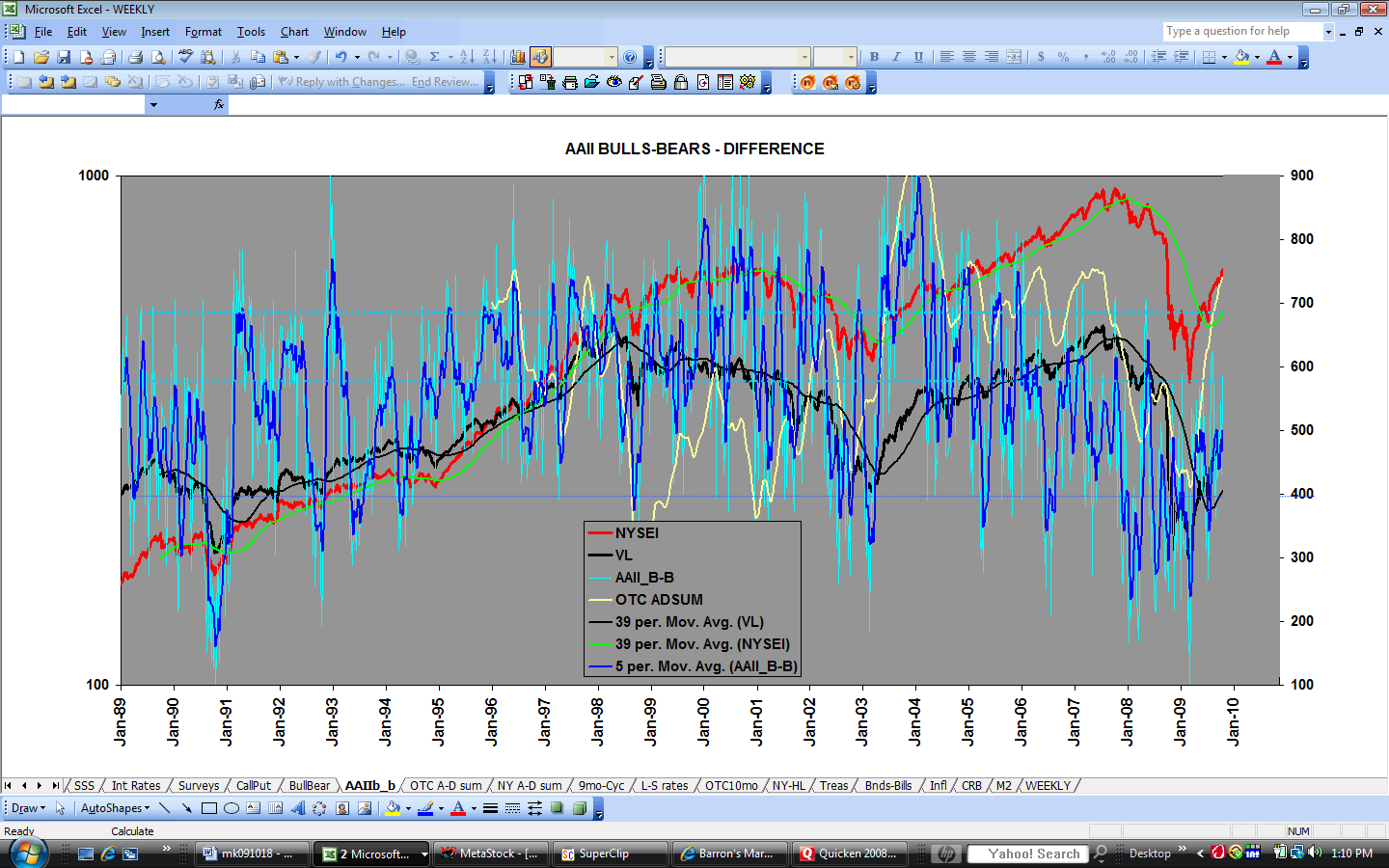
Malkiel goes on to claim that “average investors don’t make anything like 9.5% (the average annual rate of return in stocks since 1926), because they tend to get in at the top and out at the bottom”. But for everyone getting out, someone else is getting in, and by definition the average investor makes the average rate of return before fees, so he must really mean the subset of typical individual investors (http://www.geocities.com/petegersb/AAIIsentiment.GIF ). Since not everyone can make less than the average, it follows that there must be another subset of investors that makes more that than the average return. What distinguishes the successful from the unsuccessful? It can only be some intelligent application of technical and/or fundamental analysis, both of which would be useless in a truly random walk. Nevertheless, his highly suspect assertions prompted me to go back and look at my own long-term performance to confirm that my own mix of technical and fundamental analysis was worthwhile.
Before I retired in 1994 I outperformed the market substantially through luck. I worked for a company that forced me to allocate over 40% of my 401K contributions to company stock. I bought steadily through the lean 70’s, and Rockwell’s stock subsequently outperformed the market handily. So by steadily dollar cost averaging 14% of my salary and participating in the great bull market that began in 1982, I was able to retire with a nice nest egg. Then I had to get serious about managing that nest egg. I allocated some of it to a professional money manager who underperformed the market. Initially I did too, because I was reluctant to risk much of my nest egg during the irrational exuberance that persisted through the late 90’s. But by 1999 I had gained enough confidence in cycles analysis to fire the money manager and begin sharing my thoughts in this newsletter. Since the first letter in January of 1999, my portfolio has gained 67% with very little volatility, while the S&P 500 has declined 21%, and the total return of the S&P 500 including dividends has declined 10%. Mine is not a great decade-long return, but a whole lot better than average. I think I’ll stick with cycle analysis to time the market rather than become a disciple of the random walk hypothesis, which holds that successful market timing is not possible.
Fundamentals
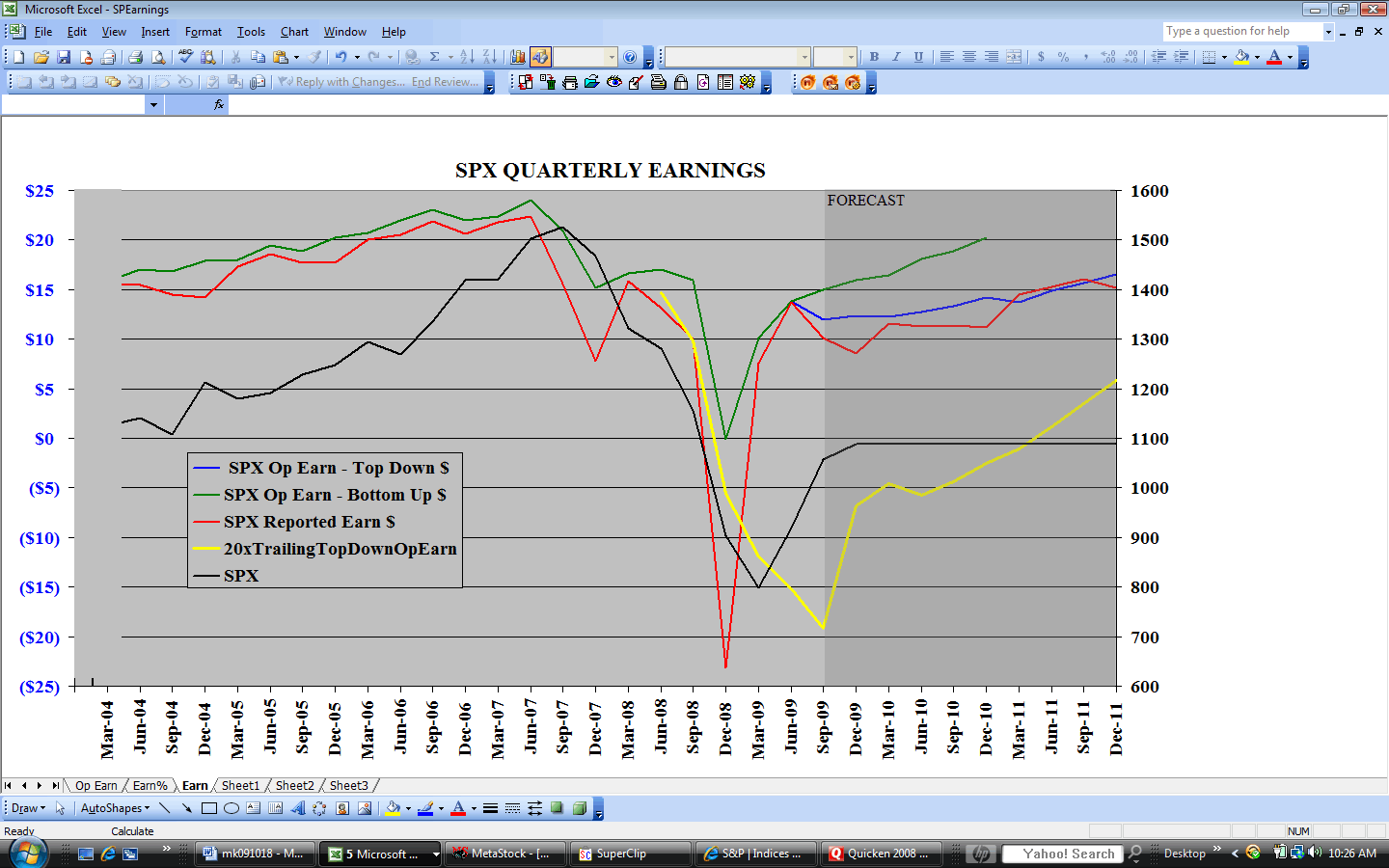
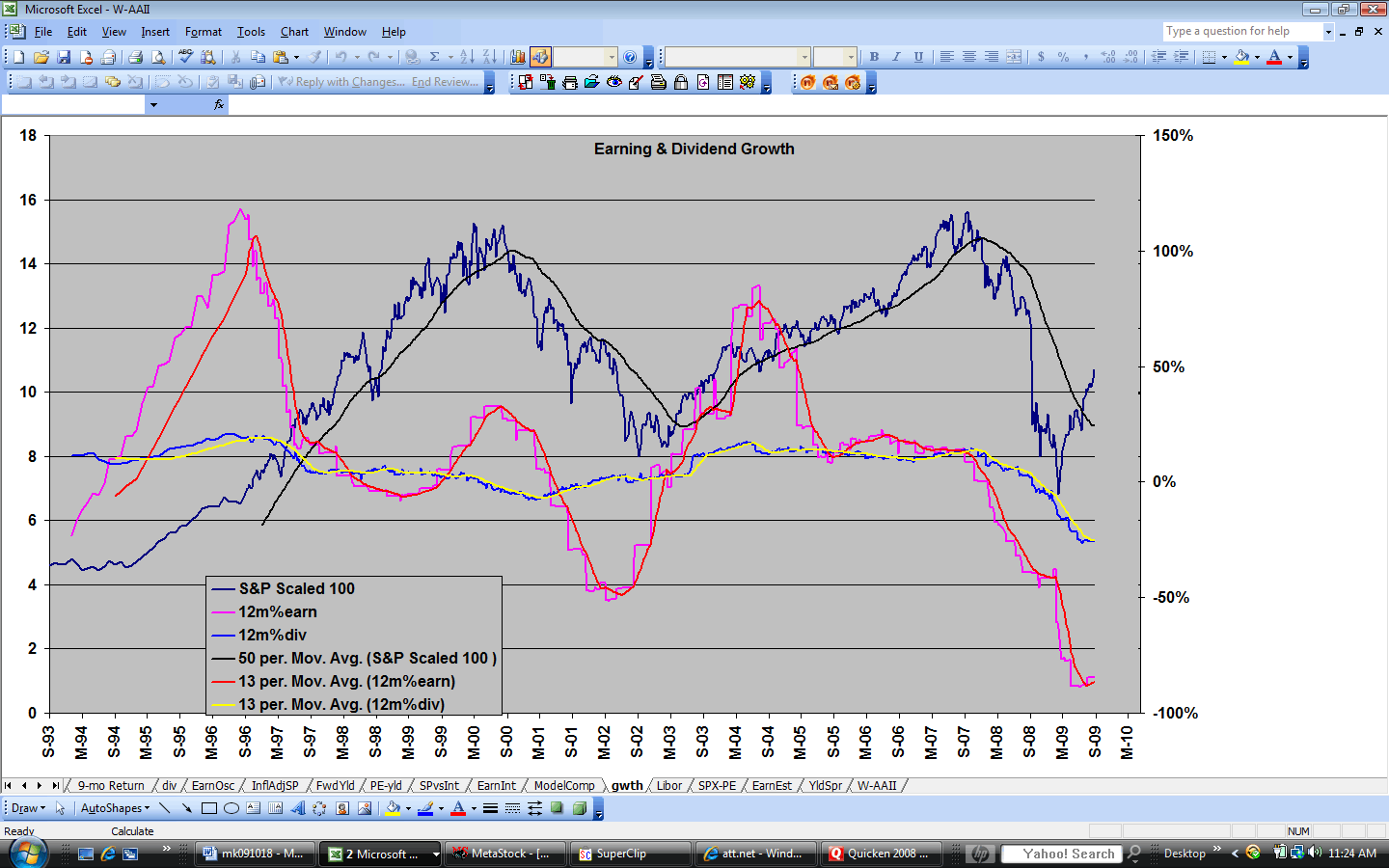
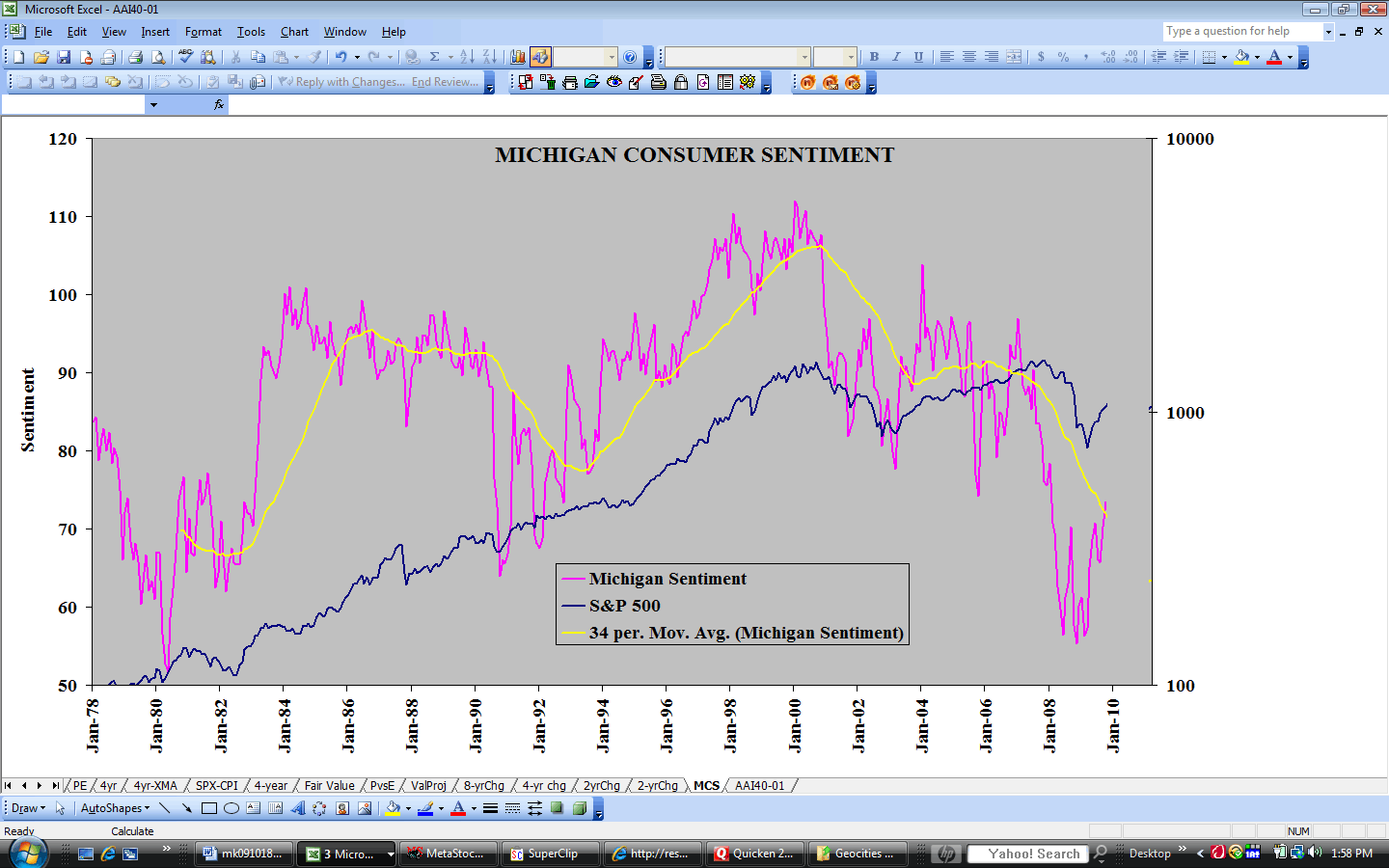
The technical picture is looking better than the fundamentals. Stocks are still very expensive relative to earnings - over 20 times this year’s and next year’s expected operating earnings (http://www.geocities.com/petegersb/EarnY-Y.GIF ). Moreover, earnings and dividends are still declining (http://www.geocities.com/petegersb/Earn_Div_ROC.GIF ). But there are some indications of an end to the longest post-WWII recession in the not-to-distant future. Consumer confidence (http://www.geocities.com/petegersb/MichiganConsumerSentiment.GIF ) is improving, and it has proven to be a pretty good leading indicator for the end of a recession and coincident indicator for the end of a bear market.
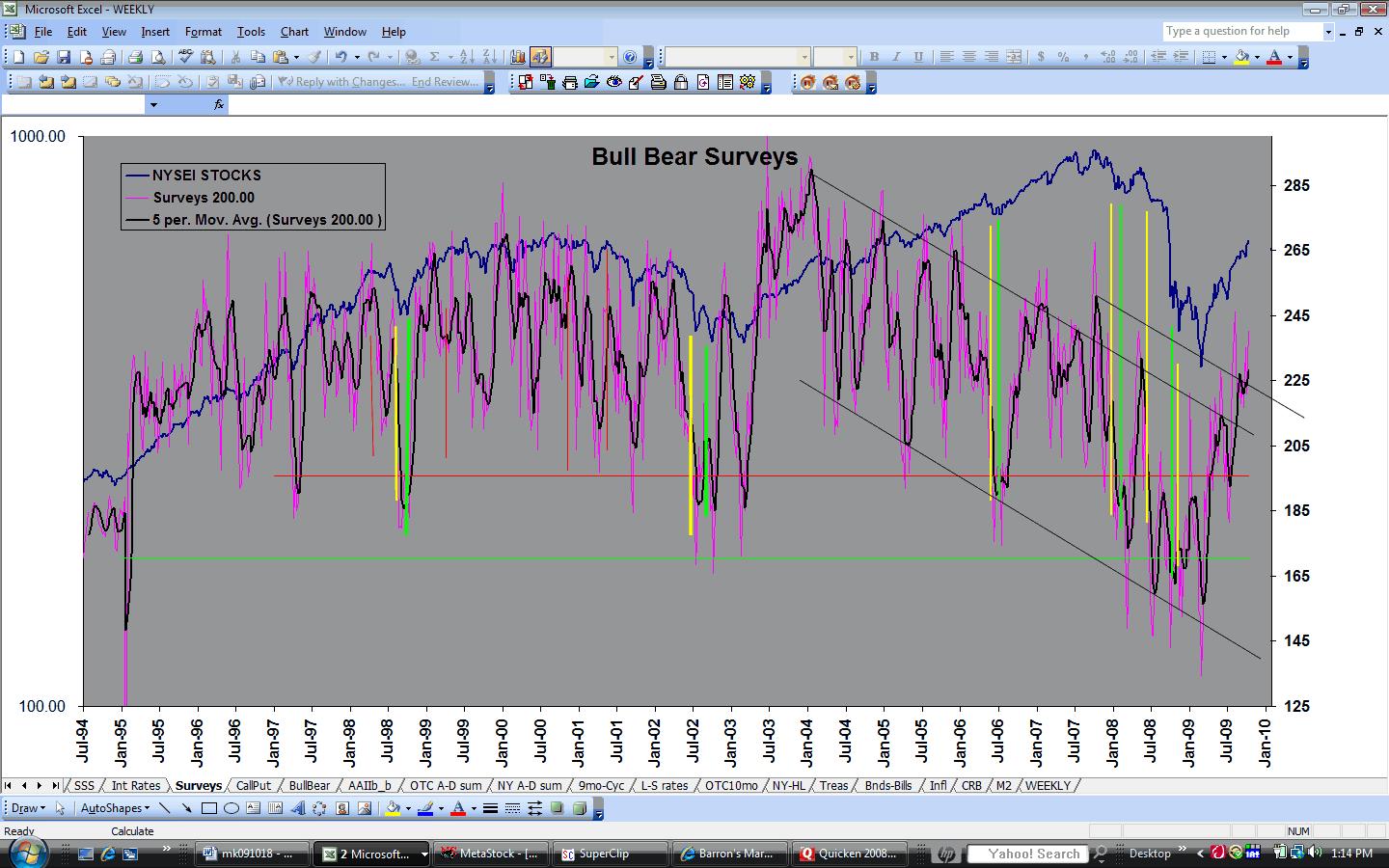
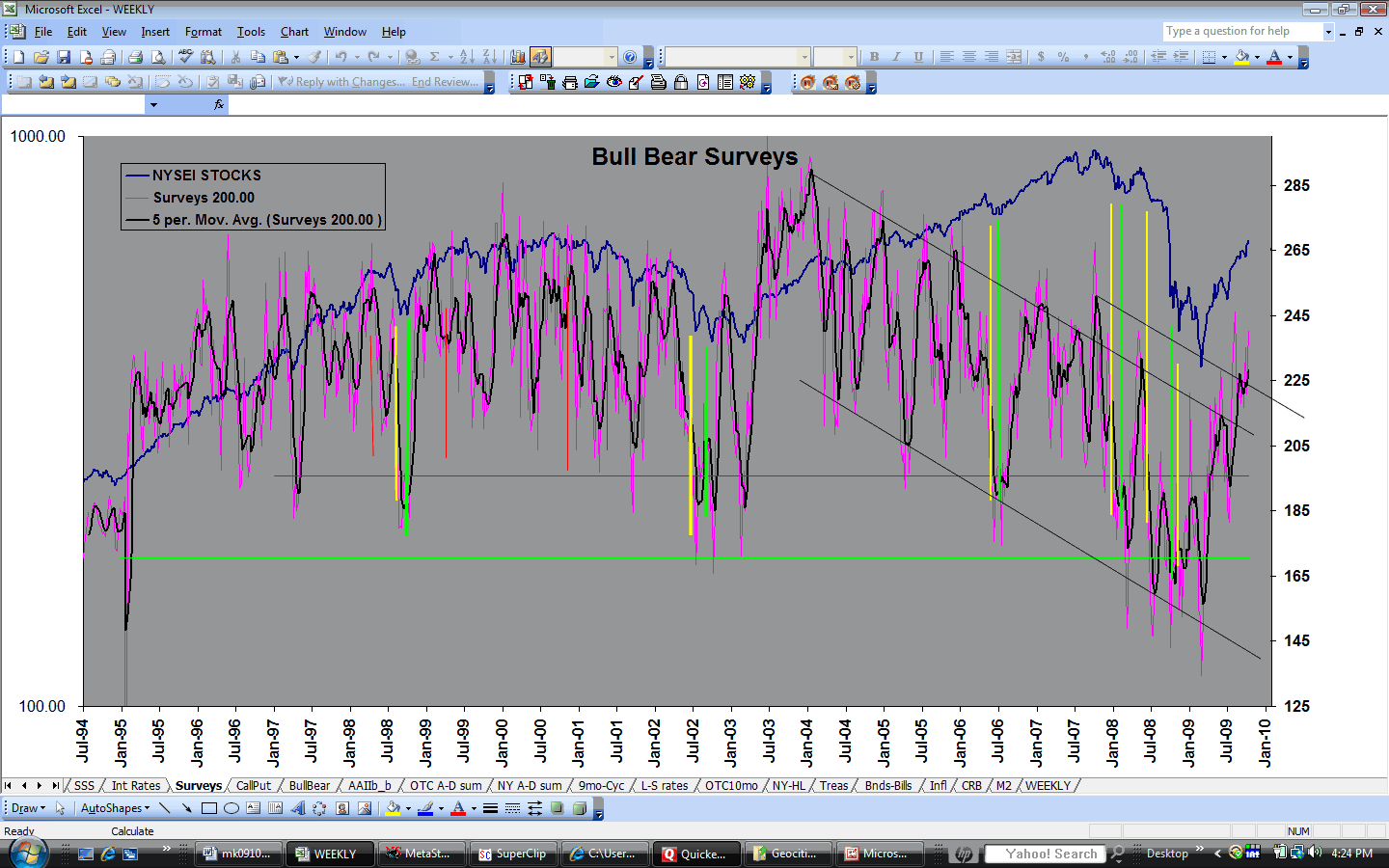
Sentiment is now consistent with the beginning of an intermediate market correction. The five-week moving average has turned down on the combined survey data (http://www.geocities.com/petegersb/SurveysCombined.GIF ) and it turned down from the top of the down trending channel. It signals a 9-mo cycle top.
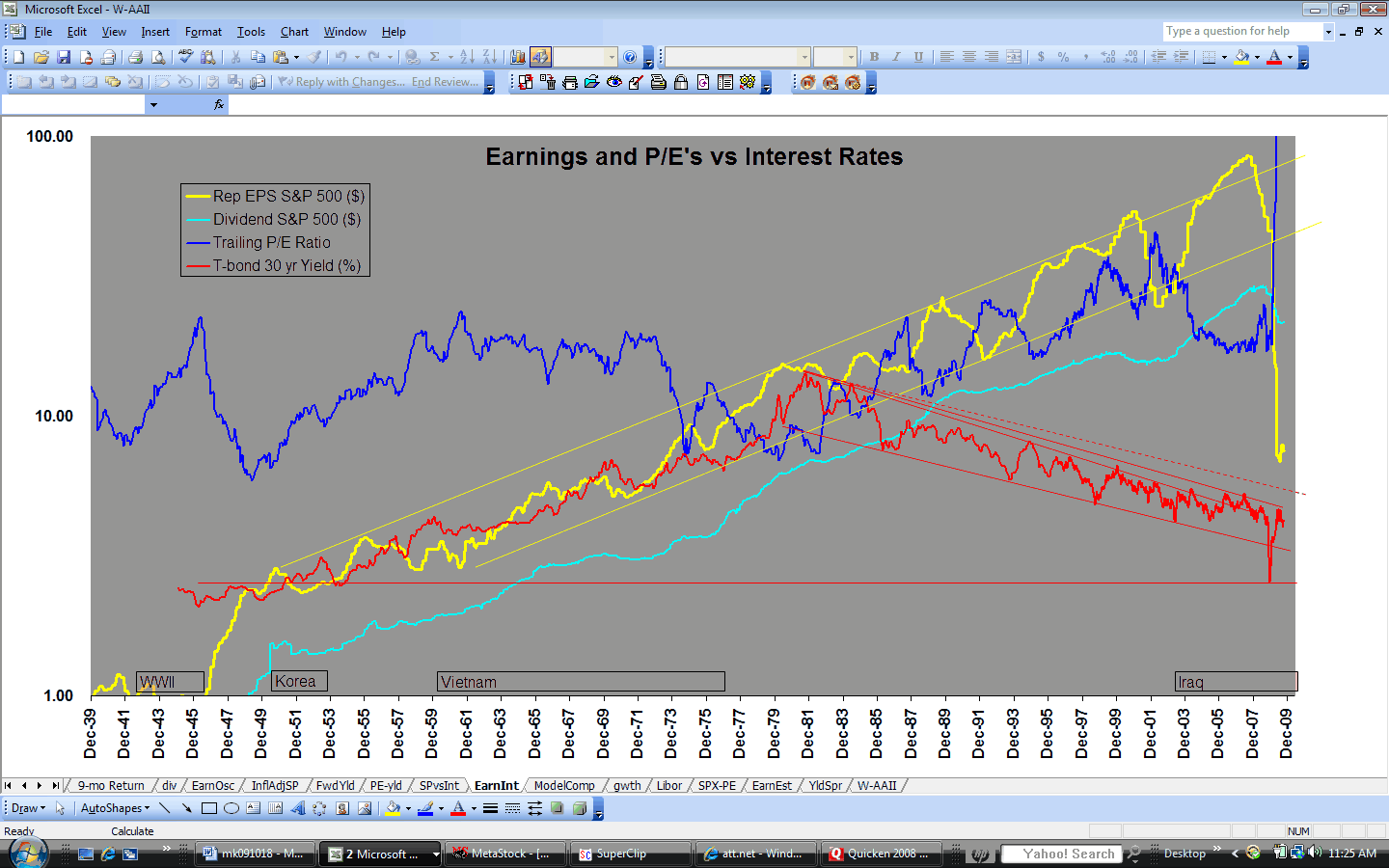
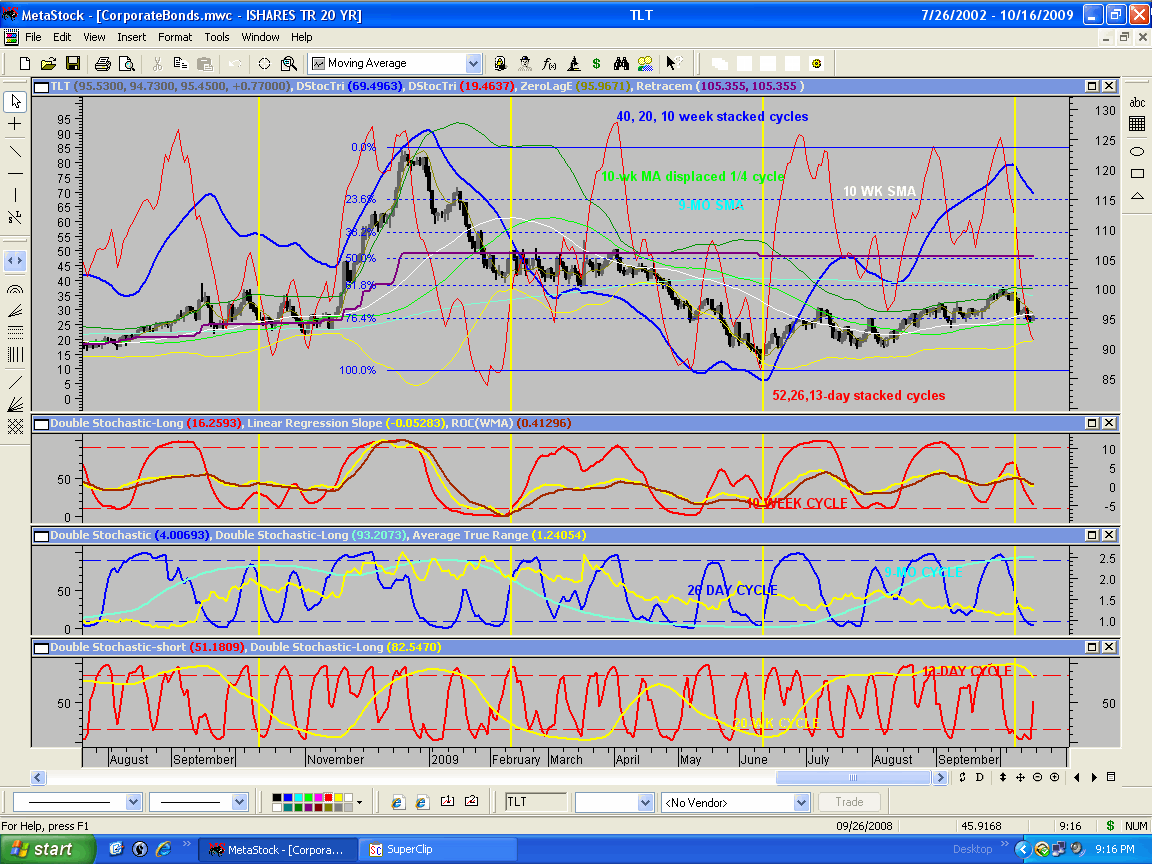
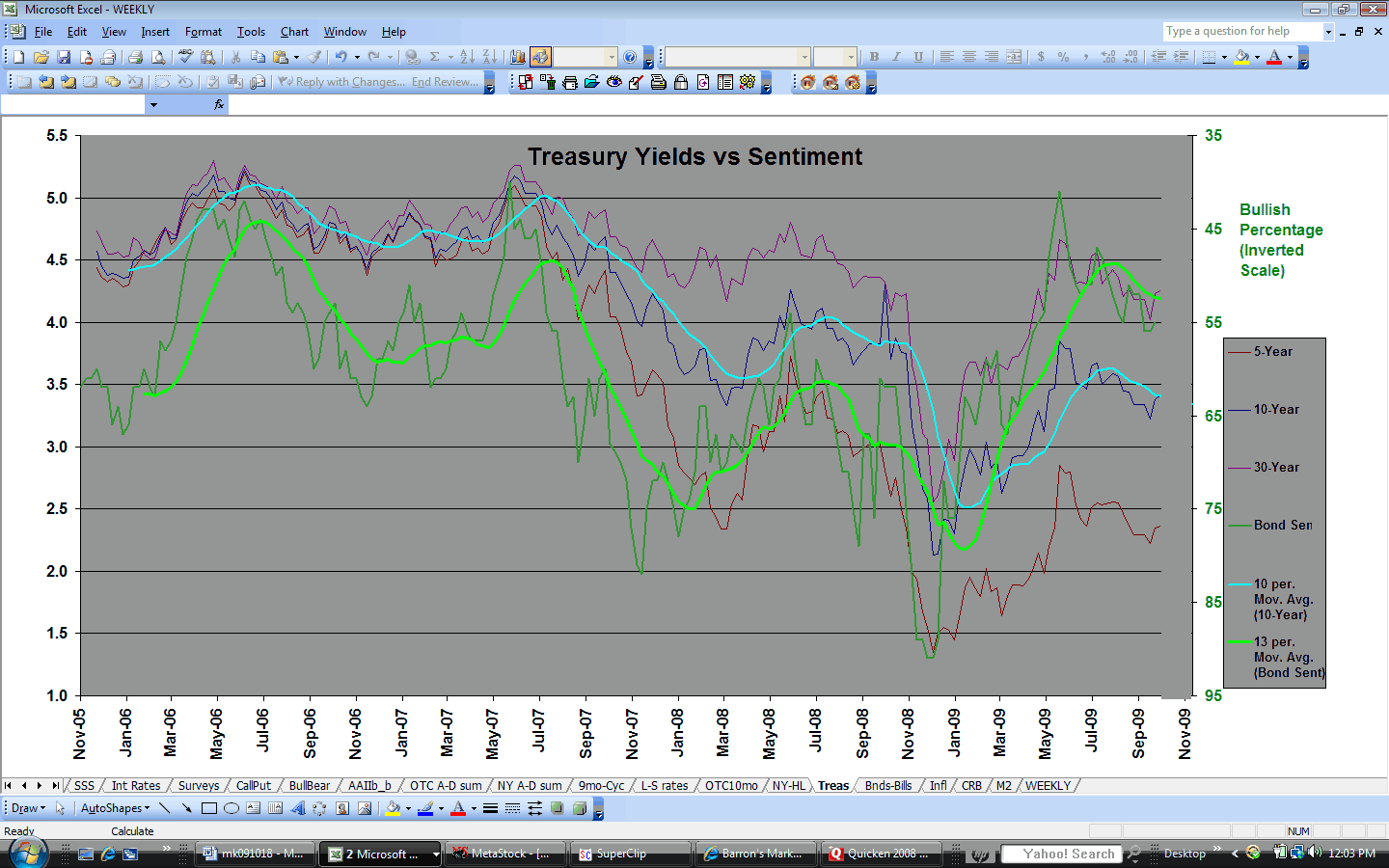
Treasury bonds: After reaching half century lows during the panic flight to safety, the interest rate on T-bonds (http://www.geocities.com/petegersb/Earnings-InterestRates.GIF ) has rebounded to the top of the trend channel that has contained it for the last 28 years. That channel will probably be broken to the upside in the not-to-distant future, but for now it appears to offer resistance that has spawned in intermediate bond rally. The 10-wk moving average stopped the rally in T-Bonds (http://www.geocities.com/petegersb/Treasury-20yr.GIF ) last week. The pullback should continue this week, but the intermediate uptrend is in its early stages. It should be a mild pullback before the intermediate rally resumes. Bond Sentiment (http://www.geocities.com/petegersb/BondSentiment.GIF ), which has begun a shift to increasing optimism, supports that conclusion.
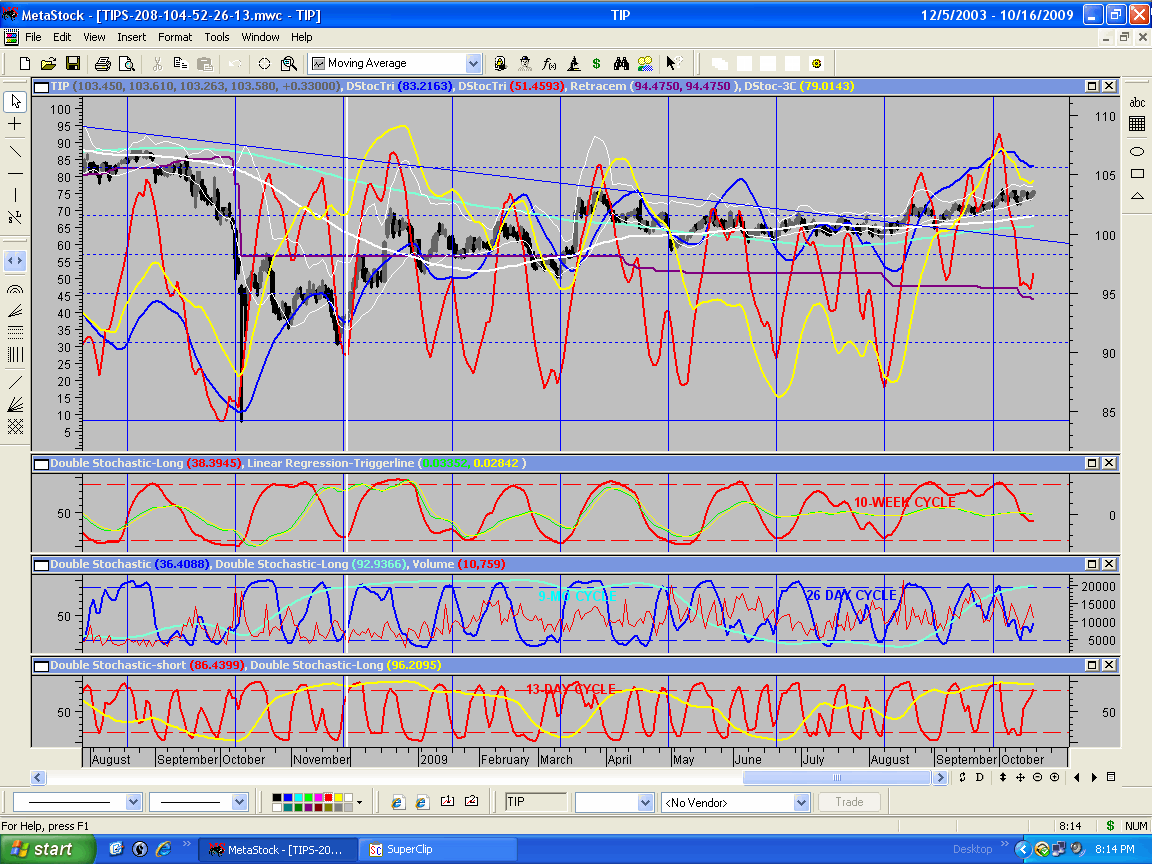
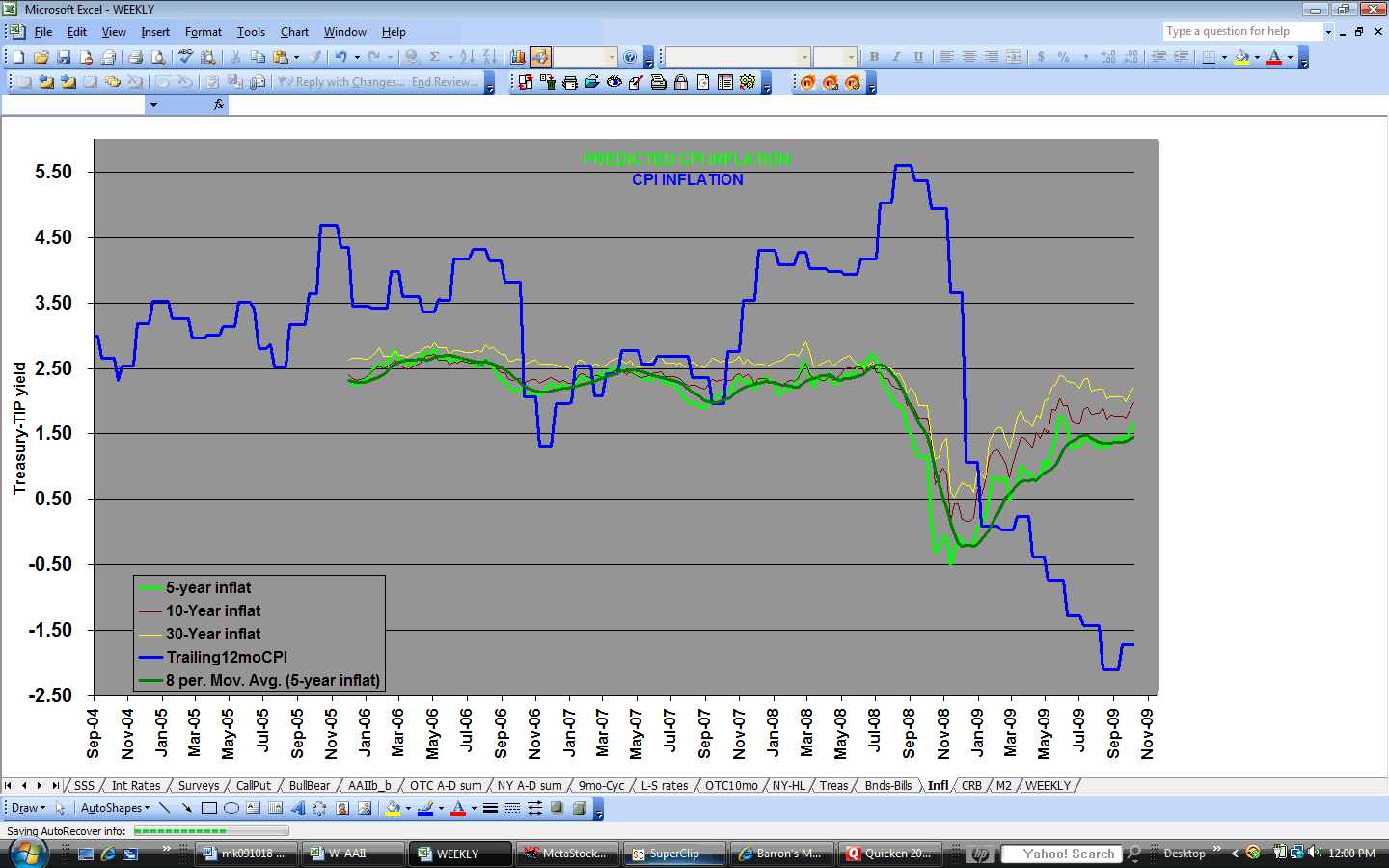
Inflation Protected Treasuries (http://www.geocities.com/petegersb/TIPs.GIF) declined slightly last week as the shortest cycles peaked in a young intermediate uptrend. There was little change in inflation expectations (http://www.geocities.com/petegersb/CPI.GIF )
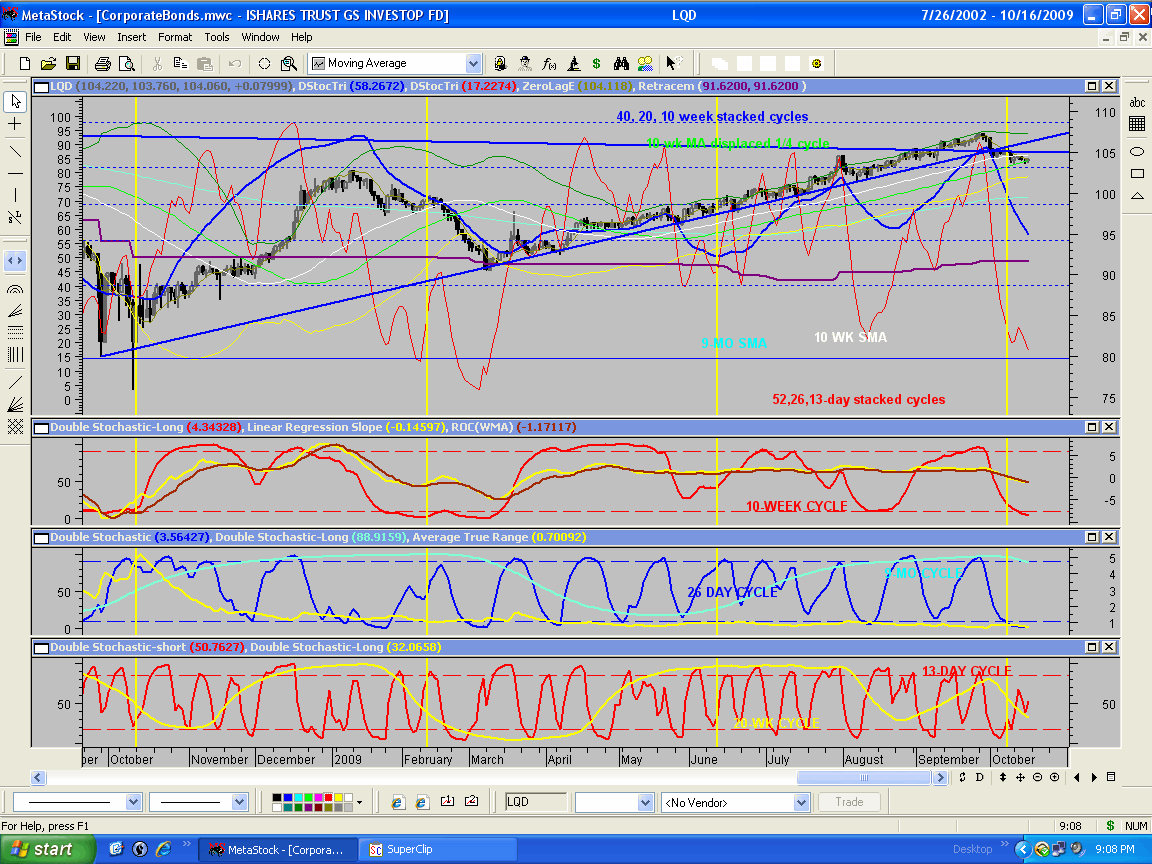
Corporate bonds (http://www.geocities.com/petegersb/CorporateBonds.GIF ) declined slightly as the short-term downtrend overcame the intermediate uptrend. Look for more of the same this week.
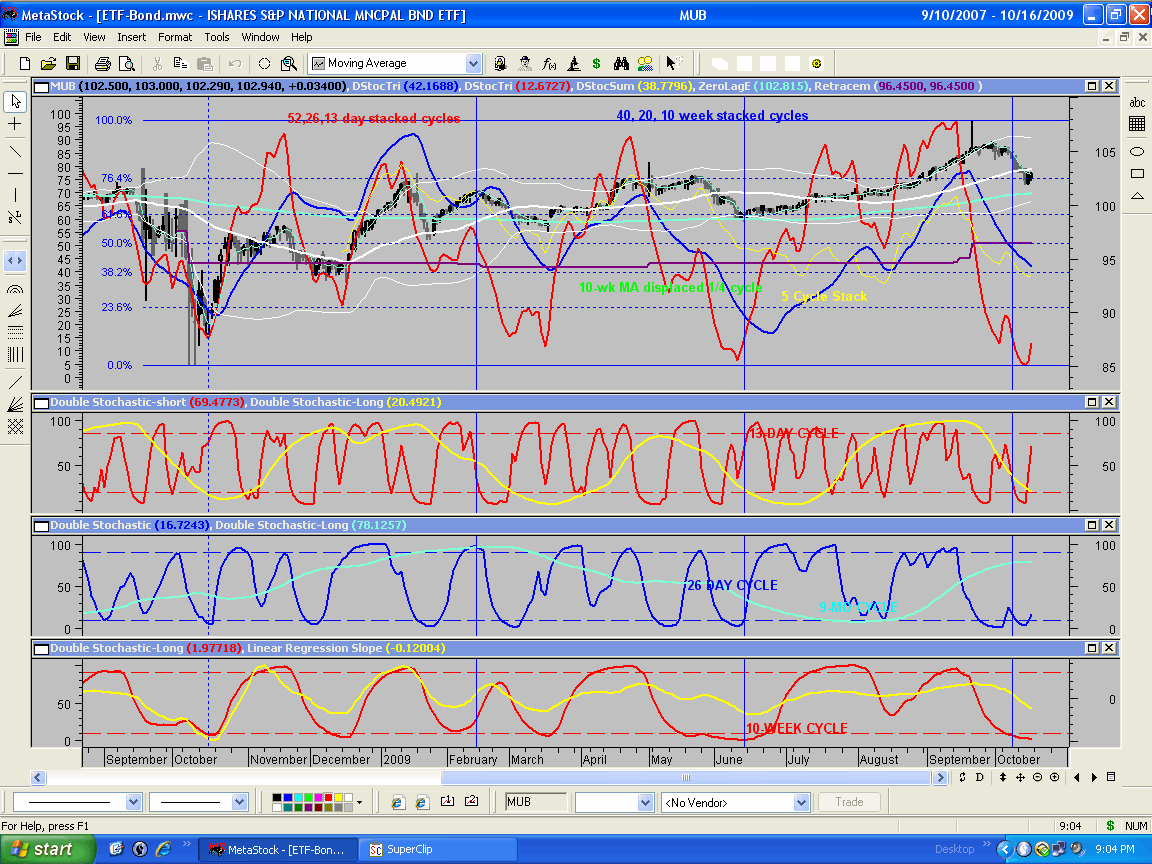
Municipal bonds (http://www.geocities.com/petegersb/MunicipalBonds.GIF ) also declined very slightly from a short-term peak in a young intermediate uptrend.
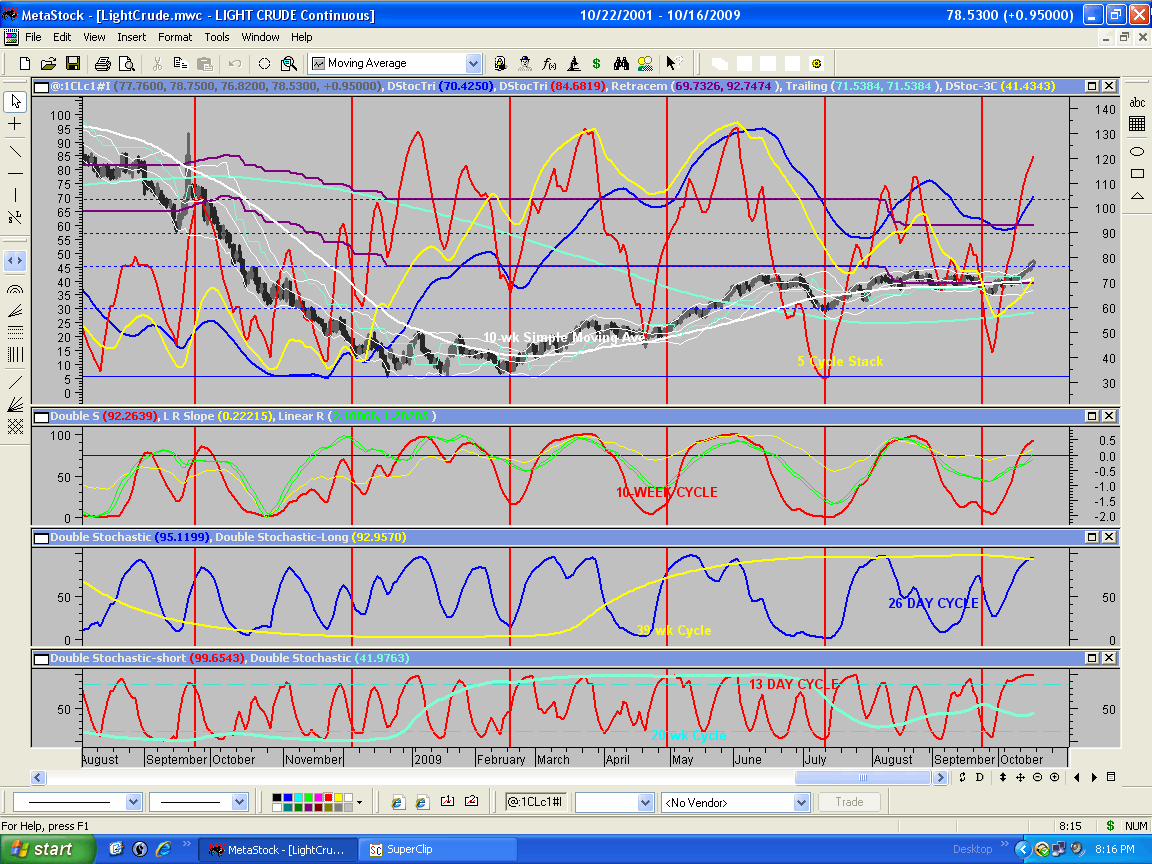
Crude oil (http://www.geocities.com/petegersb/CrudeOil.GIF ) declined almost 5 bucks last week. It probably will decline a little further this week into a short-term low, but support appears likely at the 10-wk moving average, now at $63. The intermediate downtrend looks like it will carry it somewhat lower – probably down to the 9-mo moving average at $57.
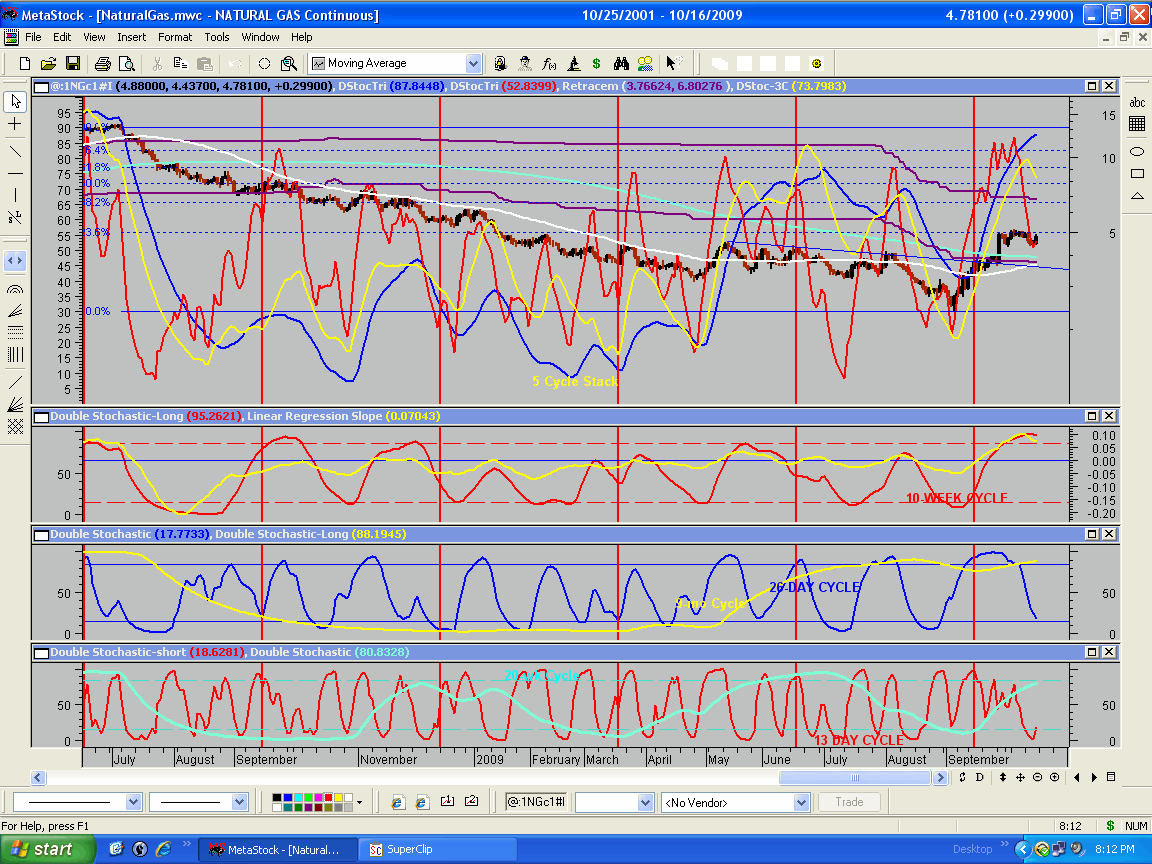
Natural gas (http://www.geocities.com/petegersb/NaturalGas.GIF ) broke out of the wedge to the downside. Both short and long-term composites are again trending downward, but a short-term bottom appears likely this week.
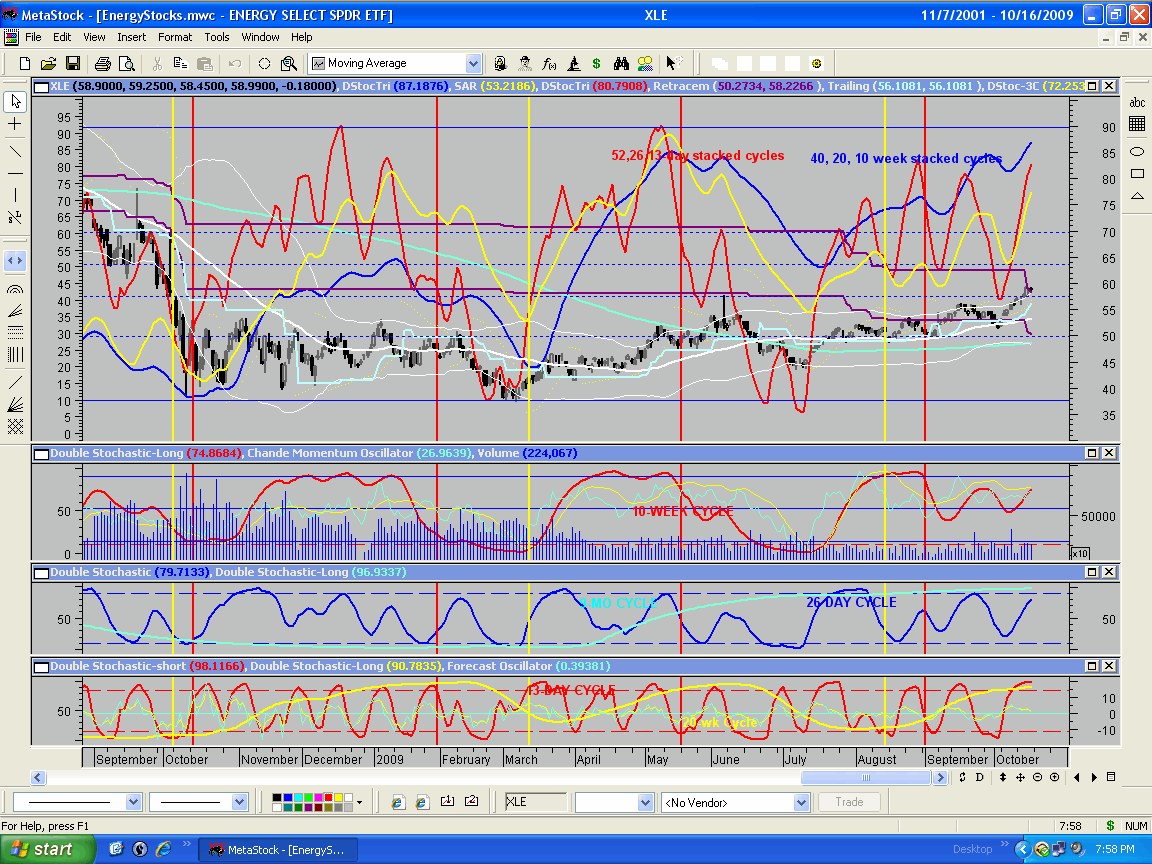
Energy stocks (http://www.geocities.com/petegersb/EnergySPDR.GIF) also declined a little last week despite a rising 13-day
cycle. The decline should pick up speed this week as the 13-day cycle adds to
the downward pressure of the longer cycles. Energy is on track to bottom with the broader
market in about a month.
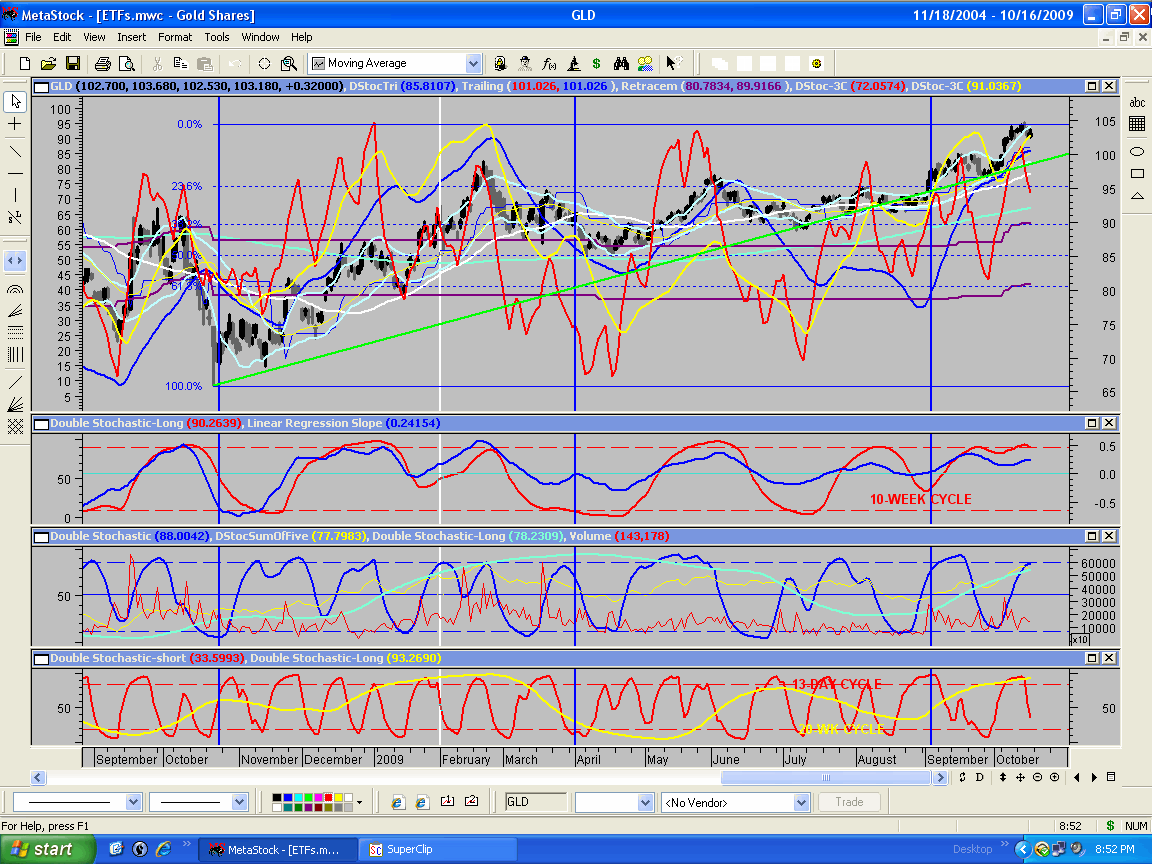
Gold (http://www.geocities.com/petegersb/GoldBullion.GIF) hugged its rising 10-wk moving average during the last
couple of weeks. It has held up well despite an apparent left-translated 9-mo
cycle peak in February and a likely left-translated 20-wk cycle peak at the
beginning of June. The 9-mo cycle is a little over 8 months old, and the 20-wk
cycle is about 12 weeks old, so the downward pressure from the intermediate
cycle appears likely to persist for another month or two. But the 10-week cycle
is favorable, so the sideways correction since the 9-month top may persist a
little longer.
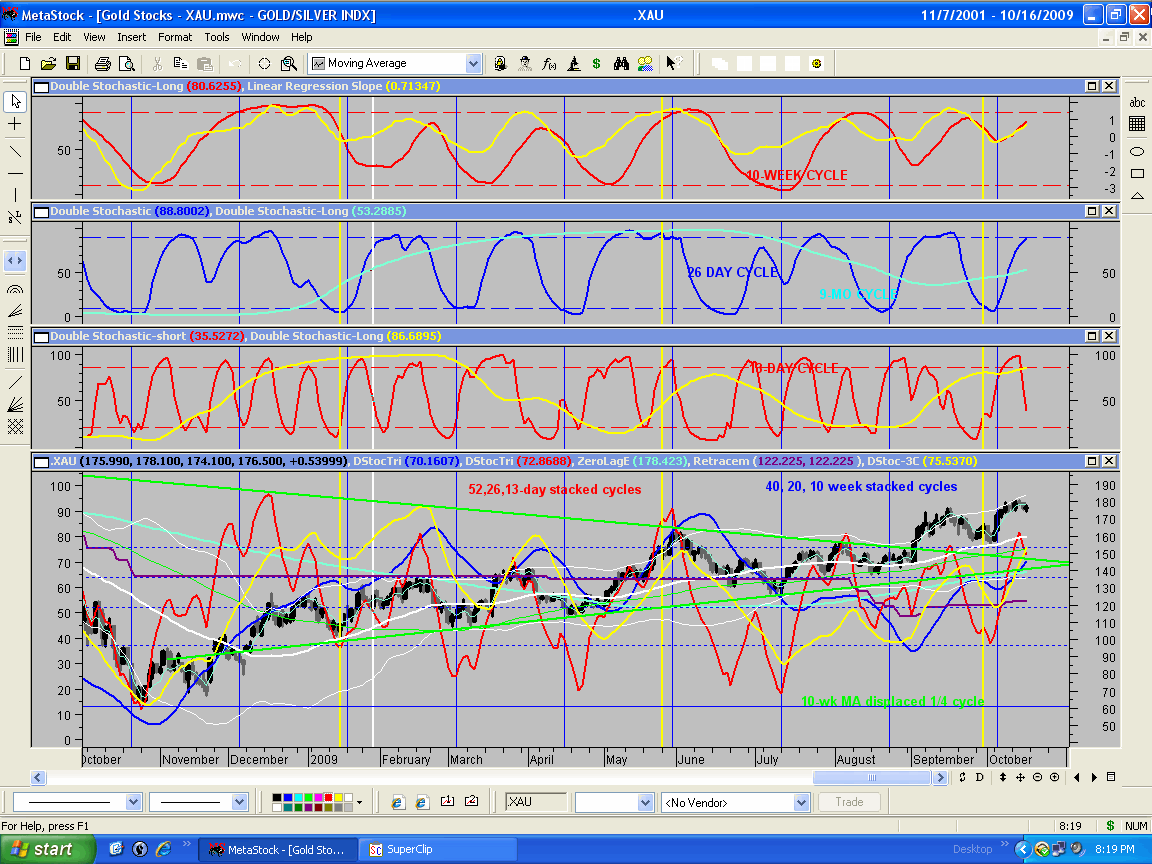
Gold Stocks (http://www.geocities.com/petegersb/GoldStocks.GIF
) continue to show a similar cycle pattern, but the XAU made a right-translated
9-mo cycle peak at the beginning of June – a healthier pattern than in the
metal. Nevertheless, the short and intermediate composites are trending
downward and appear likely to continue to do so this week.
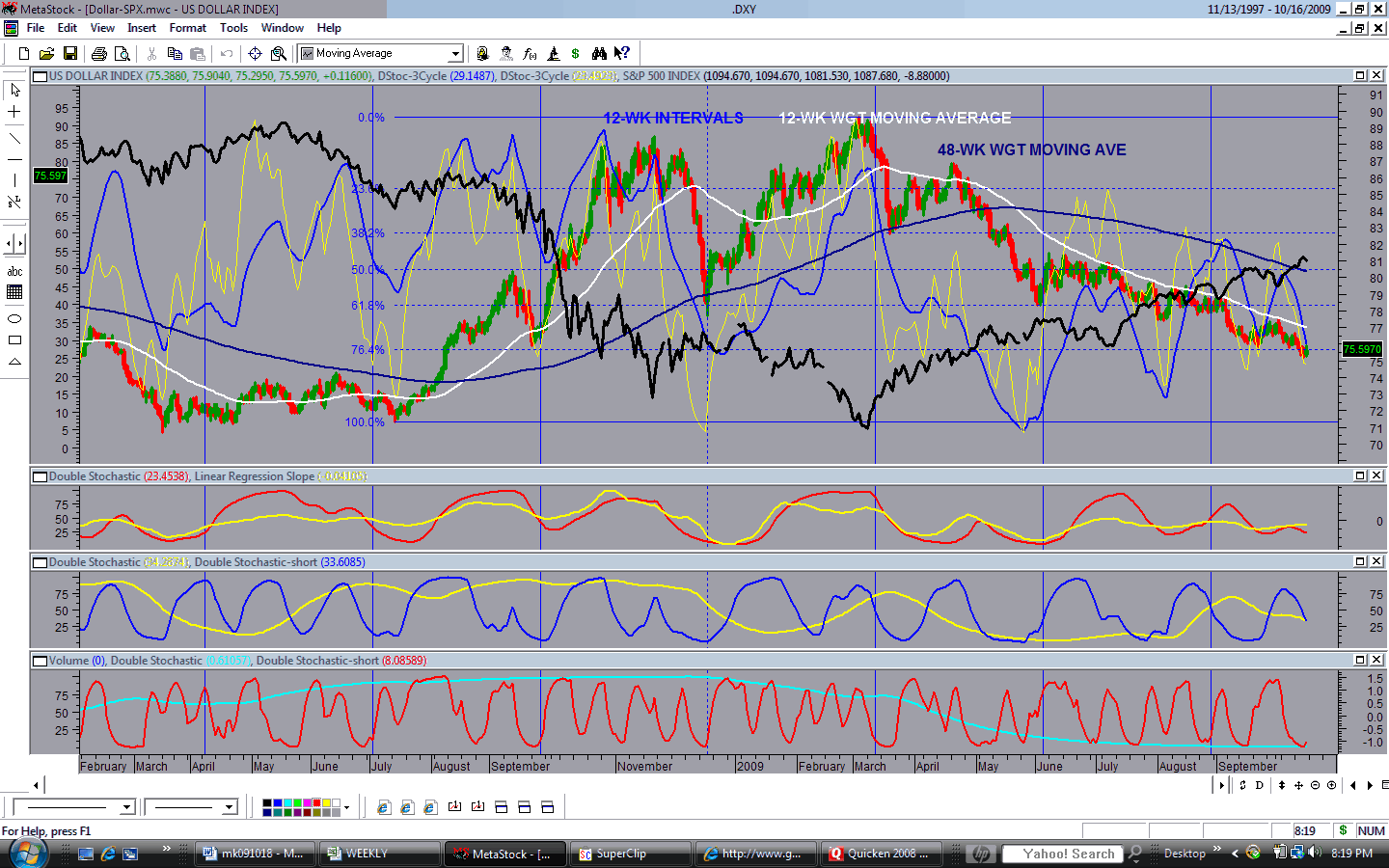
The Dollar (http://www.geocities.com/petegersb/Dollar.GIF) has been treading water under the influence of a short-term correction in an intermediate uptrend. That’s likely to continue a little longer.
.