5/3/09
The CNBC talking heads were all excited late last week about the best April for stocks in 9 years. By that comparison, the euphoria isn’t warranted even if it weren’t wrong. (During April of 2001, the S&P gained 7.7% compared to 9.4% last month.) The 2001 bear-market rally, encompassing April of that year (http://www.geocities.com/petegersb/Overview-long.GIF ), lasted for 9 weeks and gained 21.7% from intraday bottom to top. The aftermath wasn’t pretty. The current rally has lasted 8 weeks and gained 30.9%. Moreover, April-May of 2001 was far from the strongest rally of 2000-2002 bear-market. That was the 15-week gain of 24.6% from late September 2001 to early January 2002, which was also followed by even steeper losses. The 8-week rally in the autumn of 2002 before the final plunge into March of 2003 gained 24.1%. So the most impressive thing about this rally is that it rallied more in 8 weeks than any of the 20-wk cycle rallies of the first Bush bear market. But you can’t conclude from that fact that this is something different than a bear market rally. Let’s look at some bull market liftoffs and some other rallies in serious bear markets.
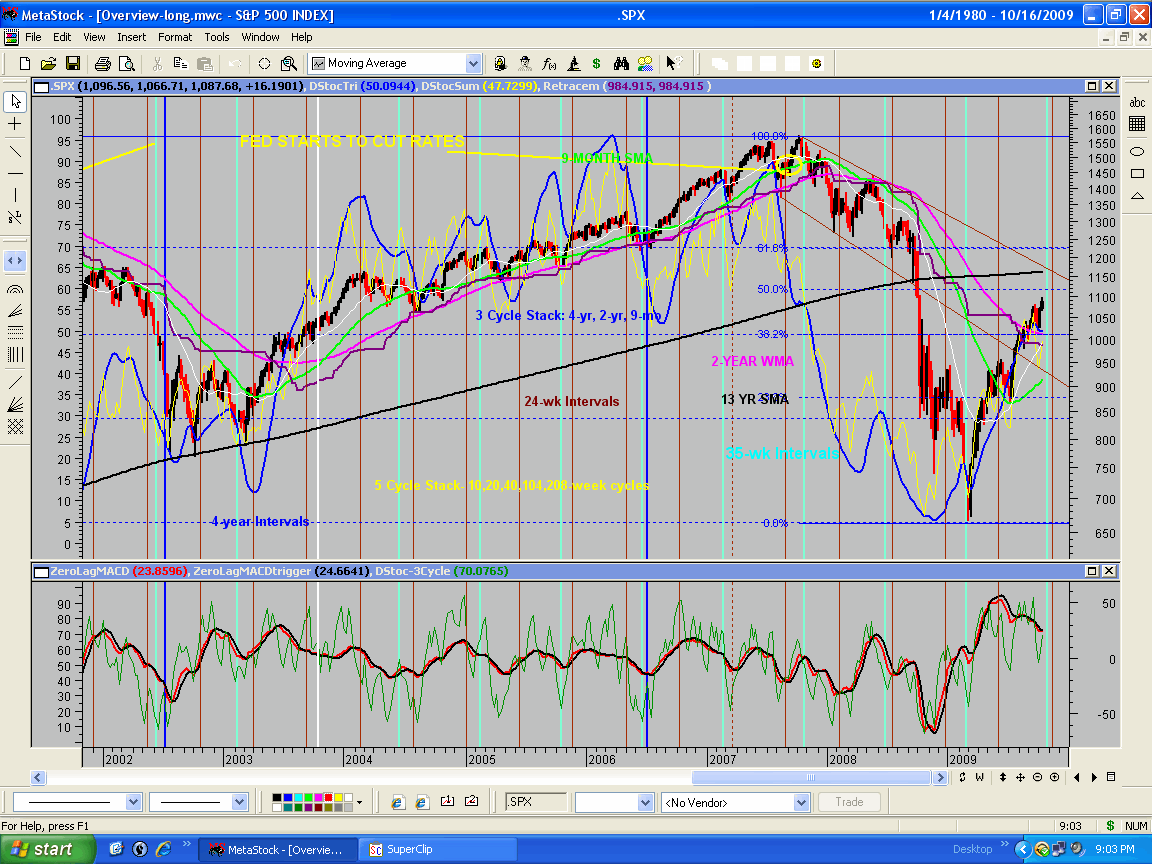
How does the current rally compare to the 4-year cycle liftoff in 2003? That rally gained 28.7% in 15 weeks before a very mild 20-wk cycle correction (pause would be a better description). So the current rally has been stronger than any bear or bull market rally of the last decade. For a historical precedent, we have to look farther back. The 69-70 bear market (http://www.geocities.com/petegersb/DowDecadeComparison-70s.GIF ) had no rallies of comparable strength. The 73-74 bear market (http://www.geocities.com/petegersb/DowDecadeComparison-70s.GIF ) had one that lasted 10 weeks and gained 18% on the Dow. The liftoff from the 74 low also lasted for 15 weeks before encountering any correction that lasted for more than a week. It tacked on 39.8% before encountering a 20-wk cycle correction and 55.9% before encountering a more significant 9-mo cycle correction. So based on the experience of today’s older investors, there has been no precedent if this is a bear market rally. But, if it’s the first 20-wk cycle rally of a new bull market, and if it follows the 1975 and 2003 experience, it would last for another 7 weeks.

How about your Father’s or Grandfathers experience when there was no Federal Reserve to dampen the peaks and valleys? A 48% Dow 30 crash in 3 months during 1929 (http://www.geocities.com/petegersb/DowDecadeComparison-30s.GIF ) was followed by a 48% bear-market rally in 5 months to recover half of its loss. As the following chart illustrates the current rally is shorter but stronger than two of the subsequent bear rallies, but longer and weaker than two others as the Dow lost another 86% from the 1930 rally peak.


The first rally of the new bull market in 1932 gained 94% in about 2 months – equaling the time of the current rally but dwarfing it in magnitude. Then, over the following 6 months, the Dow executed a perfect 76.4% Fibonacci retracement of that first rally as it successfully tested the low. A corresponding correction of the current rally would bring the Dow down to about 6900.
So based on this small sample of rallies in the worst bear markets of the last 80 years the current rally is not a black swan; similar coloration has been seen before. Similarly, if a new bull market began in March, the current rally is not unlike past patterns of price gains and duration. We have to look for other clues to tell the difference between new bull markets and bear rallies. I rely on the cycle indicators.
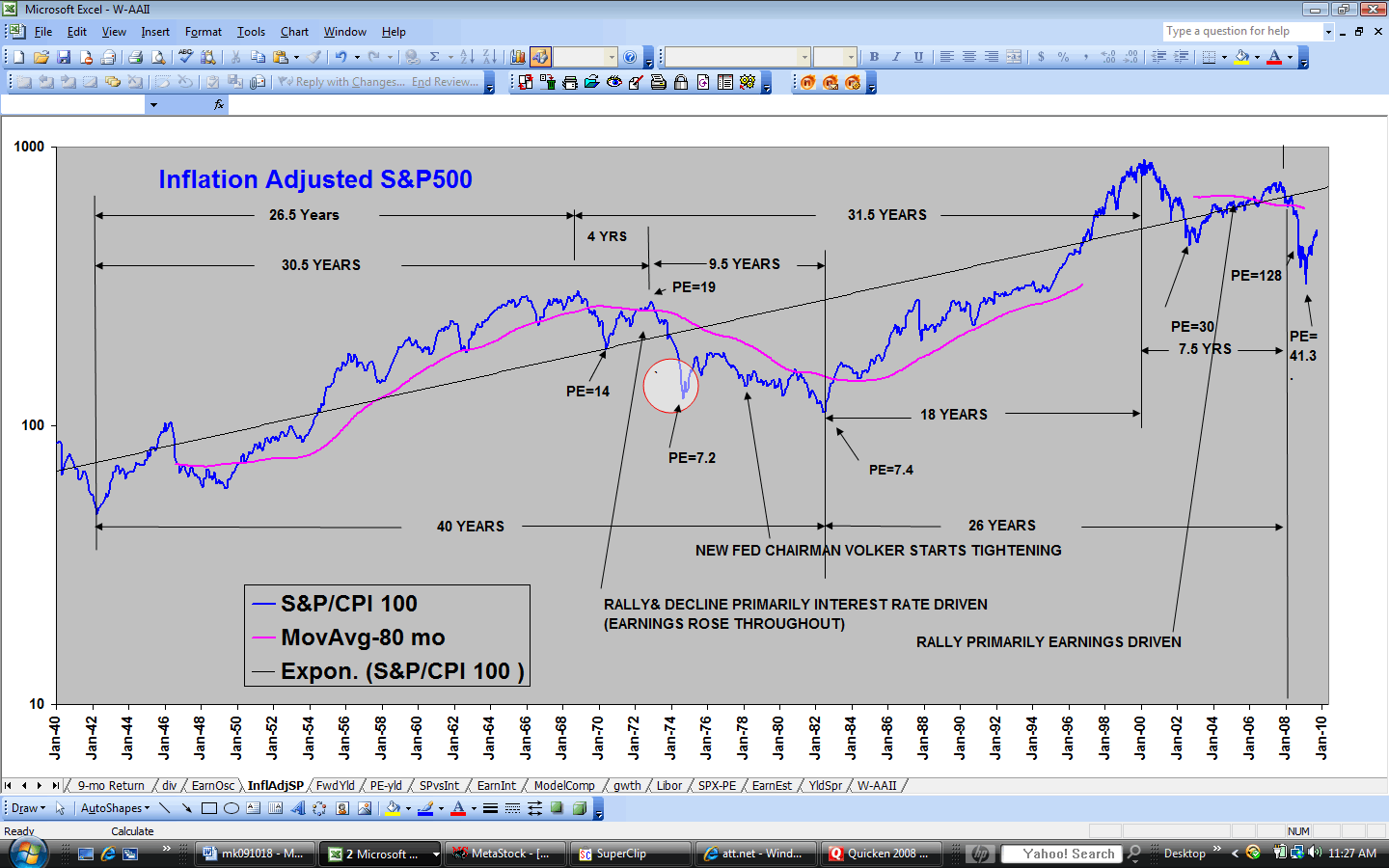
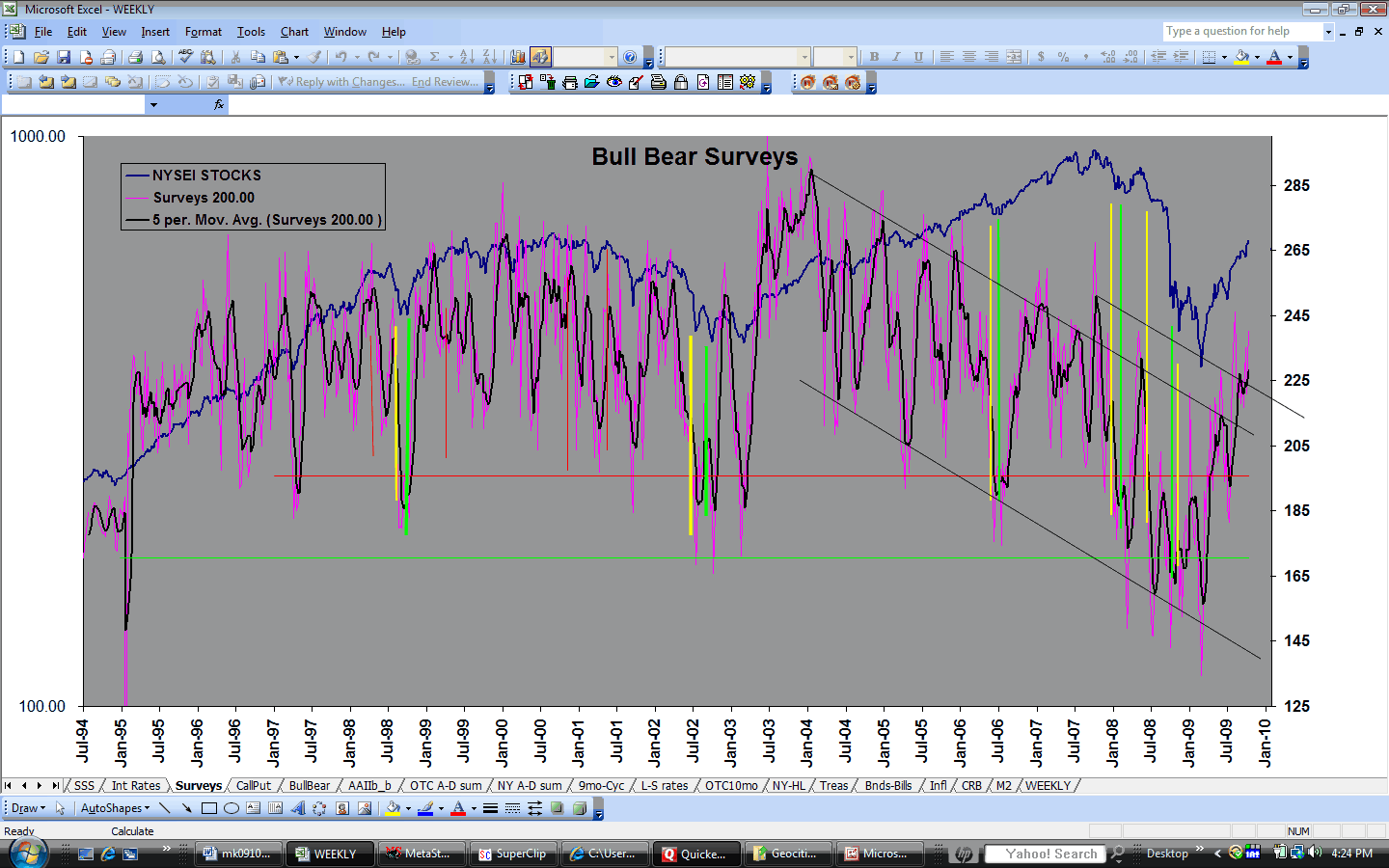
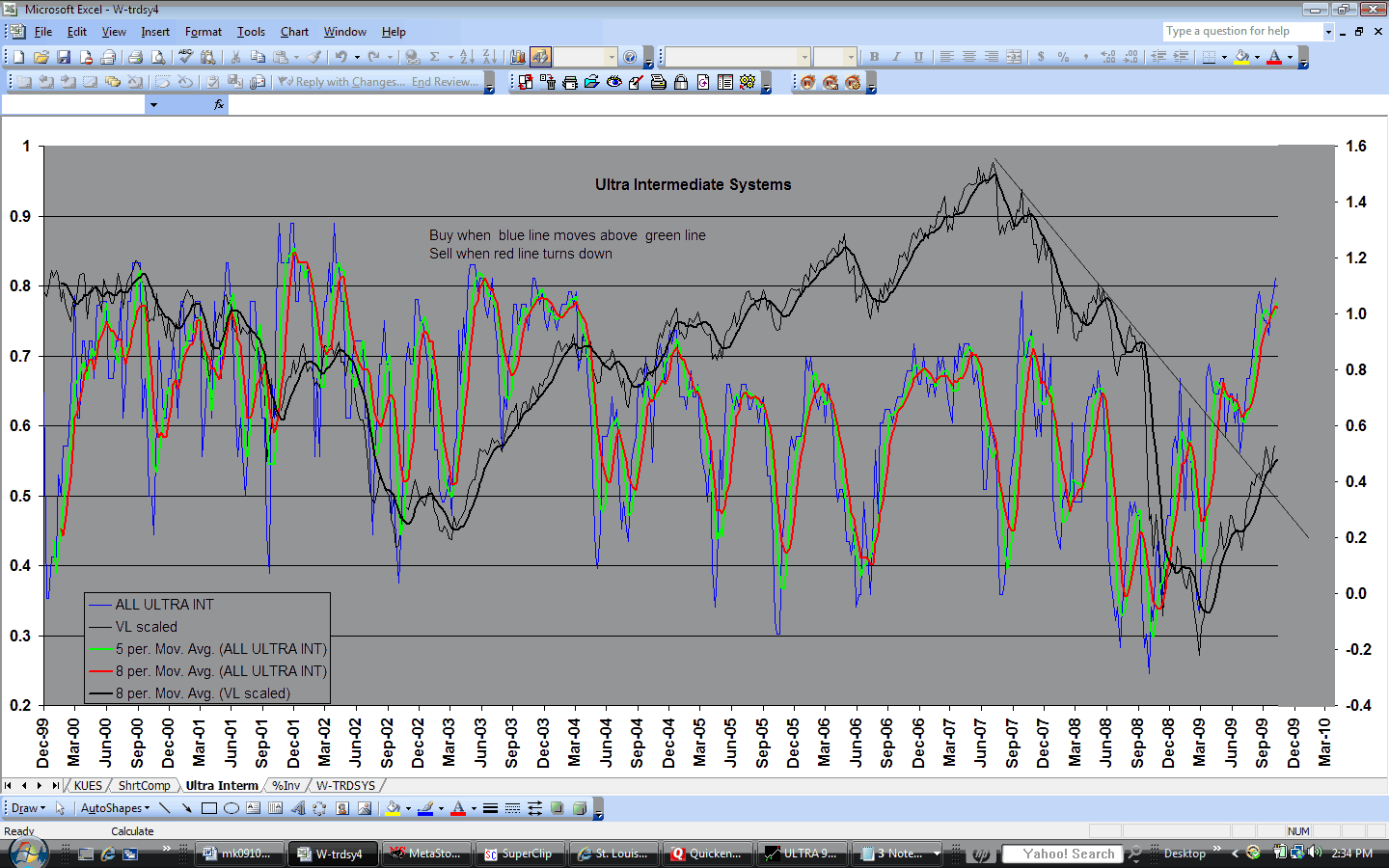
In March the timing was right for a 20-wk cycle rally, but wrong for either a 4-year or 9-month rally. Consequently, in the absence of strong evidence to the contrary, I continue to assume this is nothing more than a 20-week cycle rally that is overdue for a 10-wk cycle correction. Certainly the fundamentals, with a trailing reported P/E of 59 (http://www.geocities.com/petegersb/SPX-InflationAdjusted.GIF ) and a P/E of 30 and 25 on hoped-for 2009 and 2010 reported earnings do not provide any contrary evidence. And neither do any of my long trend indicators (9-month moving average and retracement bands) on any of the indexes (SPX (http://www.geocities.com/petegersb/SP500.GIF ), NDX (http://www.geocities.com/petegersb/NDX.GIF), Russell 2000 index (http://www.geocities.com/petegersb/Russell2000.GIF )). Sentiment (http://www.geocities.com/petegersb/SurveysCombined.GIF ) was sufficiently pessimistic in March for a major bottom, but optimism has returned to the level of recent bear-market rally peaks and has started to weaken. The ULTRA Intermediate composite (http://www.geocities.com/petegersb/UltraIntermediate.GIF ) is on the verge of a 9-mo cycle sell signal. Nothing yet compels belief in a new bull market. The strength of the current 20-wk cycle rally may be a necessary condition for a new bull market, but it is far from a sufficient condition.
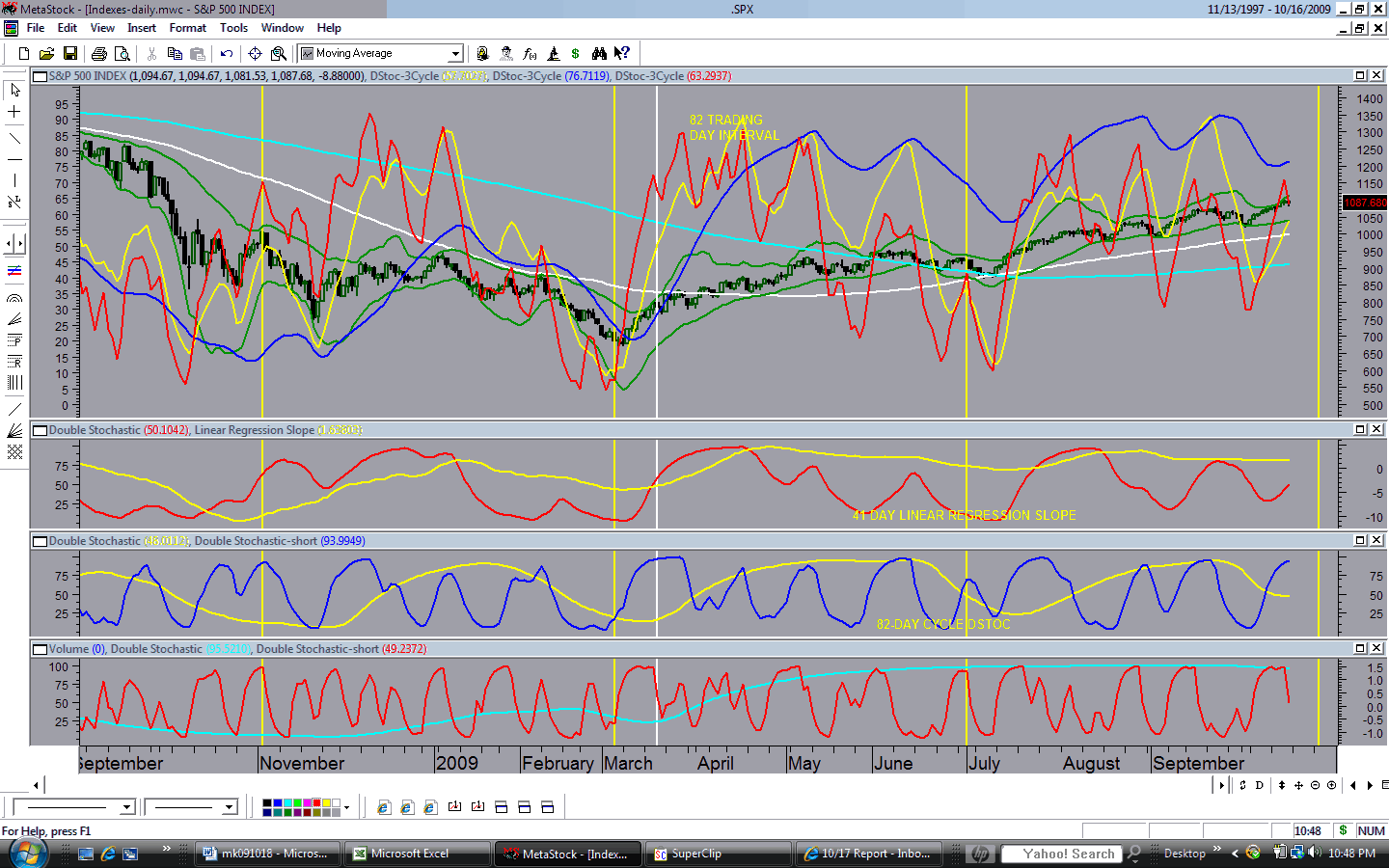
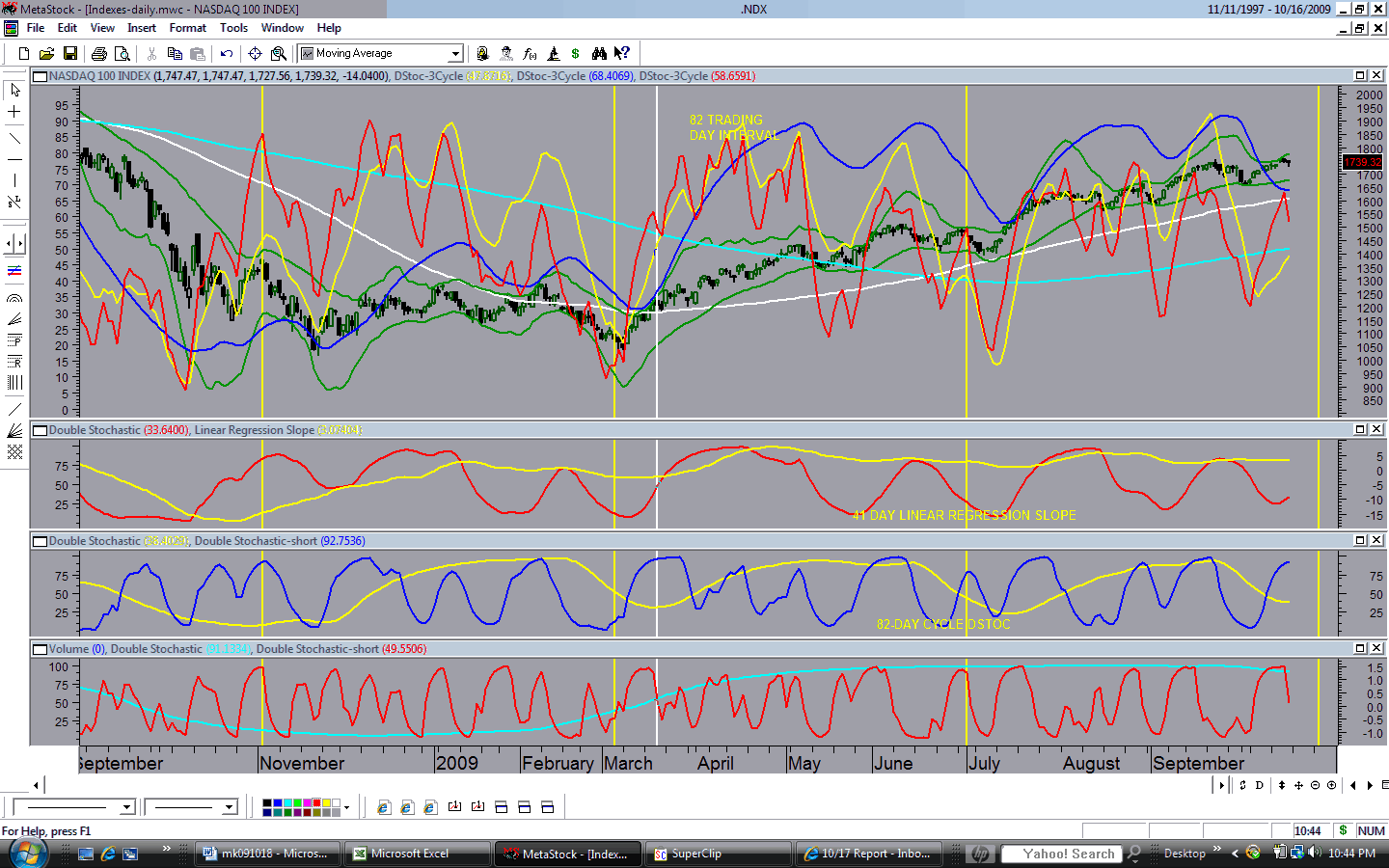
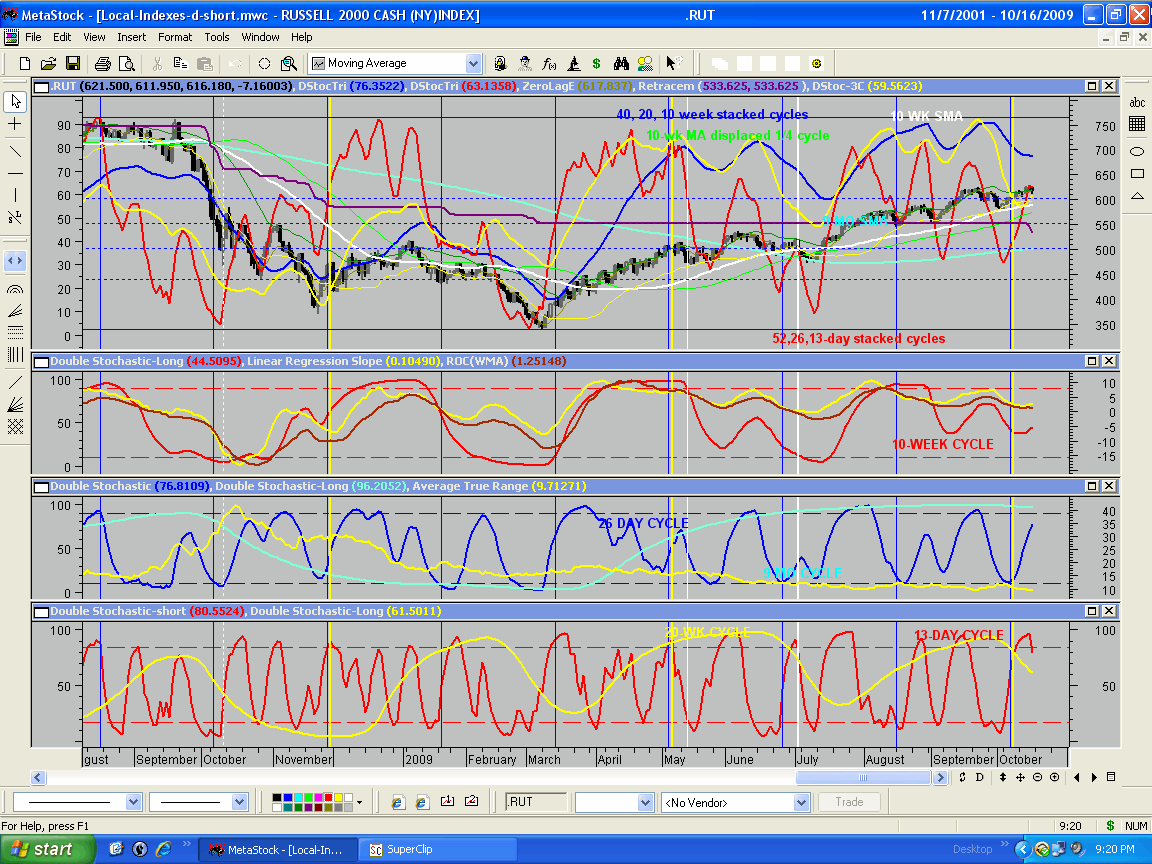
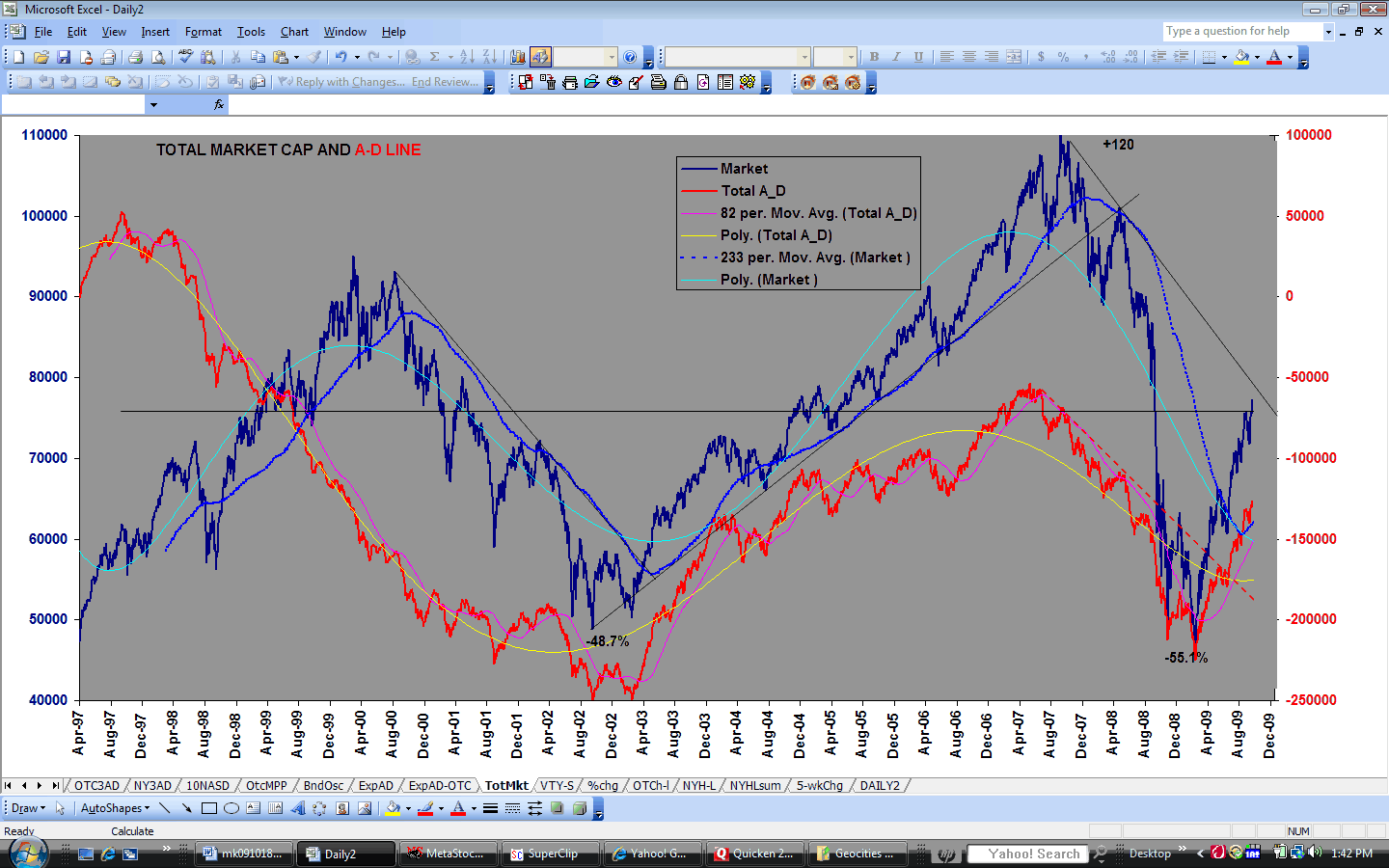
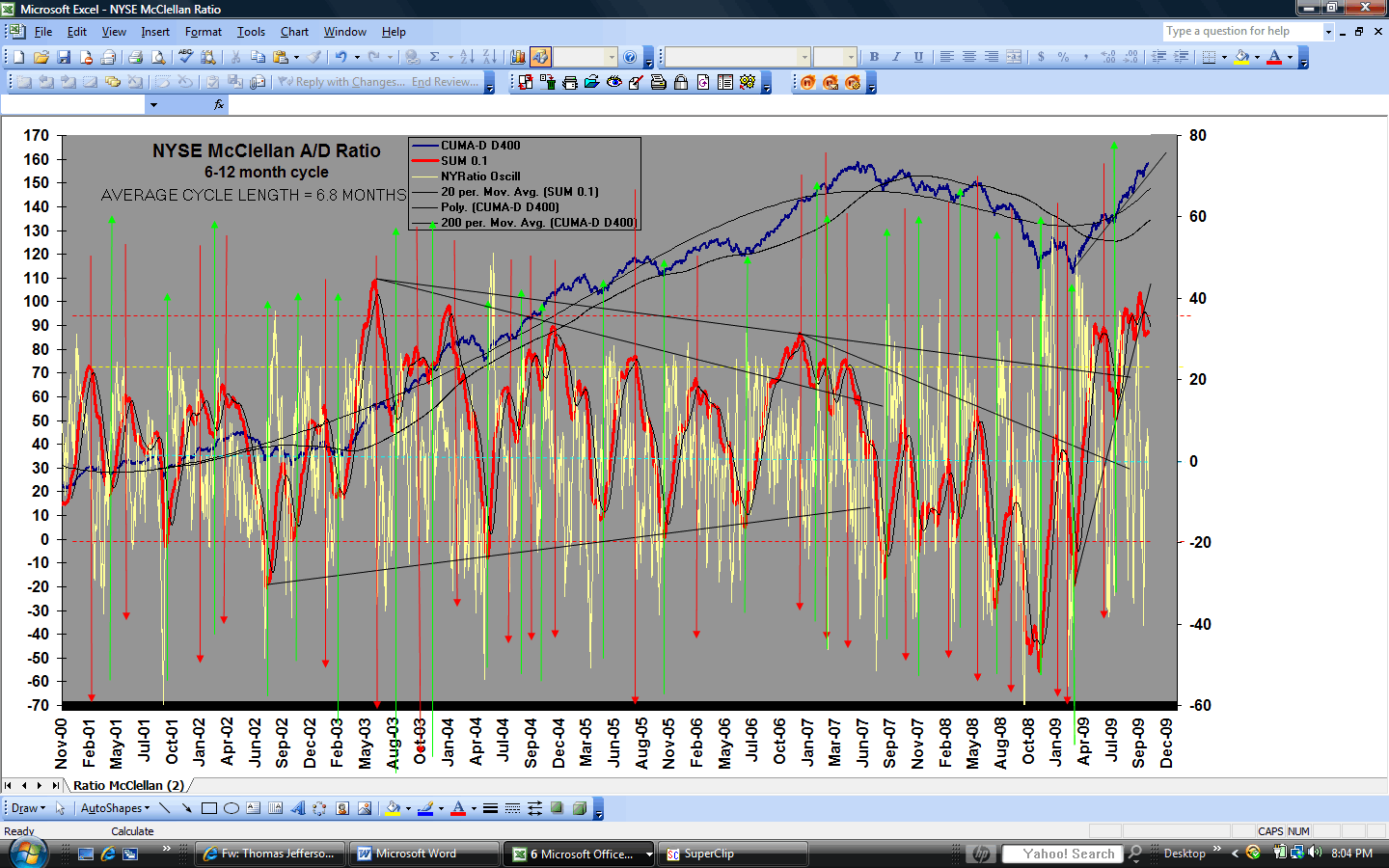
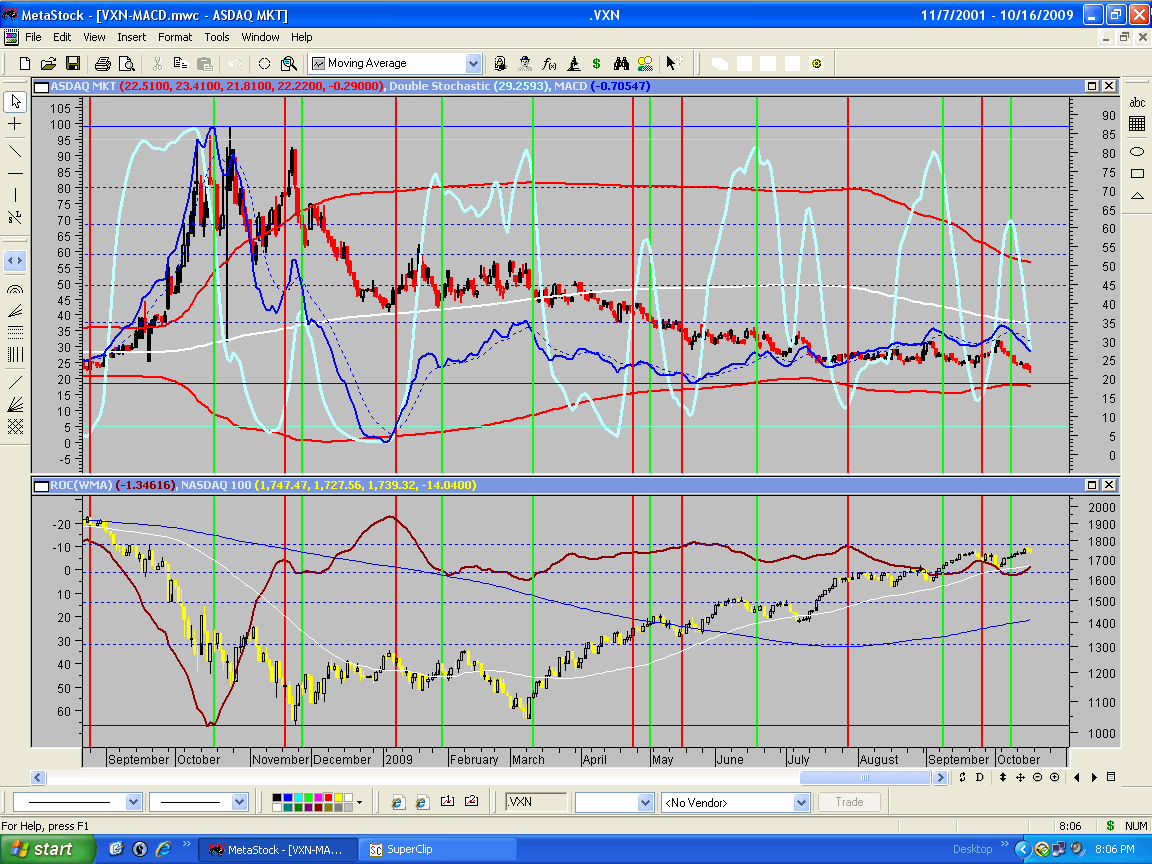
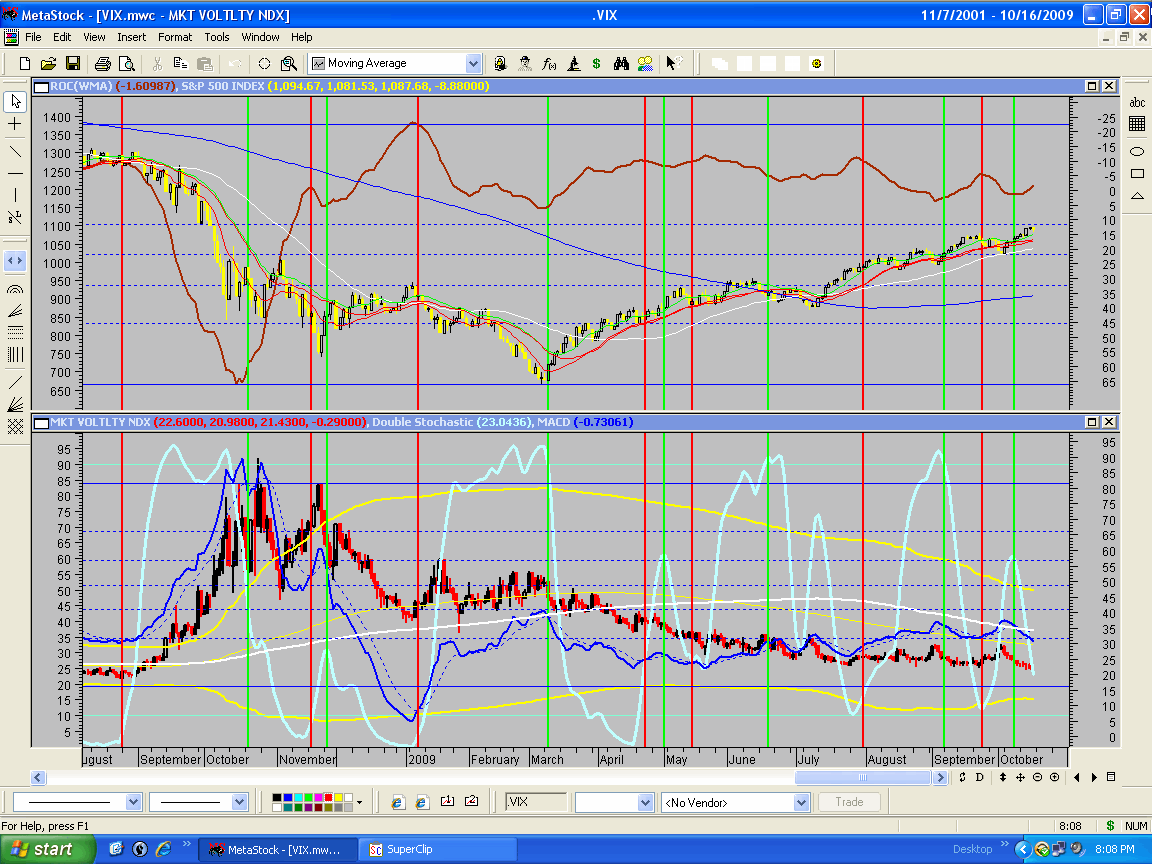
That said, the market did make some notable technical achievements last week. Total market capitalization (http://www.geocities.com/petegersb/TotalMarket.GIF ) broke slightly above its downtrend channel, and the total advance-decline line, which often leads the market averages, moved up to its January 6 peak. The NYSE advance-decline line (http://www.geocities.com/petegersb/A-Dsummation-NYSE.GIF ) moved marginally above its 9-month moving average and so did the Nasdaq 100 Index (http://www.geocities.com/petegersb/NDX.GIF). But the indexes have some difficult hurdles to overcome this week if the rally is to continue. The Nasdaq Composite is up against both the 38.2% Fibonacci retracement and the 9-month moving average at a time when the long cycles are overbought and the 13-day cycle and short-term composite have turned down. The Russell 2000 index (http://www.geocities.com/petegersb/Russell2000.GIF ) has the same problems except that it’s still well below the 38% retracement. The SPX (http://www.geocities.com/petegersb/SP500.GIF ), the weakest of the indexes, is up against the 23.6% retracement. While its 13-day cycle hasn’t yet turned down it’s quite overbought and the 20-wk cycle is extremely overbought. There are indications that the 10-wk cycle has already turned down (http://www.geocities.com/petegersb/VXN.GIF , http://www.geocities.com/petegersb/VIX.GIF ). On all of the indexes, the cycles are aligned as they were in mid-May of last year as the 20-wk cycle peaked just before a 2 month 16.6% decline in the SPX. The risks appear higher than the potential rewards.
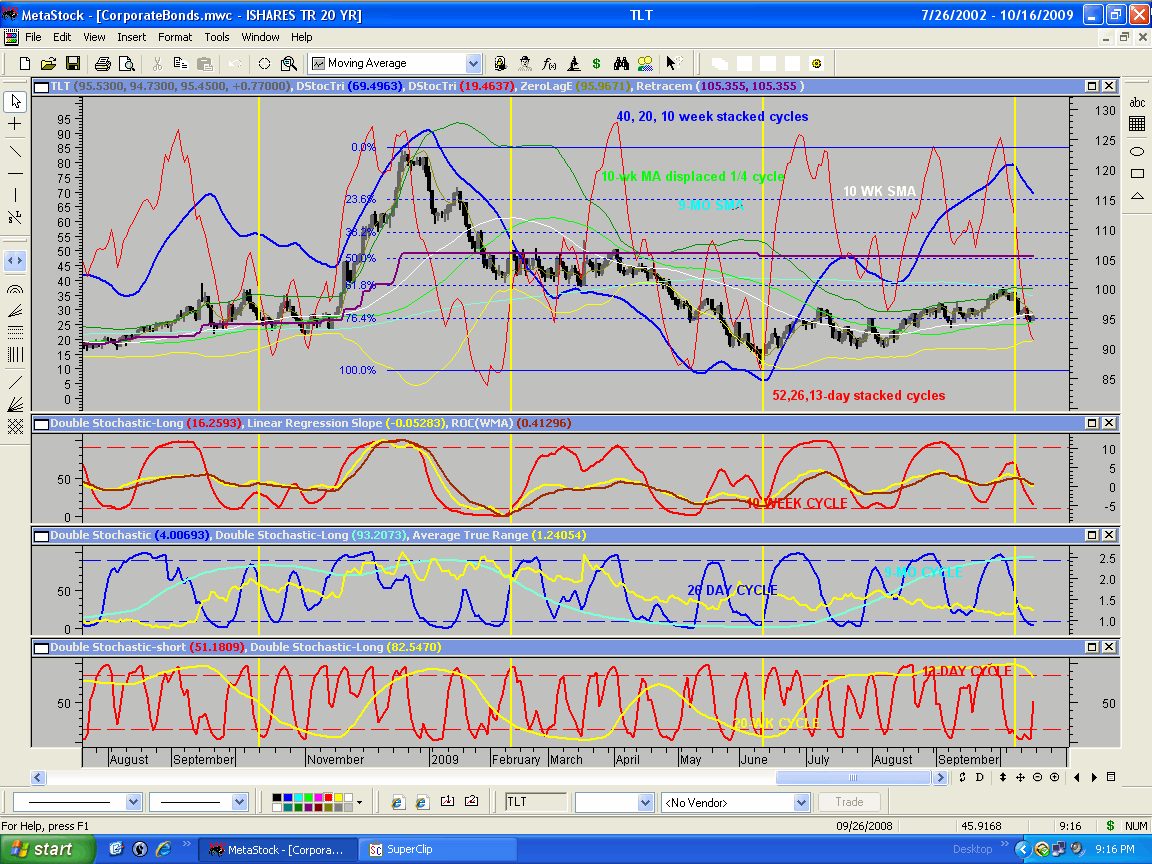
Treasury bonds (http://www.geocities.com/petegersb/Treasury-20yr.GIF ) declined as expected last week. Both short and intermediate composites are now oversold, and the 13-day cycle established a bottom on Friday. It will probably prove to be a 10-wk cycle low.
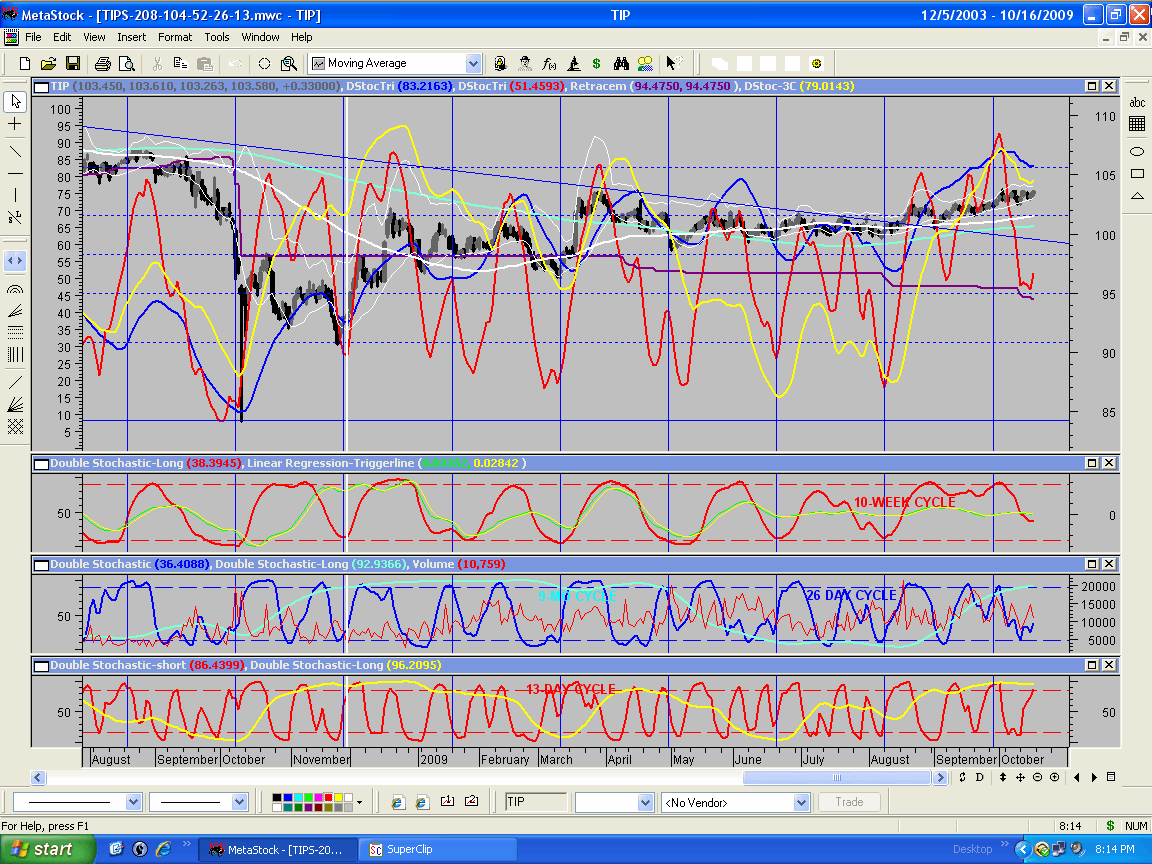
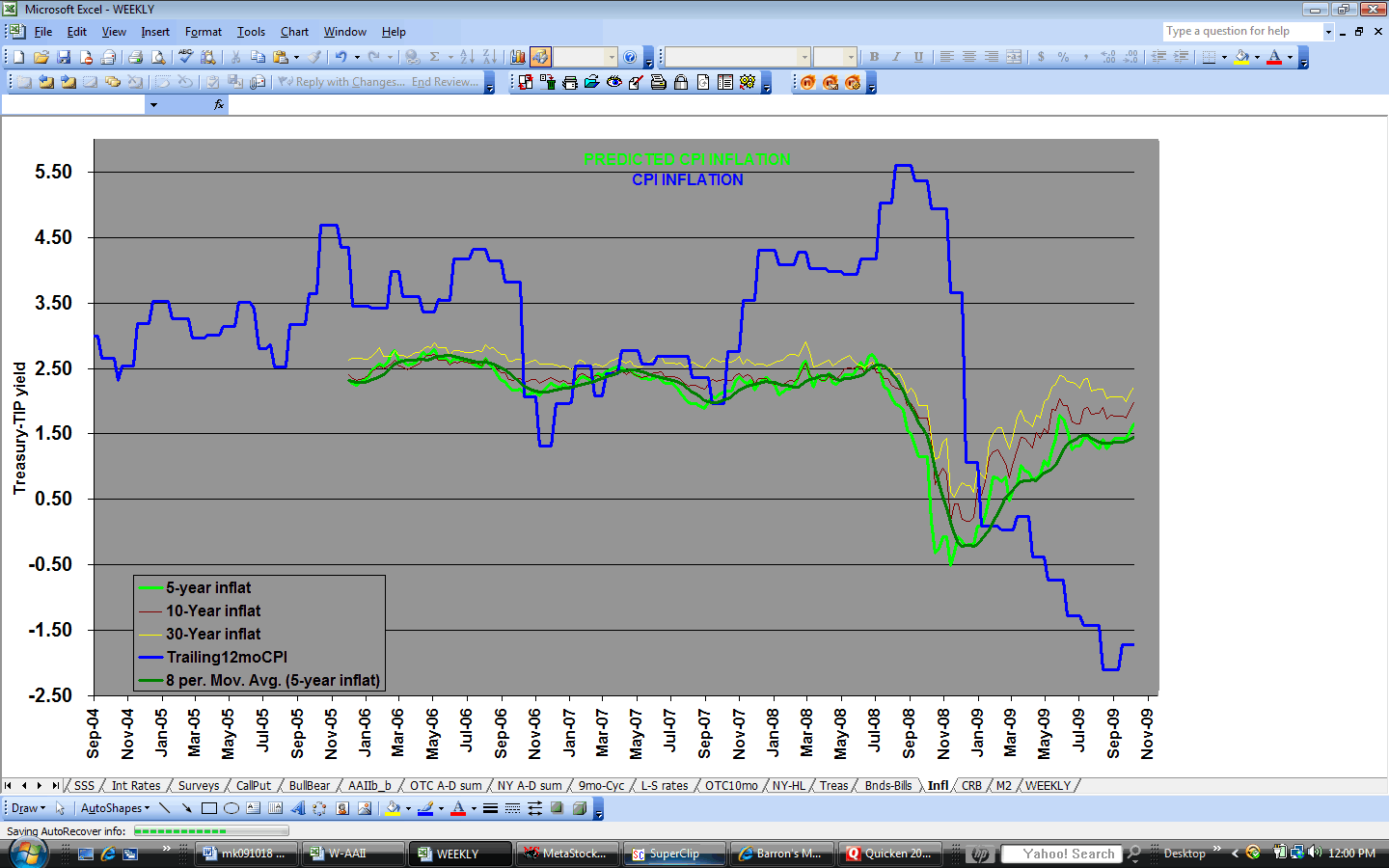
Inflation Protected Treasuries (http://www.geocities.com/petegersb/TIPs.GIF) broke below the 9-month and 10-wk moving averages. The 10-wk cycle is 8 weeks old and moderately oversold, but the shorter cycles need at least a few more days to reach bottom. After they bottom we should see the second 10-wk cycle rally of this 20-wk cycle. The recent weakness in TIPs, despite rising inflation fears (http://www.geocities.com/petegersb/CPI.GIF ), is a consequence of general weakness in treasuries as enormous supplies keep coming to market.
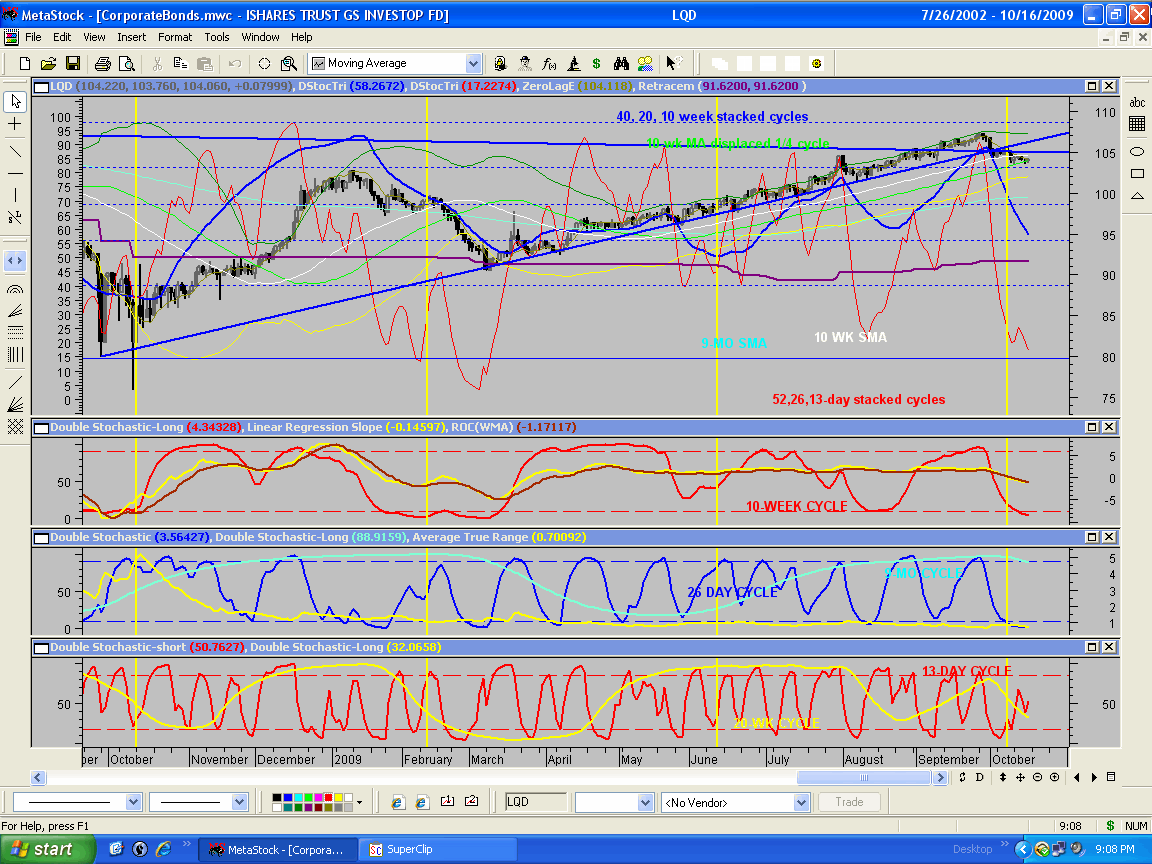
Corporate bonds (http://www.geocities.com/petegersb/CorporateBonds.GIF ) again were little changed, still maintaining position just above the down trending 9-mo moving average despite a down trending short-term composite. The 8-wk-old 20-wk cycle continues to provide support and can be expected to do so for a little while longer. However, the 10-wk cycle is extremely overbought and due for a correction. The down trending 9-mo cycle is only six and a half months old, so I expect a resumption of the intermediate downtrend soon.
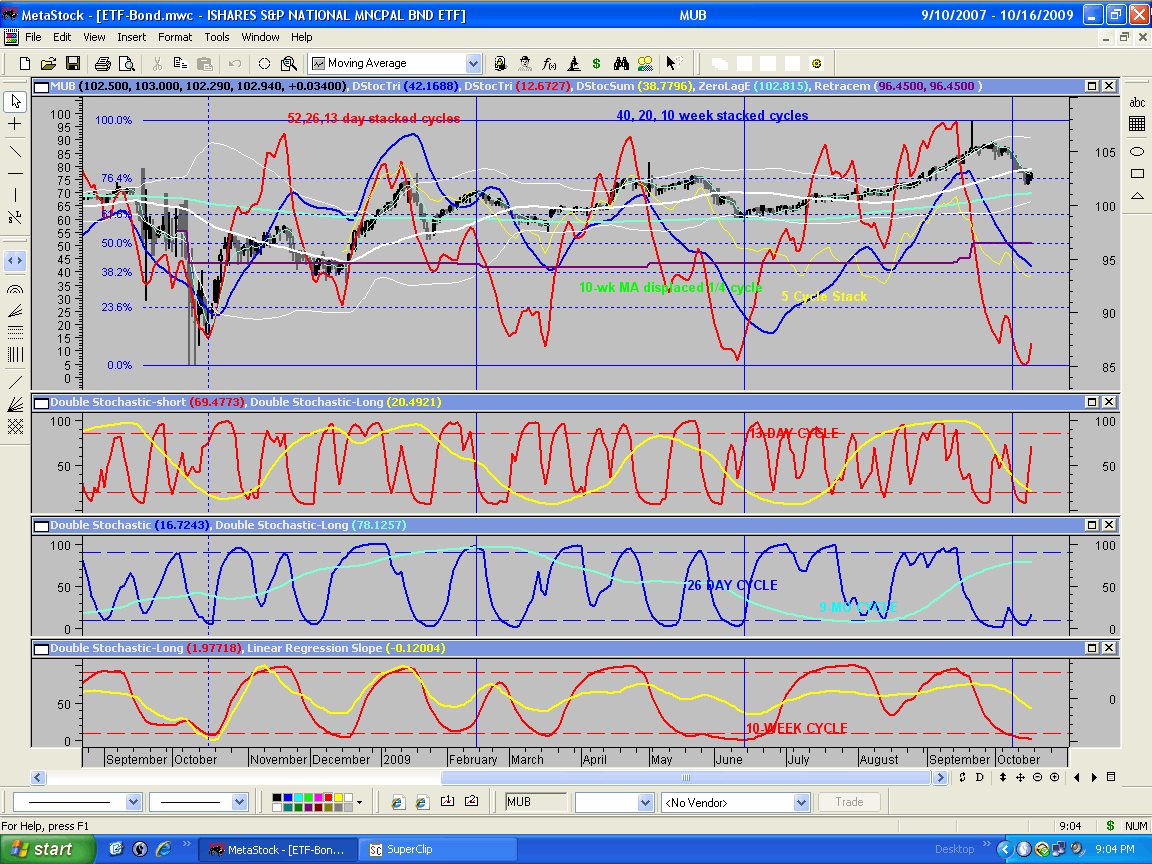
Municipal bonds (http://www.geocities.com/petegersb/MunicipalBonds.GIF ) declined as expected last week. Although the 13-day cycle is deeply oversold, the 26-day and 10-wk cycles are not yet ready for a bottom, and both short and intermediate composites are in young downtrends. Expect more weakness ahead.
Crude oil (http://www.geocities.com/petegersb/CrudeOil.GIF ) continued its rally through the 2nd week of its 10-wk cycle as expected.
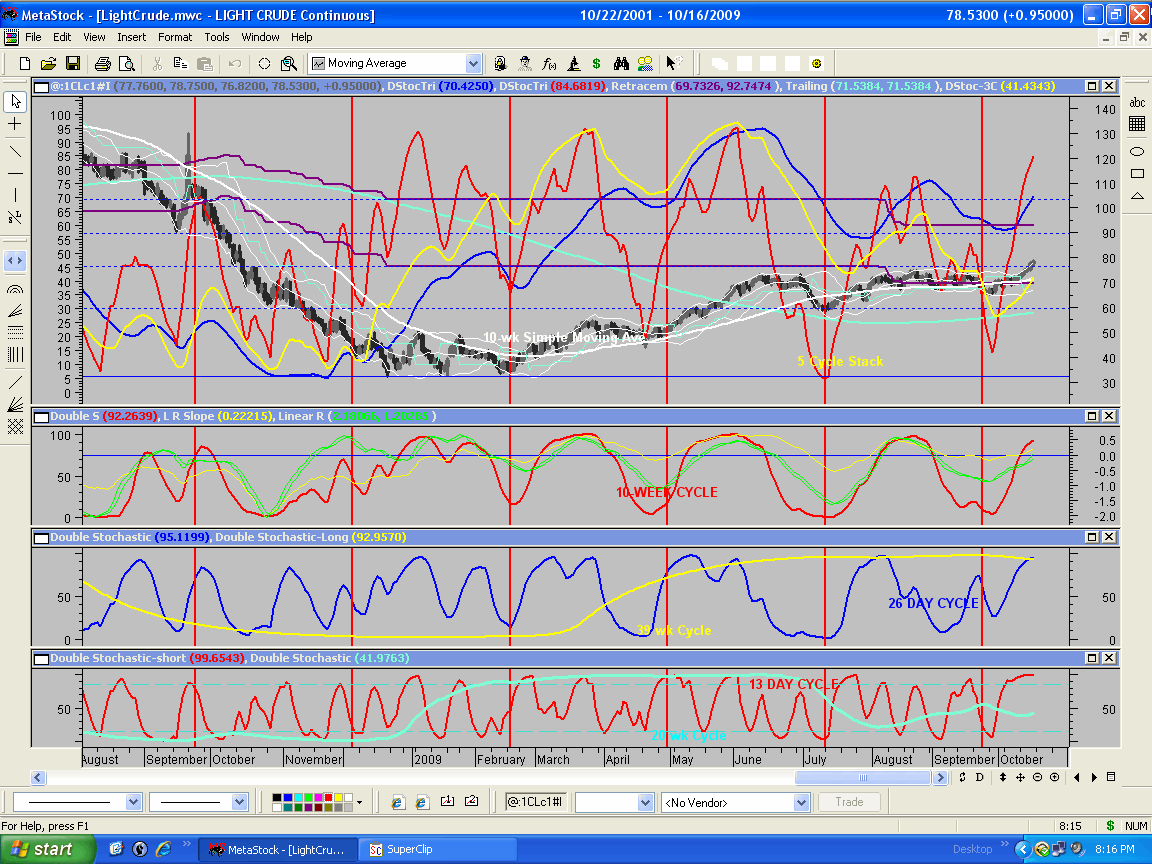
The rally is likely to pause this week as the overbought 13-day cycle corrects, but this 10-wk cycle appears likely to produce a higher high than the last one. When it does peak, it probably will prove to be a 20-wk and 9-mo cycle peak as well.
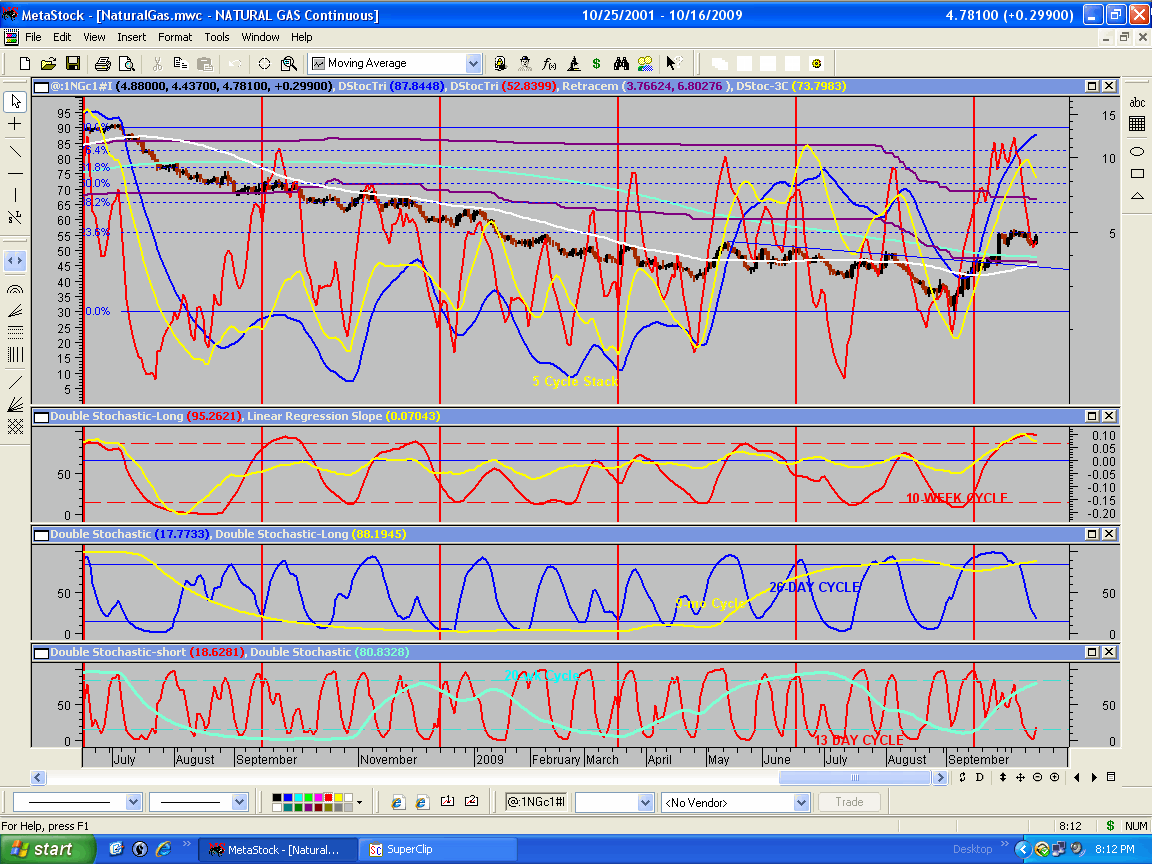
Natural gas (http://www.geocities.com/petegersb/NaturalGas.GIF ) established a short-term bottom on Monday, and was finally able to sustain a rally for the remainder of the week. It was probably the beginning of a 10-wk cycle rally, but it remains to be seen if it can sustain the rally any longer than the previous 10-wk cycles of this bear market.
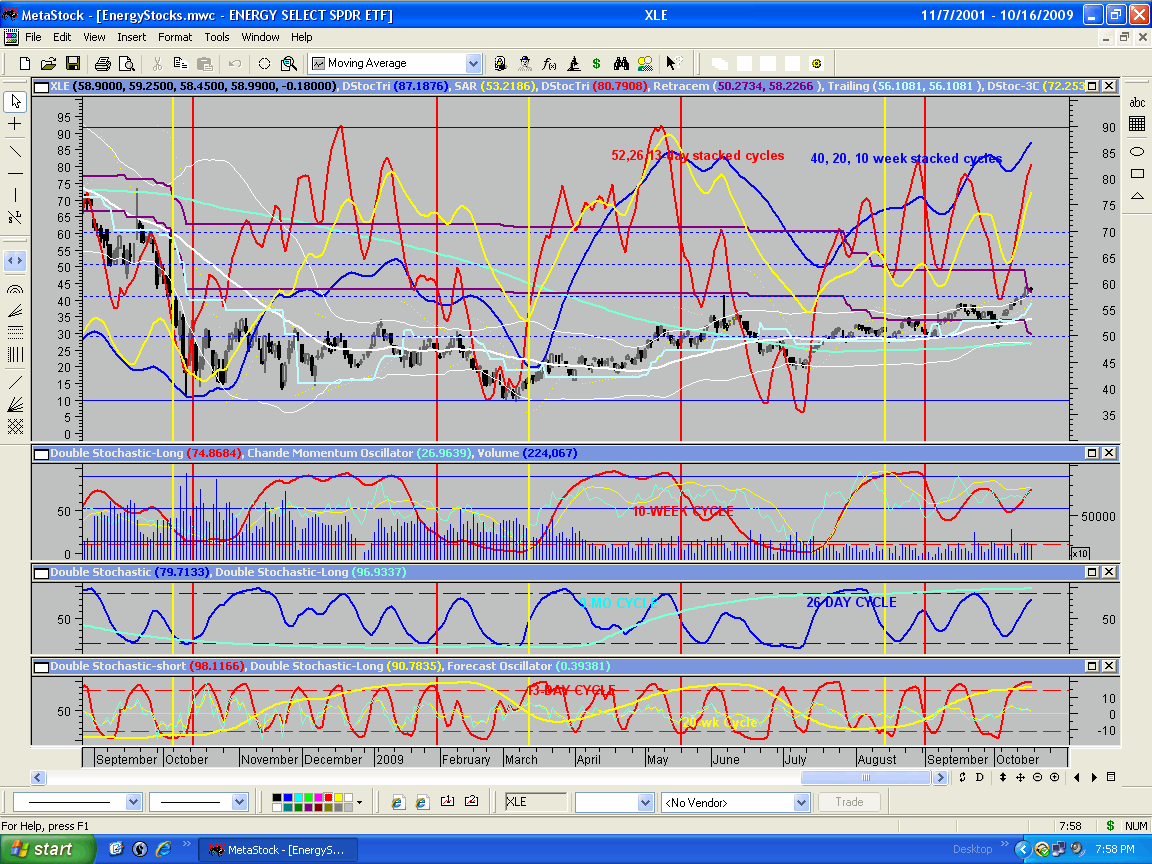
Energy stocks (http://www.geocities.com/petegersb/EnergySPDR.GIF) rallied last week along with their underlying commodities. The declining 10-wk cycle was no match for favorable trends in the other cycles. Now the 13-day cycle is moderately overbought, but the rally appears likely to extend into this week and test the top of the 7-month-old trading range. At that point both short and intermediate composites would be overbought, so a significant penetration above the trading range appears unlikely.
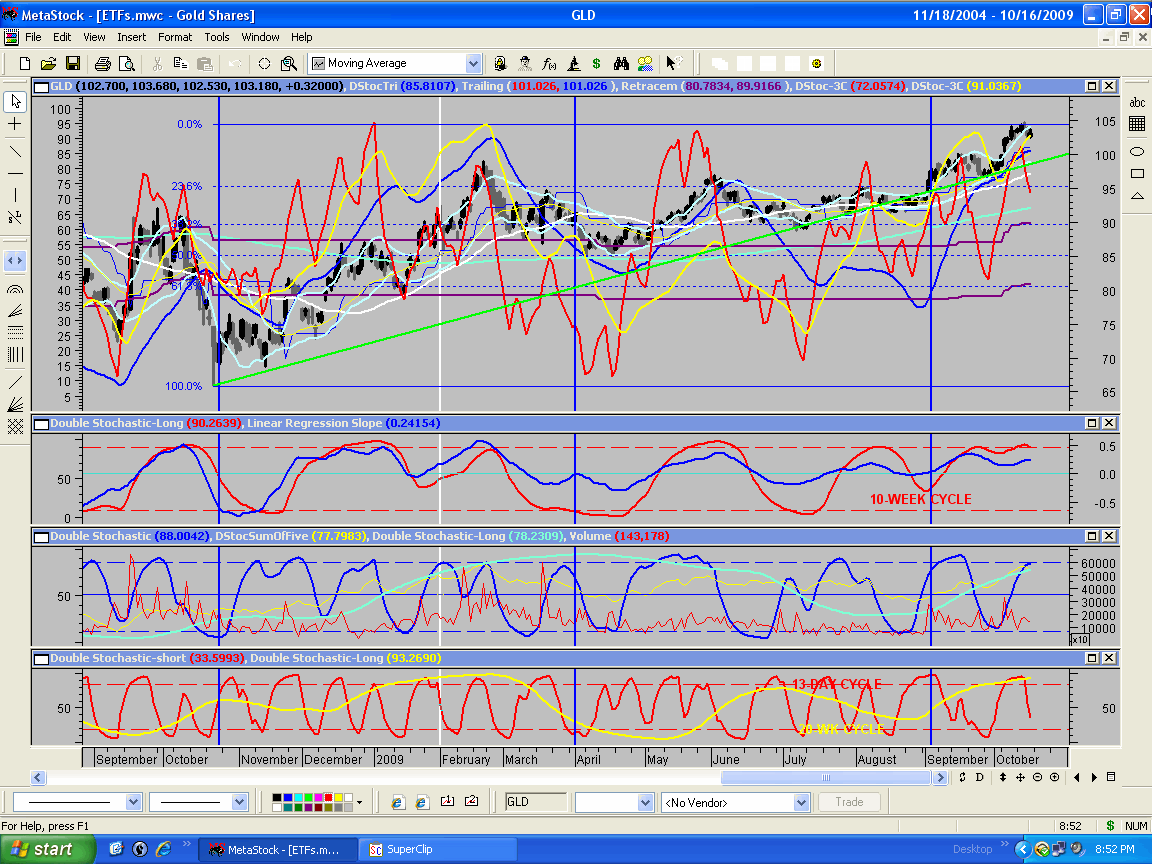
Gold (http://www.geocities.com/petegersb/GoldBullion.GIF) encountered downturns in the 13 and 26-day cycles as the
10-wk cycle struggled to gain any traction. The 26-day cycle will likely
inhibit the 10 and 20-wk rally attempts again this week.
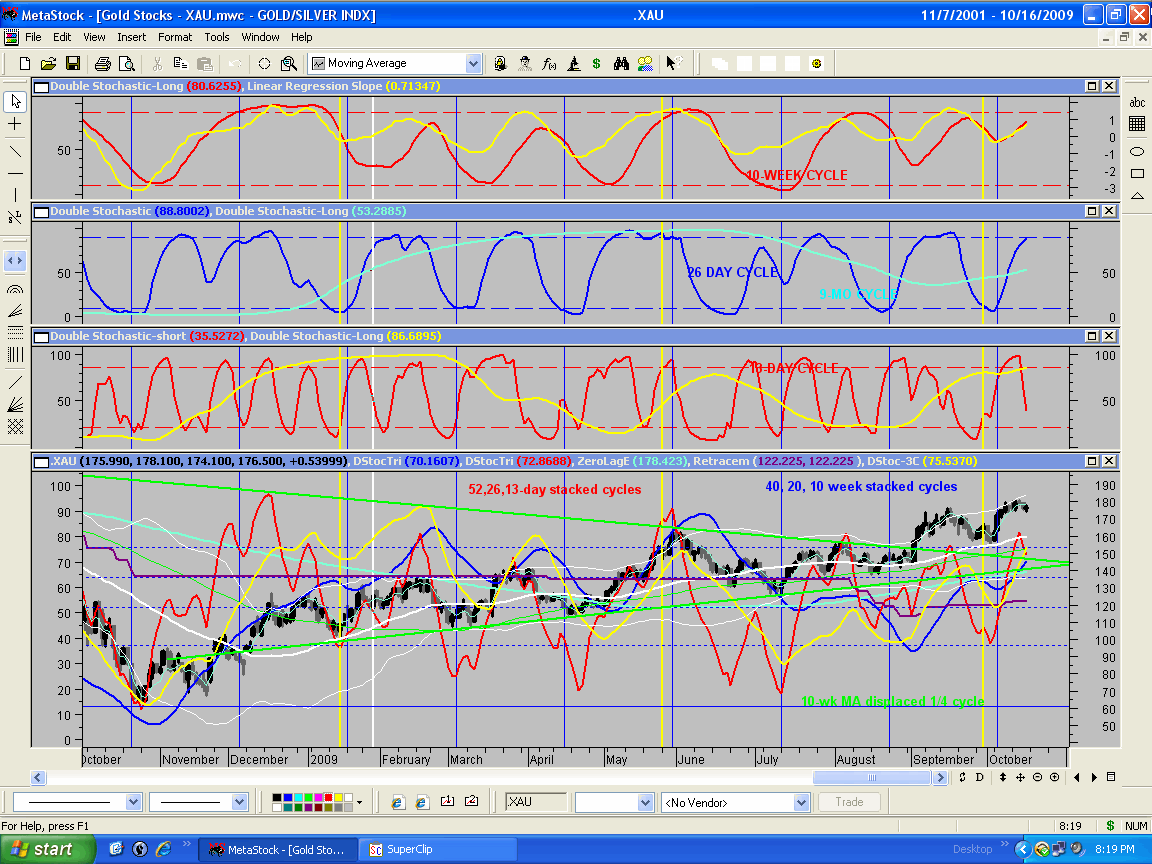
Gold Stocks (http://www.geocities.com/petegersb/GoldStocks.GIF
) also declined under the influence of down trending 10-wk and longer cycles. On Friday the 13-day cycle turned down further
reinforce the declining trend. This week
does not look promising for gold stocks.
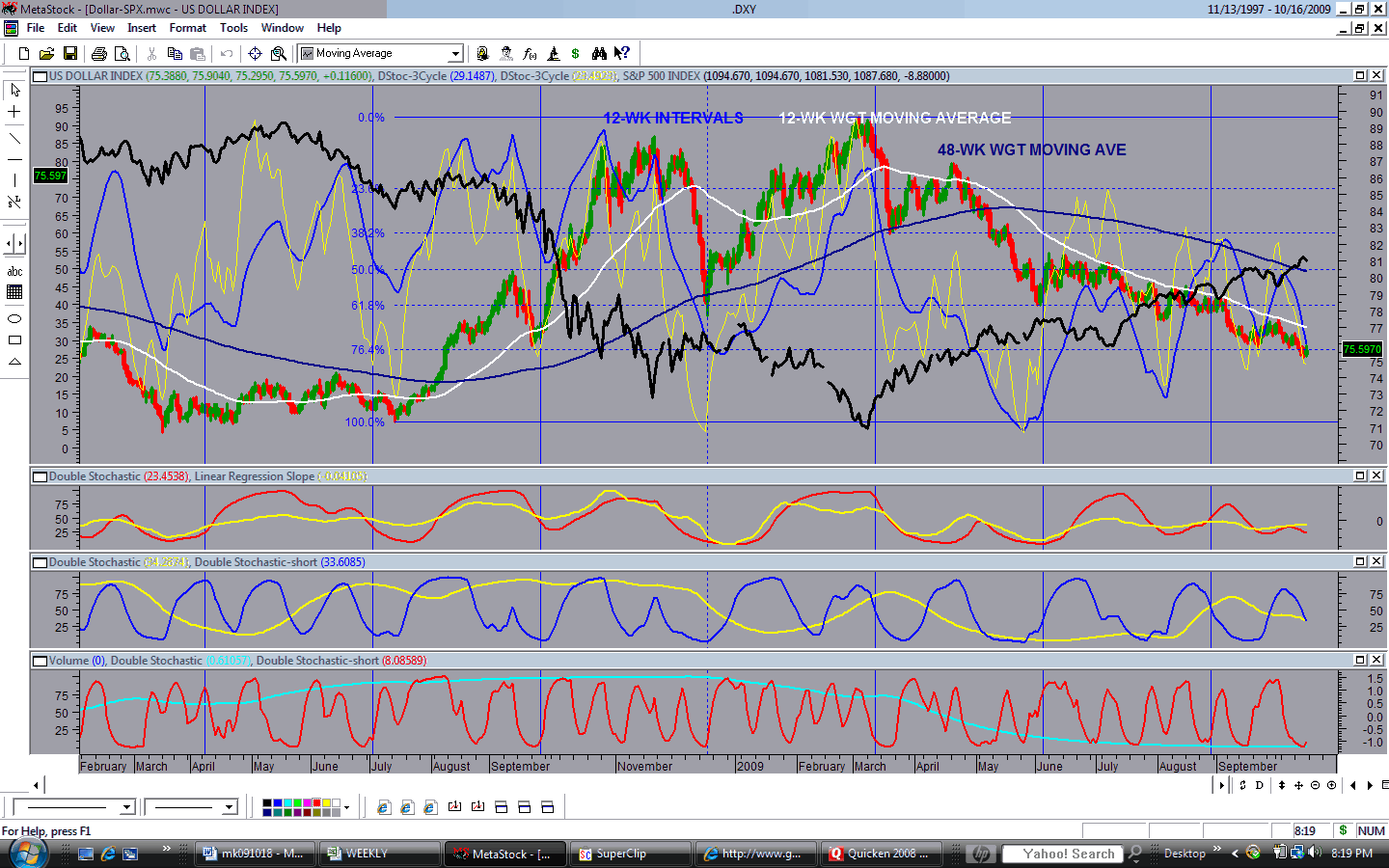
The Dollar (http://www.geocities.com/petegersb/Dollar.GIF) declined, but not as much as might have been expected from the number of unfavorable cycles. It made only a marginal downside penetration of its uptrend line. With both short and intermediate composites declining and nowhere near oversold, the decline should continue this week.