4/12/09
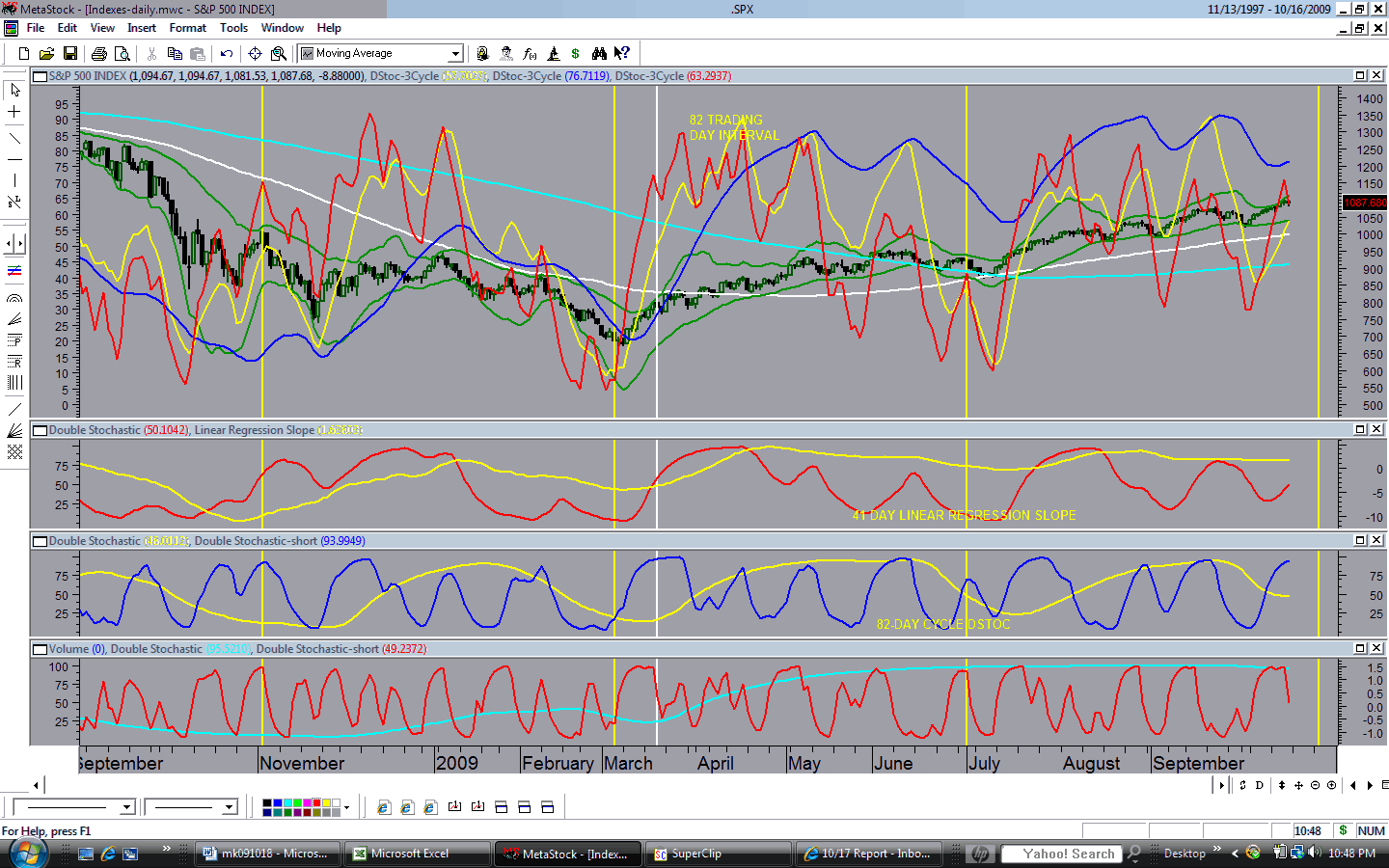
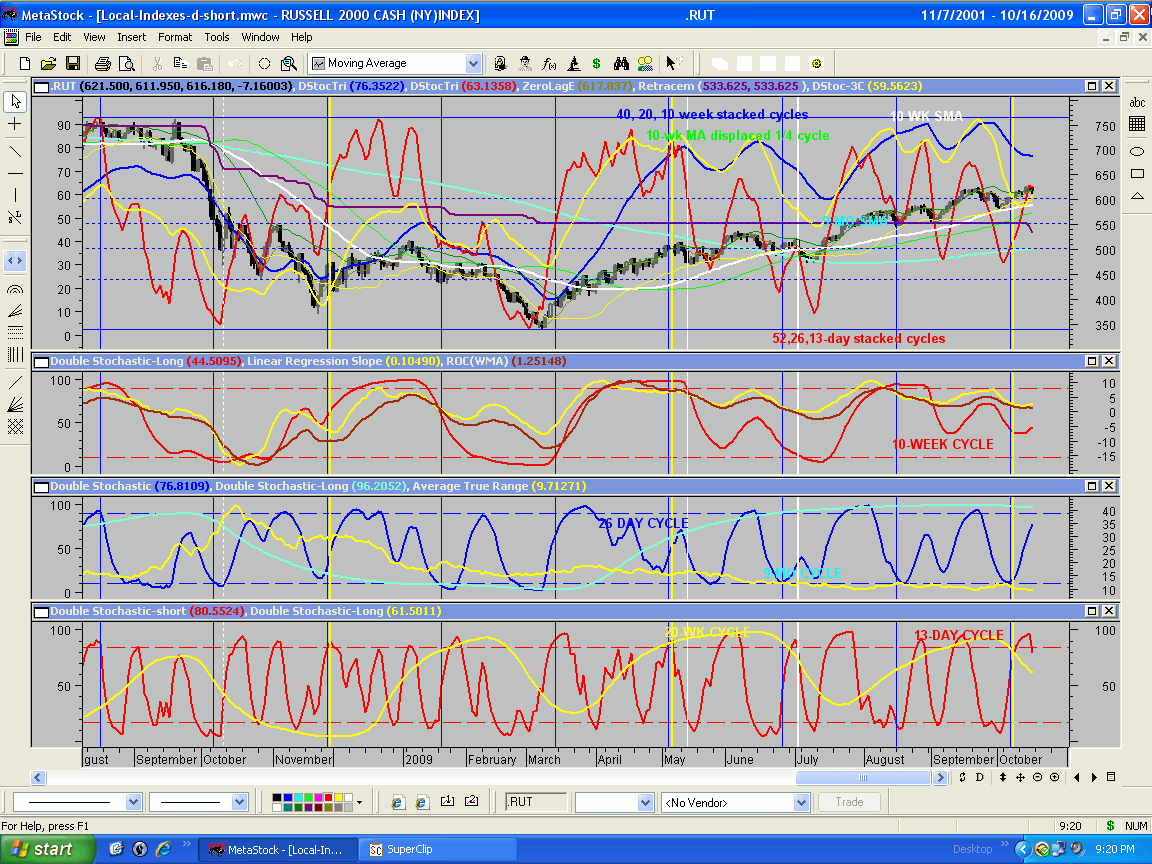
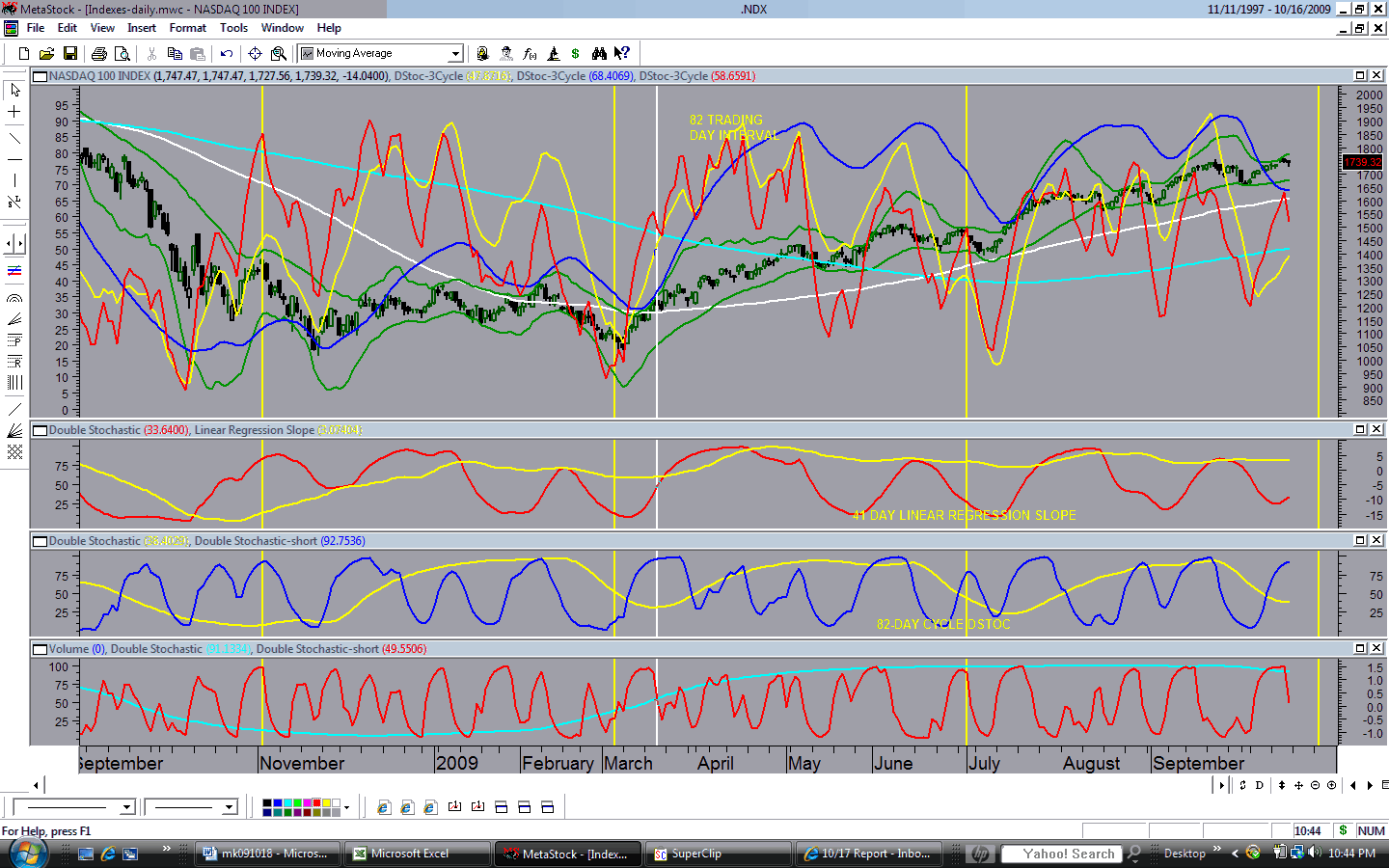
Stocks managed another gain last week on the strength of a big pre-holiday move on Thursday. The latest surge, apparently inspired by Well Fargo’s pronouncement of expected higher earnings, arrived just in time to prevent a dip below the 10-wk moving average and once again delay a peak in the 5-wk-old 10-wk cycle. It hasn’t yet produced a higher high for that 10-wk cycle on the SPX and Russell 2000 (http://www.geocities.com/petegersb/SP500.GIF, http://www.geocities.com/petegersb/Russell2000.GIF ), but the NASDAQ (http://www.geocities.com/petegersb/NDX.GIF) is already assured of a higher 20-wk cycle high. On all of these indexes, the indicators continue to follow the pattern of the 5 week rally during July and August of last year. But the price gain has been much stronger this time, and none of the indexes managed a higher 10-wk cycle peak on that rally. Furthermore, despite the huge gain, only the 10-wk cycle is extremely overbought, so more upside would not be surprising – especially if we see more high profile favorable earnings surprises. But if you are interested in reading some well-founded skepticism on 2009 earnings estimates (http://www.geocities.com/petegersb/EarnY-Y.GIF ), read John Mauldin’s latest epistle (http://www.frontlinethoughts.com/gateway.asp ).
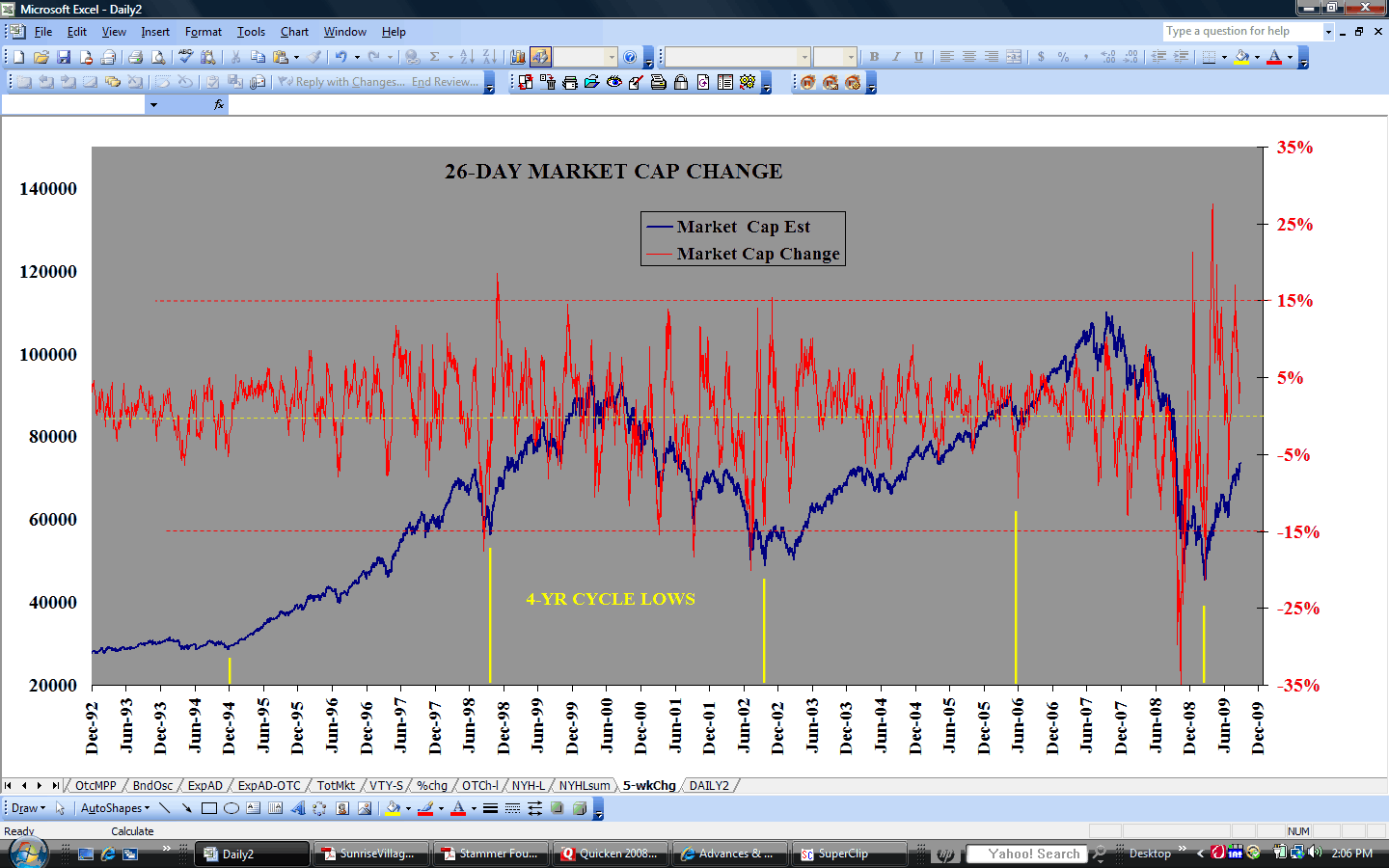
Last November completed the most extreme 5-week percentage drop in total market capitalization in at least 30 years and probably much longer. Thursday completed the most extreme 5-week percentage gain in total market capitalization in at least 30 years and probably much longer. Prior to last week, there were three 24-day trading periods in the last 16 years that produced an increase in total market capitalization in excess of 15% (http://www.geocities.com/petegersb/5-wkMktCapChg.GIF ). One ended in November 1998 following liftoff from the 1998 four-year cycle low. Another ended in August of 2002 as the first rally peaked in a price pattern that would establish the last low of a triple bottom 8 months later. The most recent was at the end of last year after the rally off of a November low that followed the worst 5 week period in at least 30 years, and that obviously was not the last low of the most recent bear market. It went lower in last month. All three of those 5-week periods produced gains between 17.6% and 18.7%, so the most recent 5-wk gain of 25.8% is truly historic. But the downside 5-wk change last November of 32.8% was even more extreme, exceeding even the 21% 5-wk plunge in 1987.
The message I get from the chart is that 5-wk volatility, both upward and downward, tends to peak in the general vicinity of 4 year cycle lows, but not necessarily at the low. The downside volatility extreme in 2006 (which wasn’t very extreme) coincided with that four-year cycle low, but in the other cases covered by the chart, it preceded the final low in the 4-yr cycle by 2 months in 1998 and by 8 months in 1994 and in 2002. If last November ultimately proves to have been the downside volatility peak for this cycle, March may well prove to have been a very premature (33 month) 4-year cycle low. But if the gap between the downside volatility extreme and the price low extends to 8 months as it did in 1994 and 2002-2003, the four-year cycle low would probably arrive this summer along with the scheduled 9-month and 20-wk cycle lows. That’s still my expectation for the 9-month cycle, and given the extreme volatility over the last few months, I have to now expect that the next 9-mo cycle low will also be the last bottom of a compressed 4-yr cycle.
While that’s my expectation, I also have to allow for the possibility that the low did arrive last month. If we just had historically extreme volatility, I suppose it can also be associated with a historically extreme contraction in 4 year cycle to less than 3 years (The anomalous 1987-1990 cycle lasted almost precisely 3 years). What would cause me to conclude that the bottom is in? I’d be encouraged if the coming 10-wk cycle correction holds above its 10-wk moving average (currently at 792). I’d be more confident if the peak of the current 20-week cycle exceeds its previous peak (944 on the SPX). But to become confident that the 4-year cycle has reached its low, I’d have to see the SPX above its 9-mo moving average, which currently stands at 994.
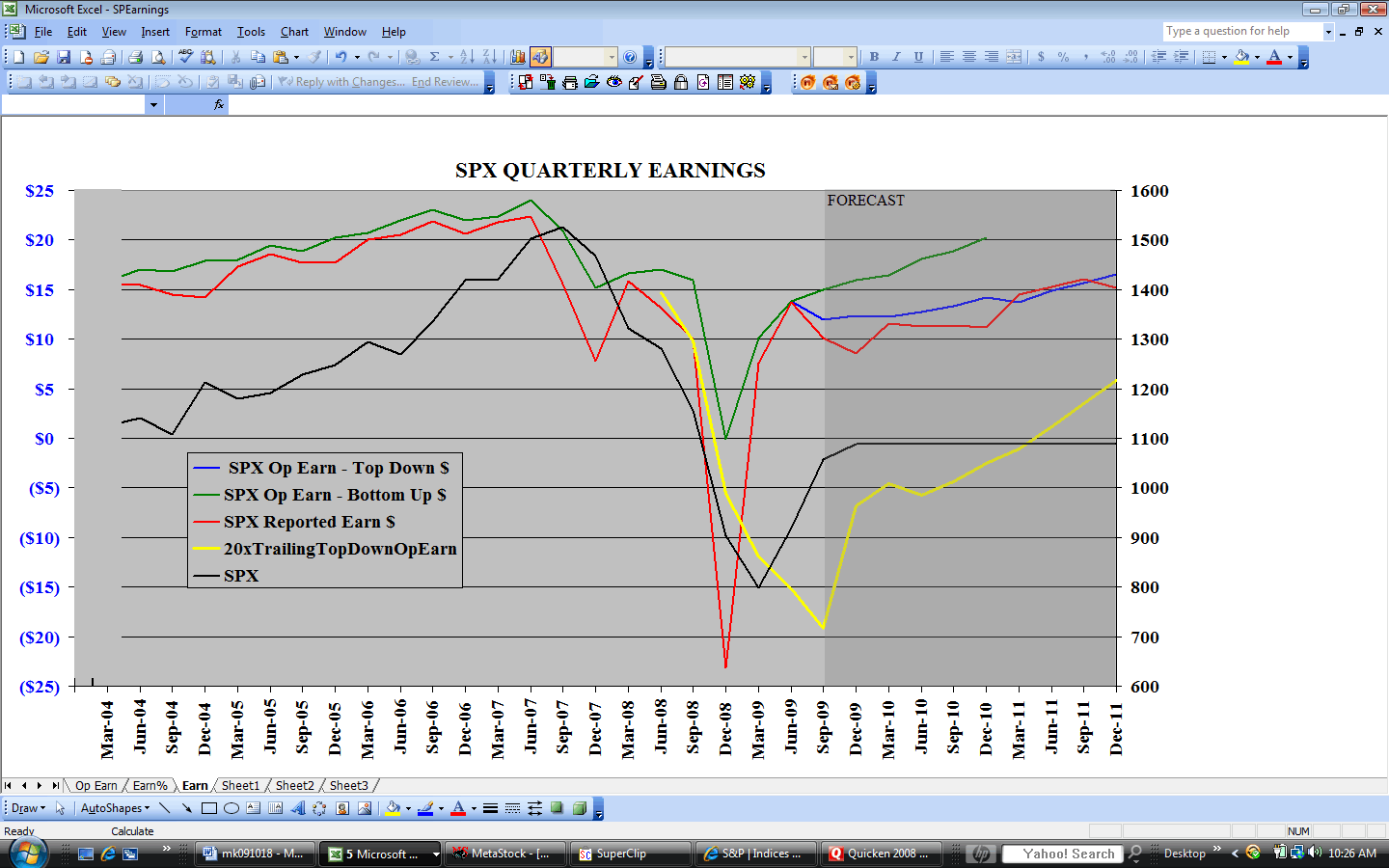
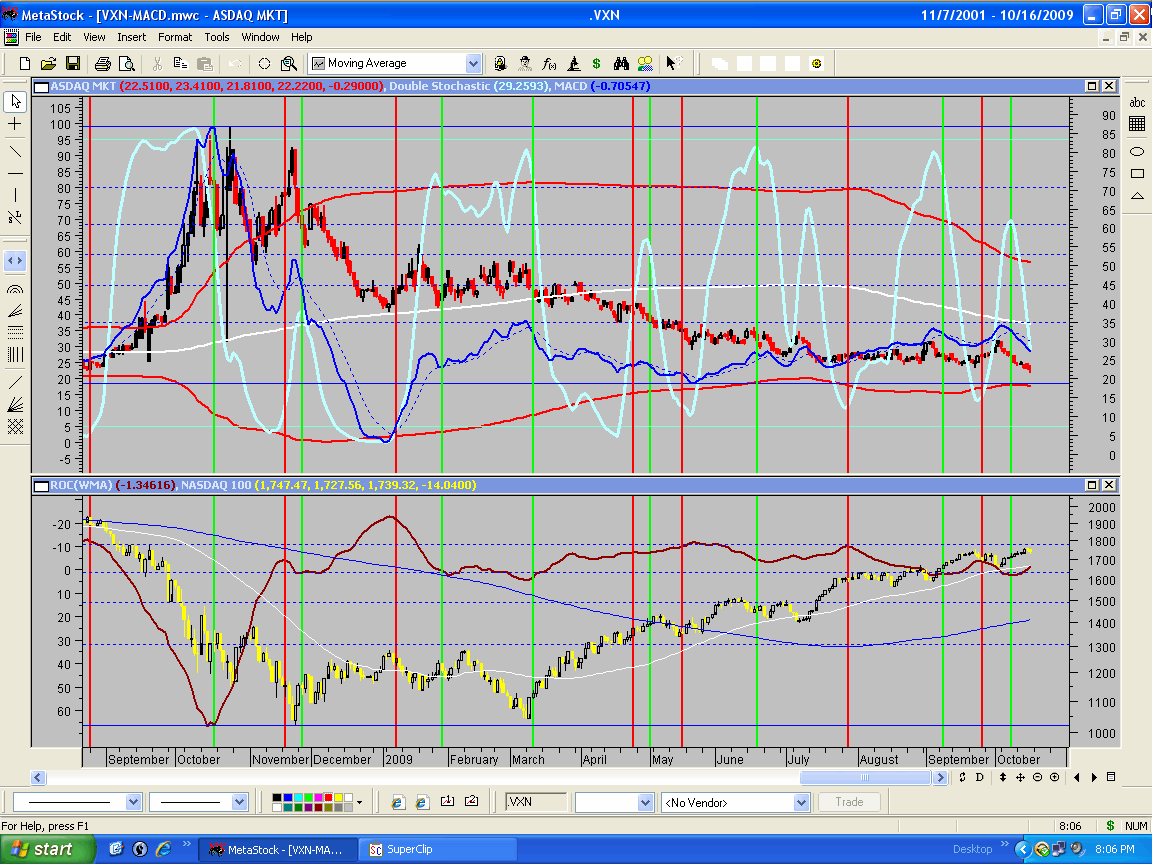
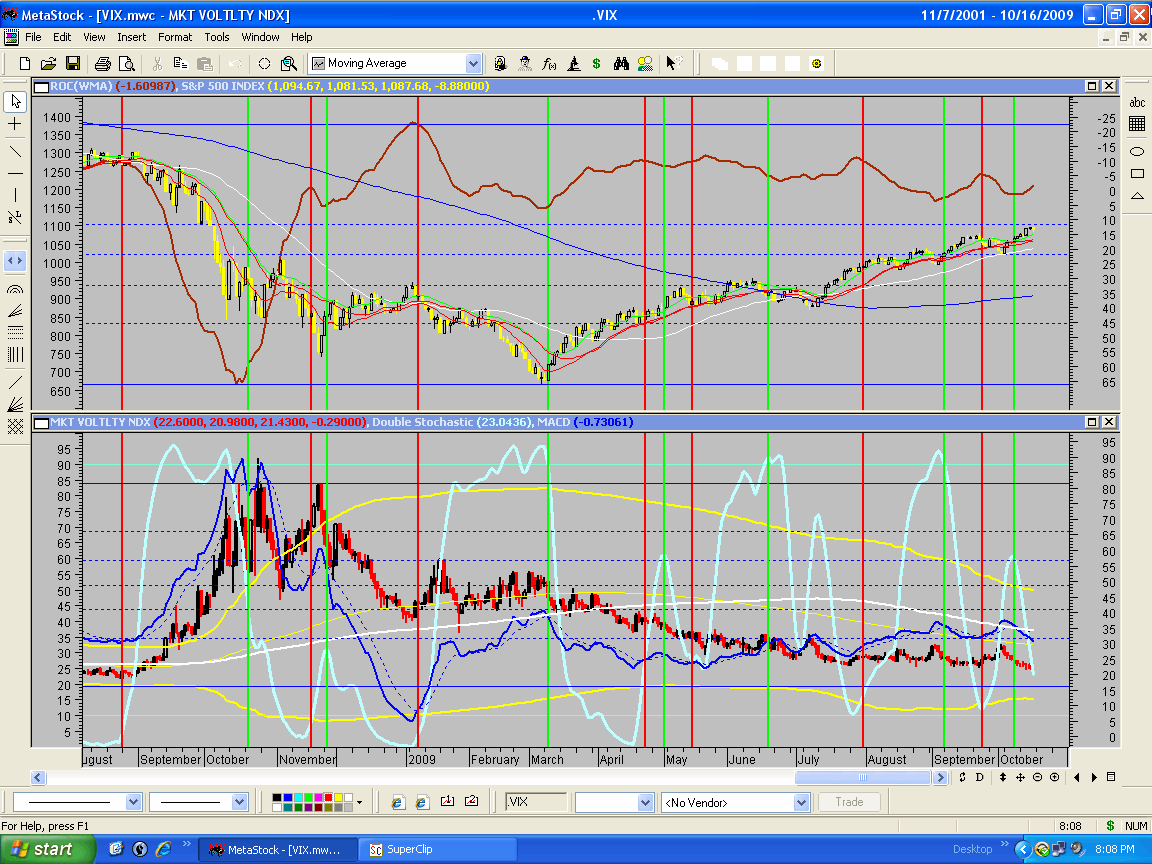
Whether we have seen have seen a bear-market rally of historic proportions or the liftoff of a new bull market during the last 5 weeks, the intermediate-term risk/reward ratio does not appear attractive here. Any further upside will likely be very limited by the middle-aged and overbought 10-wk cycle (http://www.geocities.com/petegersb/VXN.GIF , http://www.geocities.com/petegersb/VIX.GIF ), and a test of the March low, 22% below current levels, still appears quite likely this summer. And, of course, we can’t be confident that the March lows will hold if tested. That low held right at the 61.8% Fibonacci retracement of the 82-00 bull market (http://www.geocities.com/petegersb/SPX-5-wkROC.GIF ). That level should again provide strong support, but if it is broken, the next lower Fibonacci support (76.4% retracement) comes in at 450. That level is about 10 times S&P’s top-down expectation of operating earnings for both 2009 and 2010 ($44.41 and $45.78). The forward P/E on a 450 SPX rises to 16 in 2009 and 13 in 2010 if you include some of the bad stuff by using expected GAAP earnings instead ($28.51 and $35.31). And to get to those numbers, S&P is banking on a strong recovery from last year’s 4th quarter (http://www.geocities.com/petegersb/EarnY-Y.GIF ). Those are merely normal P/Es, not bargain P/Es, and as Mauldin points out, S&P has a history of steady downward revisions. Based on last week’s close, the P/E is 30 on 2009 GAAP earnings expectations and 24 on 2010 expectations. Those are numbers that had never been seen before the late 90’s, and investors are now painfully aware that they are too high to produce good returns going forward.
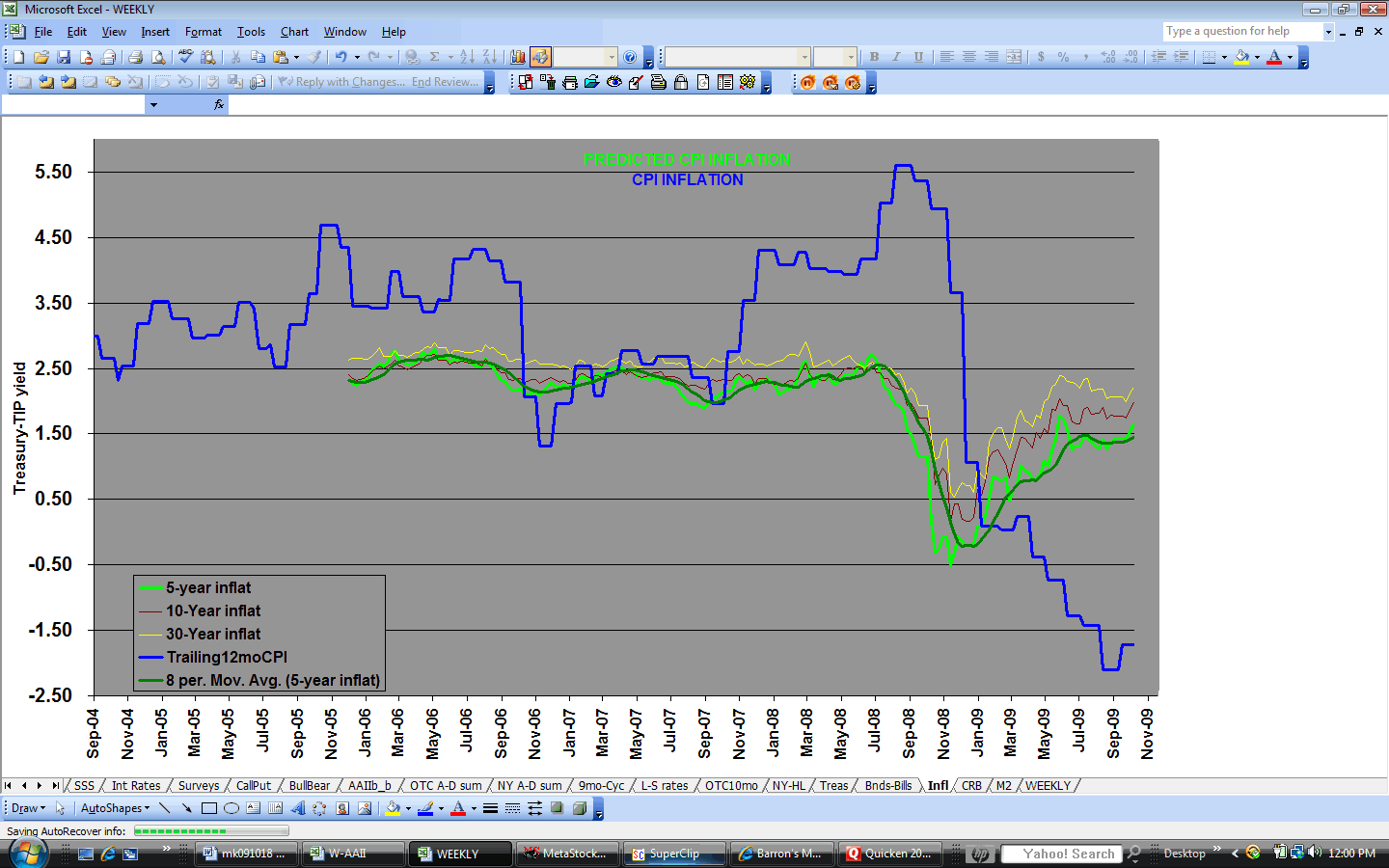
I know a good technician is supposed to ignore the fundamentals, and I subscribe to that for the short and intermediate term when the market is more driven by emotions. But in the long run stocks are valued on the basis of expected future earnings discounted on the basis of expected future interest rates. The only way you can come close to justifying today’s sky-high P/E’s is on a reasonable expectation of continued low interest rates and strong earnings growth. But even habitually optimistic S&P expects flat earnings for at least the next two years. Longer-term interest rates that are not normally manipulated by the Fed generally track inflation rates, and the bond market, although still expecting low inflation, has recently been nudging its expectation a bit higher (http://www.geocities.com/petegersb/CPI.GIF ). I don’t think it’s reasonable to expect either strong earnings growth or continued low interest rates, and certainly not both. So the most likely way to achieve reversion to the mean on stock valuation is through lower prices.
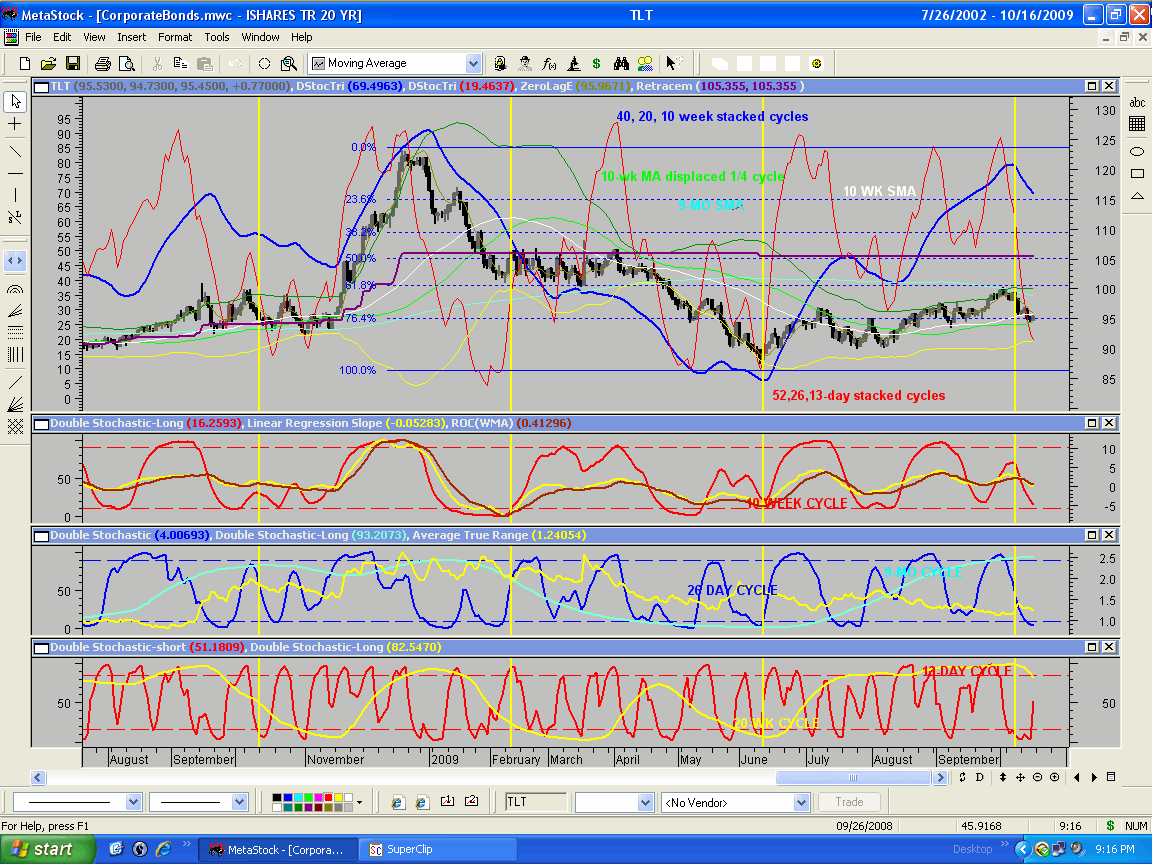
Treasury bonds (http://www.geocities.com/petegersb/Treasury-20yr.GIF ) declined slightly last week as they maintained their position between the down-trending 10-wk moving average and the up-trending 9-mo moving average. With both short and intermediate composites declining, treasuries are likely to test the 9-mo moving average this week, but a short-term bottom appears likely at that level based on oversold 13 and 26-day cycles. The 9-mo cycle is also moderately oversold and 10 months old, so the 9-mo MA will probably hold. Cycle indicators are similar to last July when a strong rally began in bonds, so it’s quite possible, perhaps even likely, that the 9-mo bottom arrived in mid-March.
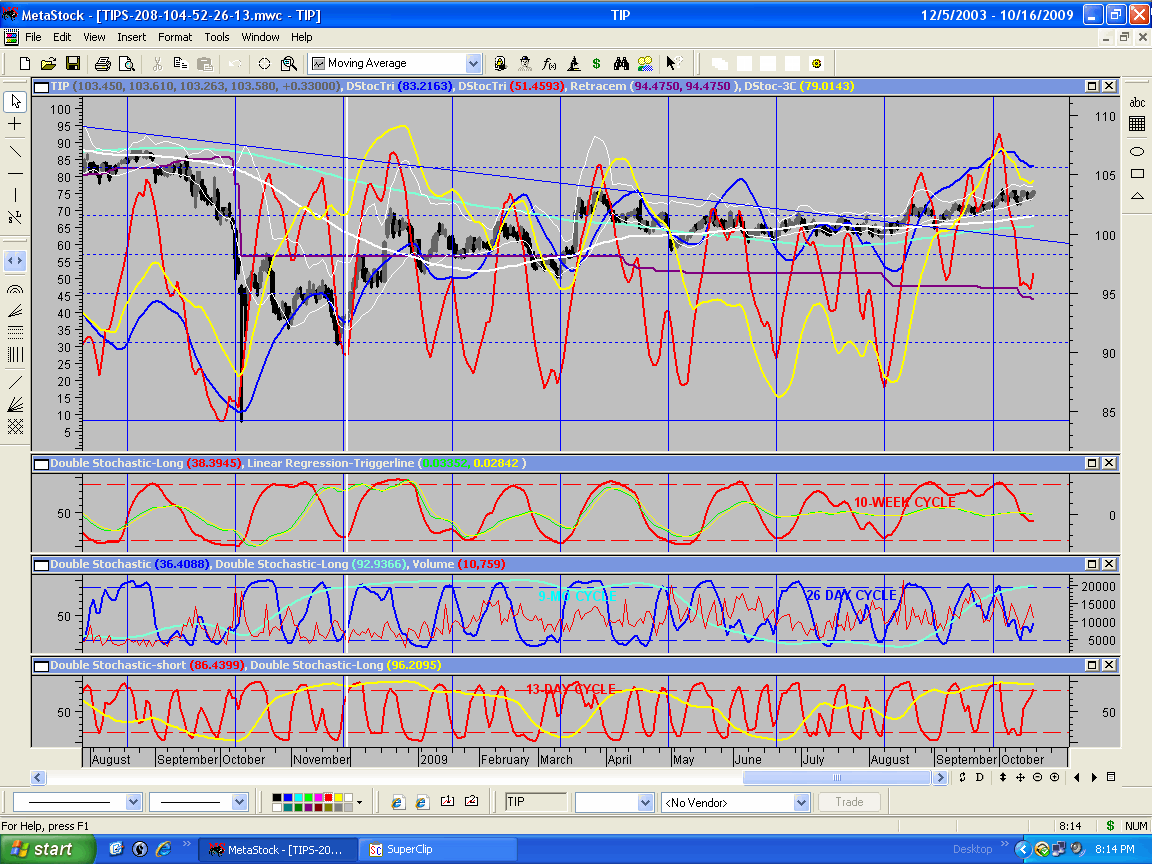
Inflation Protected Treasuries (http://www.geocities.com/petegersb/TIPs.GIF) were essentially unchanged last week as short and long cycles fought to a draw. I expect more of the same this week as favorable 13 and 26 day cycles battle an unfavorable 10-wk cycle. So far the price has held above the 9-mo moving average, and the pattern of mostly higher short-term highs and lows remains intact. The 5-wk-old 20-wk cycle suggests that the pattern will continue for a few more weeks.
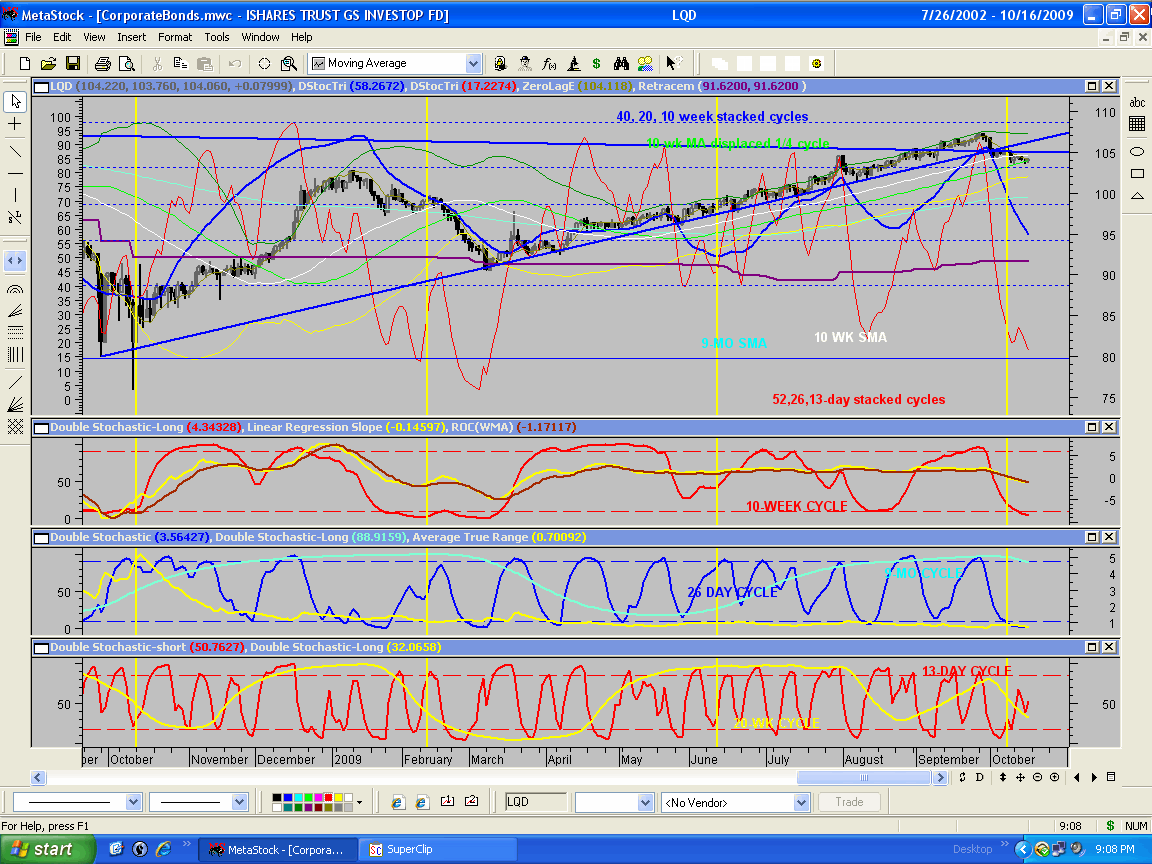
Corporate bonds (http://www.geocities.com/petegersb/CorporateBonds.GIF ) gained a little last week, but are up against the down trending 9-mo and 10-wk moving averages. While the 5-wk-old 20-week cycle is favorable, the 9-mo and 10-wk cycles are not. A move above the moving averages appears unlikely.
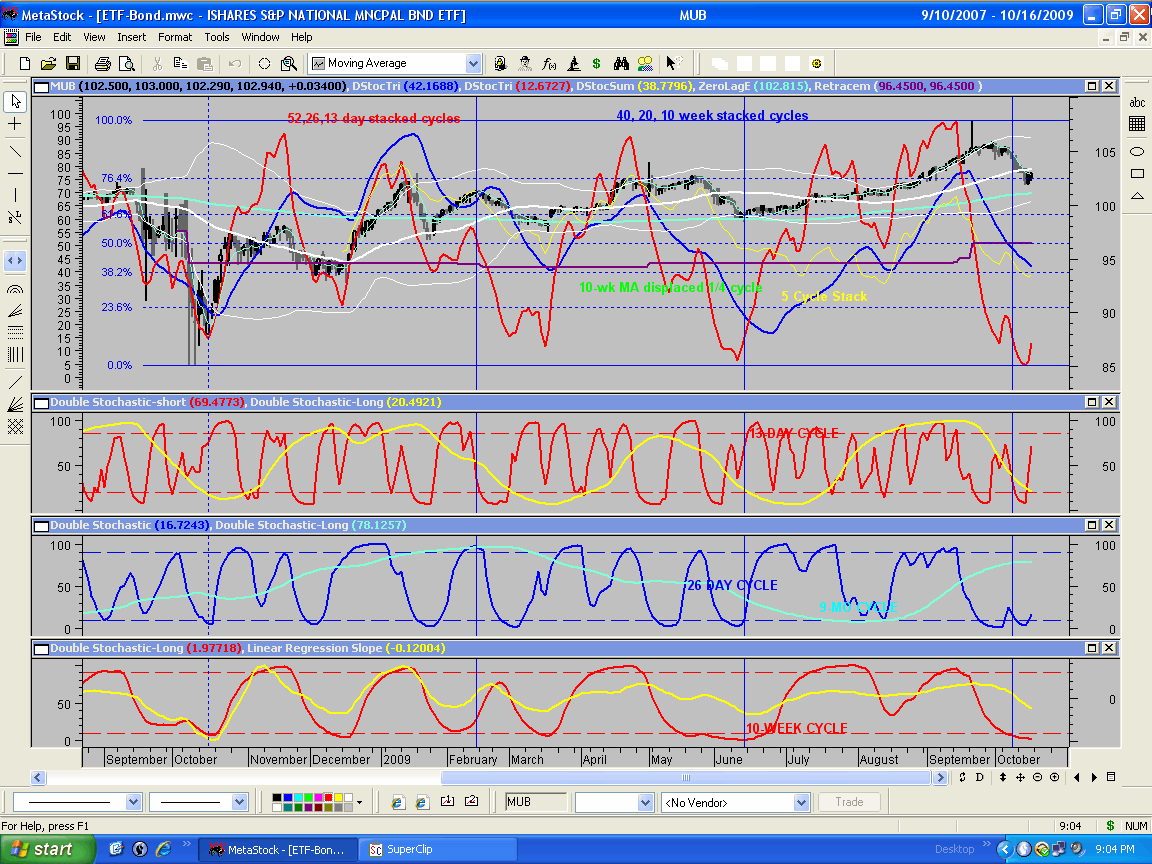
Municipal bonds (http://www.geocities.com/petegersb/MunicipalBonds.GIF ) also gained very slightly as favorable shorter cycles bested the declining 9-mo cycle. The 10 and 20-wk cycles are 5-weeks old, suggesting opposing trends this week. The overbought 13-day cycle is likely to reinforce any downturn in the 10-wk cycle.
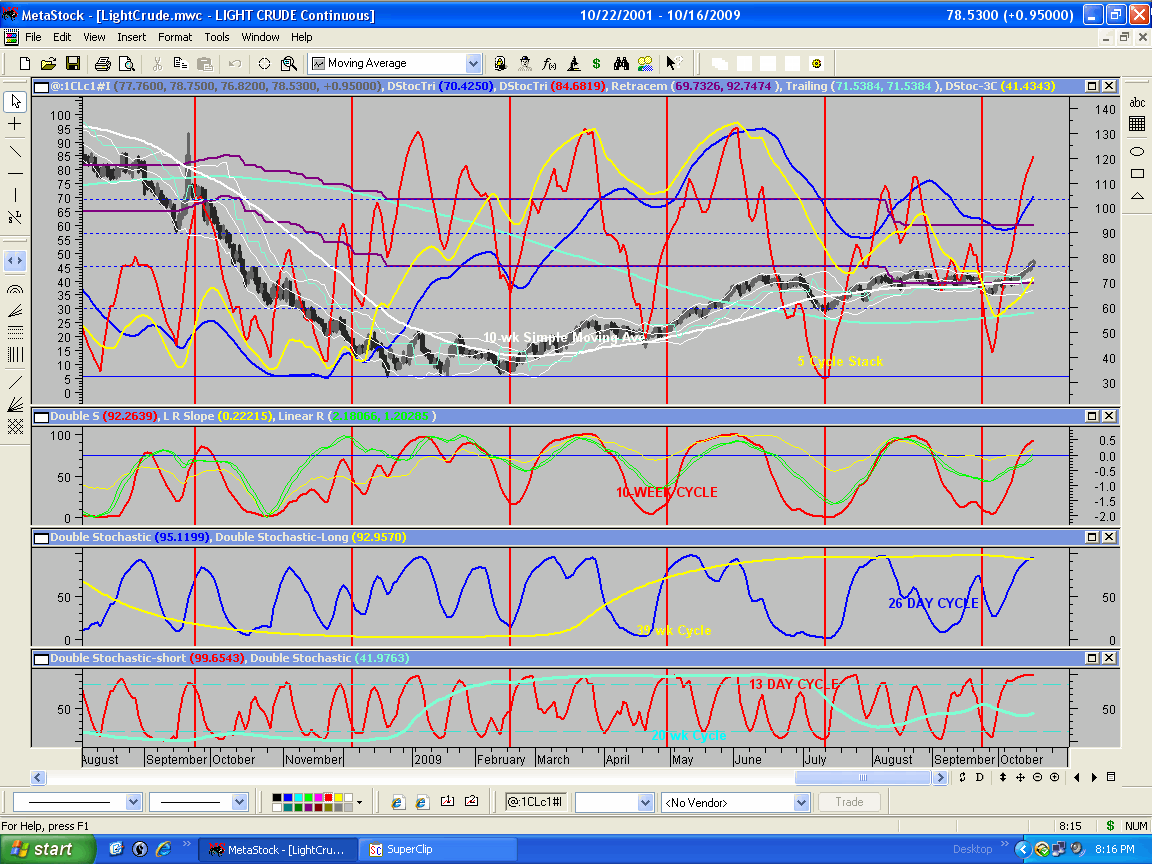
Crude oil (http://www.geocities.com/petegersb/CrudeOil.GIF ) was little changed for the week, as rising 13-day and 9-month cycles fought the declining other 3 cycles to a standstill. The 10-week cycle is now 8 weeks old, and it should find a bottom in a week or two along with the 6-day-old 13-day cycle and the 21-day-old 26-day cycle. The 20-week cycle is now 16 weeks old, so it would also be in position for a bottom at that time. Oil is already 61% above its December low, and another surge in the next couple of months, as the 20-wk cycle suggests, would not be good for our economy or the inflation statistics, but it would be indicative of a recovering world economy.
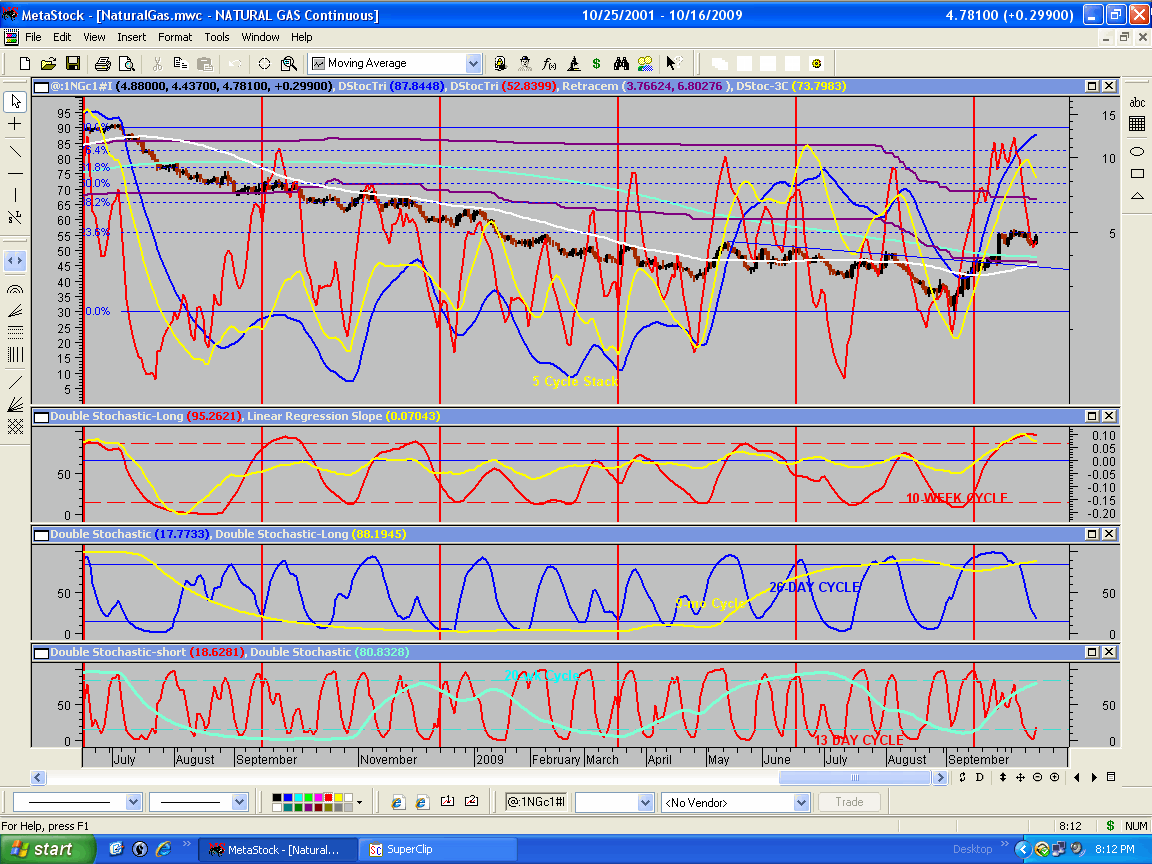
Natural gas (http://www.geocities.com/petegersb/NaturalGas.GIF ), which should be our fossil fuel of choice, again failed to rally. A lower low was followed by another failing rally attempt. Mixed cycles suggest that the overdue 9-mo rally is not yet ready for liftoff despite the upturn in the 9-mo and 20-wk cycle DStocs.
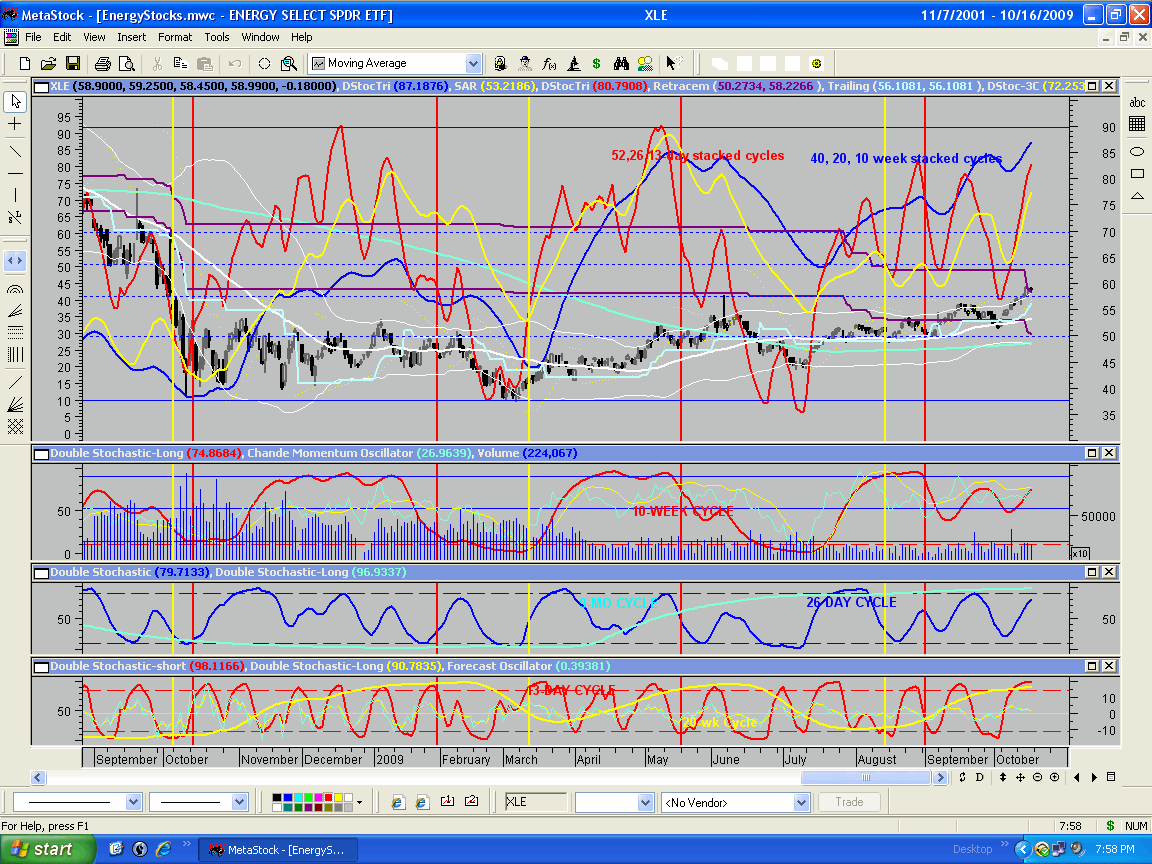
Energy stocks (http://www.geocities.com/petegersb/EnergySPDR.GIF) followed the oil pattern with little change for the week. Their 19% gain during the last 5 weeks has lagged the market averages and lagged oil by a wide margin. While the XLE closed above the 10-week moving average, another move below it as the 10-wk cycle corrects appears likely.
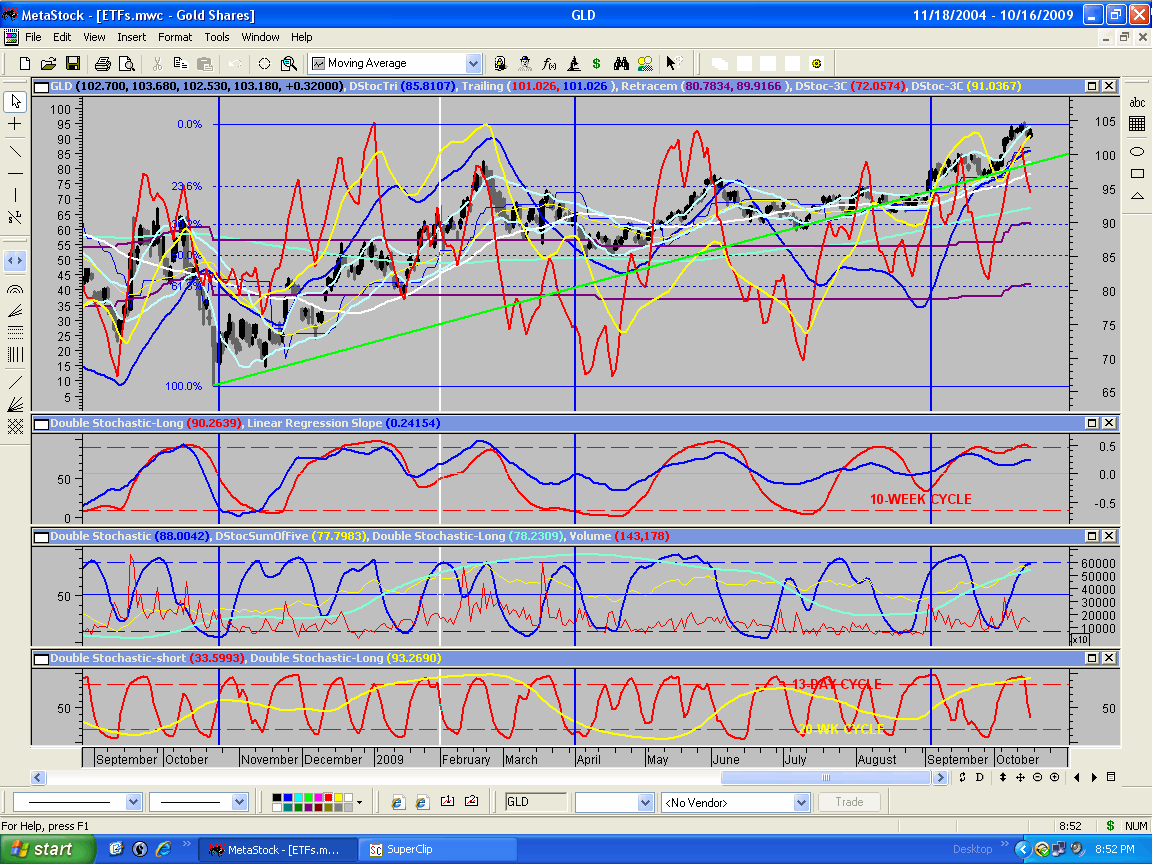
Gold (http://www.geocities.com/petegersb/GoldBullion.GIF) declined to its 9-mo moving average, where it found the
expected short-term bottom. The 26-day, 10-wk and 20-wk DStocs are all deeply
oversold and the 20-wk cycle was 21 weeks old last week. Gold appears ready to
begin its 2nd 20-wk cycle rally of the current 9-mo cycle.
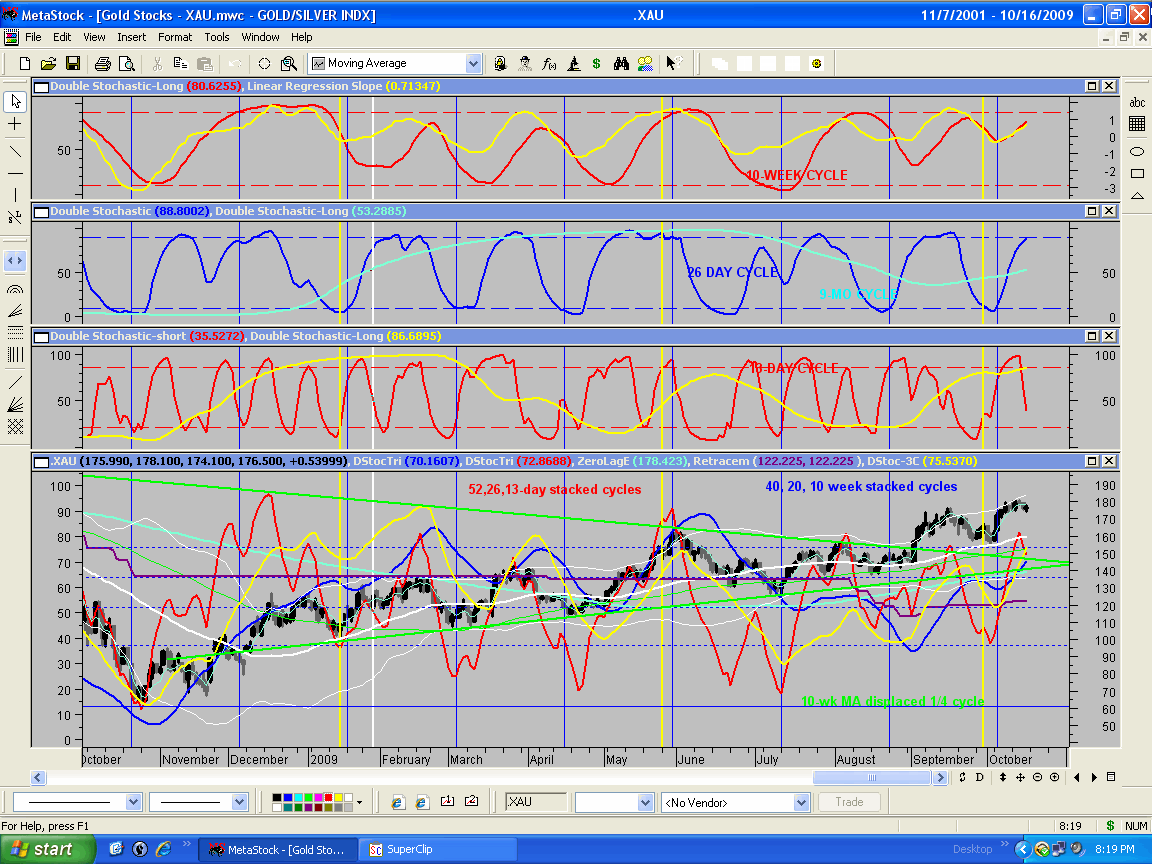
Gold Stocks (http://www.geocities.com/petegersb/GoldStocks.GIF
) penetrated slightly below the 9-mo and 10-wk moving averages, and failed to
get the short-term bounce. Only the 13-day cycle appears favorable. Gold stocks
appear more likely to move in sympathy with a 10-wk cycle correction in stocks
than with a 10/20-wk cycle rally in the metal.
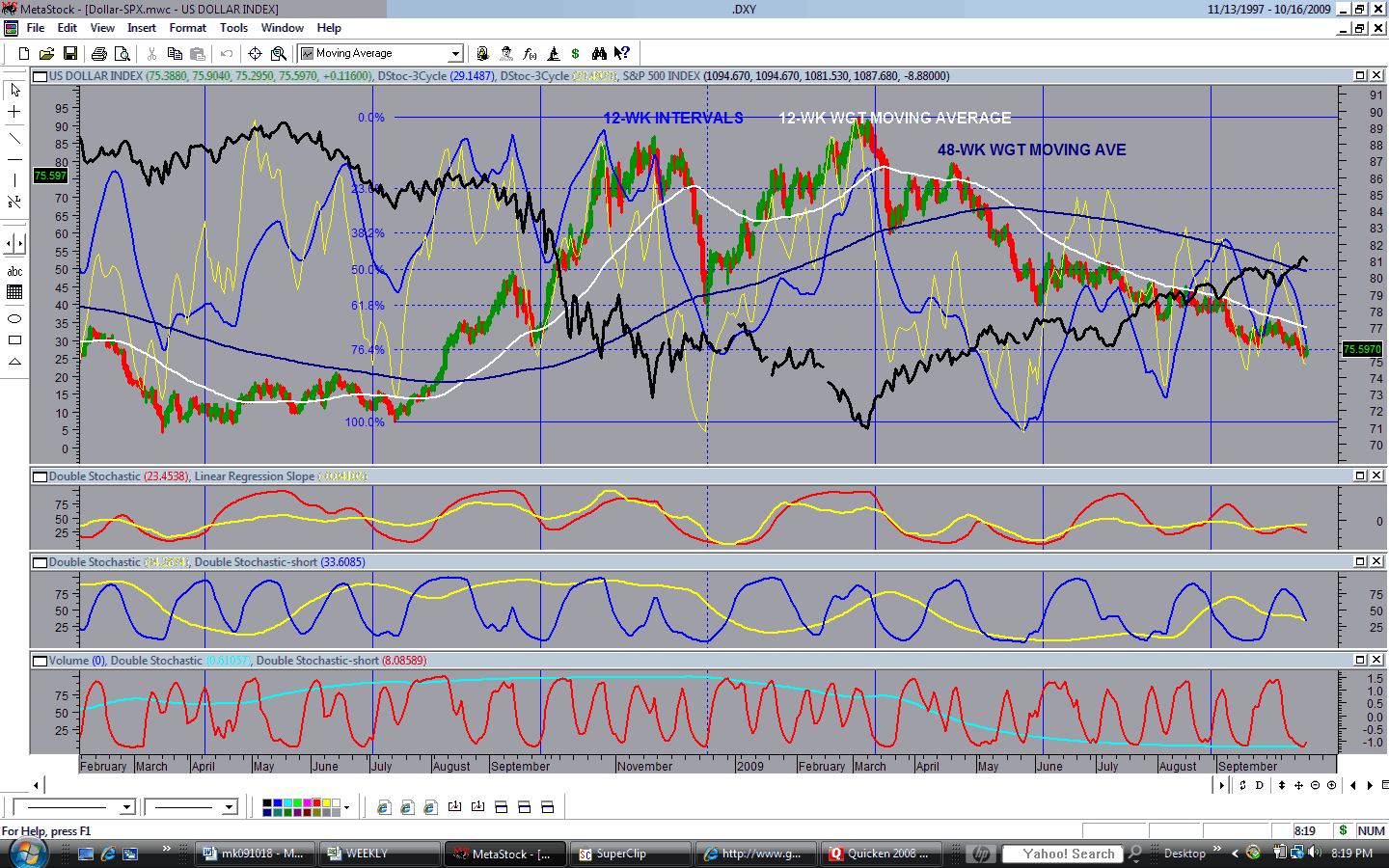
The Dollar (http://www.geocities.com/petegersb/Dollar.GIF) reversed its short-term downtrend last week right at the multi-month uptrend line. It’s threatening to move above its 10-wk moving average and to turn the intermediate composite upward. The cycle indicators look very much like they did at the beginning of the big rally since last July. A surprising increase in exports coupled with an unsurprising decline in imports probably sparked the rally, but the intermediate cycles are favorable for a continuing rally. Dollar strength has not been favorable for stock prices.