4/5/09
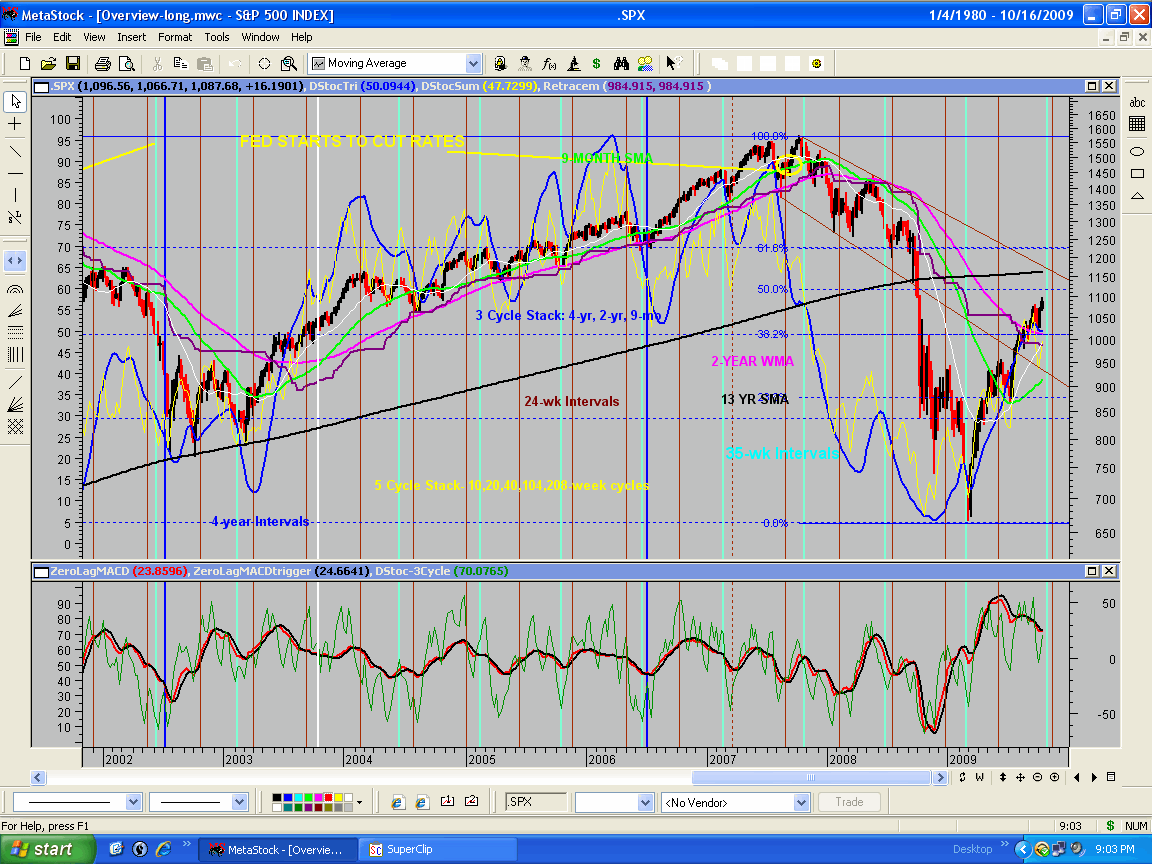
The rising 20-wk cycle was helped along last week by the Financial Accounting Standards Board’s relaxation of the mark-to-market rules and by a few economic reports that, for a change, weren’t worse than expected. It propelled stocks to their best 4-wk winning streak since 1938, Nevertheless, the rally hasn’t yet been able to break the pattern of lower intermediate highs and lows on most of the indexes (http://www.geocities.com/petegersb/Overview-long.GIF ).
The FASB action changes nothing fundamentally, but it will change the perception of bank solvency as they are given greater leeway to assess the value of their assets, which they have maintained are worth substantially more than anyone has been willing to pay for them. It remains to be seen if their judgment on that point is as bad as it was when they made or bought the toxic loans. When rules are relaxed, or not enforced, the opportunity for abuse grows. And, as has been so amply demonstrated in recent years while the Bush administration failed to enforce even the regulations that it didn’t eliminate in its quest for unfettered free markets, our corporate chieftains tend to take advantage of every opportunity for abuse.
It also remains to be seen, how much the new accounting rules will undermine the Geithner plan to get the toxic assets off of the bank’s books. Certainly the banks will now be less eager to sell, and the public/private partnership will now have to pay higher prices to participate. It’s obviously good for the banks, at least in the short-term, and it may be good for the economy if it has the desired effect of promoting easier bank lending – even if it is on the basis of judgmental values rather than market-based values. In any case if easier lending results from the Geithner plan, the FASB rule changes, or a combination of the two, they will have accomplished their purpose of helping to deter a depression.
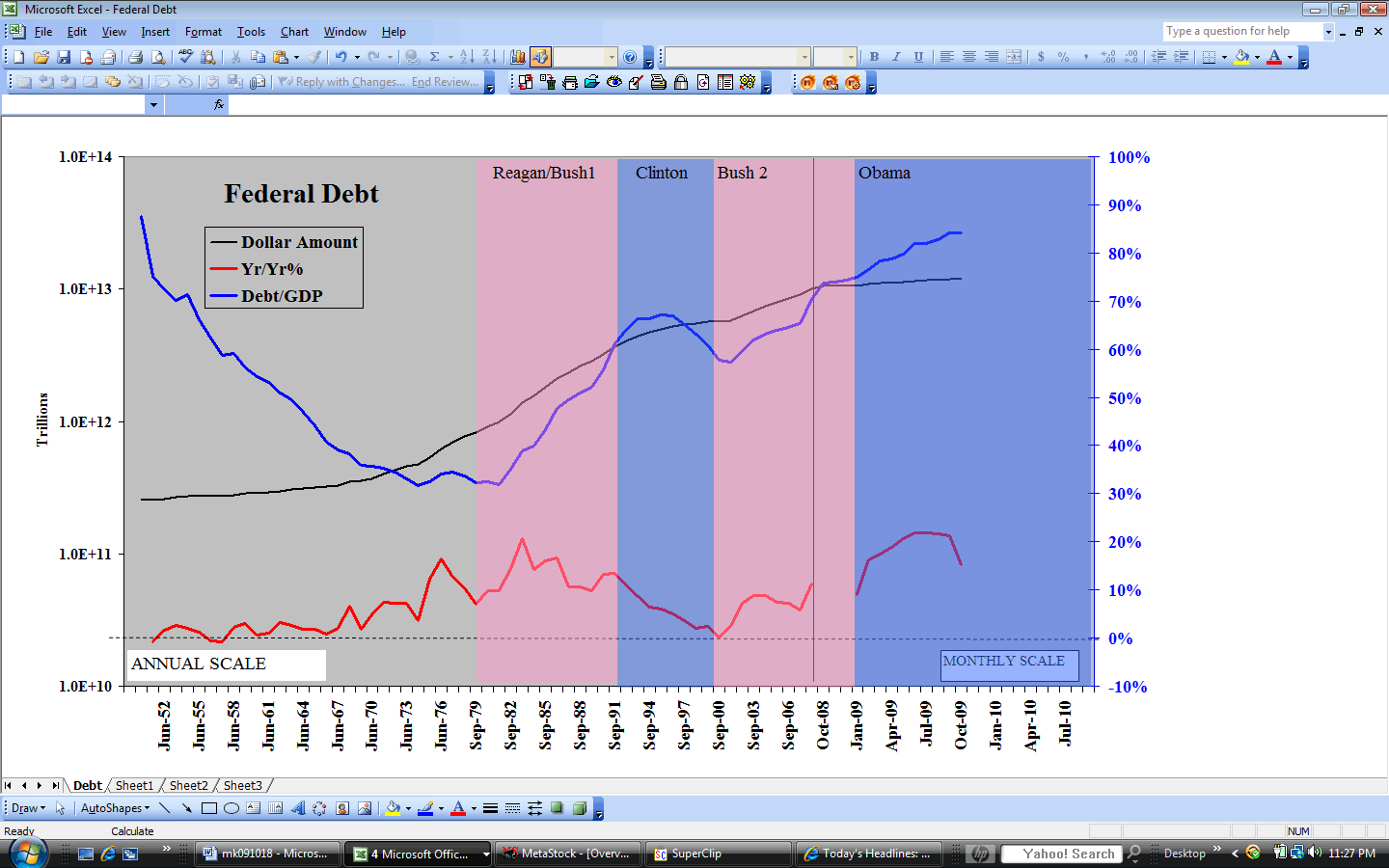
The massive fiscal and monetary stimulus that appears to be necessary in order to avert depression will likely produce inflation and it certainly will continue to inflate the Federal Debt (http://www.geocities.com/petegersb/FederalDebt.GIF ). The same crowd that reversed the favorable trend in Federal debt that prevailed during the Clinton years now suddenly has joined me in being concerned about the magnitude of the debt being passed on to our children. They voted unanimously against the stimulus plan and the Obama budget. But how serious a problem is it the debt growth problem? After all, we ran the debt/GDP ratio during WWII to twice its current 74% level and we subsequently prospered. We also survived the doubling of Federal Debt as a percentage GDP during the Reagan/Bush-1 years quite well. But the situation is much different now. The public saved huge amounts during WWII to domestically finance the explosion in debt. Now, credit cards, which were unknown then, are maxed out and our trading partners financed the bulk of the Bush-2 debt explosion. Furthermore, Reagan’s fiscal irresponsibility started when debt/GDP was less than half of the 74% level that now prevails after Bush ran it up from 57% at the beginning of his reign. Also unfunded pension and Medicare liabilities were then a small fraction of the current level. So our children and grandchildren are, at the beginning of the Obama era, in a much worse place than we or our parents were. And most of the stimulus will aggravate our debt problems before economic recovery and saner tax and regulation policies have a chance to reverse them. The stimulus will likely stimulate inflation as well as the real economic growth, and that will make the accumulated debt somewhat easier to service if interest rates don’t get too high. Let’s hope the new administration is up to the economic challenges that were so badly aggravated by the perverse policies of its predecessor.
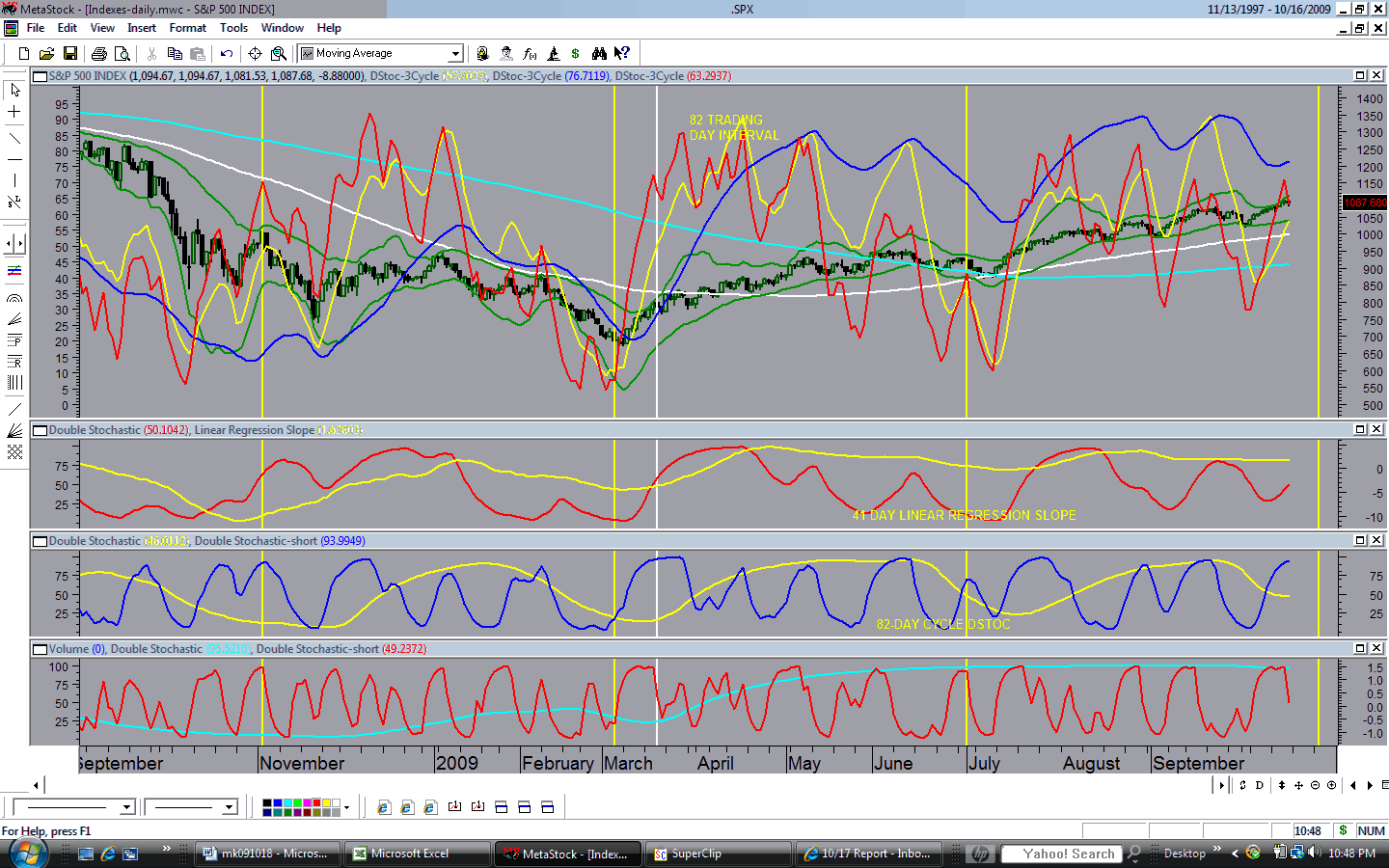
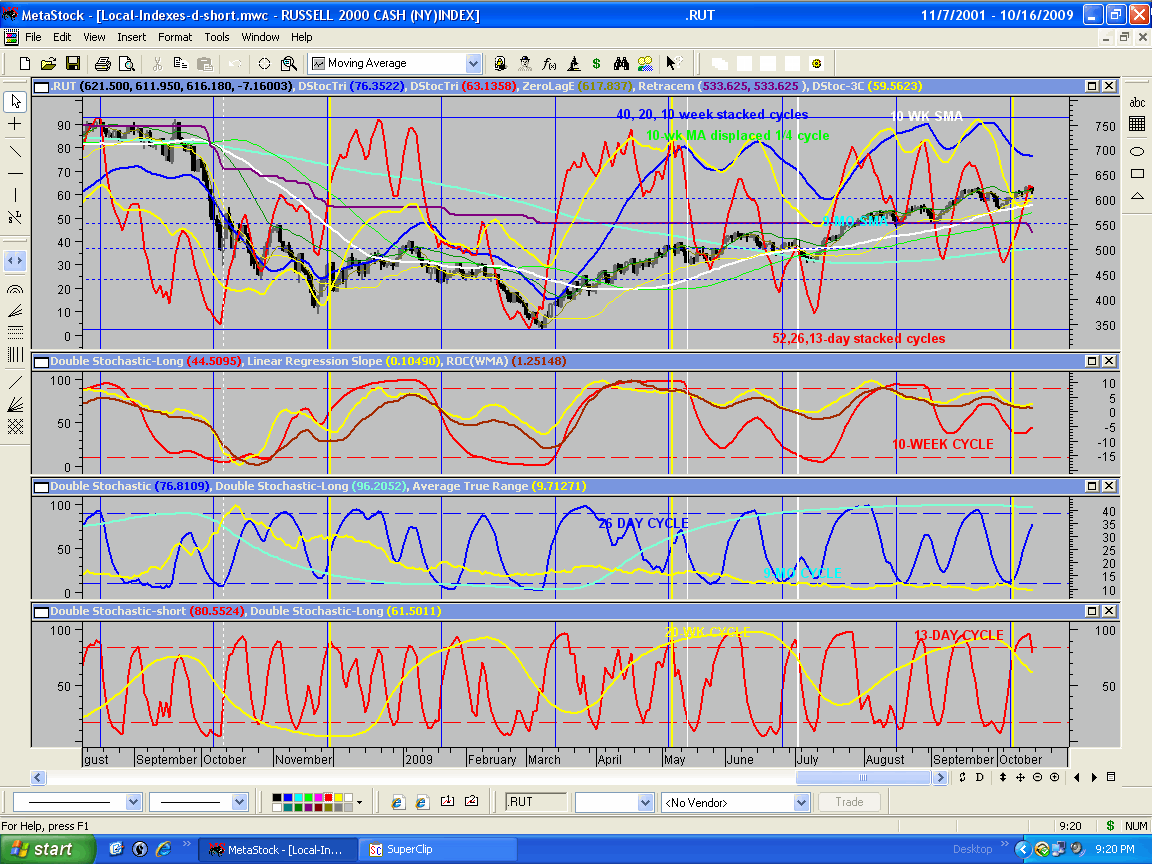
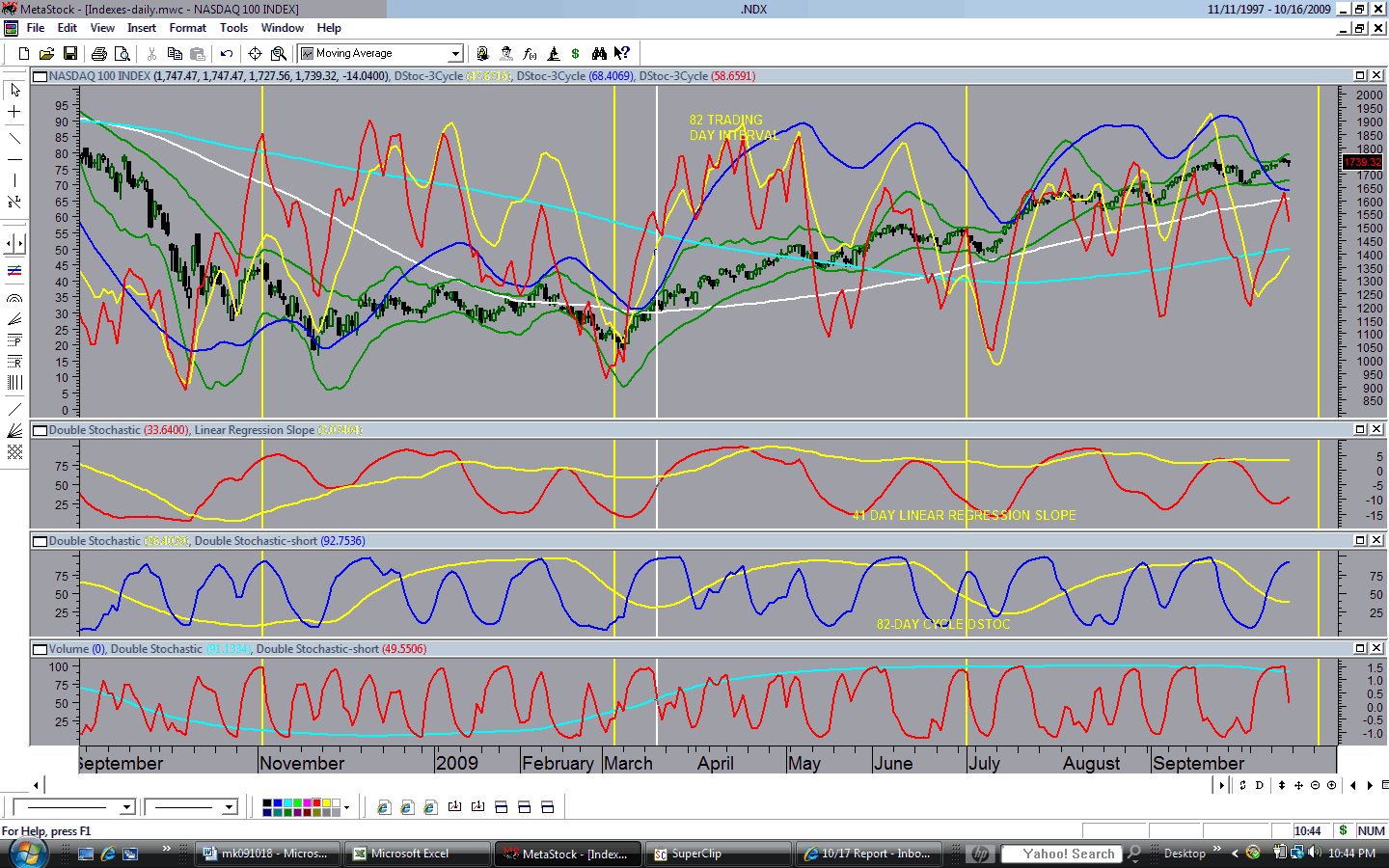
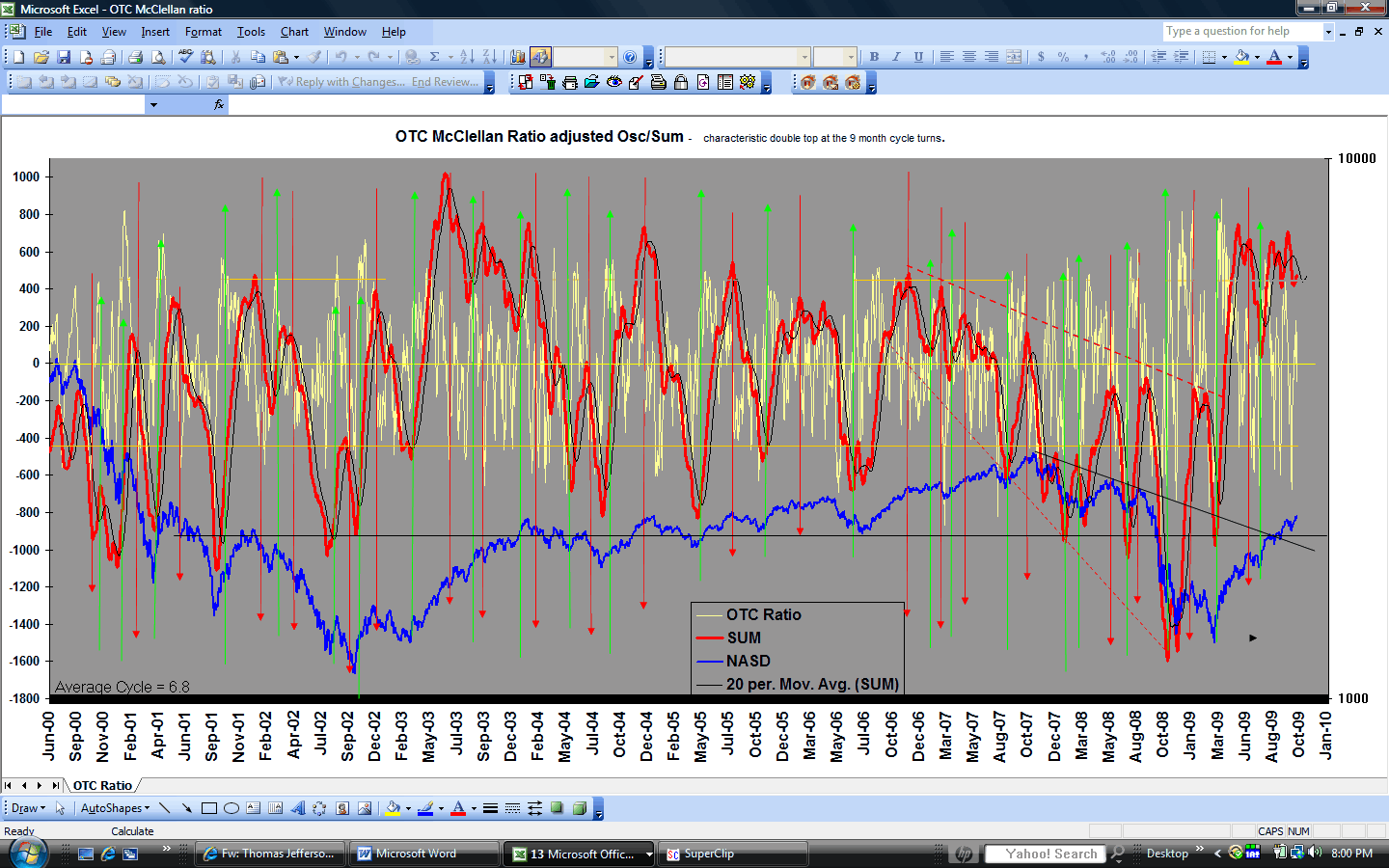
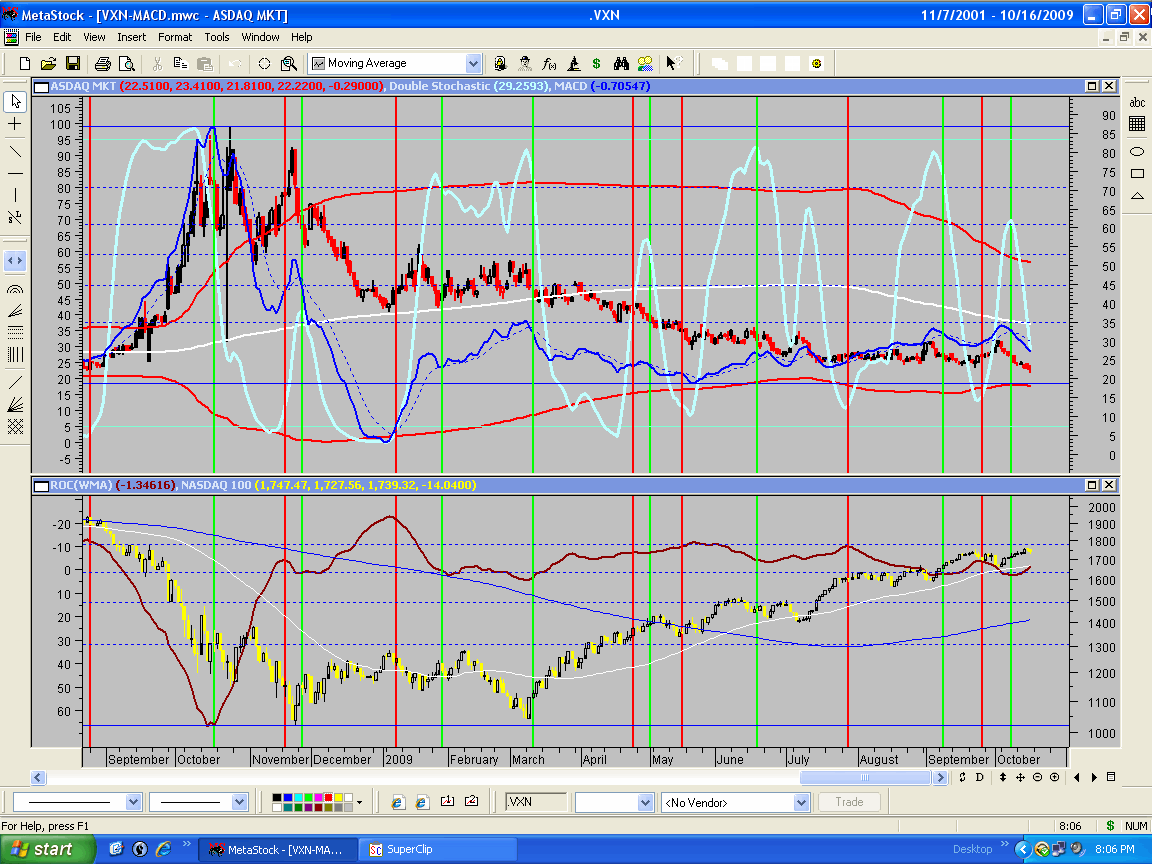
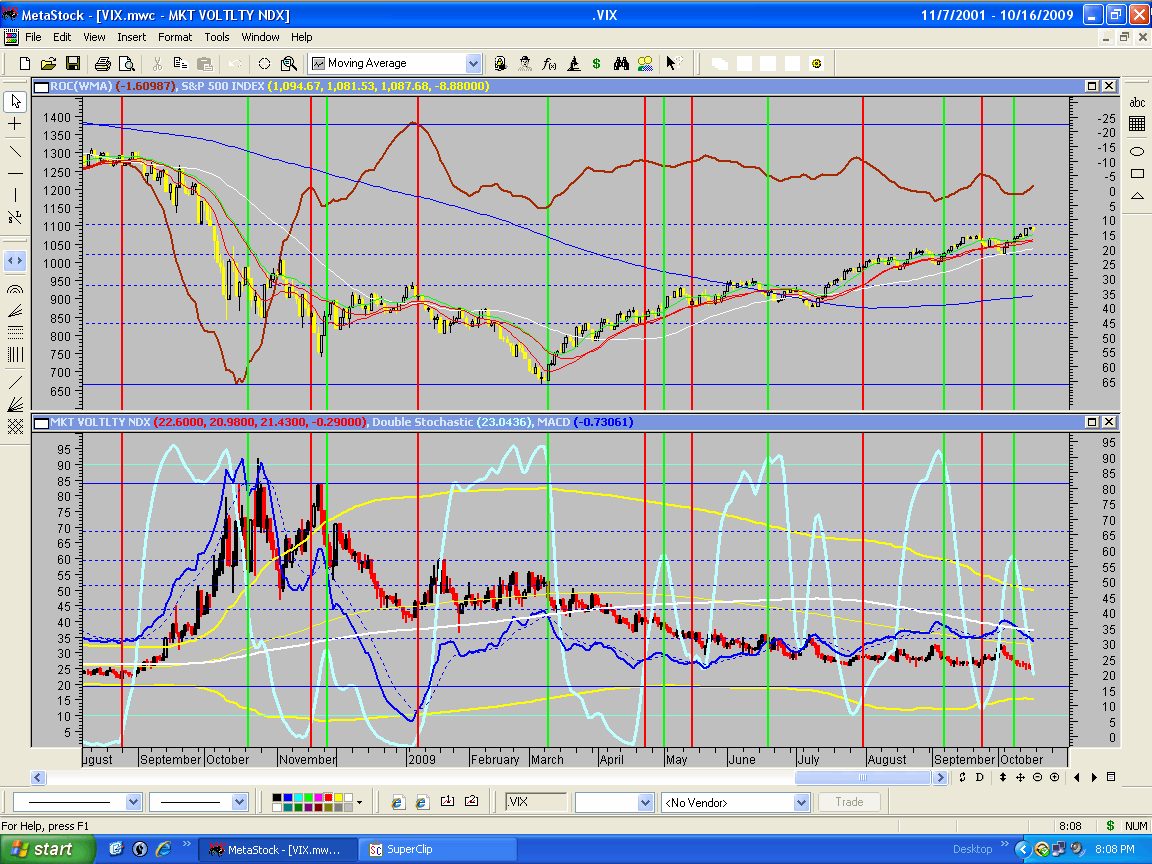
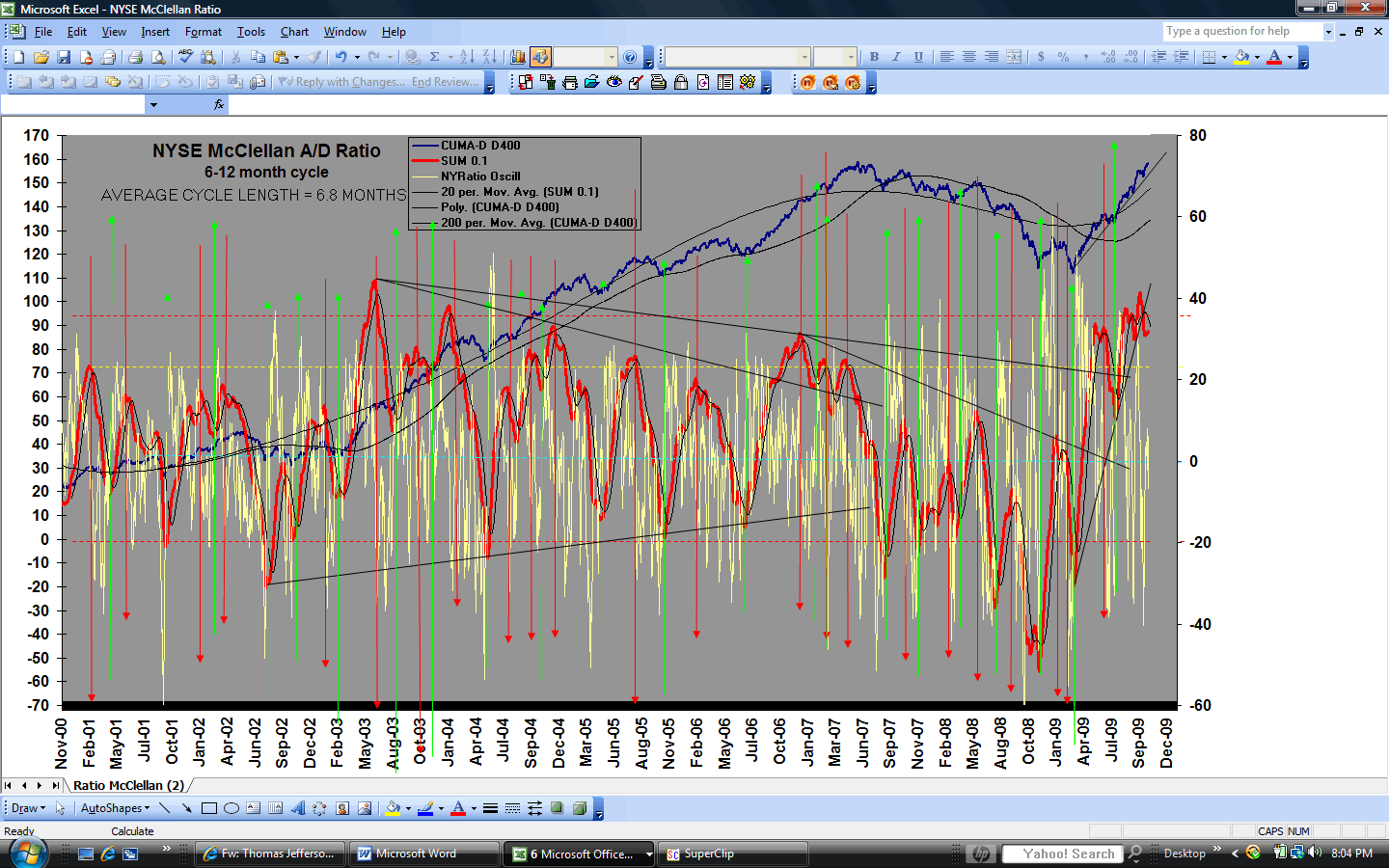
The rally is now 20 trading days old. For the most part, the pattern of lower intermediate-term highs and lows has been preserved (http://www.geocities.com/petegersb/SP500.GIF, http://www.geocities.com/petegersb/Russell2000.GIF ), but that pattern no longer prevails for the 26-day and shorter cycles. Monday’s selloff arrived on day 15 of the 13-day cycle after an extreme right translation of a higher peak. The 26-day cycle is now 19 days old, so right translation of its top is a foregone conclusion. The 10-week cycle is only 4 weeks old, so it also has a shot at right translation if the 4-day-old 13-day cycle can sustain the rally for another week. Furthermore The Nasdaq 100 (http://www.geocities.com/petegersb/NDX.GIF), after holding the November lows in March, is now assured of higher 10 and 20-wk cycle highs – a prerequisite for a bull market, but not by itself a sufficient condition (especially with a middle aged 9-month cycle, as appears to be the case currently). The Nasdaq’s McClellan Summation Index (http://www.geocities.com/petegersb/A-Dsummation-OTC.GIF ) has also been able break above its downtrend channel. None of the other indexes have yet been able to accomplish those feats despite the strongest 4 week rally in 70 years, but the still-young 20-wk cycle should give the other indexes a decent shot at matching the Nasdaq’s breakouts if the 10-wk cycle can extend its rally. However, the VIX and VXN (http://www.geocities.com/petegersb/VXN.GIF , http://www.geocities.com/petegersb/VIX.GIF ) issued a premature 10-wk cycle sell signal on Monday, and they remain in position for a valid signal very soon. They continue to by stymied by the 10-wk moving average despite the strong rally – an indication of low, not higher prices, ahead. The extent of coming 10-wk cycle correction should determine the outlook for the market during the next few months.
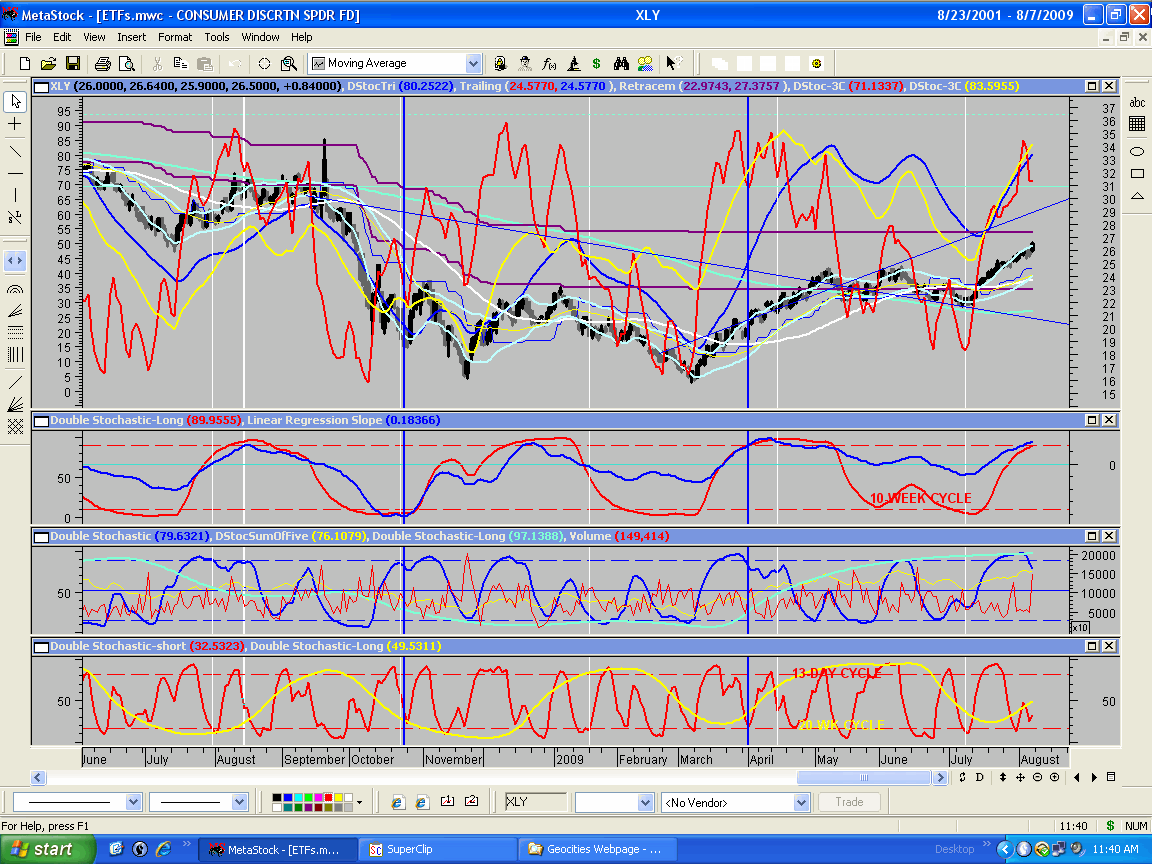
Another promising development is the leadership by the traditionally early cyclicals during this rally. Financials (http://www.geocities.com/petegersb/Financials.GIF ) led, outperforming the SPX by 35% during that period. During the last 12 days, Consumer Discretionary (http://www.geocities.com/petegersb/ConsumerDiscretionary.GIF ) has been just as strong. Of course, these are the sectors that performed worst during the prior months and are most heavily targeted by the stimulus. Their outperformance perhaps is merely the result of their volatility, but their recent performance may also be indicative of expected stimulus success. Economically sensitive Materials (http://www.geocities.com/petegersb/Materials.GIF ), Industrials (http://www.geocities.com/petegersb/Industrials.GIF ), and Technology (http://www.geocities.com/petegersb/Technology.GIF ) are also outperforming. The traditionally defensive sectors of Health Care, Consumer Staples, and Utilities are lagging. While defensive sectors can be expected to lag during any strong rally, it’s also consistent with a pending reversal of the economic decline. If consumer confidence also starts to improve as signs of stimulus success emerge, the economy will be on its way to recovery.
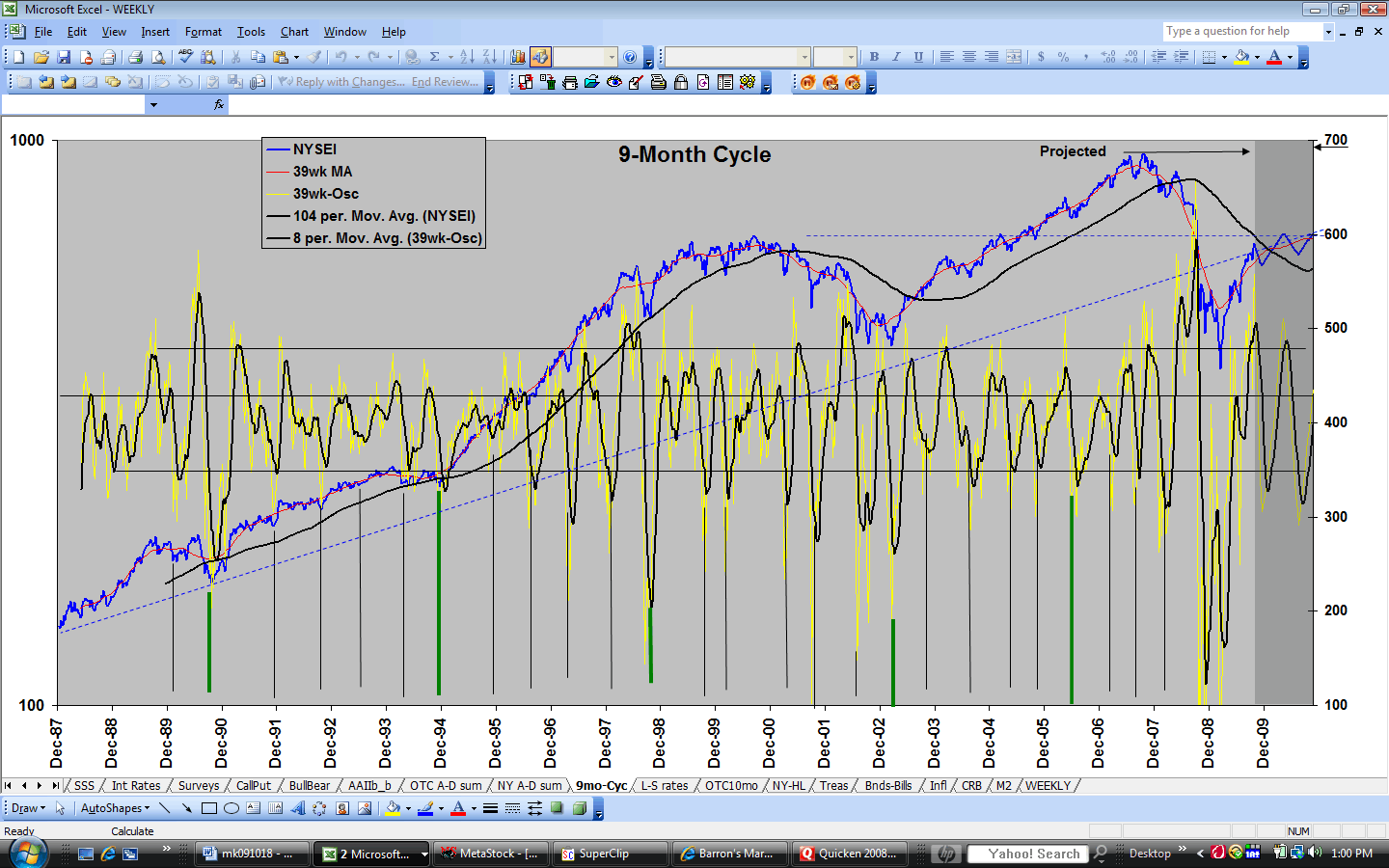
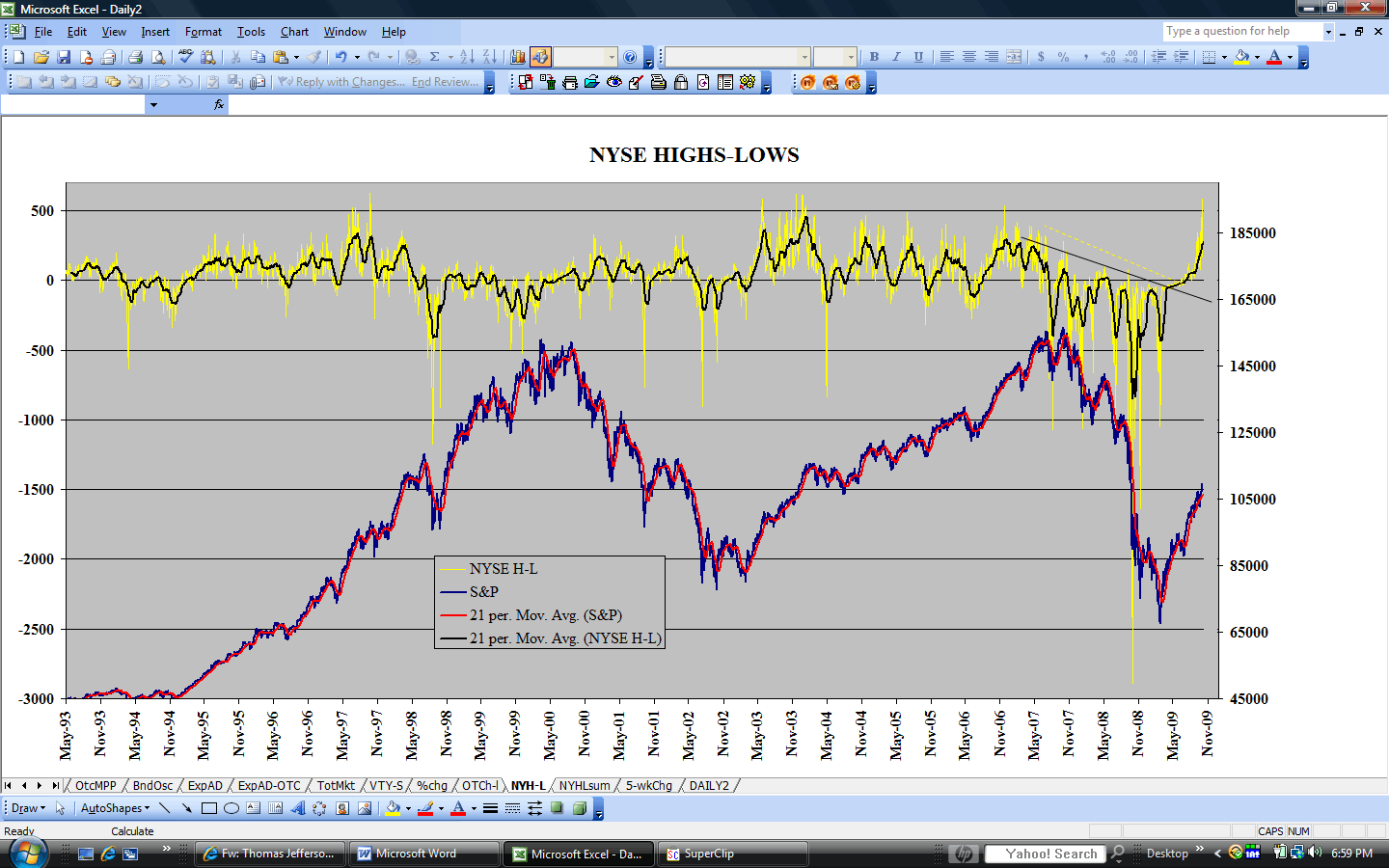
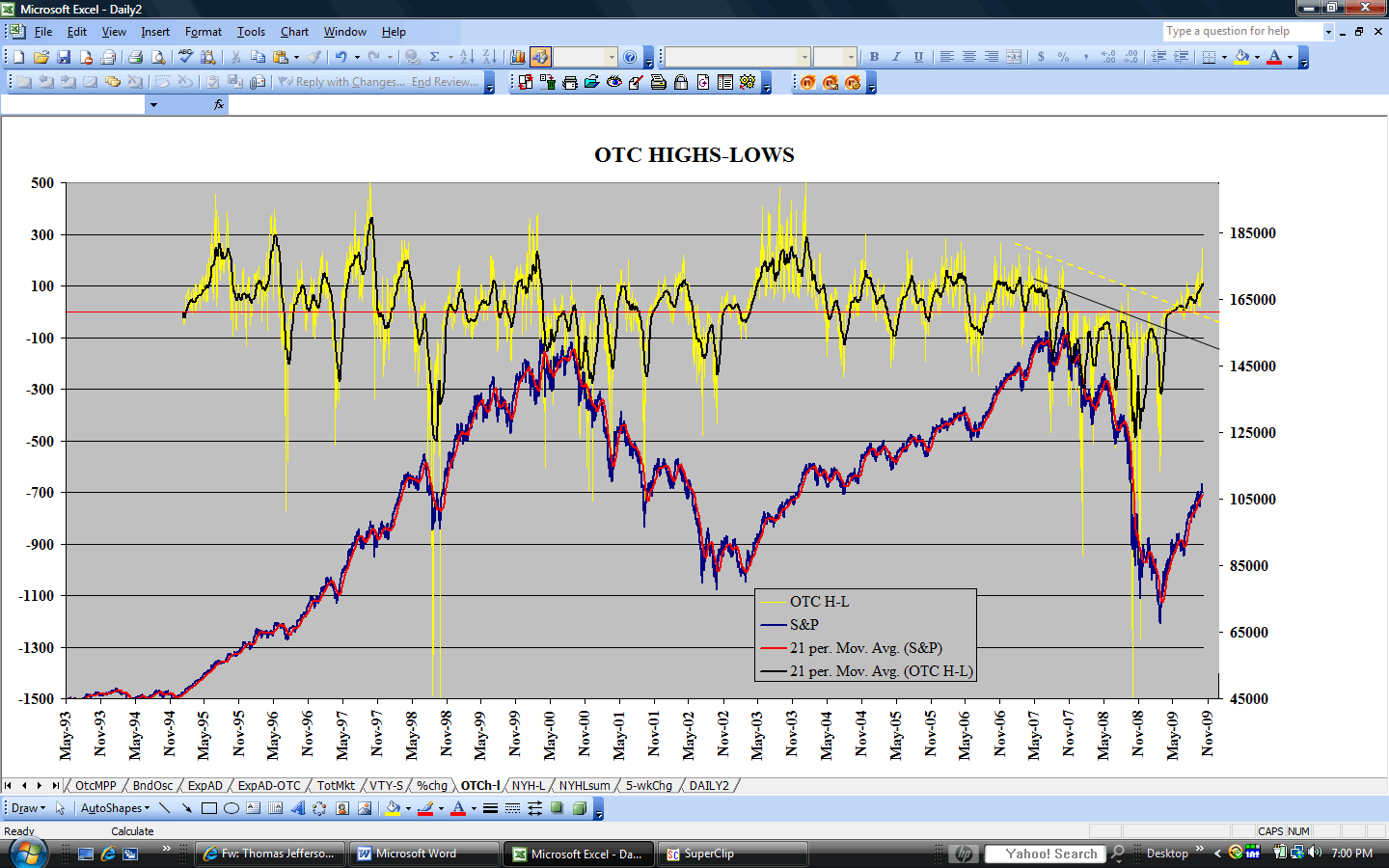
The 9-month cycle is a crucial part of the puzzle, and unfortunately it has not been well defined during the last few cycles (http://www.geocities.com/petegersb/Overview-long.GIF , http://www.geocities.com/petegersb/9moNYA.GIF , http://www.geocities.com/petegersb/HighLowNYSE.GIF , http://www.geocities.com/petegersb/HighLowOTC.GIF , http://www.geocities.com/petegersb/A-Dsummation-NYSE.GIF , http://www.geocities.com/petegersb/A-Dsummation-OTC.GIF ). The indicators suggest June 06, March 07 (9mo), March 08 (12 mo) and Nov 08 (8mo) bottoms for this cycle, but there were comparably well defined bottoms at the 20-wk cycle lows in August 07, July 08 (11mo) and March 09 (8mo). If the latter set were to define the 9-mo bottoms, the outlook for the next few months is considerably brighter than if the former set constitutes the bottoms. We’ll have to wait for the market to tell us which is correct.
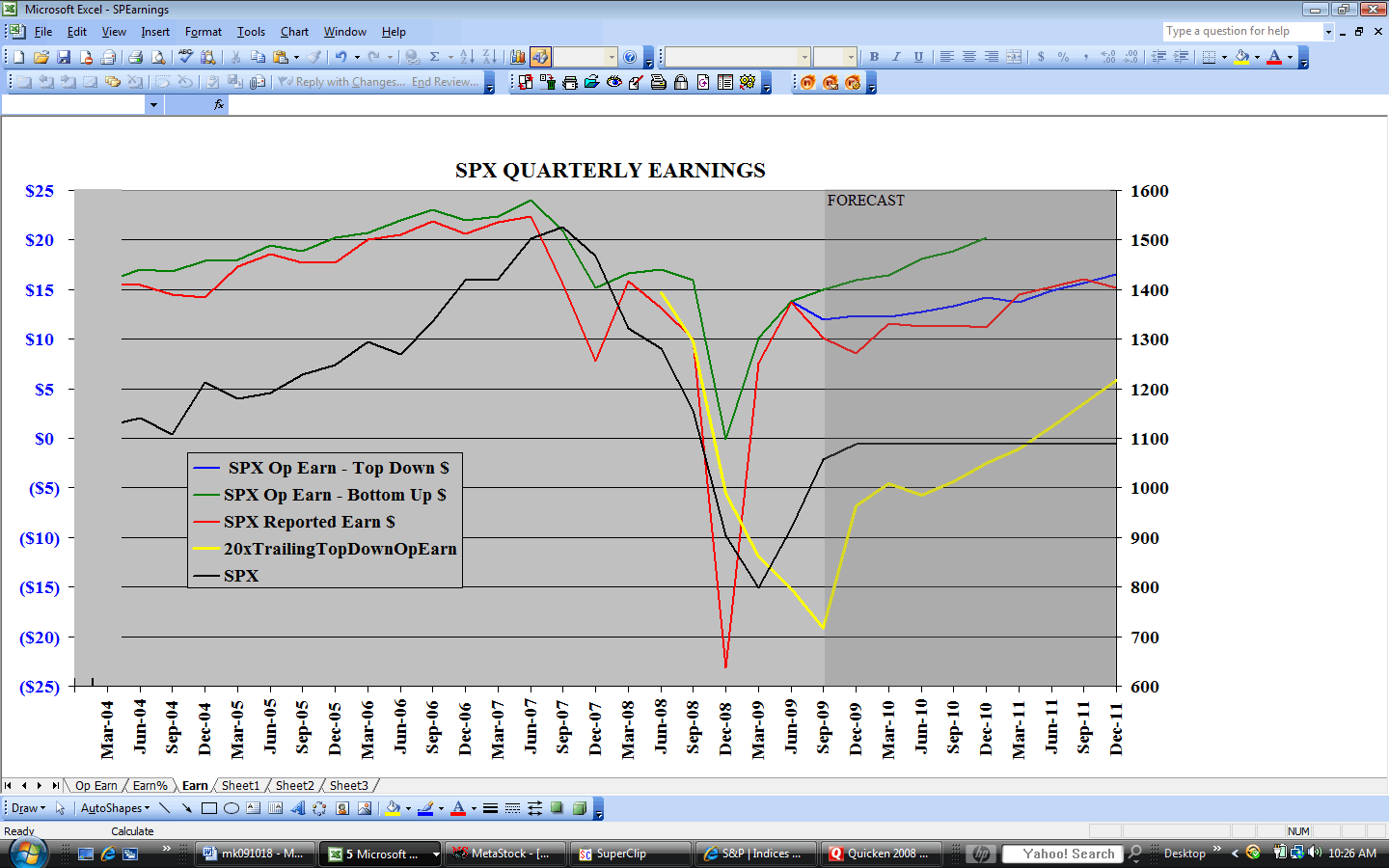
The coming earnings reporting season may resolve the confusion. If investors can look beyond likely poor 1st quarter earnings (http://www.geocities.com/petegersb/EarnY-Y.GIF ) and 2nd quarter guidance to hold above the March low, we’ll know that I misjudged the 9-month cycle. The 20-week cycle is favorable for April, but the 10-wk cycle is now middle-aged and overbought. If I am right that the last 9-month cycle bottomed in November rather than in March, the rally shouldn’t progress much farther. If I am wrong and March 6 was the bottom of that cycle, the rally is likely to continue with only minor corrections during the next few months. We won’t know the answer this week, but we should find out this month.
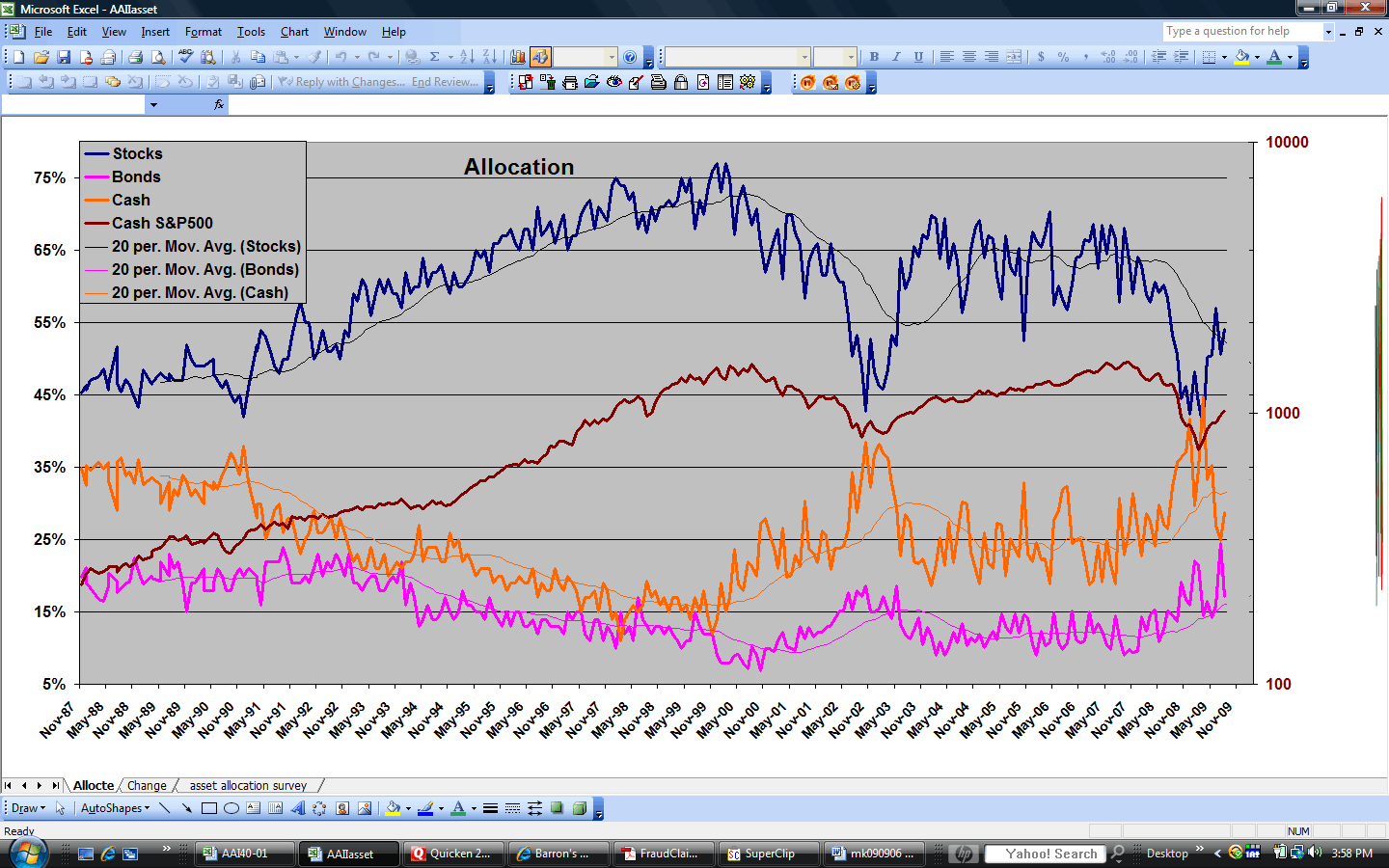
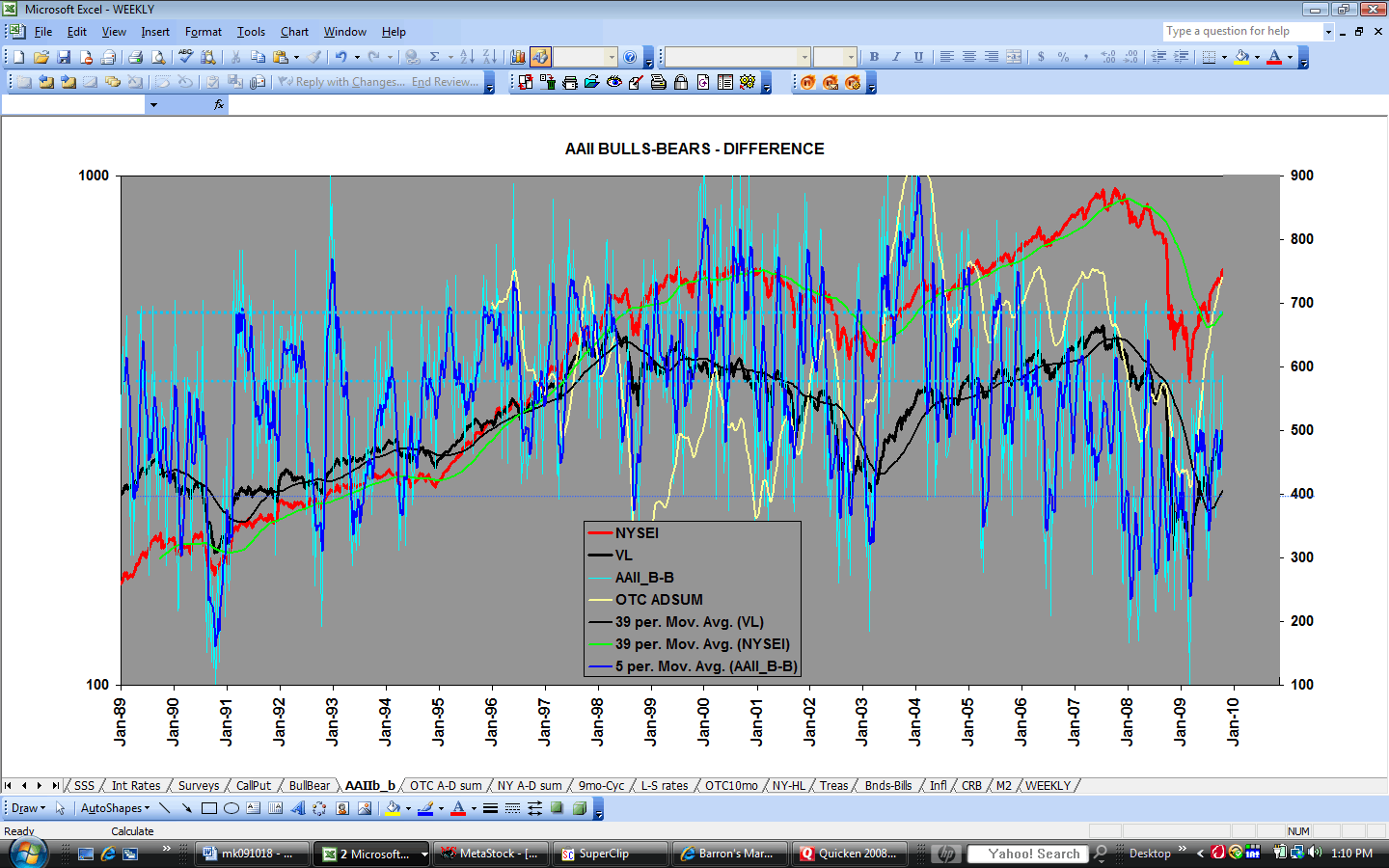
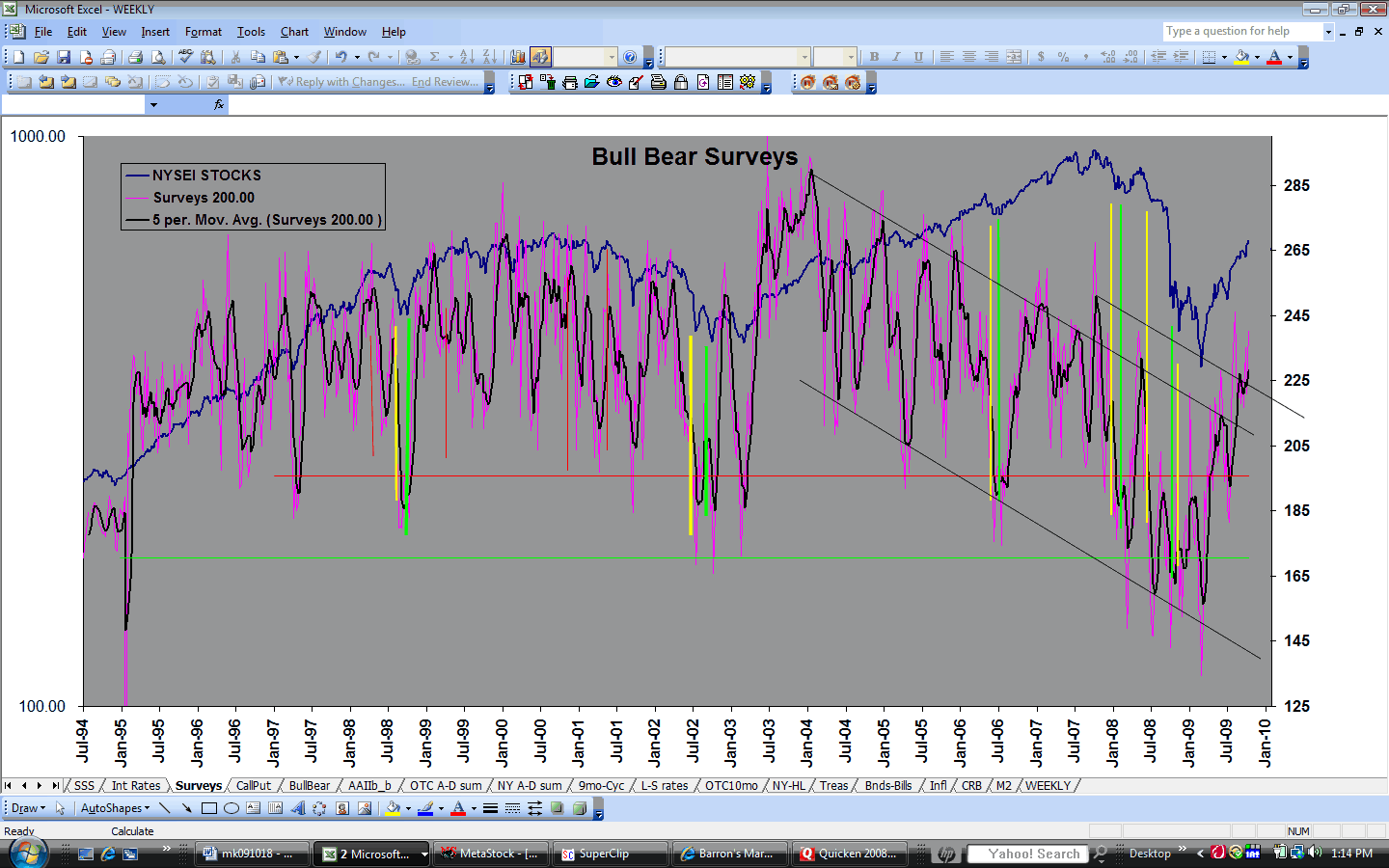
Sentiment: AAII member reported their highest allocation to cash and lowest allocation to equities in over 20 years (http://www.geocities.com/petegersb/AAIIassets.GIF ). It appears that they were aggressively selling into the rally during March. On the other hand, about twice as many are now bullish for the next six months and half as many are bearish as a month ago (http://www.geocities.com/petegersb/AAIIsentiment.GIF ). But if they aren’t matching opinion with action, it would seem the opinions are not strongly held. They want to believe, but remain skeptical. That’s favorable for stocks going forward. Advisors also remain skeptical but are also gradually shifting toward a bullish stance (http://www.geocities.com/petegersb/InvestorsIntelligence.GIF ). Also favorable.
Treasury bonds (http://www.geocities.com/petegersb/Treasury-20yr.GIF ) made a short-term peak on Wednesday when the rally stalled at the same levels as the February peaks. The correction appears to be of the 10-wk cycle variety that likely will threaten and perhaps break below the 9-mo moving average. Avoid.
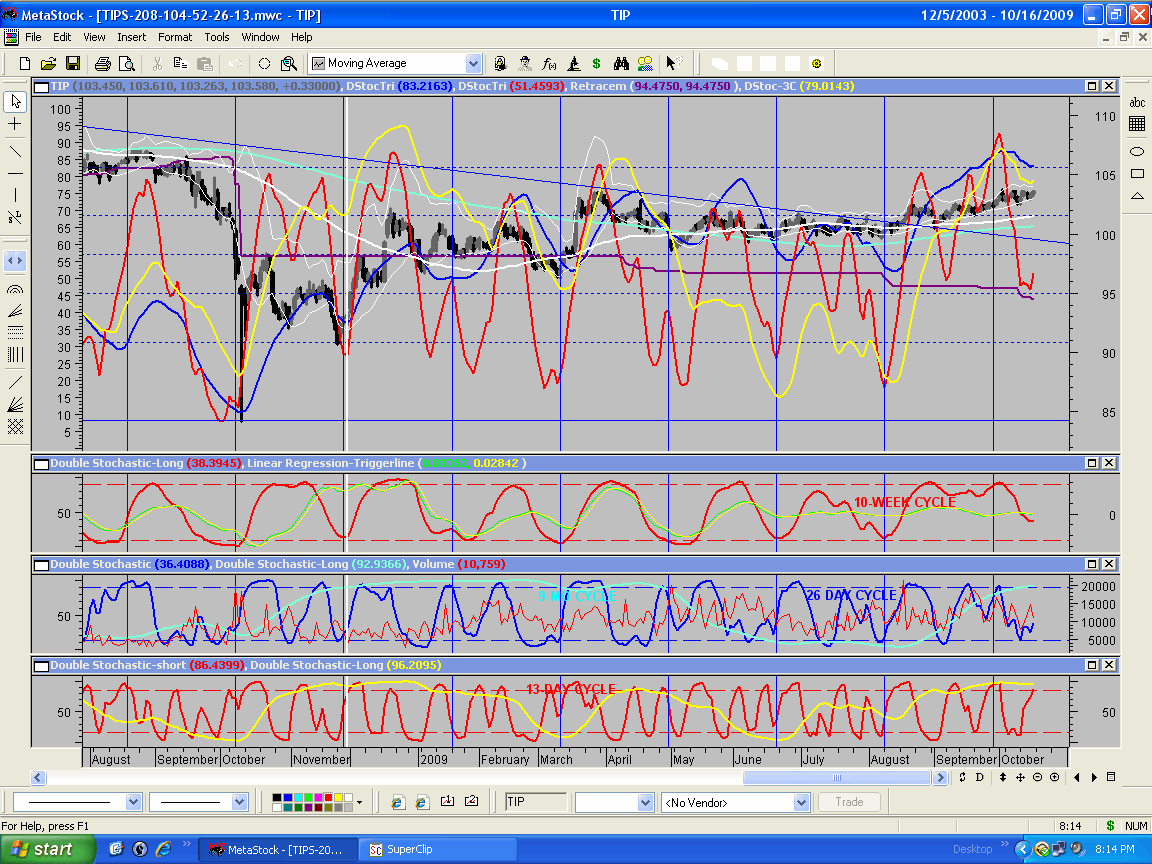
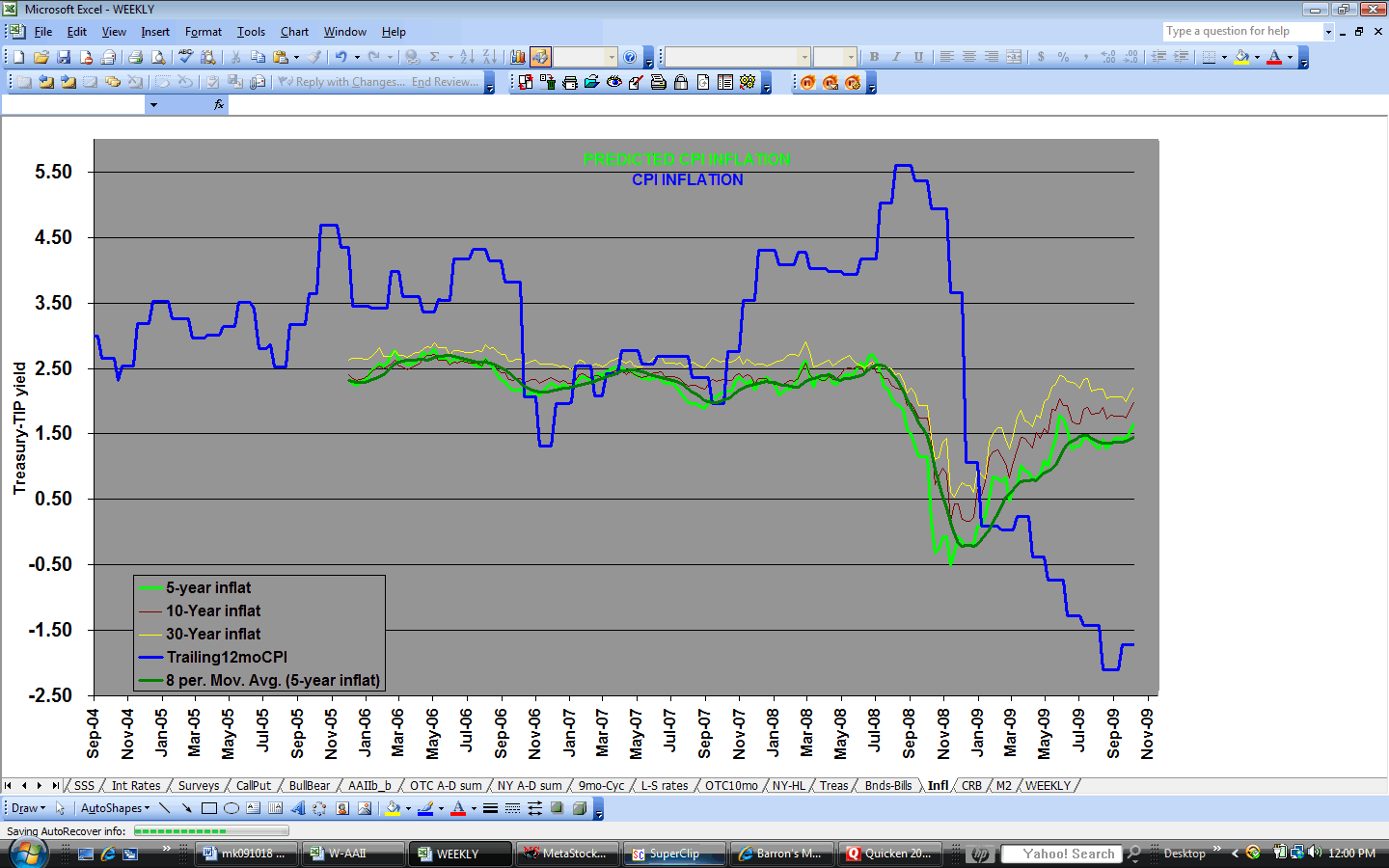
Inflation Protected Treasuries (http://www.geocities.com/petegersb/TIPs.GIF) also established a short-term peak last week, and are threatening to break below the 9-mo moving average. They may be able to hold the 10-wk moving average on this short-term correction, but if not, the 9-mo cycle rally that began last October may be at an end. For the first time in several weeks, TIPs significantly under-performed conventional treasuries. It seems that bond investors still don’t expect much higher CPI inflation (http://www.geocities.com/petegersb/CPI.GIF ). That’s either a vote against stimulus success or an expectation that the Fed will get it right for a change and withdraw the monetary stimulus at exactly the right time and in the right amount to prevent high inflation.
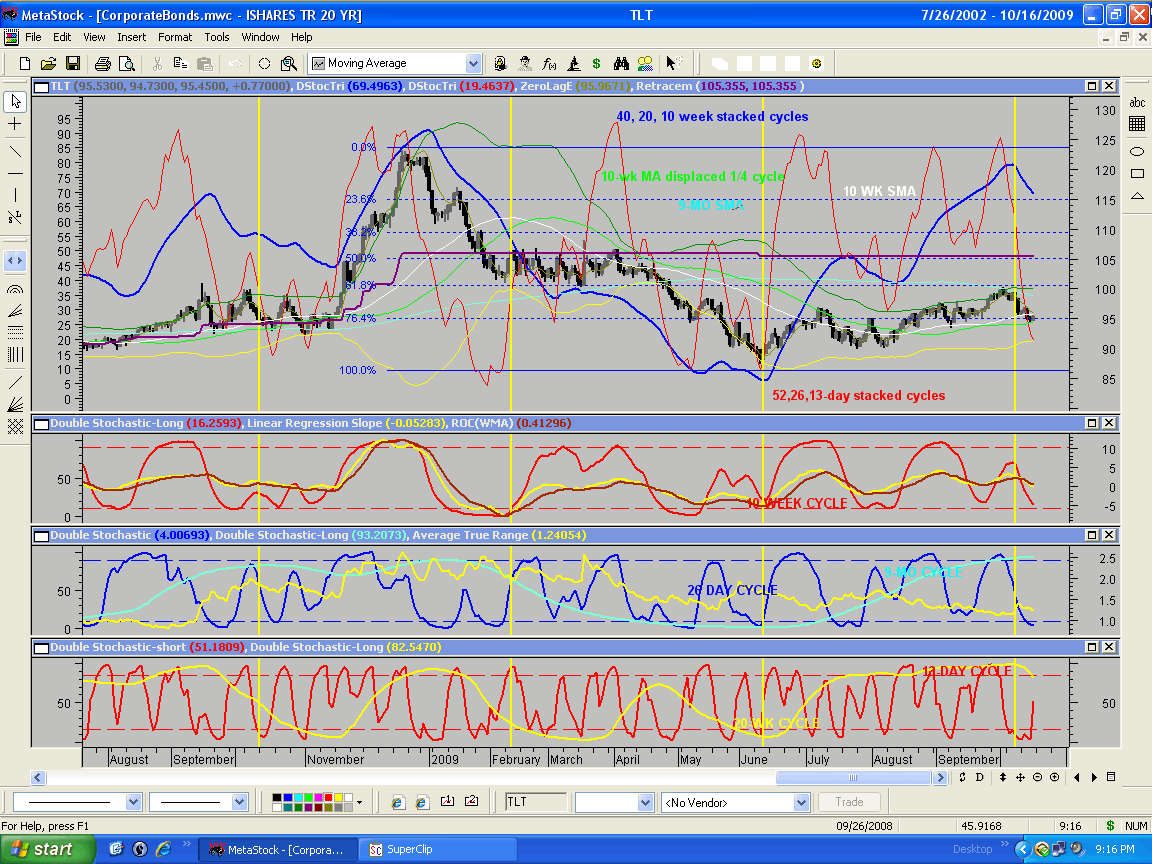
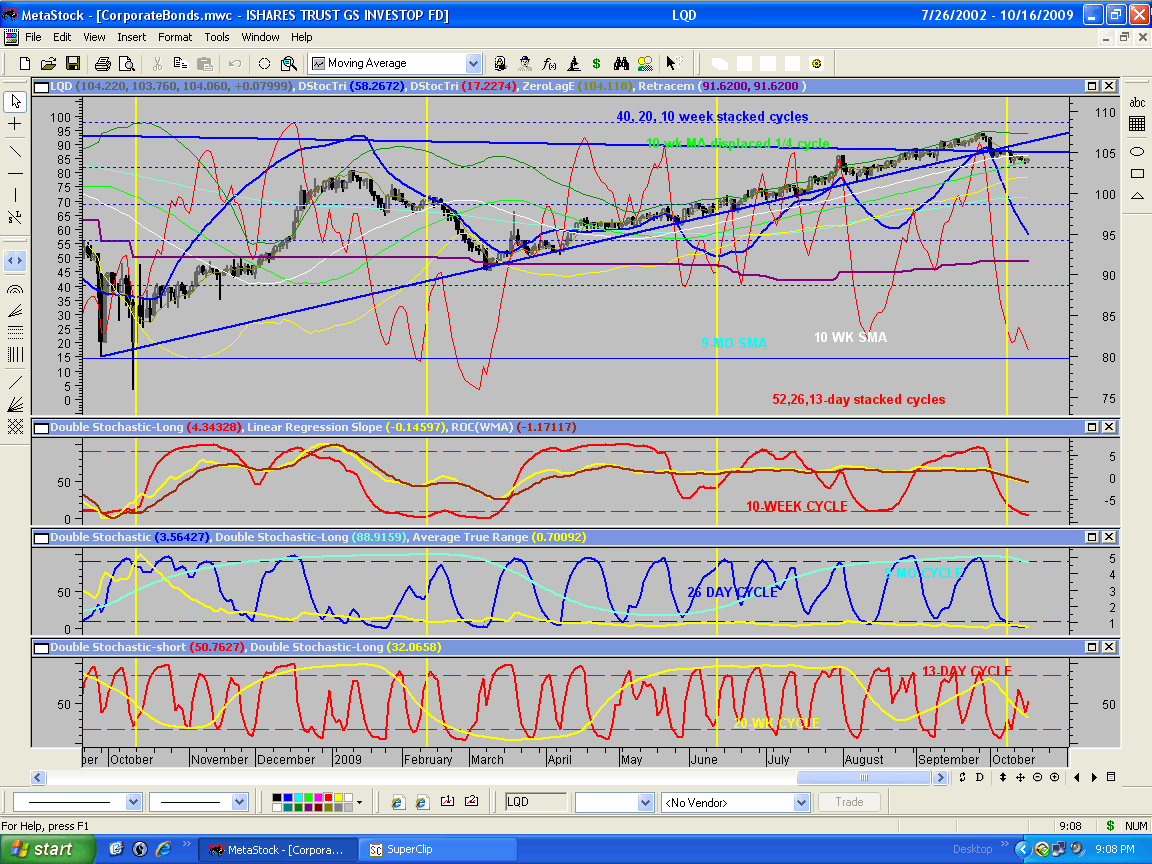
Corporate bonds (http://www.geocities.com/petegersb/CorporateBonds.GIF) also made a short-term peak last week in what appears to be a 20-wk cycle rally in a continuing longer term downtrend. They have been unable to capitalize significantly on the favorable portion of the 10-wk cycle and remain below the coincident 9-mo and 10-wk moving averages. Avoid.
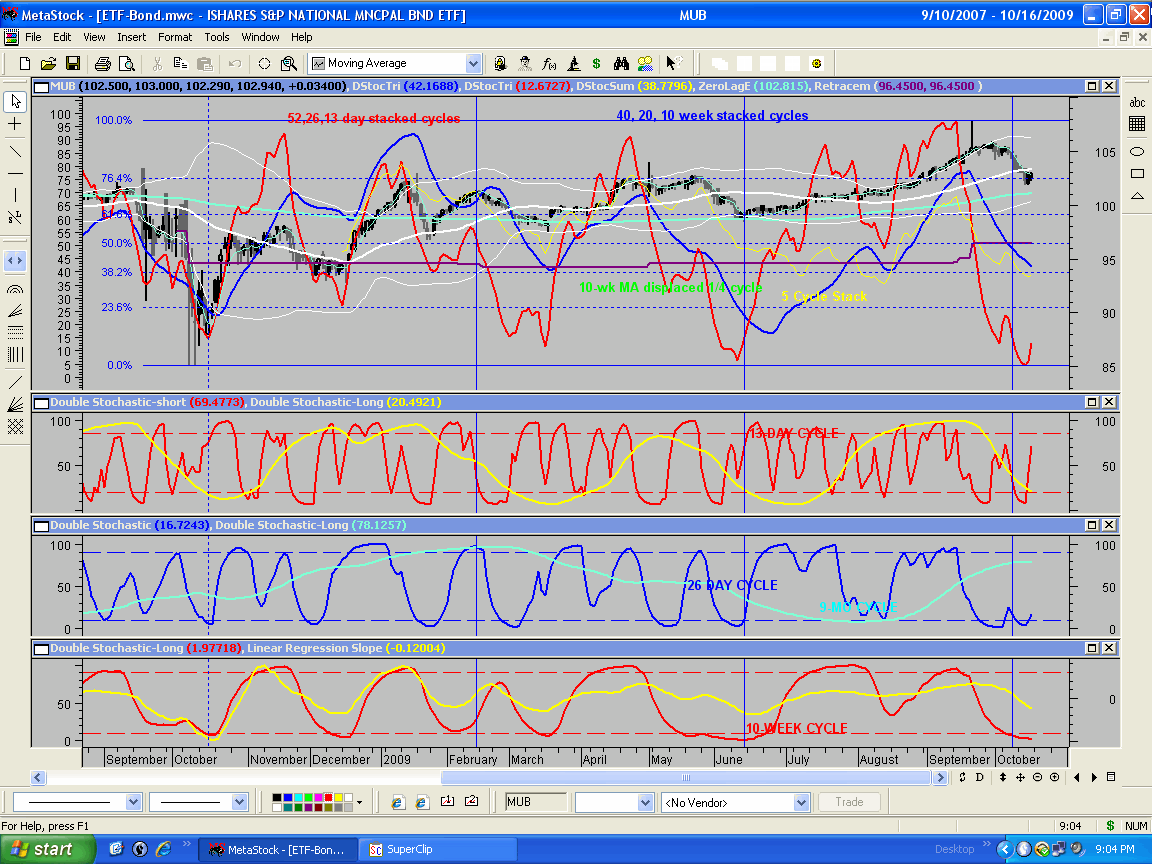
Municipal bonds (http://www.geocities.com/petegersb/MunicipalBonds.GIF ) seem to have deferred a short-term peak for a few more days. A rising 20-wk cycle should counter a declining 9-mo cycle to keep munis fairly flat for a few more weeks.
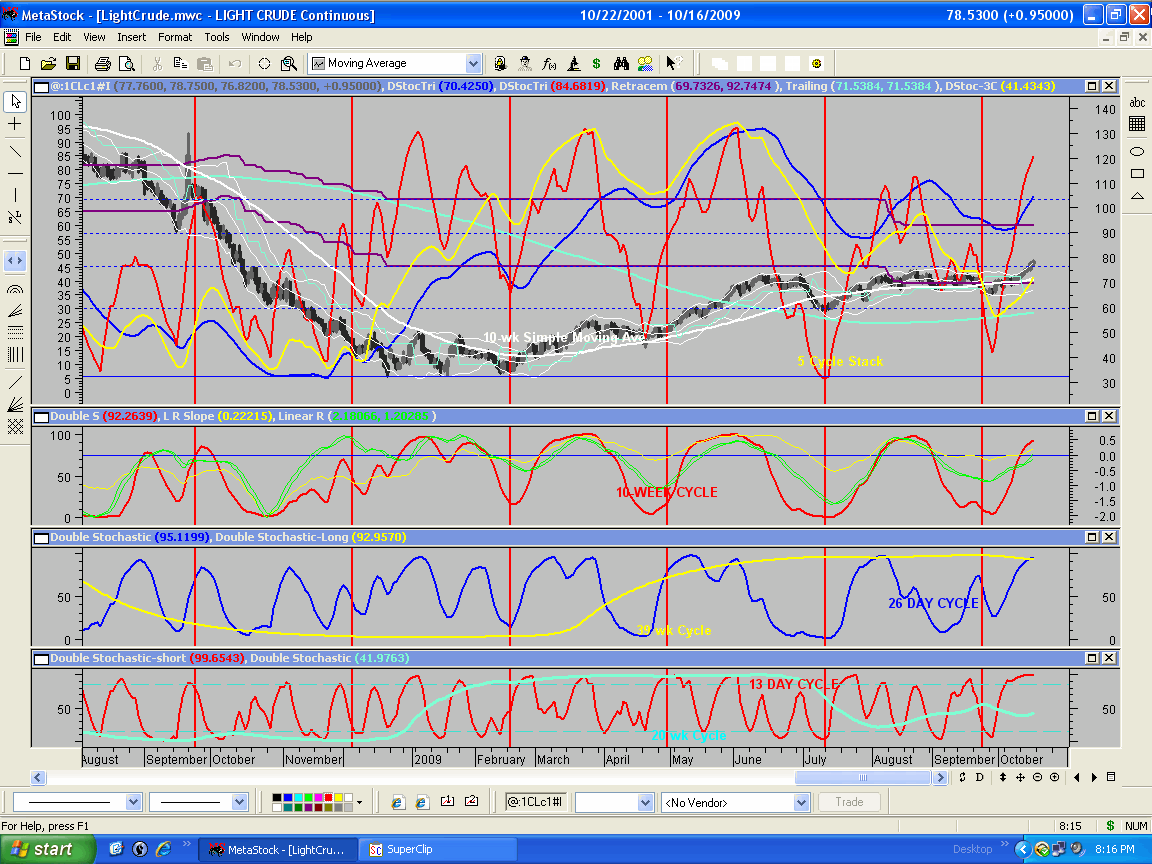
Crude oil (http://www.geocities.com/petegersb/CrudeOil.GIF ) held above the January short-term peaks, completed the 13-day cycle phase of its short-term correction on Wednesday, and then rallied to challenge the prior week’s peak. The intermediate uptrend is clearly dominant over the short-term downtrend. The declining 20-wk and rising 9-mo cycle are both 15 weeks old and should be competing for dominance over the next few weeks. The declining 10-wk cycle is 7 weeks old, and the declining 26-day cycle is 17 days old. They should be competing with a rising 13-day cycle this week to prevent any large moves in either direction. Most likely crude is forming a right-translated double top in the 10 and 20-wk cycles. The subsequent correction should be relatively shallow. If it can hold above the 10-wk moving average, oil may have ended its bear market.
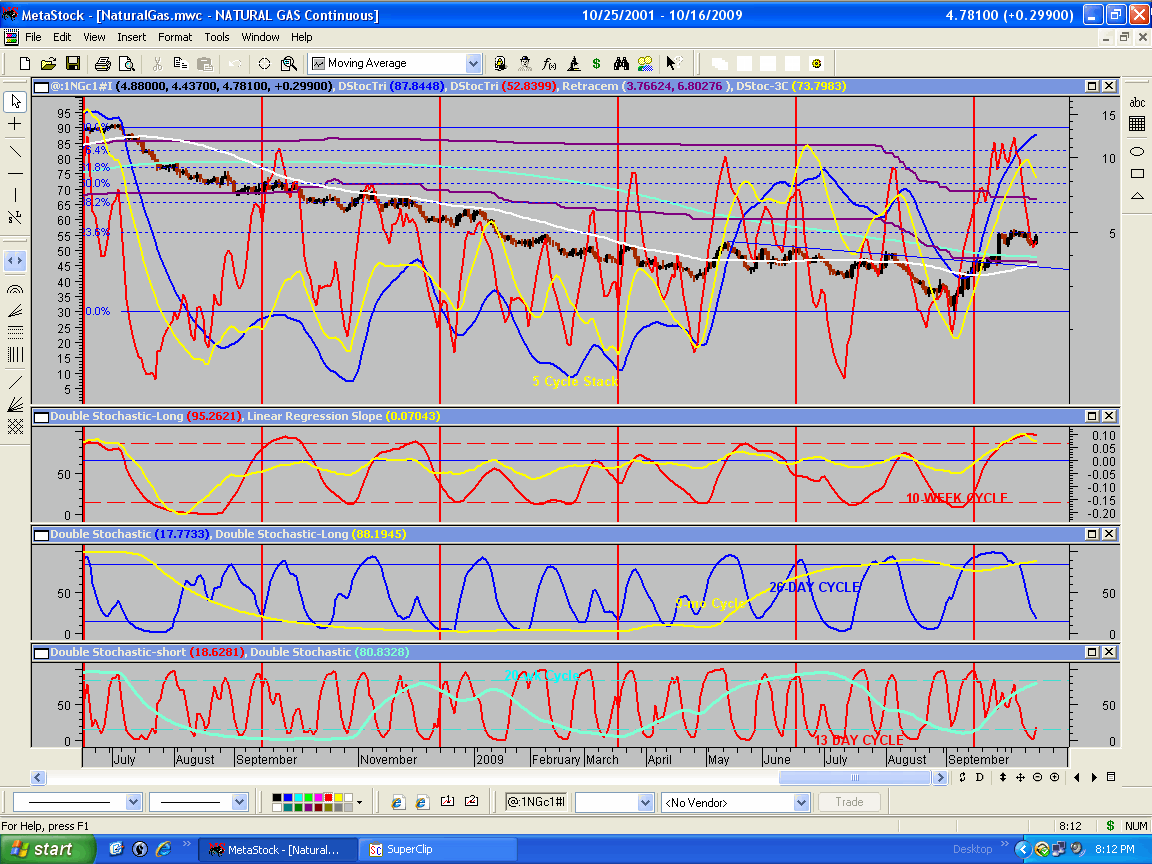
Natural gas (http://www.geocities.com/petegersb/NaturalGas.GIF ) held the prior week’s low as the positive intermediate trend compensated for the negative short-term trend. Those trends appear likely to continue this week, and should be followed by another attempt to move above the 10-week moving average.
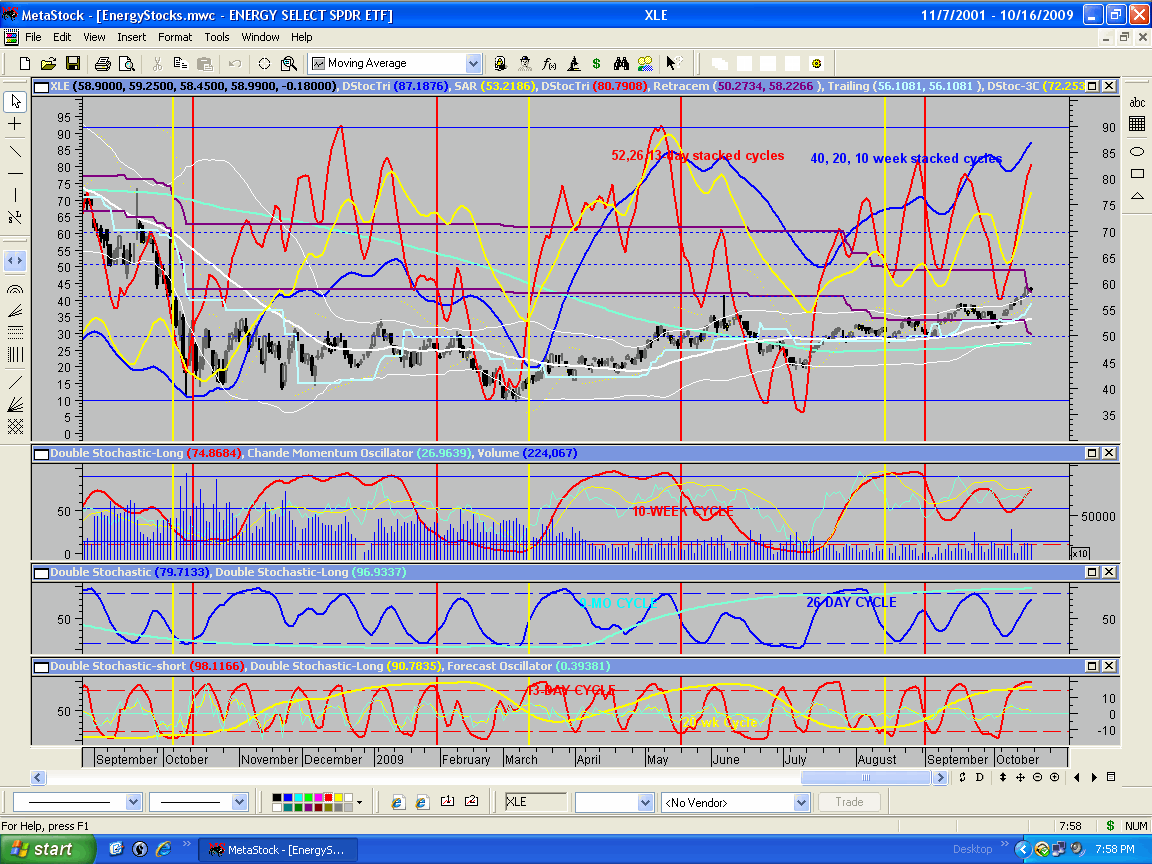
Energy stocks (http://www.geocities.com/petegersb/EnergySPDR.GIF) dipped below the 10-wk moving average early in the week, but a 13-day cycle low on Wednesday, was followed another push above the MA that turned the short-term composite upward again. The rally should extend into this week as both short and intermediate composites trend upward.
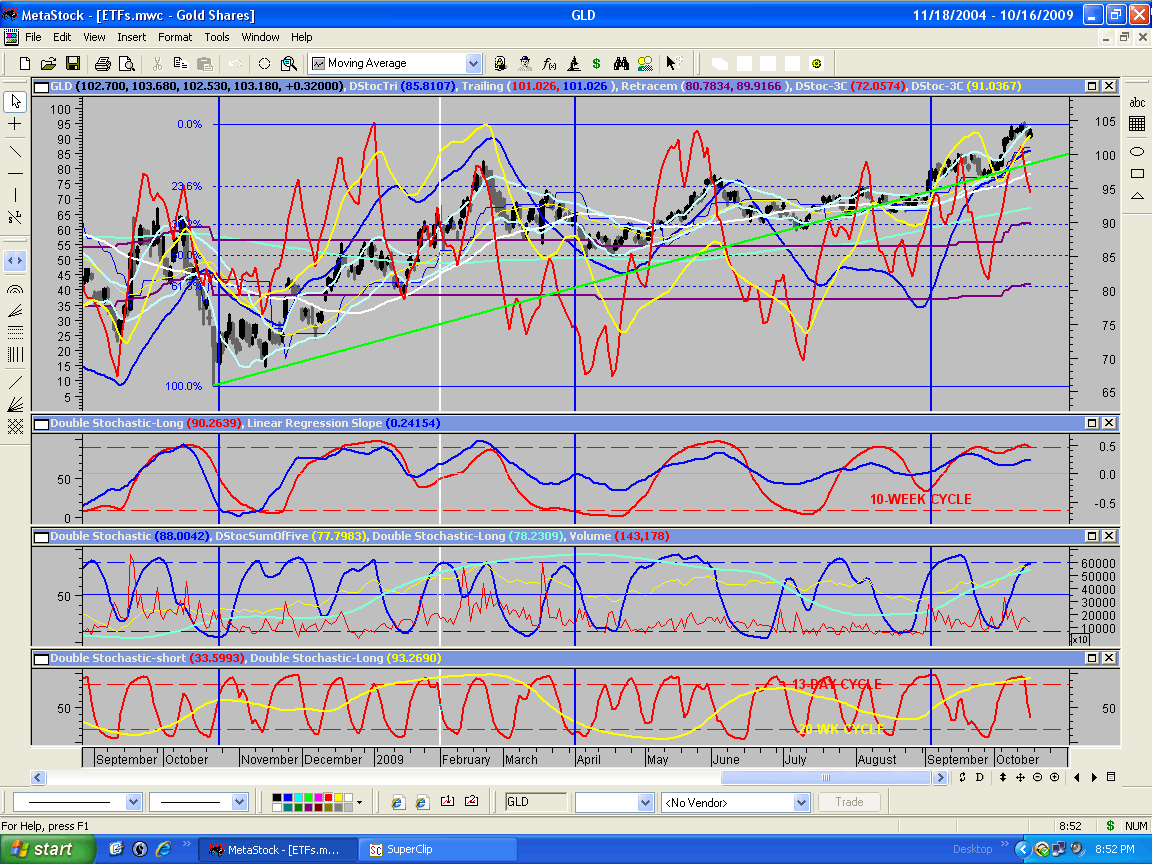
Gold (http://www.geocities.com/petegersb/GoldBullion.GIF) declined as expected, but so far have has held above the
March lows / January highs at the 38% retracement of the rally off of the
November low. The oversold 20-wk cycle has now reached its life expectancy, so
the second 20-wk cycle rally of this 9-mo cycle appears about ready for
liftoff. The shorter cycles are either moderately oversold or almost oversold,
suggesting that the rally should begin sometime this week.
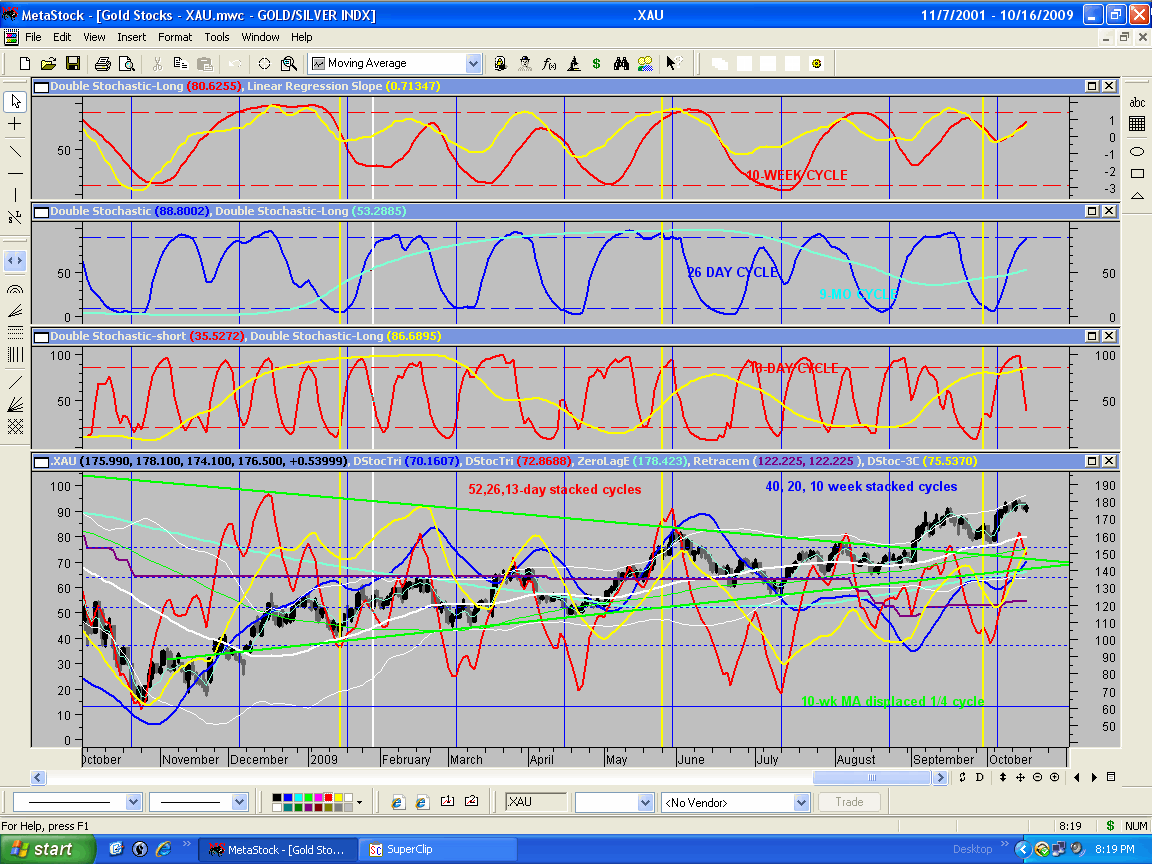
Gold Stocks (http://www.geocities.com/petegersb/GoldStocks.GIF
) are not quite as promising. They declined to the intersection of the 10-wk
and 9-mo moving averages. While the 10 and 20-wk cycles are rising and the
13-day cycle is moderately oversold, the 26-day appears likely to decline for
another week. If it dominates, the retest of the moving averages likely will
fail. But it’s just as likely that the favorable cycles will dominate and
extend the 5 month old uptrend.
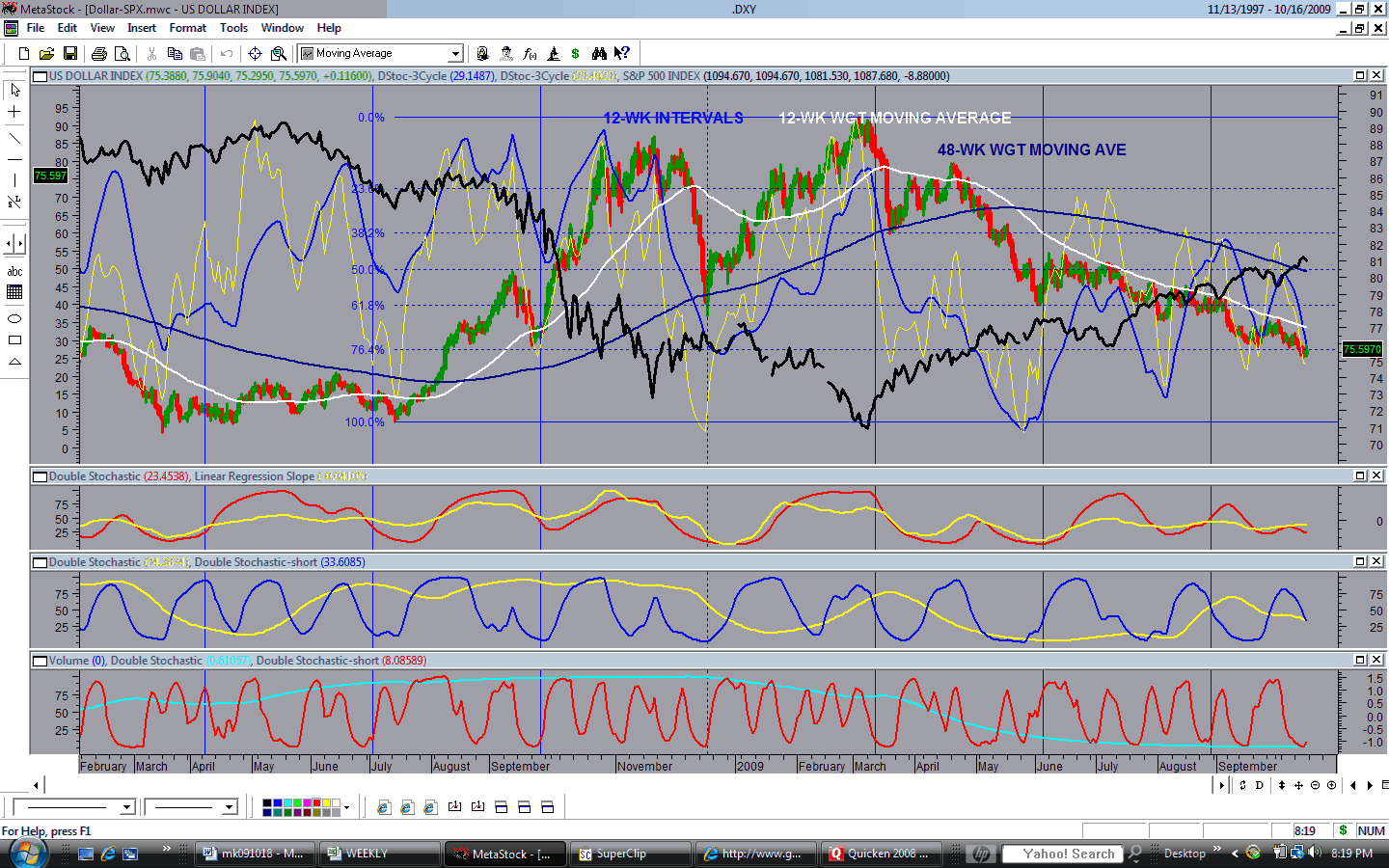
The dollar (http://www.geocities.com/petegersb/Dollar.GIF) completed its short-term rally and peaked on Monday - right at the expected 10-wk moving average resistance with the intermediate downtrend intact. Expect the decline to continue this week and perhaps break the uptrend since last July.