This will be the last report until October 26.
9/28/08
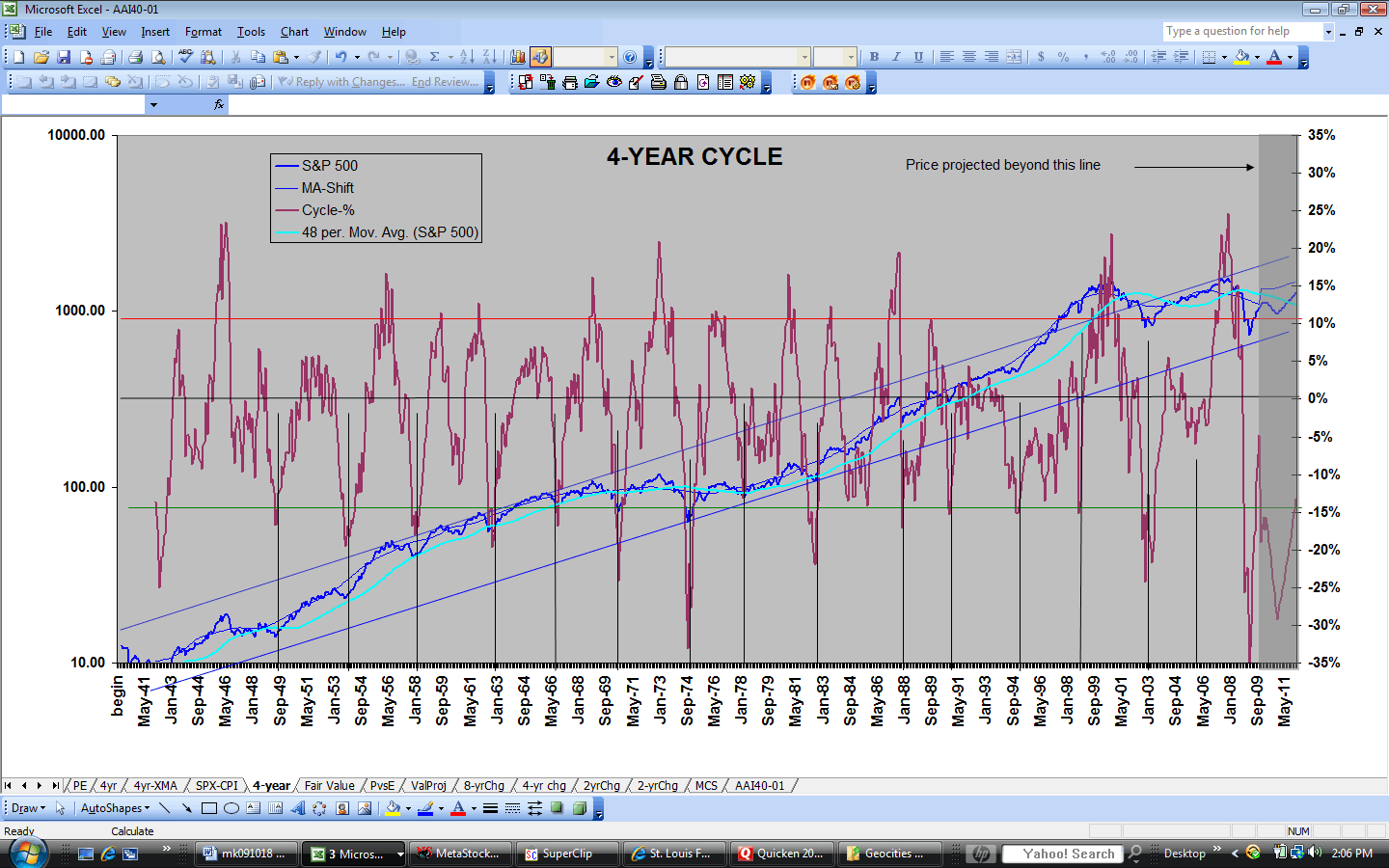
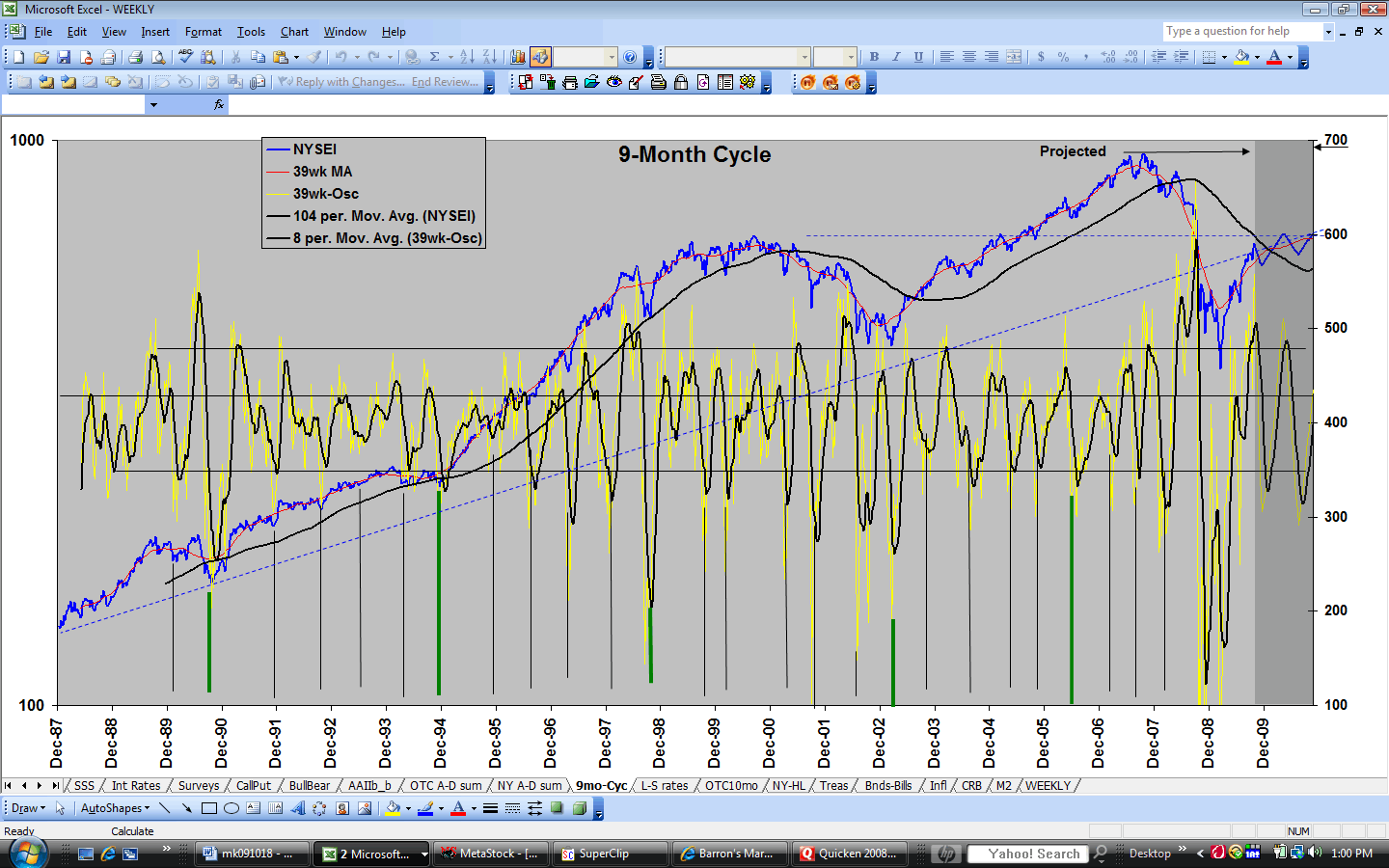
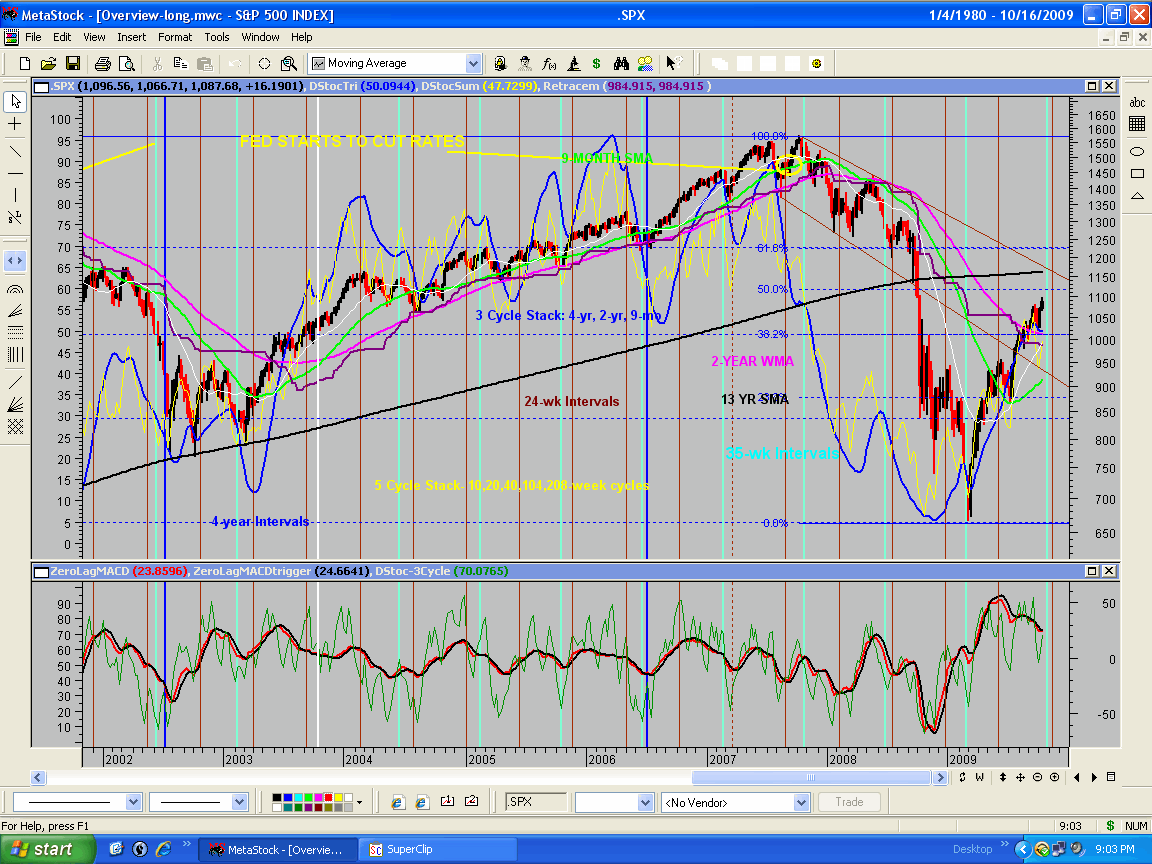
Apparently an agreement has been reached among the congressional leadership on the plan for the US Treasury to buy the otherwise unsalable debt of our financial institutions (http://financialservices.house.gov/essa/summary_of_the_eesa2.pdf ). The “free marketeers” on Wall Street have celebrated the preliminary rounds of this drift to socialism, and they will probably buy stocks even more enthusiastically this time. Hopefully, this plan (if not torpedoed by congressional Republicans) will be effective enough to preclude the need for more bailouts, but that is far from a foregone conclusion. It should thaw the frozen financial system to the point where markets can once again function, and prevent a complete meltdown of the economy. (Read John Mauldin (http://www.frontlinethoughts.com/gateway.asp ) if you still doubt the magnitude of the crisis.) But, while it should slow the rate of decline, it will not quickly produce a resurgent economy or arrest the decline in corporate profits. Housing probably won’t bottom for another year or two and the consumer is just beginning to reign in her profligate spending. The latest bailout does nothing to change my opinion that the market won’t make a long-term bottom until 2010 (when the 4-year cycle low is due (http://www.geocities.com/petegersb/4YearCycle.GIF )), and that lower stock prices are likely between now and year end as the declining 9-month (http://www.geocities.com/petegersb/9moNYA.GIF , http://www.geocities.com/petegersb/Overview-long.GIF) and 20-week cycles (http://www.geocities.com/petegersb/Overview-med.GIF ) run their course.
How much money the taxpayer ultimately loses or gains on
this plan, depends largely upon the price the Treasury pays for the assets that
it buys, and how many more loans will default. In theory, the reverse auction
suggested by Paulson should produce a fair price. Given the risk, a fair price
would ultimately produce a return on the order of the one Warren Buffet will
get on his purchase of Goldman Sachs’ perpetual preferred shares yielding 10%
plus whatever gains are made on the associated warrants to purchase the common shares
below current market. Perhaps
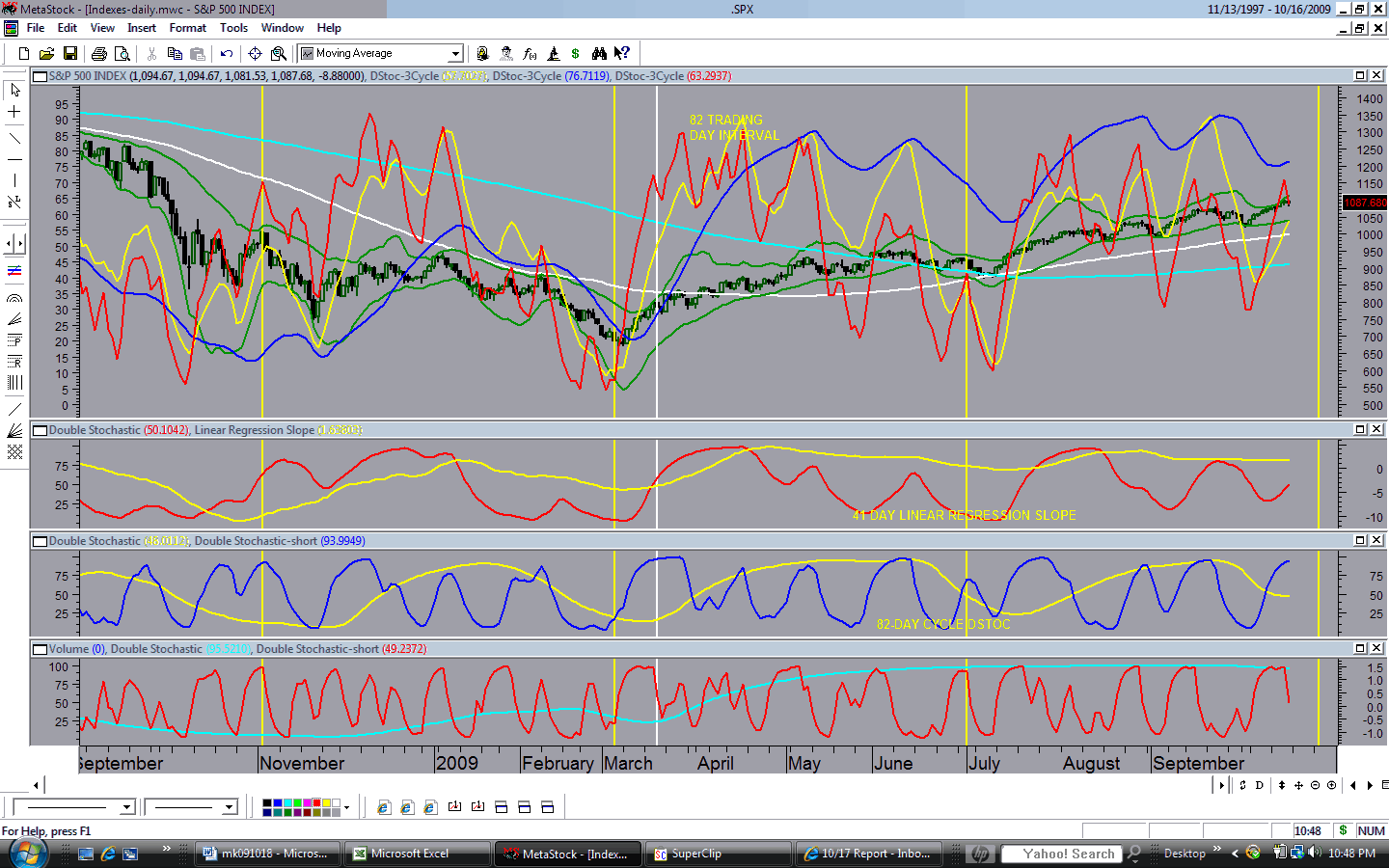
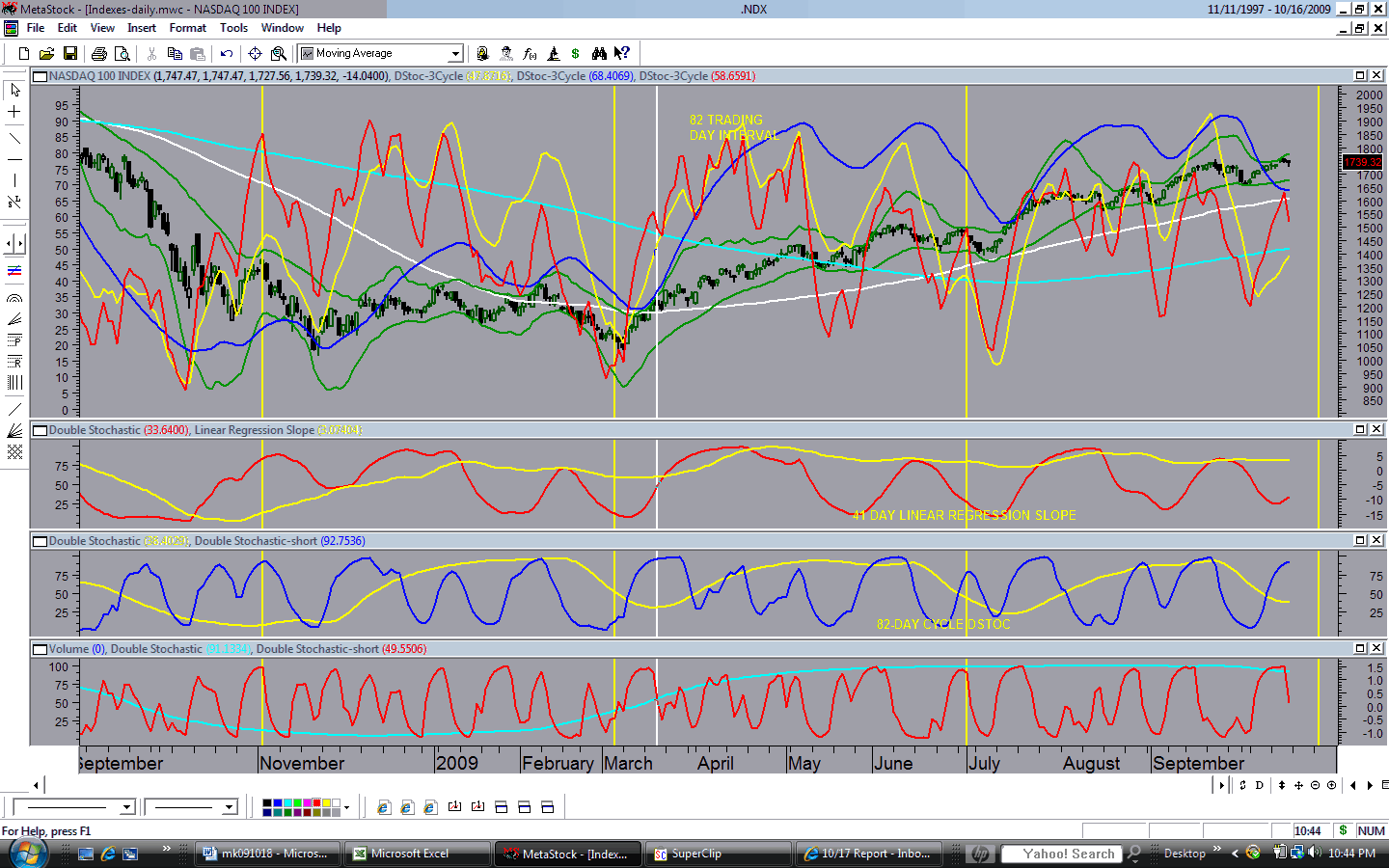
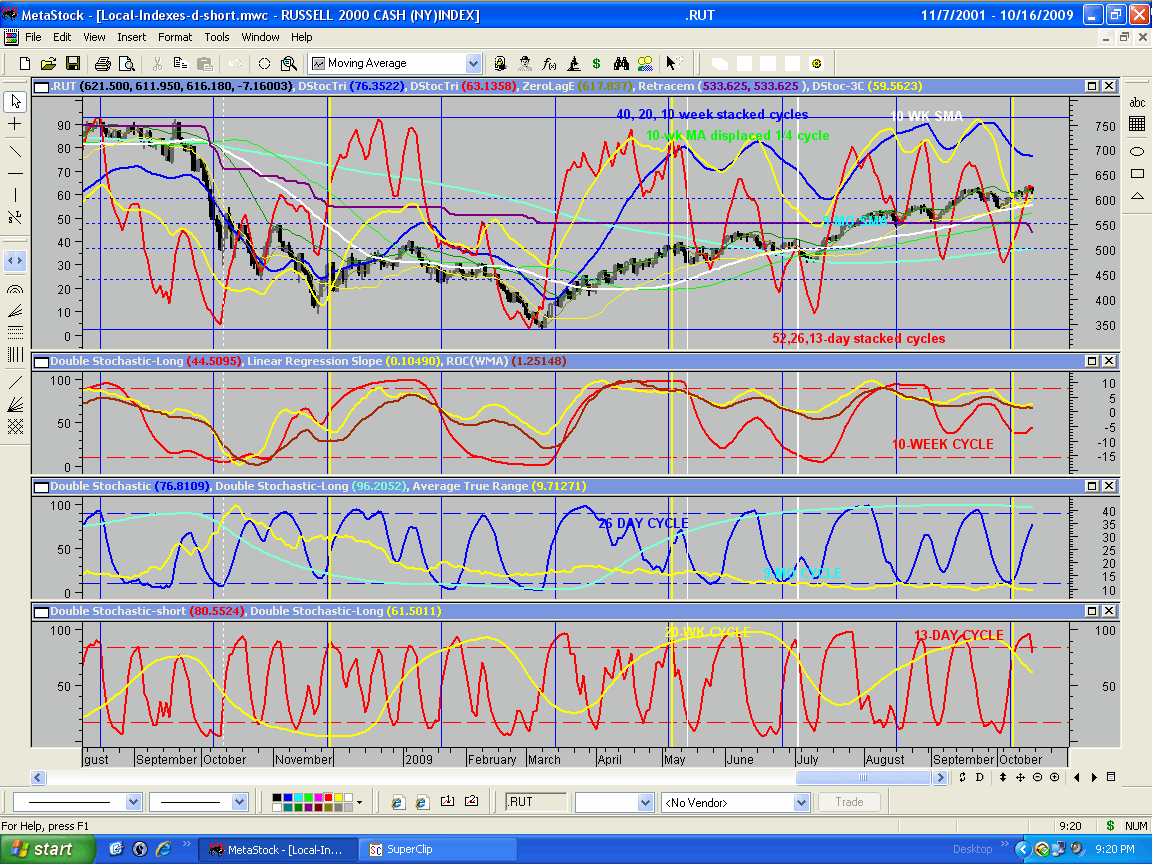
In the very short-term, stocks are likely to rally. The young, but so far weak, 10-wk cycle is rising and should get a considerable boost from bailout agreement. It’s initial up-thrust died at the 10-week moving average on the SPX (http://www.geocities.com/petegersb/SP500.GIF), but it’s likely to challenge it again this week. The 6-day-old 13 and 26-day cycles should have enough juice left to get there, and perhaps even penetrate it. The 6 ½-month-old 9-month cycle has entered the potential bottoming range, but the 11-week-old 20-wk cycle argues strongly for a 9-month bottom that arrives closer to schedule near year-end. The NDX (http://www.geocities.com/petegersb/NDX.GIF) never got very close to its 10-wk moving average and is still hovering very close to its lows, but the cycle pattern looks similar. The Russell small cap index (http://www.geocities.com/petegersb/Russell2000.GIF ), which so far has outperformed the large caps during this 9-month cycle, was the worst performer last week, losing 6.5%. It probably will underperform for a while as money moves back into the large financial institutions that have dragged the large-cap indexes down this year.
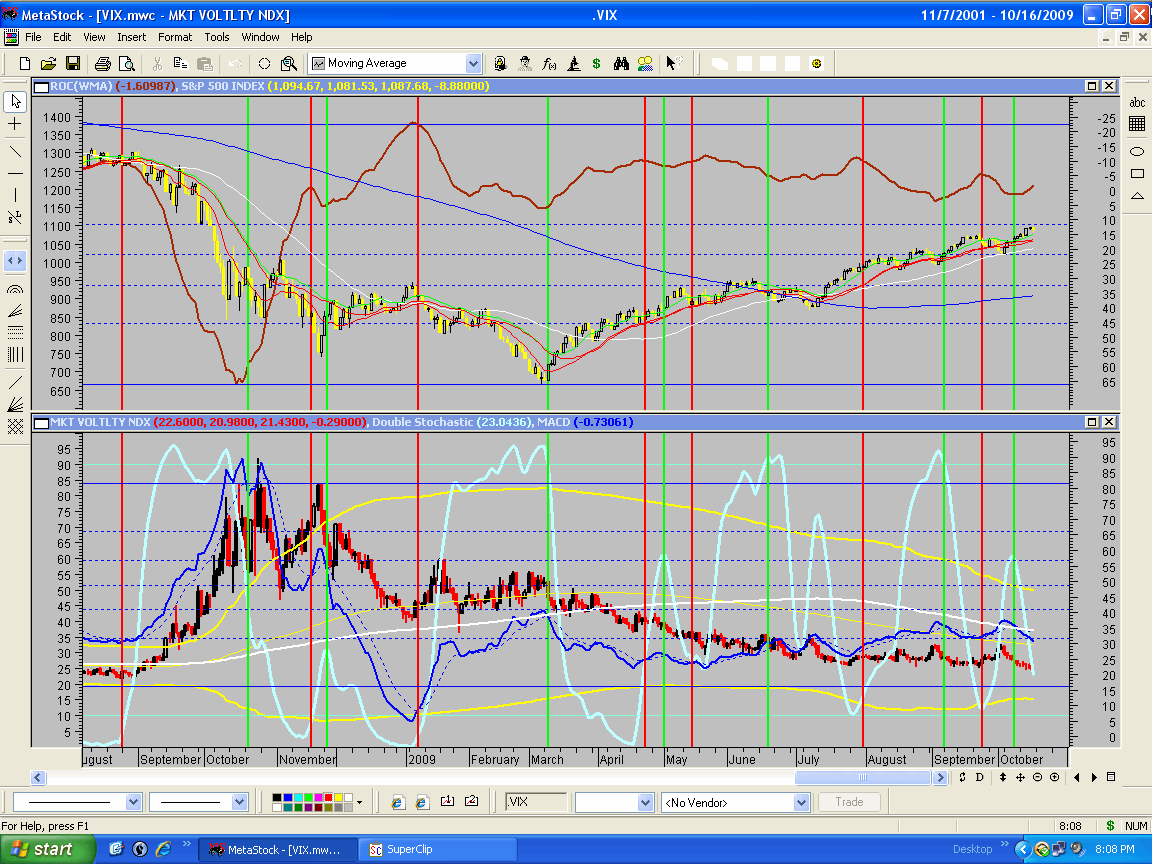
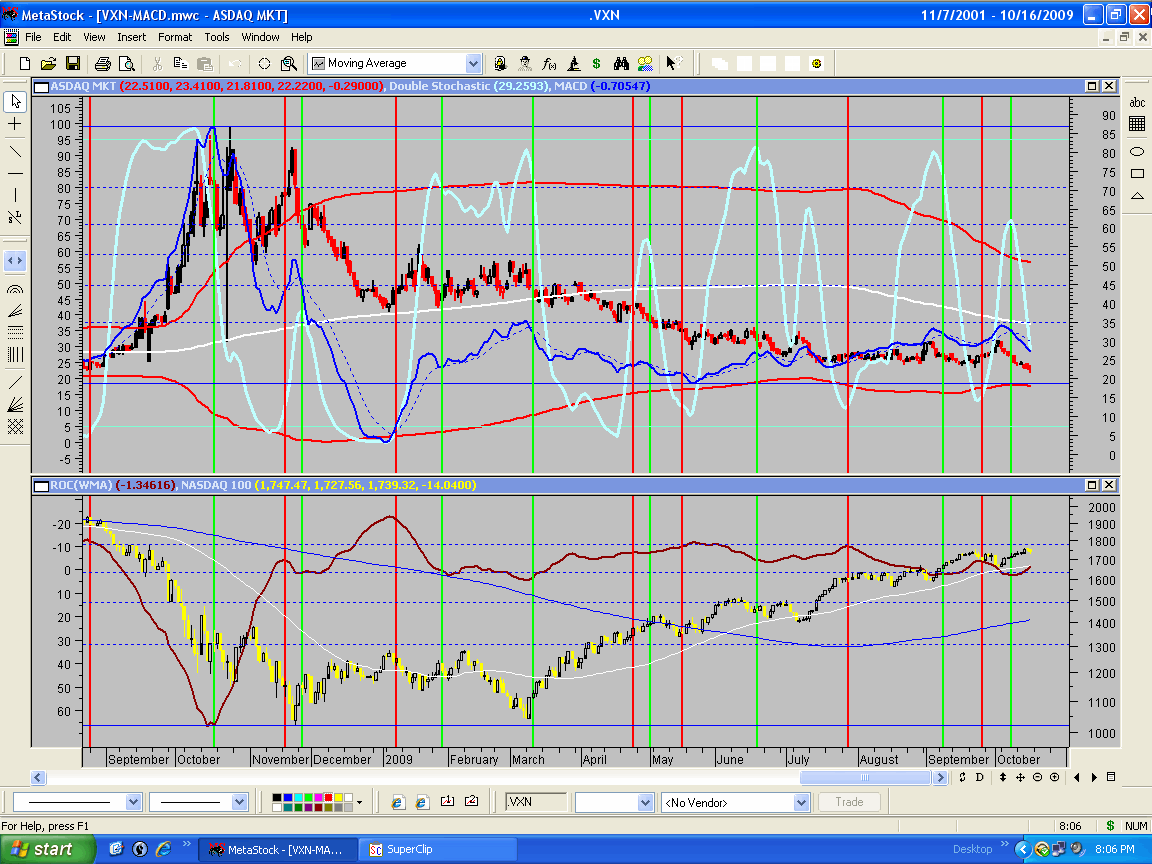
Despite last week’s dismal performance, the DStocs on the all of these major indexes suggest the 10-wk cycle’s uptrend remains intact. However, the daily VIX (http://www.geocities.com/petegersb/VIX.GIF) and VXN (http://www.geocities.com/petegersb/VXN.GIF) remain ambivalent. Their DStocs have signaled a 10-wk cycle rally, but their MACDs refused to confirm. And the rising DStocs on the weekly VIX and VXN (http://www.geocities.com/petegersb/VIX-weekly.GIF , http://www.geocities.com/petegersb/VXN-weekly.GIF ) indicate that the 20-wk cycle hasn’t yet reached bottom.
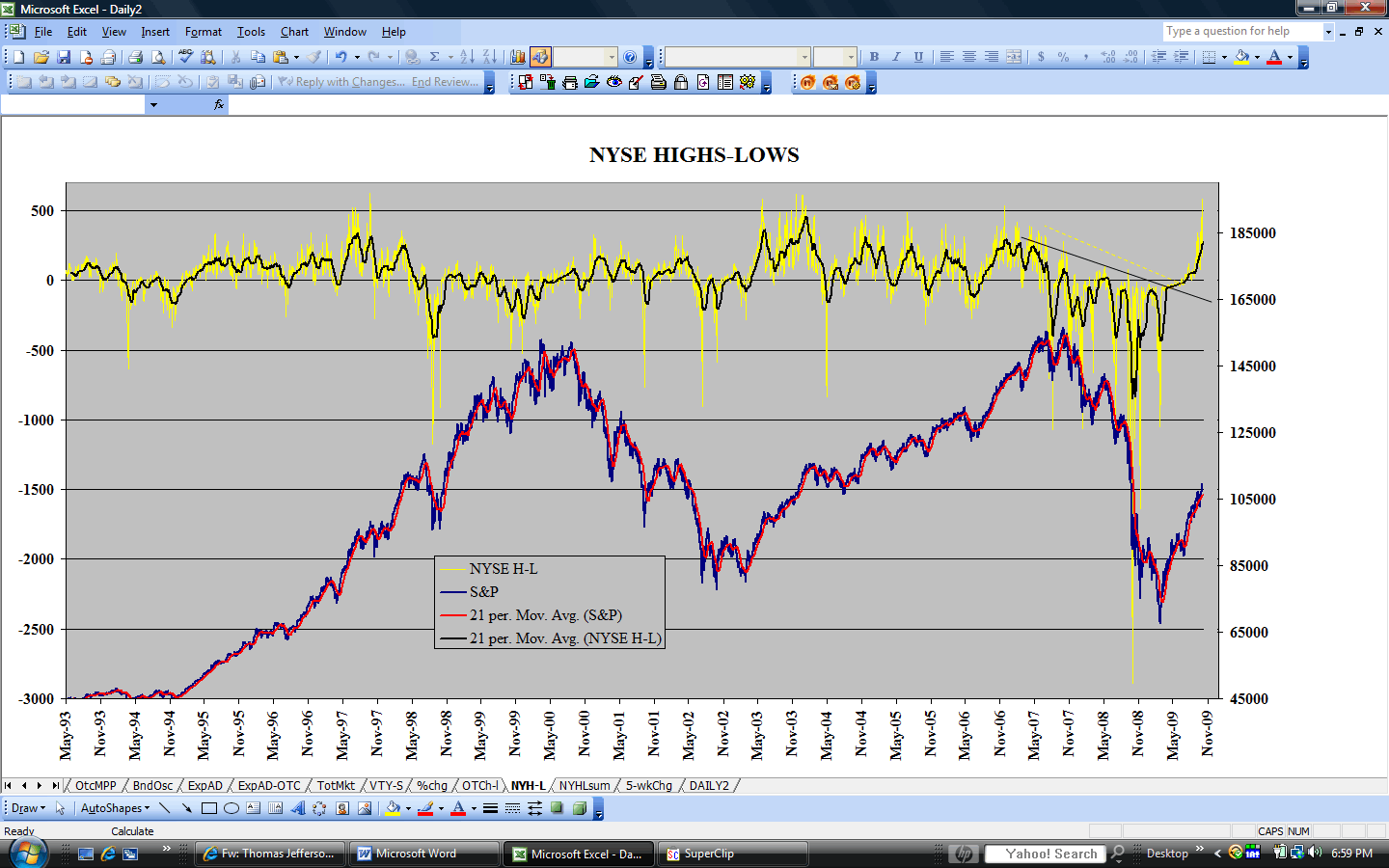
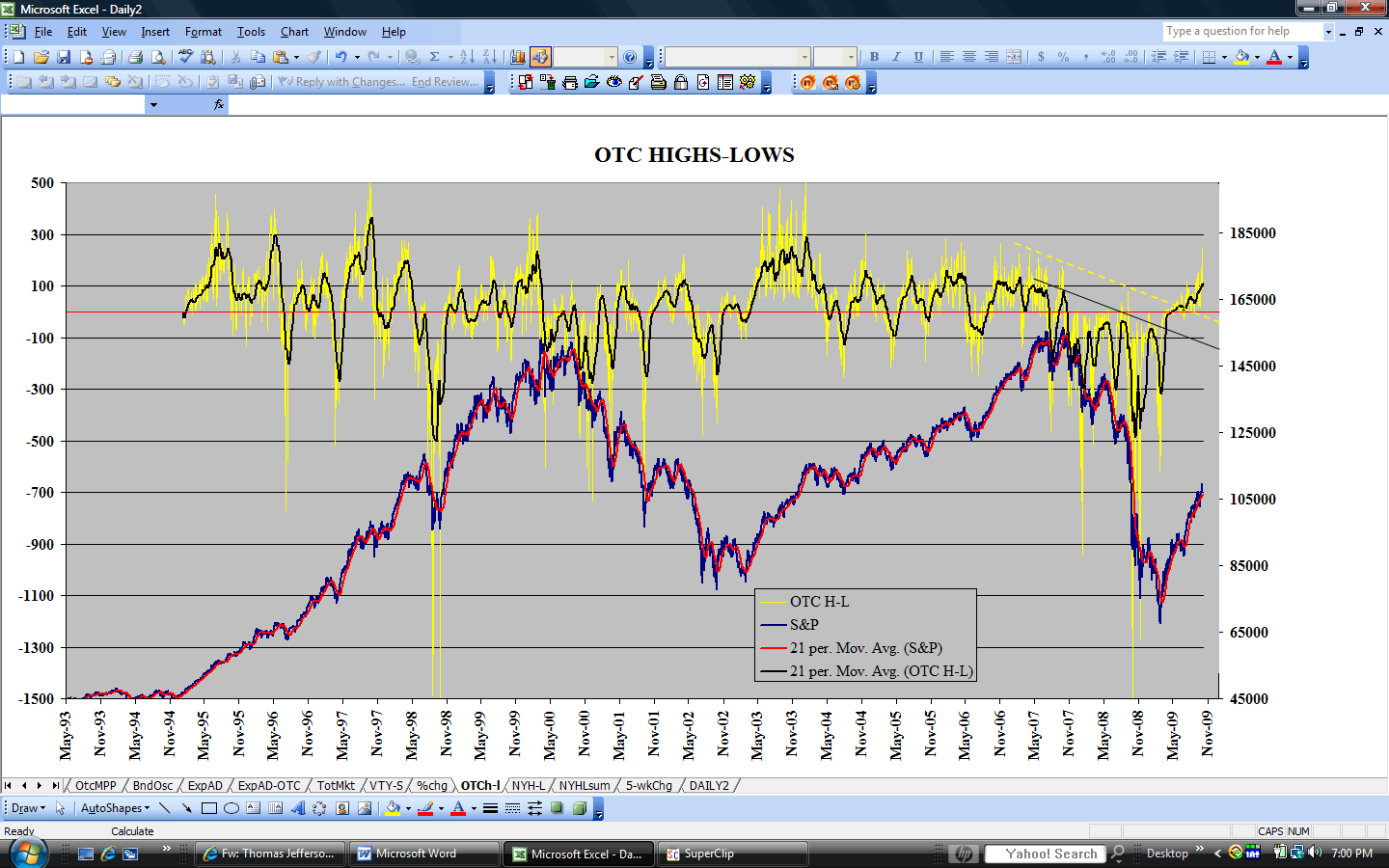
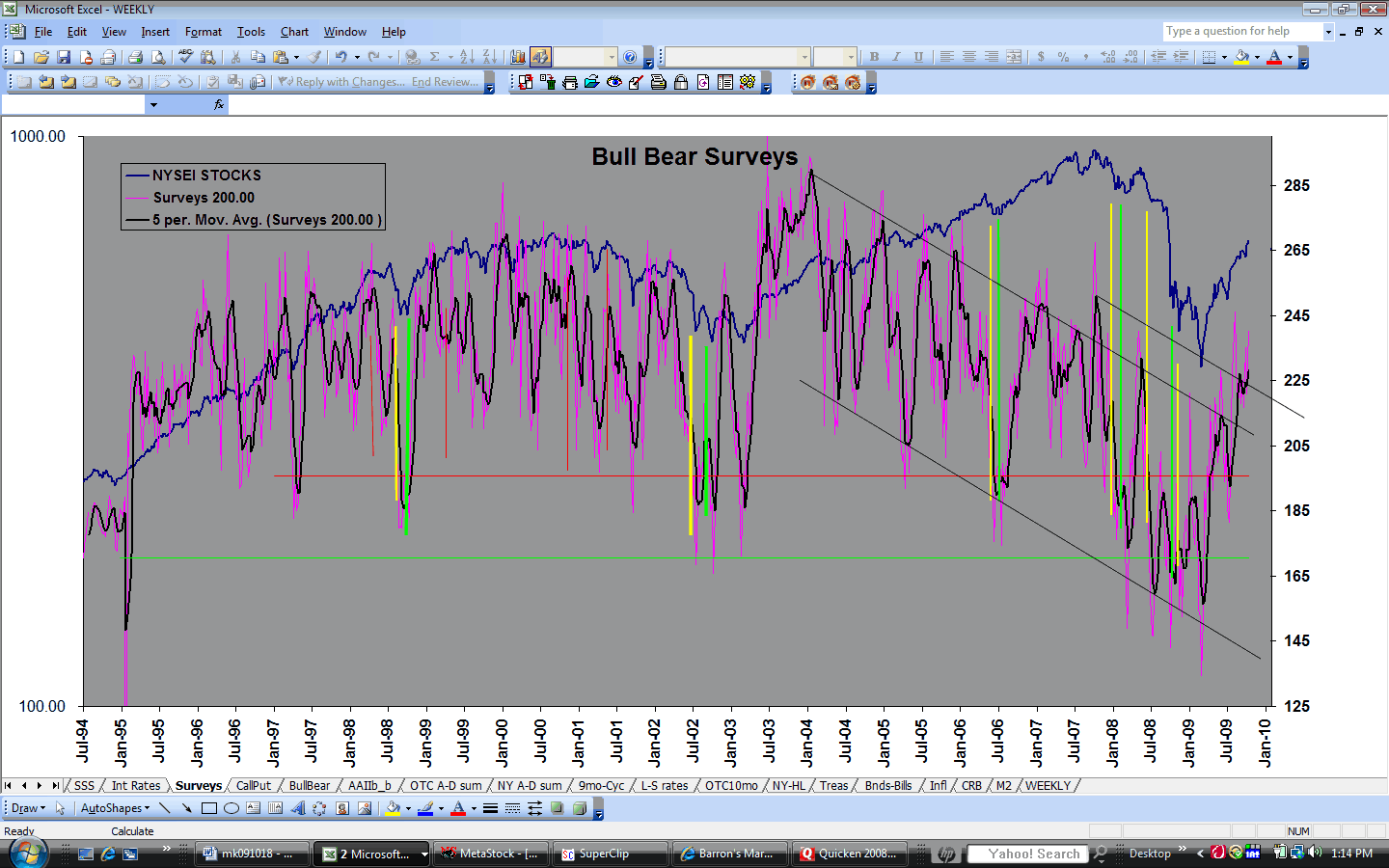
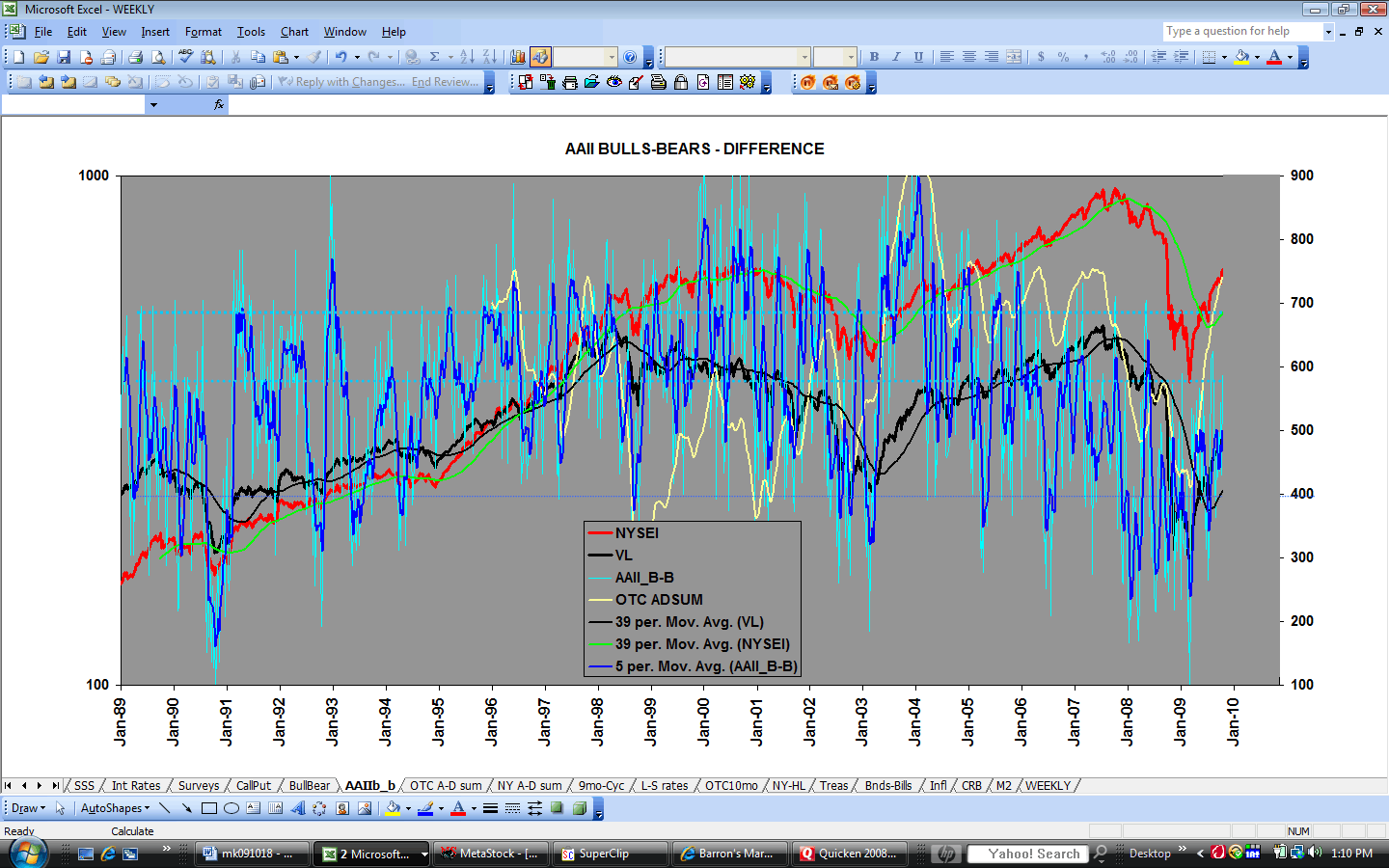
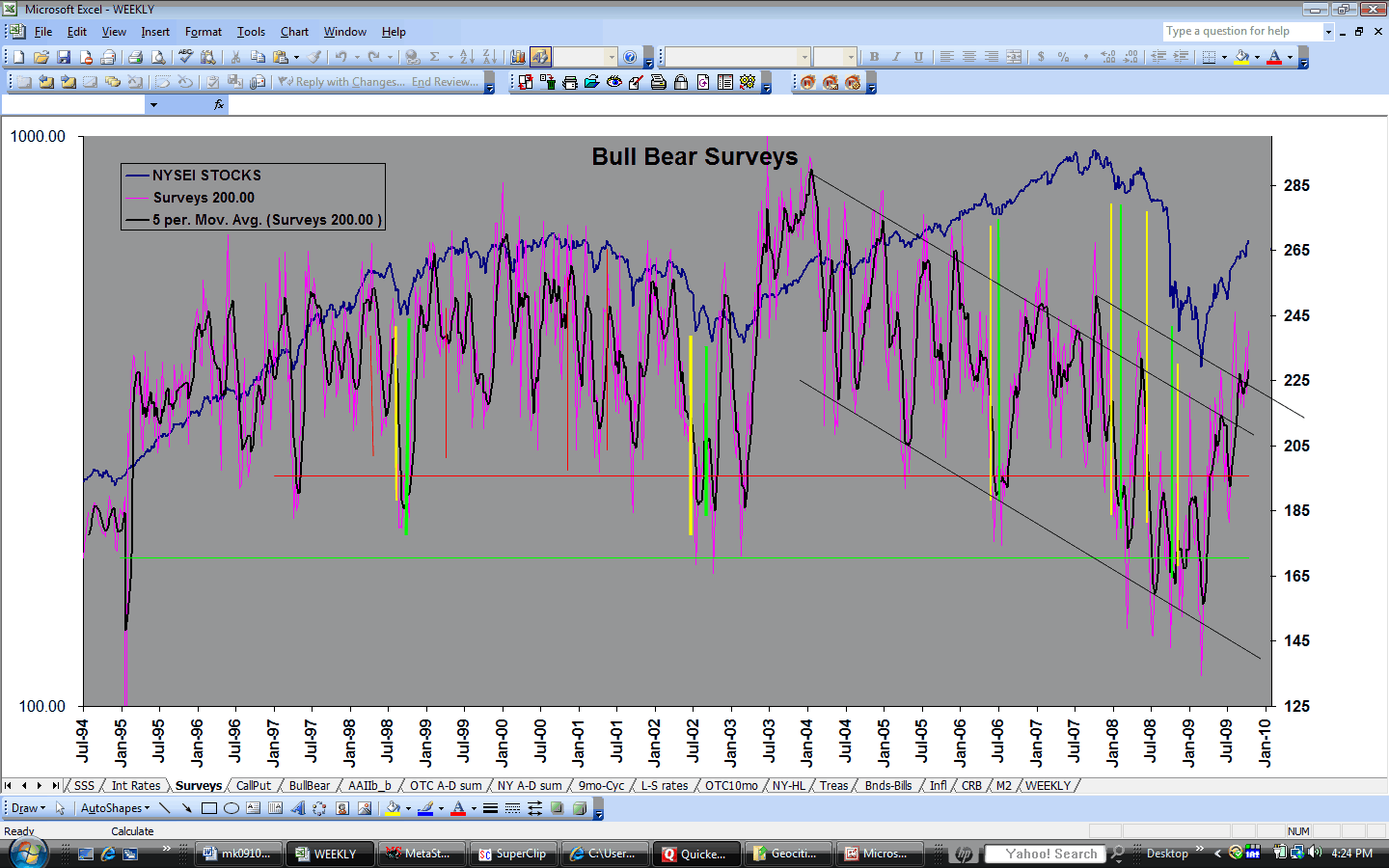
Breadth figures, including the high-low ratios (http://www.geocities.com/petegersb/HighLowNYSE.GIF , http://www.geocities.com/petegersb/HighLowOTC.GIF ), were dismal again last week. There is no indications of a significant bottom – just similarity to other 10-wk cycle lows during the last year. Similarly, while both advisory services (http://www.geocities.com/petegersb/InvestorsIntelligence.GIF ) and AAII members (http://www.geocities.com/petegersb/AAIIsentiment.GIF ) remain moderately pessimistic, the trend toward greater pessimism (http://www.geocities.com/petegersb/SurveysCombined.GIF ) is still unfavorable for the market.
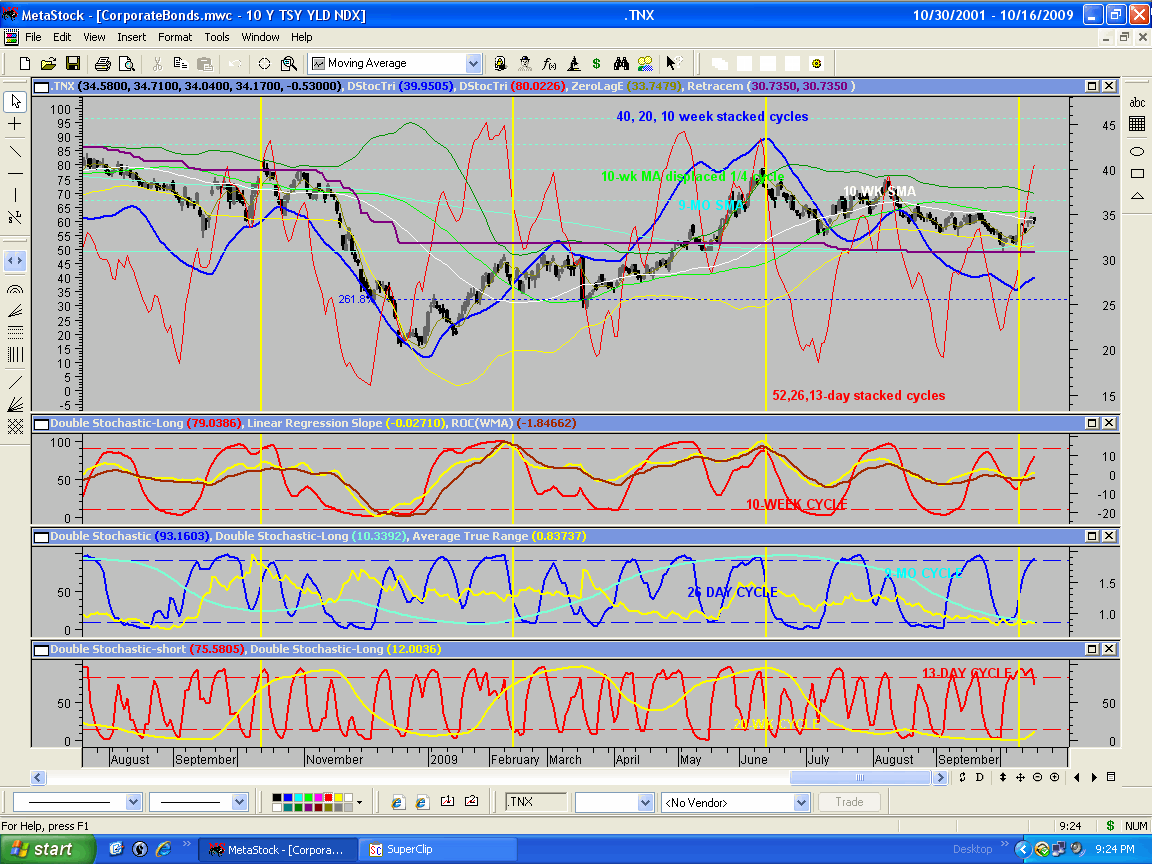
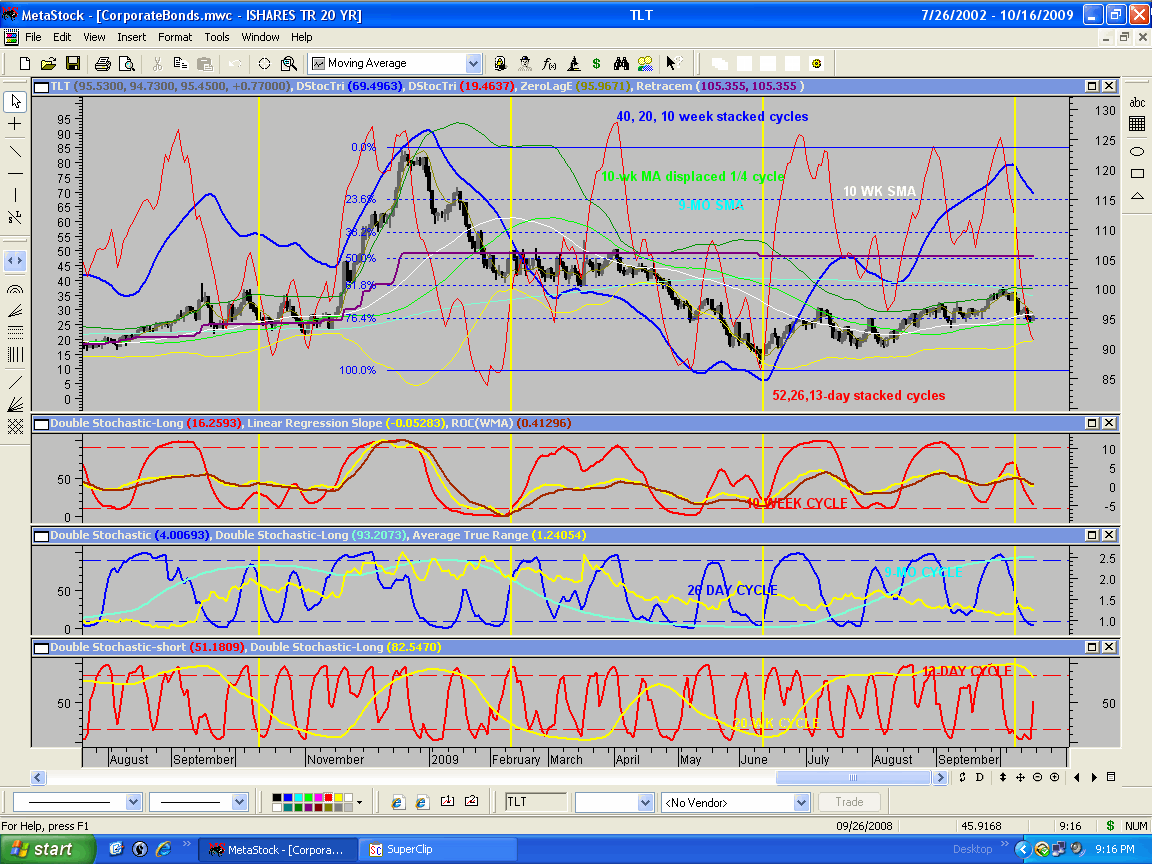
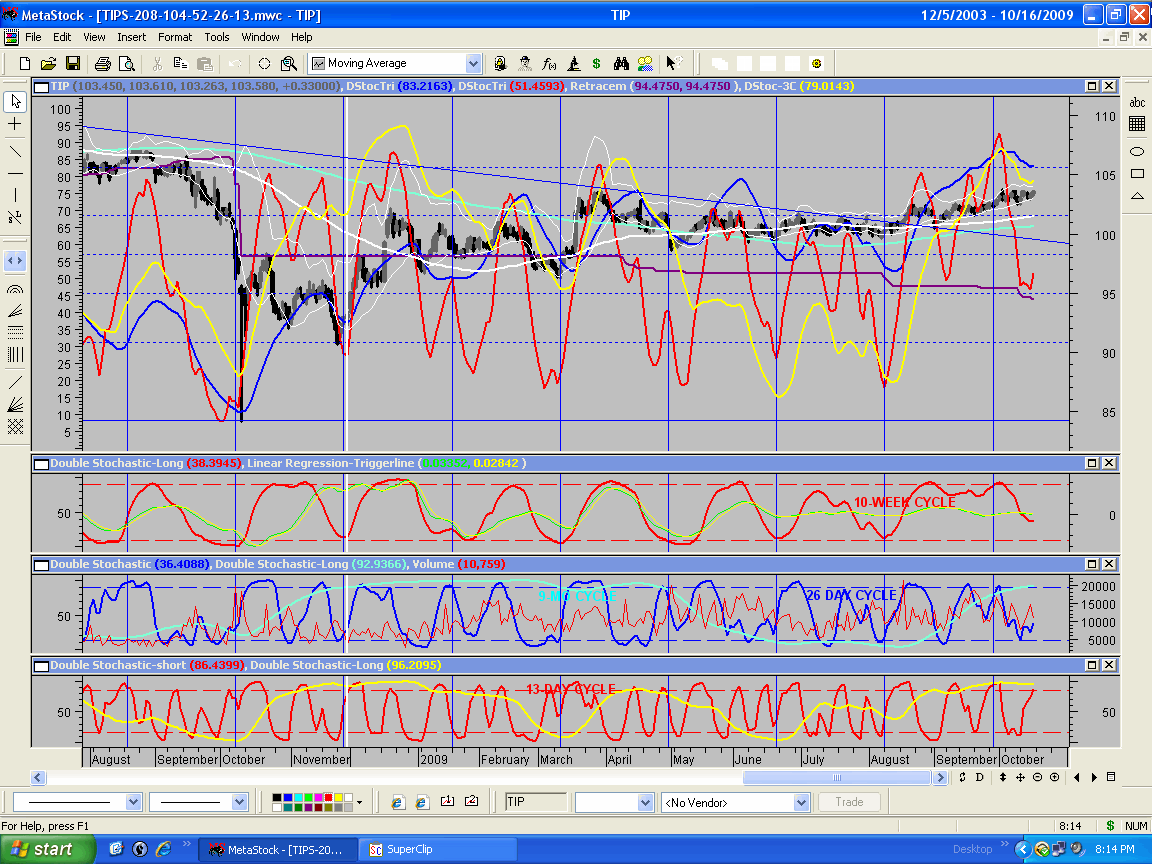
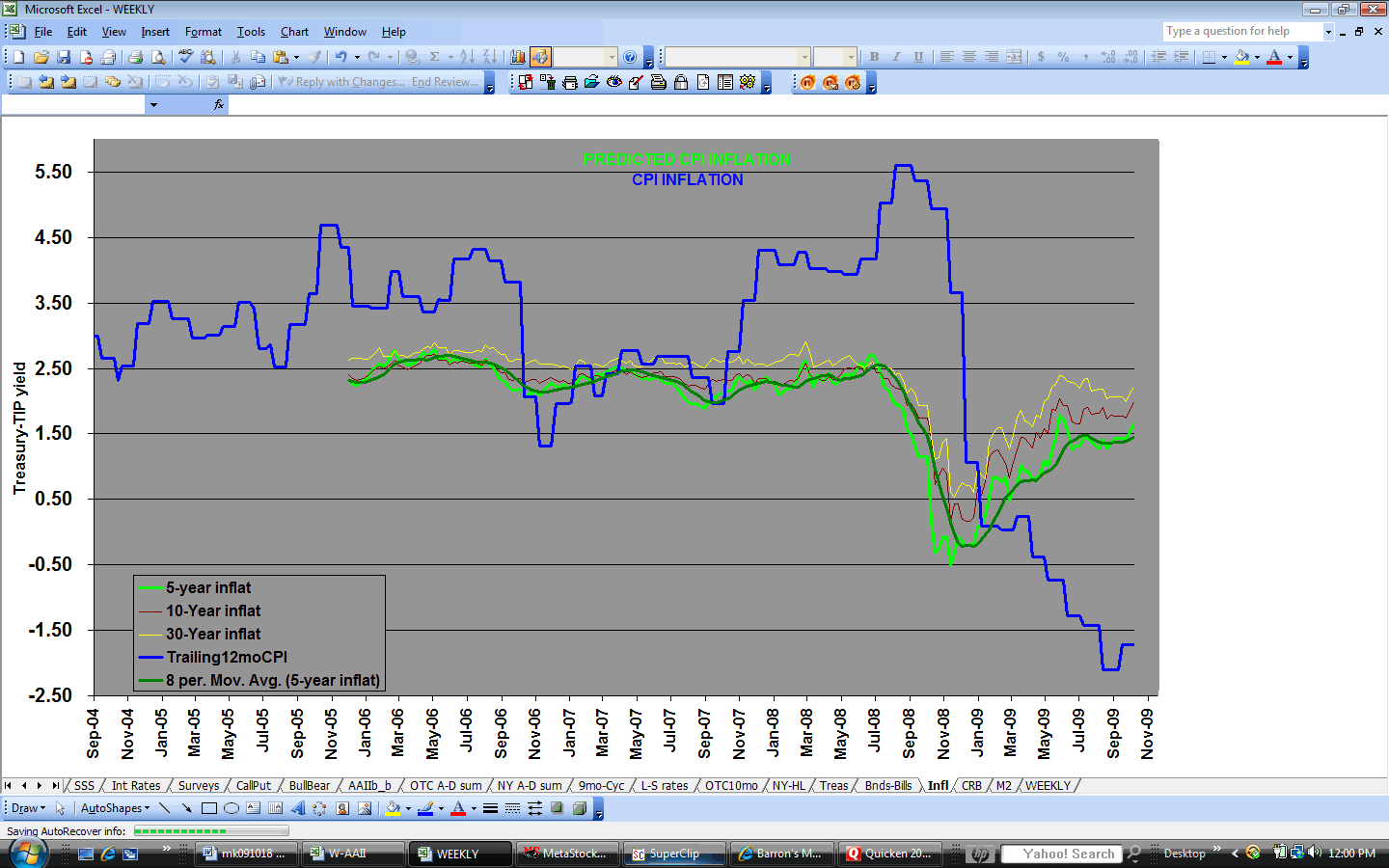
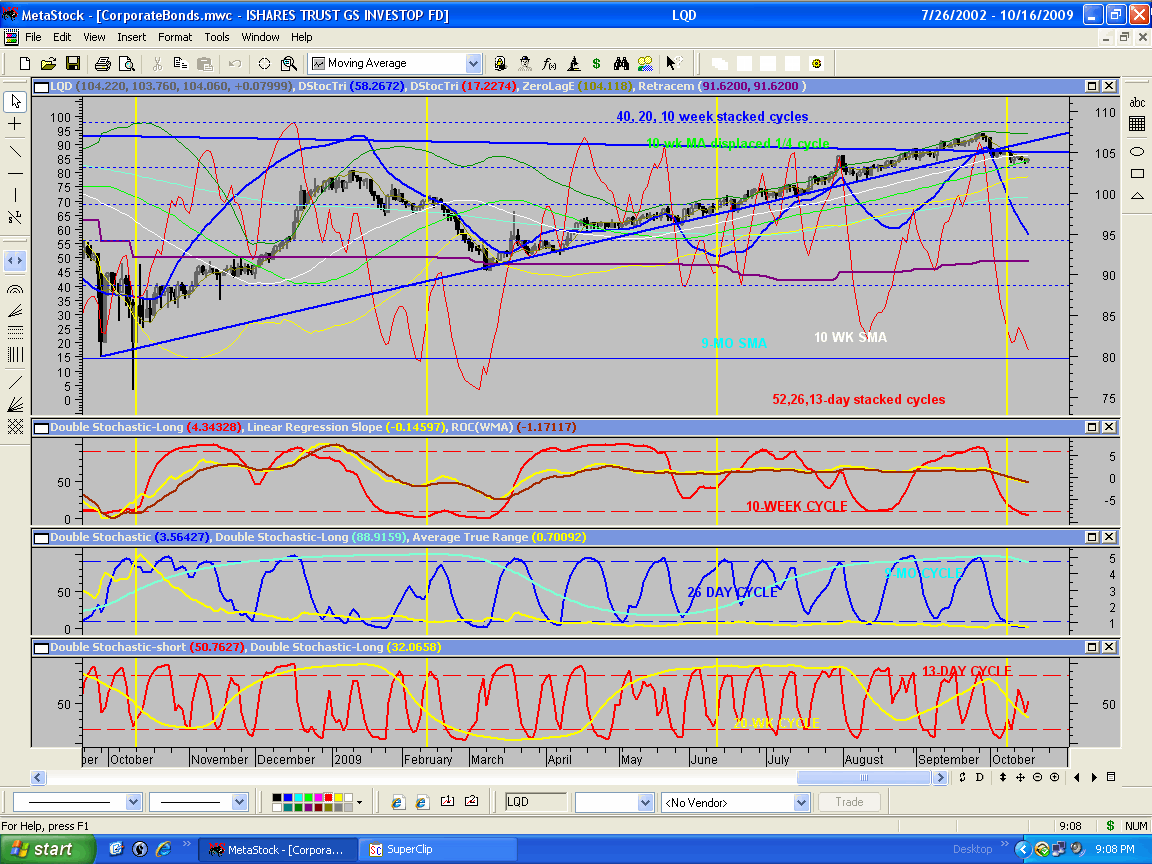
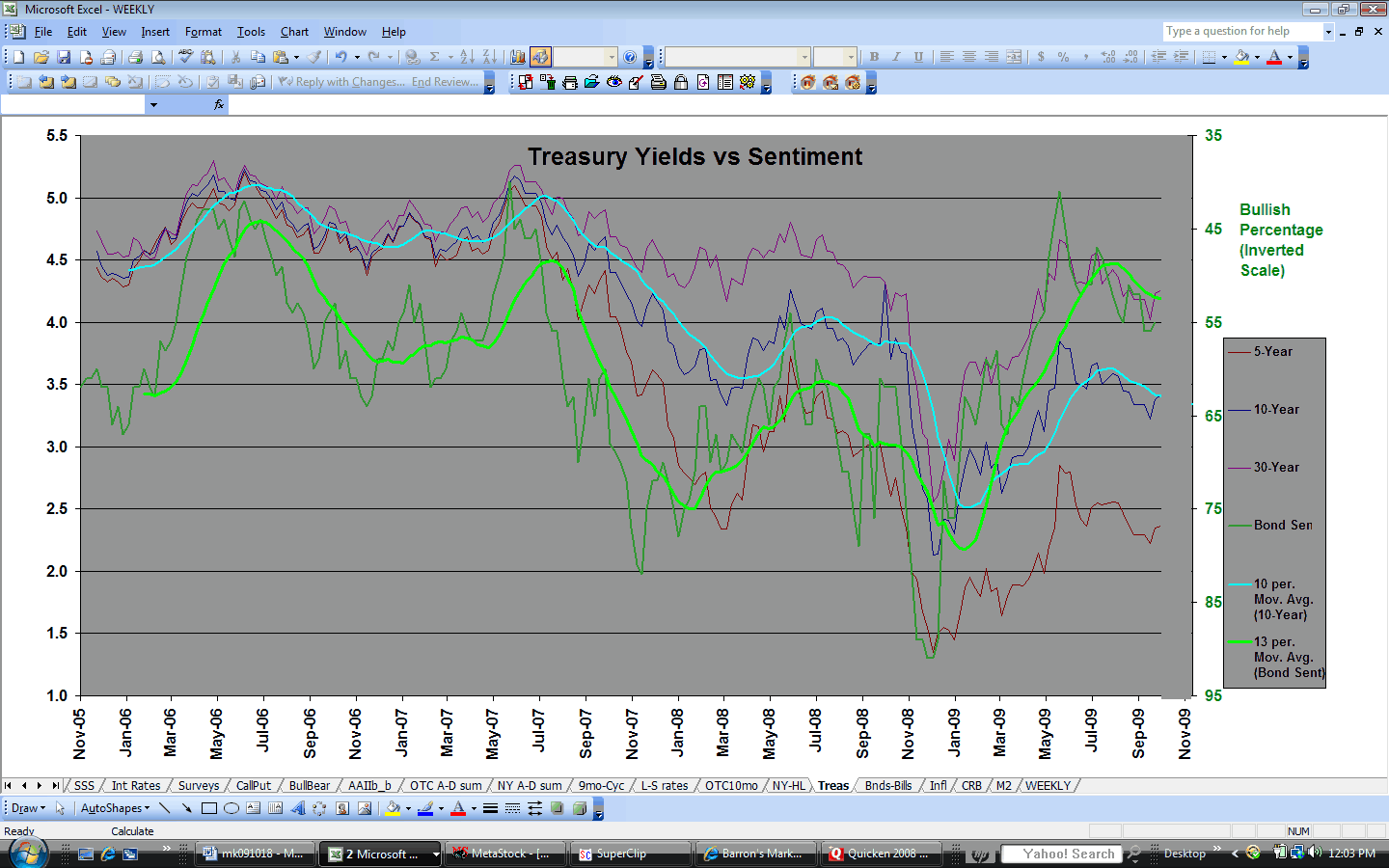
Treasury yields (http://www.geocities.com/petegersb/TreasuryYield-10yr.GIF stalled at the coincident 10-wk and 9-mo moving averages after gapping hugely to that level on the first news of the $700 billion bailout. Little wonder that rates didn’t drop during last week when the year-over-year increase in the treasury’s debt surged from $640 billion to $794 billion. When the bailout swings into action, that number will rise to well over a trillion. We’ll probably have to pay those foreigners higher rates to buy all that new paper, but in the short-term, Treasury bonds (http://www.geocities.com/petegersb/Treasury-20yr.GIF ) are oversold and should be able to rally little before being torpedoed by the longer cycles. Inflation protected Treasuries (http://www.geocities.com/petegersb/TIPs.GIF) didn’t hold up as well as the conventional variety. It seems that bond investors believe that the CPI (http://www.geocities.com/petegersb/CPI.GIF ) rate of inflation will average only 1% over the next 5 years. They seem to be betting on an extended recession or depression. Corporate bonds (http://www.geocities.com/petegersb/CorporateBonds.GIF) added to their huge losses from the prior week. Mixed cycles suggest no significant recovery any time soon. Bond sentiment (http://www.geocities.com/petegersb/BondSentiment.GIF) has now confirmed a bleak intermediate outlook for bonds.
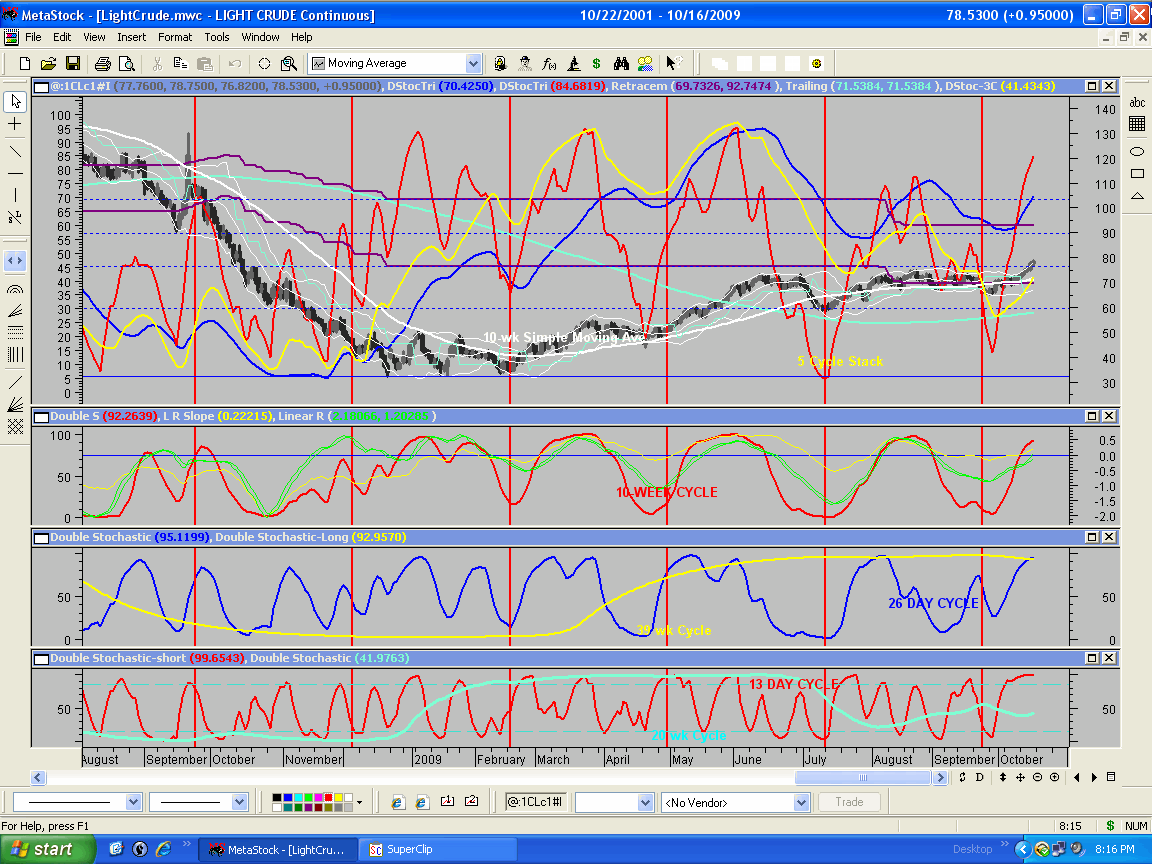
Crude oil (http://www.geocities.com/petegersb/CrudeOil.GIF ) spiked well above my short-term target of $110-$115 on a furious short-covering rally in the expiring contract on Monday. On the roll to the October contract on Tuesday, it settled back below the 9-mo and 10-wk moving averages. The short cycles are trending downward or are overbought, but the intermediate trend is now favorable.
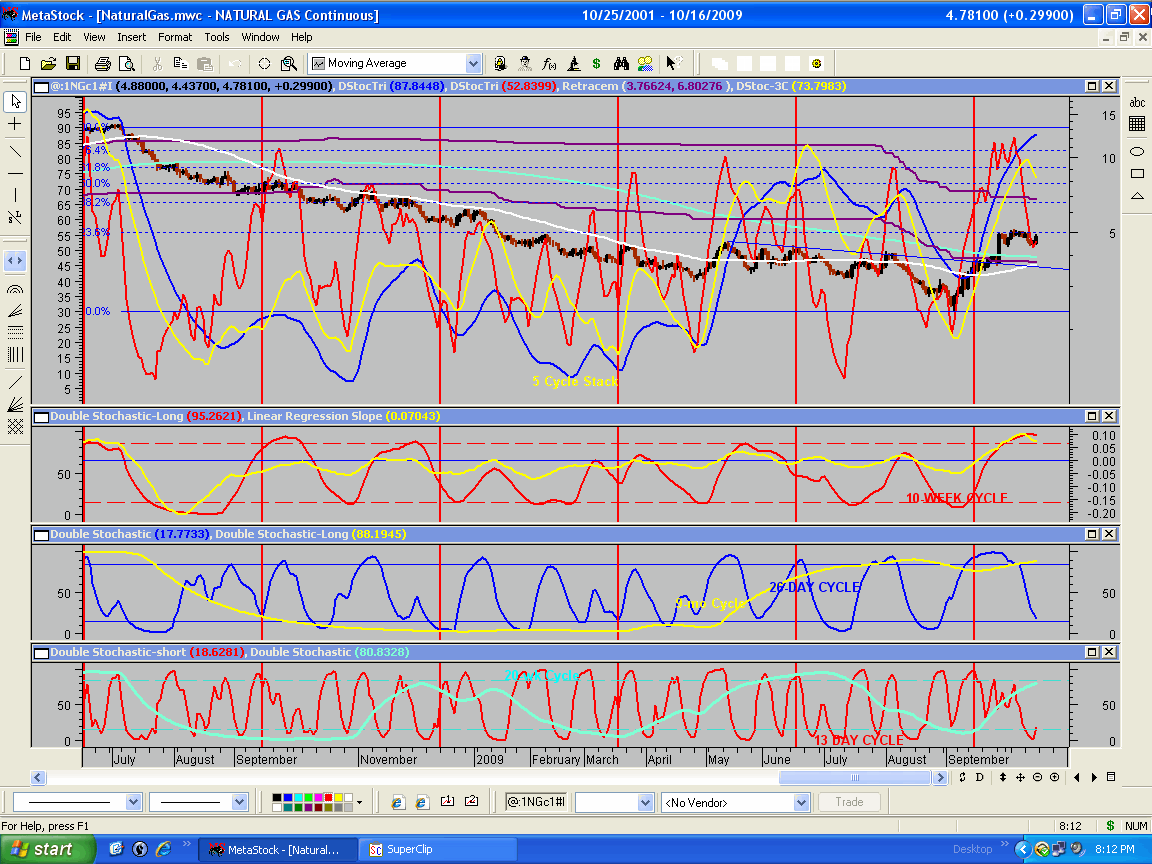
Natural gas (http://www.geocities.com/petegersb/NaturalGas.GIF ) ended the week close to where it started, but the short-term trend turned down and the intermediate trend is flat. It doesn’t look attractive for the next few weeks.
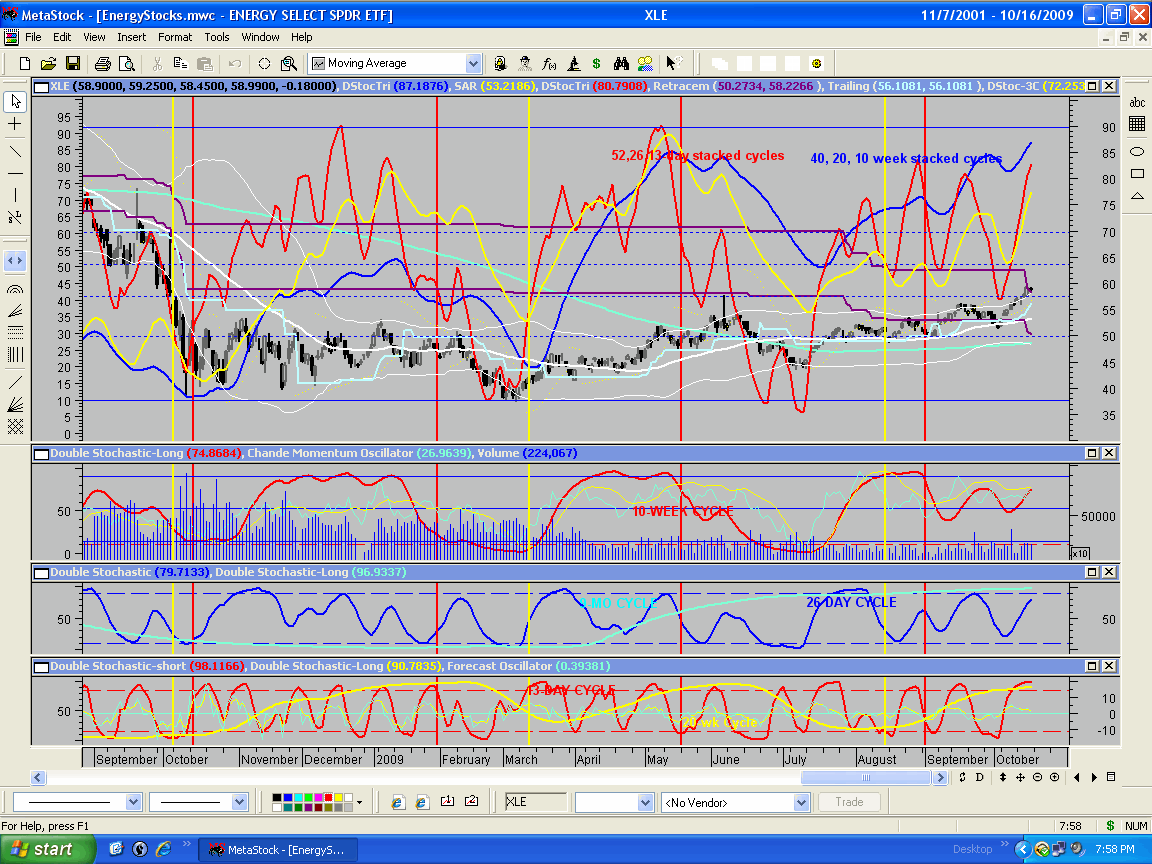
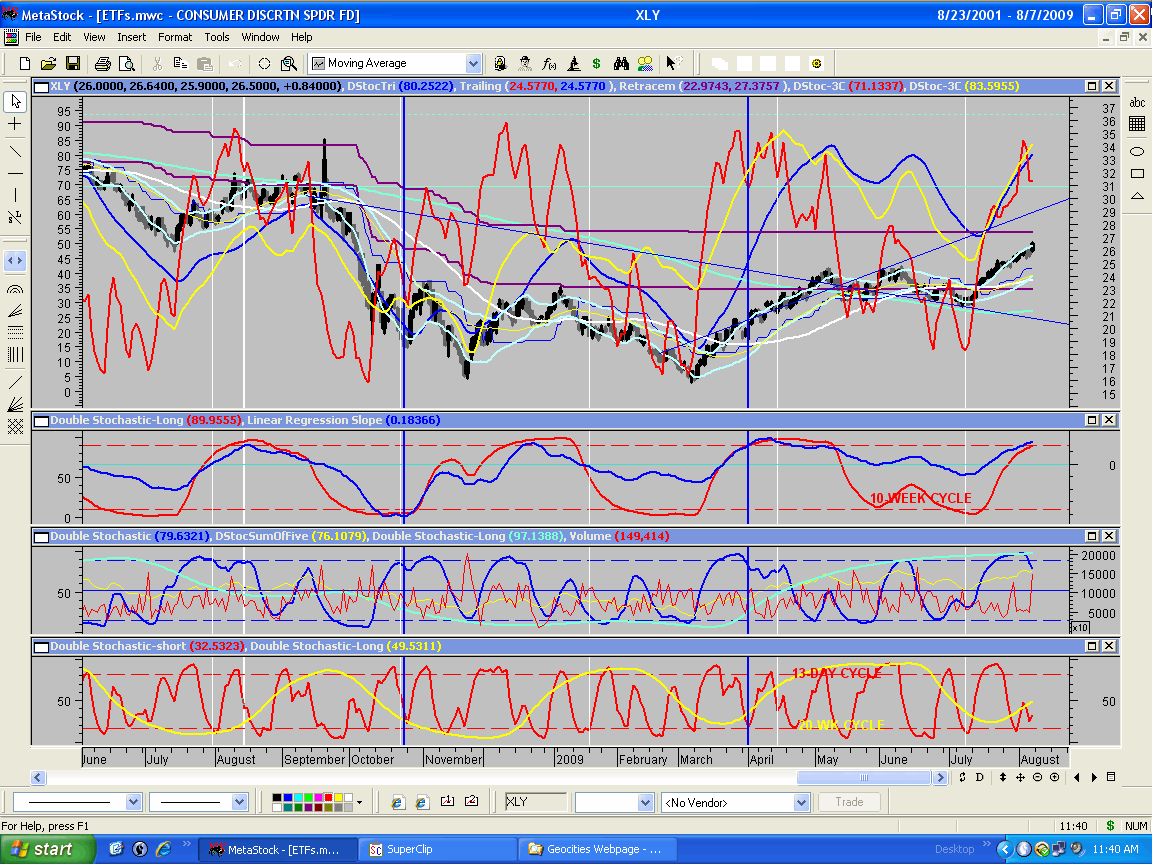
Energy stocks (http://www.geocities.com/petegersb/EnergySPDR.GIF) declined last week, but not as much as materials (http://www.geocities.com/petegersb/Materials.GIF ), Financials (http://www.geocities.com/petegersb/Financials.GIF ), Industrials, or Consumer Discretionary (http://www.geocities.com/petegersb/ConsumerDiscretionary.GIF ). The defensive sectors held up better. The short-term looks fairly neutral this week, but the intermediate-term leans positive.
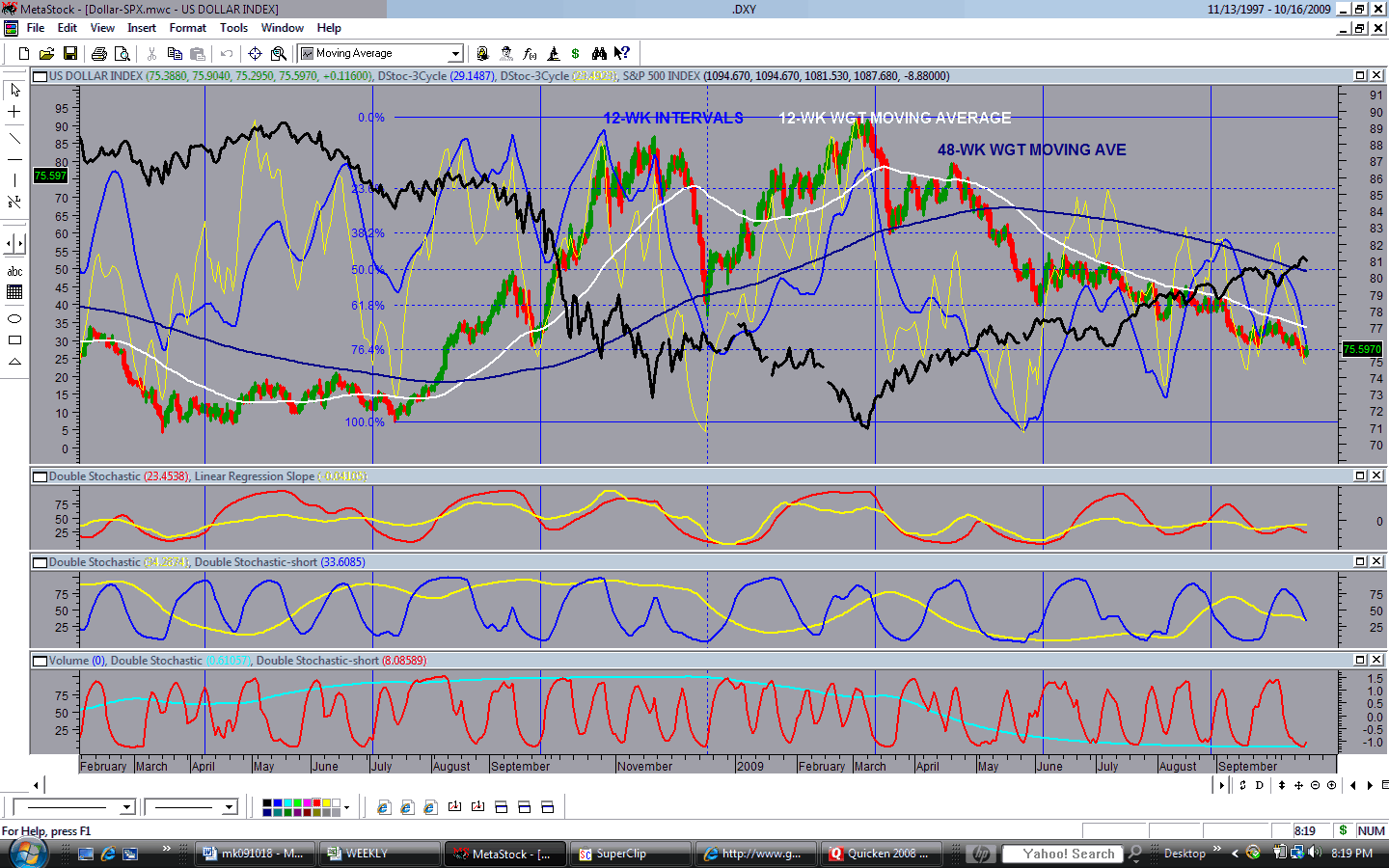
The dollar (http://www.geocities.com/petegersb/Dollar.GIF) pulled back to its 10-wk moving average before initiating the expected short-term bounce. So far it’s a weak bounce that did nothing to reverse the intermediate downtrend. The intermediate cycles suggest that the bailout will hurt rather than help the dollar. That’s no surprise given the coming surge in borrowing requirements.
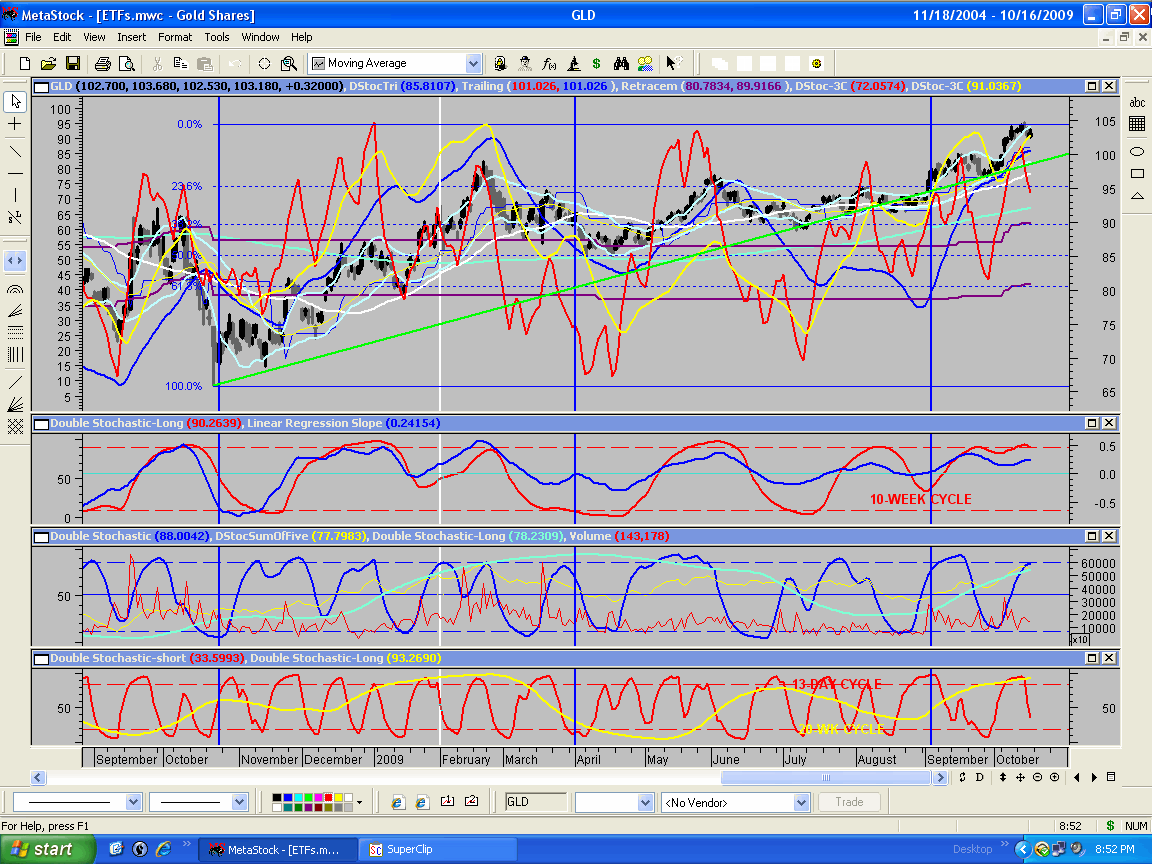
Gold (http://www.geocities.com/petegersb/GoldBullion.GIF) stalled at its 9mo moving average, and the short-term
composite turned down last week. The short cycles should drive it back down to
the 10-wk moving average, but the intermediate uptrend is intact and the 20-wk
cycle should remain favorable for a couple of months.
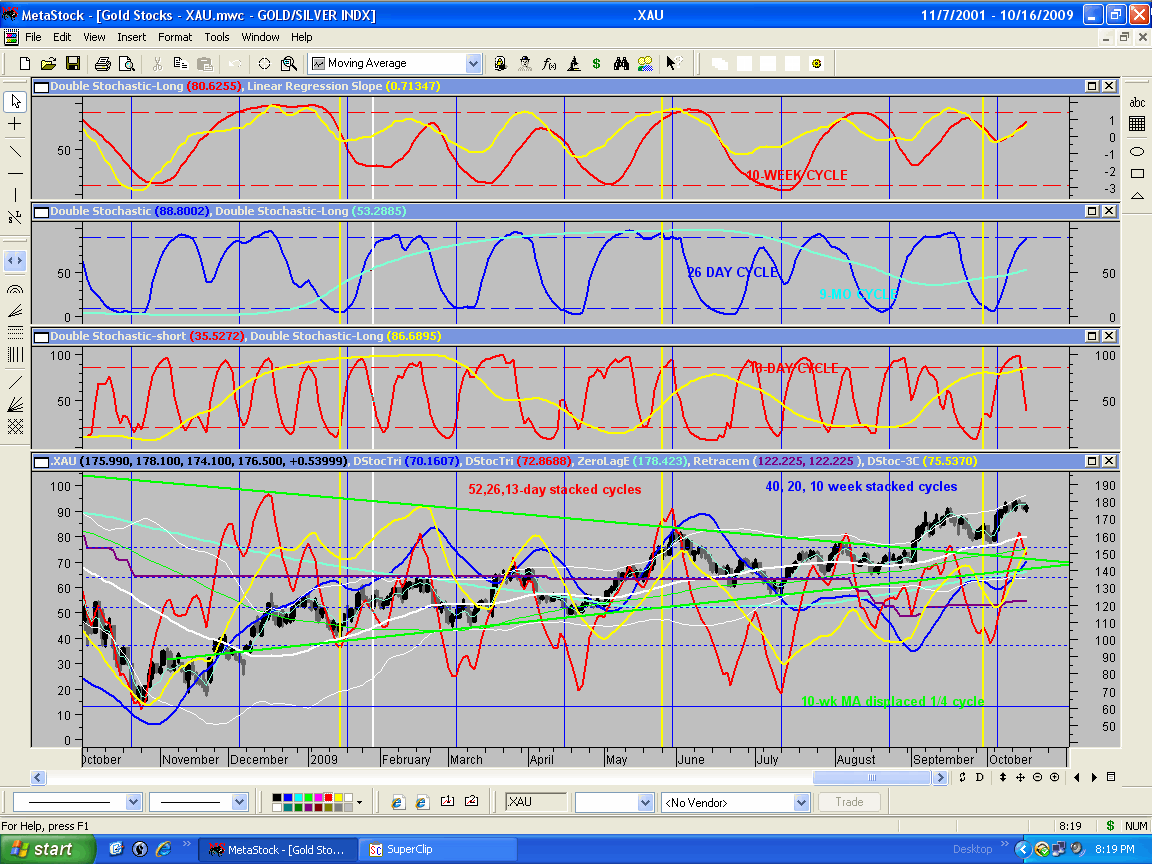
Gold Stocks (http://www.geocities.com/petegersb/GoldStocks.GIF
) stalled at the steeply declining 10-wk moving average as the short-term
composite turned down. However, the
intermediate trend is favorable and should provide good support during the
short-term correction.
Finally, having seen the Friday
night debate and last week’s Sara Palin interview, I can’t resist a little
political commentary. John McCain continues to rely largely on two invalid
claims. First, he asserts that Obama is not ready for the presidency. After selecting
Palin and hearing the incoherent nonsense she spouted in answering her TV
interviewers, it’s amazing that McCain can keep a straight face while making
that claim. Today she contradicted McCain’s position on pursuing terrorists
into
Second he continues to assert that
Obama will raise your income taxes, neglecting to concede that it’s only on the
5% of you that earn over $250,000 annually. And when he complains about raising
the capital gains tax potentially to the levels in effect during the prosperous
pre-Bush years, he neglects to mention that those increases will fall largely
on the wealthy as well. The middle class realizes the bulk of its capital gains
in tax-deferred accounts such as 401Ks and IRAs. These gains are ultimately taxed
at ordinary income tax rates, so these people gain no benefit from favorable
capital gains rates. And there is no
reason why tax policy should penalize work any more than capital investment at
any income level. It’s quite obvious that the higher capital gains rates during
the 90’s didn’t deter risk taking in any significant way. Sadly, McCain’s once-upon-a-time straight-talk
express derailed with the onset of the presidential campaign.