9/14/08
We go to press as another government guarantee for a takeover of a failing financial institution looms. It’s becoming a weekly affair as necessity belatedly trumps free-market ideology in this administration. Considering the number of financial institutions threatening failure, the market performed well last week. There were a lot of fireworks, but in the end there was little change. If no rescue of Lehman materializes, this week may not be so benign, but the cycles suggest a little more short-term bounce for stocks. On the other hand, interest rates, energy, gold and the dollar all appear to have made intermediate-term reversals late last week – all in directions that tend to be unfavorable for stocks.
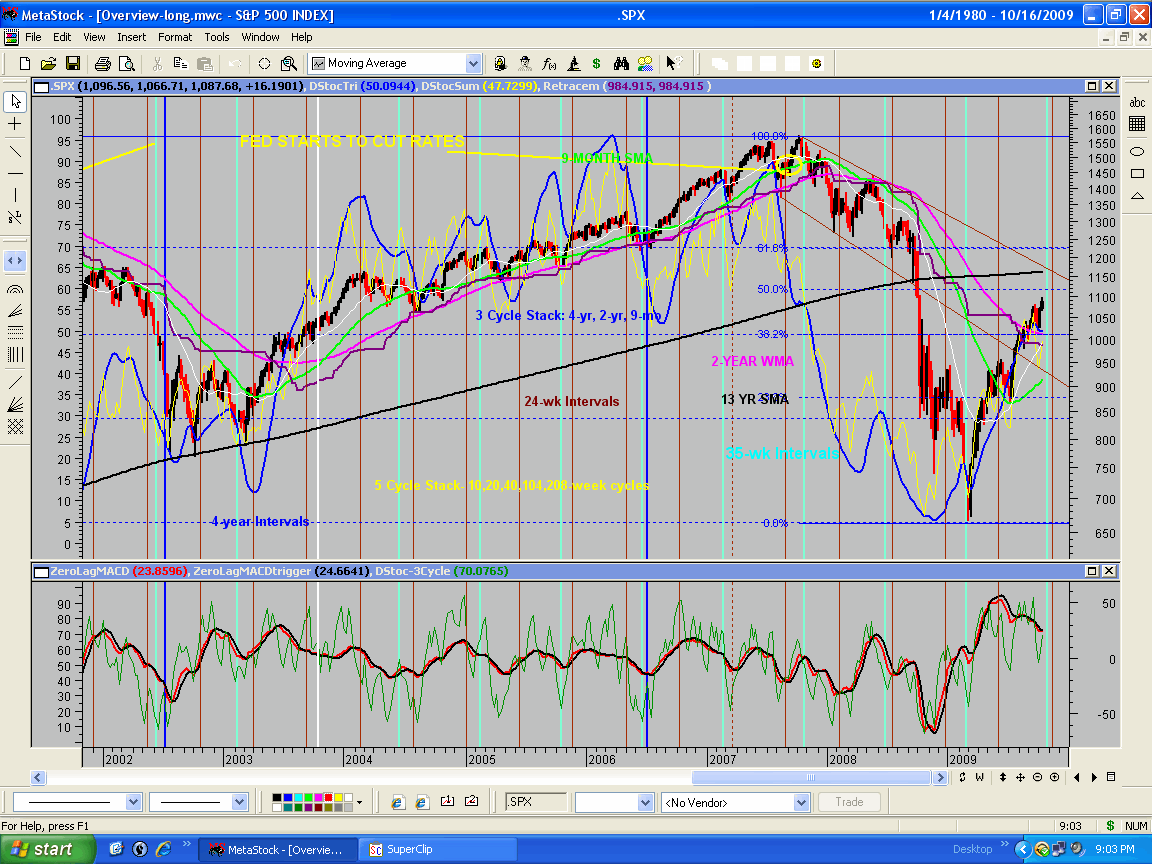
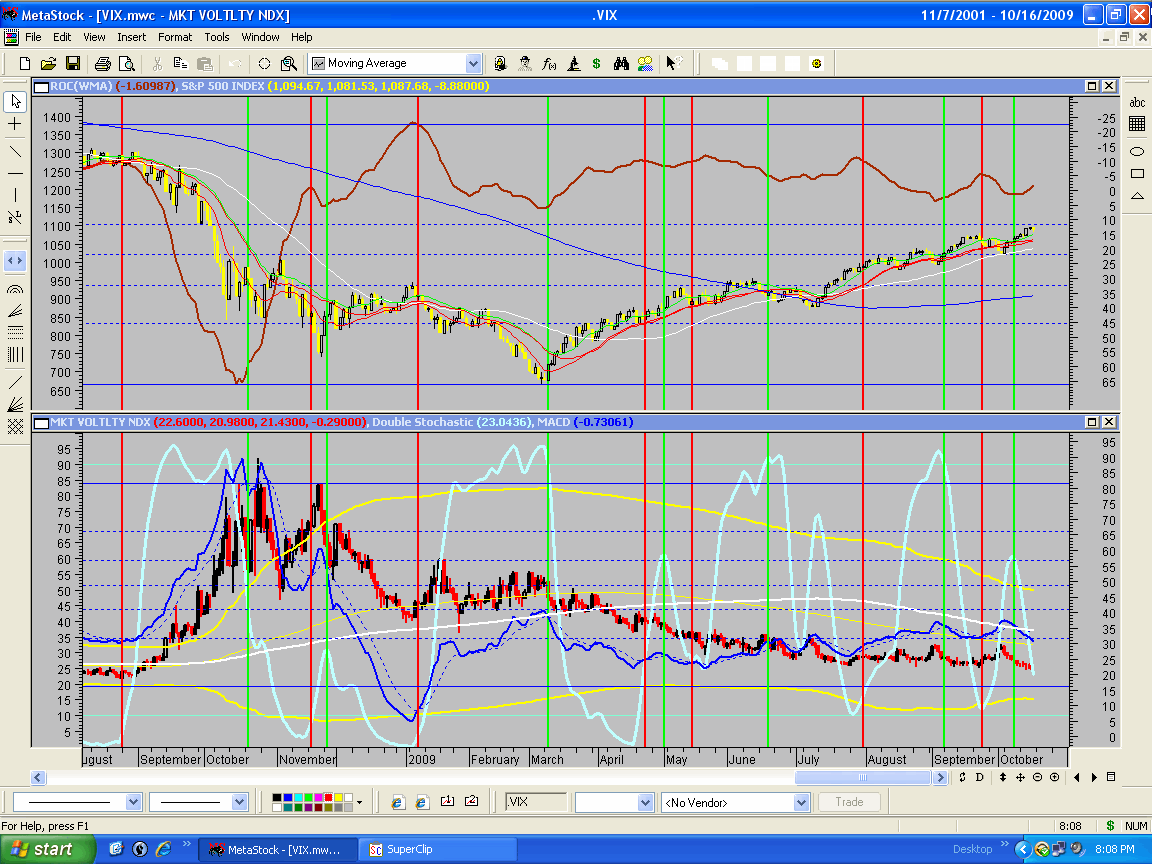
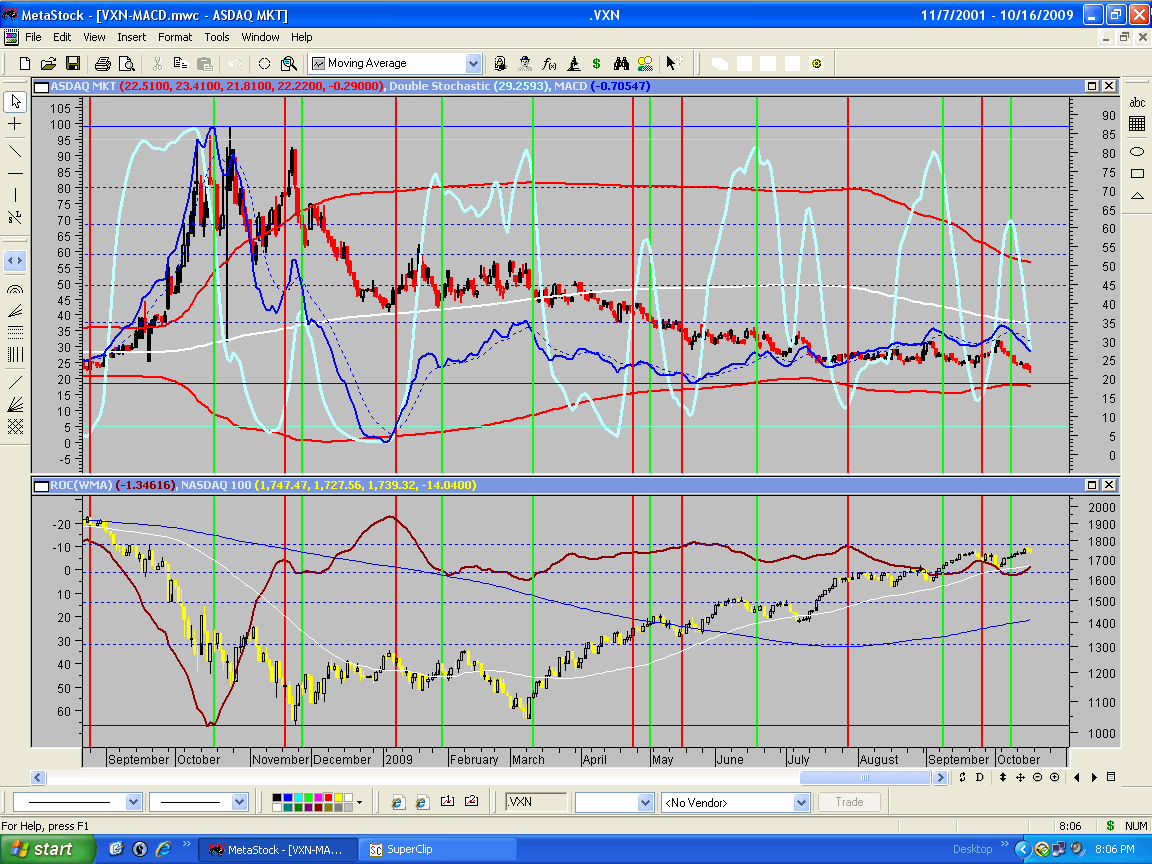
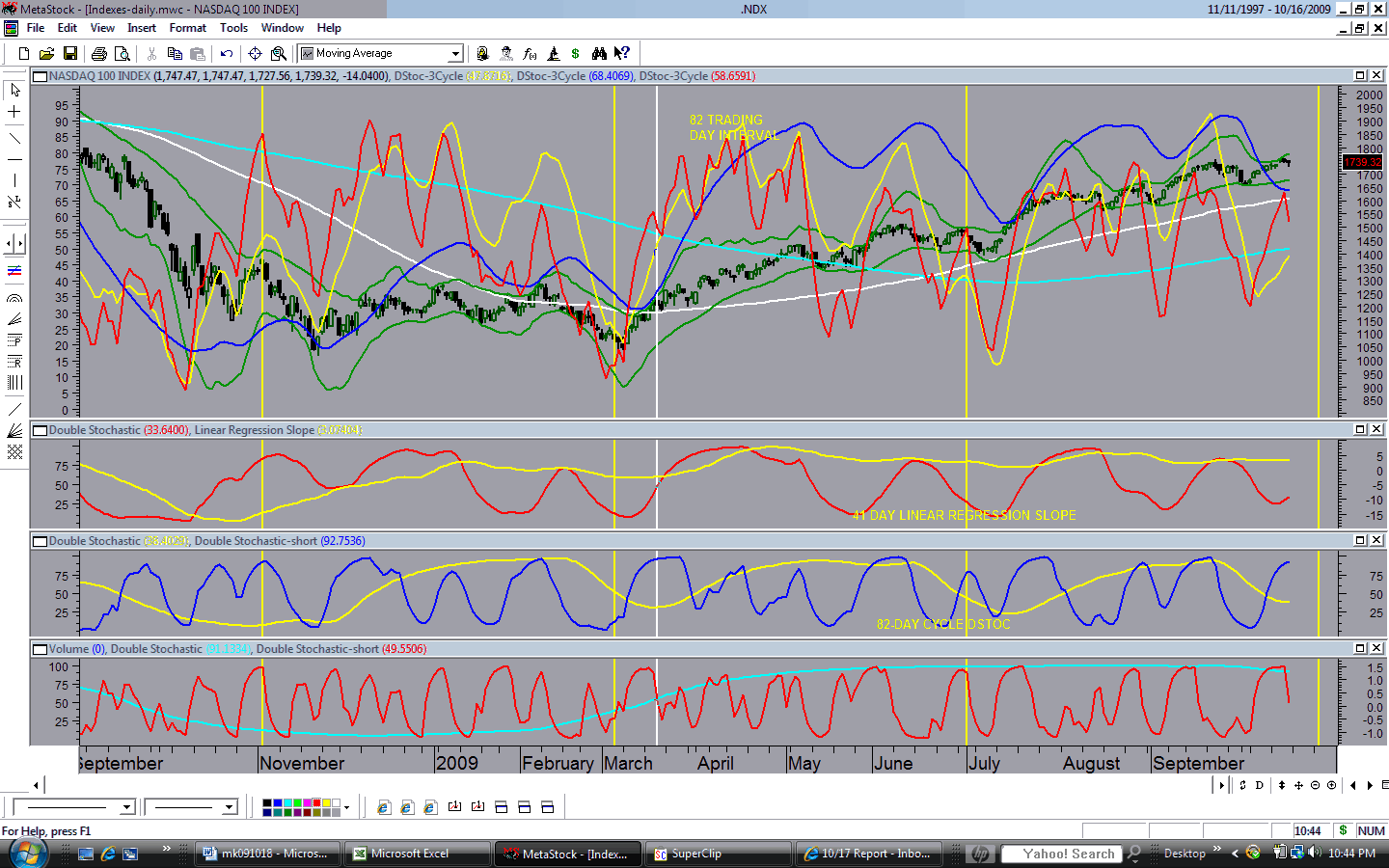
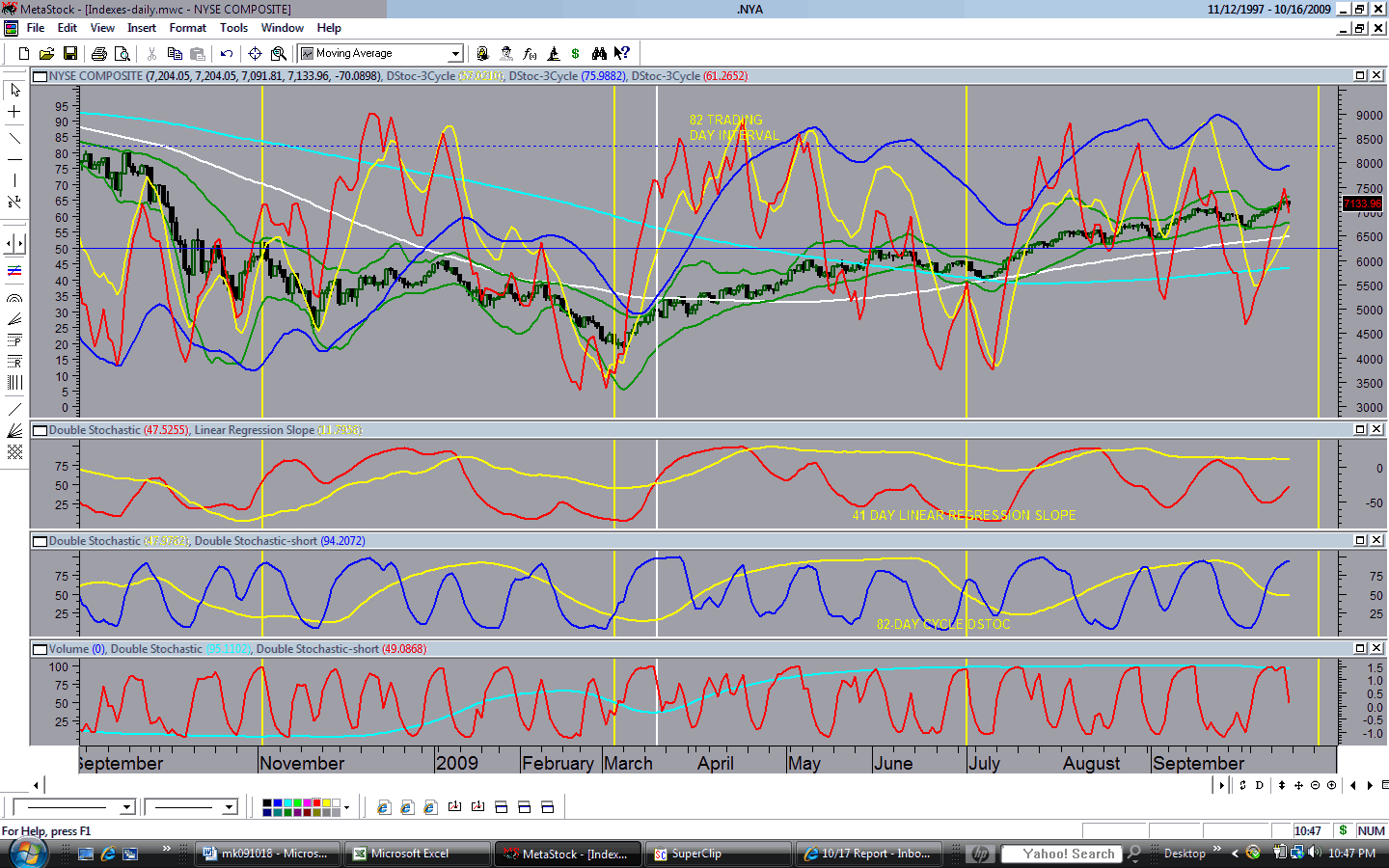
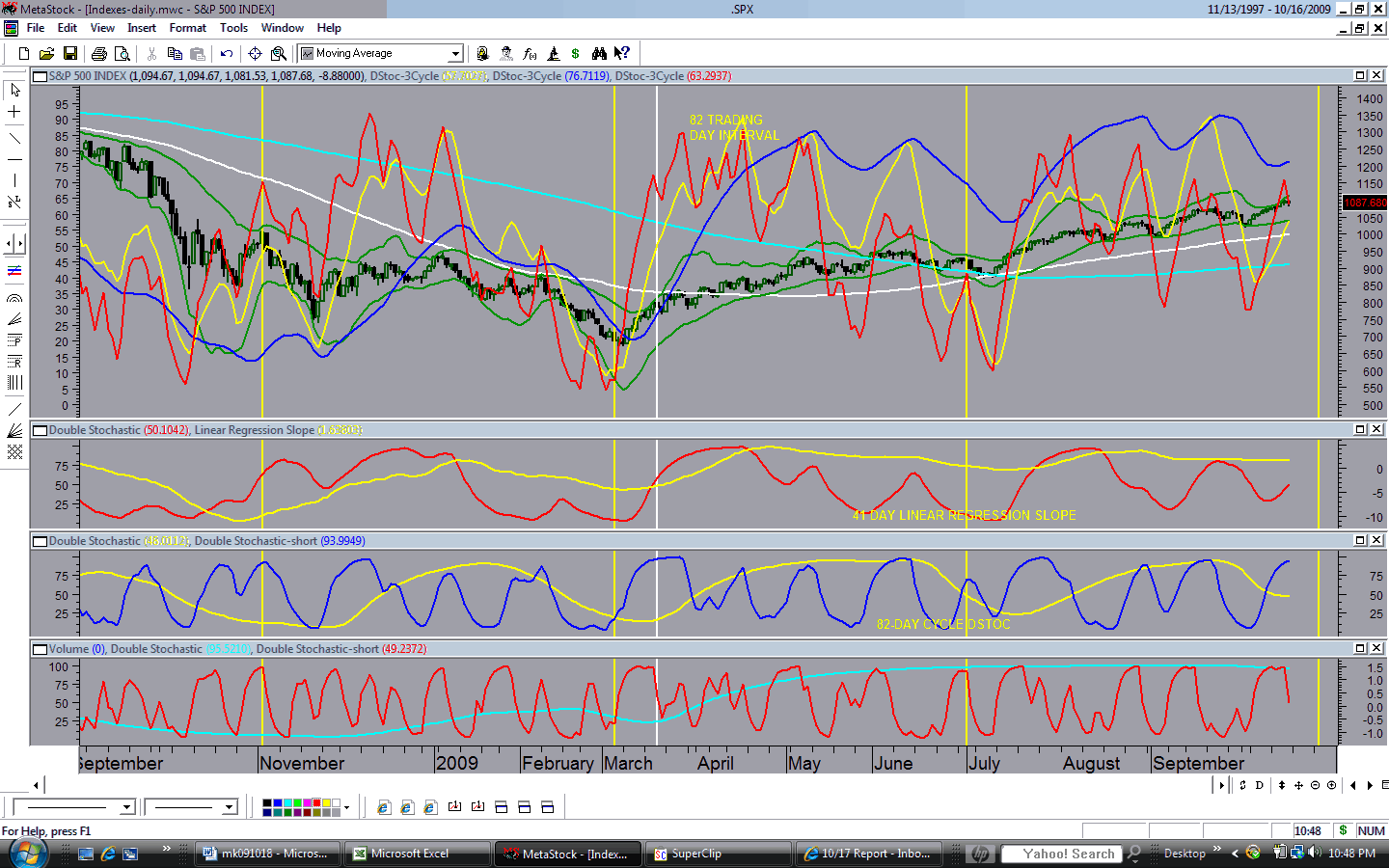
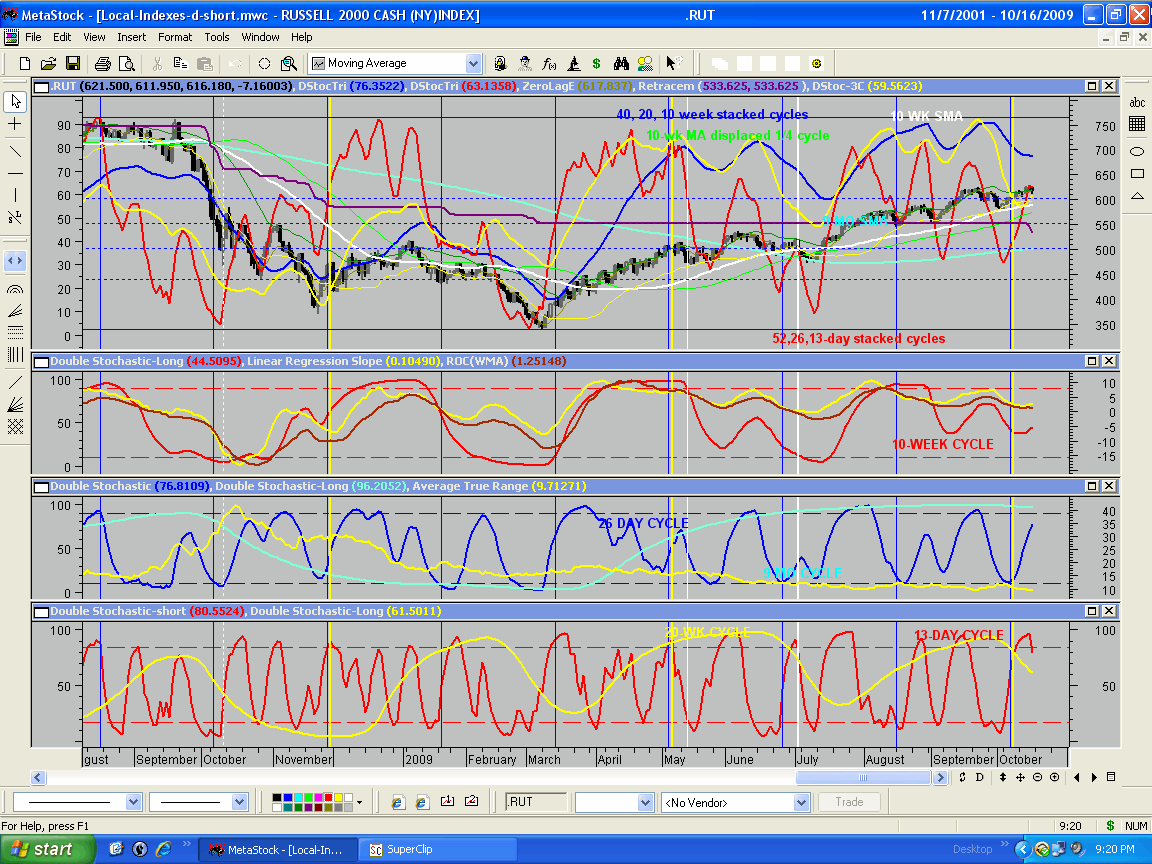
Last week I wrote: “All cycles are now trending downward, but the 13 and 26-day are moderately oversold. Consequently, a miss by hurricane Ike may provide another brief relief rally. But the 10-wk cycle should maintain the downward pressure through most of this month, and the 20-wk and 9-mo cycles (http://www.geocities.com/petegersb/Overview-med.GIF , http://www.geocities.com/petegersb/Overview-long.GIF ) should maintain the downward pressure for about another 3 months.” At the end of the trading week, slow moving Ike still hadn’t made landfall, but a short-term bottom was established on Thursday, which was day 27 of the 26-day cycle and day 11 of the 13-day cycle. It may prove to be a bottom for the 9-wk old 10-wk cycle as well, but there is no evidence of that yet. The DStocs on both the price indexes and on the daily VIX (http://www.geocities.com/petegersb/VIX.GIF) and VXN (http://www.geocities.com/petegersb/VXN.GIF) have gotten in position for a turn, but it hasn’t happened yet. In any case this 10-week cycle low will be lower than the last on the NDX (http://www.geocities.com/petegersb/NDX.GIF) and the NYA (http://www.geocities.com/petegersb/NYSE.GIF ), but probably not on the SPX (http://www.geocities.com/petegersb/SP500.GIF) and almost certainly not on the Russell small cap index (http://www.geocities.com/petegersb/Russell2000.GIF ). The latter was the only index without a lower 10-week cycle high. So the evidence of longer cycle downtrends in the large-cap indexes is pretty clear, but not quite so obvious for the small caps.
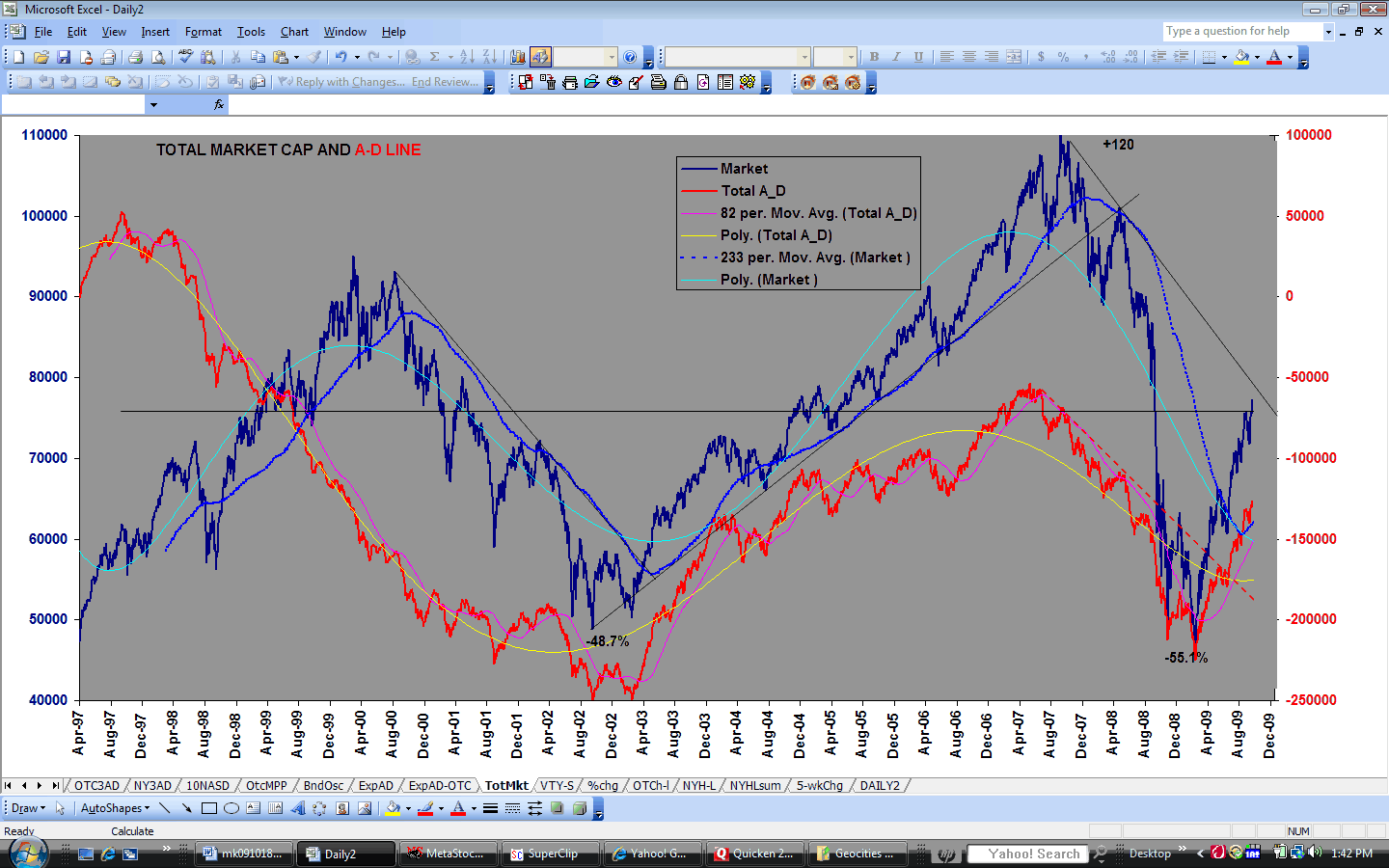
That dichotomy can also be clearly seen in a comparison of the total market capitalization, which has broken a little below the bottom of its downtrend channel, with the total Advance-Decline line, which remains in the middle of its downtrend channel and even above its July low (http://www.geocities.com/petegersb/TotalMarket.GIF ). The improved breadth, however, is a fairly recent phenomenon. The A-D line is well below its 2006 four-year cycle low, while the capitalization index remains a bit above that level. To a large extent, the poor performance of the large caps since May derives from the collapse of the Financials (http://www.geocities.com/petegersb/Financials.GIF ), which were the largest component of the capitalization weighted indexes last year. To what extent the remainder of the economy will be dragged down by the near collapse of our financial system remains a matter of conjecture. Once consumer deficit spending is seriously impacted, probably a lot, and it’s clear that the impact is now being felt. Mauldin (http://www.frontlinethoughts.com/gateway.asp ) has another excellent article on the problems still facing our economy. He remains optimistic that we will muddle through, but that it will likely take quite a few years. For example his data projects that housing is only about half way to its bottom, both in time and magnitude. With a projected low in 2010, that would be about the right time for a 4-year cycle low in stocks as well.
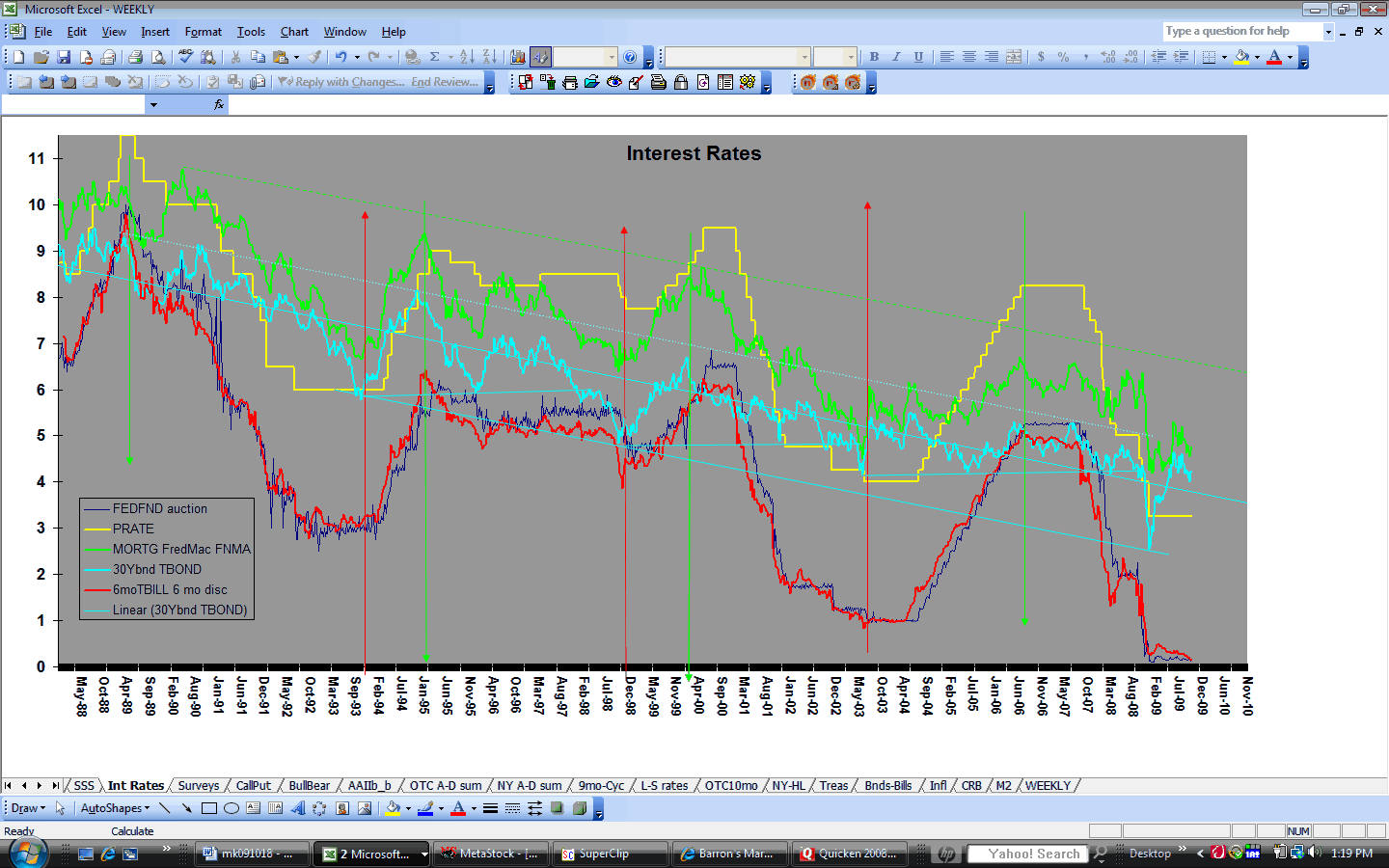
Mortgage rates (http://www.geocities.com/petegersb/InterestRates.GIF ) took a big dive last week, presumably as a result of our big government keeping Fannie and Freddie in business. That will enable a few more buyers to pick up perceived bargains, but probably not nearly enough to absorb the tide of foreclosures still coming. Sales have picked up a bit recently but the housing inventory keeps rising.
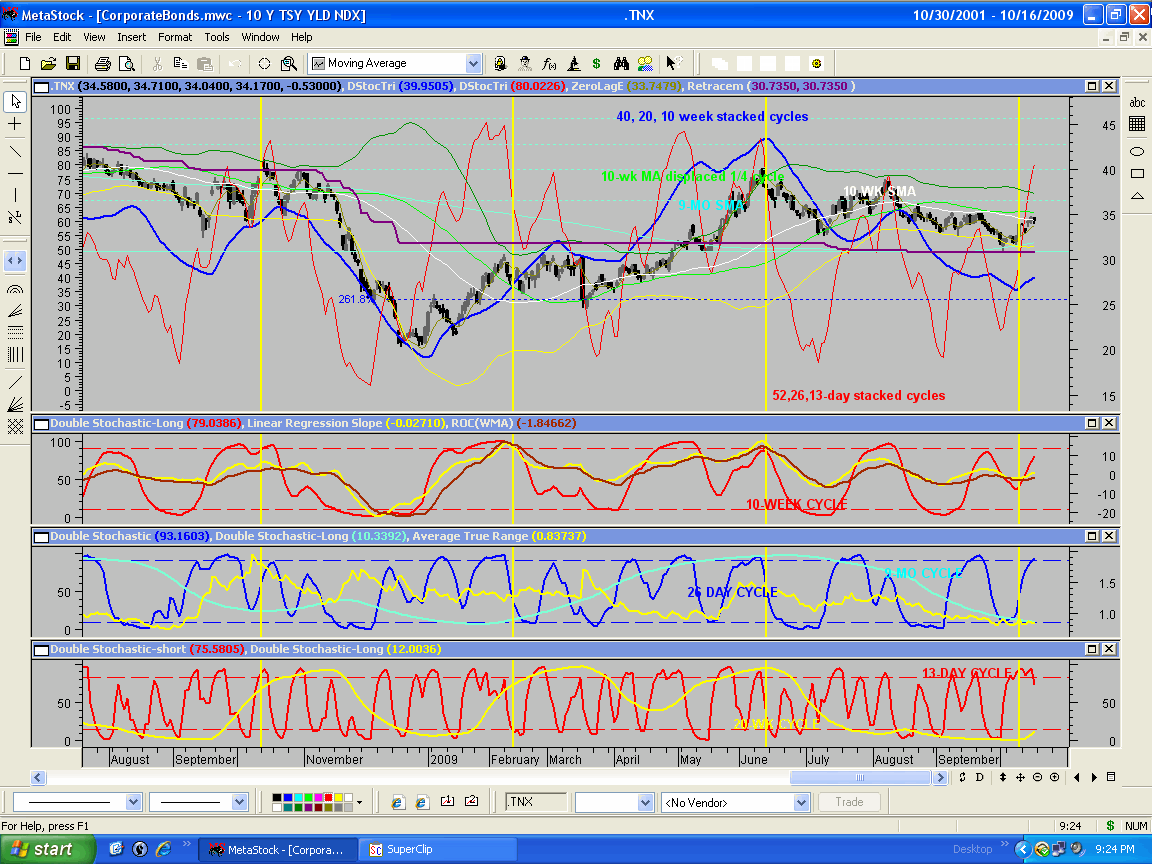
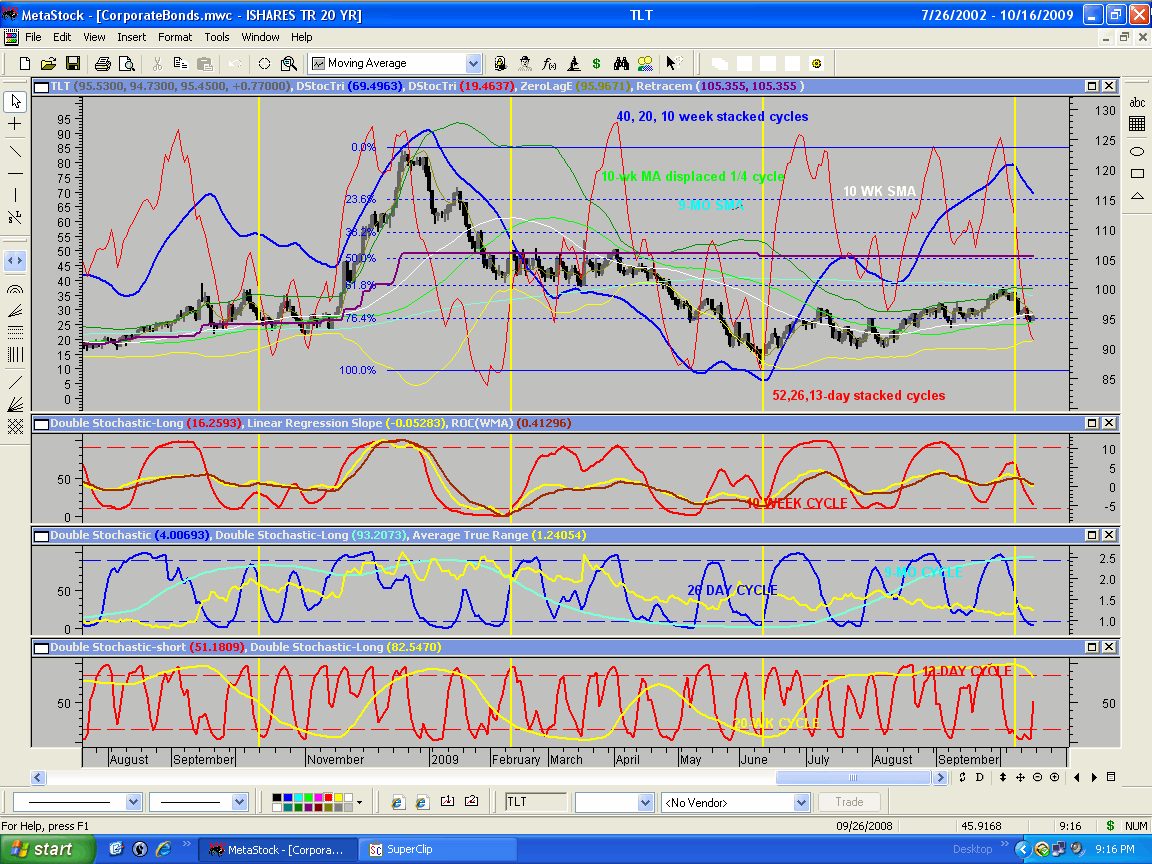
T-Bond yields (http://www.geocities.com/petegersb/TBondYield-weekly.GIF ) dropped early in the week, but on Friday bounced sharply off of the lows tested in 2003, 2005 and early this year. Ten-year note rates (http://www.geocities.com/petegersb/TreasuryYield-10yr.GIF ) didn’t get that low, but the cycle patterns are similar. It’s pretty clearly a 10-wk cycle low in rates, and probably a 20-week/9-mo cycle low as well. Treasury bonds (http://www.geocities.com/petegersb/Treasury-20yr.GIF ) have been a safe haven for the last three months, but no longer.
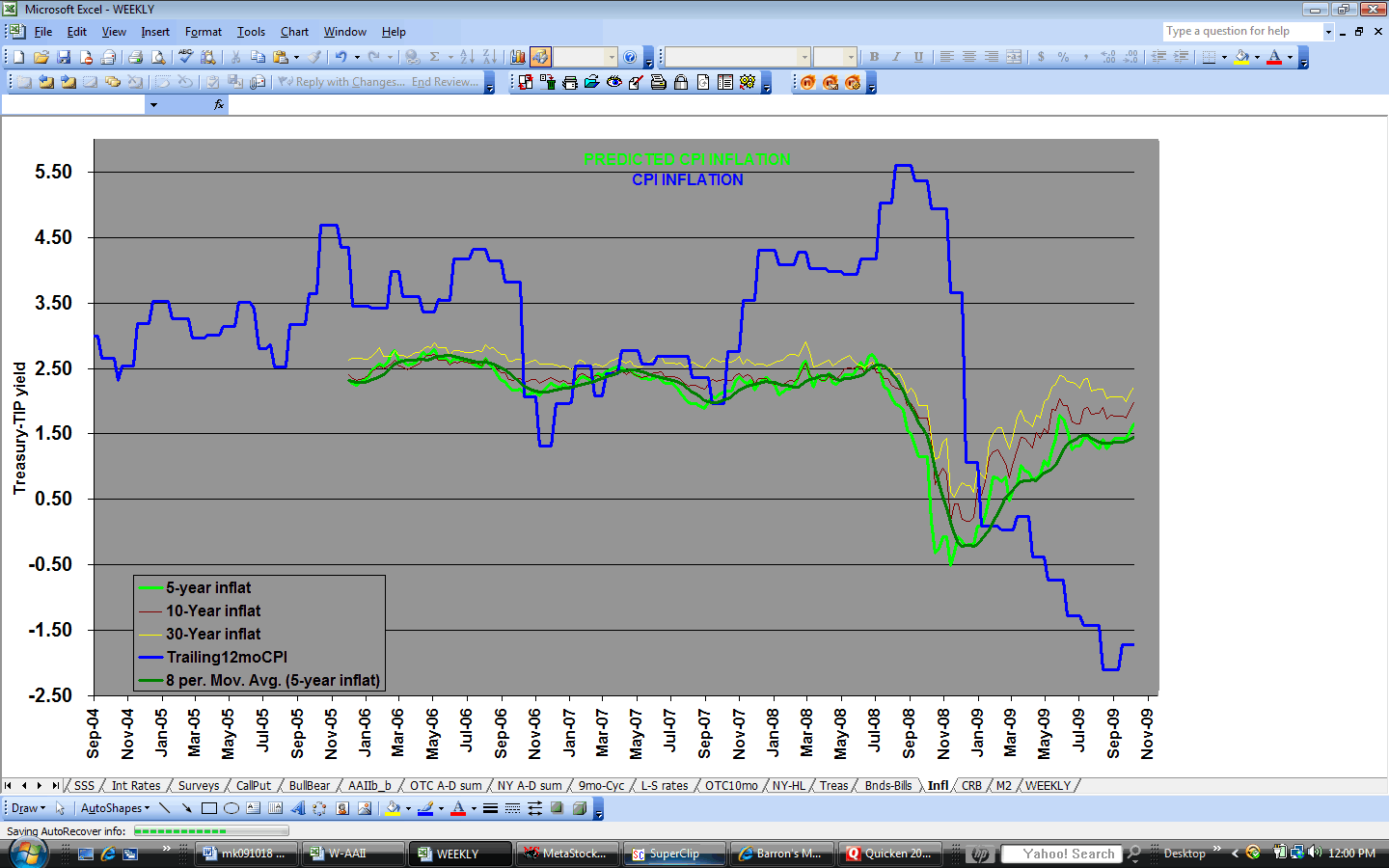
If you look only at the month over month data on the Producer Price Index, it’s a bit surprising that interest rates would rise so sharply on the very day when the PPI showed such a large drop. However, because the energy component also dropped steeply during August of last year, the year-over-year change in the PPI is still a very inflationary 9.6% compared to 9.8% a month ago. This week we’ll get a CPI report (http://www.geocities.com/petegersb/CPI.GIF ) that also probably won’t show any significant year-over-year drop.
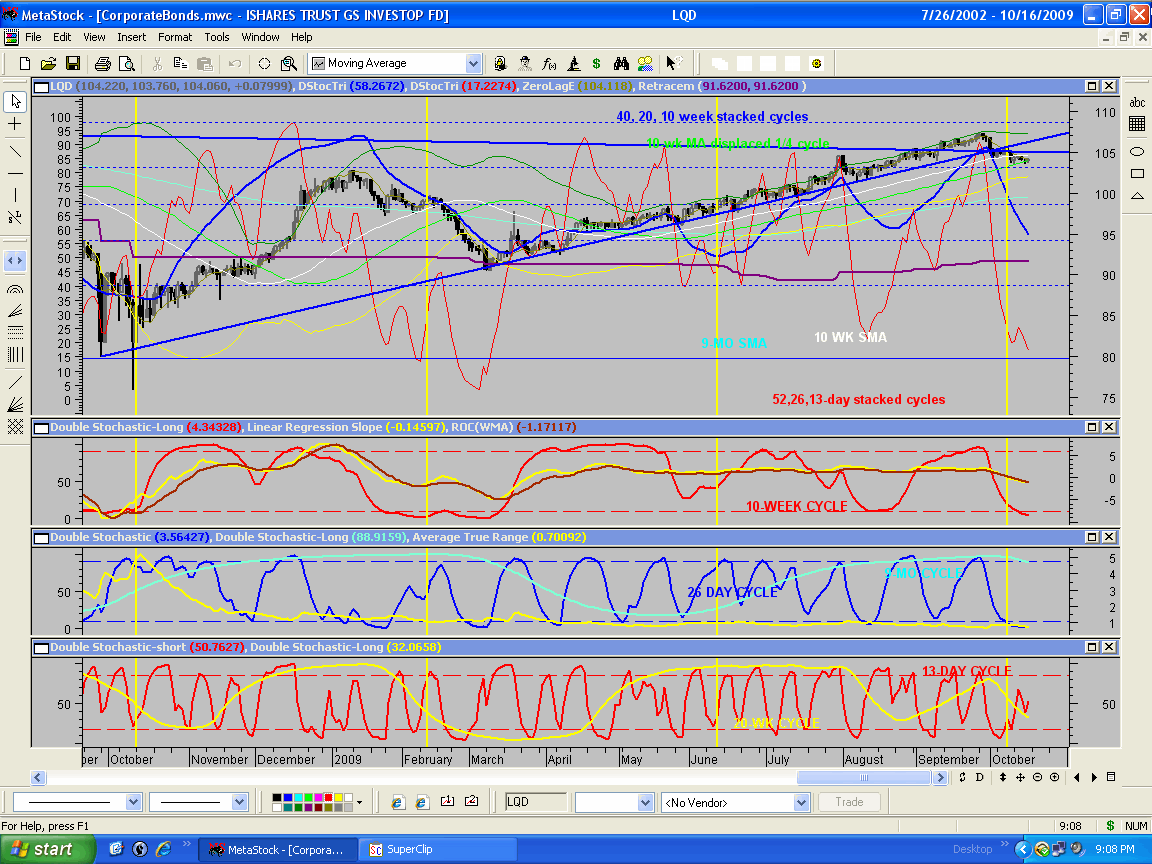
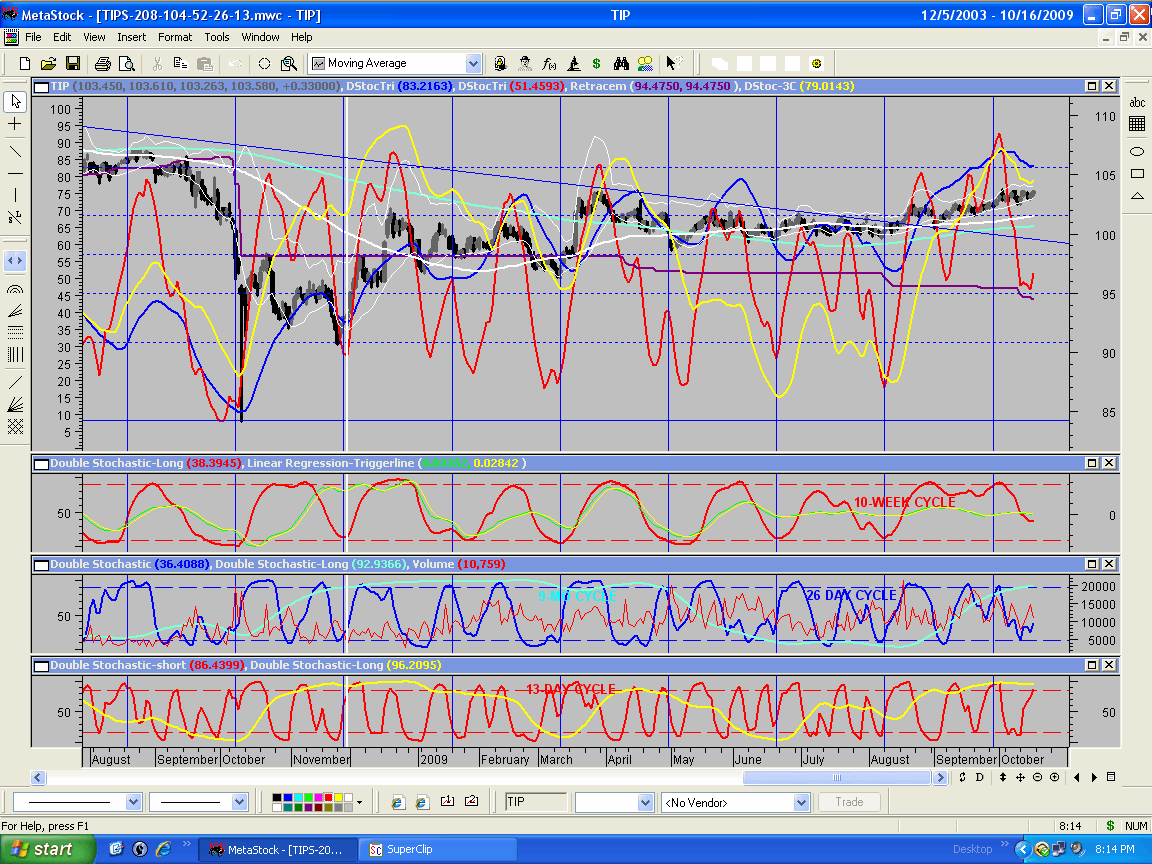
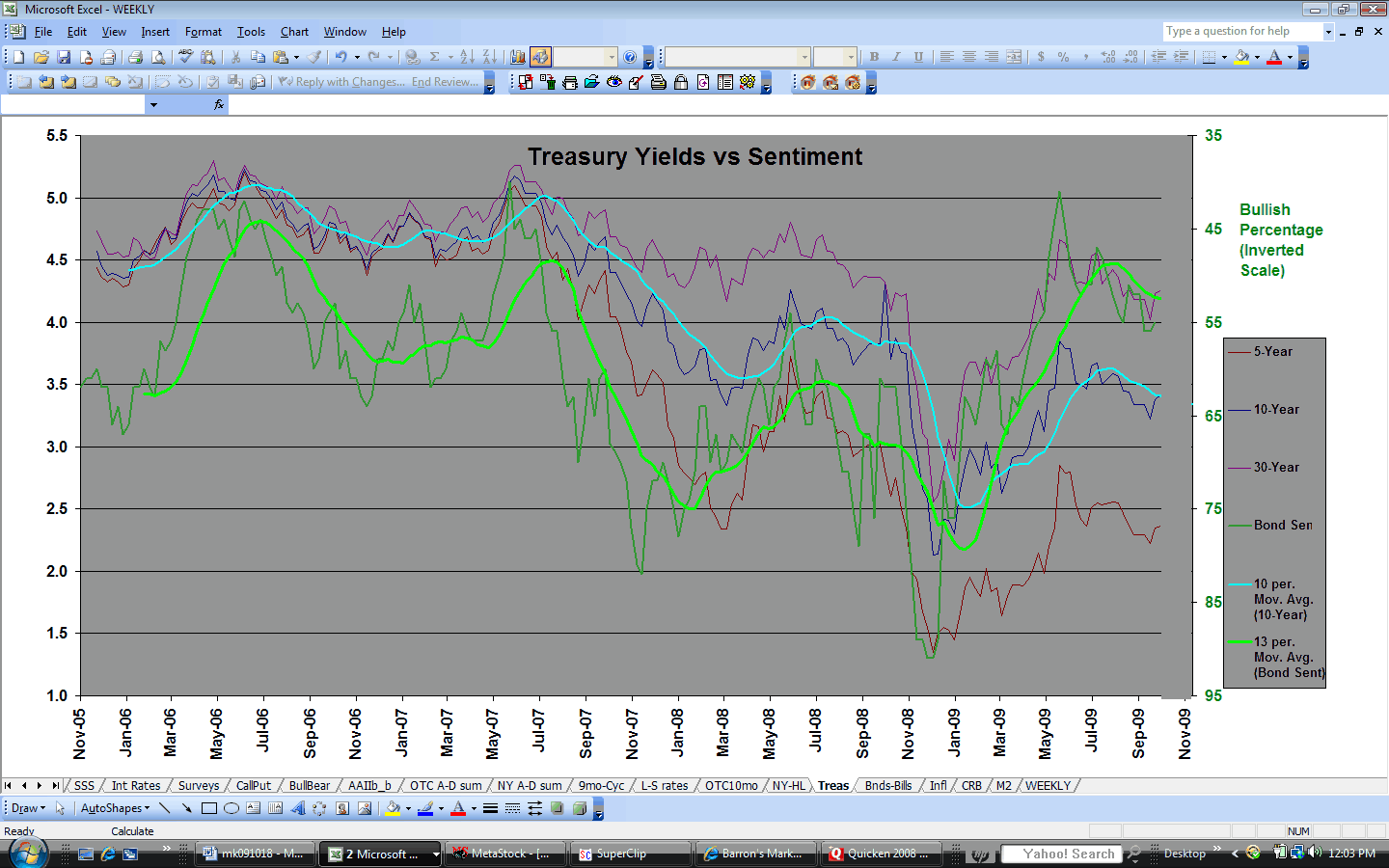
While treasuries were little changed for the week, corporate bonds (http://www.geocities.com/petegersb/CorporateBonds.GIF) again fared poorly as they contended with more downgrades in the financial sector. Inflation protected treasuries (http://www.geocities.com/petegersb/TIPs.GIF) were little changed, but remain in short and intermediate downtrends that threaten a new low for 2008 soon. Bond sentiment (http://www.geocities.com/petegersb/BondSentiment.GIF) continues to become more optimistic, but the level of enthusiasm has now reached dangerously high territory. Despite the weakening economy, it looks like interest rates are likely to move higher from here. If there are any surprises from the Fed meeting this week, they are unlikely to be interpreted favorably by bond investors.
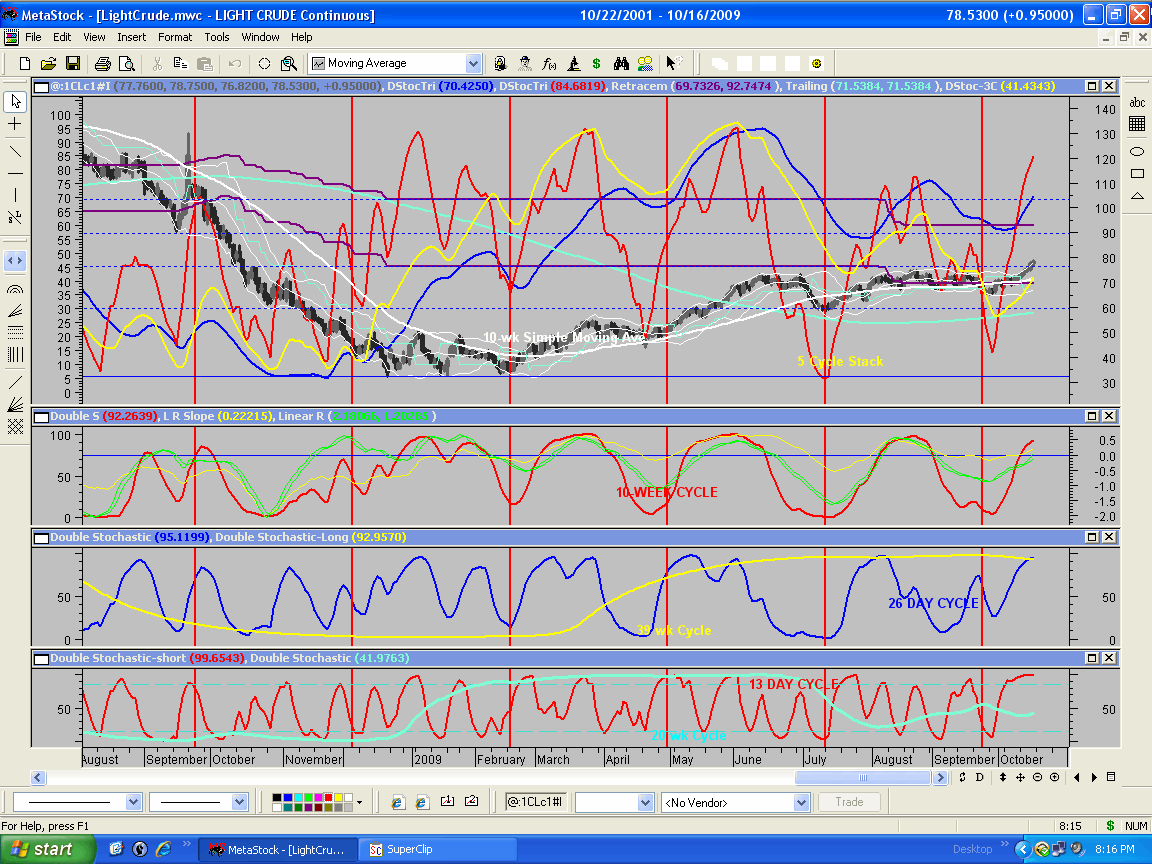
Crude oil (http://www.geocities.com/petegersb/CrudeOil.GIF ) is testing its long-term uptrend line at the $100 level with all cycles except the 10-week oversold. We can expect a 26-day cycle rally here, perhaps to test the underside of the 9-month moving average. But the 10-week cycle is only 4 weeks old and trending down from a left-translated top, so perhaps another selloff can be expected in the next month or so. If so, it probably would break the trendline before an intermediate rally can begin. For the sake of our energy future, let’s hope the price doesn’t fall much more. Conservation, which was motivated by high prices and a weak economy, has done wonders to break the upward spiral of prices. The worst thing for our long-range energy future would be for oil to continue dropping precipitously, thereby destroying our monetary incentive to conserve and convert to alternative fuels.
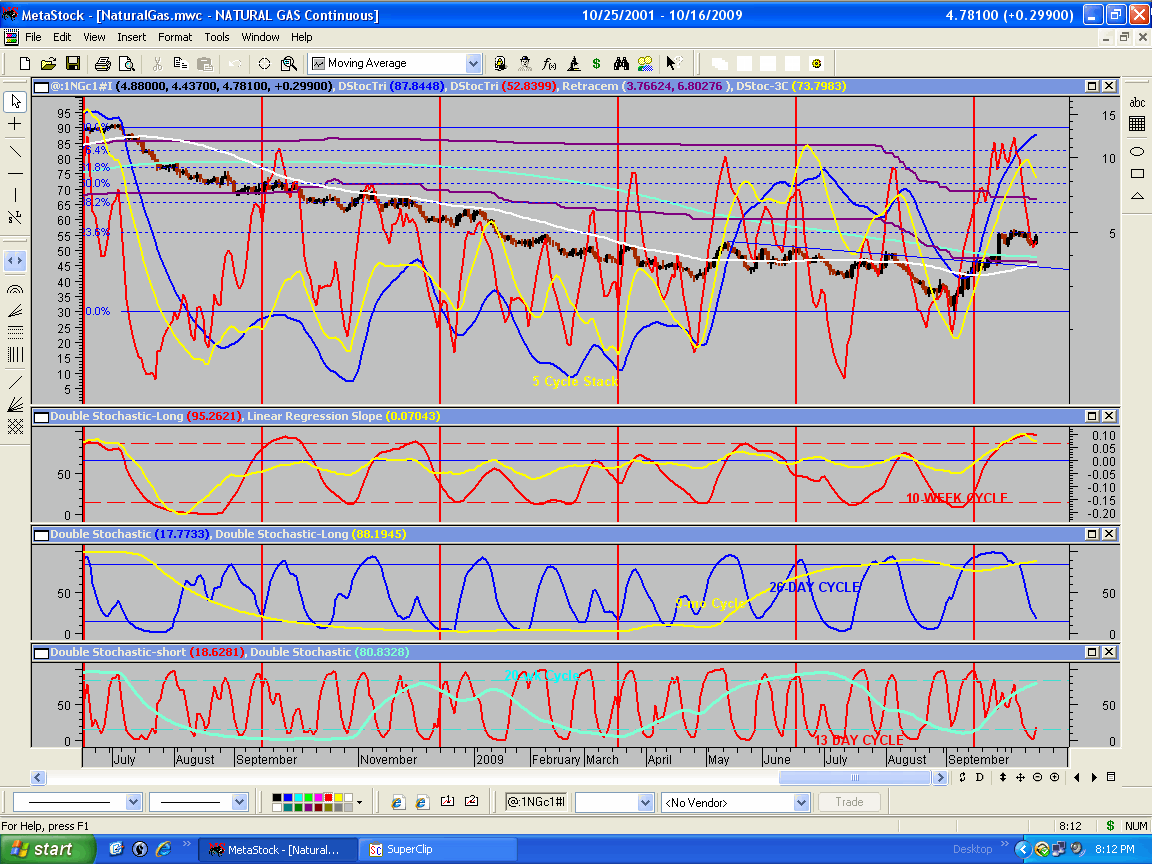
Natural gas (http://www.geocities.com/petegersb/NaturalGas.GIF ) managed only a very slight gain for the week despite help from the 13-day cycle, the 10-week cycle, and hurricane Ike. The down trending 26-day cycle is suppressing gains from the other short cycles, and preventing the oversold longer cycles from turning upward. A unit of energy from natural gas is much cheaper than the same amount of energy from oil; it’s cleaner burning; it’s largely domestically supplied; and we have large reserves. Its advantages are so overwhelming it’s hard to understand why this country hasn’t been focused on developing the technology and infrastructure to enable gas to be substituted for oil in more applications. The lack of an intelligent energy policy has now produced a record high for the ratio of the price of oil to the price of natural gas. From an average of about 7 during the first half of this decade, the ratio rose to a peak of over 15 in early September. Had we been serious about cutting our dependence on foreign oil instead of paying lip service while letting Cheney and the oil lobby establish energy policy, the auto companies would now be producing mostly vehicles powered by natural gas or electricity instead of oil, the oil/gas ratio would be at a record low instead of a record high, and McCain and Obama wouldn’t have had any reason to reverse their former opposition to expanded drilling for oil offshore. They still don’t have a good reason, because much more effective alternatives can be made available in a shorter time frame. Conversion to cheaper domestically available natural gas is one. Conservation is another, as demonstrated by the recent reduced demand as high prices motivated consumers to conserve.
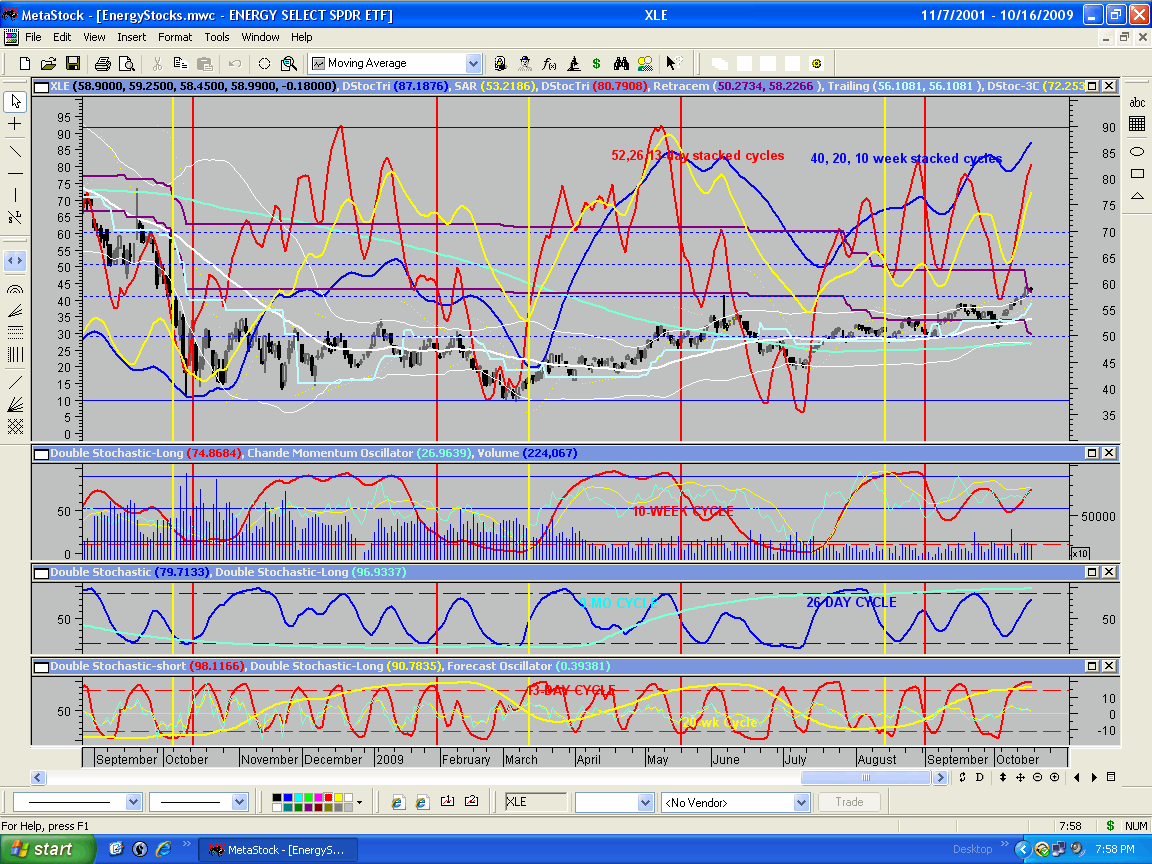
Energy stocks (http://www.geocities.com/petegersb/EnergySPDR.GIF) successfully tested their January lows on Tuesday and bounced sharply from oversold levels in the 13-day and 20-wk cycles. The 9-month cycle wasn’t oversold, but it is 8-months old, suggesting it may have bottomed or should bottom soon. The 10-wk cycle, however, doesn’t appear ripe for a bottom, so energy stocks may require another test of last week’s lows before establishing a more enduring low. One positive sign is the record volume in the XLE at Tuesday’s low. It smacked of capitulation. Energy stocks peaked about 2 weeks before the underlying commodities in July. Perhaps they are now leading the way up as well.
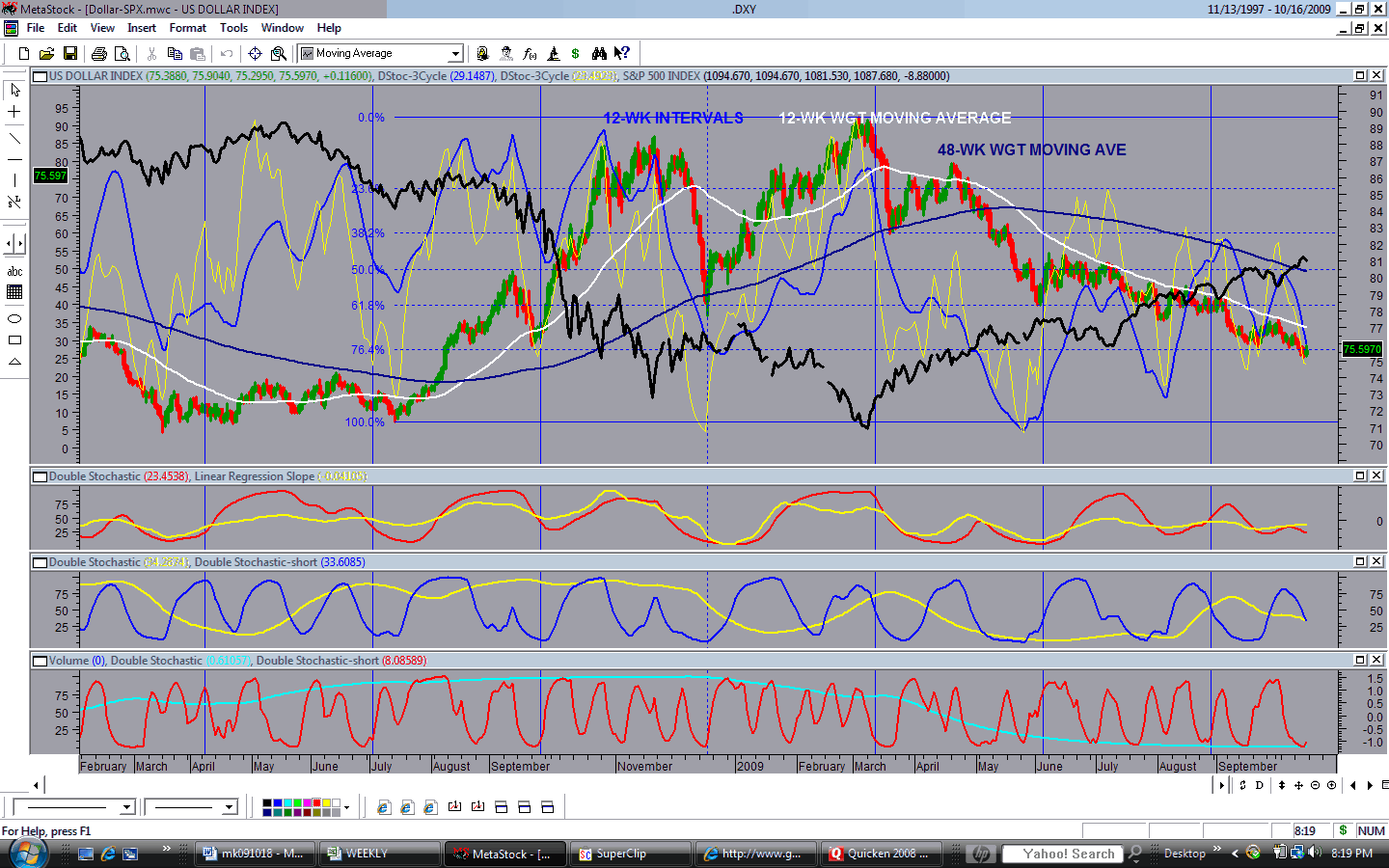
The powerful 20-wk cycle rally in the dollar (http://www.geocities.com/petegersb/Dollar.GIF) peaked on Thursday with the 9-month cycle 6 months old and the 20-week cycle 9-weeks old. Consequently, each should be providing downward pressure for about the next 3 months. However, the shorter cycles may bottom fairly quickly. They should find support at the level where the dollar rally stalled briefly in mid-August. We can expect the 10-week moving average to be near that same level in a couple of weeks to provide additional support. There is no obvious reason for the sudden reversal, but it coincided with a similar sharp reversal in energy stocks and gold. It appears that their high correlations are continuing, and I suspect that a continuation in one will result in a continuation in all.
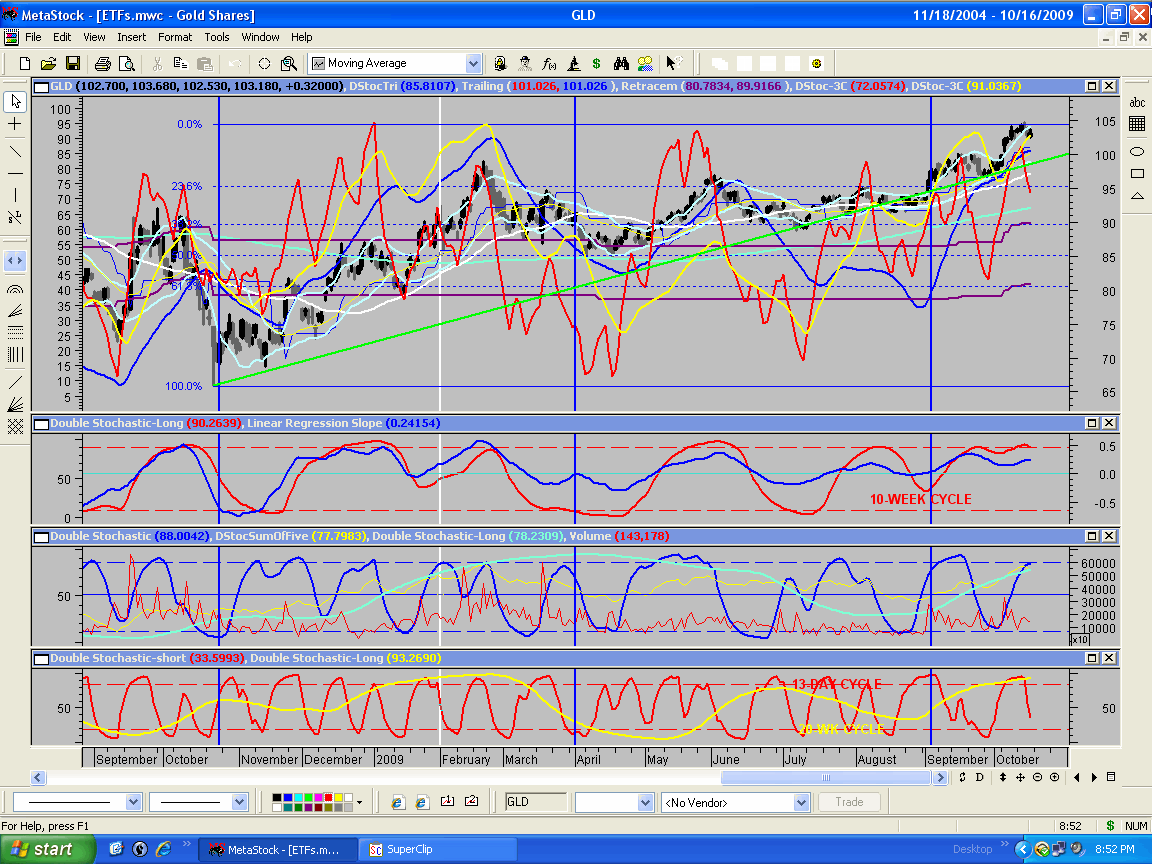
Gold (http://www.geocities.com/petegersb/GoldBullion.GIF) made a 13-day cycle low on Thursday, and probably a
26-day cycle low as well, but not before it broke support at the August low. However,
it found new support at the 2006 high, which also happens to be the 62% Fibonacci
retracement of the big rally from the 2006 low. It happened at a time when the
20-wk cycle was 19 weeks old and deeply oversold, suggesting long-term support.
The intermediate composites and 9-month cycle are also deeply oversold,
suggesting that it’s time for an intermediate rally. The problem with that
scenario is that the 10-wk cycle seems to have bottomed 4 weeks ago and has
since moved lower, suggesting a severe left-translated peak. Gold will probably
produce an intermediate rally over the next few weeks despite the 10-wk cycle
problem. A strong rally would revive its bull market credentials, but any rally
that stops below the 9-month moving average at about 880 would probably signal
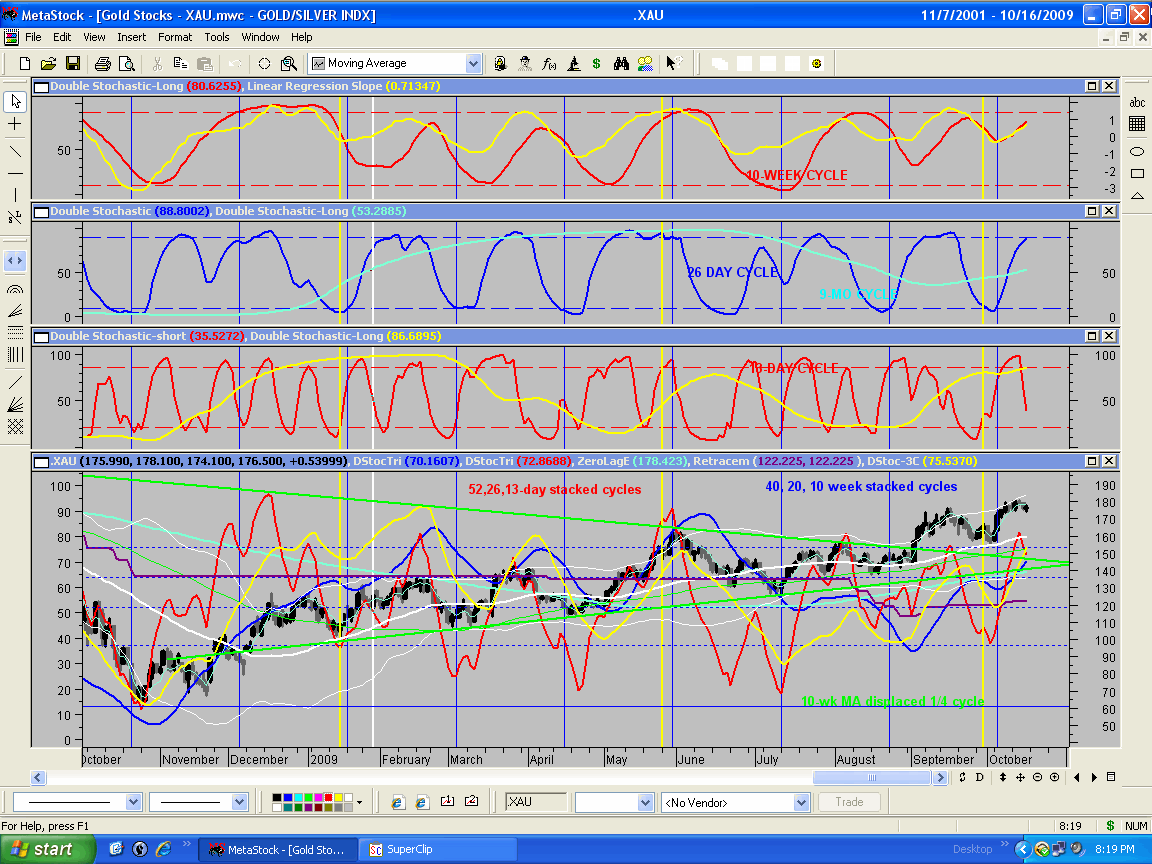
the death of the long-term uptrend. Gold
Stocks (http://www.geocities.com/petegersb/GoldStocks.GIF
) had yet another losing week, but it was capped by a big rally on Friday that
wiped out most of the losses. The bounce materialized as the XAU reached its
2003 and 2004 peaks and its most oversold condition since the lows of those
same years (http://www.geocities.com/petegersb/GoldStocks-weekly.GIF
). The time is right for an intermediate bottom, and the short and intermediate
composites turned up from extreme oversold conditions.