9/7/08
With Friday’s employment report, the misery index reached its highest level since the elder Bush was president. The unemployment component is destined to go higher yet (and it already is much higher if all those discouraged workers who have stopped looking were counted), but the inflation component may moderate due to the depressed economy. It makes one wonder what ever happened to those economic benefits that were advertised in selling Bush’s poorly designed tax cuts. It also makes you wonder why Americans would want to elect another Republican that wants to continue the same misguided policies, and who is so delusional that he believes that “the fundamentals of our economy are strong”.
In an effort to keep that “strong” economy from collapsing, our Republican Secretary of the Treasury met this weekend with the heads of Fannie Mae and Freddie Mac to try to figure out how our big government can rescue those institutions and our financial system. (It was just announced that the Federal Housing Finance Agency will now manage those companies.) It’s ironic that a government that has expanded enormously under 6 years of total Republican rule is organizing all these government bailouts while Republican conventioneers endlessly repeated the Republican mantra that government is the source of our problems, and once again promised to end the era of big government. Reagan and two Bush’s made the same promise and proceeded to expand government. Why would any but the most gullible Republican devotee believe McCain/Palin would deliver on that promise when about the only identifiable difference from Bush is candidate McCain’s promise to no longer torture prisoners?
Greed coupled with poor judgment in the private sector was
the cause of the current financial crises. Government was merely an enabler in its
failure to adequately regulate leverage and lending practices in a sector so
vital to our economy. And that failure is a product of a Republican government
that preaches that any regulation of the private sector is a bad thing. That Republican mantra was again much in
evidence in
While McCain and Palin advocate the same failed policies,
the Bush administration seems to be taking some advice from Obama. The oil
situation has now motivated the Bush administration to talk to terrorist Omar Kaddafi.
It was just a short while ago that Bush, along with McCain, ridiculed the idea
that you ought to be talking to your enemies as well as your friends when Obama
suggested it. Of course, this is the
same administration that a short time ago was aghast at the idea of
establishing timelines for withdrawal from
Last week I wrote:” Next week’s decline should be greater than last week’s. And if Gustav damages our energy infrastructure, it could be pretty dramatic.” Gustav did little damage, but stock investors took off their rose-colored glasses anyway and began facing up to economic reality. Monday’s brief relief rally appears to have ended the weak rising phase of the 26-day cycle rally. All cycles are now trending downward, but the 13 and 26-day are moderately oversold. Consequently, a miss by hurricane Ike may provide another brief relief rally. But the 10-wk cycle should maintain the downward pressure through most of this month, and the 20-wk and 9-mo cycles (http://www.geocities.com/petegersb/Overview-med.GIF ) should maintain the downward pressure for about another 3 months.
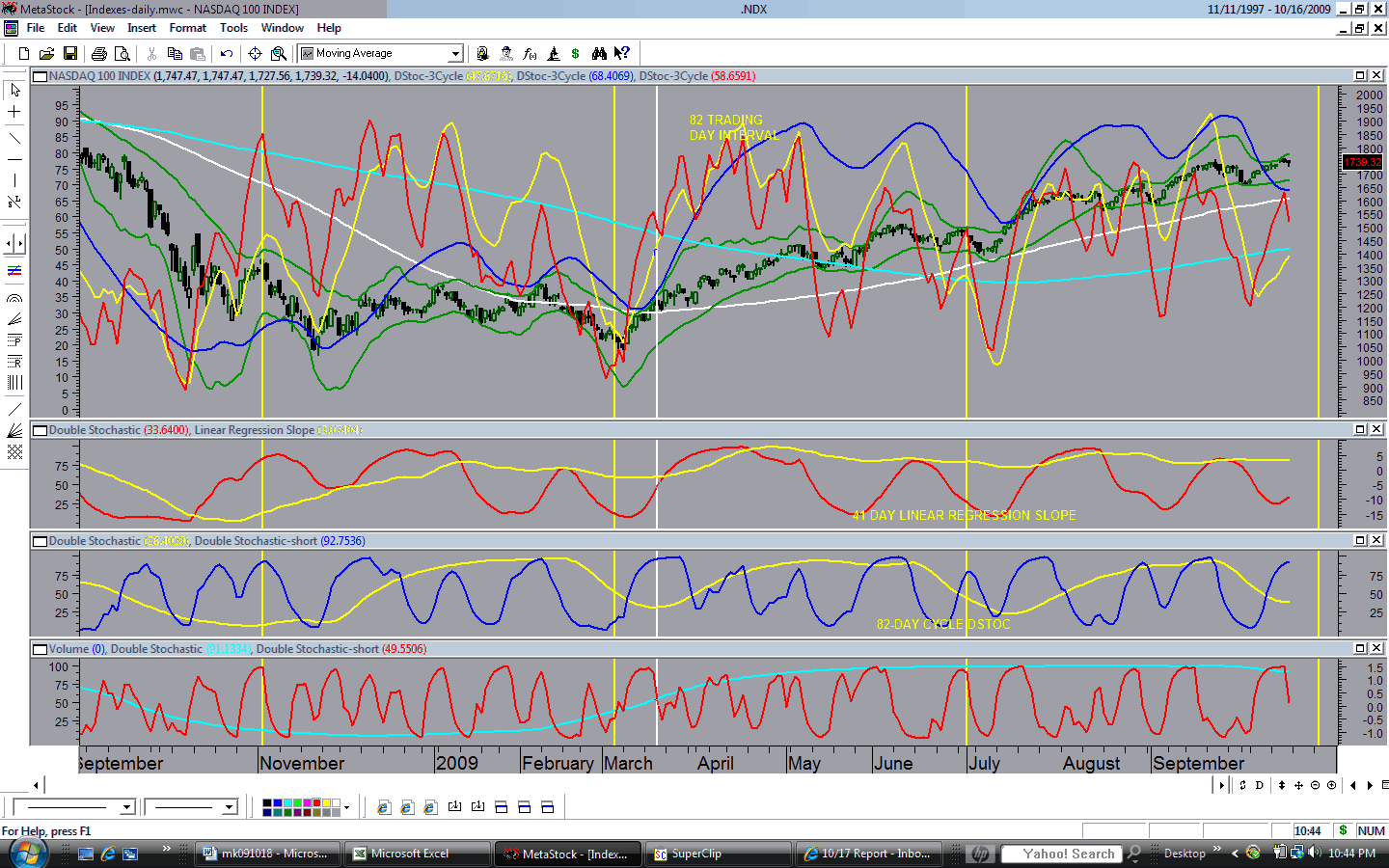
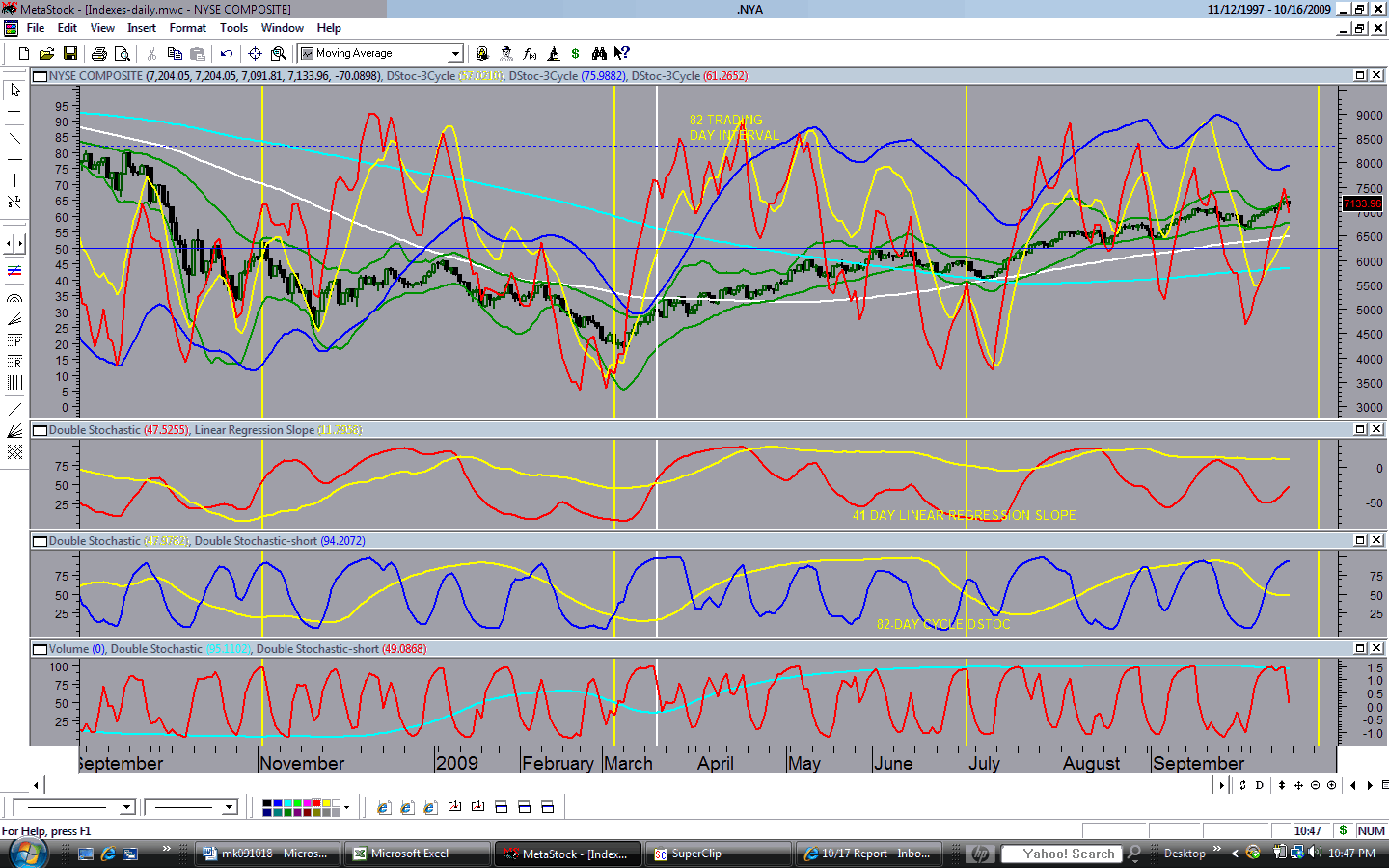
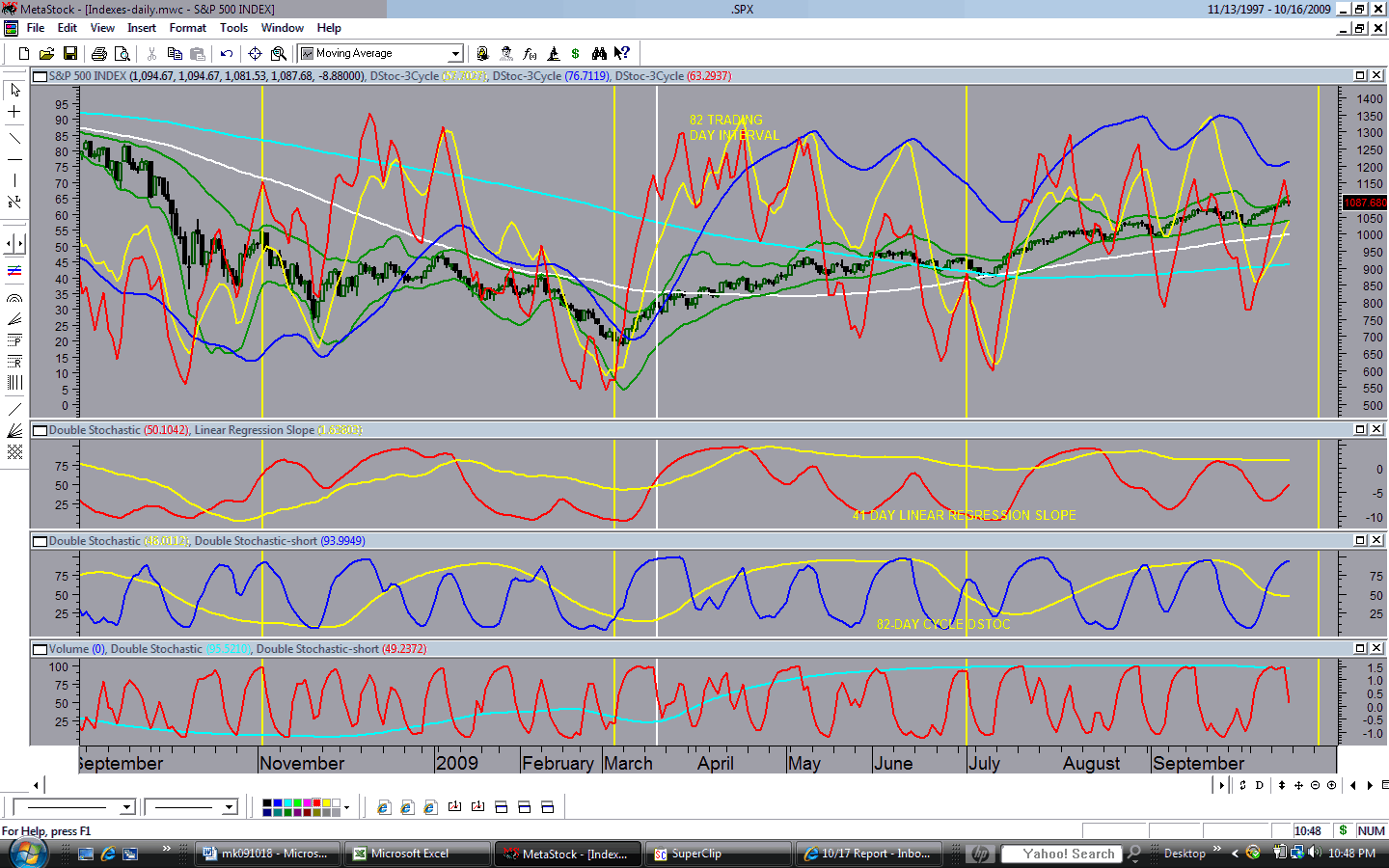
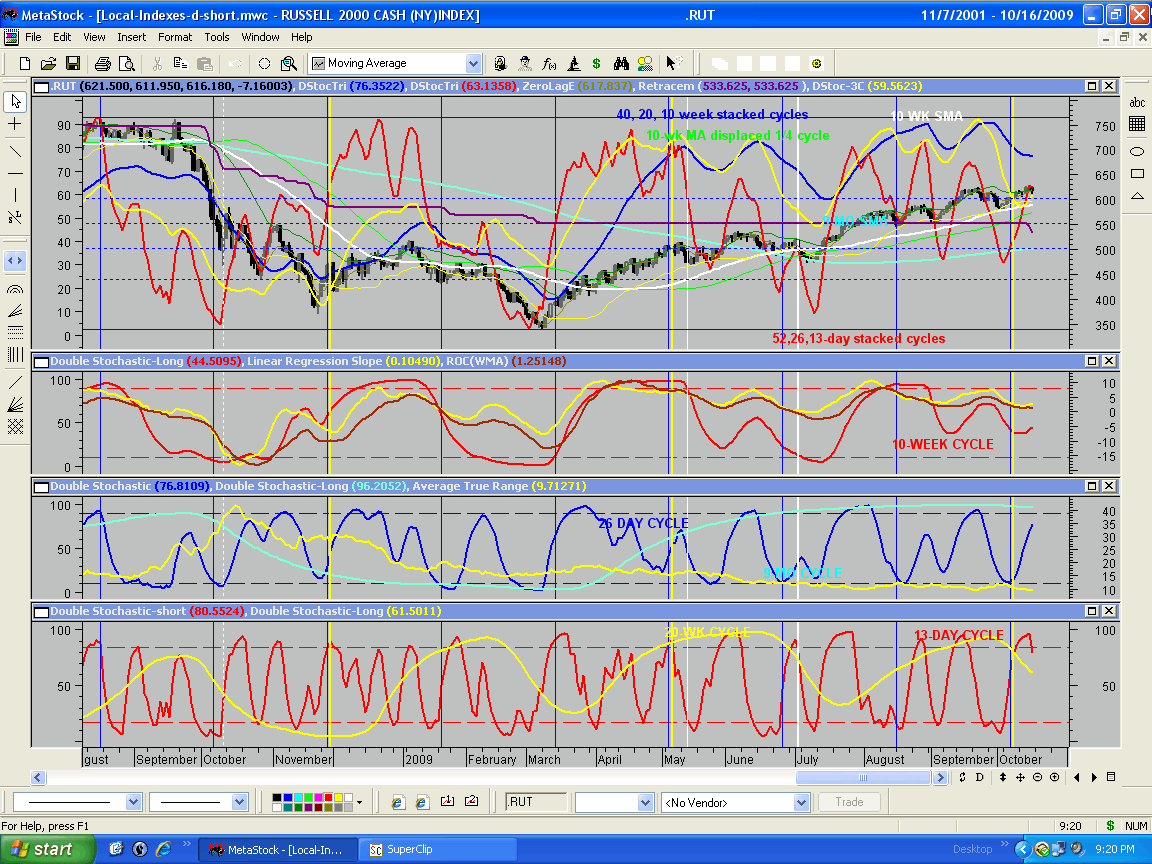
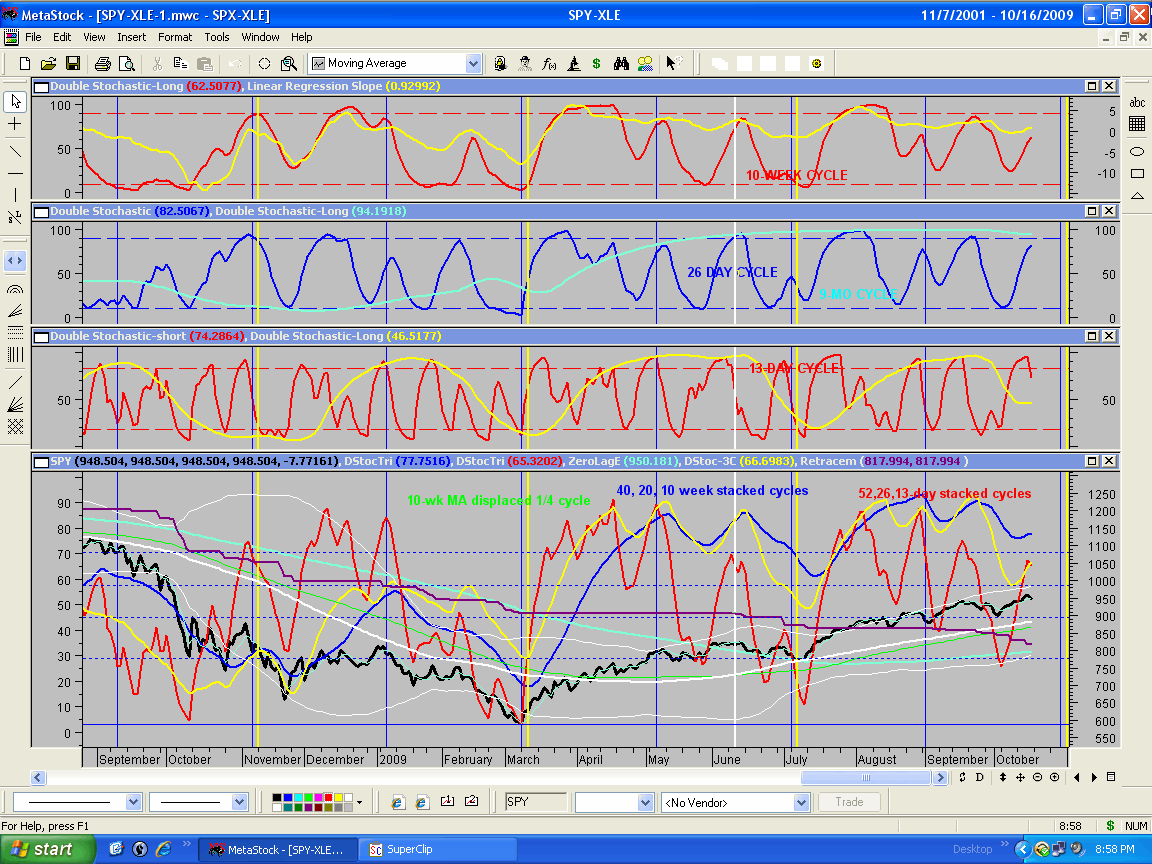
The NDX (http://www.geocities.com/petegersb/NDX.GIF) and NYSE (http://www.geocities.com/petegersb/NYSE.GIF ) broke below their July Lows and the SPX (http://www.geocities.com/petegersb/SP500.GIF) threatened its July low before recovering a bit on Friday afternoon. Only the Russell small cap index (http://www.geocities.com/petegersb/Russell2000.GIF ) and the SPX ex-energy (http://www.geocities.com/petegersb/SPY-XLE.GIF) remain comfortably above their July lows.
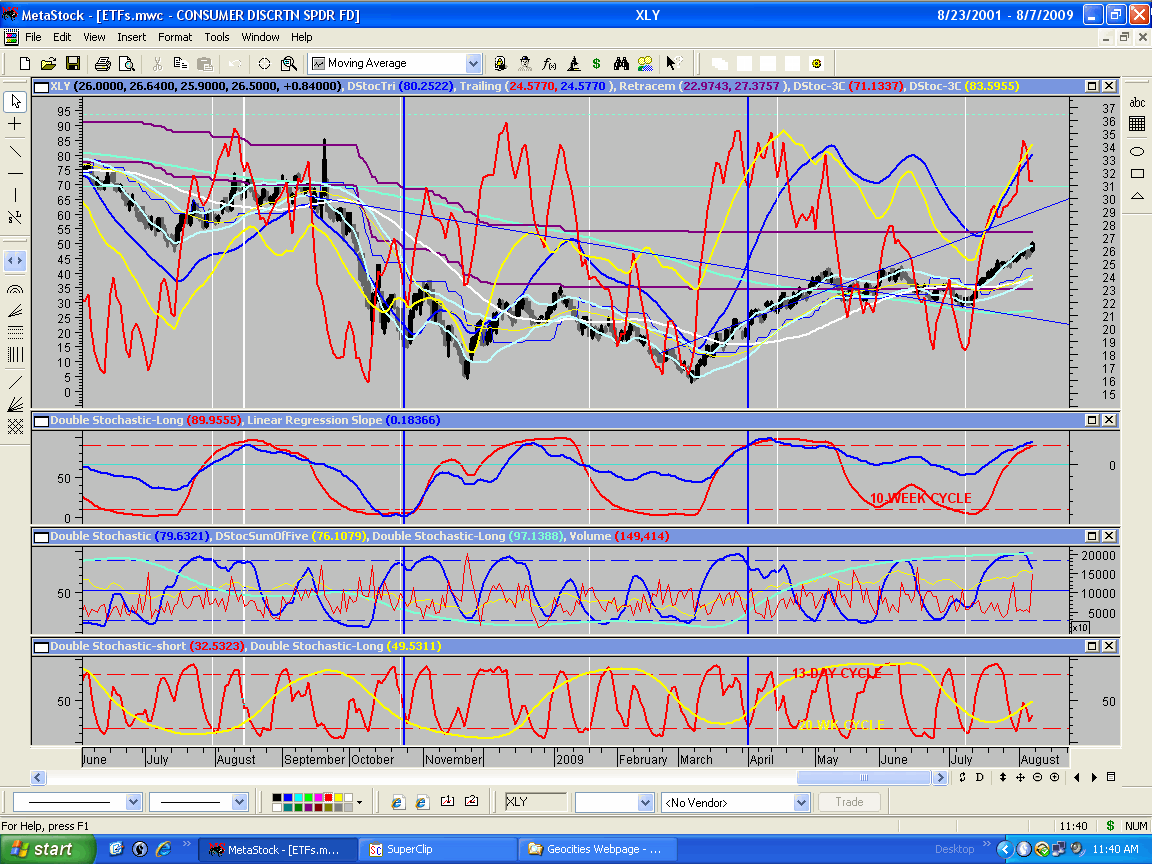
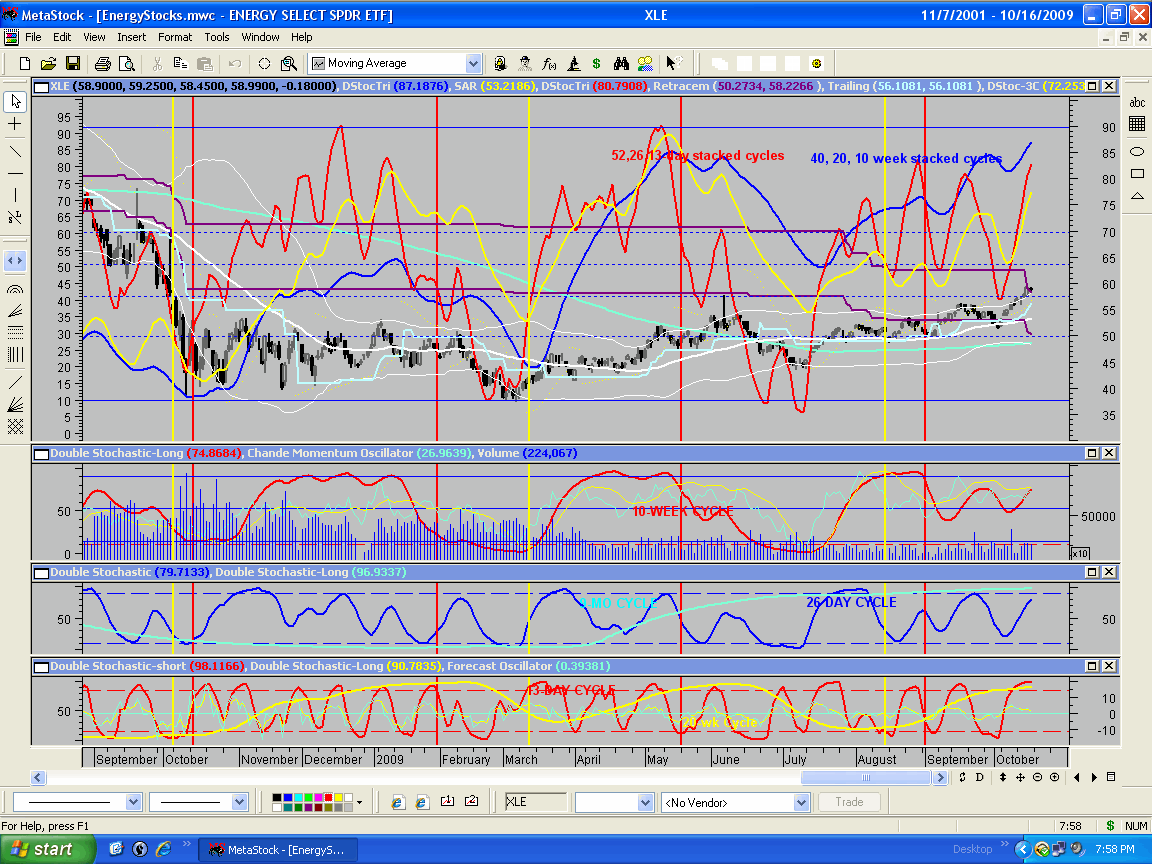
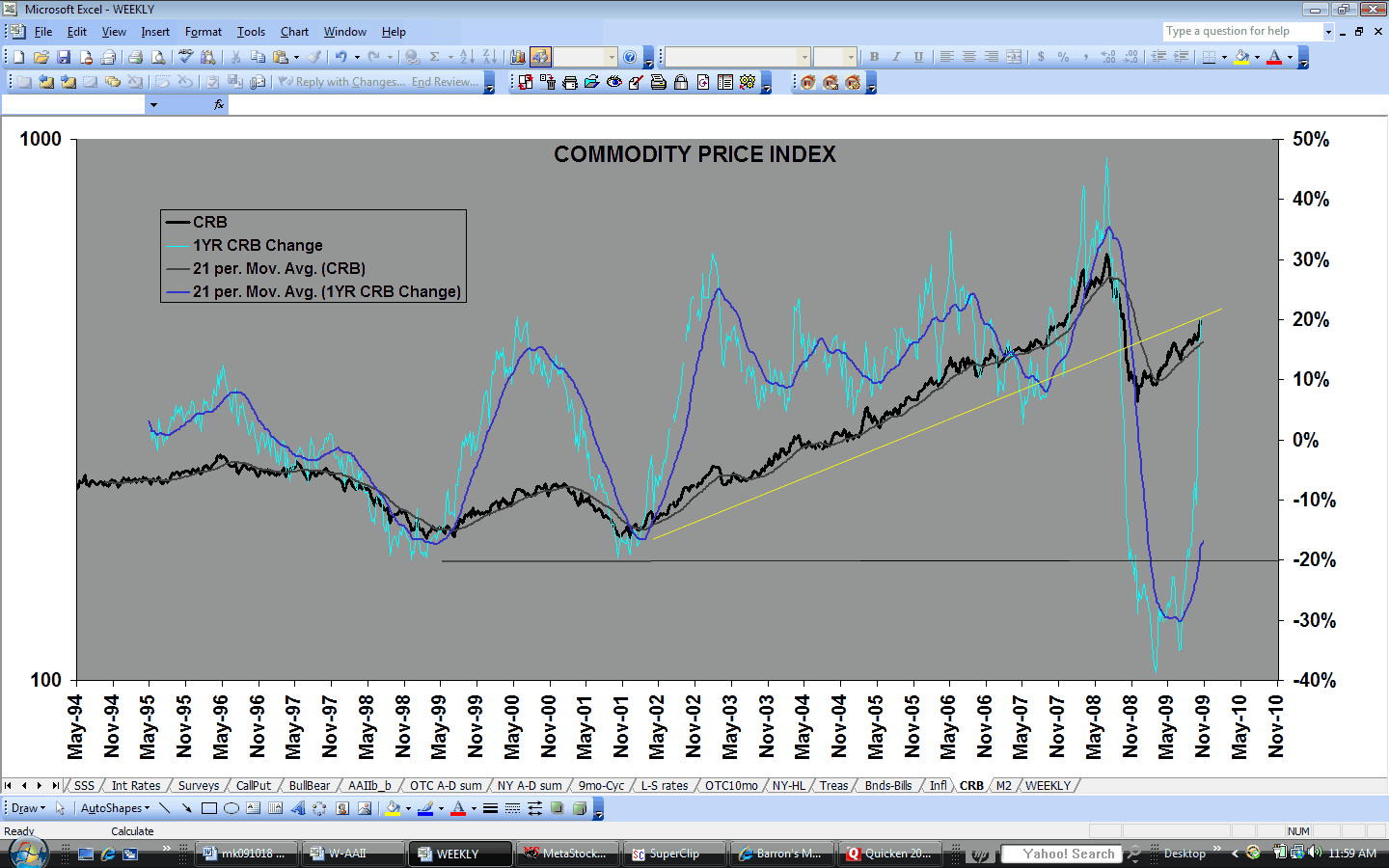
Despite the grim rear view financial and consumer news, it wasn’t those sectors (http://www.geocities.com/petegersb/Financials.GIF , http://www.geocities.com/petegersb/ConsumerDiscretionary.GIF ) that dragged the market down last week. Despite Wall Street’s contempt for government, it seems to have faith that it will rescue our financial institutions by continuing to privatize any gains while socializing the losses. The Materials (http://www.geocities.com/petegersb/Materials.GIF ) and Energy (http://www.geocities.com/petegersb/EnergySPDR.GIF ) sectors fared the worst. It seems to be the Wall Street consensus that energy and other commodity prices (http://www.geocities.com/petegersb/CRB.GIF ) will continue to drop, rescuing the consumer while decimating energy company earnings. The demand destruction from high prices and a weak economy that has been responsible for the drop in energy prices will likely continue, but most oil companies would remain nicely profitable even if oil drops to its year-ago $80 level. And the average consumer, even those still working, will still be hard pressed economically when it costs only $50 instead of $75 to fill up the gas tank.
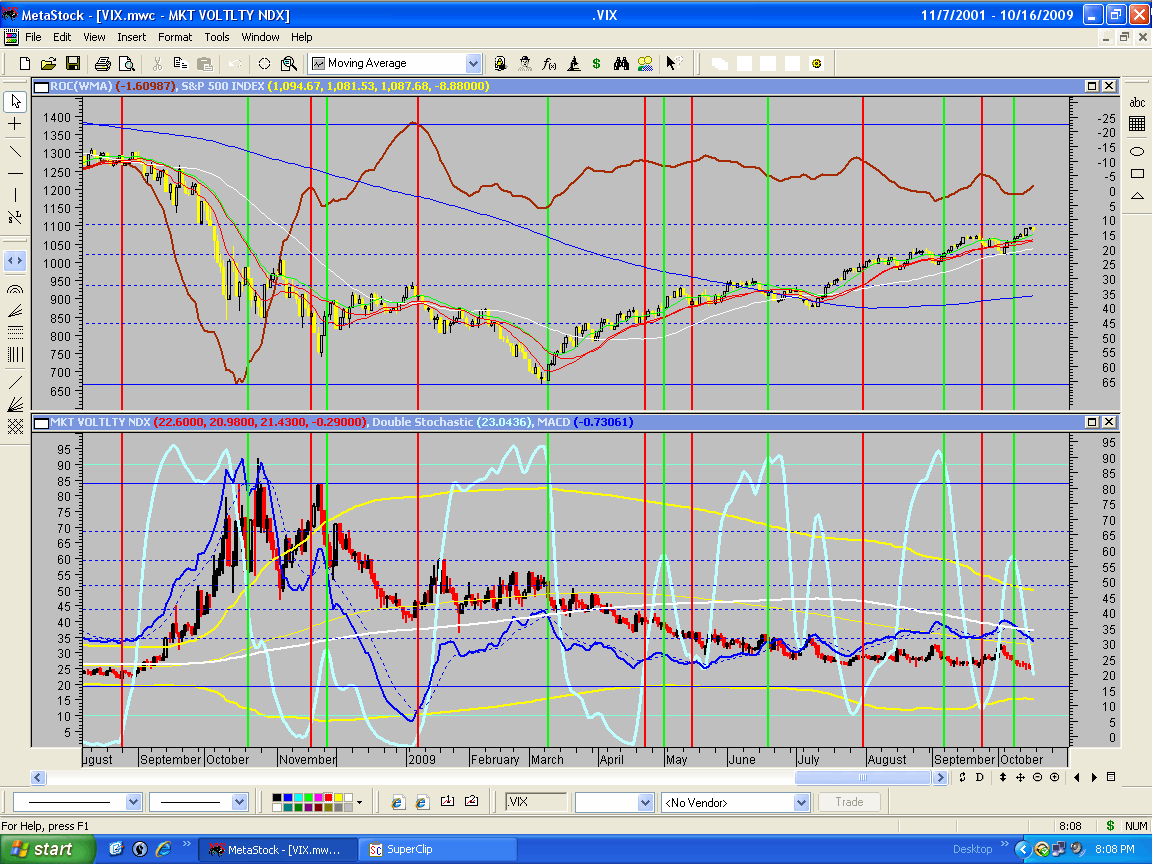
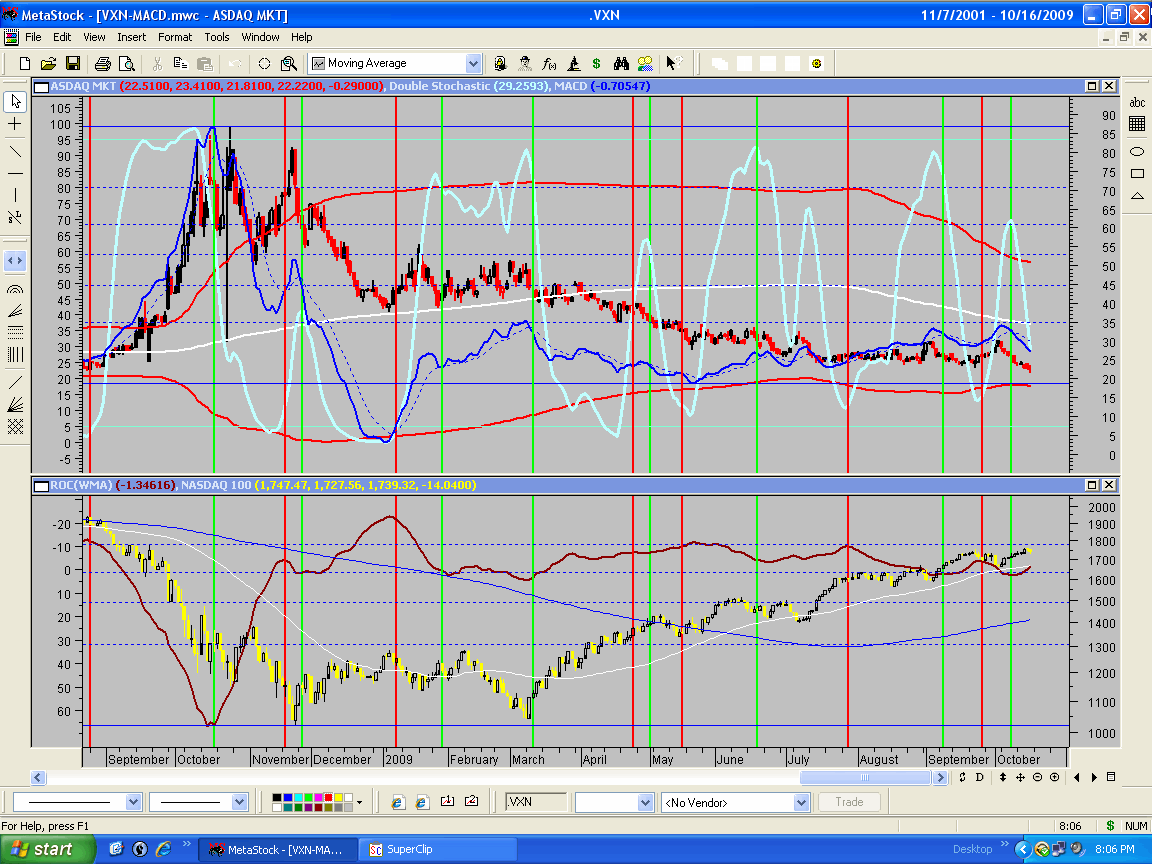
The daily VIX (http://www.geocities.com/petegersb/VIX.GIF) and VXN (http://www.geocities.com/petegersb/VXN.GIF) as well as the DStocs on the daily price charts suggest the declining phase of the 10-wk cycle is only about half complete, and perhaps another 2-3 weeks will be required for it to reach bottom. Doubling the decline so far would put the SPX at the bottom of the down trending price channel near 1150.
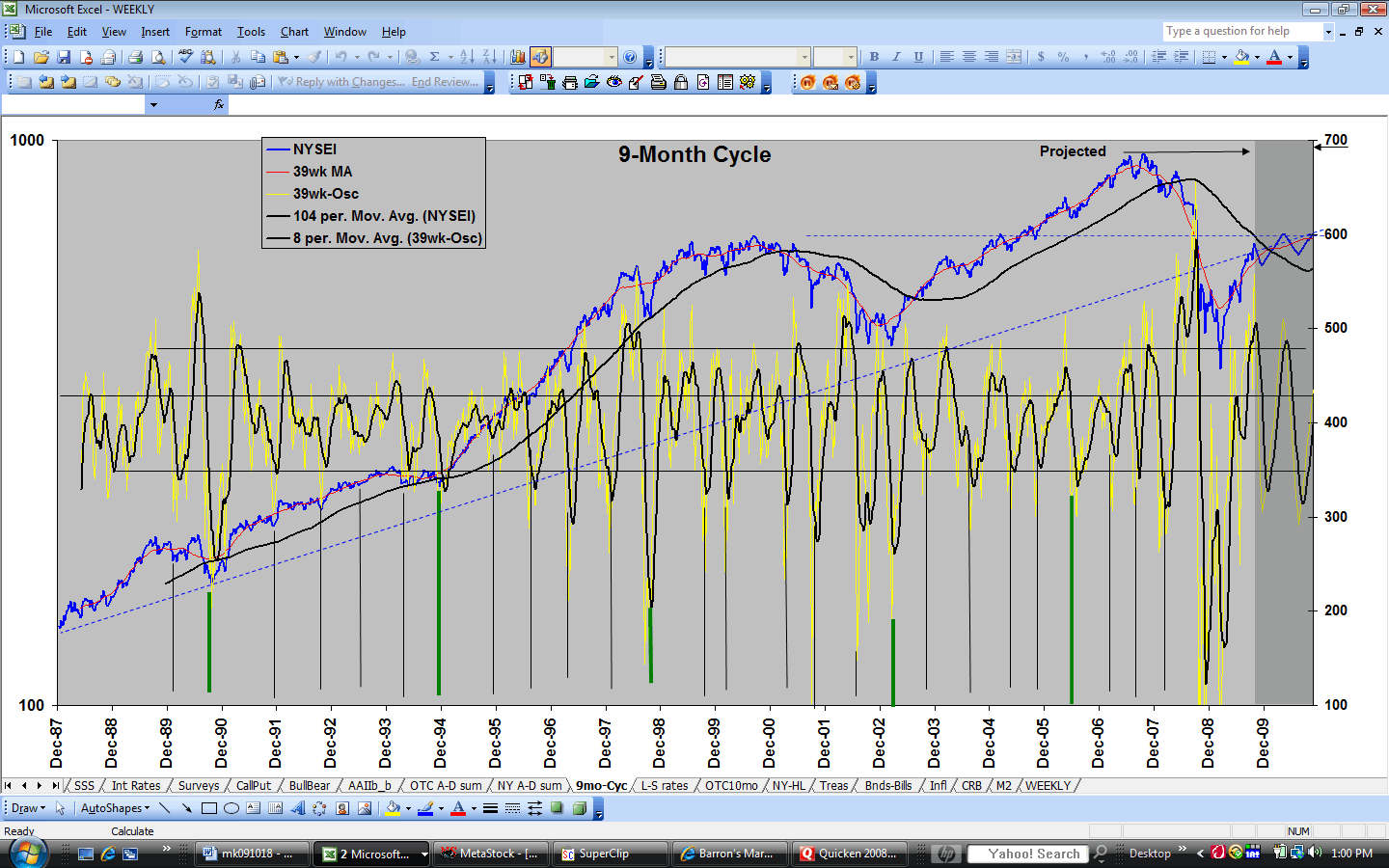
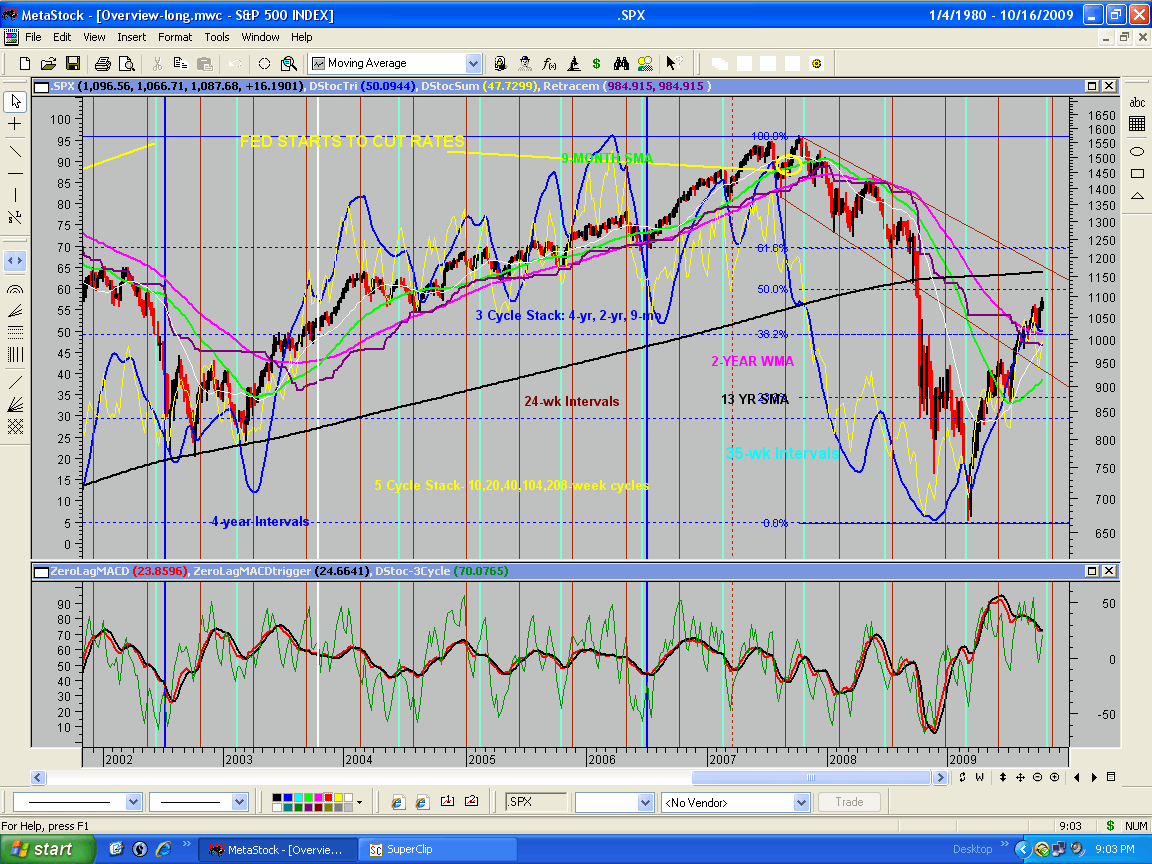
The weekly VIX and VXN (http://www.geocities.com/petegersb/VIX-weekly.GIF , http://www.geocities.com/petegersb/VXN-weekly.GIF ), as well as the DStocs on the weekly price charts, indicate that the 20-week cycle has turned down from a lower left translated peak. But it’s still overbought and only 8 weeks old, suggesting about another 3 months to reach bottom. That would be about 9-months after the March 9-month cycle bottom (http://www.geocities.com/petegersb/9moNYA.GIF ), so it too should be ripe for a bottom at that time. It’s a bit early to estimate a price level at that time, but the bottom of the downtrend channel on the SPX (http://www.geocities.com/petegersb/Overview-long.GIF ) would be at about 1070 in December. That’ll do as a target for now. Assuming Standard & Poor’s top down operating earnings projection of $72.59 for 2008 is in the ballpark, 1070 would produce a normal trailing P/E of 15 – a reasonable number if interest rates remain low.
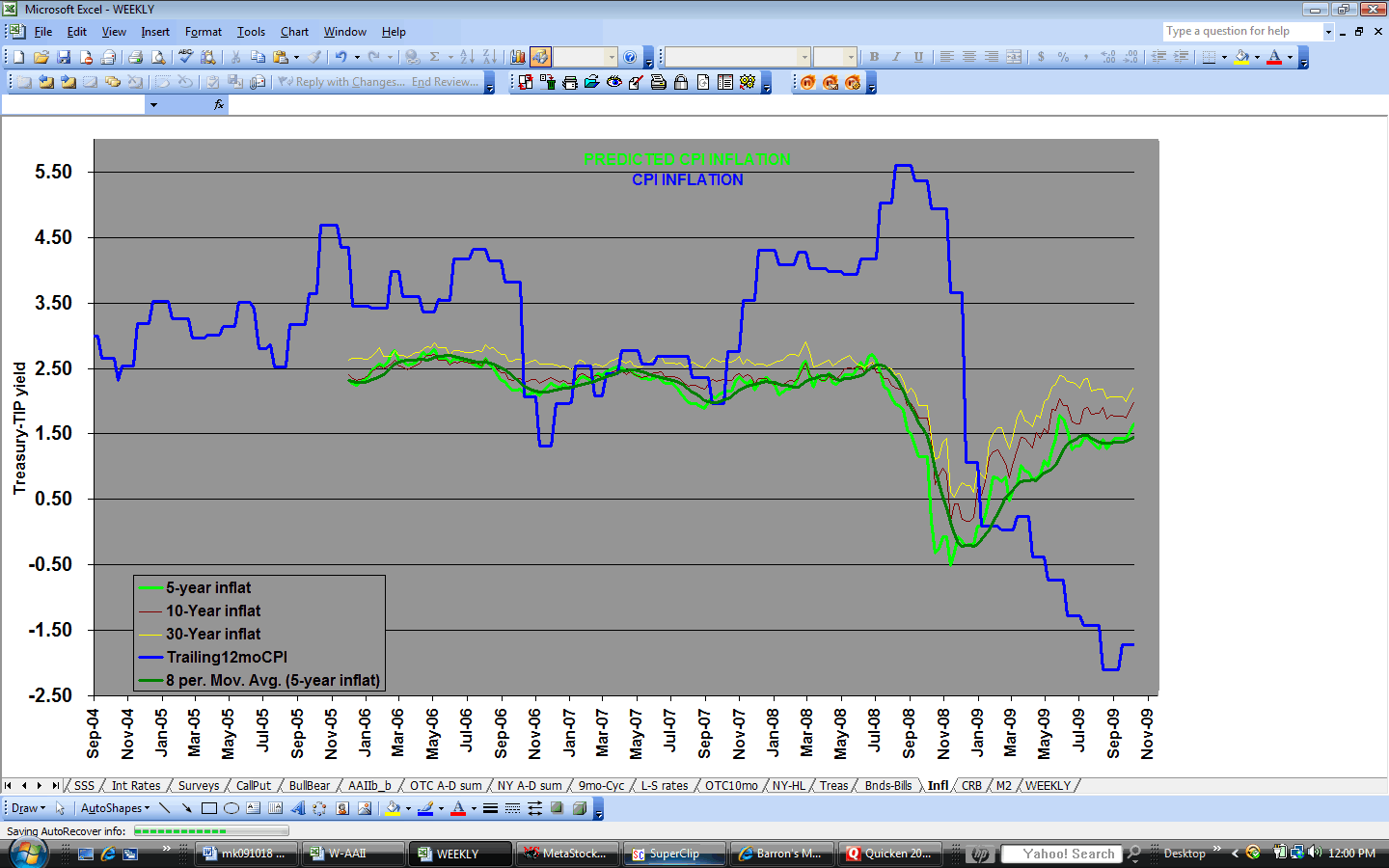
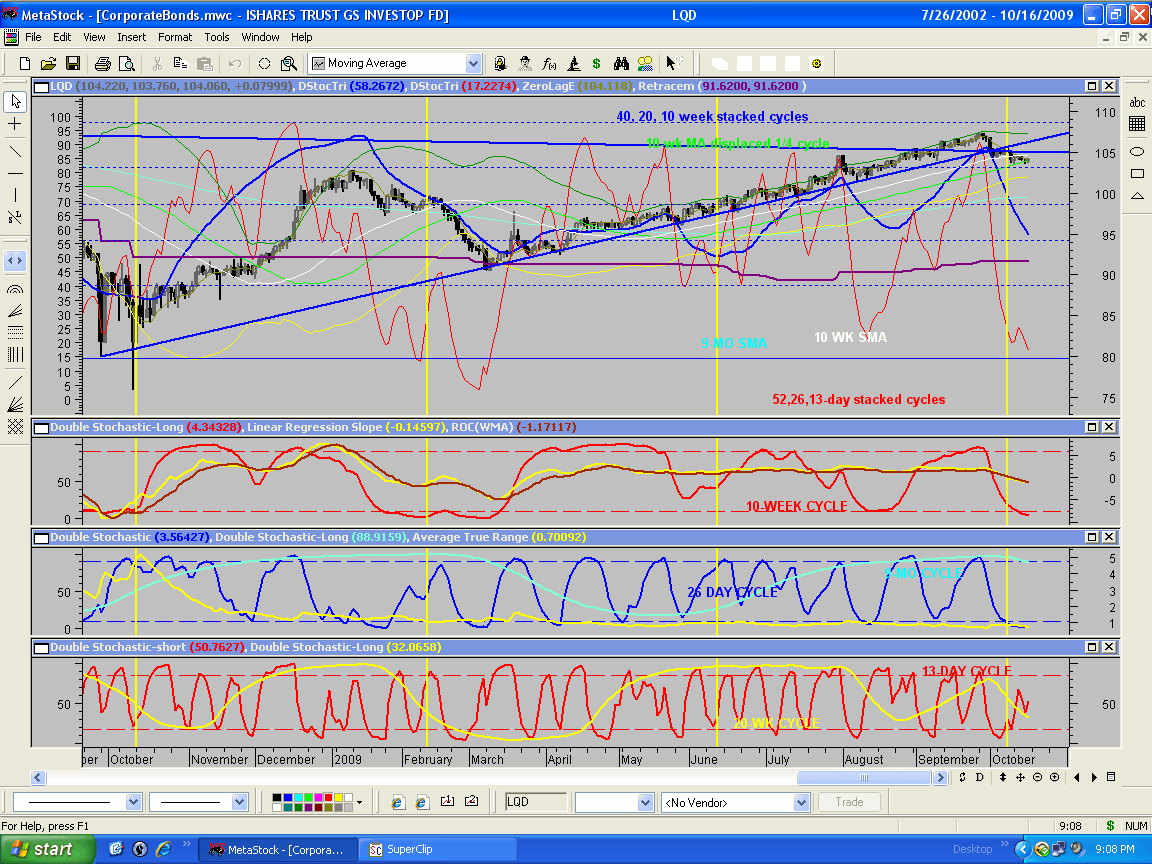
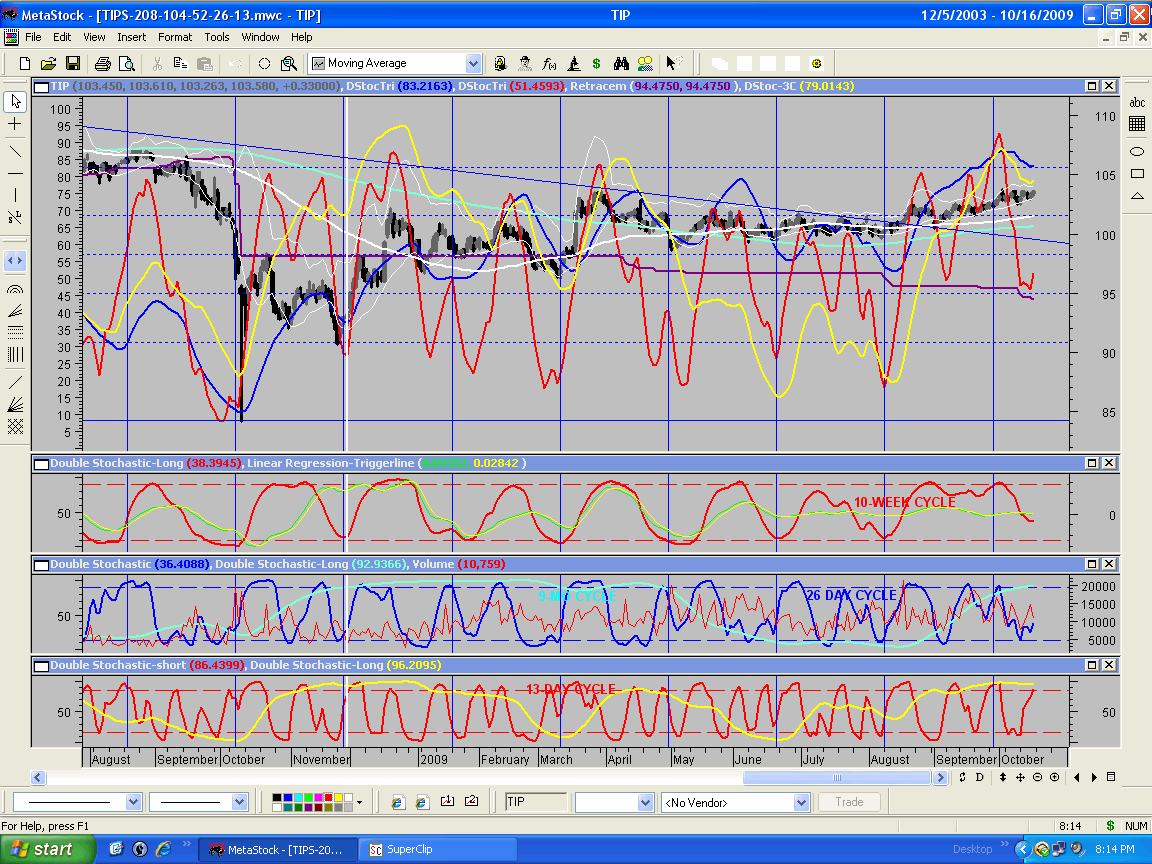
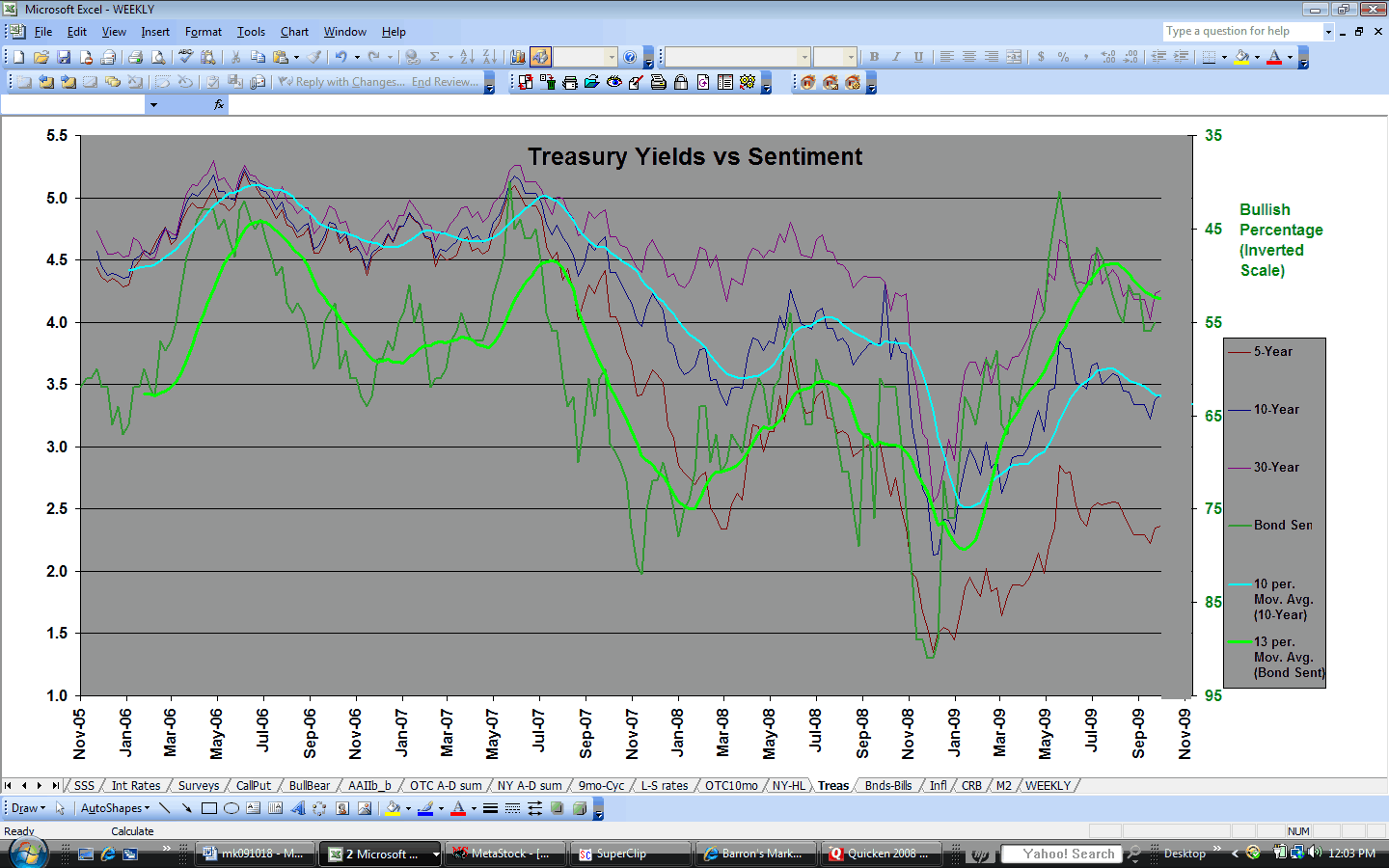
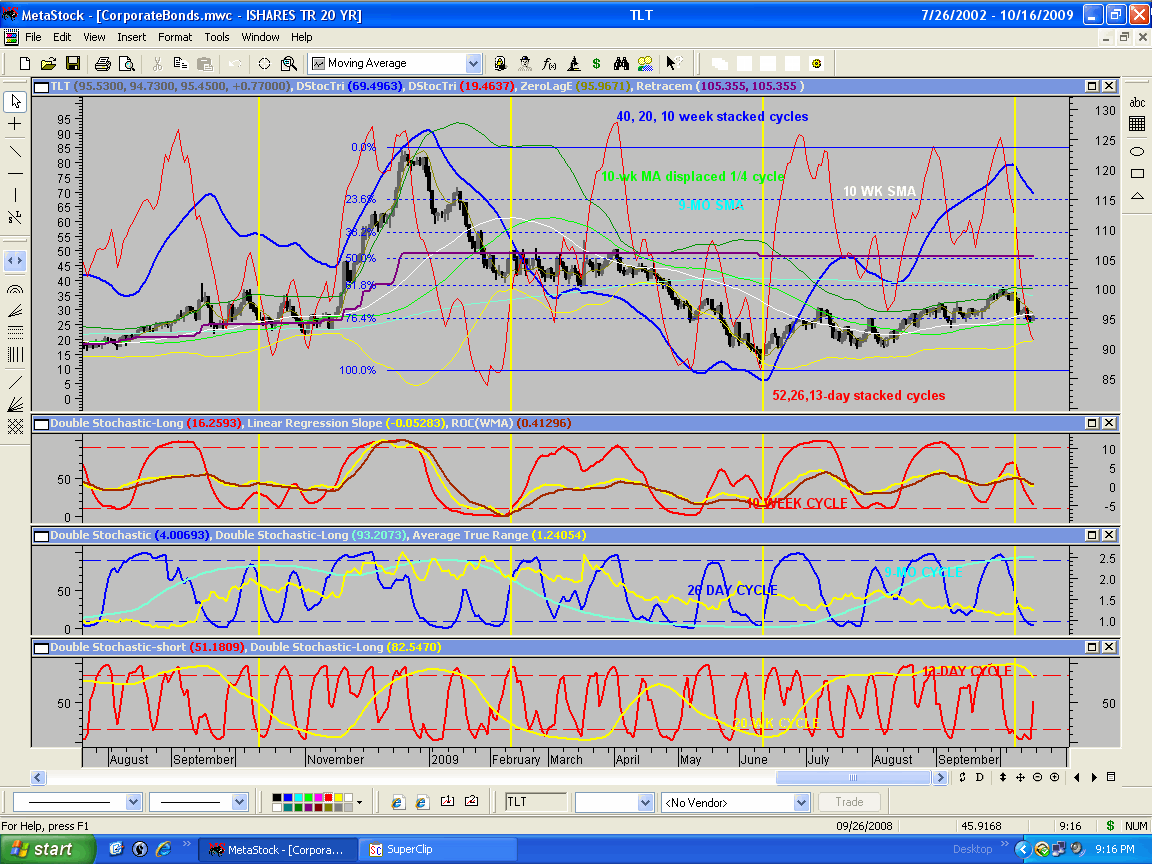
T-Bond yields (http://www.geocities.com/petegersb/TBondYield-weekly.GIF ) are again approaching the lows tested in 2003, 2005 and early this year. Given the high inflation rate (http://www.geocities.com/petegersb/CPI.GIF ) and the relatively poor performance of corporate bonds corporate bonds (http://www.geocities.com/petegersb/CorporateBonds.GIF) and inflation protected treasuries (http://www.geocities.com/petegersb/TIPs.GIF), these low rates pretty clearly result from a flight to safety coupled with an expectation that a continuing weak economy will bring inflation down substantially. Bond sentiment (http://www.geocities.com/petegersb/BondSentiment.GIF) is moderately favorable for continued low rates in the intermediate term, but the short-term composite on the T-bond ETF (http://www.geocities.com/petegersb/Treasury-20yr.GIF) suggests at least a short-term decline in bond prices.
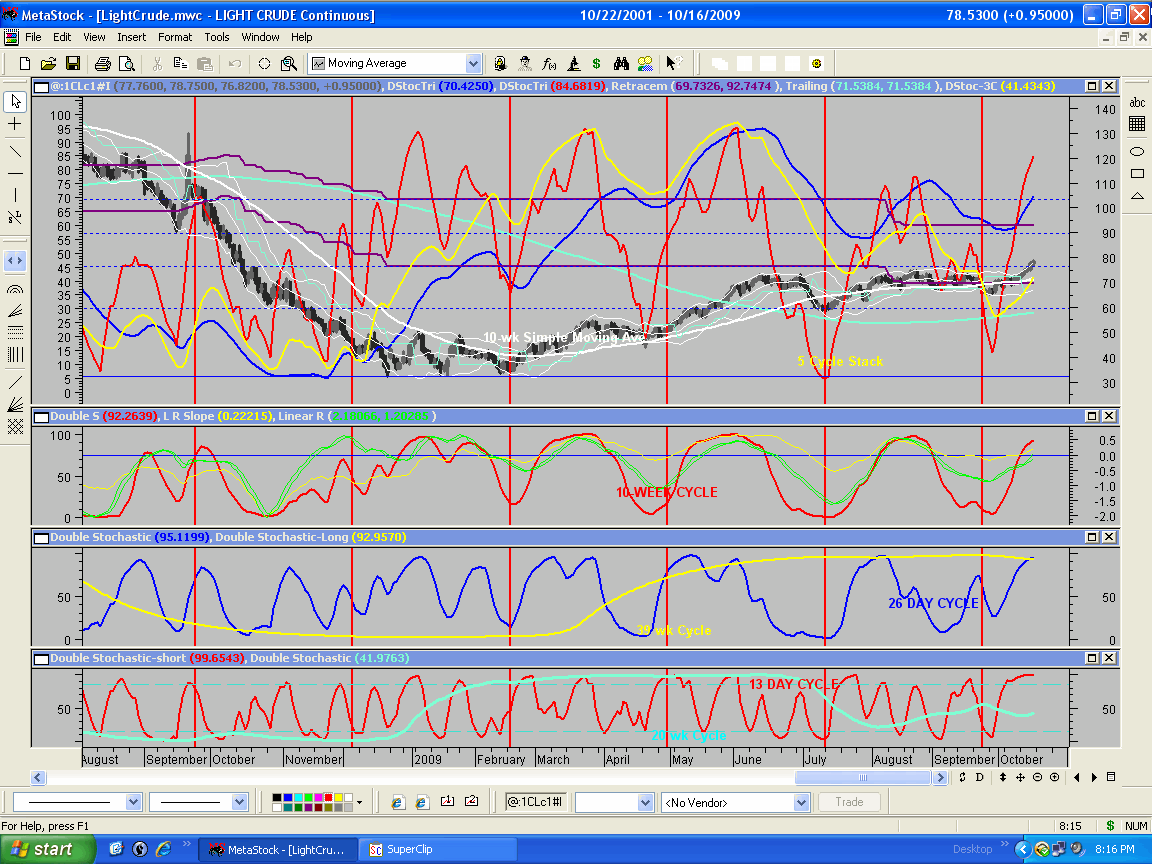
Crude oil (http://www.geocities.com/petegersb/CrudeOil.GIF ) broke below its 9-mo moving average on Tuesday as hurricane damage was essentially non-existent. It then rallied back to it and backed off to test Friday’s low. The 13-day, 20-wk and 9-month cycles are oversold, but the 26-day and 10-wk cycles are likely to drive the price still lower in the near term. The long-term trendline stands right at $100. That’s a reasonable short-term target. If it holds there, the oversold longer cycles should be able to mount an intermediate rally.
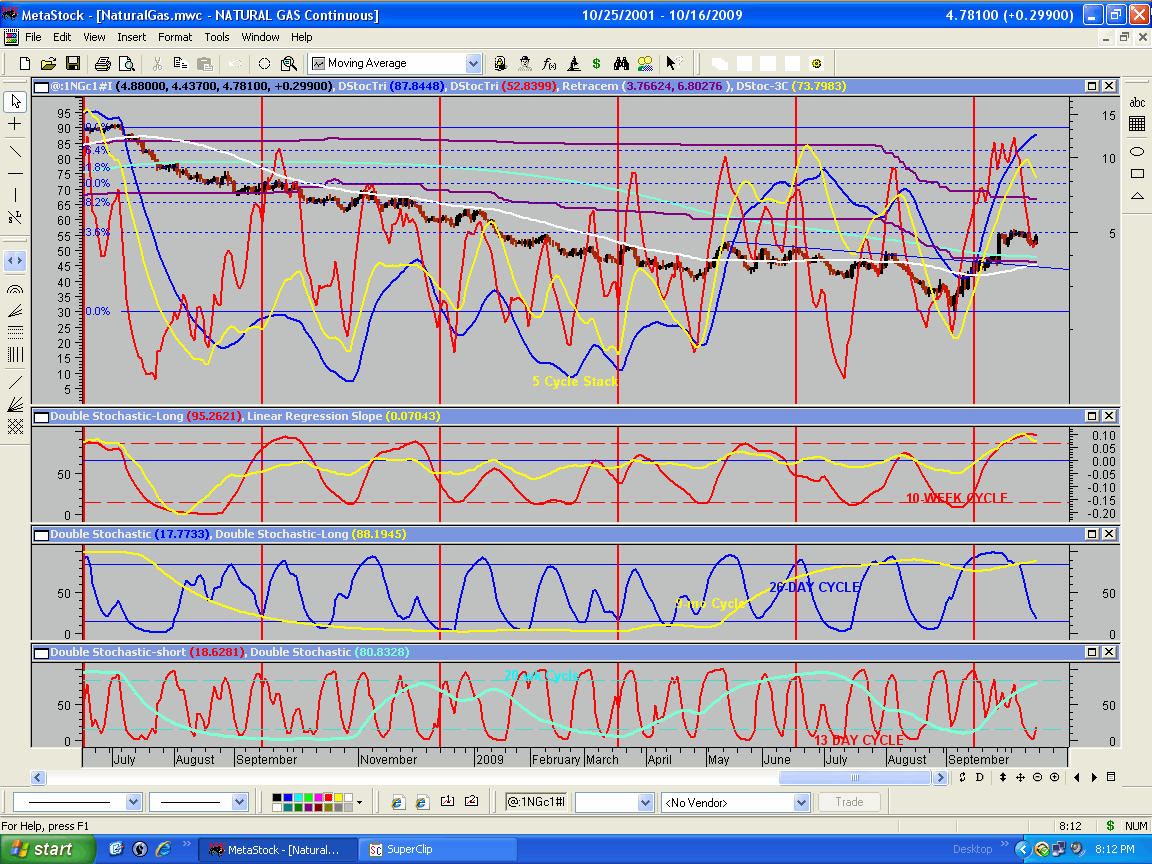
Natural gas (http://www.geocities.com/petegersb/NaturalGas.GIF ) has declined even more dramatically than oil. It’s now trying to hold last November’s low. Most of the cycles are trying to turn up, but the 26-day cycle is resisting. The price and cycle patterns are similar to those of a year ago when natural gas made a major low.
Energy stocks (http://www.geocities.com/petegersb/EnergySPDR.GIF) are again testing the $65 level where the 20-wk cycle held in August of 2007 and January of 2008. The deeply oversold and aging 20-wk cycle suggests that it should hold again, but first the short-term composite looks like it has unfinished business on the downside.
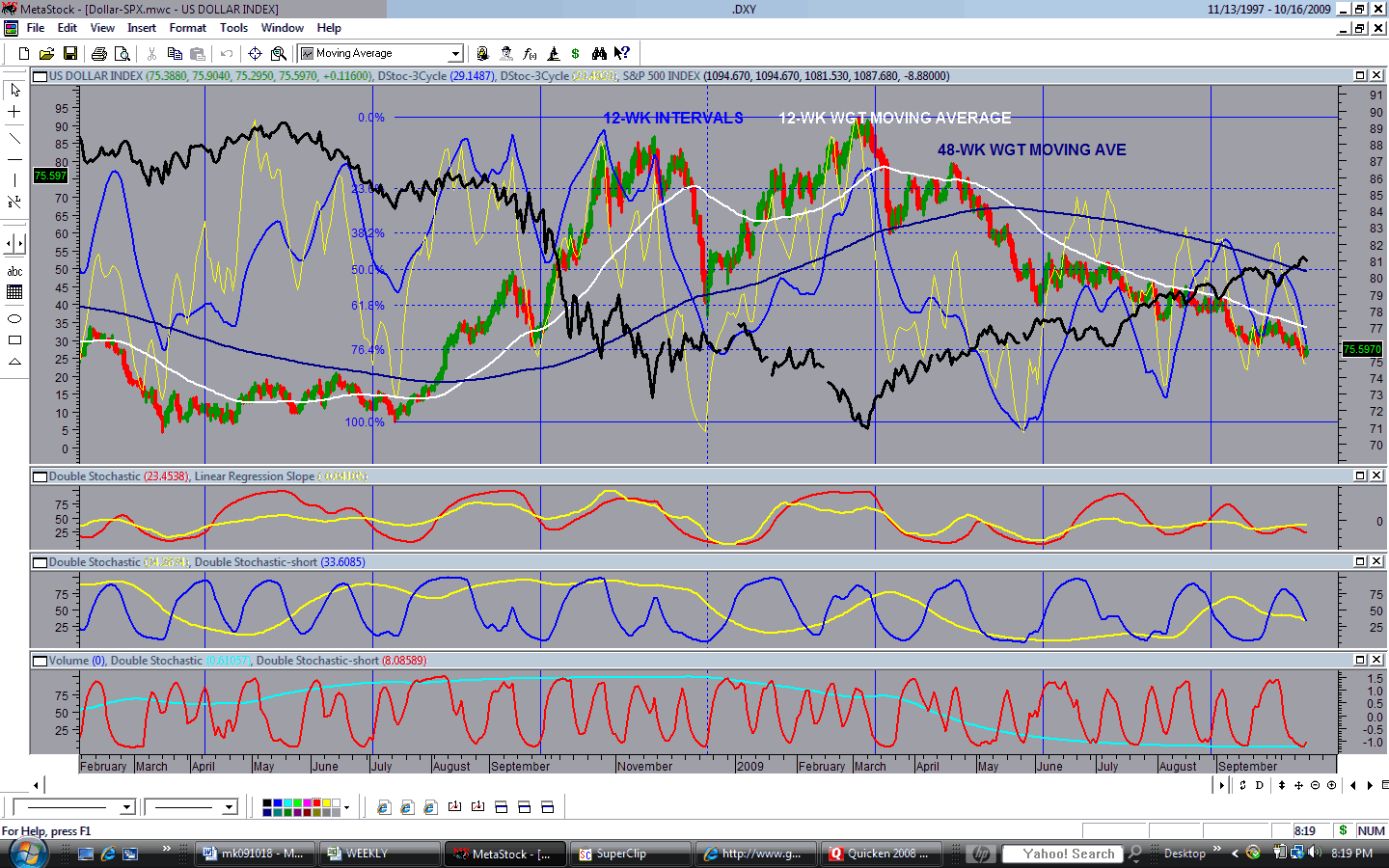
The powerful rally in the dollar (http://www.geocities.com/petegersb/Dollar.GIF) resumed last week. Now that there aren’t as many petro-dollars moving abroad, perhaps the price gains produced by the rising 20-week cycle shouldn’t be all surprising, but an 11% move in eight weeks is huge – especially for a currency. The dollar is overbought, but such a powerful rally can sustain an overbought condition for quite some time.
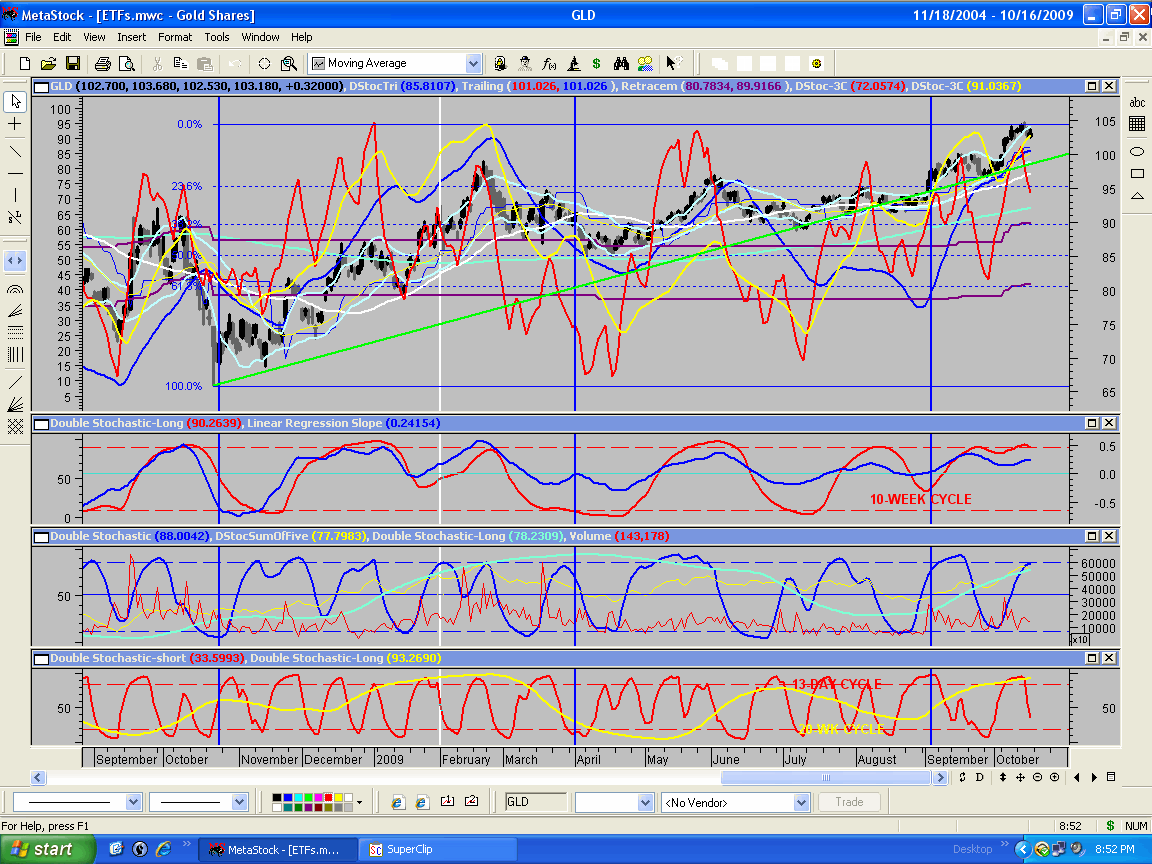
Gold (http://www.geocities.com/petegersb/GoldBullion.GIF) declined last week as it usually does when the dollar
rallies. Under the pressure of a declining 26-day and 13-day cycles, it tested
the mid-August lows – so far successfully. The 13-day cycle is near a bottom,
and may have bottomed on Tuesday, but the 26-day cycle appears likely to continue
exerting downward pressure this week. All the other cycles are primed for a
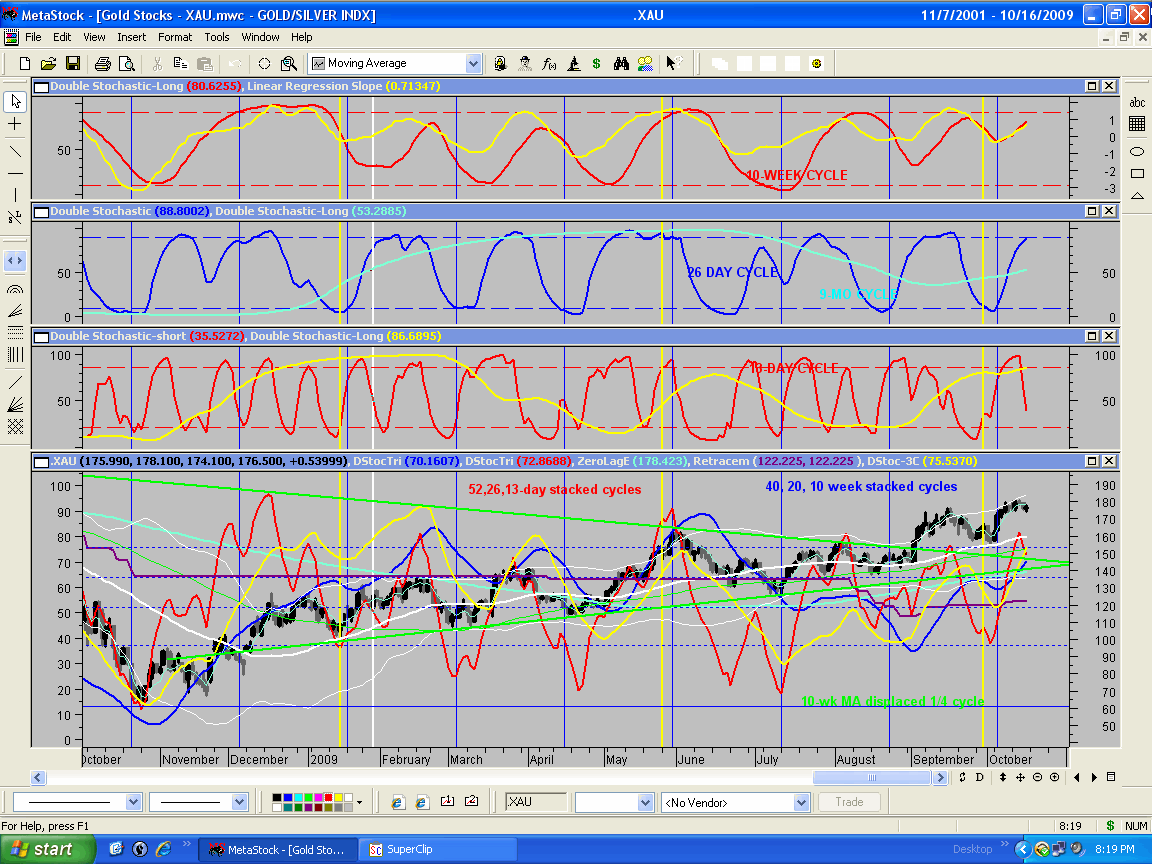
rally. Gold Stocks (http://www.geocities.com/petegersb/GoldStocks.GIF
) also tested the mid-August lows, but failed. The XAU is now testing the
August 2007 low, as it faces the same cycle pattern as the metal. The odds
favor bouncing off of the year-ago lows when the 26-day cycle bottoms.