8/17/08
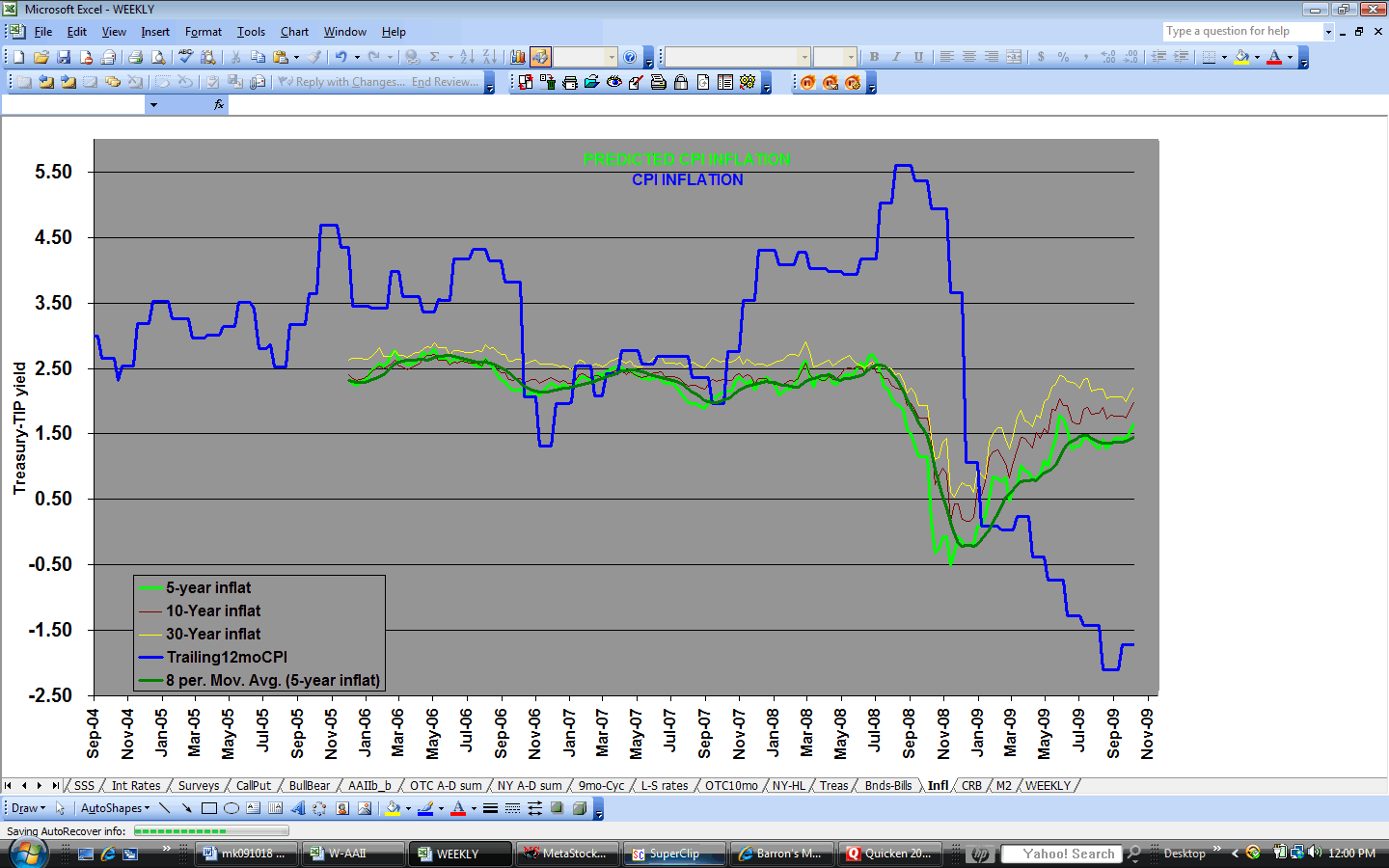
The market refused to fold last week. After a couple of down days stock investors’ spirits were revived on Thursday despite another large rise in the consumer price index (http://www.geocities.com/petegersb/CPI.GIF ) and higher jobless claims (up another 19,500 on the 4 week moving average to 440,000). Go figure. I guess stock investors figure that low labor costs will more than offset any damage done to profits by high material costs. Never mind that high inflation usually depresses price/earnings ratios. Bond investors seem to have reasoned that high inflation will be no match for economic weakness in determining bond prices despite the already negative real returns. Or perhaps both are simply betting on lower inflation numbers next month when the July plunge in energy prices will be factored into the inflation numbers. Even if the month-over-month numbers look better in the next report, the year-over-year numbers are likely to be even worse, because 11 months ago the CPI actually dipped. I’m guessing that next month we’ll see a year-over-year number in excess of 6%. But I’m obviously in the minority. That bond investors are expecting lower inflation is evidenced by the fact that the real return on a 5-year TIP is slightly above 1% currently while it’s a negative 2.5% on the conventional five year treasury.
A week ago, stocks rallied 300 points on news of war between
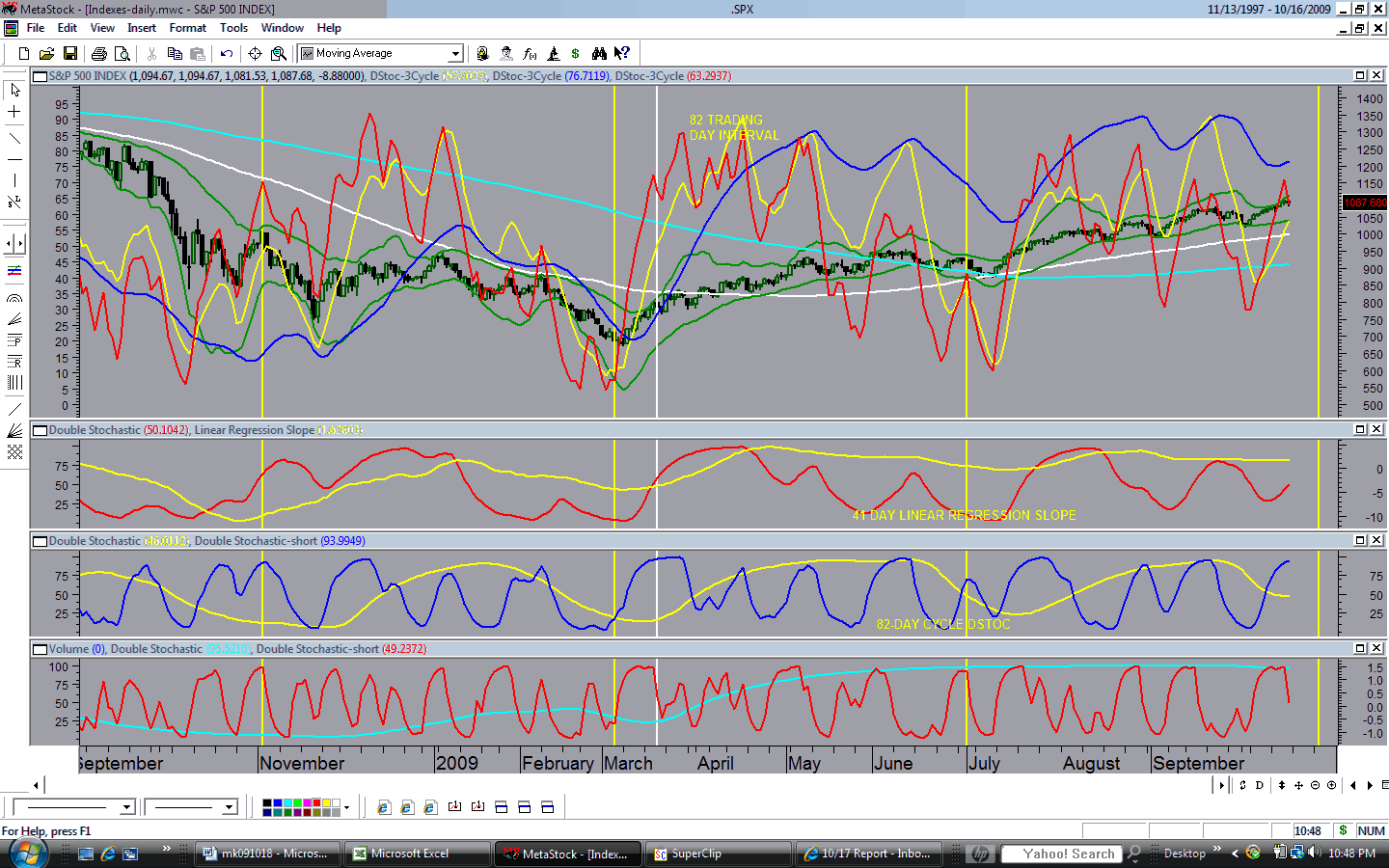
The 10-wk moving average is proving to be formidable resistance as expected for the SPX (http://www.geocities.com/petegersb/SP500.GIF). It gained a little last week, but only a tenth of a percent. Considering the correction that was taking place in the 13-day cycle, that was an impressive performance. But this week, the same resistance should be equally challenging. The 14-day-old 26-day cycle has unfinished business on the downside, and the 5-week-old 10-wk cycle is now 5-weeks old and even more overbought than it was a week ago. However, the 13-day and 20-week cycles should lend support. Another week with little progress in either direction wouldn’t be surprising, but a down trending short-term composite coupled with a flat intermediate composite should give the edge to the downside.
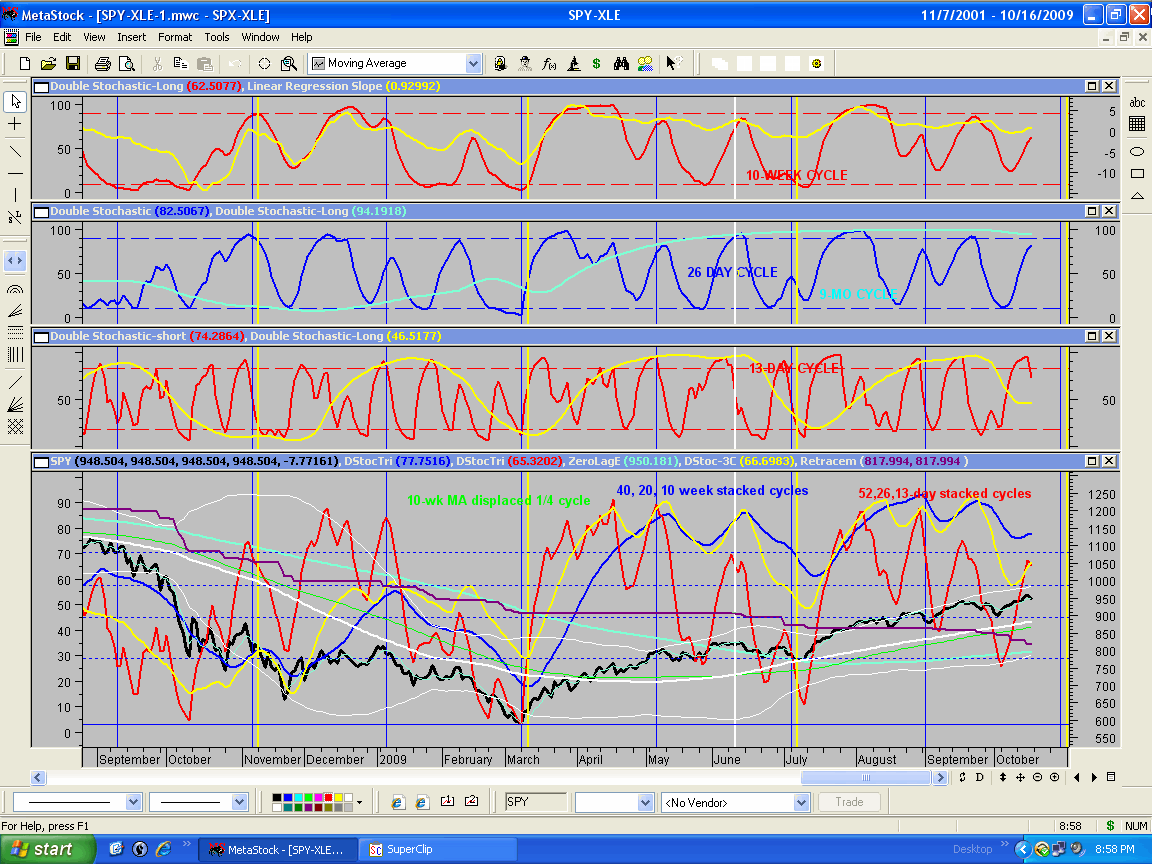
The SPX was once again dragged down by the energy stocks. While the cycles for the SPX ex-energy (http://www.geocities.com/petegersb/SPY-XLE.GIF) are very similar to those of the full SPX, its intermediate composite is in a much stronger uptrend. It looks like it has a good chance of reaching resistance at the 38% Fibonacci retracement before the 10-wk cycle peaks. A turn in oil ahead of a turn in stocks would make that more likely.
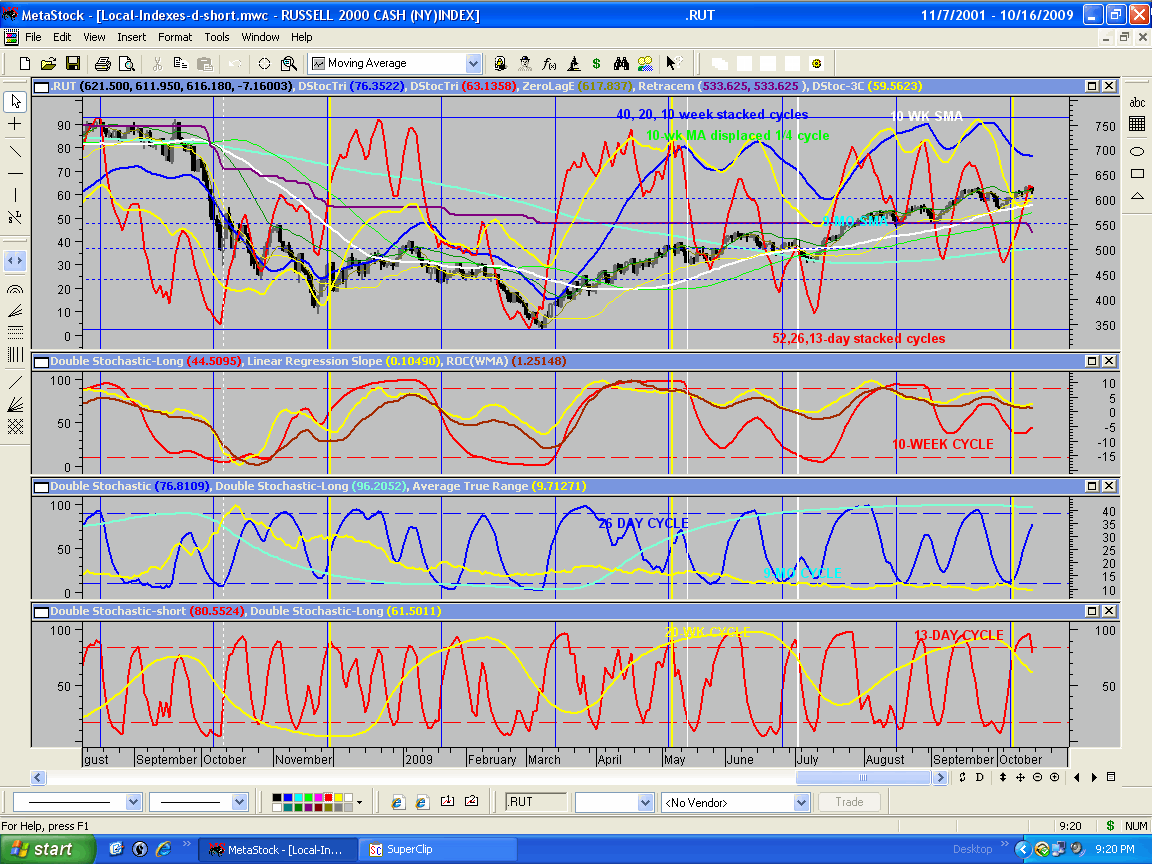
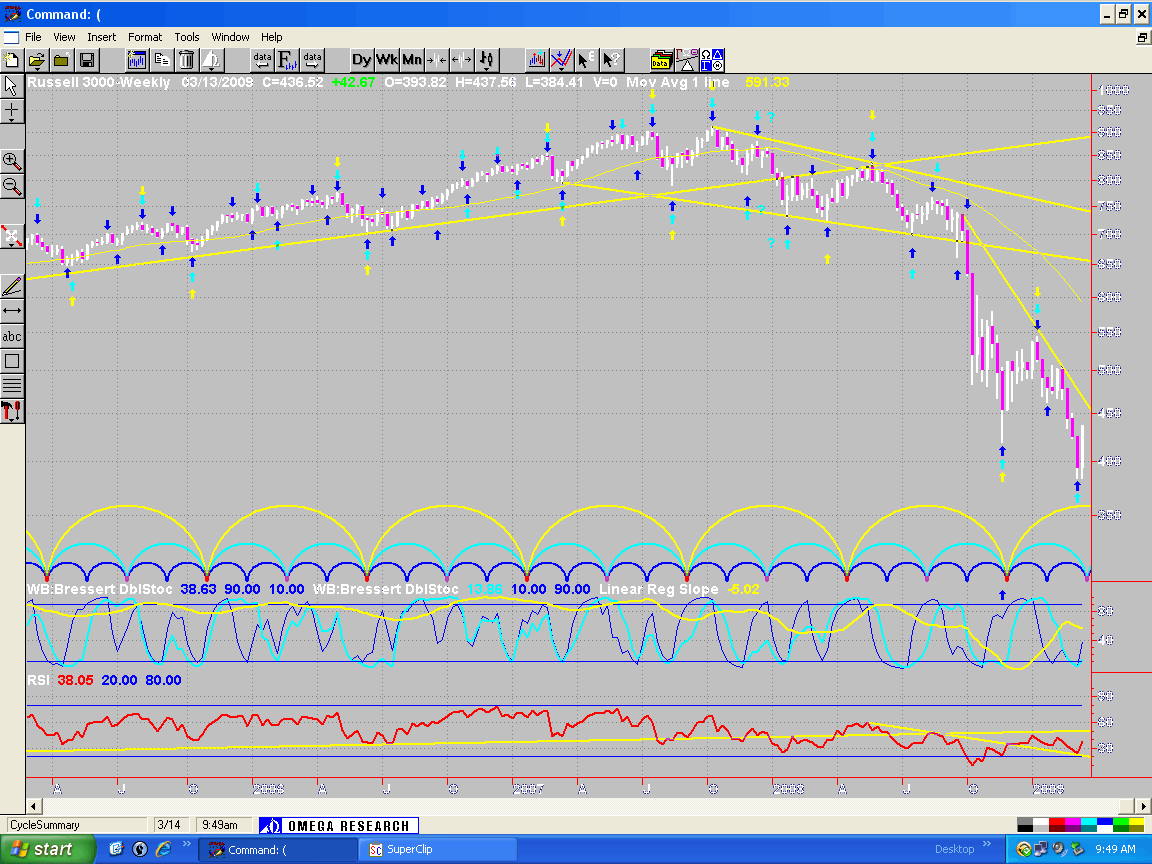
The Russell small cap index (http://www.geocities.com/petegersb/Russell2000.GIF ) continues considerably stronger. It matched its June high early on Friday before pulling back later in the day. It also broke above resistance at the 50% retracement before closing right at that mark. The cycles, however, look very similar to those at the October peak 9 months ago. That suggests the possibility of a peak that is far more significant than a mere 10-week cycle peak. But if the short-term rally can persist despite its extreme overbought condition, the chart will begin to look like that of a bull market.
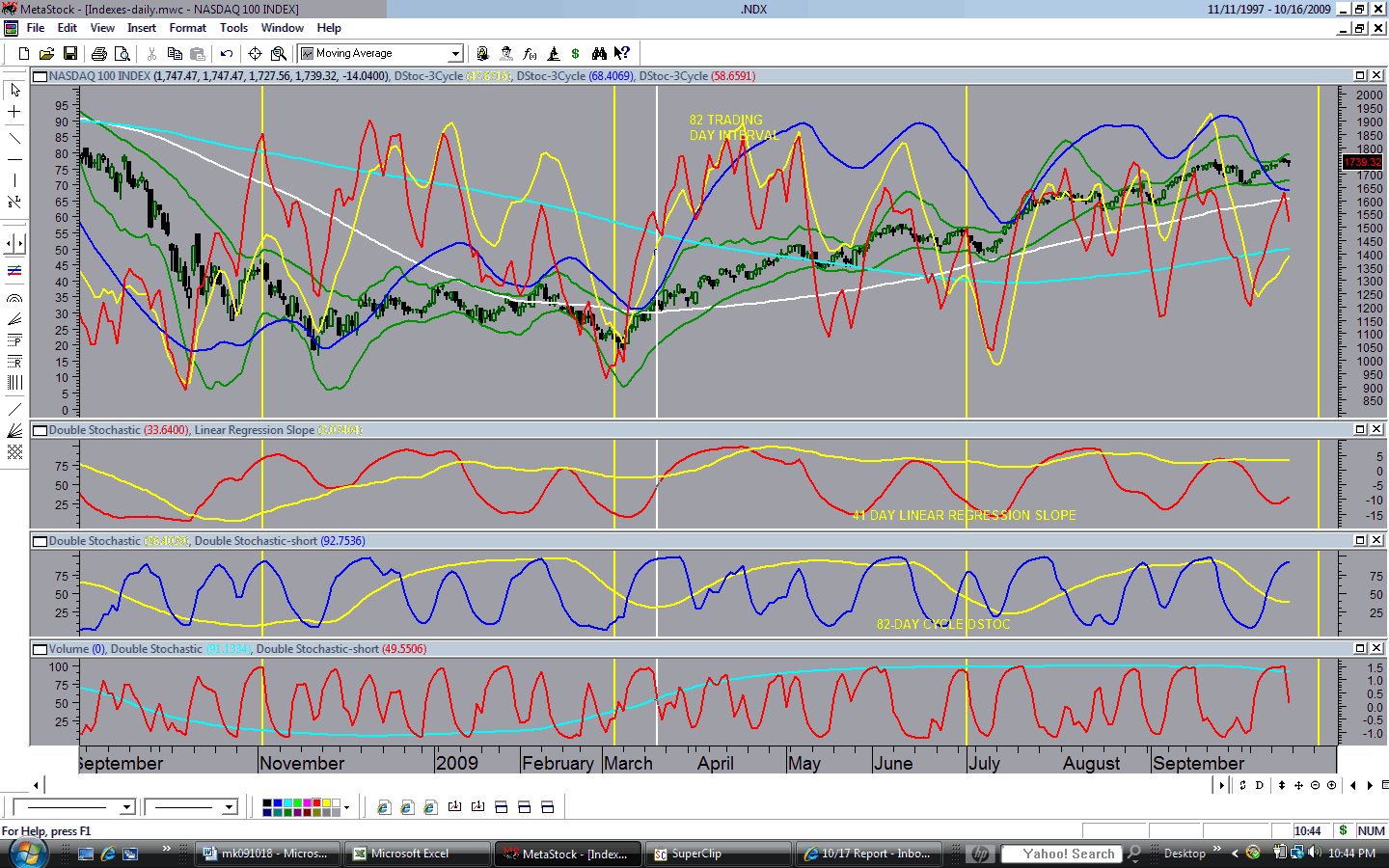
The NDX (http://www.geocities.com/petegersb/NDX.GIF) continues stronger than the SPX, but weaker than the small caps. It moved through its 9-mo MA and is now trying to work its way through the 50% retracement level. However, its very overbought short-term composite ticked downward on Friday, signaling a potential peak in its 5-wk-old 10-wk cycle.
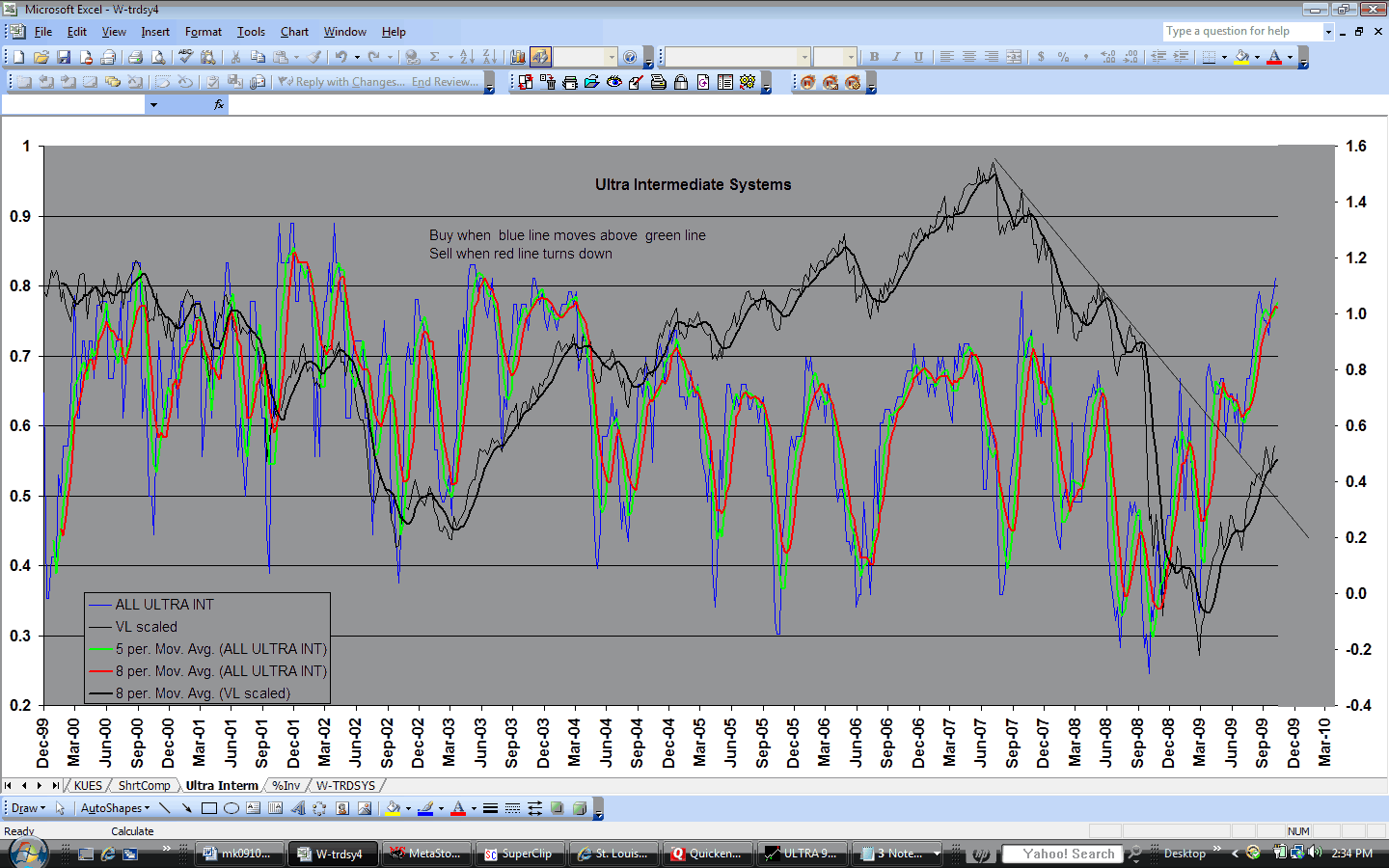
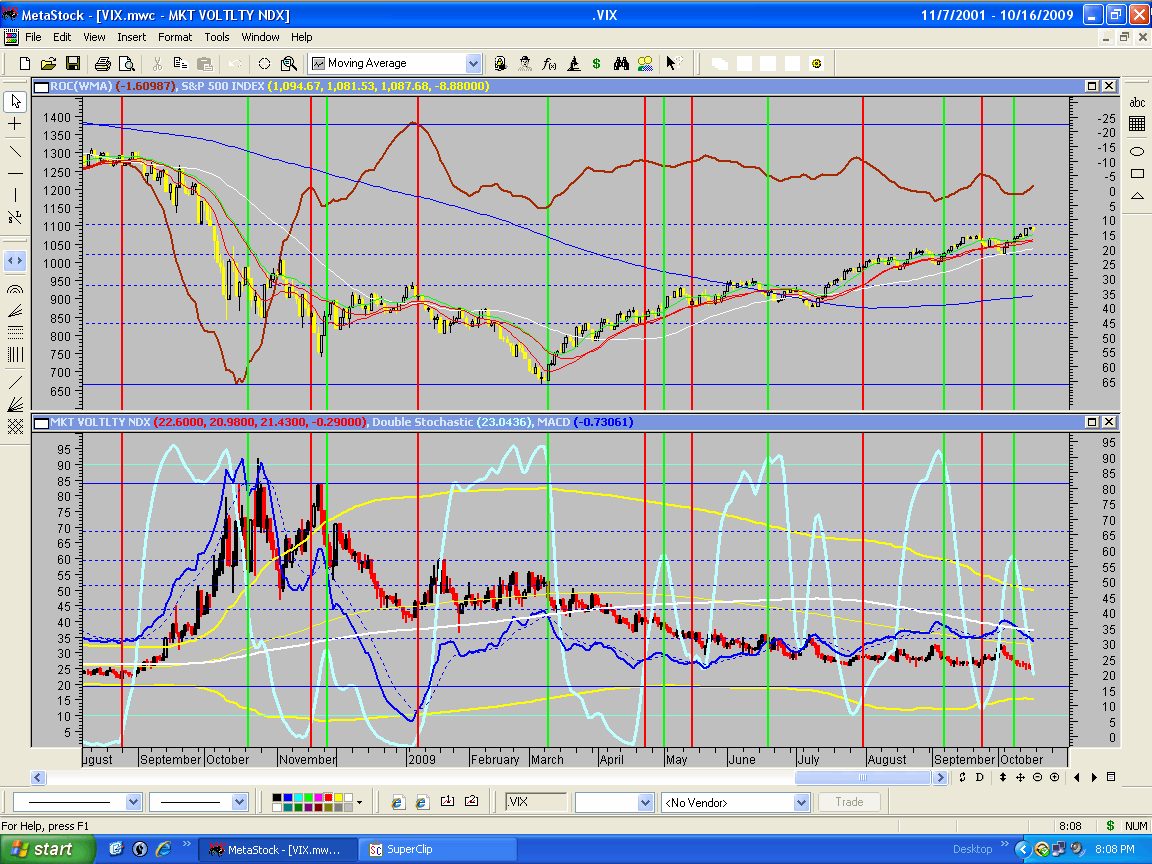
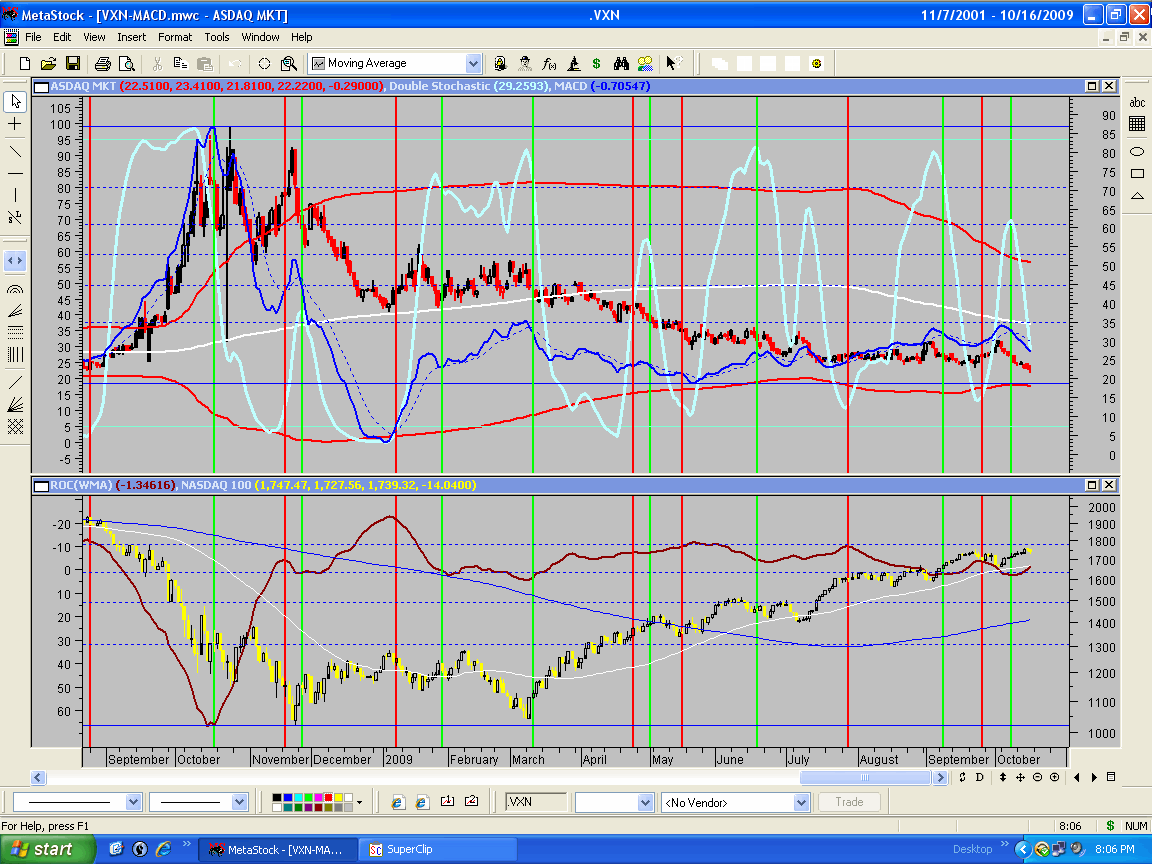
The weekly VIX and VXN (http://www.geocities.com/petegersb/VIX-weekly.GIF, http://www.geocities.com/petegersb/VXN-weekly.GIF) indicate that the 5-wk-old 20-week cycle rally should continue for quite some time. So does the ULTRA trend following system (http://www.geocities.com/petegersb/UltraIntermediate.GIF ). But the DStocs on the daily VIX (http://www.geocities.com/petegersb/VIX.GIF) and VXN (http://www.geocities.com/petegersb/VXN.GIF) remain at extreme lows – ready to trigger 10-week stock cycle sell signals on even a minor rise in the VIX or VXN. Such a signal looked likely a week ago. It looks even more likely this week.
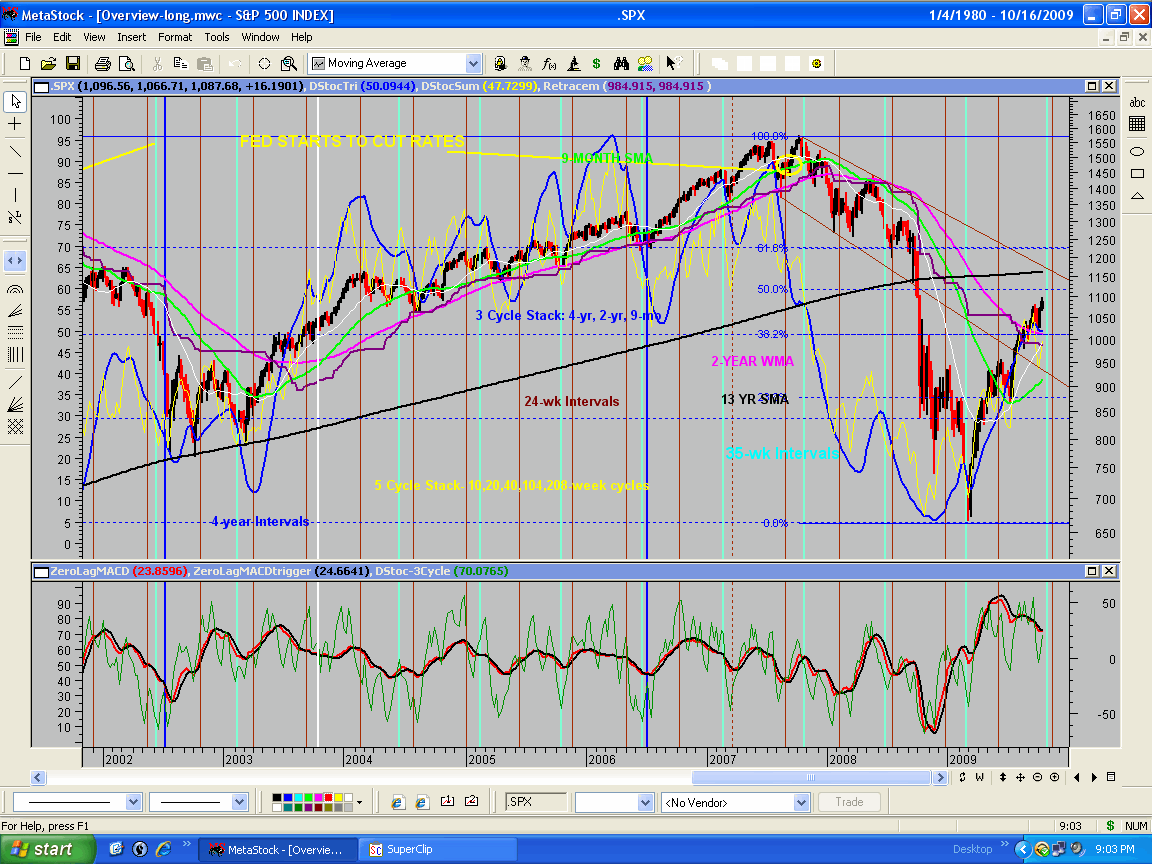
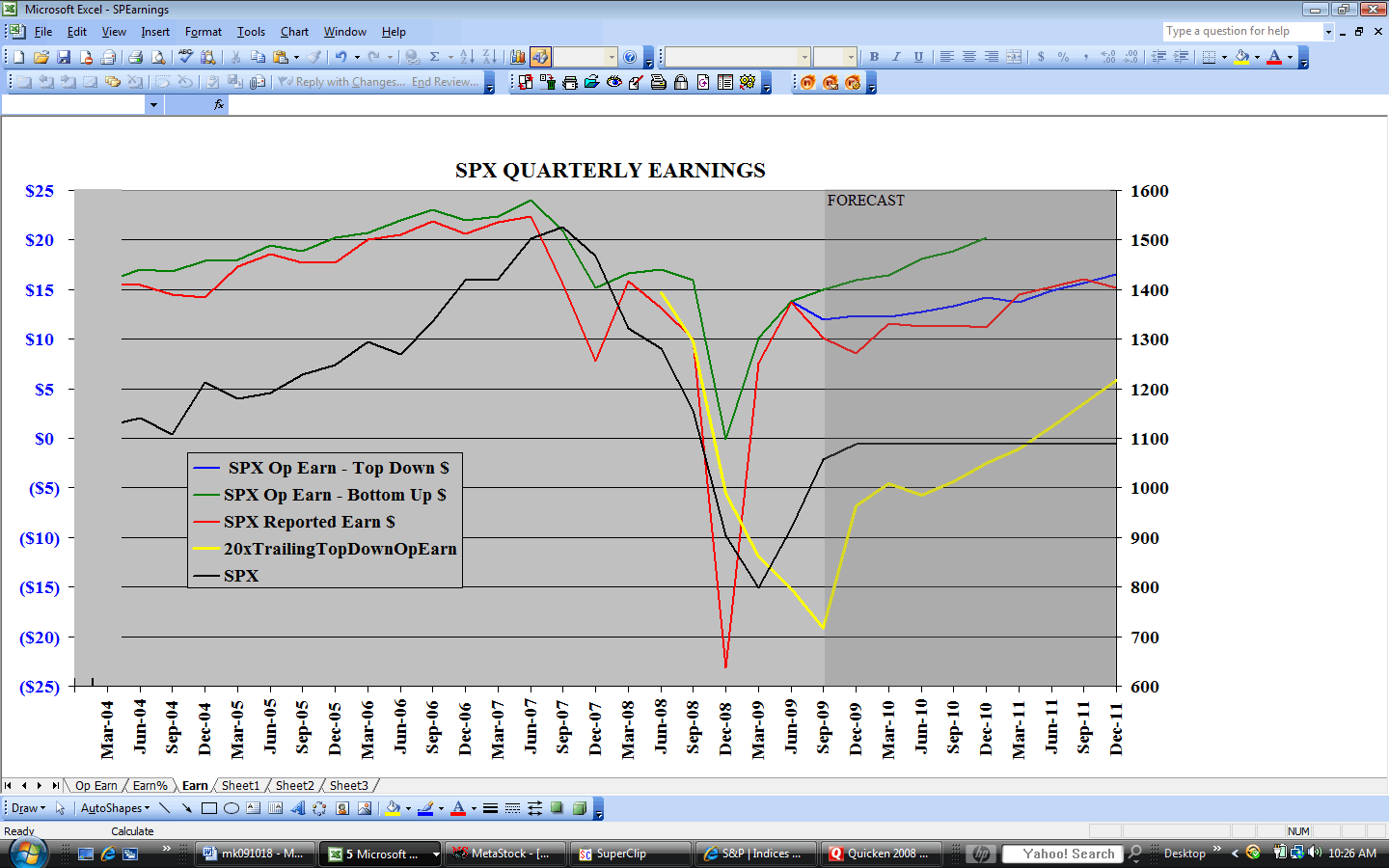
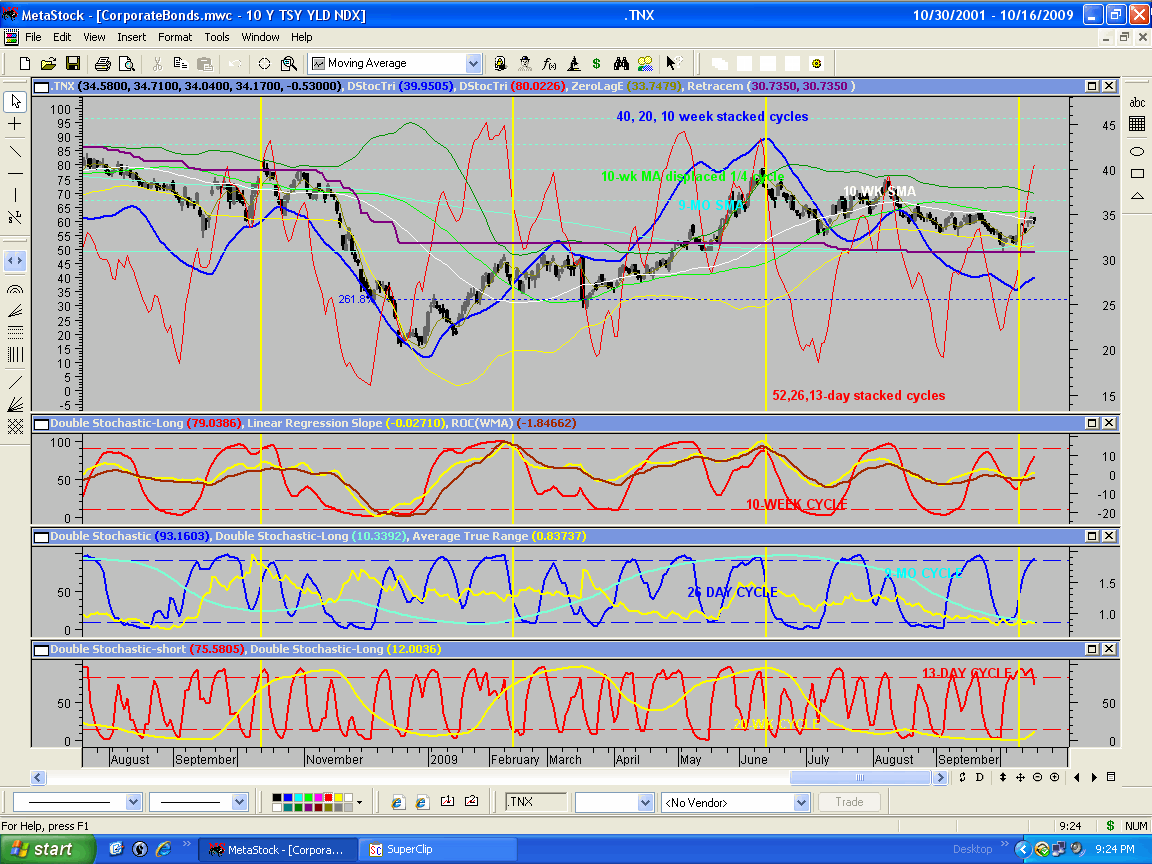
The weekly price charts (http://www.geocities.com/petegersb/Overview-long.GIF, http://www.geocities.com/petegersb/Overview-med.GIF ) indicate that the 9-month cycle remains in a downtrend. A reversal in these indicators coupled with a higher 20-wk cycle high would cause me to reverse my opinion of its trend, but neither has happened yet. So far this still looks like a 20-week cycle countertrend rally in an ongoing bear market, and the continuing deterioration in the fundamentals is likely to support a resumption of the downtrend. As the 2nd quarter earnings reports roll in, Standard & Poor’s continues to lower its ridiculously high bottom-up operating earnings estimates (http://www.geocities.com/petegersb/EarnY-Y.GIF) – this week from $82.30 to $80.78 for 2008 and from $109.13 to $108.43 for 2009. Their top-down analysts’ estimates appear much more reasonable at $79.42 for this year and $76.06 for next year. If you believe the bottom-up estimates, stocks are reasonably cheap at a 12 multiple on 2009 operating earnings. However, if you take a more realistic view and accept the top-down estimates, stocks are expensive at a 17 multiple on estimated 2009 earnings. Dividends have also been dropping steadily since 2nd quarter reports have started coming in. If bottom-up estimates had any validity, corporations would have no need to scale back dividends. However, if you look at reported earnings, you can see why dividends are being cut. S&P last week revised trailing 12-mo reported earnings from $60.39 to $51.83. The latter equates to a very expensive P/E of 25, or an earnings yield of only 4%. It makes the safe 3.85% yield on the 10-yr treasury (http://www.geocities.com/petegersb/TreasuryYield-10yr.GIF ) look relatively attractive despite its negative real return in a 5.6% inflation environment.
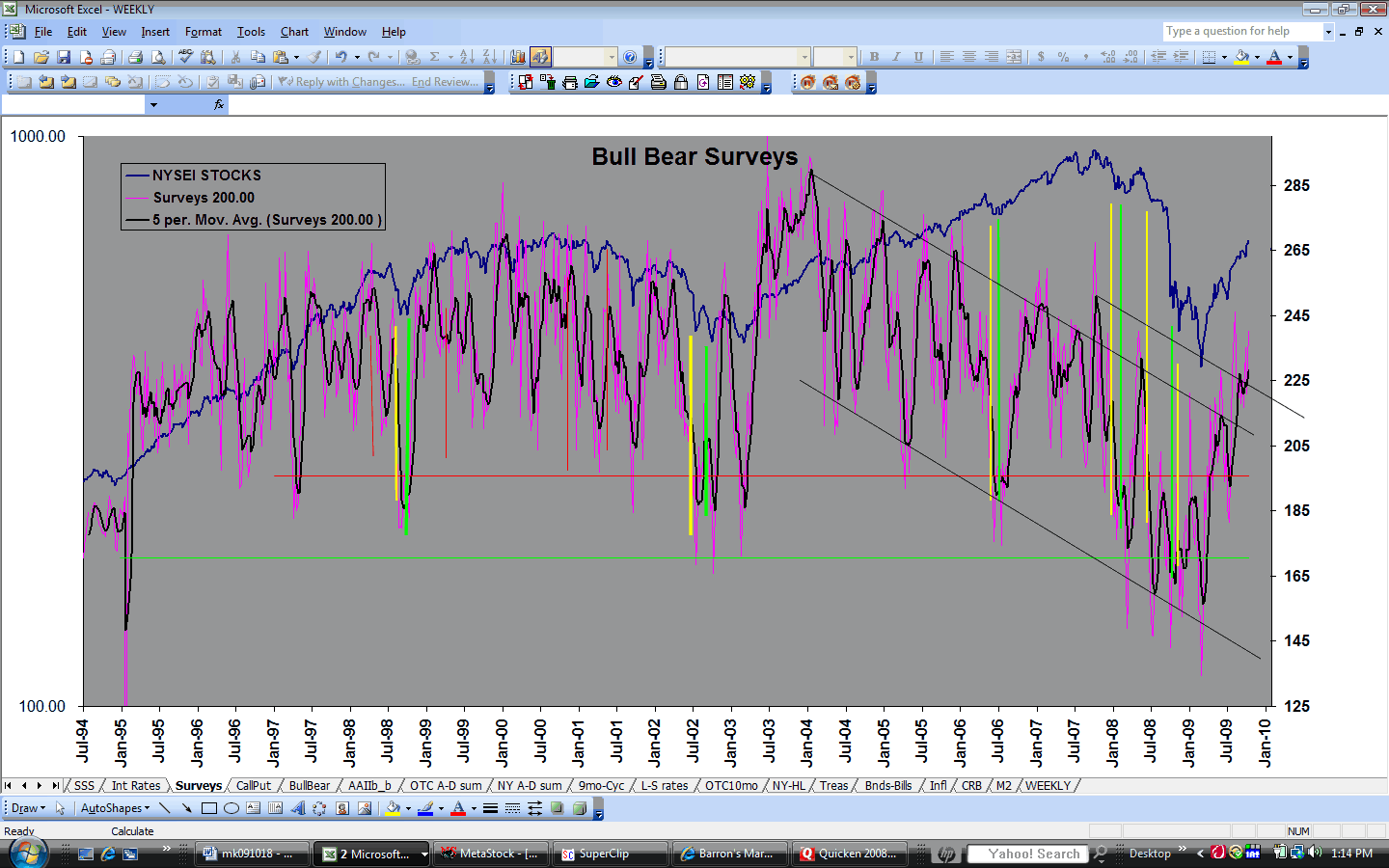
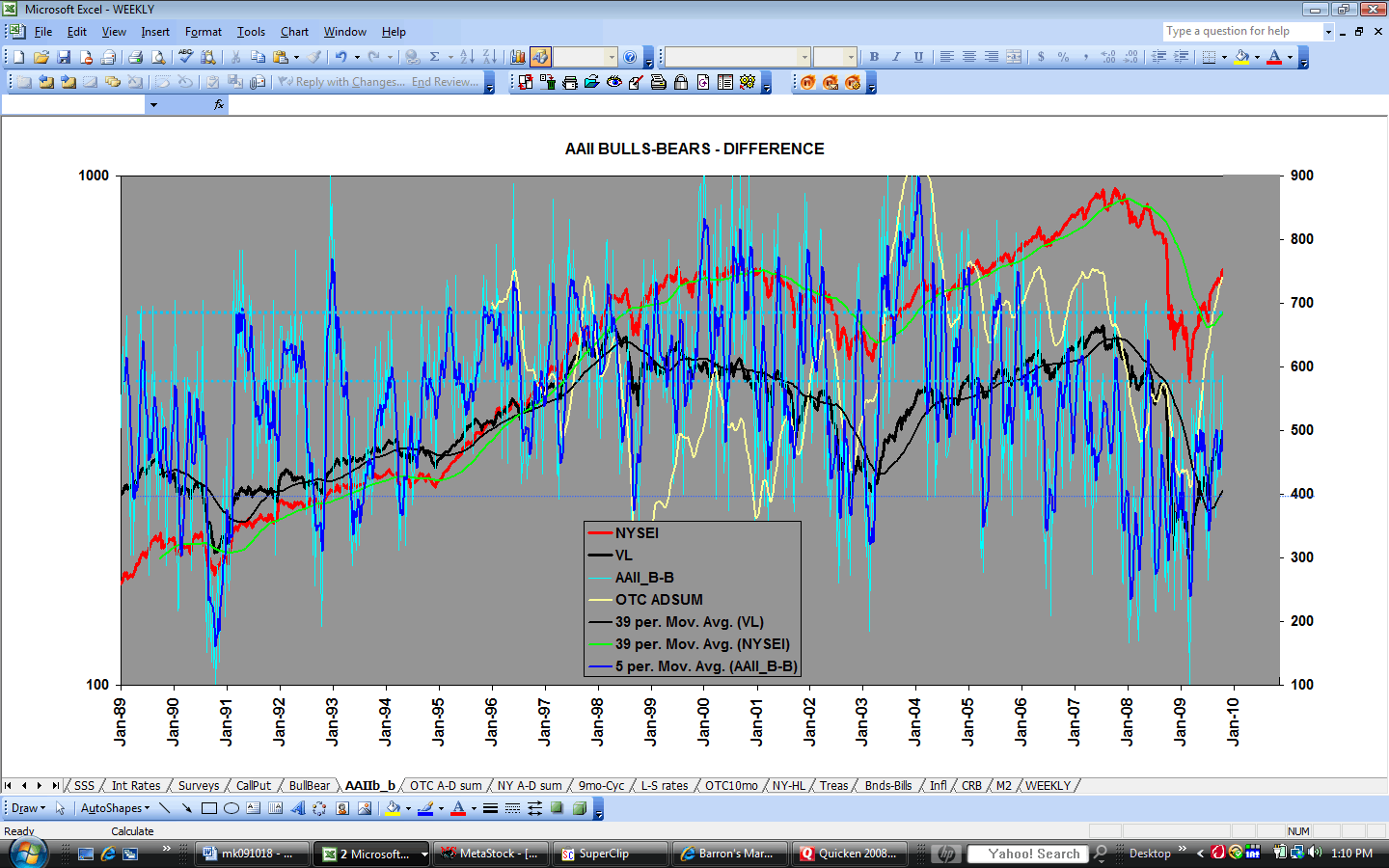
Sentiment deteriorated
a little among advisory services (http://www.geocities.com/petegersb/InvestorsIntelligence.GIF),
but among AAII members (http://www.geocities.com/petegersb/AAIIsentiment.GIF),
it improved a little. Buy signals on
both remain intact.
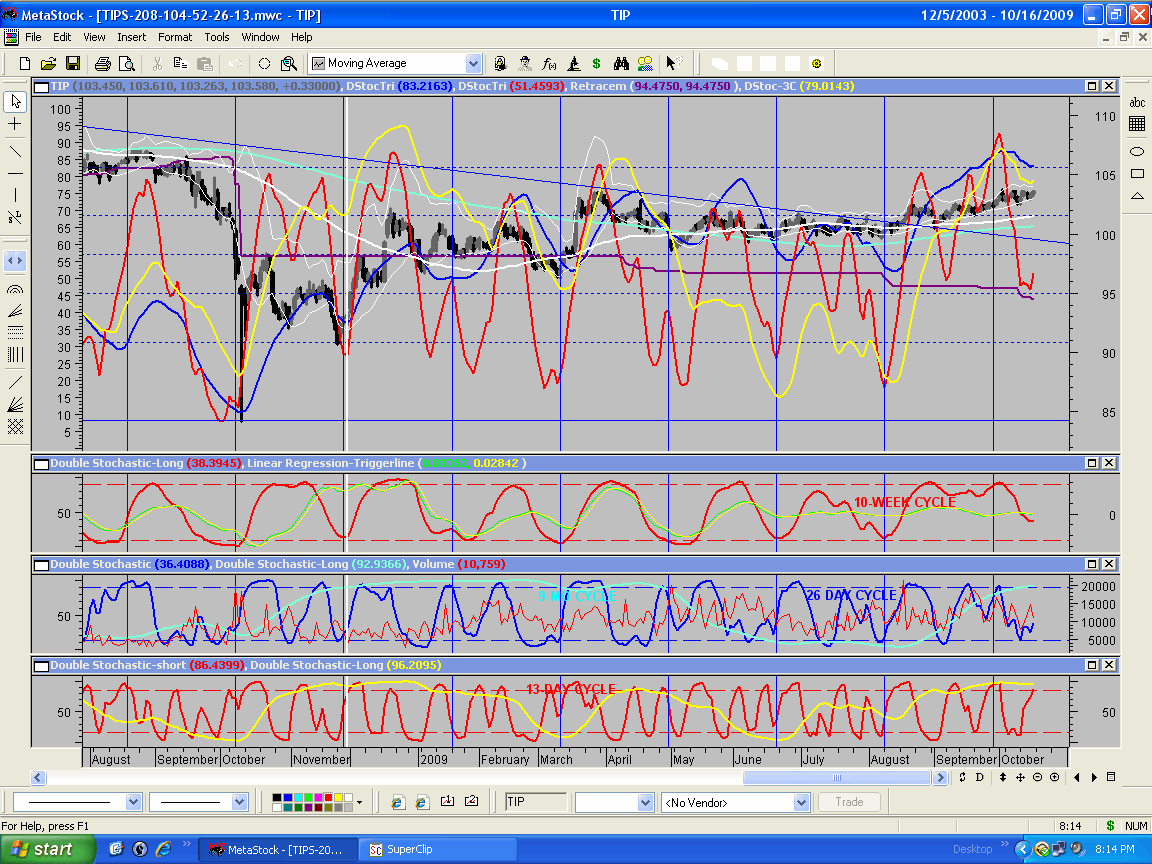
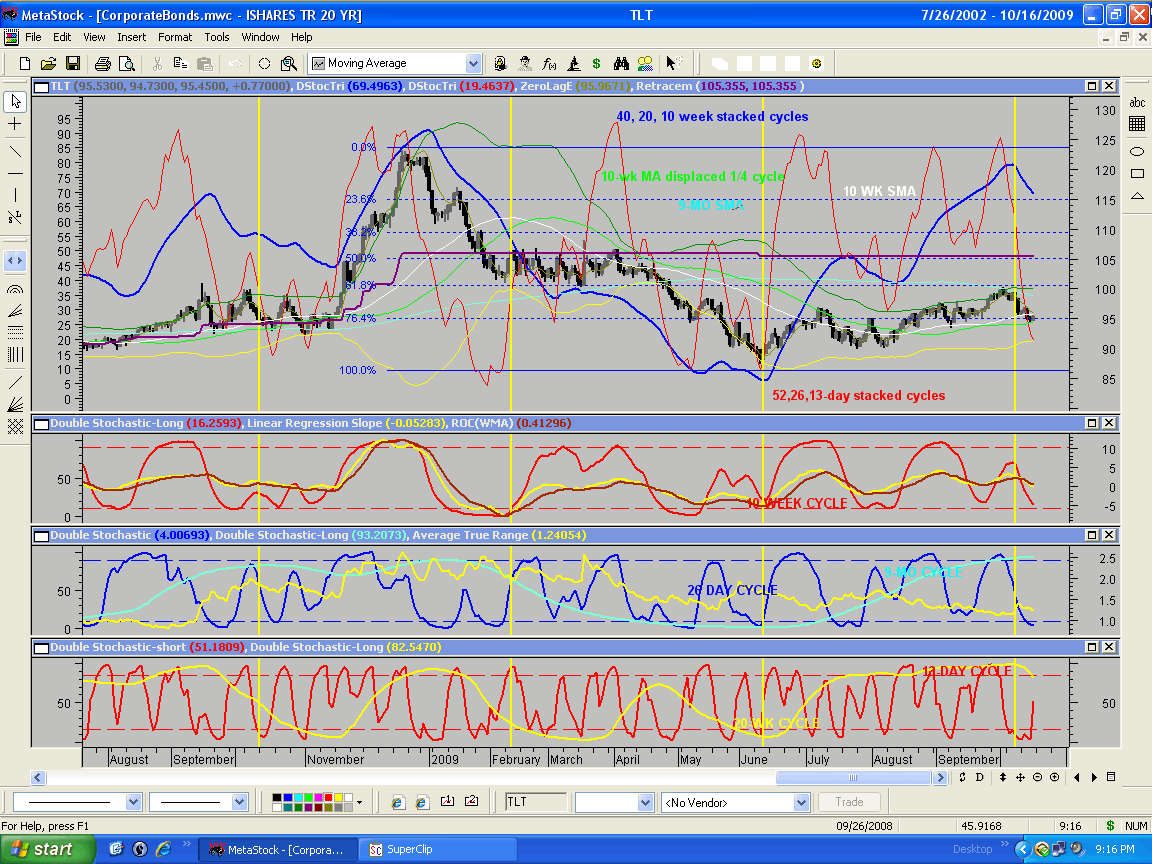
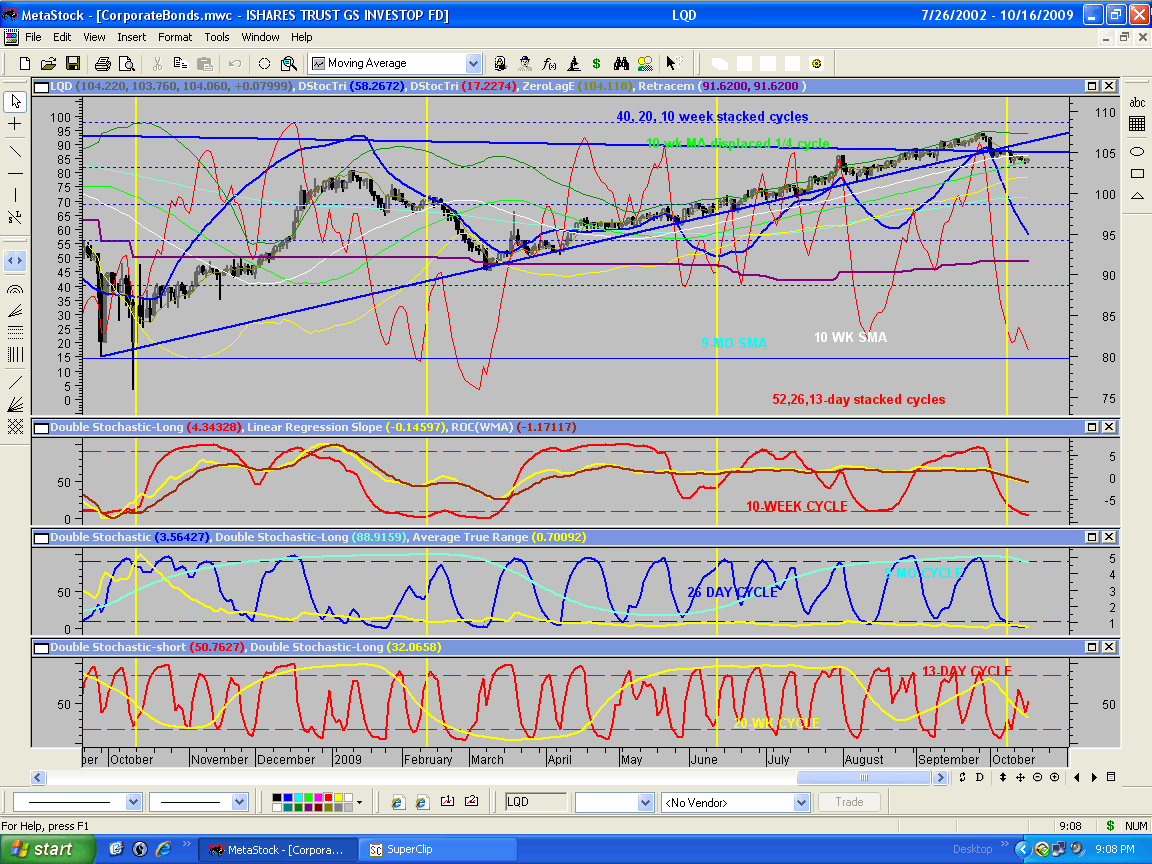
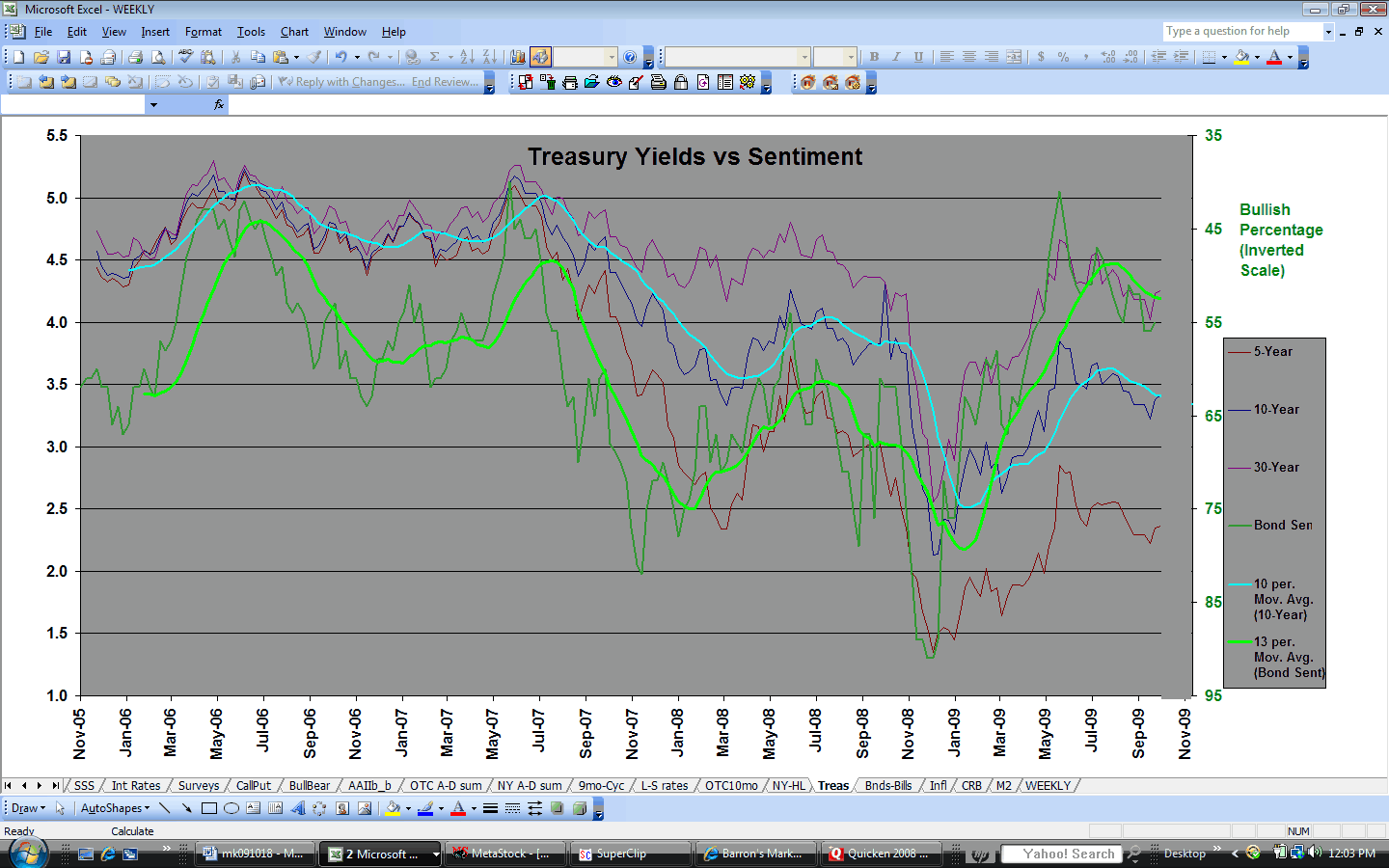
Government Bonds (TIPS (http://www.geocities.com/petegersb/TIPs.GIF) and T-bonds (http://www.geocities.com/petegersb/Treasury-20yr.GIF)) continued the 10-wk cycle rally that began a week and a half ago. T-bonds managed to close slightly above the rising 9-month moving average and will challenge the July high on any continuation of the rally. That may not happen this week because the 13 and 26-day cycles are ripe for a correction, but the 10-week cycle rally should have enough left to produce a higher 10-wk cycle high to go with its higher low. Despite the grim CPI news, inflation expectations (http://www.geocities.com/petegersb/CPI.GIF ) declined again, so the TIP rally was not as strong. It remains below both the 9-mo and 10-wk moving averages. Unlike its conventional treasury counterpart, its intermediate composite remains in a downtrend. The Treasury market is clearly betting on an economy that is sufficiently weak to kill inflation. Corporate bonds (http://www.geocities.com/petegersb/CorporateBonds.GIF) had a much weaker rally as they near a peak in the 10-wk cycle rally that began with the stock rally 5 weeks ago. The rally seems to have stalled right at the steeply down trending 10-wk moving average. Bond investors continue to seek safety, betting that higher yield from corporate bonds won’t compensate for the increasing default risk as the economy weakens. Bond sentiment (http://www.geocities.com/petegersb/BondSentiment.GIF) improved enough to produce an intermediate buy signal for bonds.
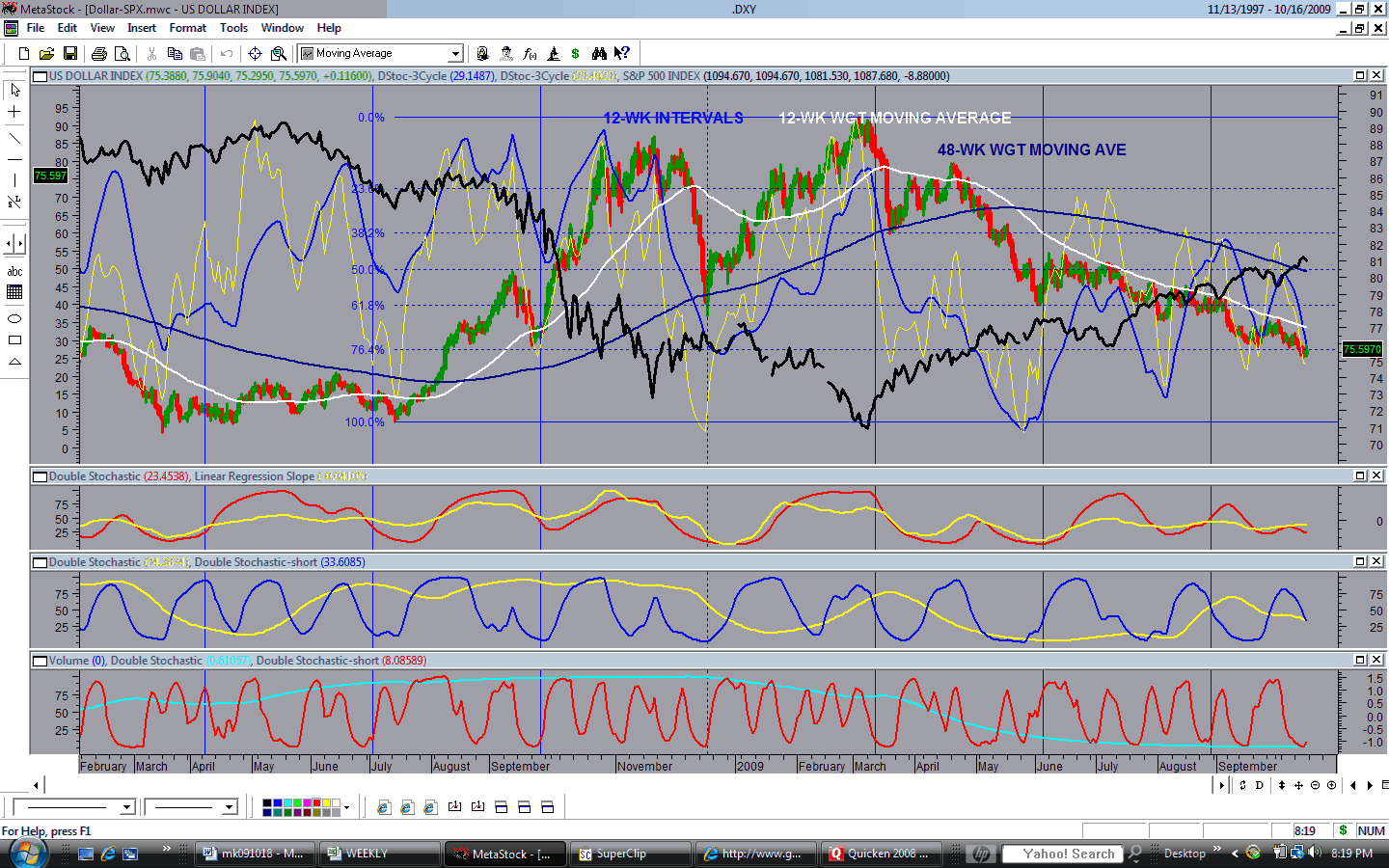
The dollar (http://www.geocities.com/petegersb/Dollar.GIF) surged again last week, marginally setting a high for 2008. That assures a higher 20-wk cycle high and leaves the dollar less than a point below its last 9-month cycle peak. It also makes a right translated peak for the 5-month old 9-month cycle highly probable. The surprise dollar strength is good news for inflation, and serves as a pretty good explanation for the bond market’s insensitivity to the CPI news. It’s bad news for your holdings in foreign securities if it lasts. It’s somewhat unusual for the second 20-week cycle within a 9-month cycle to be so much stronger than the first – particularly at the presumed beginning of a new bull market. So maybe it’s not a new bull market, but merely a natural reaction to the steep plunge in our costs for imported oil during the last 5 weeks. If so the dollar will resume its decline when oil resumes its rise. At least with respect to 10-wk cycles, both appear ripe for a course reversal. Both short and intermediate composites are overbought for the dollar, its 9-mo cycle is 5 months old, and its 10-week cycle is 5-weeks old. You don’t want to argue with such a strong intermediate trend, but it’s time for at least a correction.
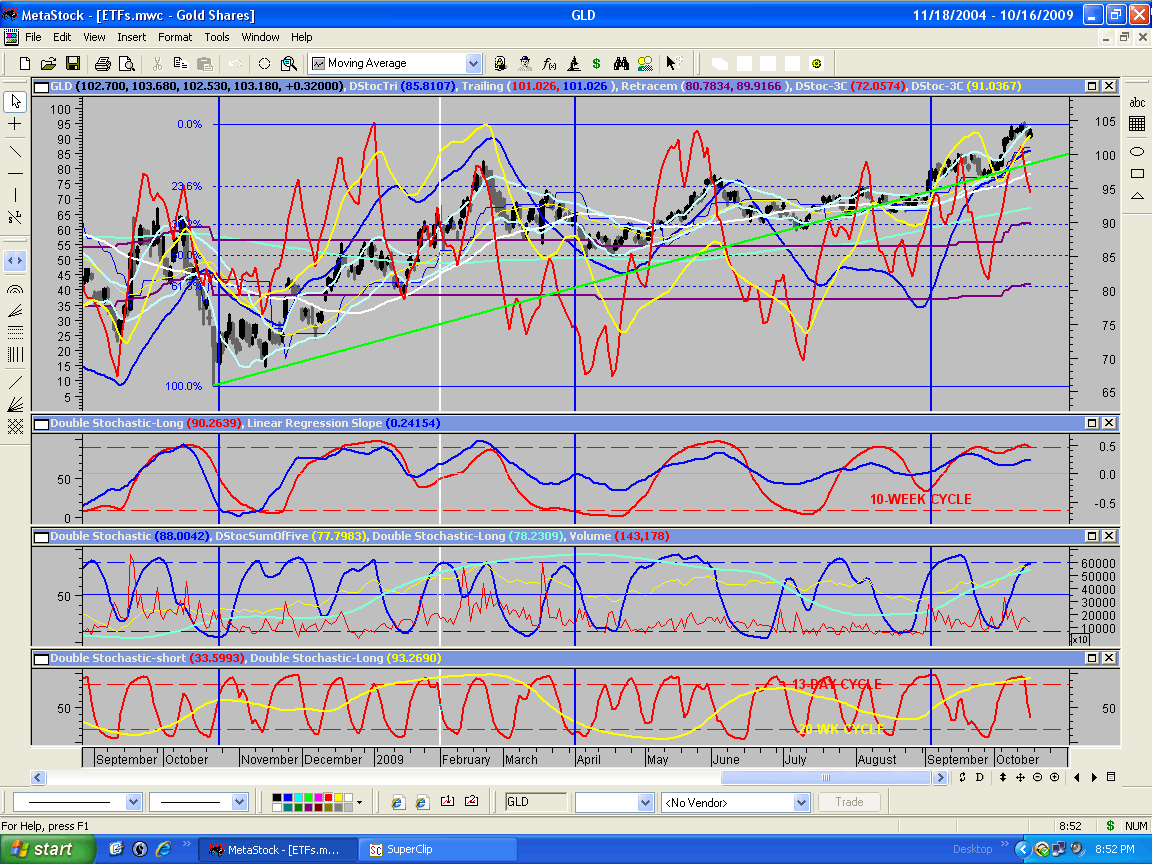
Gold (http://www.geocities.com/petegersb/GoldBullion.GIF) maintained its inverse correlation with the dollar. It plunged well below its May low to produce a
lower 20-wk cycle low to go with its lower high. It made a new 2008 low as well.
That suggests the long-term uptrend has been broken. However, a three year old
uptrend line that held against similar patterns in October of 2006 and August
of 2007 hasn’t yet been broken on the linear scale (it has on a log scale). That
appears to be the one potential positive for the long-term trend. In the short
term, like stocks and the dollar, gold looks ripe for a 10-wk cycle turn – only
in the opposite direction. Unlike the metal, Gold stocks, as represented
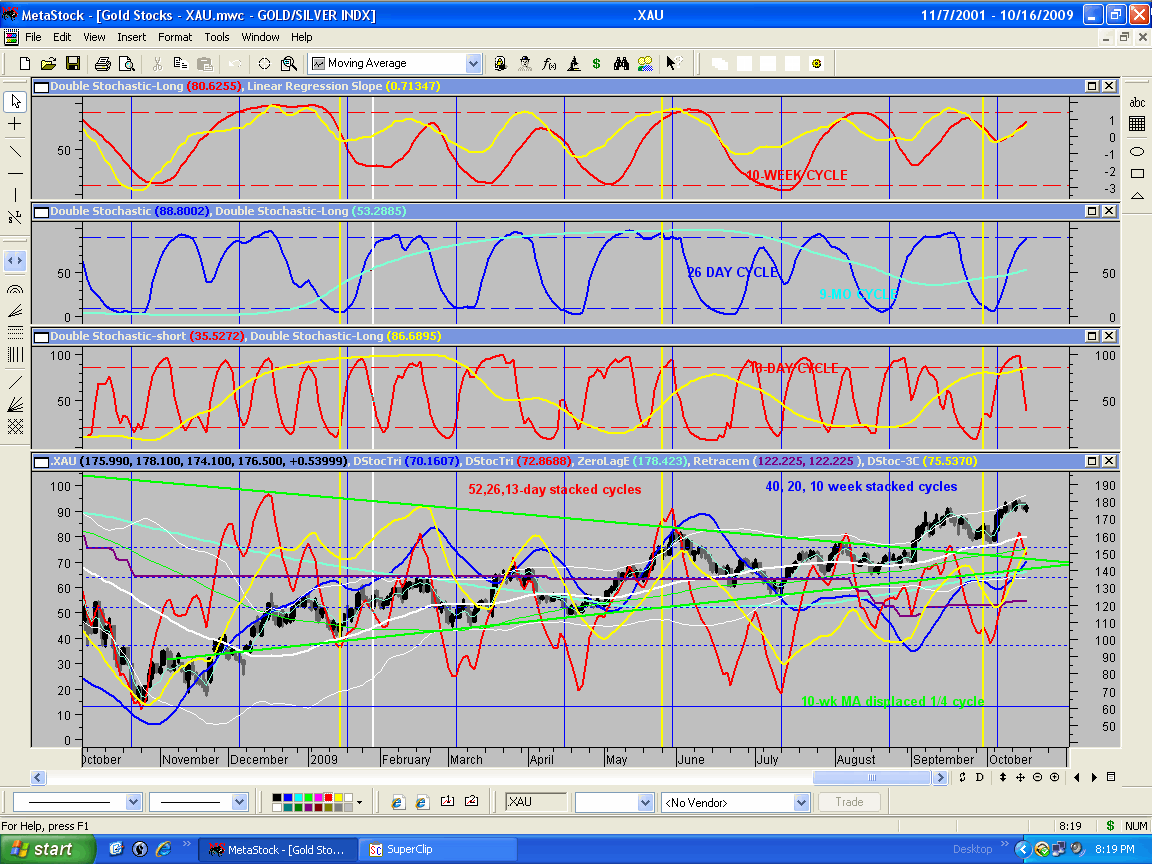
by the XAU (http://www.geocities.com/petegersb/GoldStocks.GIF), held above Monday’s low. While outperforming the metal
in the very short run, the XAU has lost a third of its value during the last 5
weeks, while the metal lost “only” 20%. Its intermediate composite is oversold
as are the 10-wk and longer cycles. Monday’s low in the short-term composite
may well prove to be an intermediate low as well.
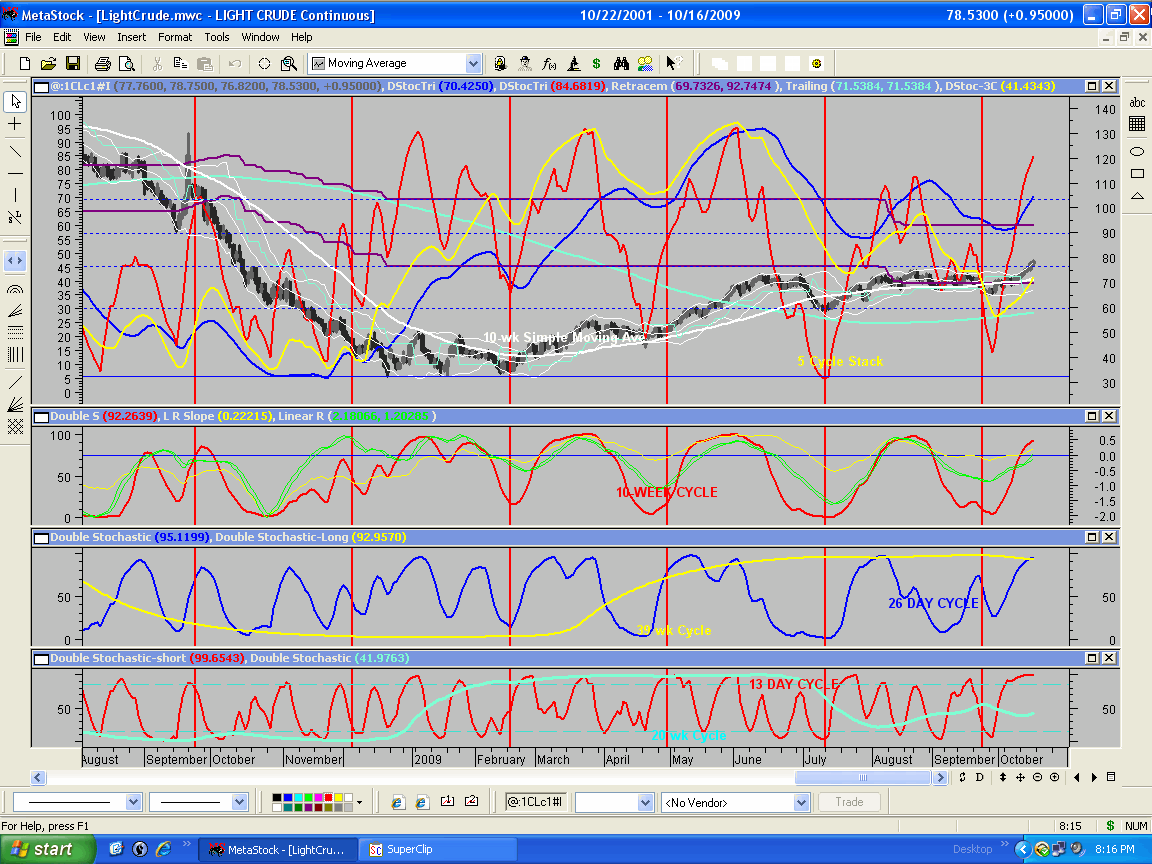
Crude oil (http://www.geocities.com/petegersb/CrudeOil.GIF ) held above its 9-month moving average, declining only another $2. Its 10-week cycle is over 10-weeks old and deeply oversold. Its short-term composite turned up on Wednesday. Like everything else, it appears ripe for a turning point in the 10-week cycle. I suspect oil will be the key to the expected turns in stocks, the dollar and gold. If it does rally, gold will probably do so as well, and stocks and the dollar will probably decline. If the 10-wk trend doesn’t change for oil, it probably won’t change for stocks, gold and the dollar either. Oil has been pretty consistent in mounting rallies at 10-wk intervals, and there is no reason to think it won’t do so this time. But a break below the 9-month moving average would seriously impair its bull-market credentials. An equally important test will come on the next intermediate rally. It will have to move above its 10-wk moving average near 130 to maintain its bull market credentials.
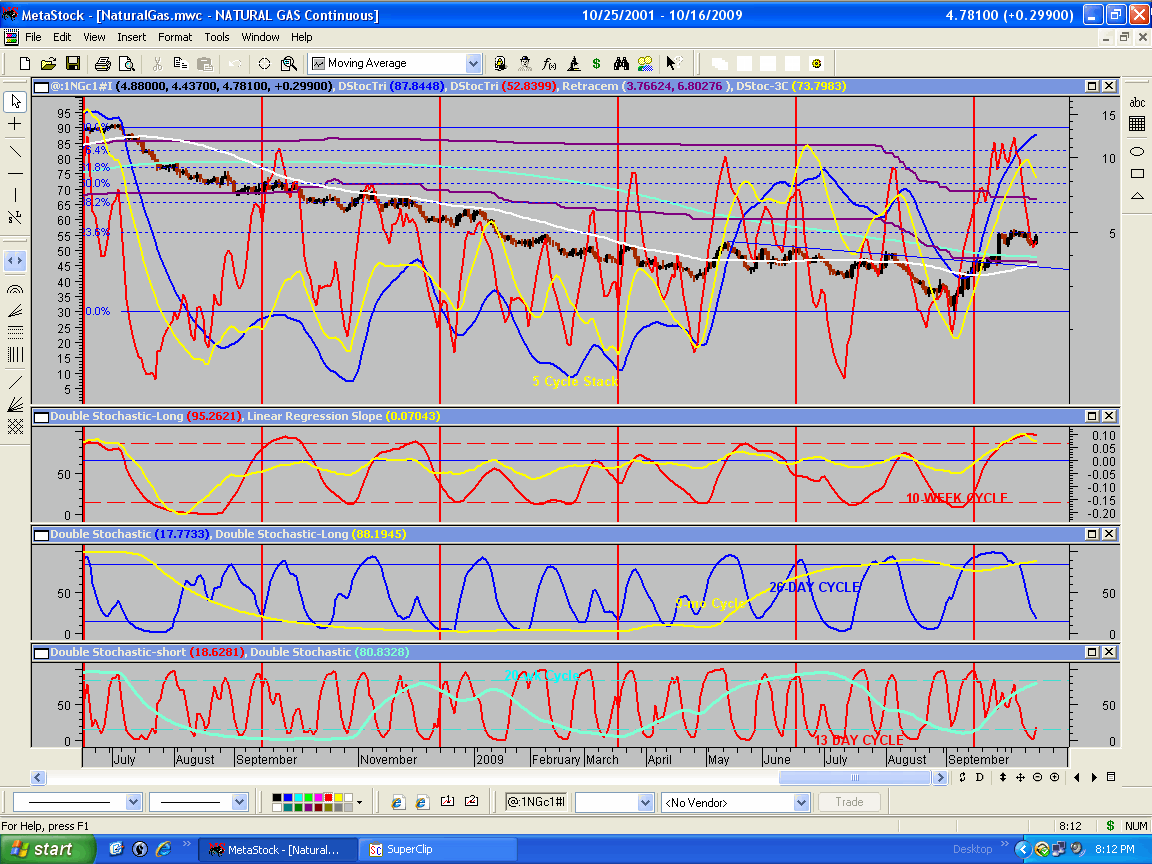
Natural
gas (http://www.geocities.com/petegersb/NaturalGas.GIF) is in worse shape than oil. It broke below its 9-mo
moving average 4 weeks ago, rallied back to it on a 13 –day cycle rally, and
subsequently sank quite a bit lower. Both the intermediate and short composites
are trending downward, and neither is oversold. If it breaks below $8, as
appears likely, the next support should materialize at about $7.20. A deeply
oversold 10-wk cycle is 11 weeks old, providing some hope for a bottom at a
high level than that.
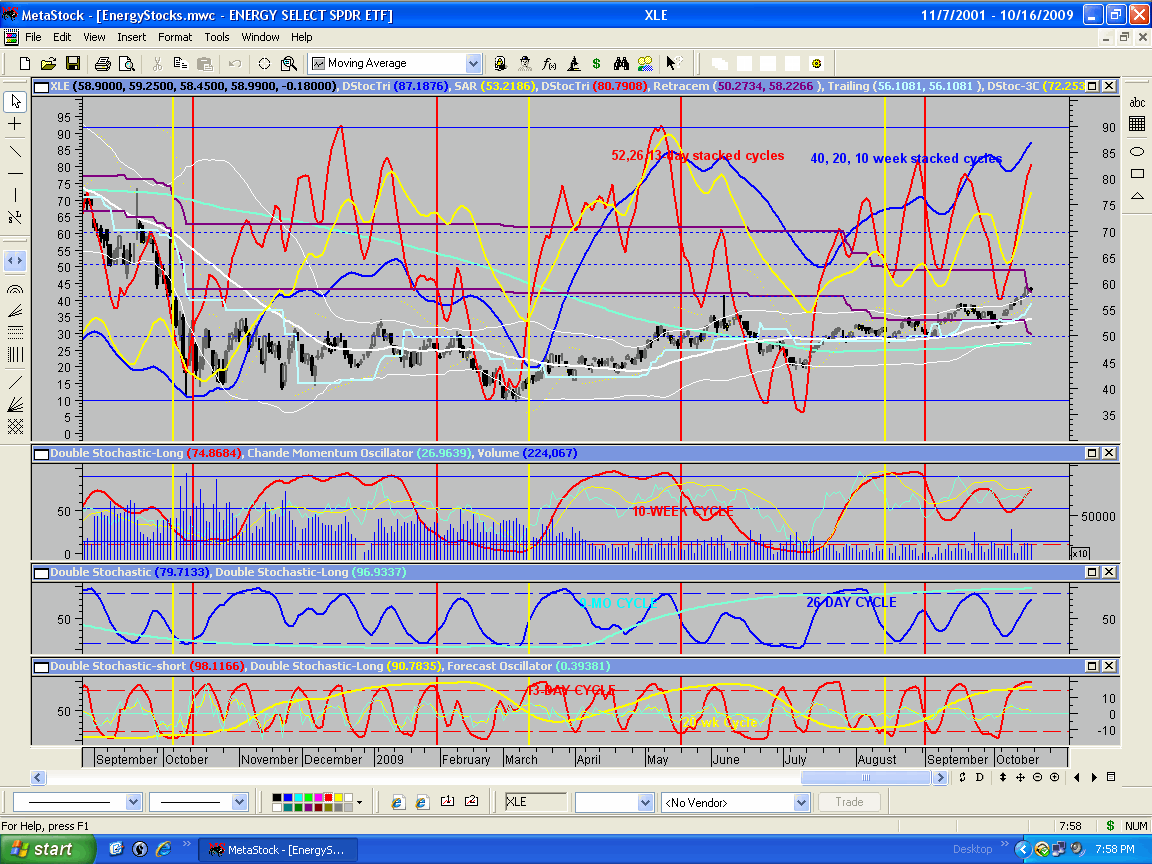
Energy
stocks (http://www.geocities.com/petegersb/EnergySPDR.GIF) were little changed last week despite uptrends in the short-term
composite and its shorter component cycles. That’s not encouraging action. Neither
is the inability to rally from a deeply oversold 20-wk cycle that has gone
beyond any normal life expectancy. Can the deeply oversold 10-wk cycle that has
met its life expectancy produce better results? Stay tuned.