8/3/08
Out of necessity, the Federal Debt ceiling was raised from
$9.815 trillion to $10.615 trillion as the budget office announced an impending
record official deficit of $495 billion – about double what Bush claimed it would
be just a few months ago. Of course, even the upward revision understates the
true deficit by a wide margin. First, it doesn’t include $80 billion of
Bush claimed the increased deficit was due to the economic
conditions that reduced revenues and increased government expenditures. True
enough, at least in part, but isn’t this the same guy who early in his first
term argued that his tax cuts would stimulate the economy to the point of
increasing revenues and prevent the economic malaise that the US is now
experiencing? That was obviously one of the erroneous forecasts made by the
Bush administration – on a par with those made about his invasion of
The Bush cuts utterly failed to deliver the promised results, and now the economy has deteriorated to the point where our government is further burdening future taxpayers by buying the suspect assets of lenders to keep them afloat and giving consumers handouts to maintain their spending – all in a desperate attempt to keep the sinking economy afloat. Our misguided Neoconservatives have adopted Keynesian policies, which they previously derided, to save the system. Will Paulson, Bernanke and Barney Frank be able to rescue the economy from the over-levered mess that earlier Bush policies failed to prevent? Stock investors seem to think so, but for an informed contrary opinion, read the interview with Nouriel Roubini (http://www.rgemonitor.com/blog/roubini ) in this week’s Barron’s. He argues, with supporting data, that we are only in the second inning of a severe protracted recession that will last at least 18 months. He predicts that many more banks will fail because, so far, they have written down only their subprime loans, they still face huge losses in higher quality real estate loans, and they haven’t started to write down most of their bad consumer credit loans. And the consumer is hurting. Debt to disposable income has risen to 140% compared to 100% when the last recession started in 2000. Retail sales gained only 0.1% in June despite the rebate checks, and they declined in real terms. They will decline more severely in coming quarters. The FDIC has only $53 billion available to cover the deposits at failed banks and 15% of that has already been committed to bail out IndyMac. In other words, the FDIC will go bust with only 7 more failures of similar sized banks, and by Roubini’s estimate another 700 to 1400 banks are in serious danger of bankruptcy. In all, he and many respected financial institutions estimate total loan losses will mount to $1-$2 trillion, and only $300 billion of that has so far been written off. Can you imagine the run on the banks when rumors of FDIC bankruptcy begin to surface? I might add that Roubini is not a perma-bear on the economy. He sees a nasty recession and international financial crisis, but sustained growth in the global economy once the crisis passes. Someone will have to eat those losses. Sadly it won’t be restricted to imprudent stock and bond holders. Future tax payers will bear much of the burden, but most of the highly paid industry chiefs who’s bad judgement precipitated the crisis will continue to walk away with millions or billions in golden parachutes to be financed by taxpayers and stock and bond holders.
The bailout-inspired short-covering in financials (http://www.geocities.com/petegersb/Financials.GIF) that produced most of the gains since the middle of July still looks like nothing more than a normal 20-wk cycle rally in a longer-term bear market. It may be a harbinger of an economic bottom in 6 or 9 month (the normal lead time), but this weeks dismal economic reports provide little reason to expect an economic bottom this year. The continuing massive losses in banks and brokers are an old story, but now similar problems are surfacing at the credit card issuers as the consumer pulls back. The rate of decline in auto sales seems to be accelerating, and GM’s loss, which was far larger than forecast, rivals the recent losses in the big financial firms. Even Exxon-Mobile couldn’t earn as much as expected despite record oil and gas prices, which finally are having a significant impact on consumption. Even the official estimate of unemployment is rising, and wages remain stagnant for those that still have jobs. That doesn’t bode well for this consumer-driven economy. The weak dollar has produced increasing exports, but the economies of the countries that buy our goods and services are also starting to weaken. So that rare economic bright spot is also in jeopardy.
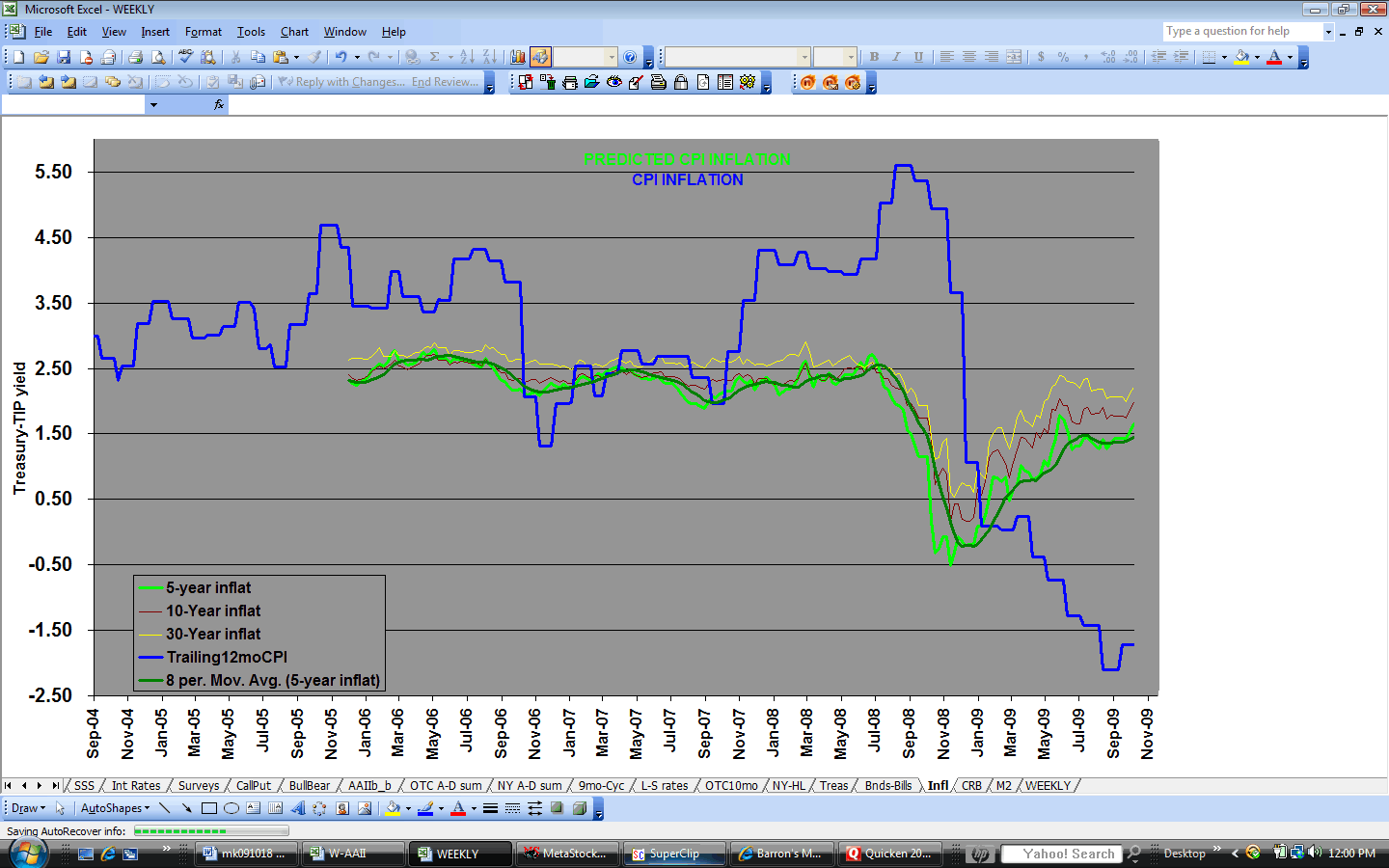
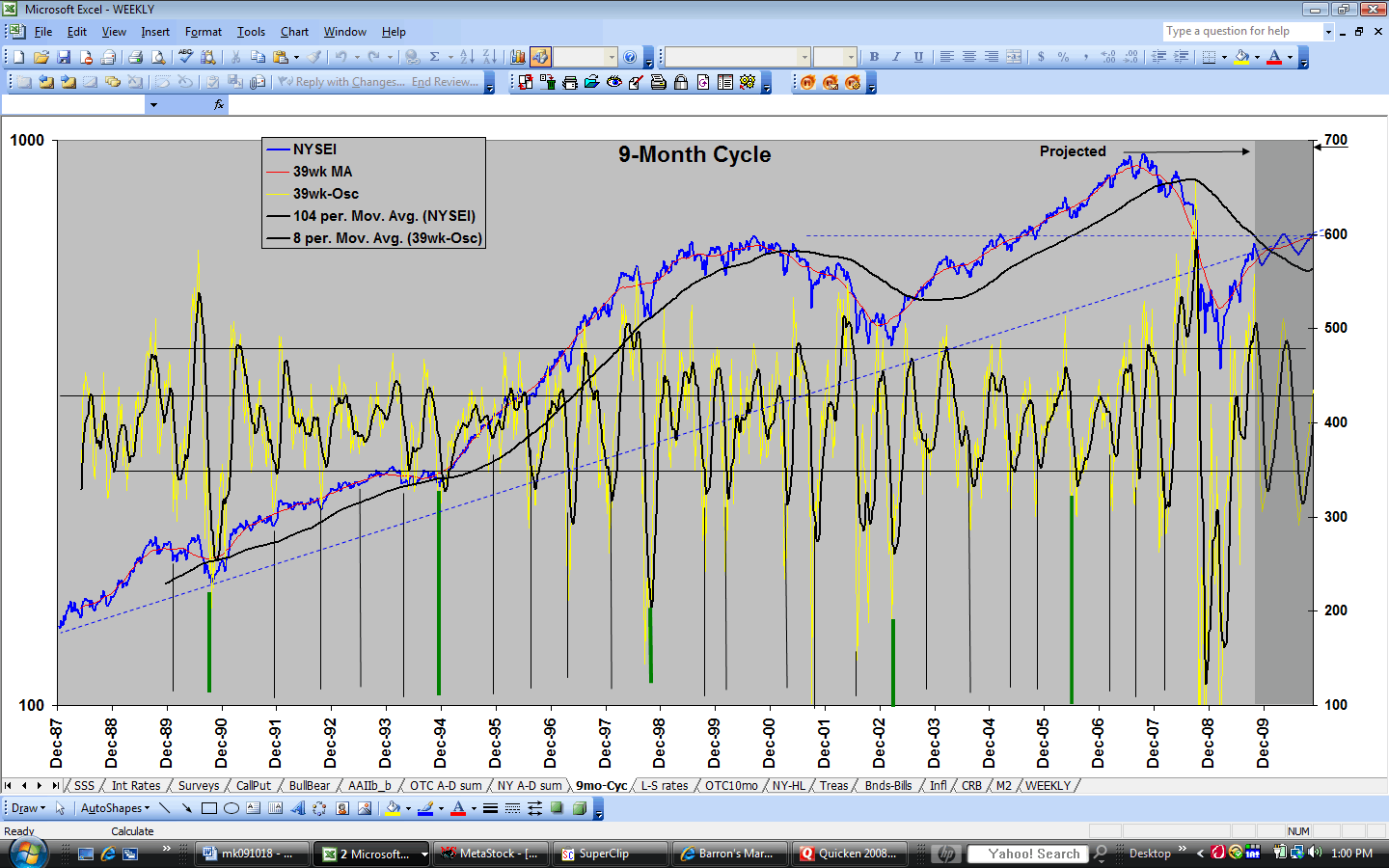
I know it’s always darkest before the dawn, especially in financial markets, but it’s hard to see any fundamental changes in the works other than government bailouts that will support a turnaround. And we’re getting close to the point where the only ammunition left in the government’s arsenal are the Fed’s printing presses. That leaves the stark choice between recession/deflation (if free-market economics are allowed to take their natural cyclical course) and high inflation (http://www.geocities.com/petegersb/CPI.GIF ) if massive government intervention (now favored even by Republicans other than Ron Paul) continues and is successful in preventing a serious depression. Either way, I see nothing on the horizon that would lead me to suspect that my 9-mo cycle projection (http://www.geocities.com/petegersb/9moNYA.GIF ) down to the long-term trendline late this year is too pessimistic. Recession is bad for earnings, and inflation is bad for the stock market’s P/E ratio, which currently stands at a very elevated 23 on the SPX. If the recession lasts only 18-months, the end of this year would be the right time frame for an anticipatory bottom in stocks.
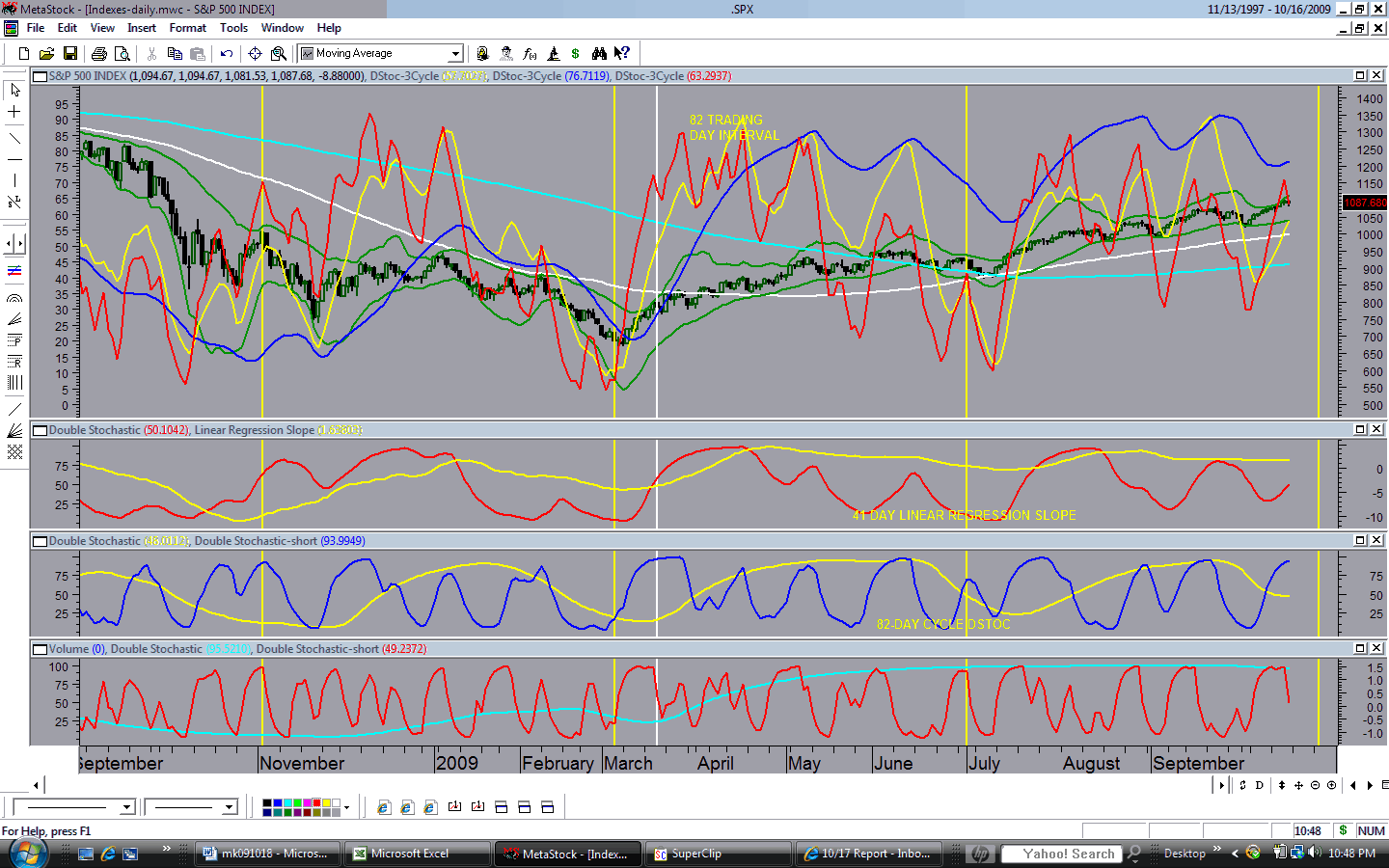
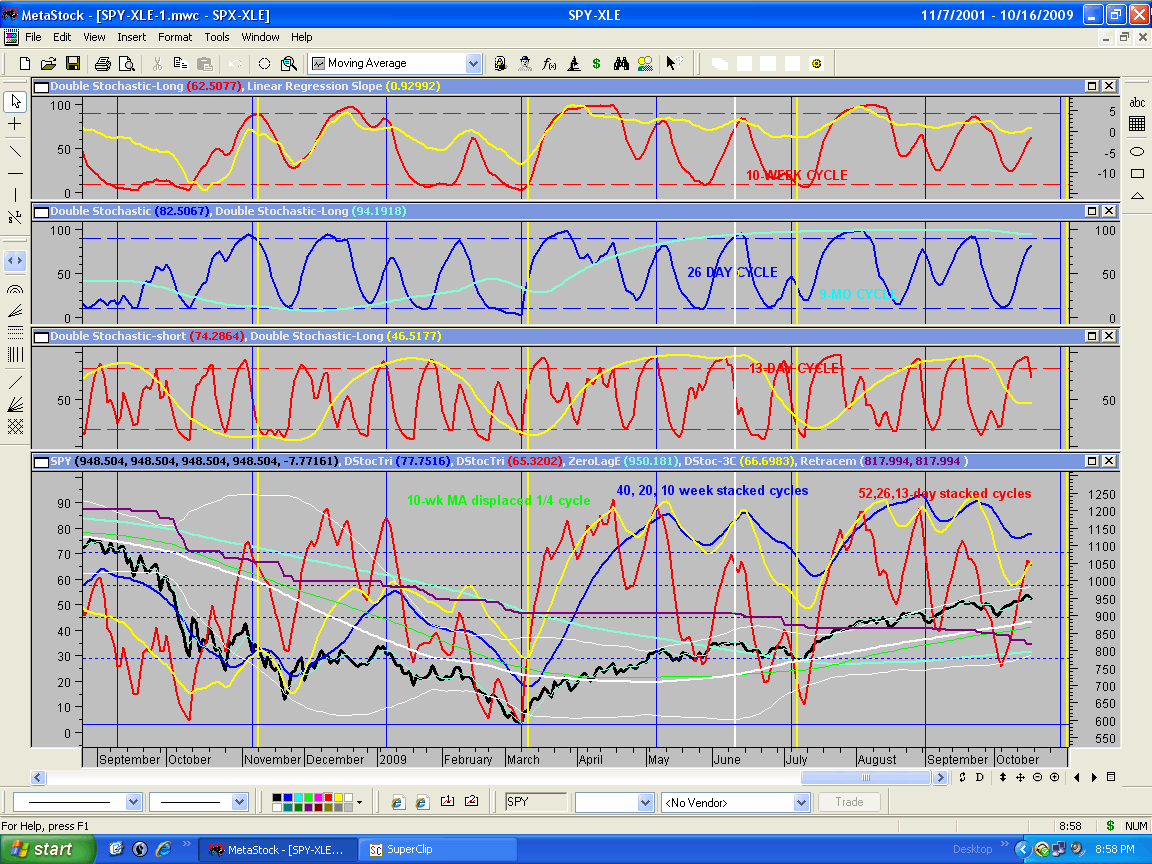
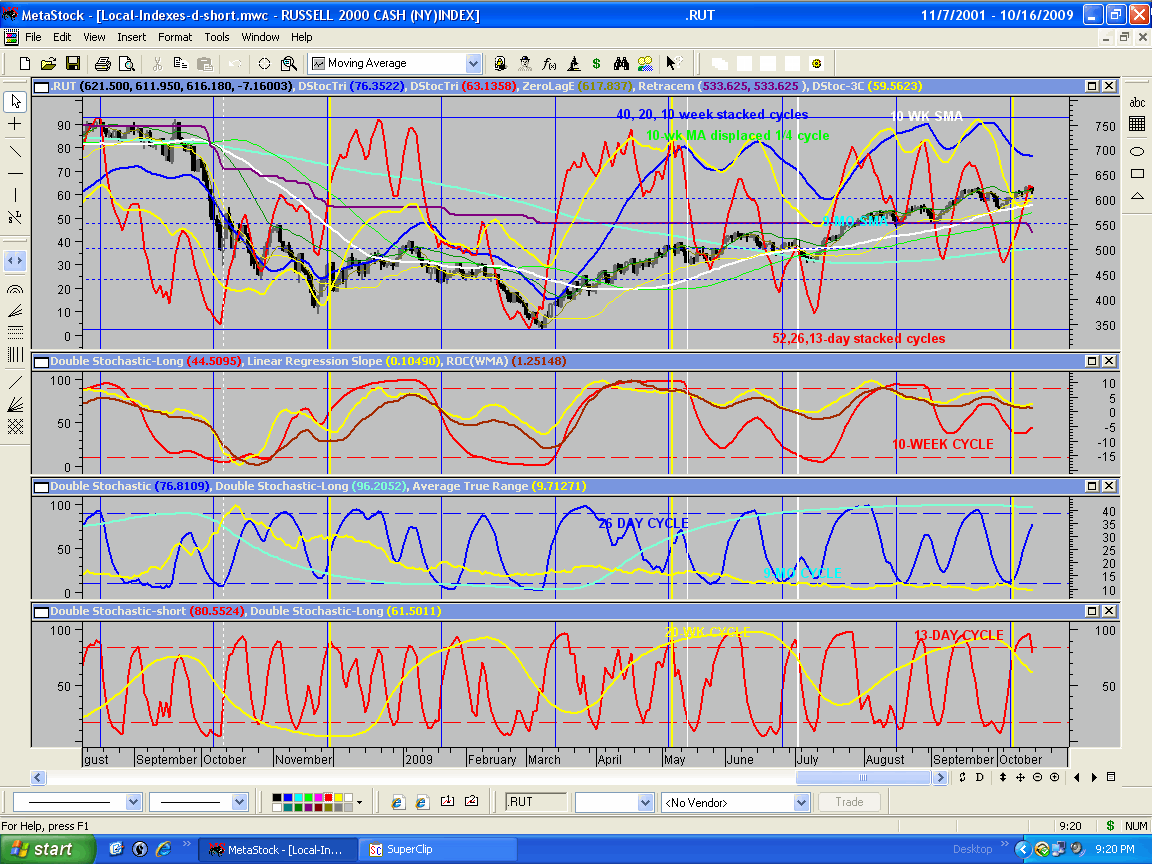
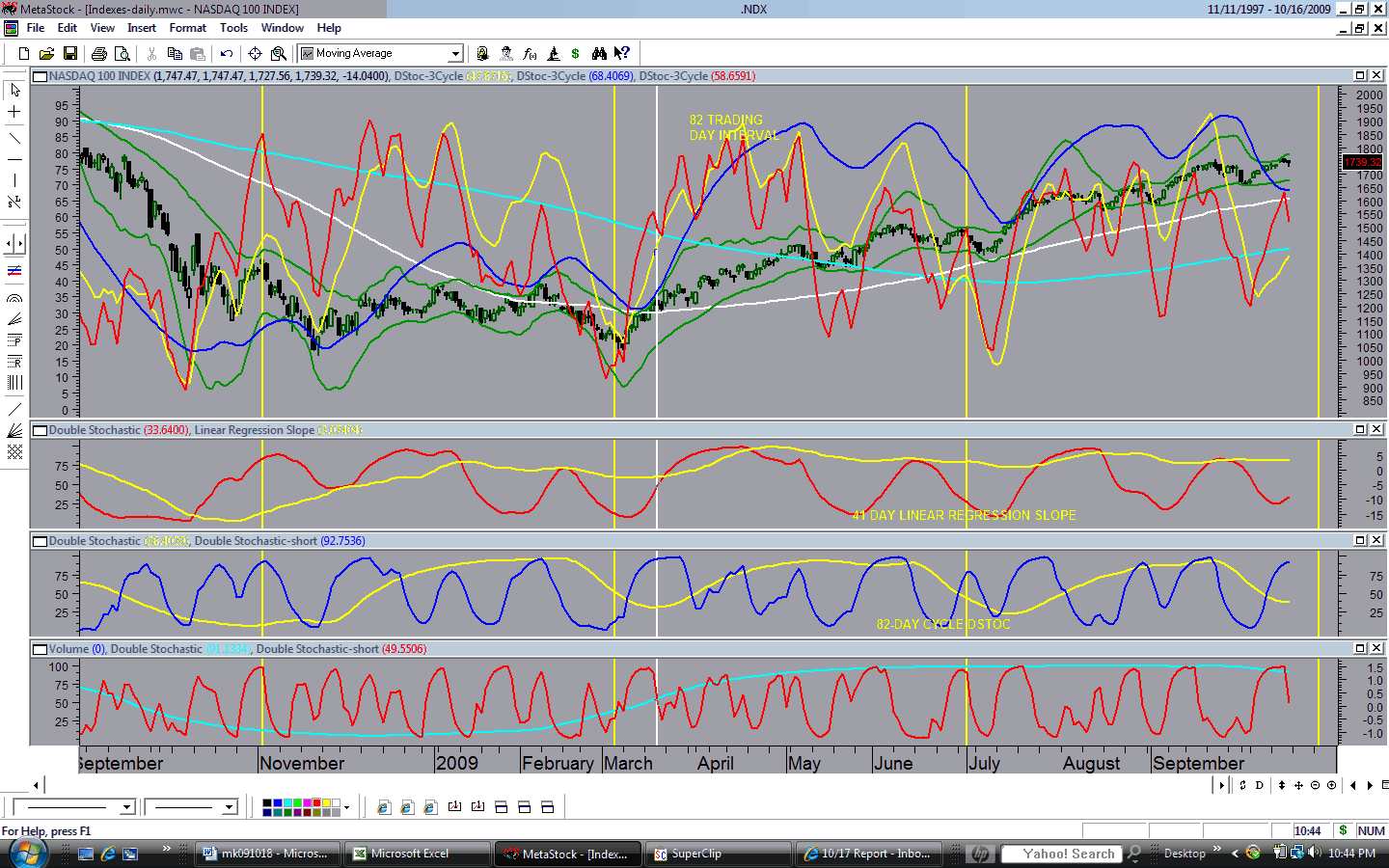
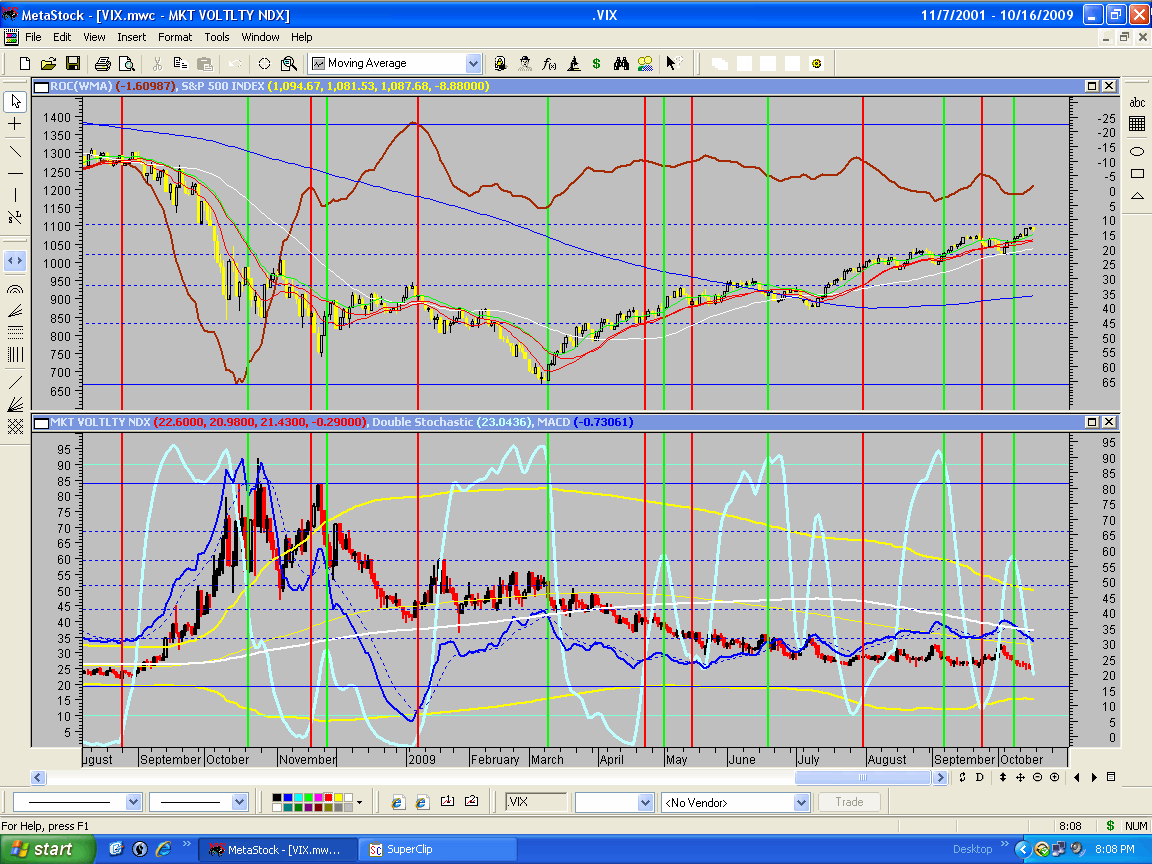
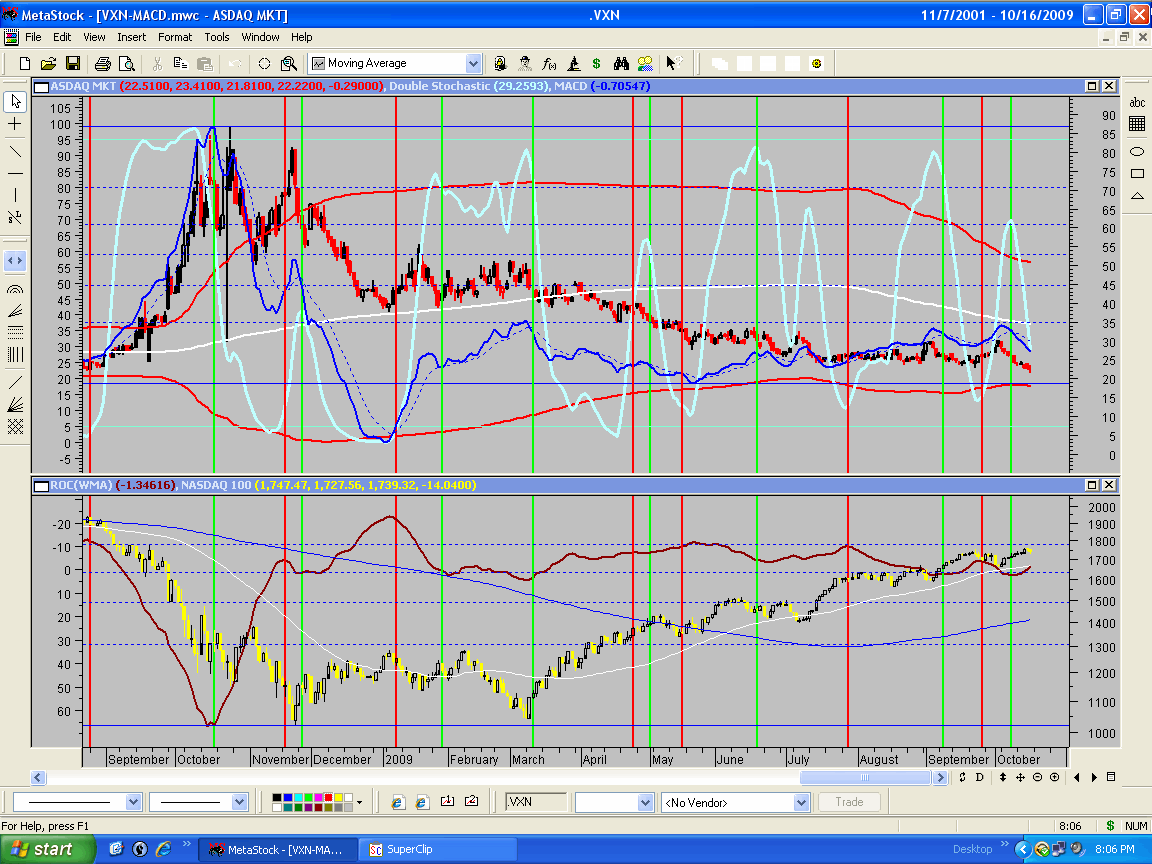
The rally stalled last week for a second time at the 23% Fibonacci retracement of the October-July decline on the SPX (http://www.geocities.com/petegersb/SP500.GIF) and on the SPX ex-energy (http://www.geocities.com/petegersb/SPY-XLE.GIF), and at the 38% retracement that coincides with the declining 9-month moving average on the Russell small cap index (http://www.geocities.com/petegersb/Russell2000.GIF ). The NDX (http://www.geocities.com/petegersb/NDX.GIF) continues to be mired near the 23% retracement of its October-March decline - unable to mount any significant rally off of the July low. The rally also appears to be forming its first 26-day cycle peak of the current 20-wk cycle. The DStocs for the 26-day cycle have turned down from extreme overbought levels, and on the NDX, the short-term composite has turned down as well. The 10-week cycle is overbought on all of the major indexes except the NDX, and looks ripe for a 10-wk cycle top. Furthermore, while the weekly VIX and VXN (http://www.geocities.com/petegersb/VIX-weekly.GIF, http://www.geocities.com/petegersb/VXN-weekly.GIF) indicate the 20-week cycle rally is intact, the DStocs on the daily VIX (http://www.geocities.com/petegersb/VIX.GIF) and VXN (http://www.geocities.com/petegersb/VXN.GIF) have reached the low levels that are consistent with an impending 10-week cycle peak in stocks. If the down-trending 26-day cycle dominates this week, the 10-week cycle indicators will probably turn down.
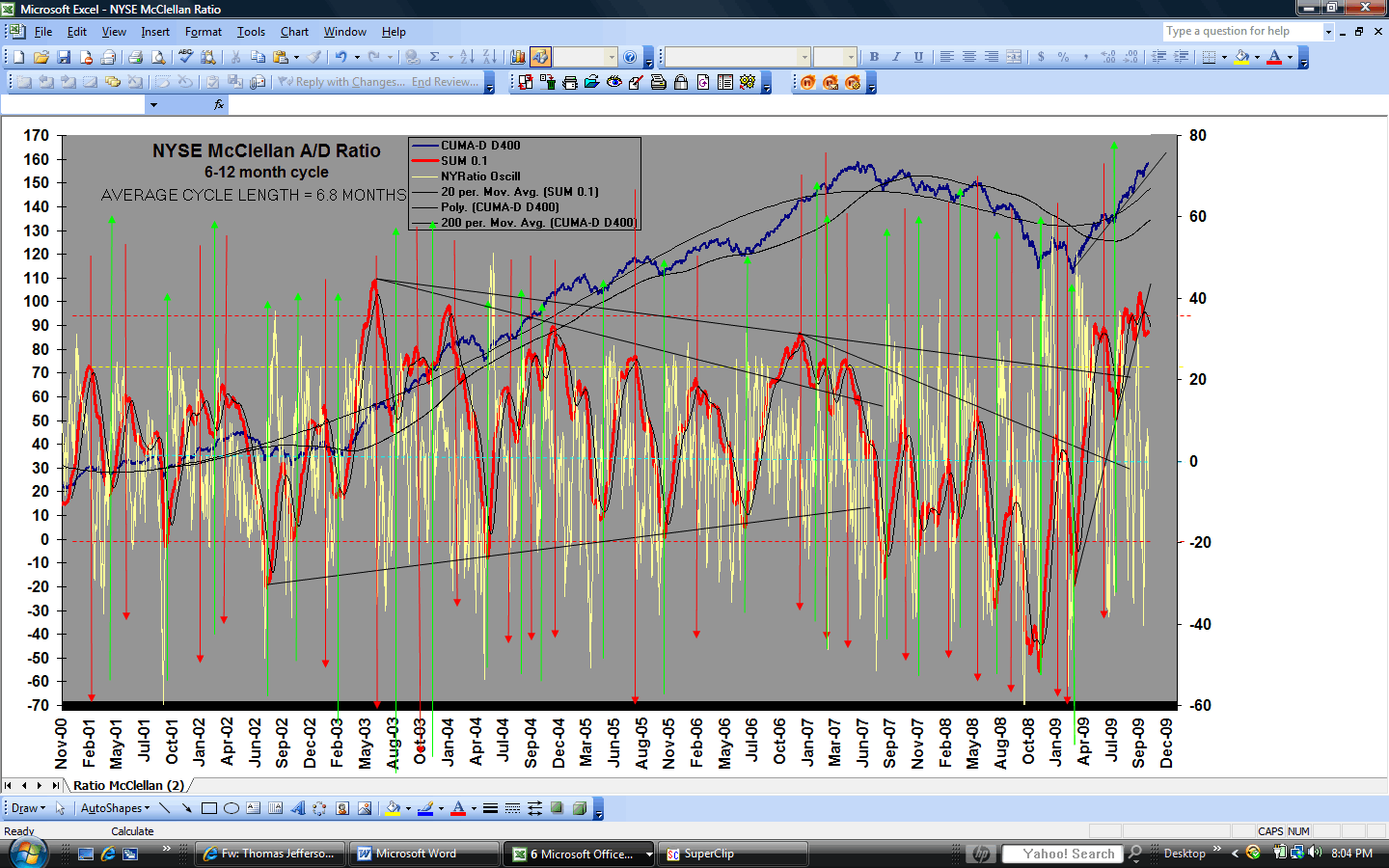
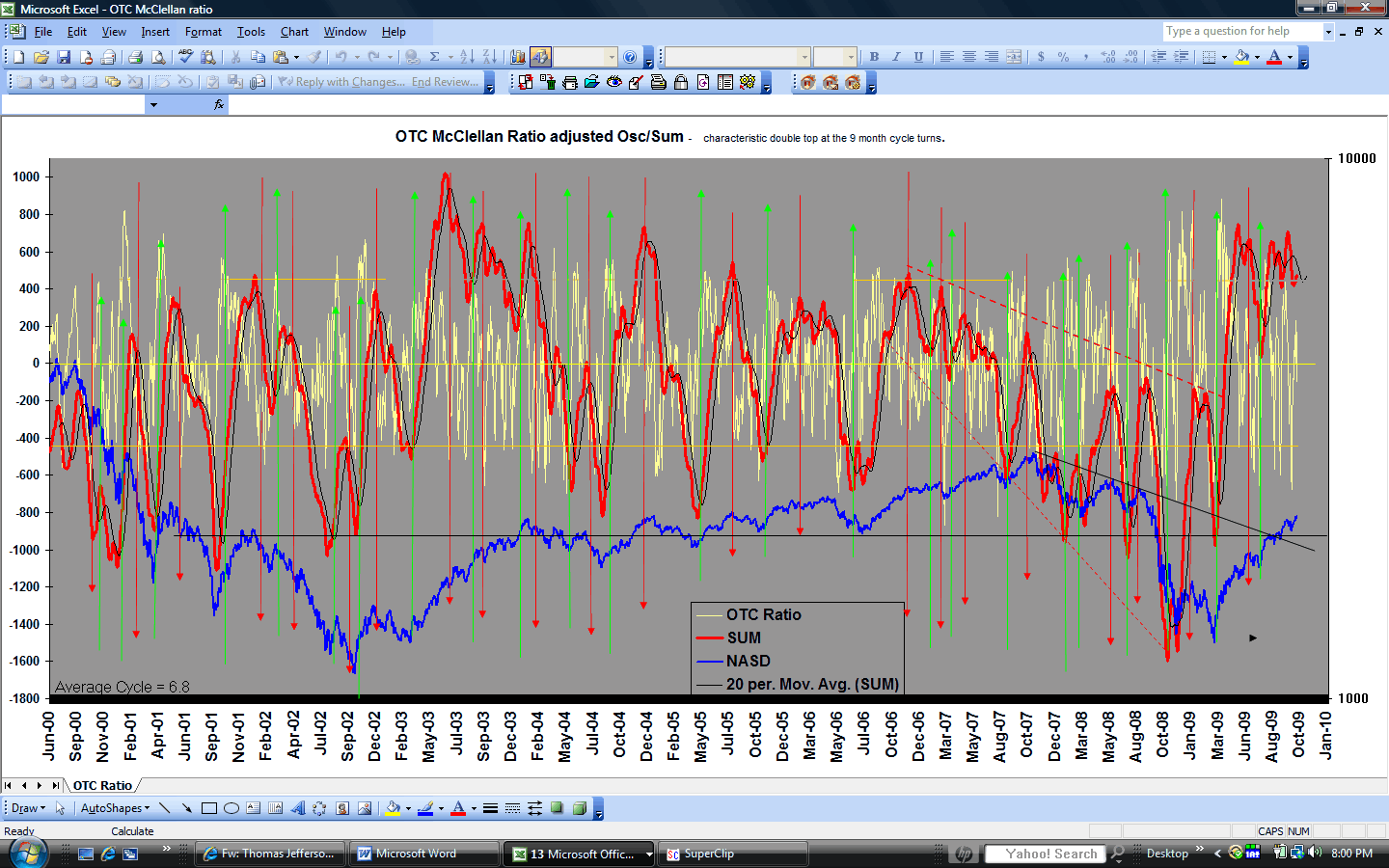
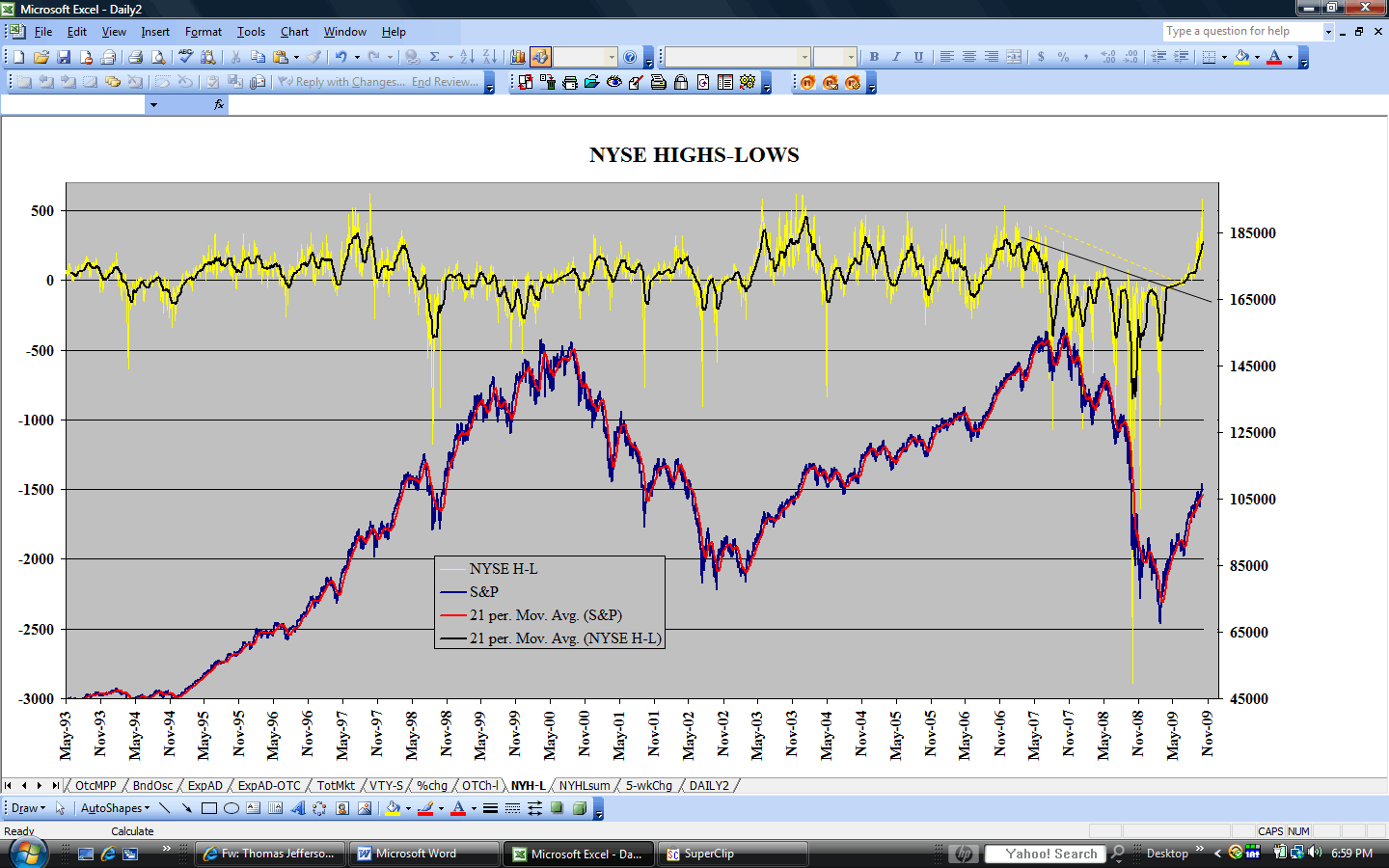
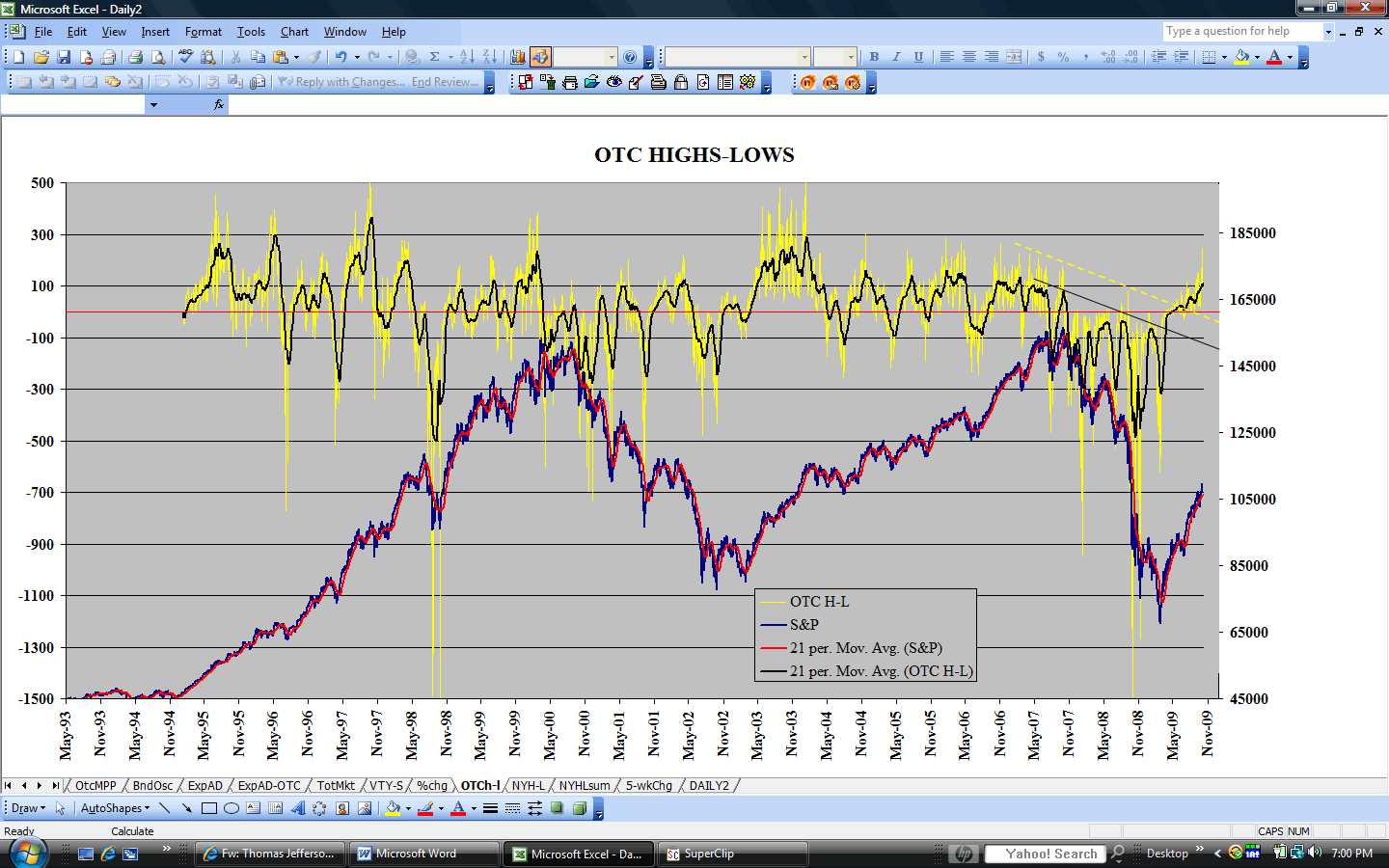
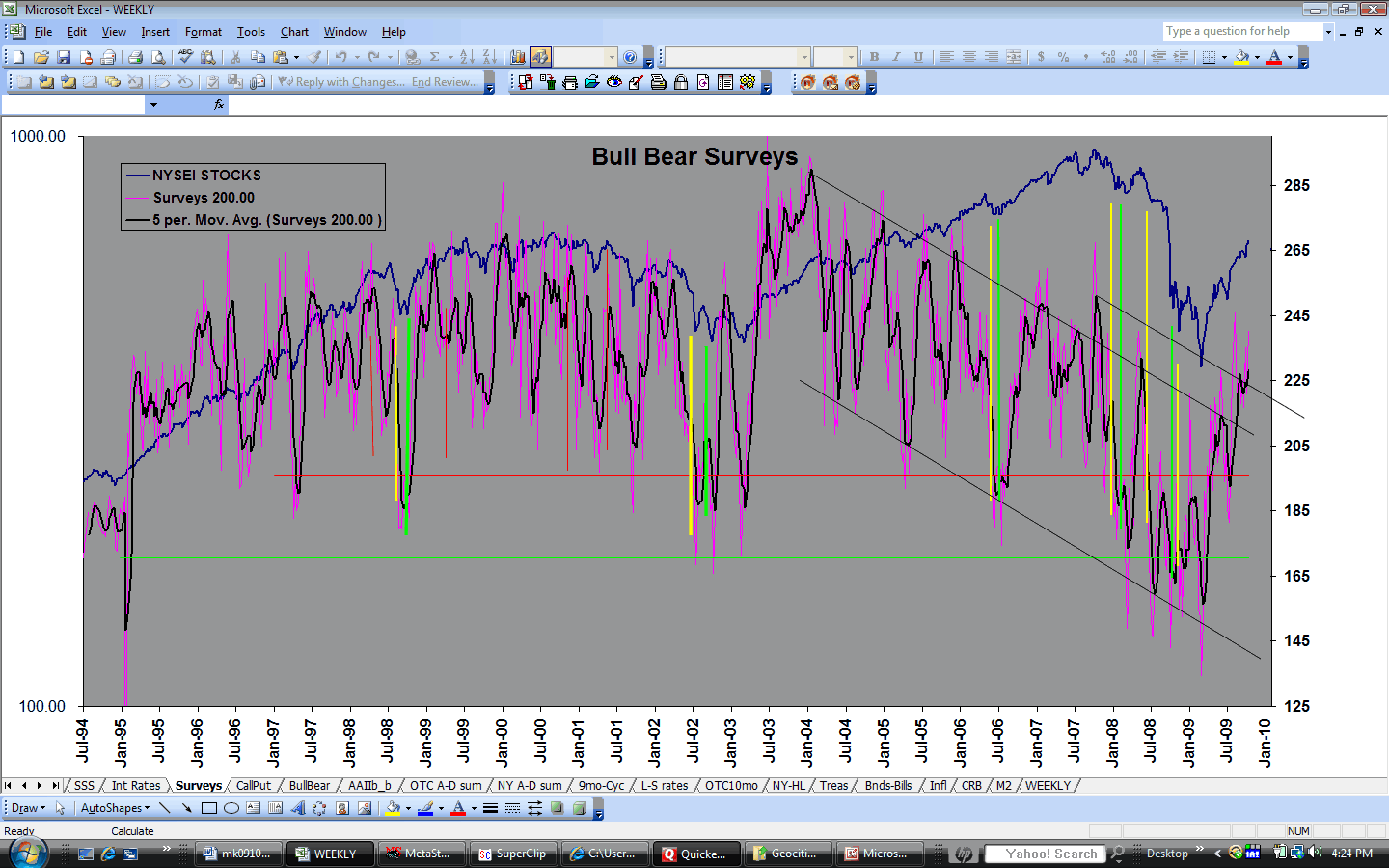
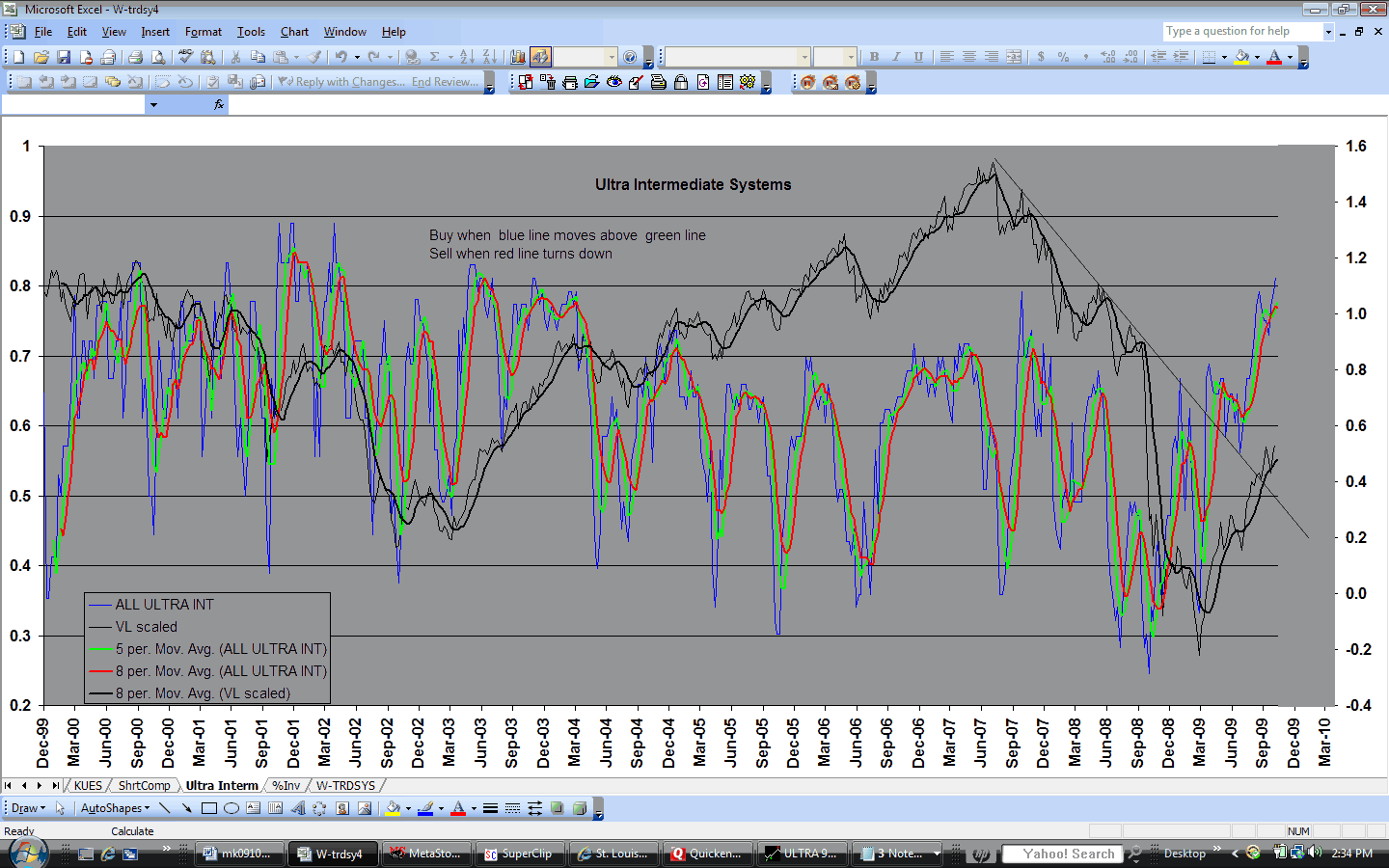
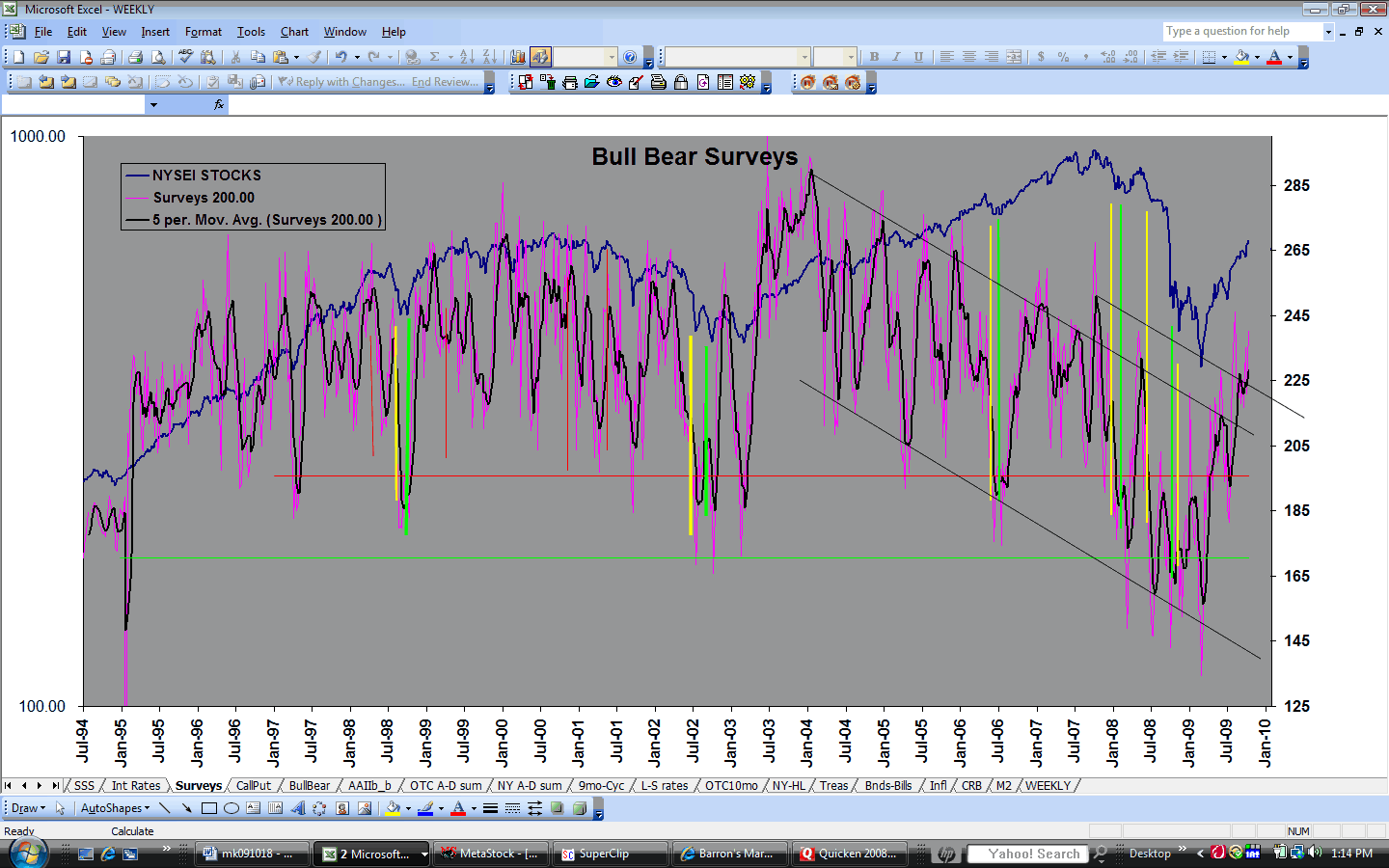
As reported last week, many of the breadth indicators have turned up more convincingly than on previous false starts this year (http://www.geocities.com/petegersb/A-Dsummation-NYSE.GIF, http://www.geocities.com/petegersb/A-Dsummation-OTC.GIF, http://www.geocities.com/petegersb/HighLowNYSE.GIF, http://www.geocities.com/petegersb/HighLowOTC.GIF ), and sentiment readings sentiment readings (http://www.geocities.com/petegersb/SurveysCombined.GIF) have now turned positive. But some of the intermediate-term indicators, such as the ULTRA trend following system (http://www.geocities.com/petegersb/UltraIntermediate.GIF ) have so far stubbornly refused to provide buy signals.
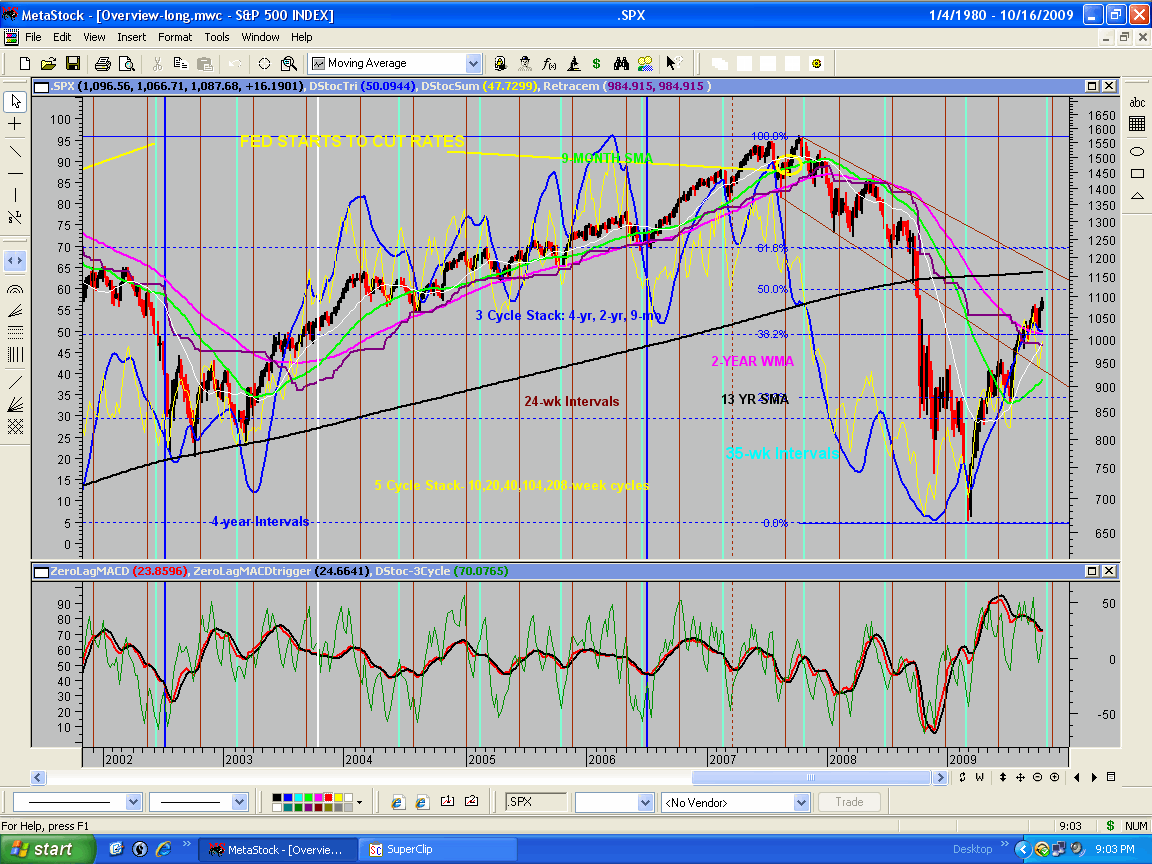
In summary, this 20-week cycle looks different than the January rally 24 weeks ago and the December rally 35 weeks ago (http://www.geocities.com/petegersb/Overview-long.GIF) with respect to breadth and sentiment, but not with respect to price action. Both of those rallies produced only modest gains that ended in left-translated tops, and they preceded lower lows. If declining 26-day, 9-month and 4-year cycles dominate over rising 13-day, 10-wk and 20-wk cycles this week, we can expect a repeat with left-translated peaks in the latter group.
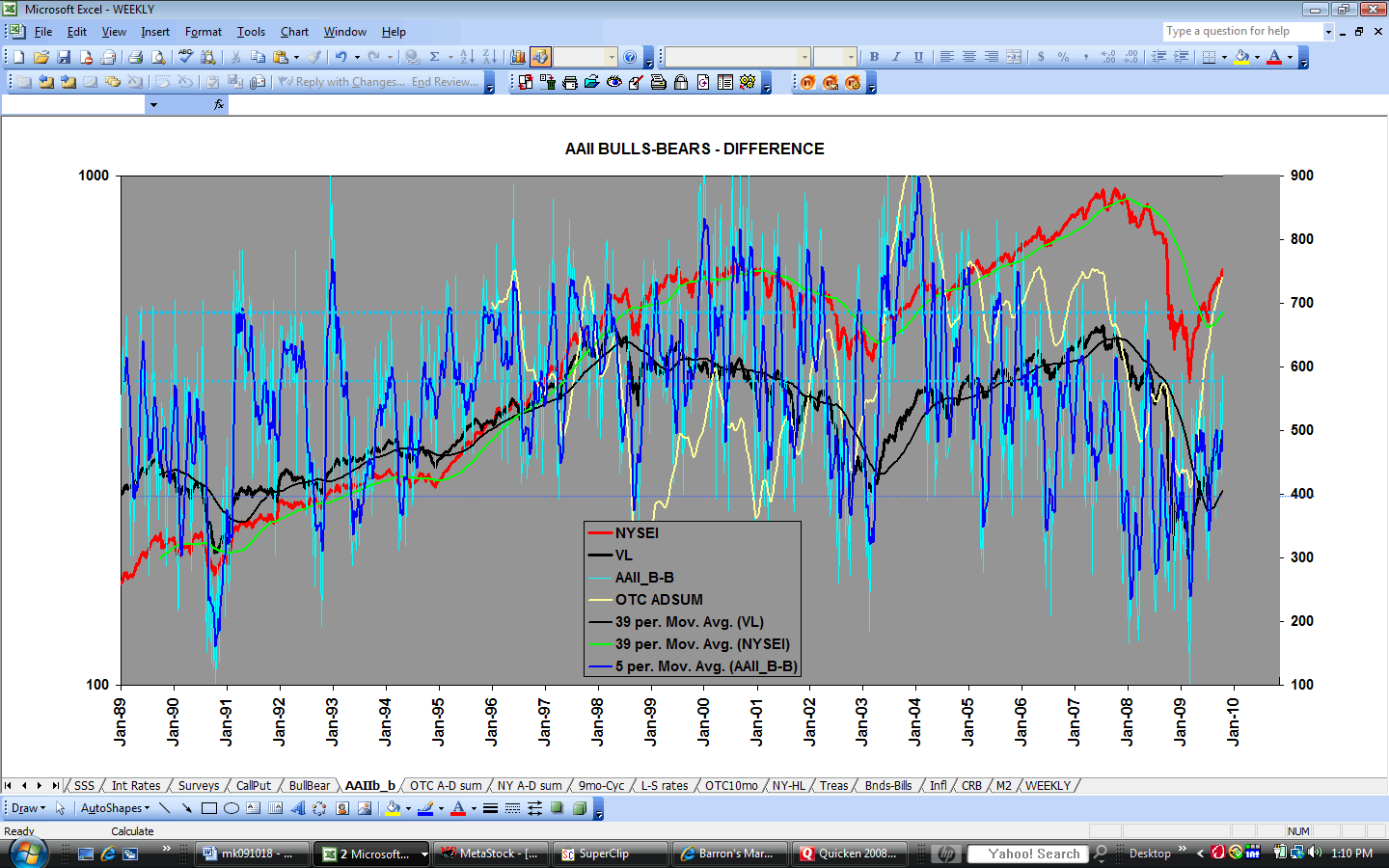
Sentiment continued
to improve, significantly among AAII members (http://www.geocities.com/petegersb/AAIIsentiment.GIF), and a little among advisory services
(http://www.geocities.com/petegersb/InvestorsIntelligence.GIF). We
got a 5-week moving average buy signal from the AAII, but not yet from the
advisors.
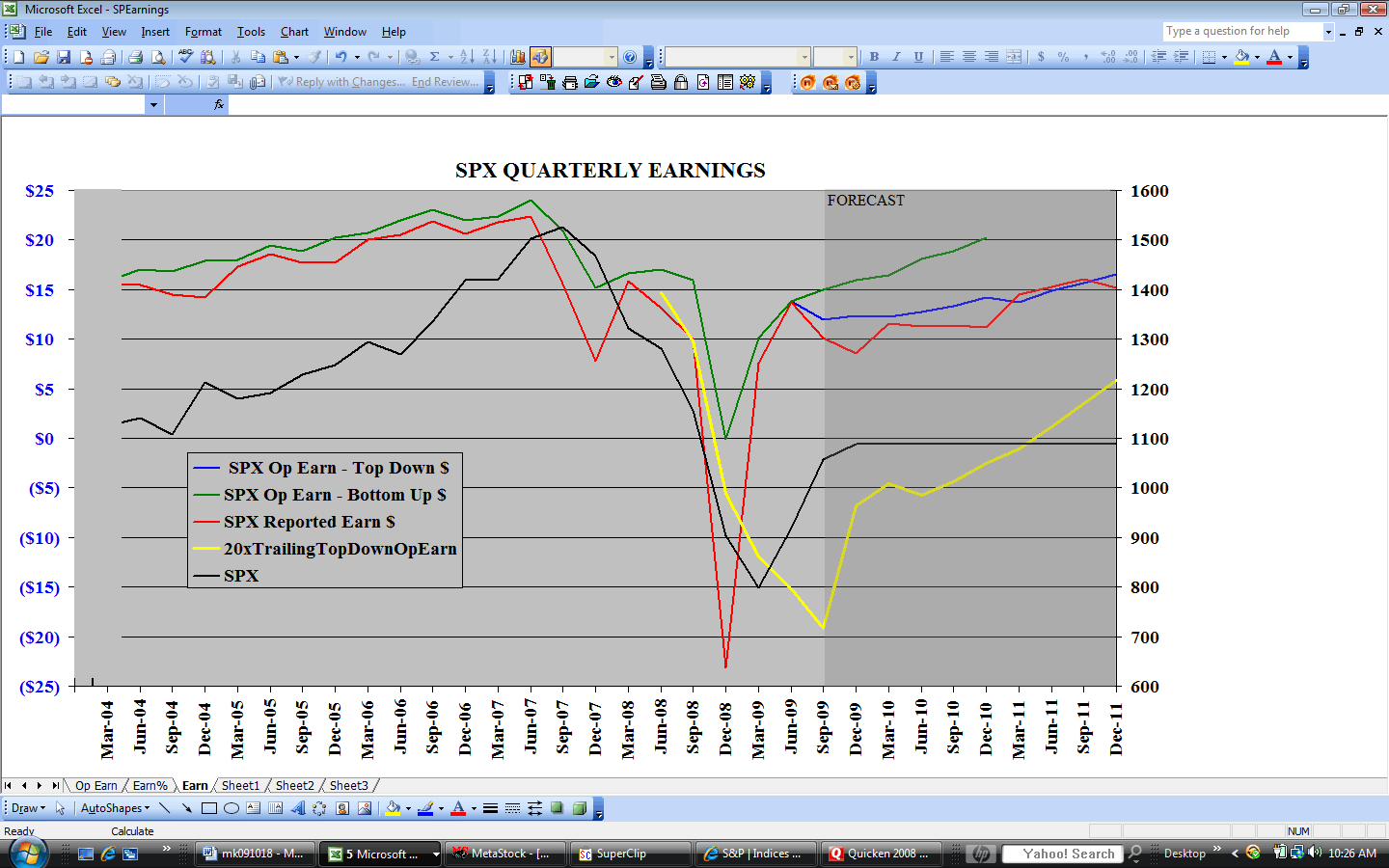
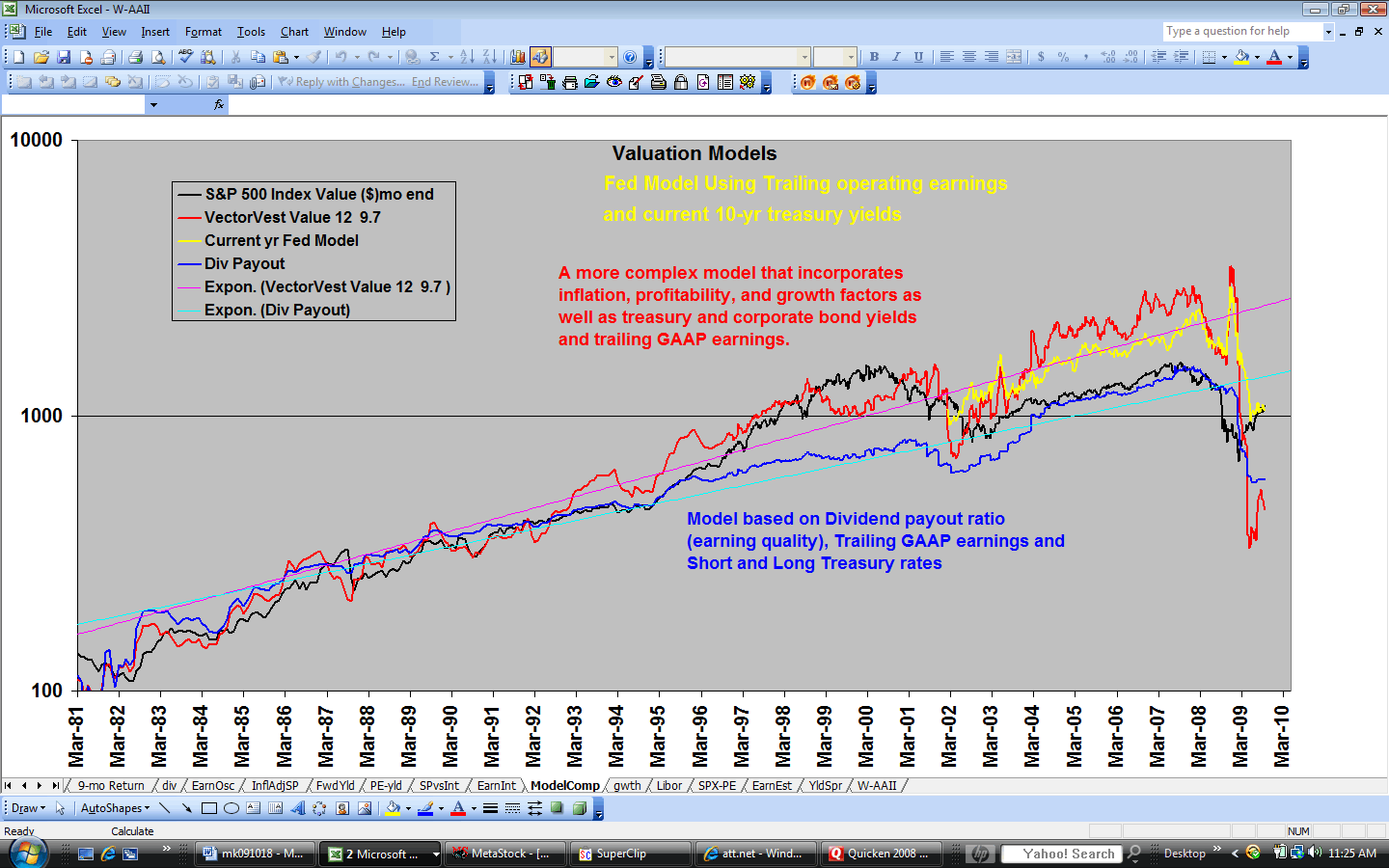
Bottom-up Earnings estimates (http://www.geocities.com/petegersb/EarnY-Y.GIF) are continuing to be revised downward to better conform to the flat top-down estimates – but only for this year. Last week, Standard & Poor’s adjusted its bottom-up operating earnings estimates for each of the remaining quarters in 2008 downward by only a few pennies, but they raised each quarter in 2009 by a few pennies as well. Jim Kramer’s famous rant against the Fed a year ago is just as applicable to Standard & Poor’s. “They haven’t a clue”. There is no discernable reason why the valuation models (http://www.geocities.com/petegersb/ValuationModels.GIF ) that use those bottom-up earnings projections should not continue to drop well into 2009, or perhaps beyond.
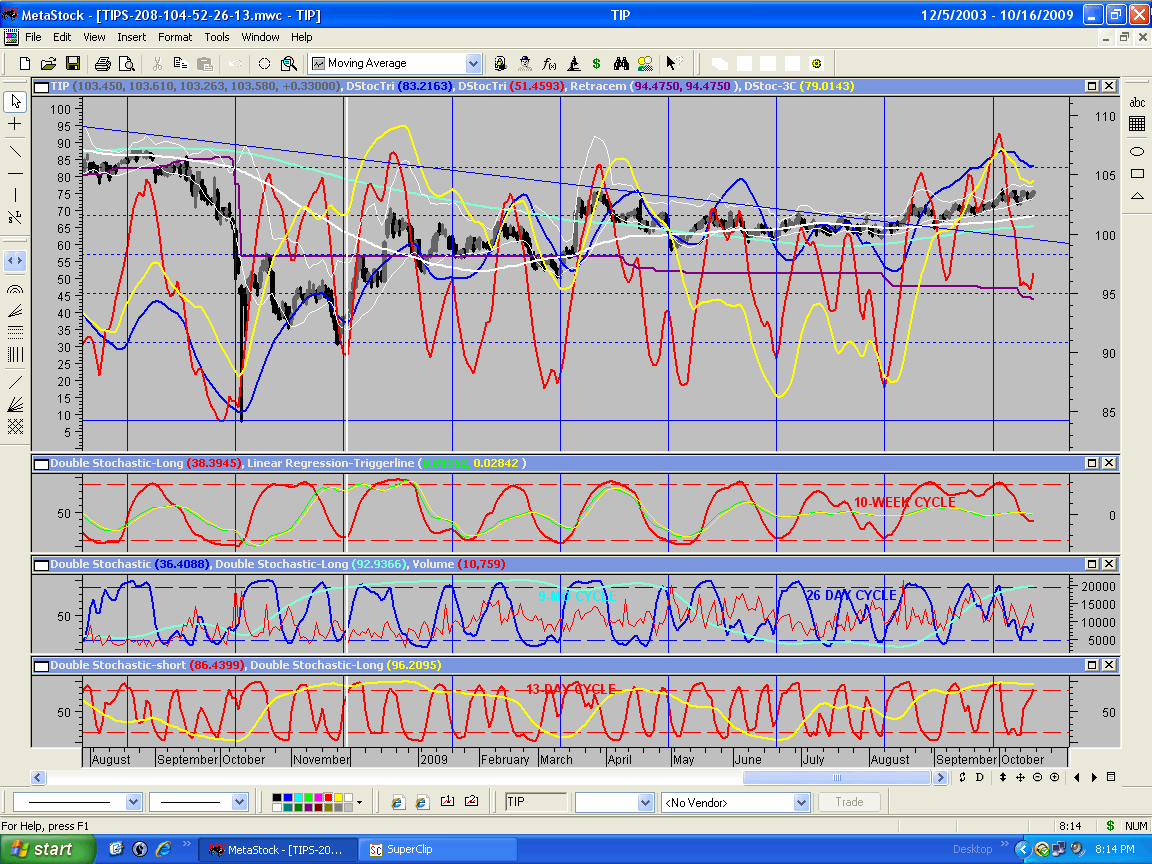
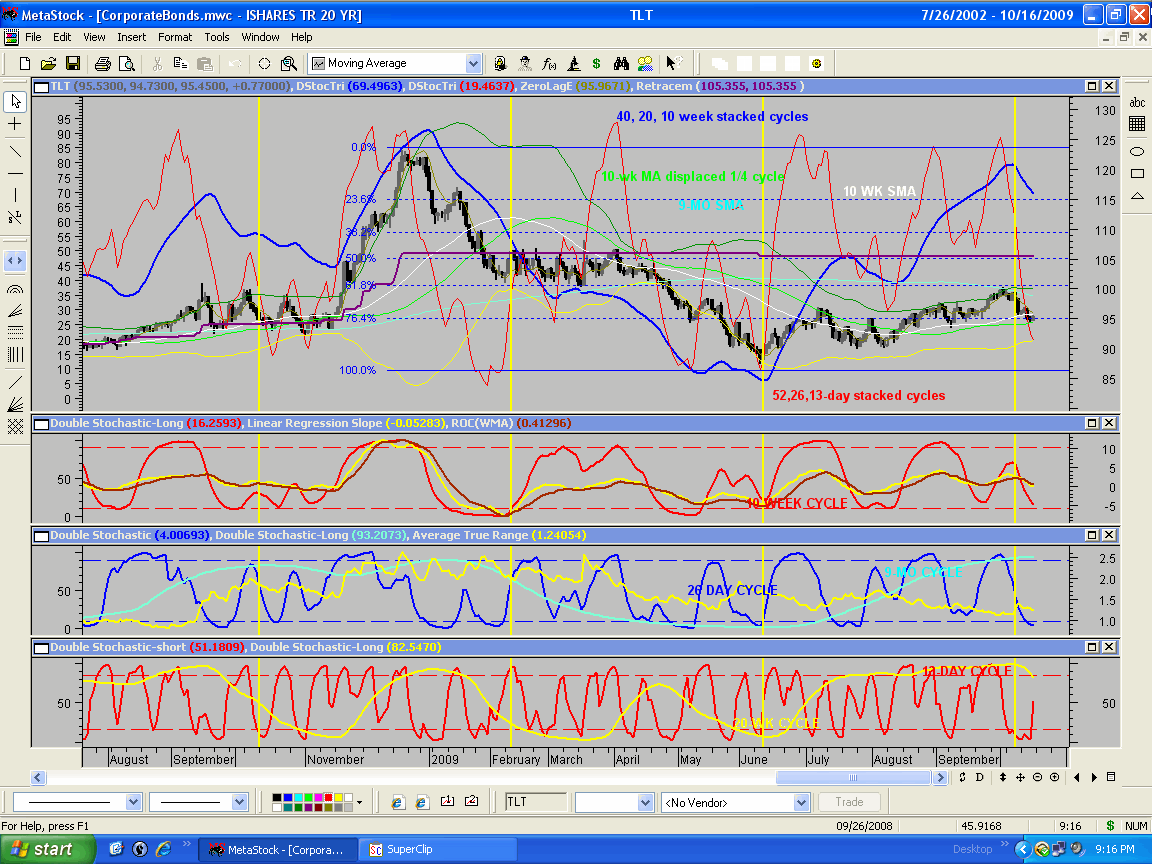
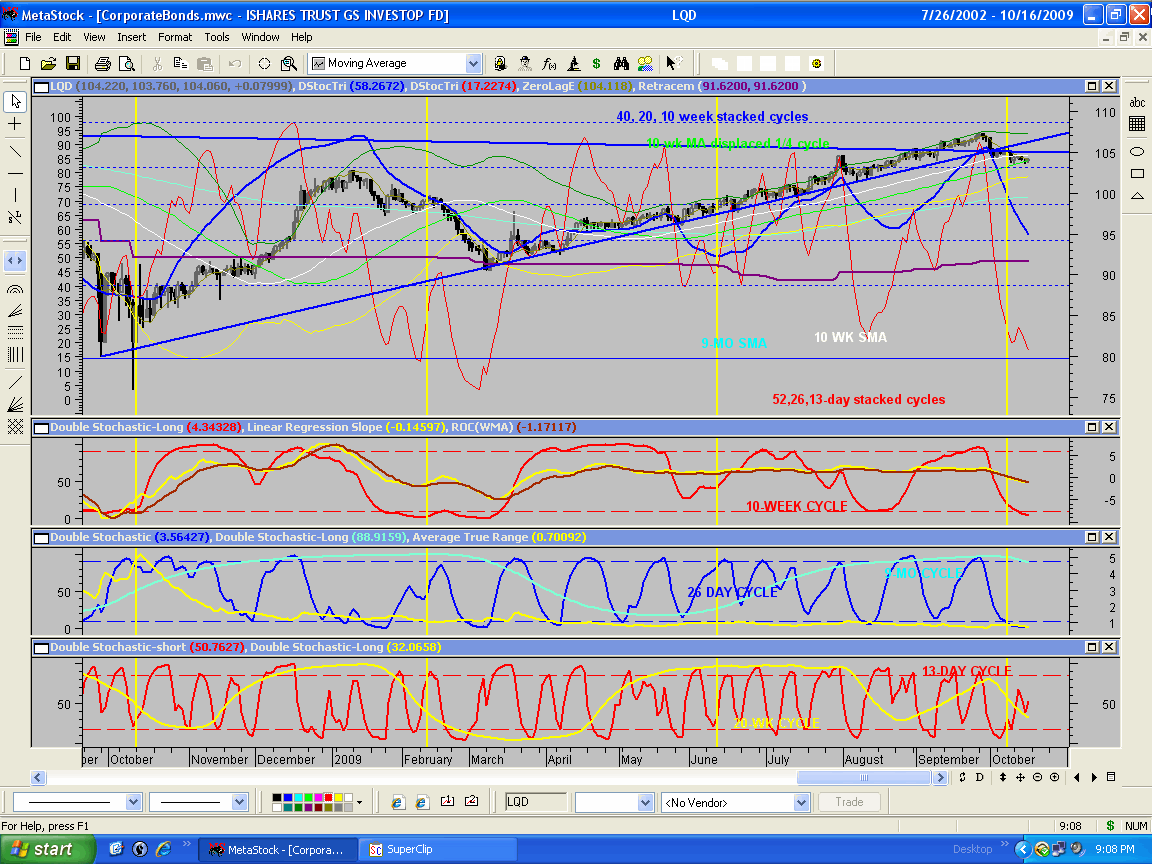
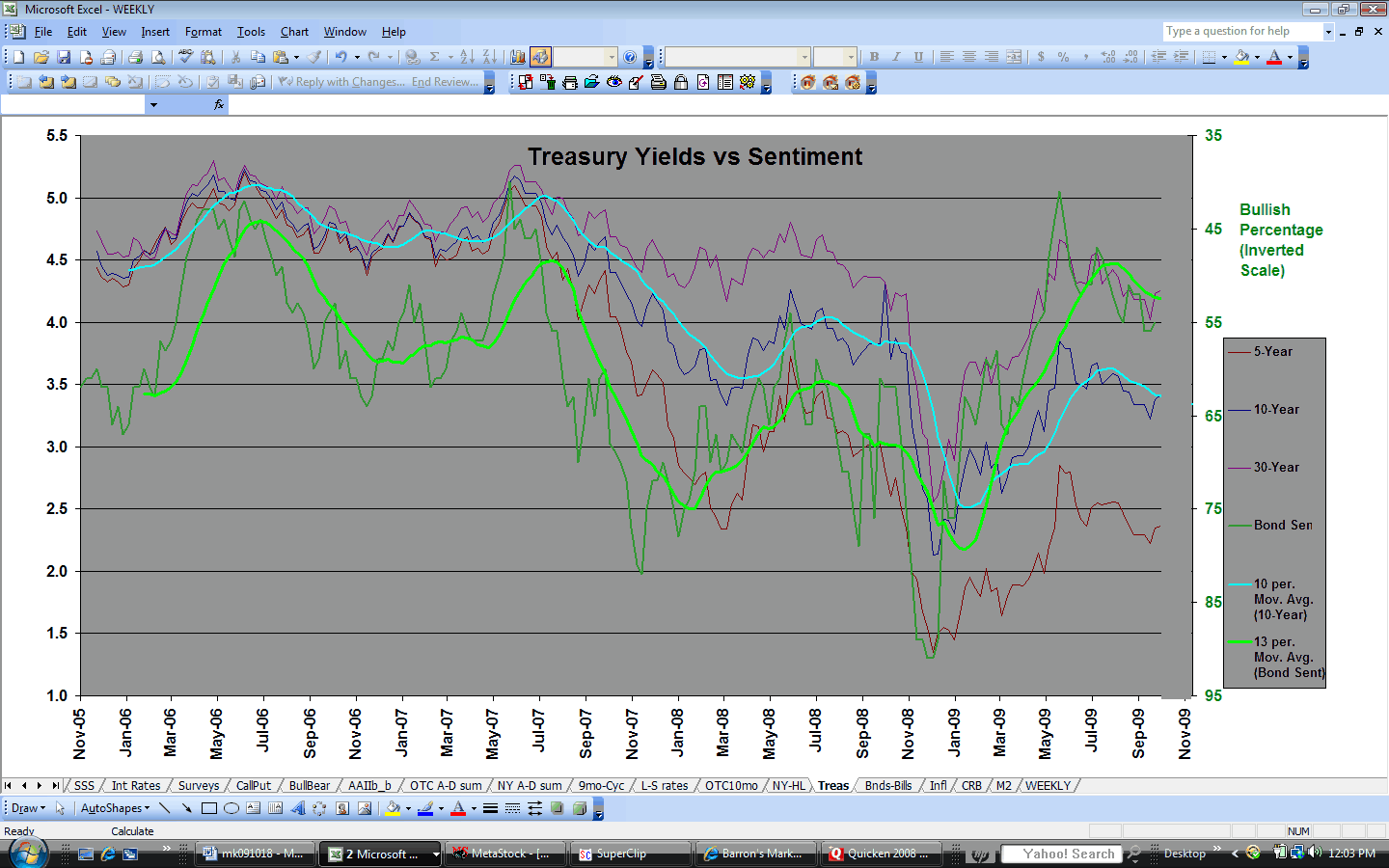
Government Bonds (TIPS (http://www.geocities.com/petegersb/TIPs.GIF) and T-bonds (http://www.geocities.com/petegersb/Treasury-20yr.GIF)) produced the expected short-term rally last week, but on Friday that rally stalled at the down-trending 80-day moving average that has provided resistance or support at many intermediate turning points. The most recent intermediate peak occurred a little higher in early July. This time the downturn looks like a 13-day cycle peak within an ongoing intermediate downtrend. Corporate bonds (http://www.geocities.com/petegersb/CorporateBonds.GIF) participated in the short-term rally until Friday when the short-term composite turned down. It looks like Corporates will retest their July low despite the oversold condition of the longer cycles. Bond optimism (http://www.geocities.com/petegersb/BondSentiment.GIF) improved a little, but not enough to reverse the decline in the moving average. Expect a continuing intermediate decline in bond prices and corresponding increases in long-term interest rates.
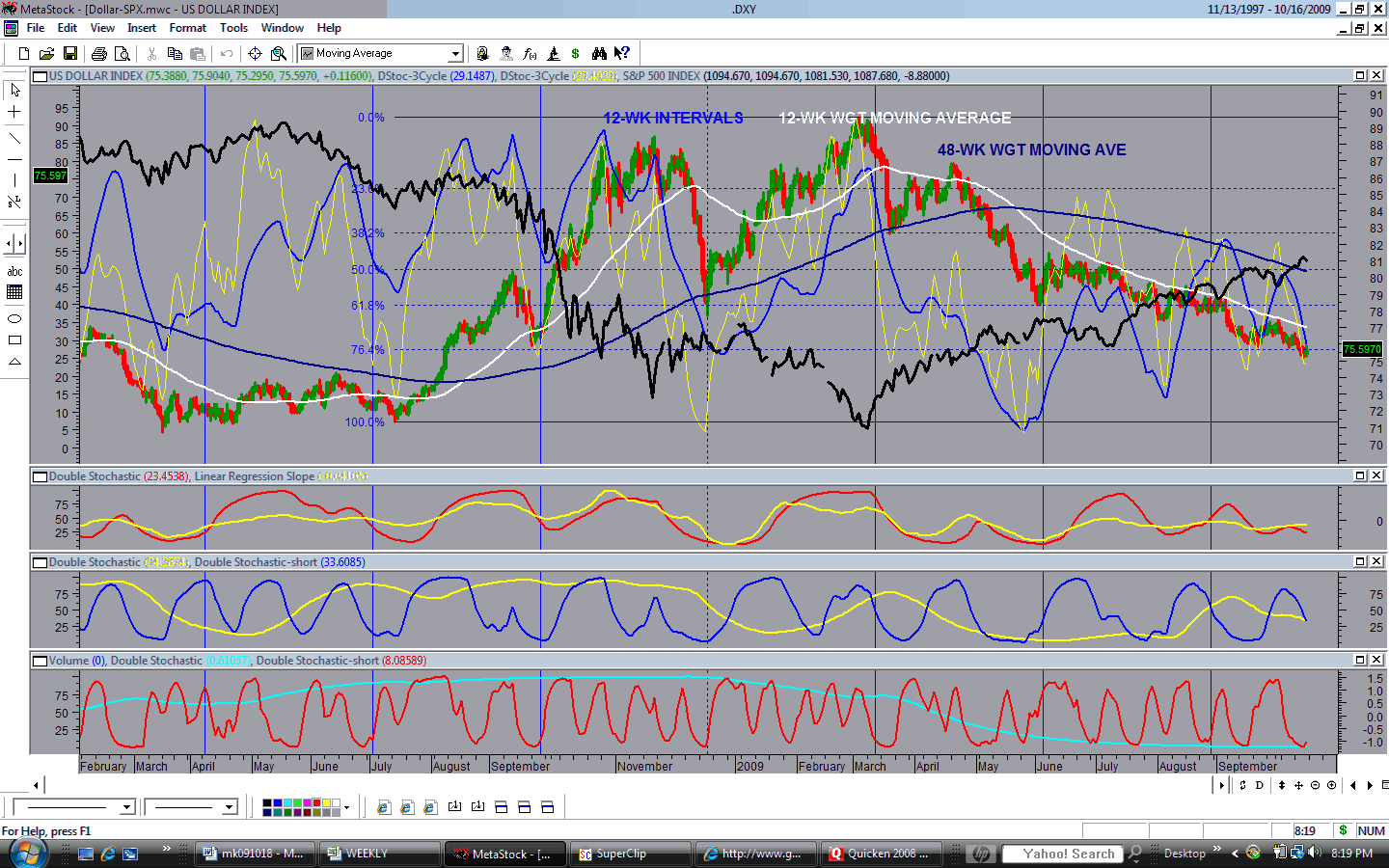
The dollar (http://www.geocities.com/petegersb/Dollar.GIF) strengthened its 20-wk cycle rally credentials last week as it moved above its 10-wk moving average. It now appears likely to challenge its June high, which matches the current down-trending 9-month moving average, before the short-term rally peaks. If the June high proves impervious to the 3-week-old 20-wk cycle rally, look for subsequent new lows.
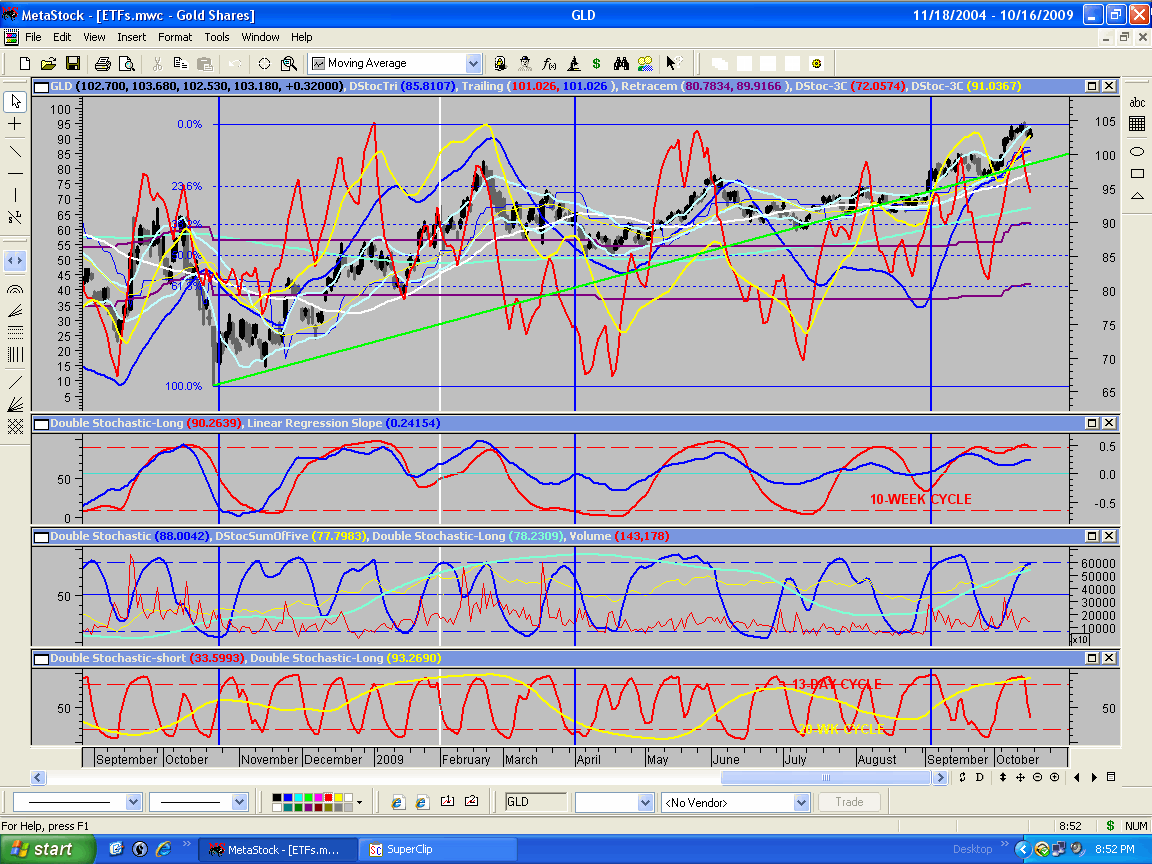
Gold (http://www.geocities.com/petegersb/GoldBullion.GIF) failed to rally as expected last week. Instead it
declined to support at the 9-month moving average before a one-day bounce on
Thursday. While the price pattern remains bullish, most cycles are not. Both
intermediate and short composites have turned down and they are in the middle
of the range. 9-month and 26-day cycles are supportive, but the others are not.
The near future doesn’t look promising for the metal, and that’s consistent
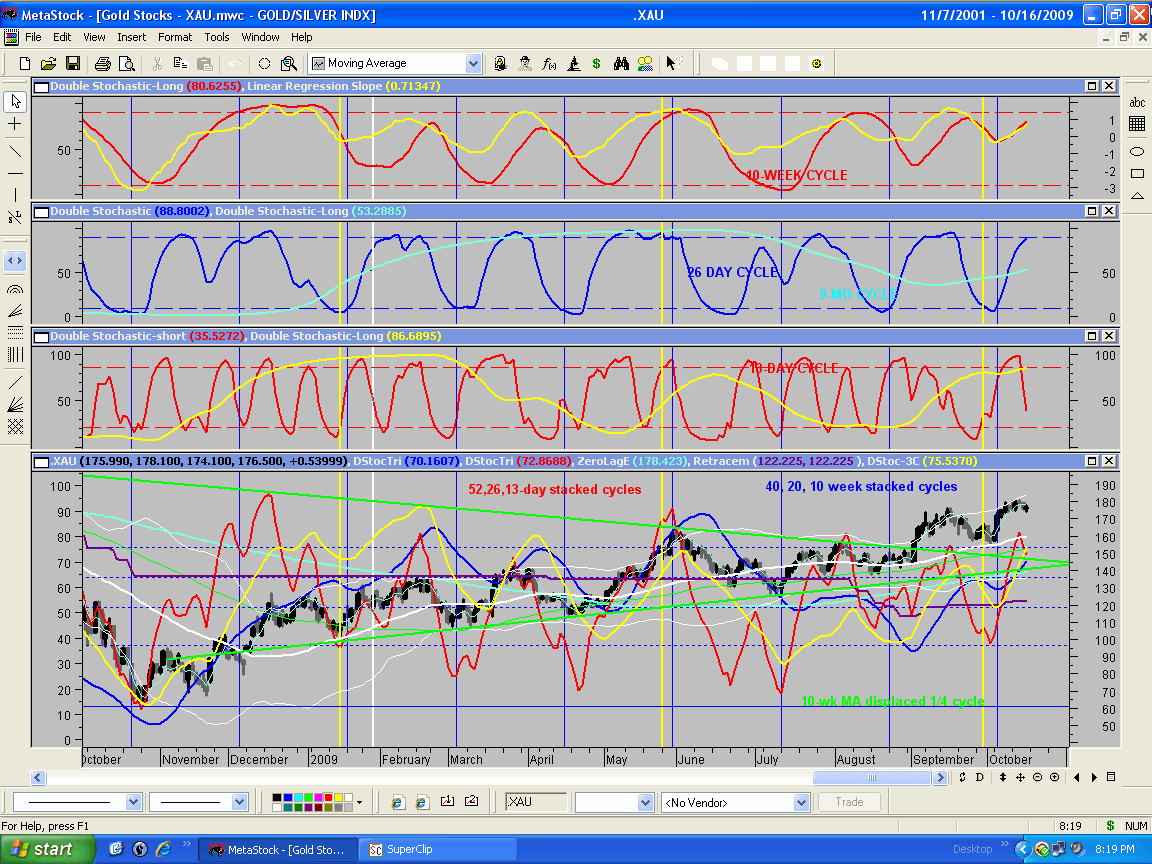
with the young 20-week cycle rally in the dollar. Gold stocks, as
represented by the XAU (http://www.geocities.com/petegersb/GoldStocks.GIF), broke down to the 50% retracement of the rally over the
last year – the bottom of the 2008 trading range. The 26-day cycle should
provide some support here, but the intermediate outlook is unfavorable.
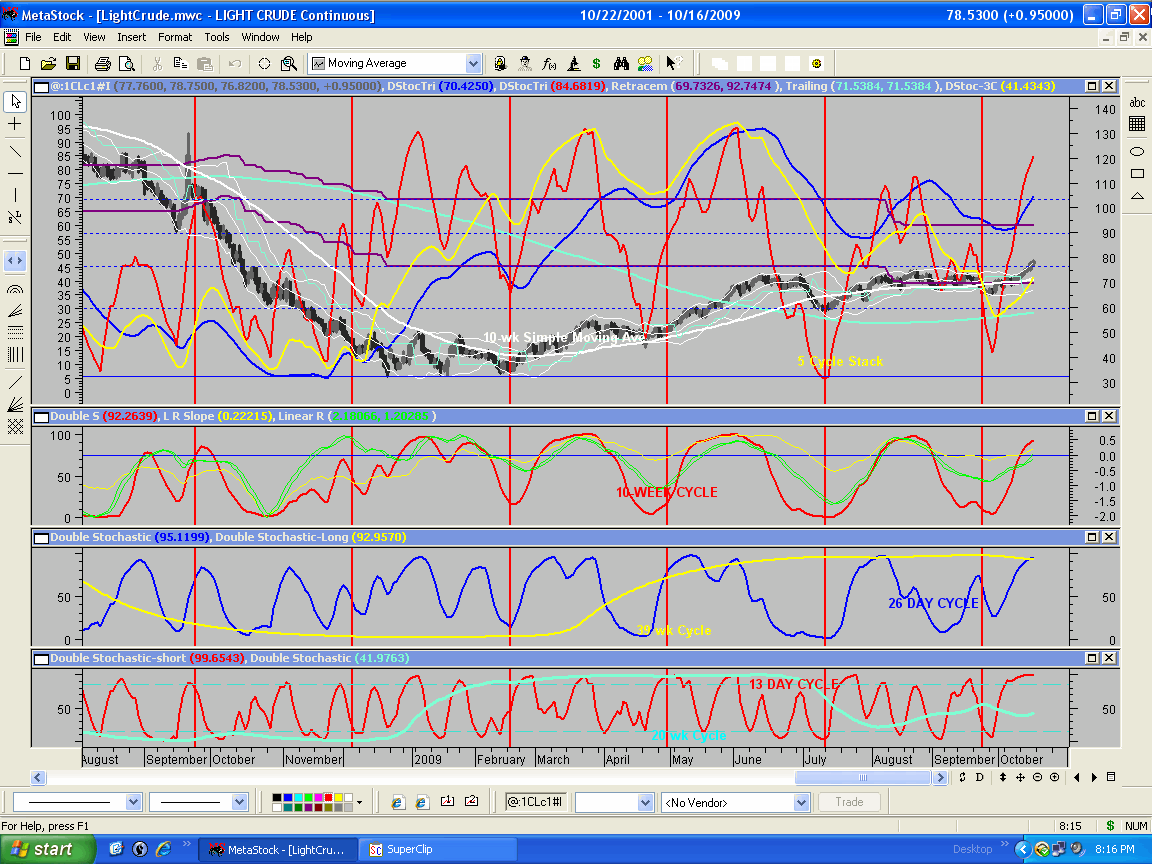
Crude oil (http://www.geocities.com/petegersb/CrudeOil.GIF ) gained a couple bucks last week after some large gyrations. The short-term composite turned up from deeply oversold territory. It looks like the beginning of a 10-wk cycle rally, and probably a 20-wk cycle rally as well. Expect a retracement at least to the 10-wk moving average at $133 on this 10-wk cycle rally. For an opposite opinion of the prospects for crude (and most commodities), see http://www.pring.com/movieweb/commodity_peak/commodity_peak.html , where Martin Pring argues that commodities have peaked. I have to admit that he makes a pretty good case, but he’s also a bull on stocks where he does not make a very convincing case.
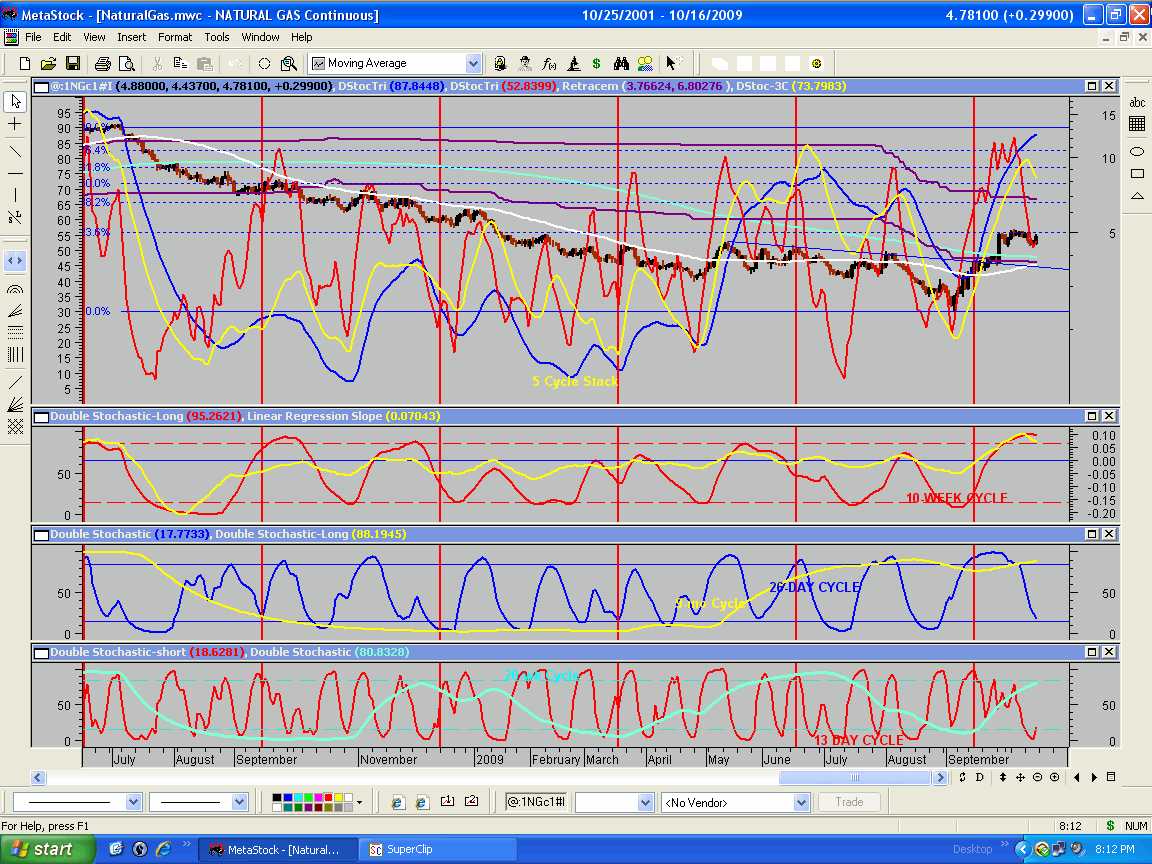
Natural
gas (http://www.geocities.com/petegersb/NaturalGas.GIF) managed a small gain back up to its 9-mo moving average
last week. The 13-day cycle is overbought, but the 26-day cycle has turned up
and should be supportive this week. The short-term composite is rising from a
deeply oversold level, and the 10-week and longer cycles appear to be ripe for
a bottom.
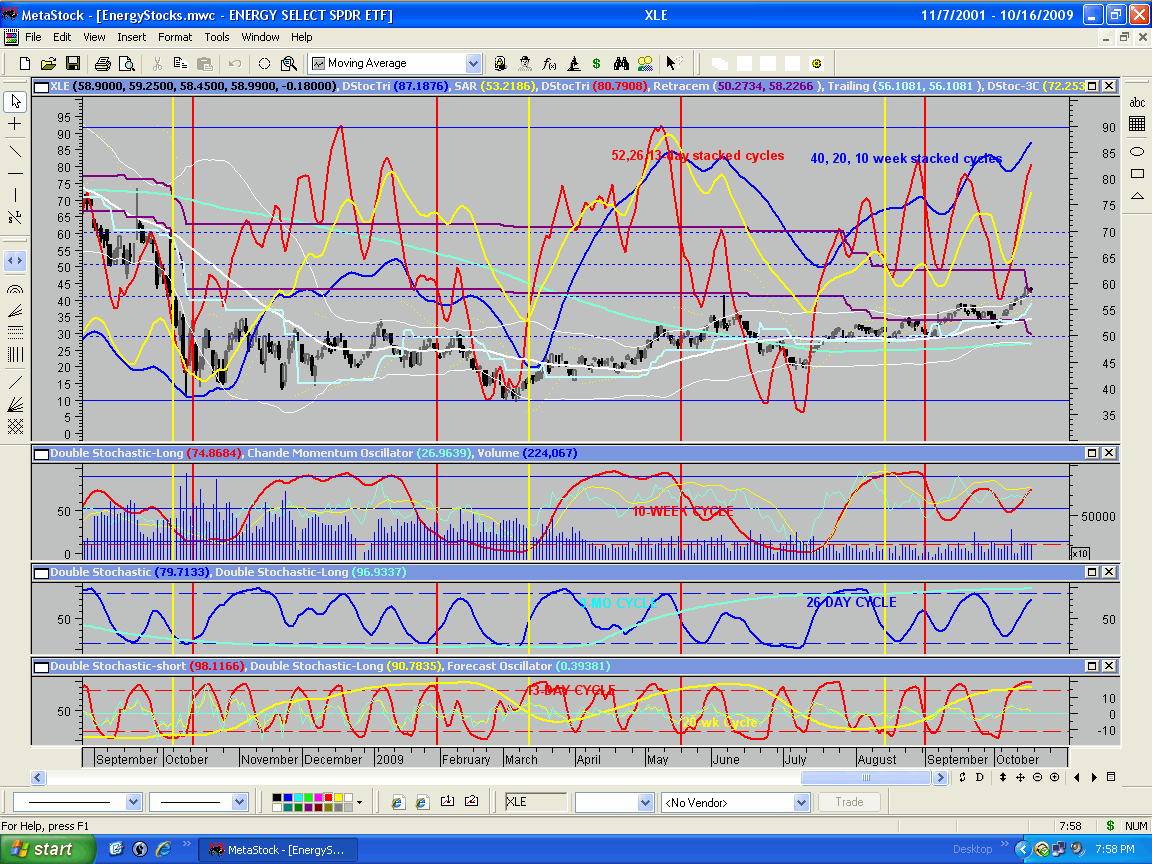
Energy stocks (http://www.geocities.com/petegersb/EnergySPDR.GIF) also managed a small gain last week as the short cycles rose. They had a good gain going until the price bumped up against resistance at the 9-month moving average. The short cycles should produce another attempt to penetrate that level. If they succeed it will probably mark the beginning of a 20-wk cycle rally.