There will be no report next weekend.
I believe last week’s link problems have been corrected. If you encounter any more problems, please let me know at [email protected]
7/6/08
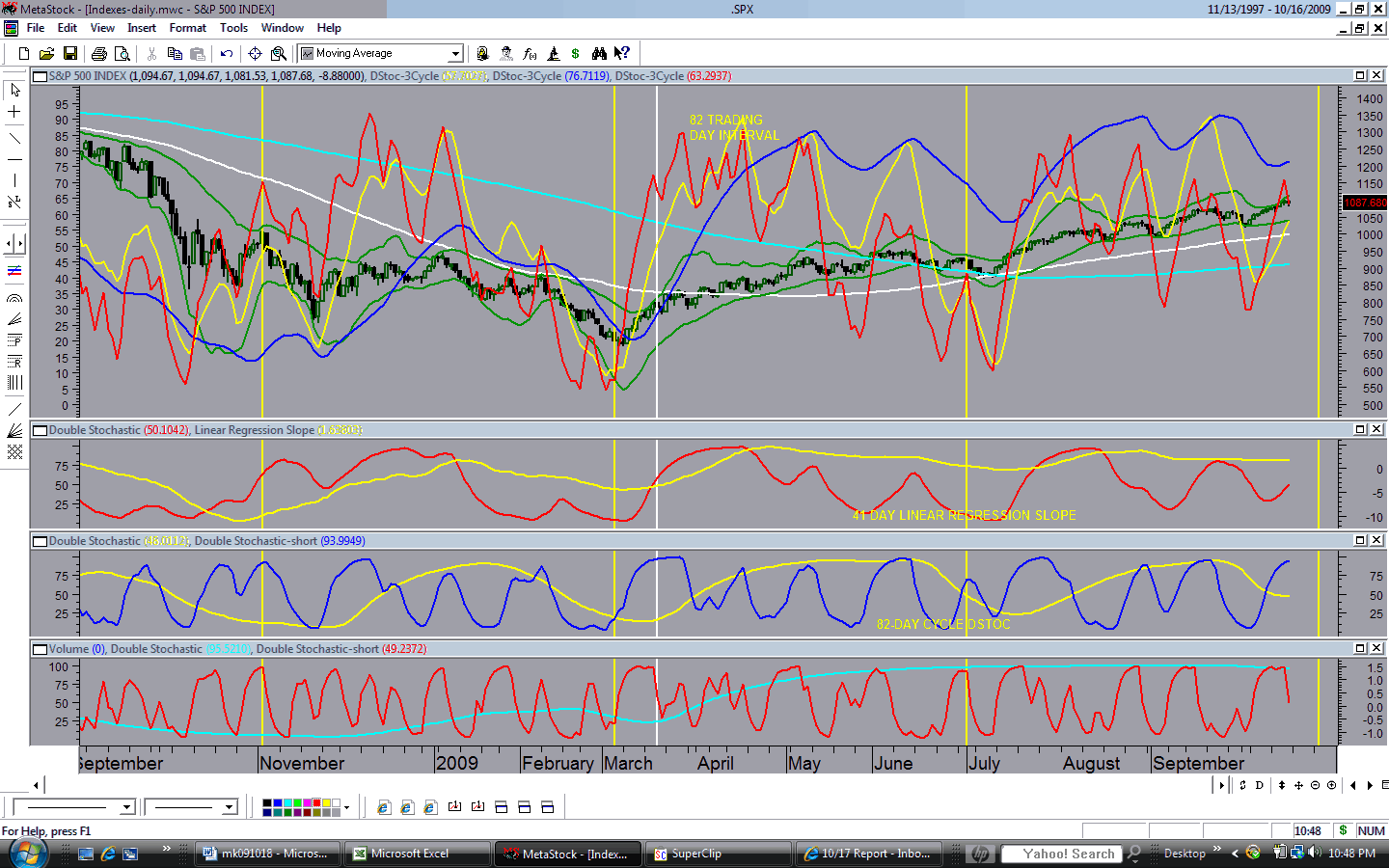
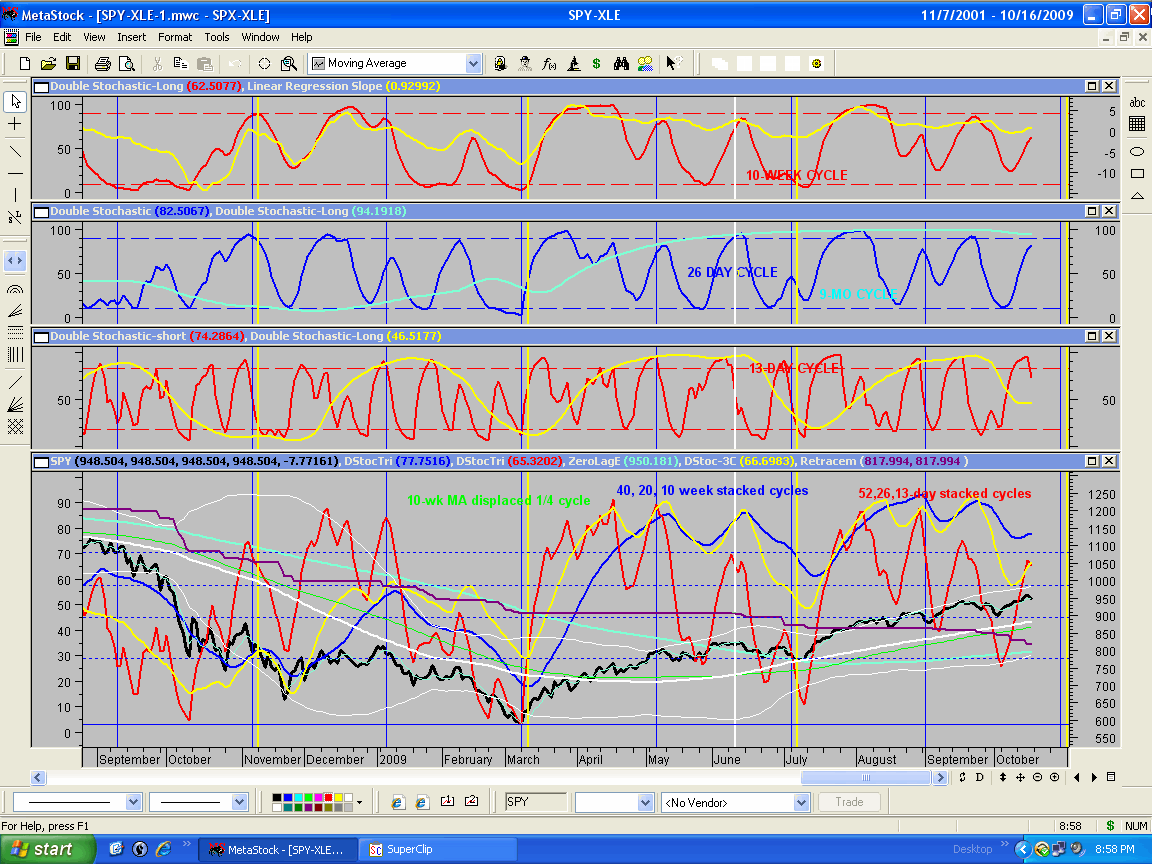
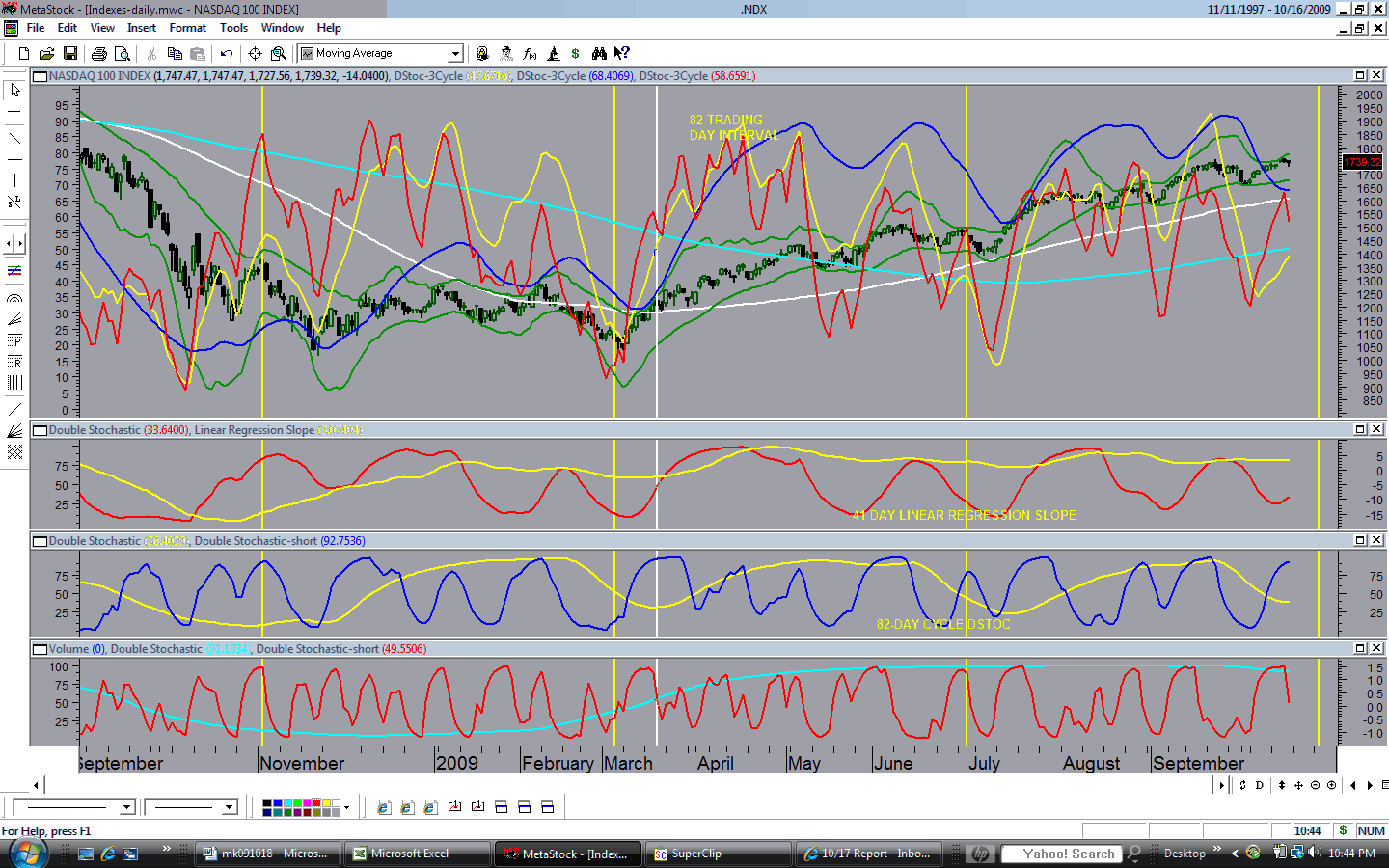
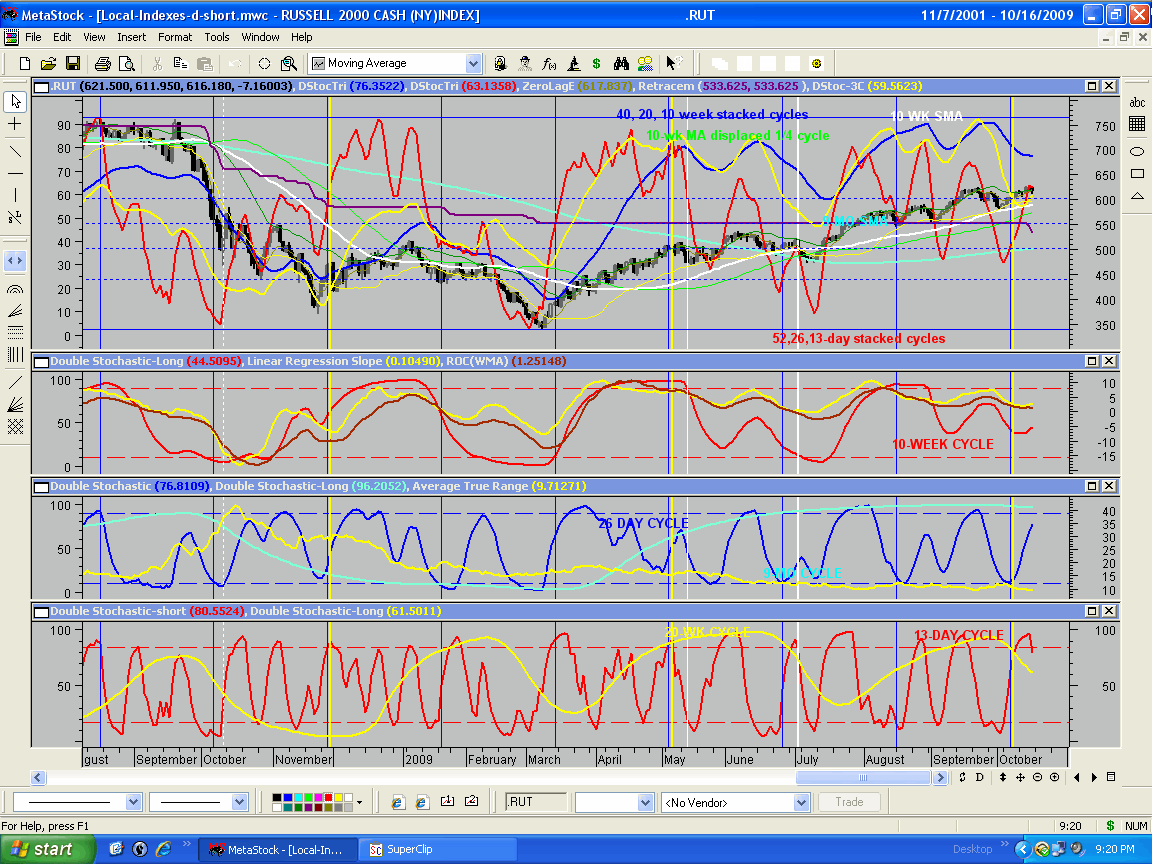
A week ago I expected support levels to hold at a 10-wk cycle bottom after a few more days to the downside for stocks. Despite a tendency for stocks to rally going into a holiday, no rally has yet rally materialized. Instead, the SPX (http://www.geocities.com/petegersb/SP500.GIF) made a new closing low for this 9-month cycle on Wednesday, and a lower intraday low on Thursday. Ex-Energy stocks, the remainder of the SPX (http://www.geocities.com/petegersb/SPY-XLE.GIF ) broke down to a 3-year low as it approached the bottom of its bear-market trend channel. Of course, the worst performing sector, Financials (http://www.geocities.com/petegersb/Financials.GIF ), also has had the heaviest weighting in the SPX. If you equally weight the 9 sectors, you get a somewhat less grim picture. The equally weighted index (http://www.geocities.com/petegersb/SPDR-Composite.GIF ) currently resides a little above the March low and well above the January low. From its October peak, it’s down only 14.2% compared to 19.9% for the SPX and 23.3% for the SPX ex-Energy. The NDX (http://www.geocities.com/petegersb/NDX.GIF) and Russell 2000 (http://www.geocities.com/petegersb/Russell2000.GIF) also fared a little better recently, giving up “only” 60%-80% of the March-June rally phase of the17-week-old 20-week cycle. However the NDX is 18.9% below its October peak, and the RUT is 22.3% below its July 07 peak, so the only refuge has been energy and other commodities. Since mid-October when most of the market peaked, the XLE (http://www.geocities.com/petegersb/EnergySPDR.GIF) is up 8%, and Gold (http://www.geocities.com/petegersb/GoldBullion.GIF) is up 22%. There is always a bull market someplace.
There is some potentially good news in the status of cycle indicators for the broad market indexes. Not only are the 10-week and shorter cycle indicators deeply oversold, they bear a strong resemblance to conditions surrounding the Thanksgiving holiday. From there a 10 week cycle rally ensued that lasted 2 weeks, followed by a second rally attempt that produced a double top 2 weeks later and led to the steep January decline. A similar pattern this time would get the S&P back up to perhaps 1330 in late July before the next leg down for this bear market.
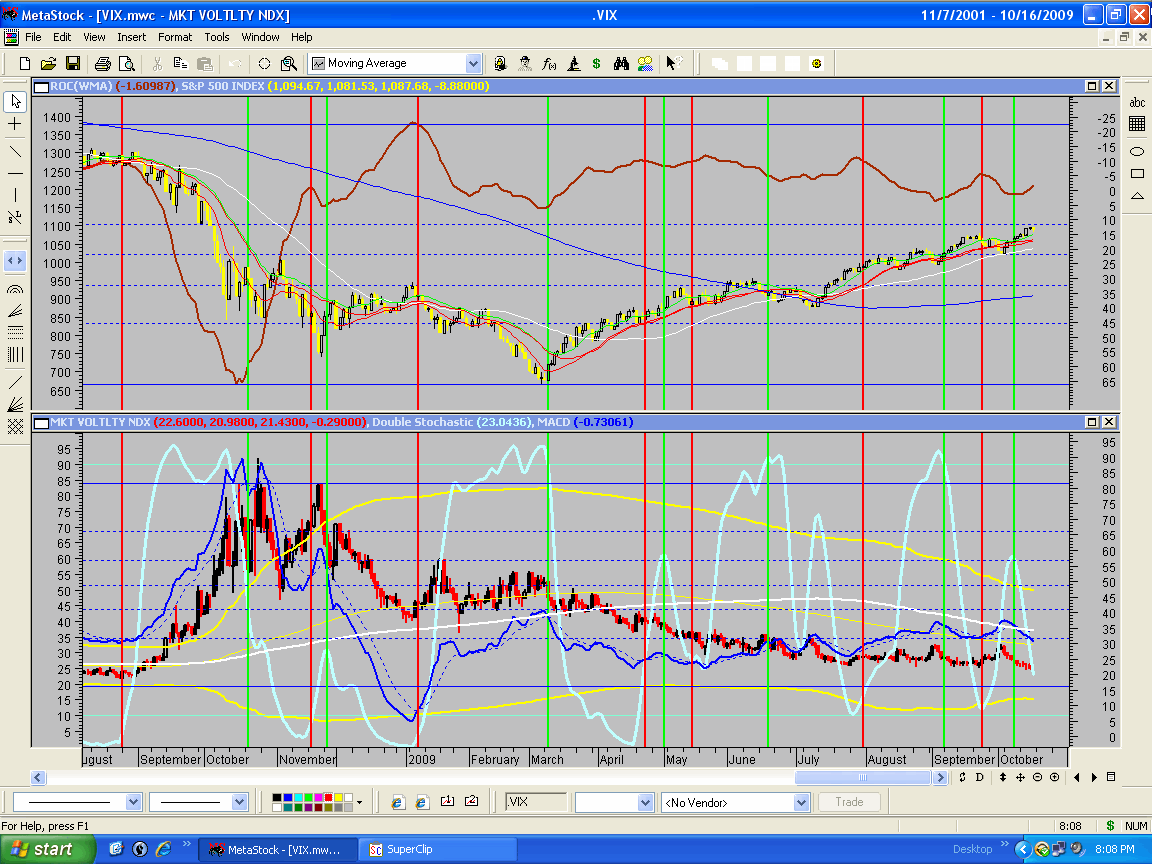
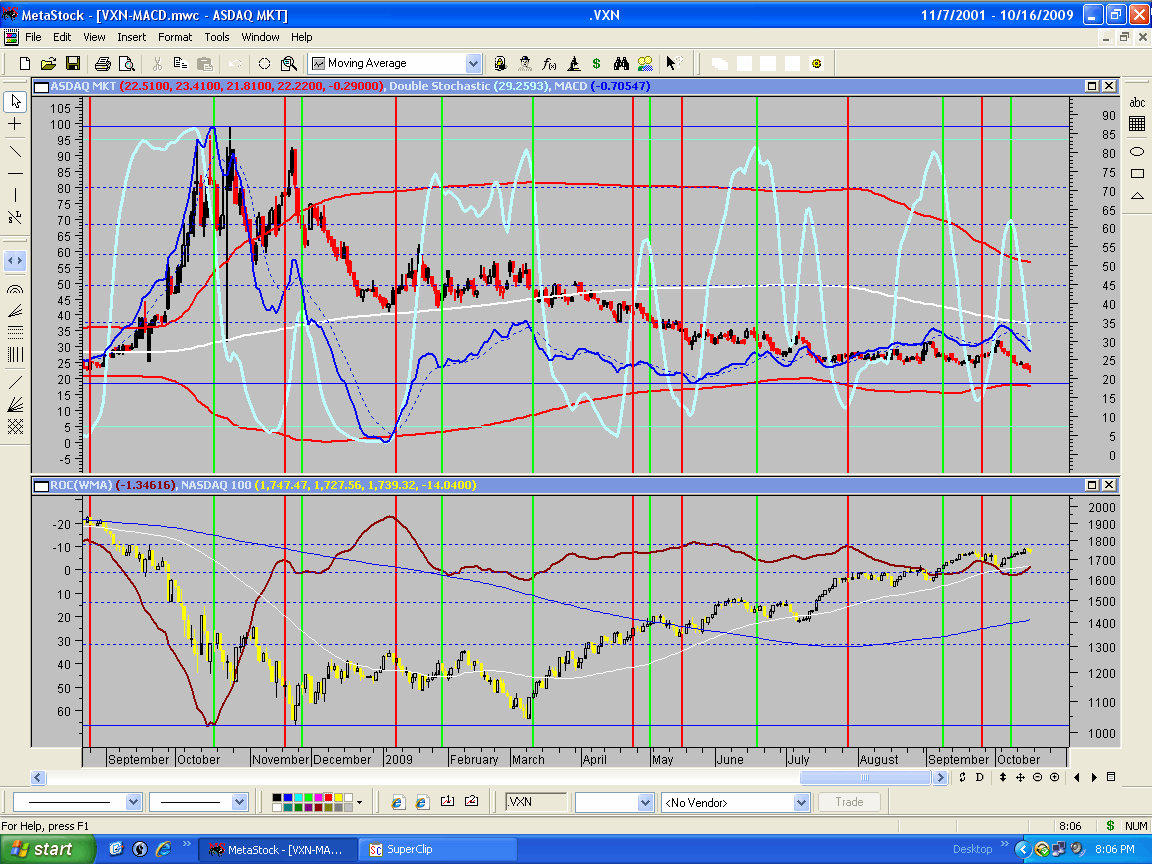
Unfortunately, that similarity does not carry over to the VIX and VXN. At the late-November 10-wk cycle low the DStoc on the daily VIX (http://www.geocities.com/petegersb/VIX.GIF) had already entered a clear downtrend, but currently it has turned up again after a brief dip in mid-June. That brief dip suggests that perhaps the 10-week cycle did bottom on June 12 at age 12 weeks, when I originally thought, and the ensuing 2-day rally was the best we could get out of the rally phase. If so, it implies the 10-week cycle is only 3 weeks old, and the worst lies ahead, not behind. The same holds true for the VXN (http://www.geocities.com/petegersb/VXN.GIF). Although the level of these indicators continues to suggest that stocks are near a 10-week cycle low, the time lapsed since anything that could be interpreted on the price charts as a 10-week cycle low, argues against a near-term bottom. The weekly VIX and VXN (http://www.geocities.com/petegersb/VIX-weekly.GIF, http://www.geocities.com/petegersb/VXN-weekly.GIF) suggest that the 20-week cycle is not yet near a bottom. A 17-week-old 20-week cycle fits well with the presumption of a 3-week-old 10-week cycle. Both are compatible with another month or two on the downside before we see a nested bottom of these two cycles. An August low for these cycles would then produce a second 20-week cycle rally off of the 9-month low established in March, and set these cycles up for a nested low late in the year. Given the time remaining for these cycles to play out, we could well see that 35% average bear market detailed in this week’s Barron’s – or worse.
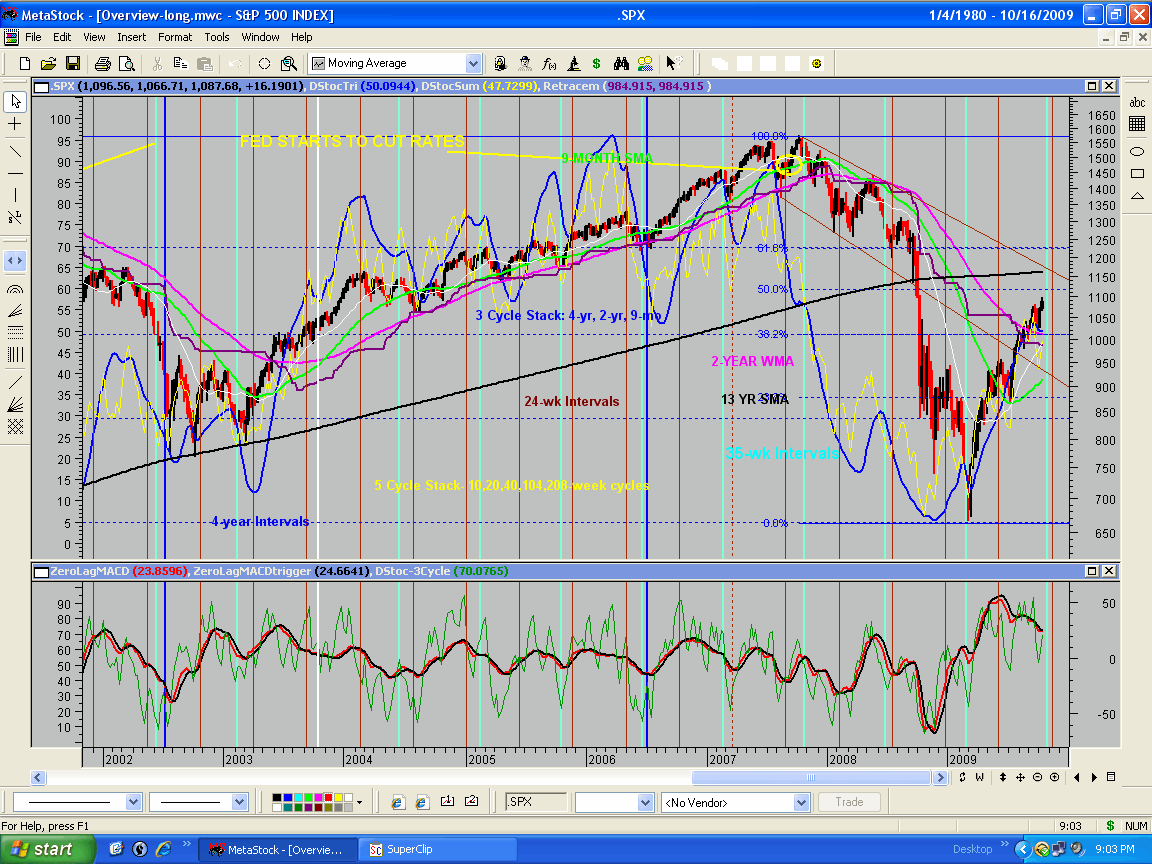
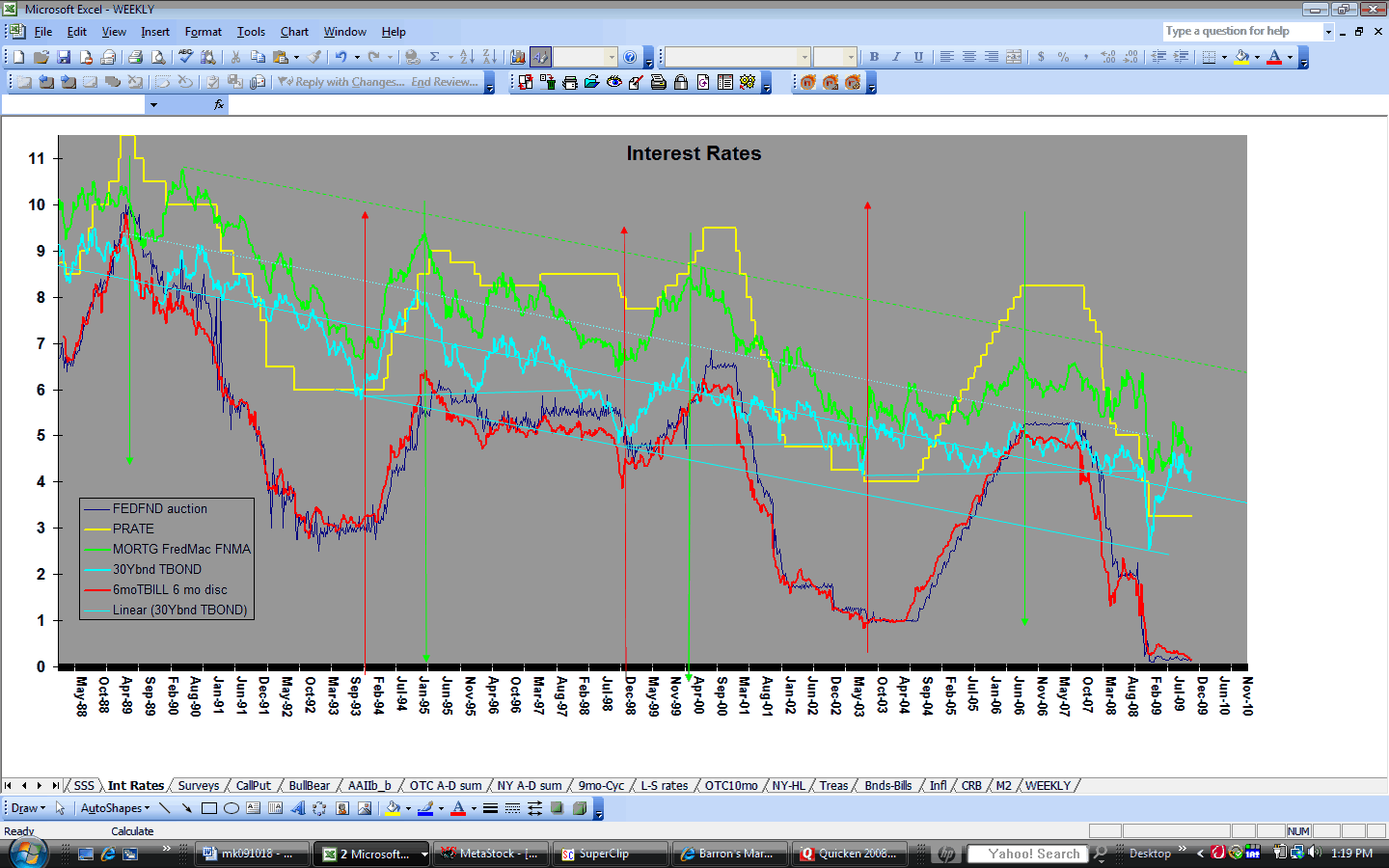
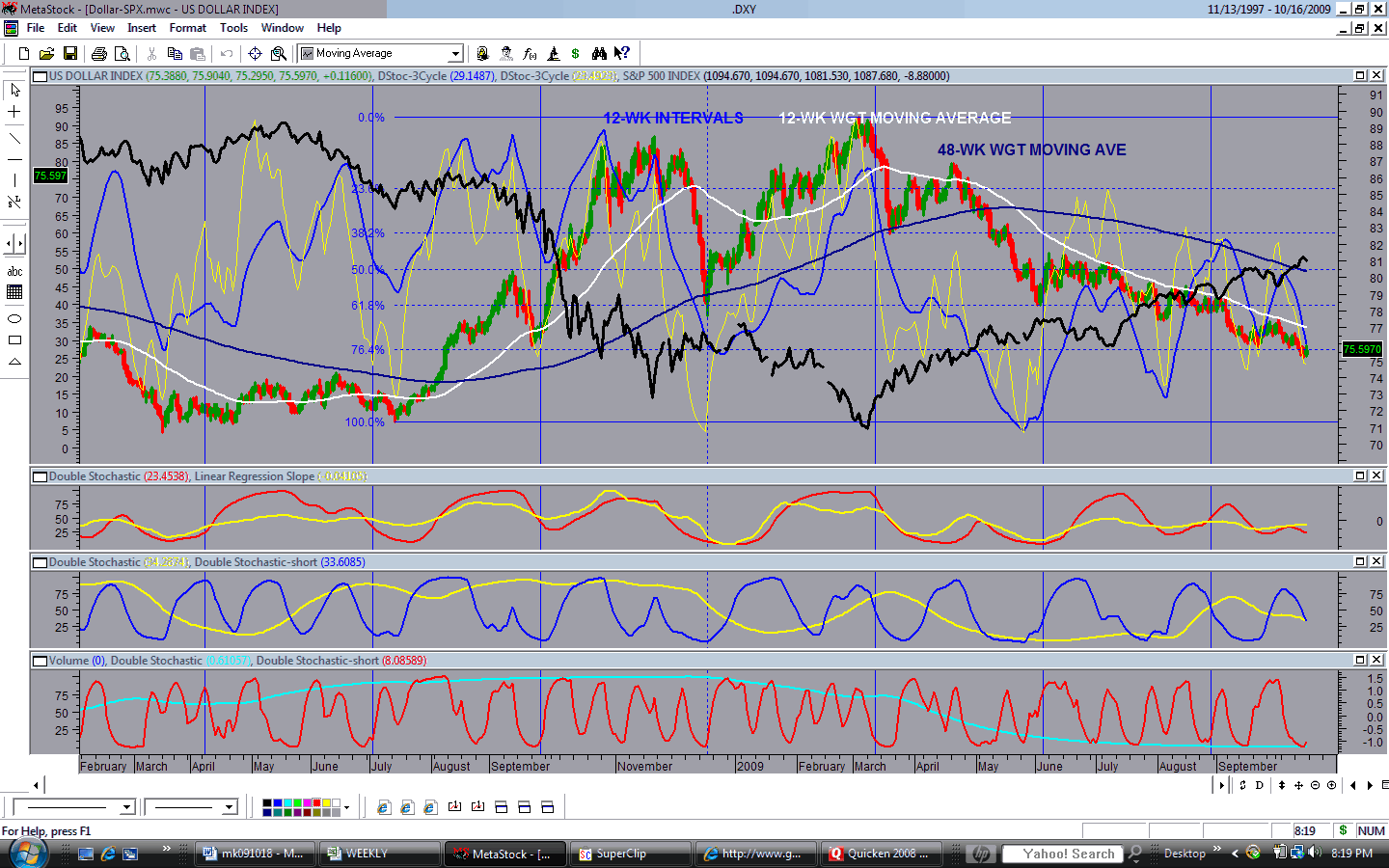
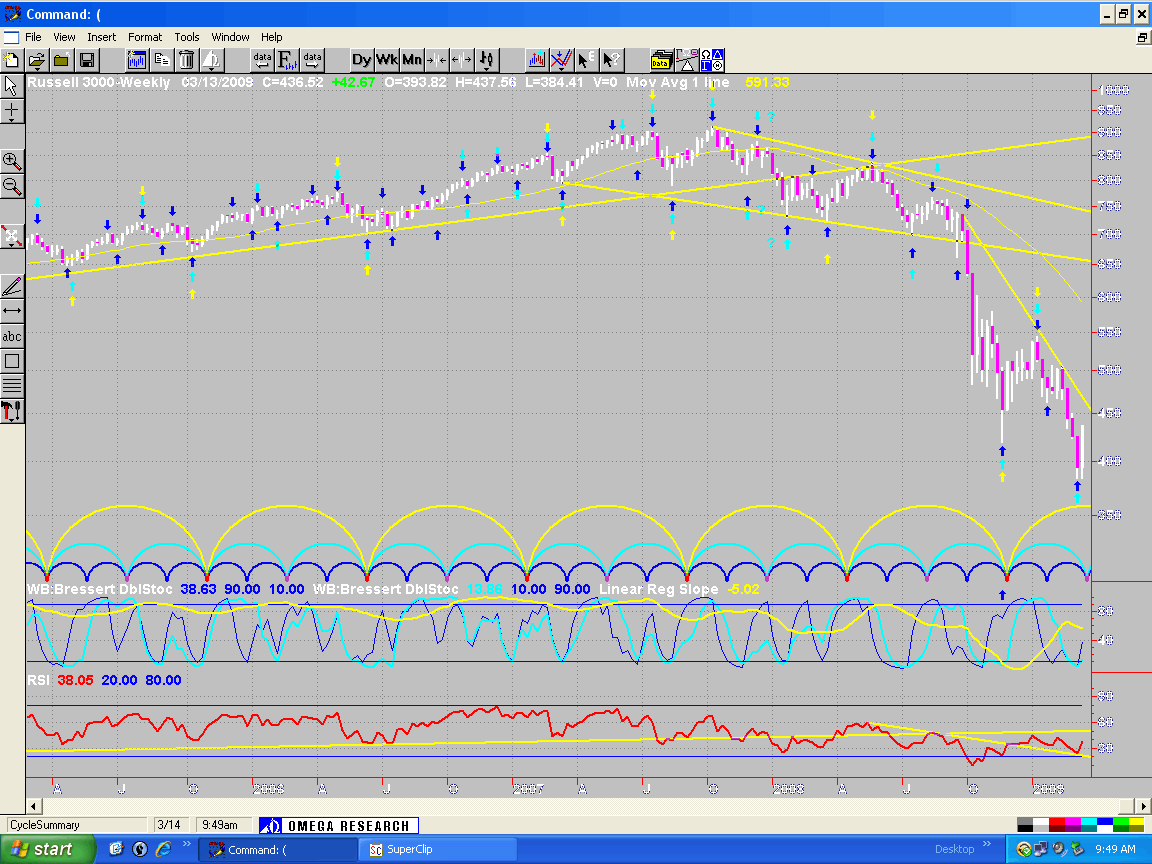
The status of the 10-week cycle appears sufficiently precarious that attempting to play its next rally phase is fraught with risk. At worst, if it did bottom in June, July promises to be even worse than June. At best it will soon attempt to rally against longer cycles that are clearly in downtrends. A similar price and indicator pattern on the long-term weekly chart (http://www.geocities.com/petegersb/Overview-long.GIF) in August of 2001 led to a good bear-market rally into year end, but it did turn out to be only a rally into a continuing bear market. And at that time, the Fed was still 2 years away from its last rate cut of that cycle (http://www.geocities.com/petegersb/InterestRates.GIF ). It was then willing to continue cutting rates because inflation was not so threatening, and the dollar (http://www.geocities.com/petegersb/Dollar.GIF)) was only about a month into its 40% freefall from 120 to 72 under the weight of the Bush economic and foreign policies and the Greenspan monetary policies that together have helped bring us to the current sad state of affairs.
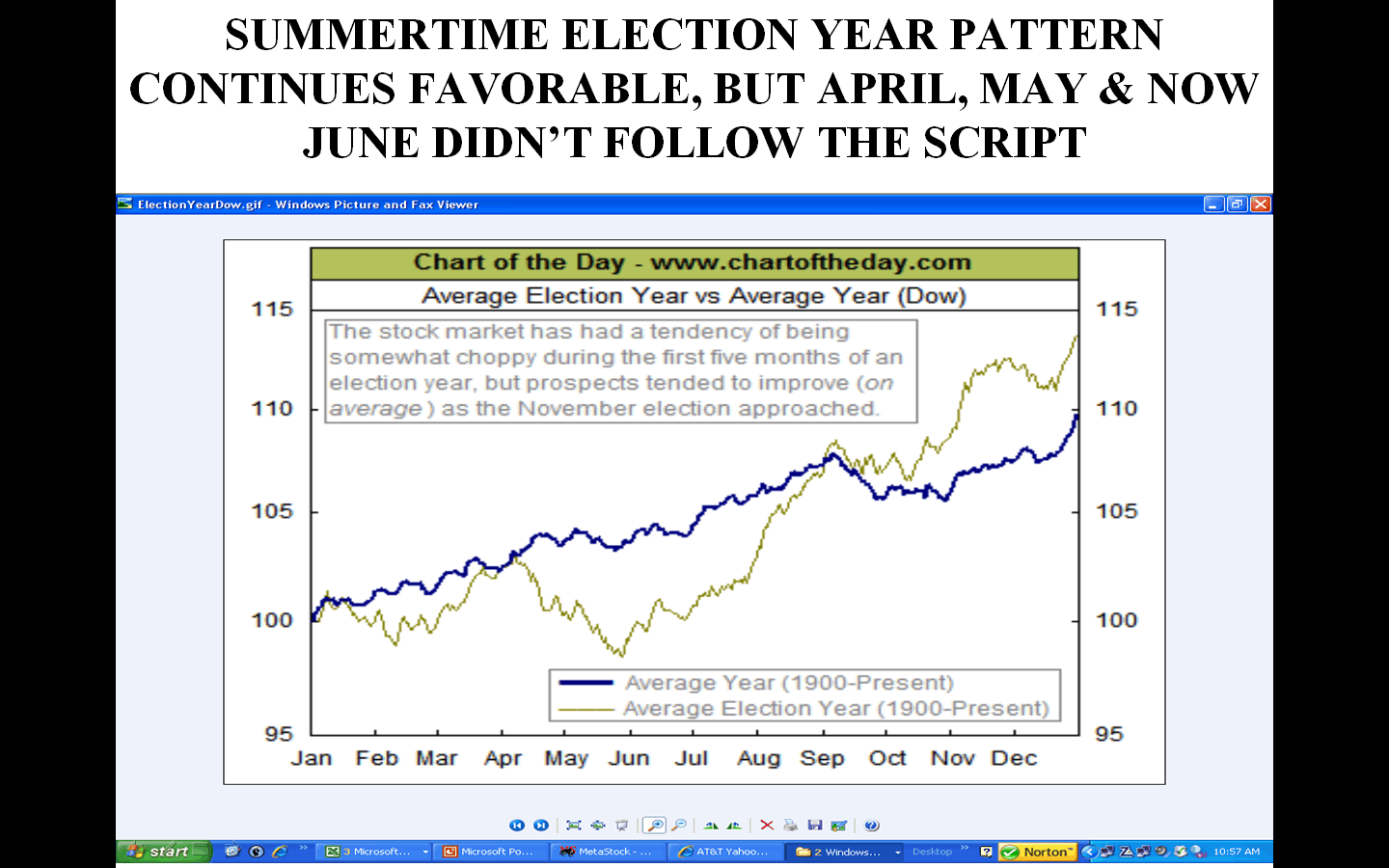
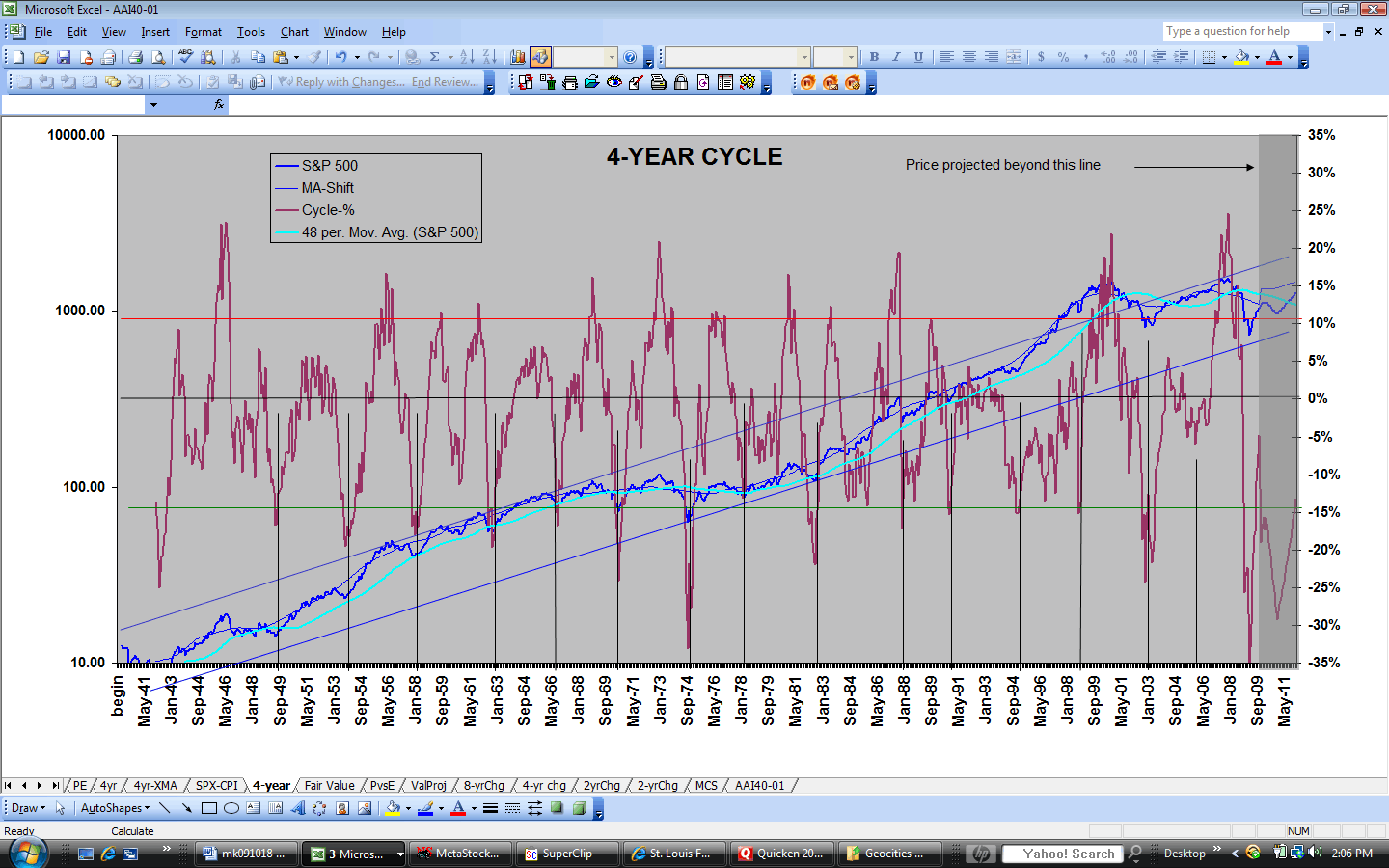
In summary, while some indicators suggest that stocks remain ripe for that summertime 10-wk cycle rally, a good case can also be made for a nested 10/20-week cycle low sometime in August. I don’t think we can rely of the normal election-year pattern (http://www.geocities.com/petegersb/ElectionYearPattern.GIF) to prevent worse to come as the 9-month cycle (http://www.geocities.com/petegersb/Overview-med.GIF) heads towards its next scheduled low sometime in the 4th quarter. Conversely, we can probably rely on the normal 4-year election cycle (http://www.geocities.com/petegersb/4YearCycle.GIF ) to produce a very difficult market for the subsequent two years.
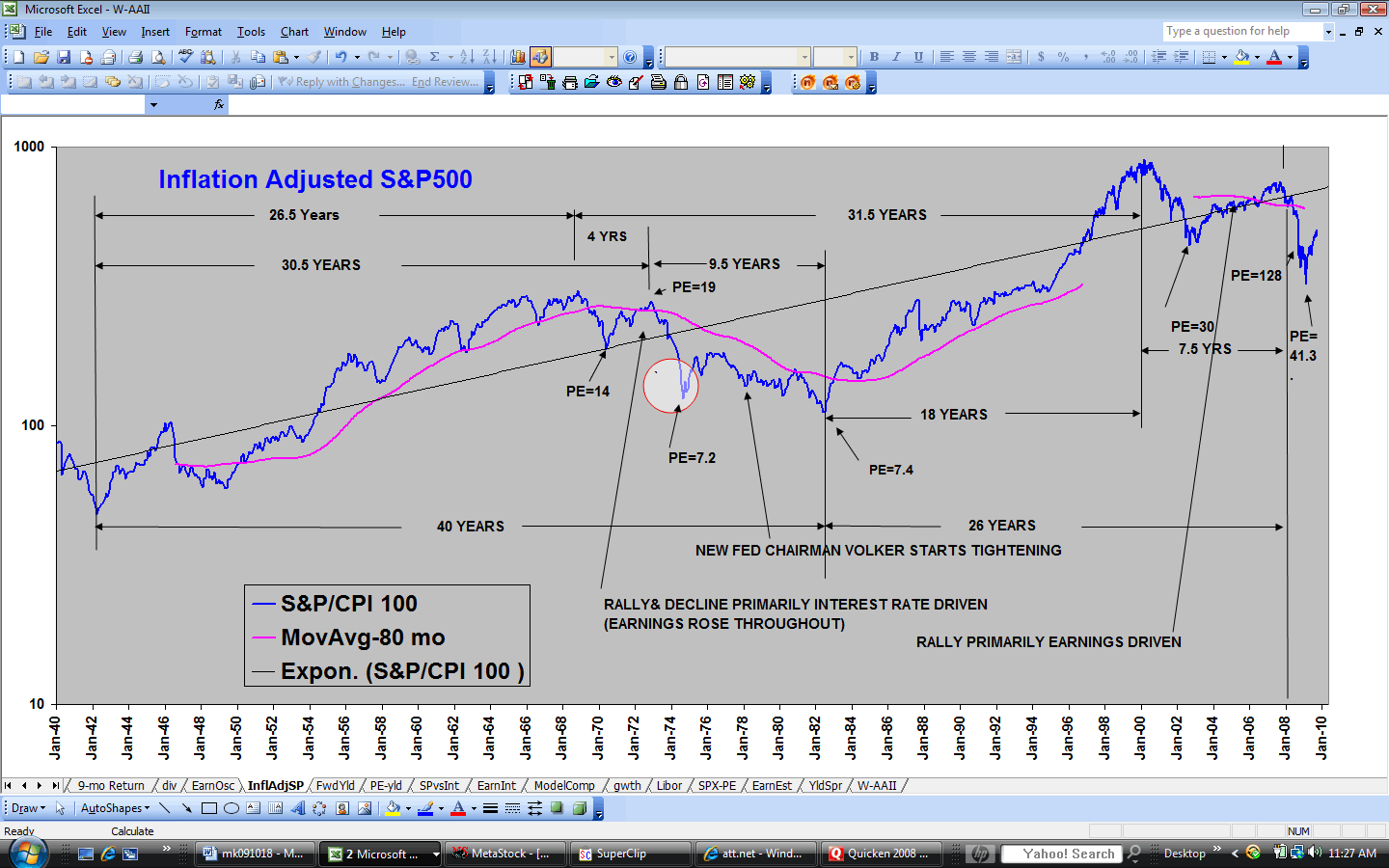
Unfortunately, the down slope may be buttressed by the late
stages of a much longer cycle as well (http://www.geocities.com/petegersb/SPX-InflationAdjusted.GIF
). The similarities to the decade of the 70’s are indeed worrisome. Nixon and
Ford had to face the inflationary consequences of Johnson’s ill-advised guns
and butter policies during the unjustified Vietnam War. Similarly, Obama will
have to deal with the inflationary consequences of Bush’s ill-advised guns and
butter policies after his unjustified
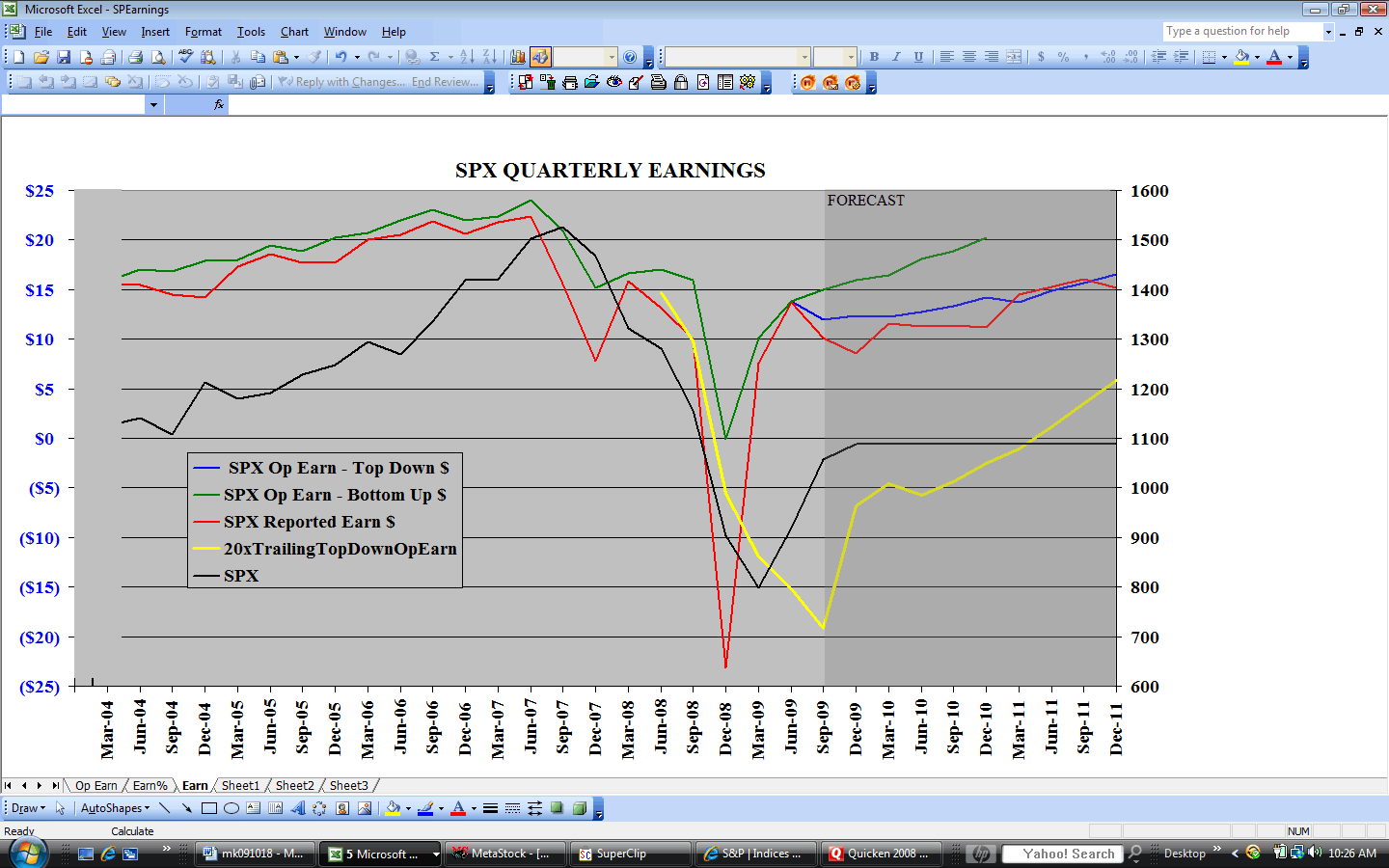
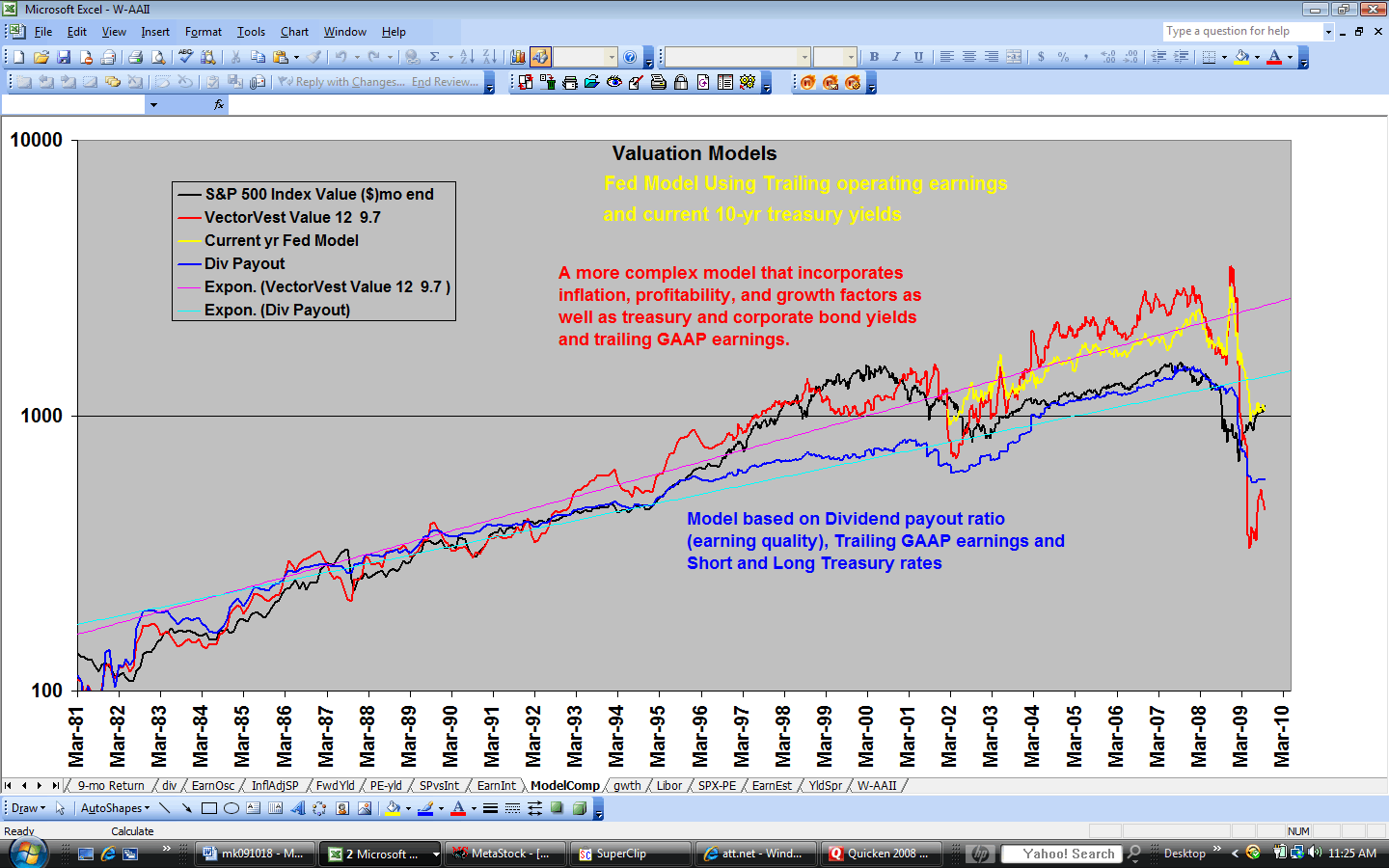
But won’t the predicted surge in earnings next year reduce the P/E without lower stock prices? That surge only appears in the bottom-up estimates (http://www.geocities.com/petegersb/EarnY-Y.GIF) that are usually wrong and are continuing to be revised downward to better conform to the flat top-down estimates. Last week, Standard & Poor’s adjusted its bottom-up operating earnings estimates for 2008 downward by another 20 cents and the 2009 estimate another 21 cents. The gap between these bottom-up estimates and the lower top-down estimates has narrowed to $7.43 but for the full year 2009 it has widened to an astronomical $29.22. The valuation models (http://www.geocities.com/petegersb/ValuationModels.GIF) that use those bottom-up earnings projections should be viewed with great skepticism. The trend in those models appears to have some value, however, and the current trend clearly remains very negative. If earnings were to continue declining, stocks would have to decline much more drastically to once again produce normal P/E ratios.
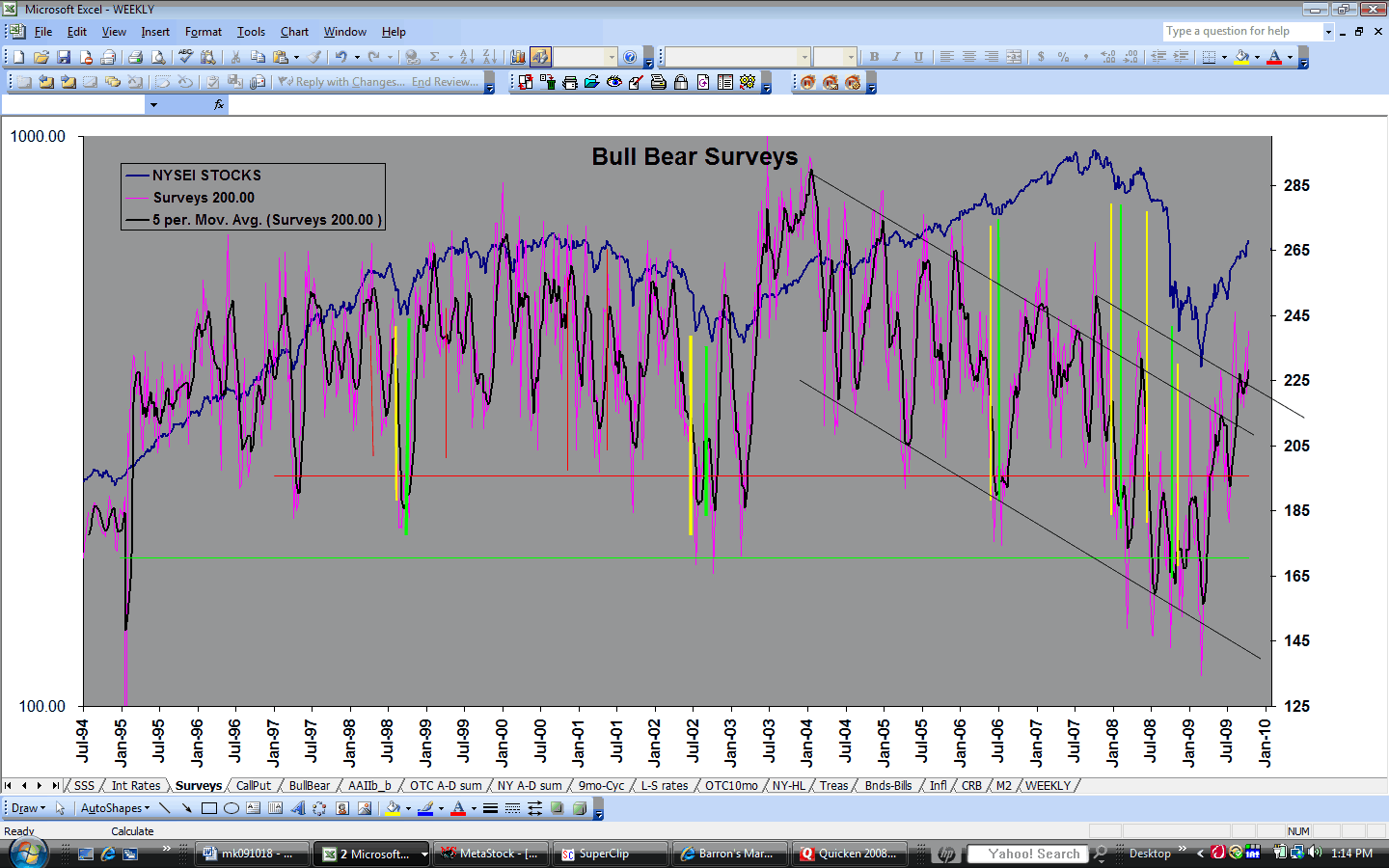
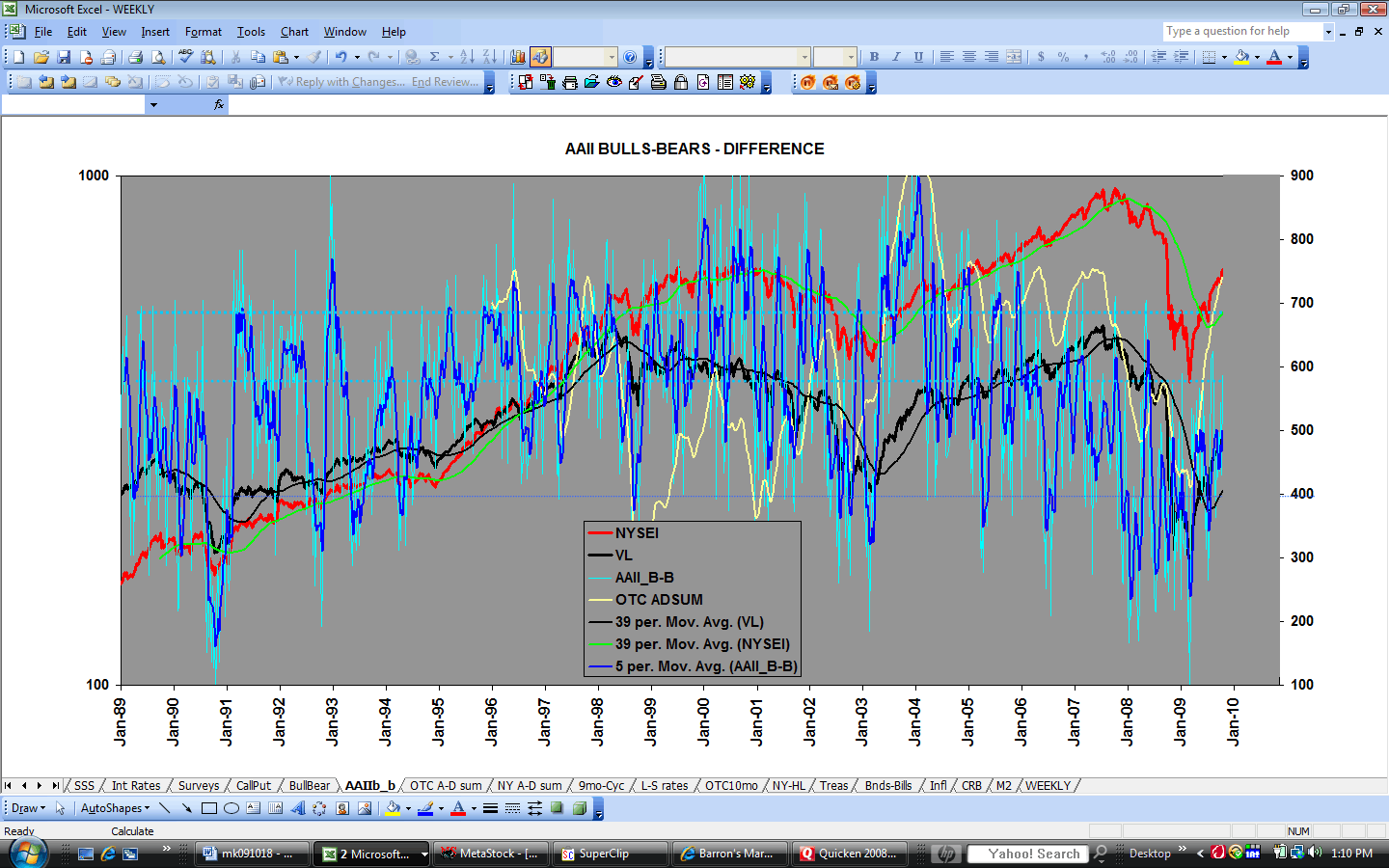
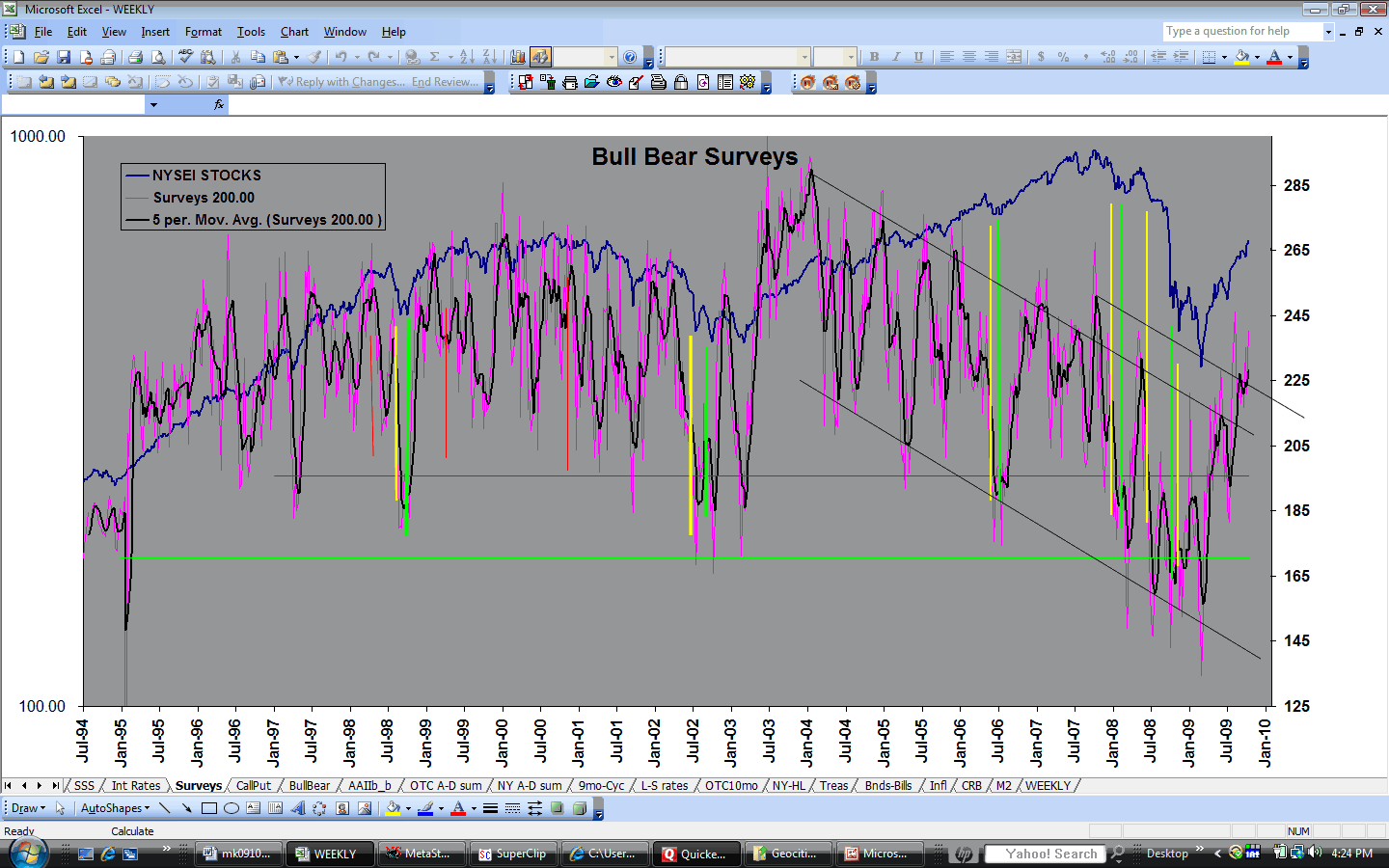
Sentiment has become deeply pessimistic, but until there is some indication of a reversal in that trend, it’s probably too early to buy. After the worst June for stocks since the depression era and the worst 1st half since the stagflation of the 1970’s, Barron’s finally recognized the bear market with a front page headline proclaiming: “The Bear’s Back”. While popular magazine headlines are frequently a good contrary indicator, Barron’s has relatively small circulation, and the article does provide historical data that makes a case for continuation to lower prices after stocks reach the proclaimed 20% bear market threshold. On that point, there’s no disagreement from Advisory services (http://www.geocities.com/petegersb/InvestorsIntelligence.GIF) and AAII members (http://www.geocities.com/petegersb/AAIIsentiment.GIF). They are very pessimistic and becoming more so. As long as that trend continues we can expect stocks to continue to decline. Furthermore, despite a price level that is below the March lows in the DJIA and the SPX, pessimism is not yet as deep as it was at that time (http://www.geocities.com/petegersb/SurveysCombined.GIF). Expect new depths before a significant turn.
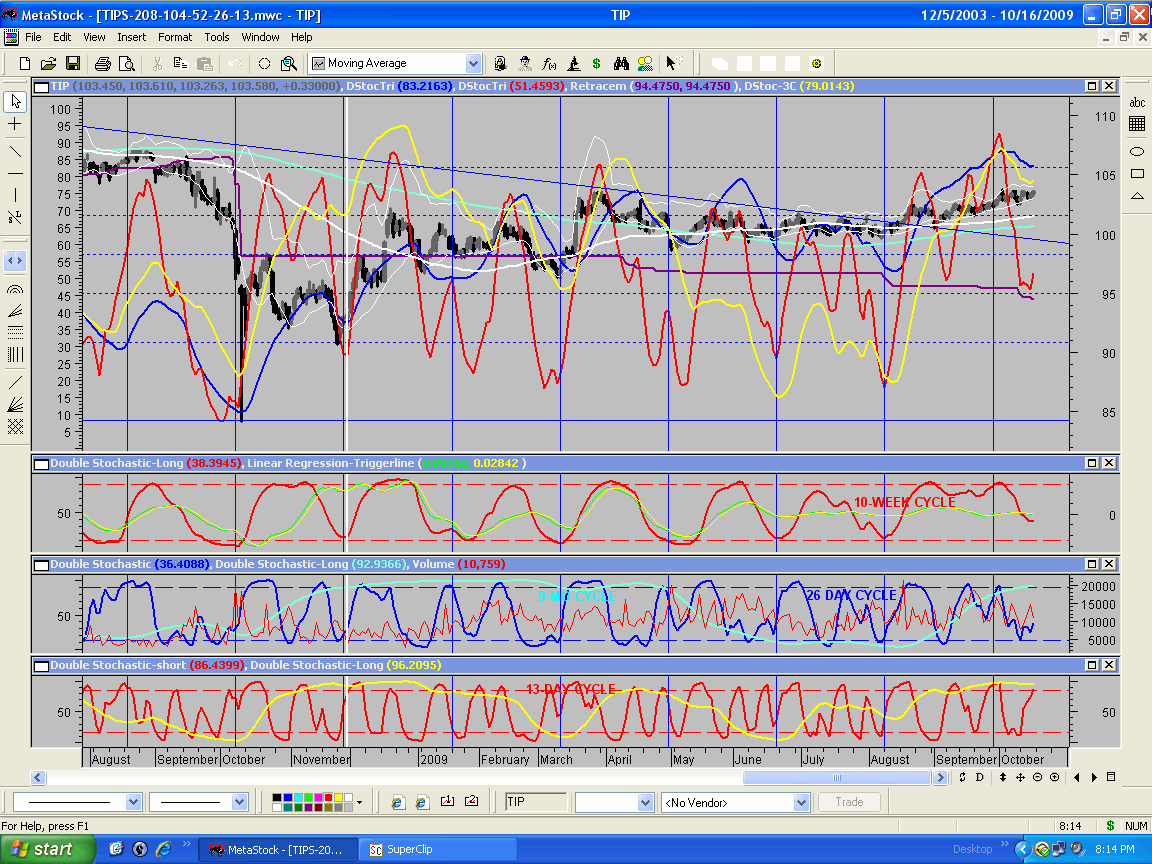
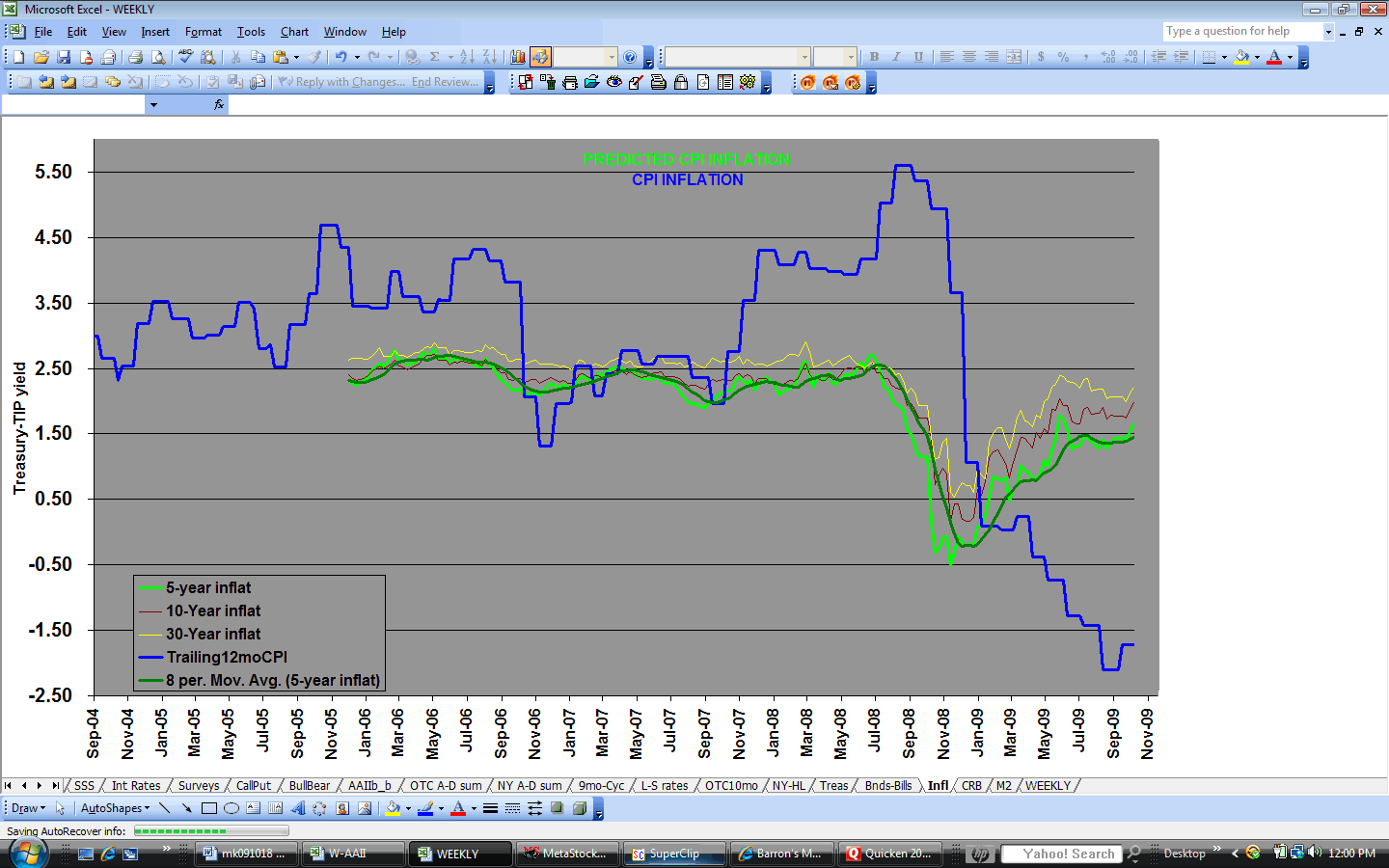
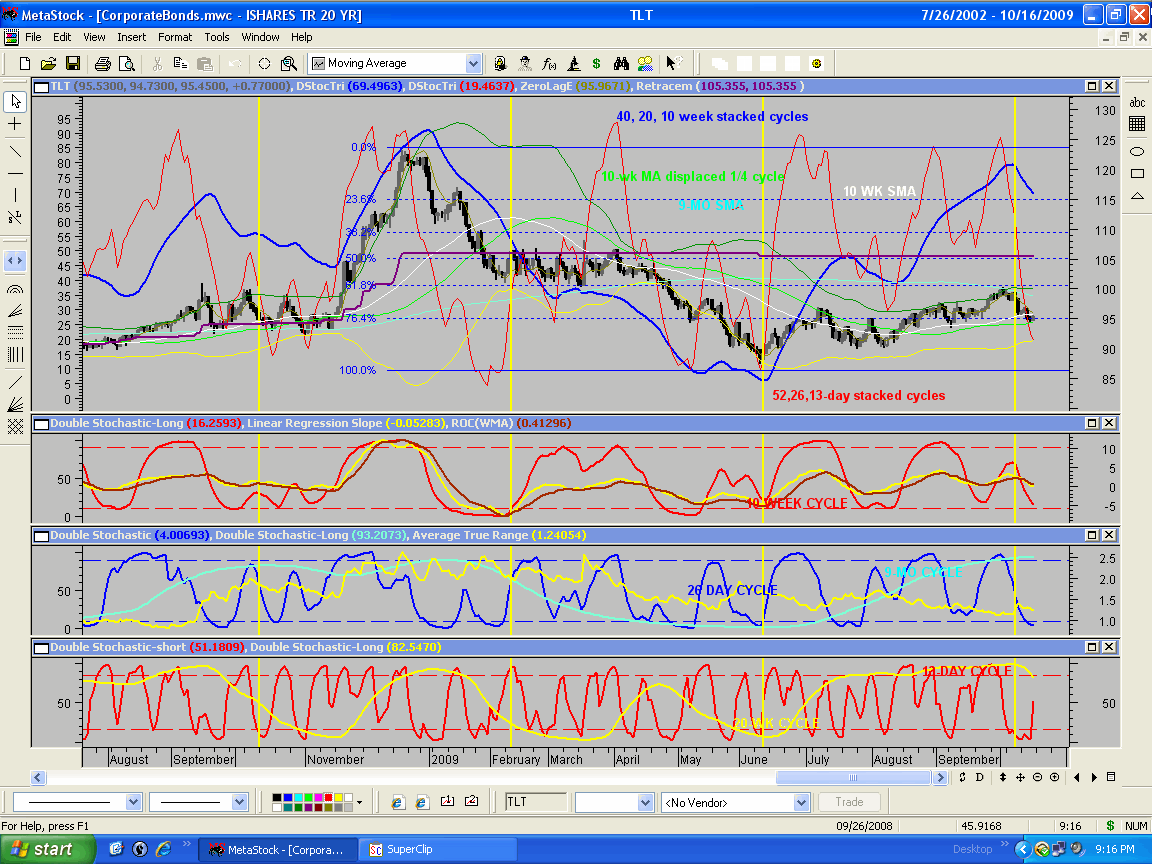
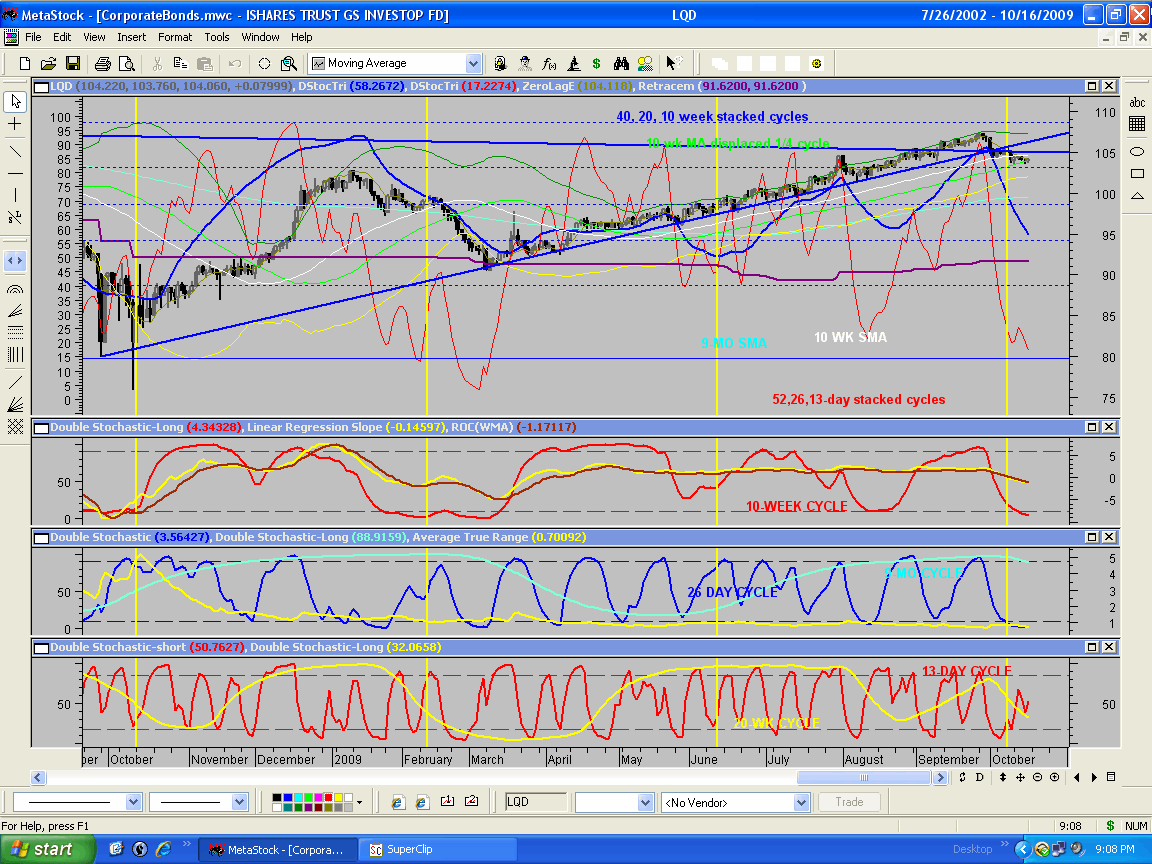
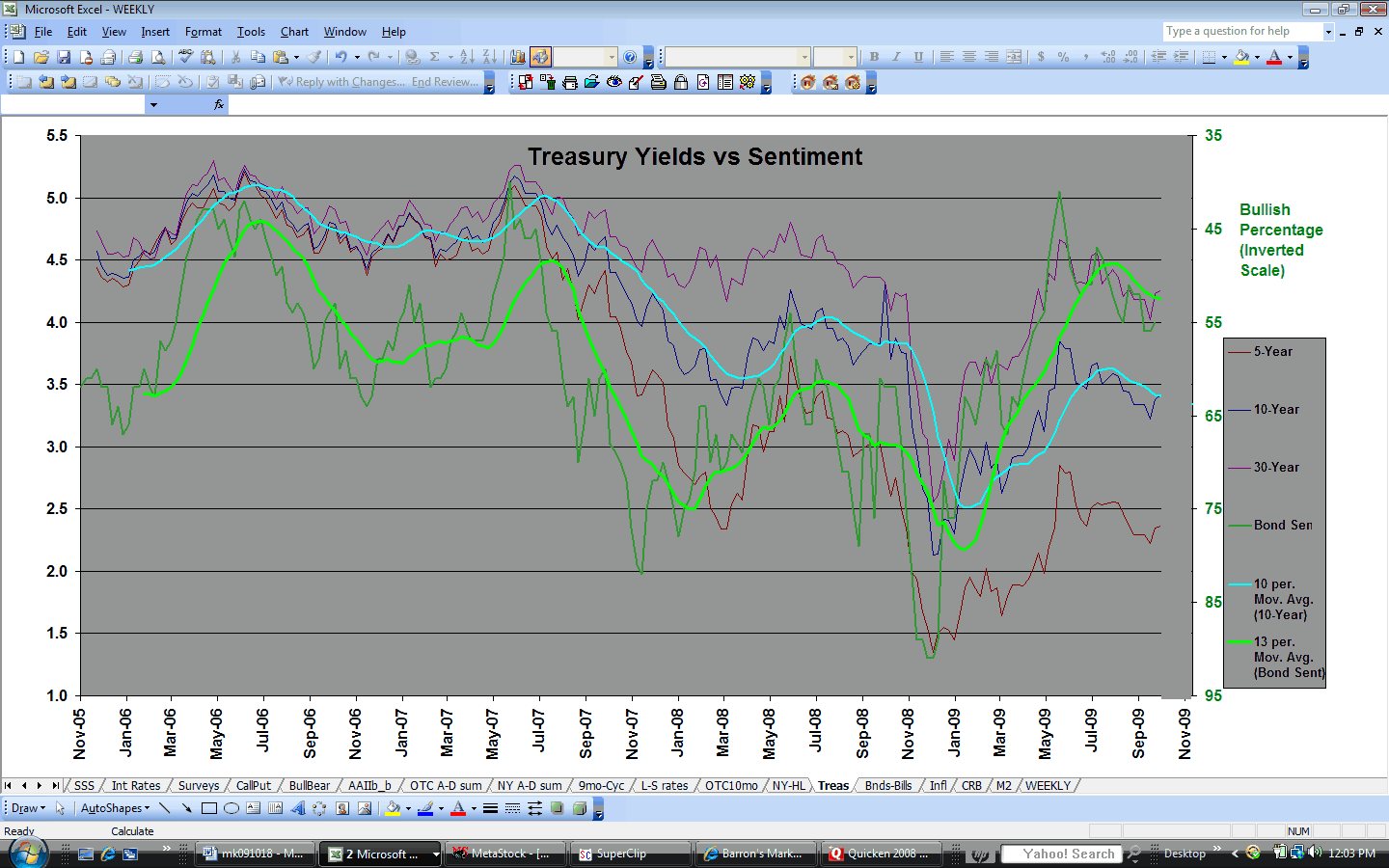
Government Bonds were fairly flat for the week as a correction in the overbought 13-day cycle stalled the rally in the longer cycles. TIPS (http://www.geocities.com/petegersb/TIPs.GIF), benefiting from heightened inflation fears (http://www.geocities.com/petegersb/CPI.GIF ), managed a small gain. Conventional T-bonds (http://www.geocities.com/petegersb/Treasury-20yr.GIF) lost a little ground – enough to turn the short-term composite downward. The 26-day cycle remains overbought for both, and will probably produce a minor decline this week and limit any gain from the up trending longer cycles. Corporate bonds (http://www.geocities.com/petegersb/CorporateBonds.GIF) are another story. They declined sharply to another new multi-year low. All the cycles are now oversold except for the 26-day cycle. The intermediate composite is very oversold, and a little more decline this week will produce a short-term oversold condition as well. Perhaps then they can join treasuries in an intermediate rally. Bond sentiment (http://www.geocities.com/petegersb/BondSentiment.GIF) has now improved enough to produce a crossing of the moving average to produce an intermediate-term buy signal.
The dollar (http://www.geocities.com/petegersb/Dollar.GIF) gained slightly for the week on the strength of a good Thursday rally off of a short-term low that essentially matched the May low. The short-term rally should be sustained this week, but the intermediate downtrend remains intact.
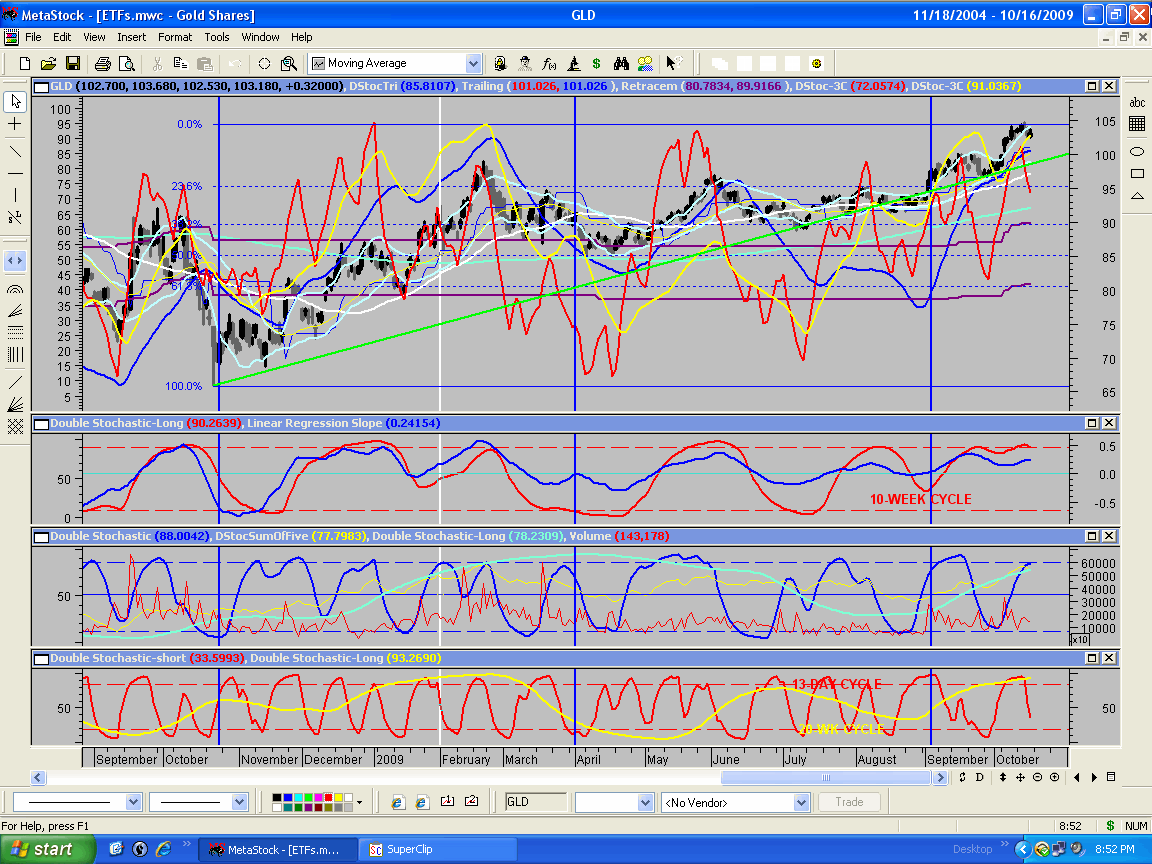
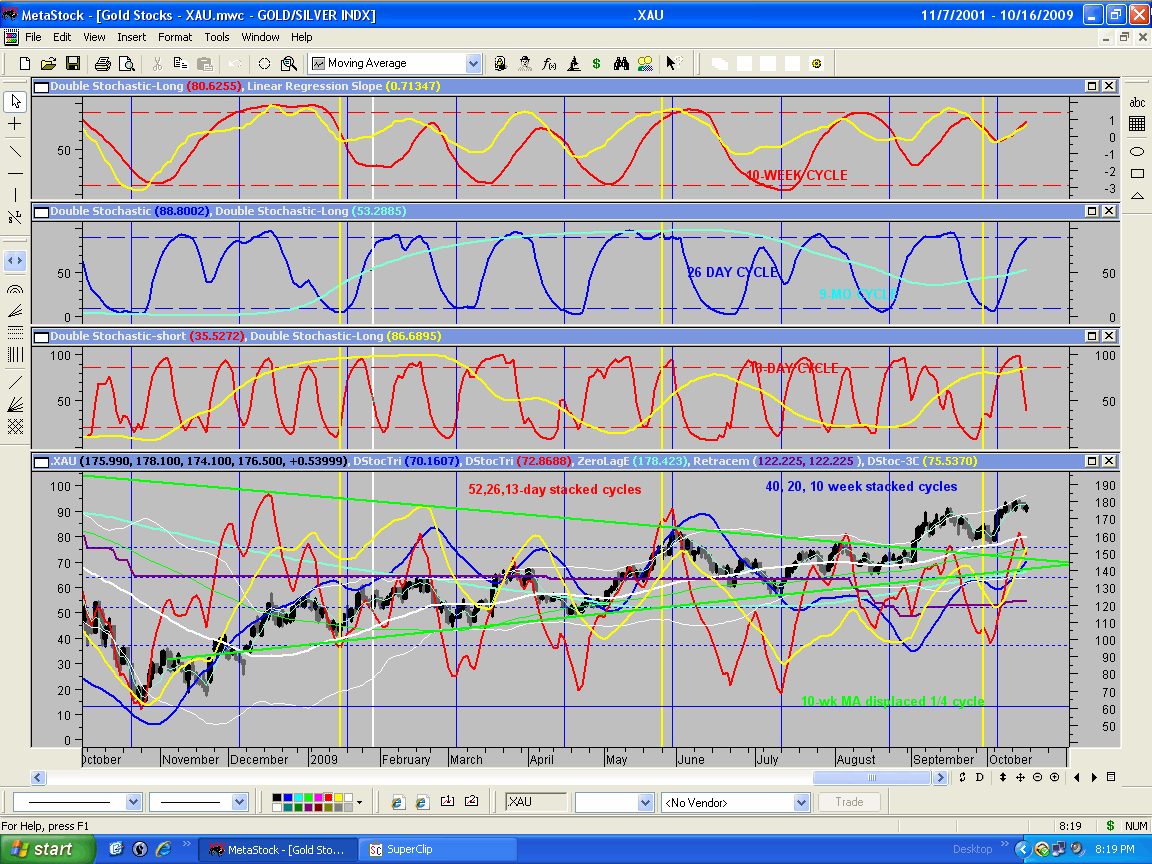
Gold (http://www.geocities.com/petegersb/GoldBullion.GIF) moved above its May short-term peak, and pulled back to
it as the short-term composite peaked. A further pullback appears likely as the
overbought 13 and 26-day cycles correct, but the intermediate uptrend should
remain intact. Gold should again become a buy near its 10-week moving average. A
break below the June low, which is near the 9-month moving average, would be
cause for concern. Gold stocks, as represented by the XAU (http://www.geocities.com/petegersb/GoldStocks.GIF), turned down from a higher 26-day cycle peak within a
continuing intermediate uptrend.
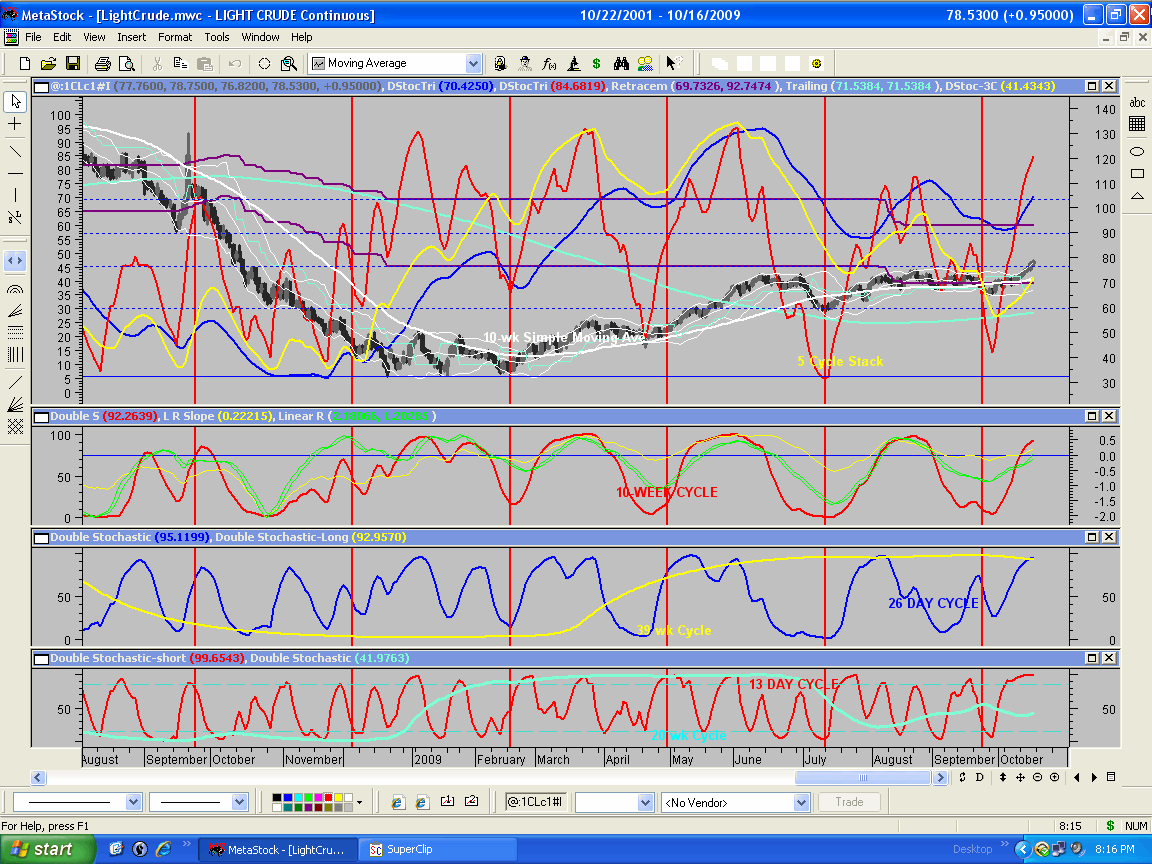
Another week, another five bucks and another all-time high for a barrel of Crude oil (http://www.geocities.com/petegersb/CrudeOil.GIF). Although the 13 and 26-day cycles are overbought, the rising short and intermediate composites are not. That $150 level could easily be hit this week before a short-term peak is established.
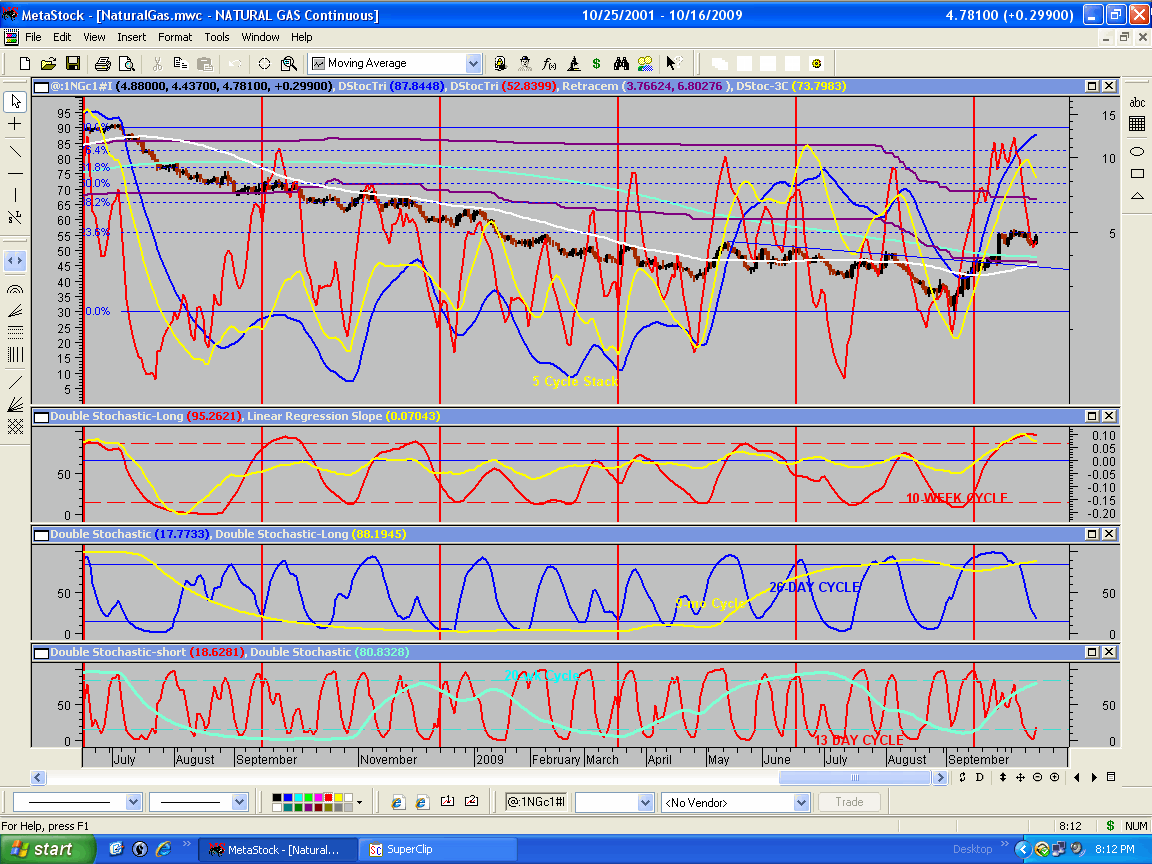
Natural
gas (http://www.geocities.com/petegersb/NaturalGas.GIF) gas hit a new multi-year high again last week. Although 3
of 5 cycles are overbought, the relatively fresh 26-day cycle should sustain
the uptrend this week. One of these weeks we’ll see a break below the narrow
trend channel that has characterized this move for the last 16 weeks. That will
probably signal an extreme right-translated peak for the 20-week and 9-month
cycles. For now, Natural Gas remains a hold.
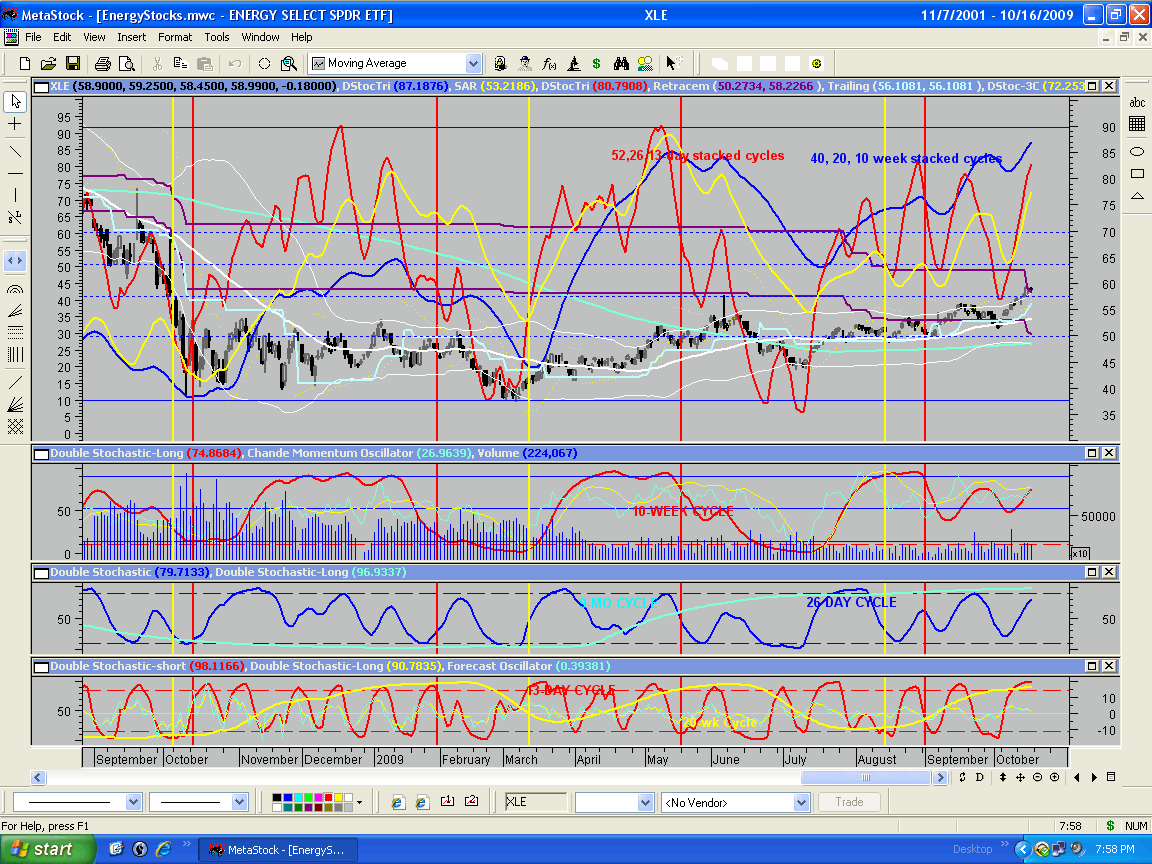
Once again Energy stocks (http://www.geocities.com/petegersb/EnergySPDR.GIF) couldn’t come close to matching the performance of the
underlying commodities. They moved down to the bottom of their 2-month trading
range as they join other stock indexes in searching for a 10-week cycle bottom.
The difference is that Energy Stocks are accomplishing their intermediate
correction by moving sideways over a 2-month period, while most non-energy
stocks have been moving sharply downward. If broad stock indexes can find that
10-week bottom, Energy Stocks appear likely to surge to new highs again.