I probably will not produce a report next week, but I will post my 4/29 briefing to the West Coast Cycles Club when it is completed.
4/27/08
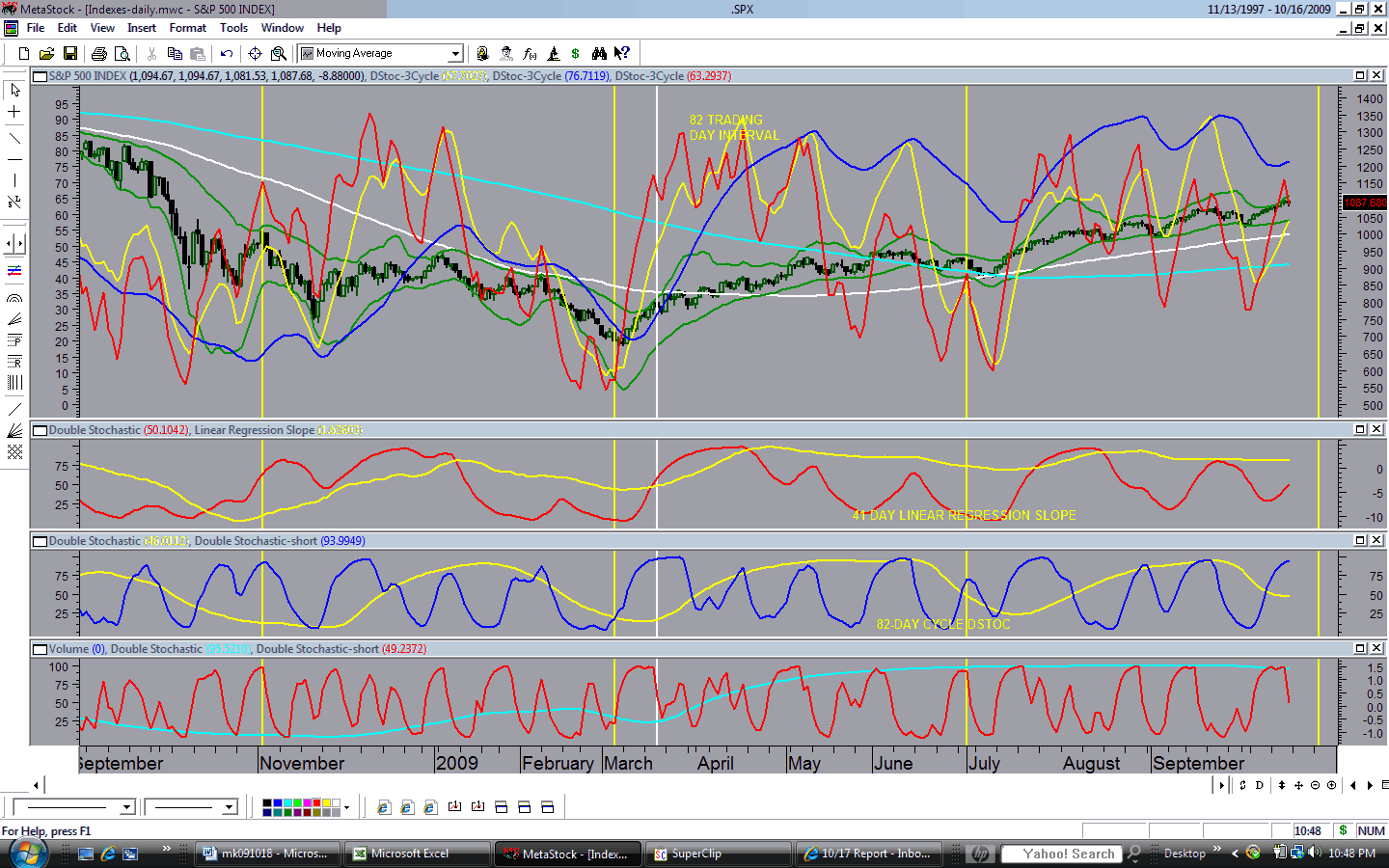
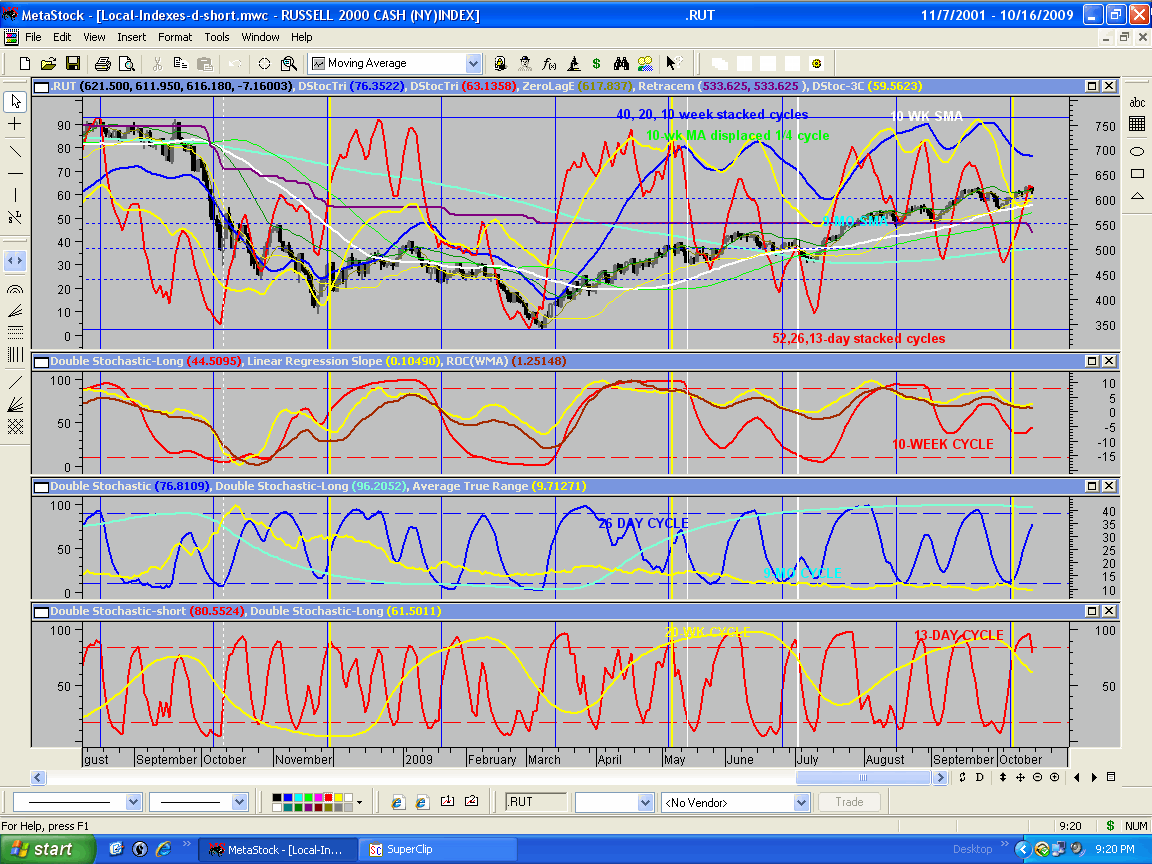
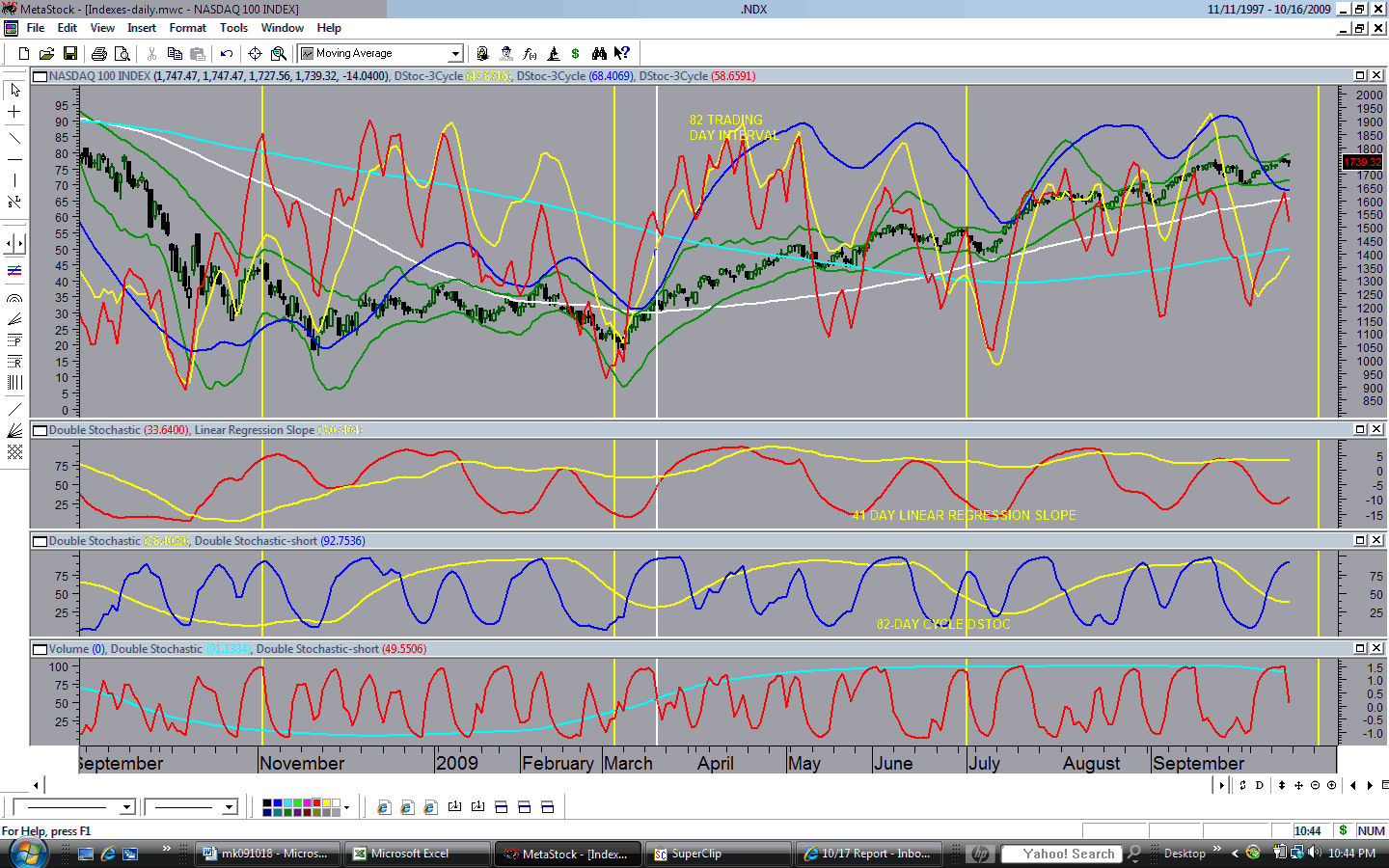
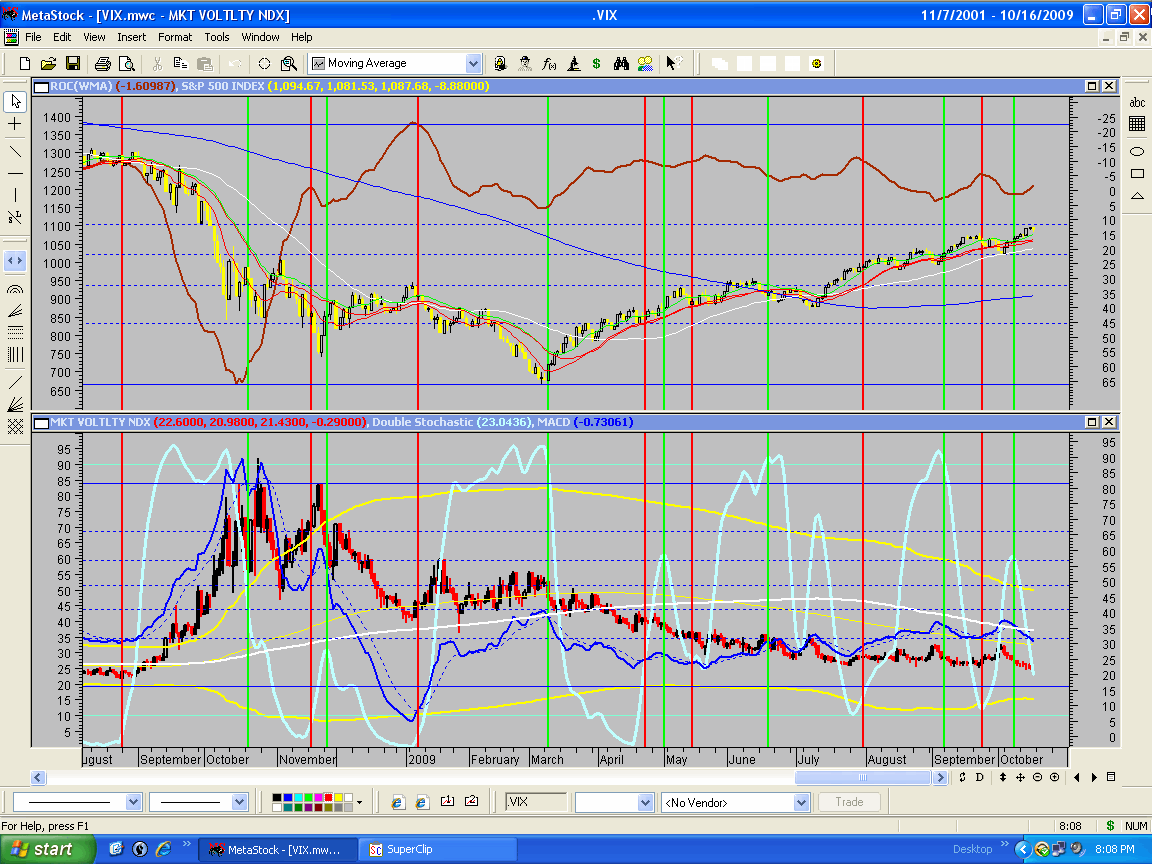
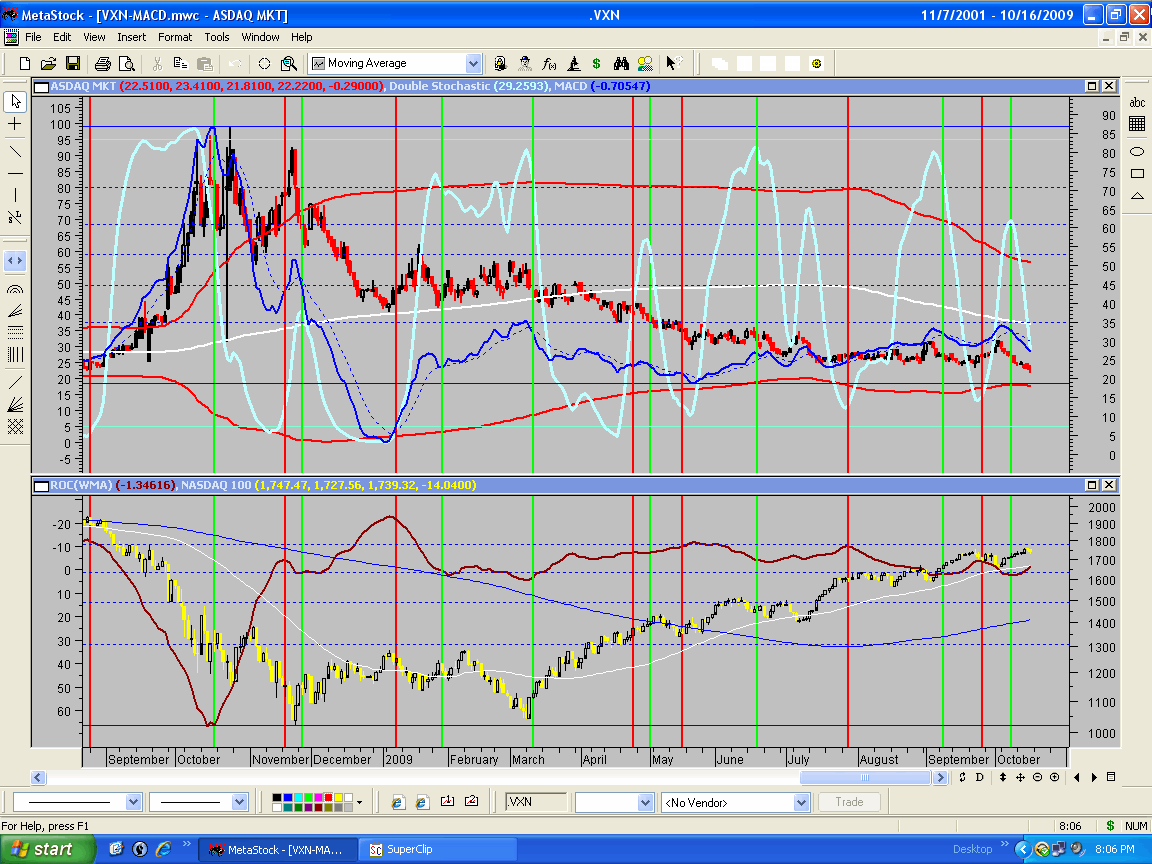
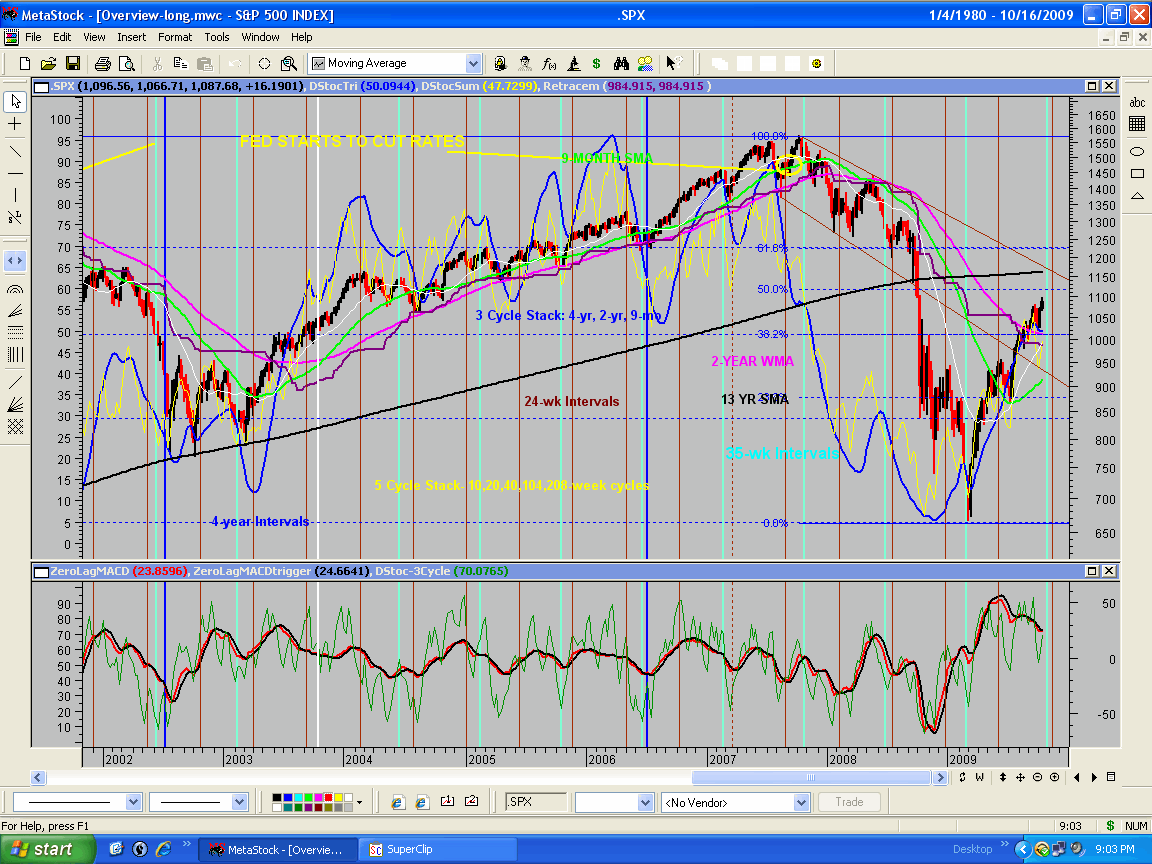
A week ago I thought that the 10-week cycle was nearing a peak, but that the rally phase of the 13-day cycle would last a few more days before that peak was reached. The rally lasted the entire week (http://www.geocities.com/petegersb/SP500.GIF, http://www.geocities.com/petegersb/Russell2000.GIF, http://www.geocities.com/petegersb/NDX.GIF), but prices made very little progress, reinforcing the case for an imminent end to the 10-week cycle rally. The 13-day cycle is now 9 days old and overbought. The 10-week cycle is 6-weeks old and overbought. The 20-wk cycle is 14 weeks old and overbought. Consequently, these three cycles appear likely to produce a pullback this week. Furthermore, the overbought short-term composite on all of the indexes and the extremely low levels of the DStocs on the daily VIX and VXN (http://www.geocities.com/petegersb/VIX.GIF, http://www.geocities.com/petegersb/VXN.GIF) continue to suggest that the 10-week cycle is very close to a peak. The moderately low levels of the DStocs on the weekly VIX and VXN (http://www.geocities.com/petegersb/VIX-weekly.GIF, http://www.geocities.com/petegersb/VXN-weekly.GIF) suggest that the 20-week cycle is also close to a peak. However, the 3-month-old 9-month cycle is rising by most measures (http://www.geocities.com/petegersb/Overview-med.GIF) (http://www.geocities.com/petegersb/Overview-long.GIF), and the 26-day cycle appears to have bottomed along with the 13-day cycle, and it is not overbought. Consequently, the 26-day cycle should provide some support during the initial stage of the 10/20-week cycle pullback, and the 9-month cycle should provide support during the entire 10/20-week cycle pullback – a pullback that should last anywhere from one to seven weeks, but is most likely last about 5 weeks.
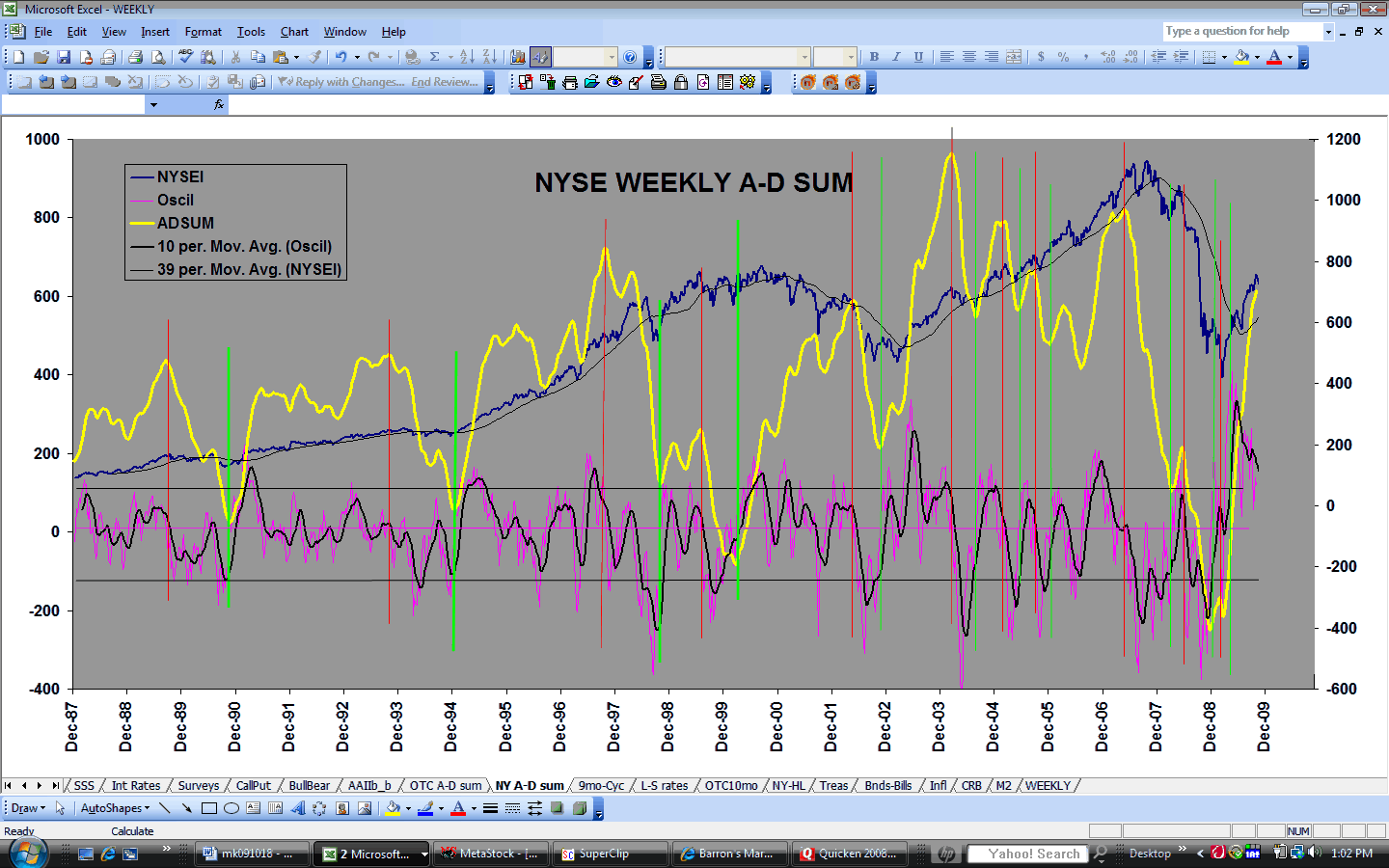
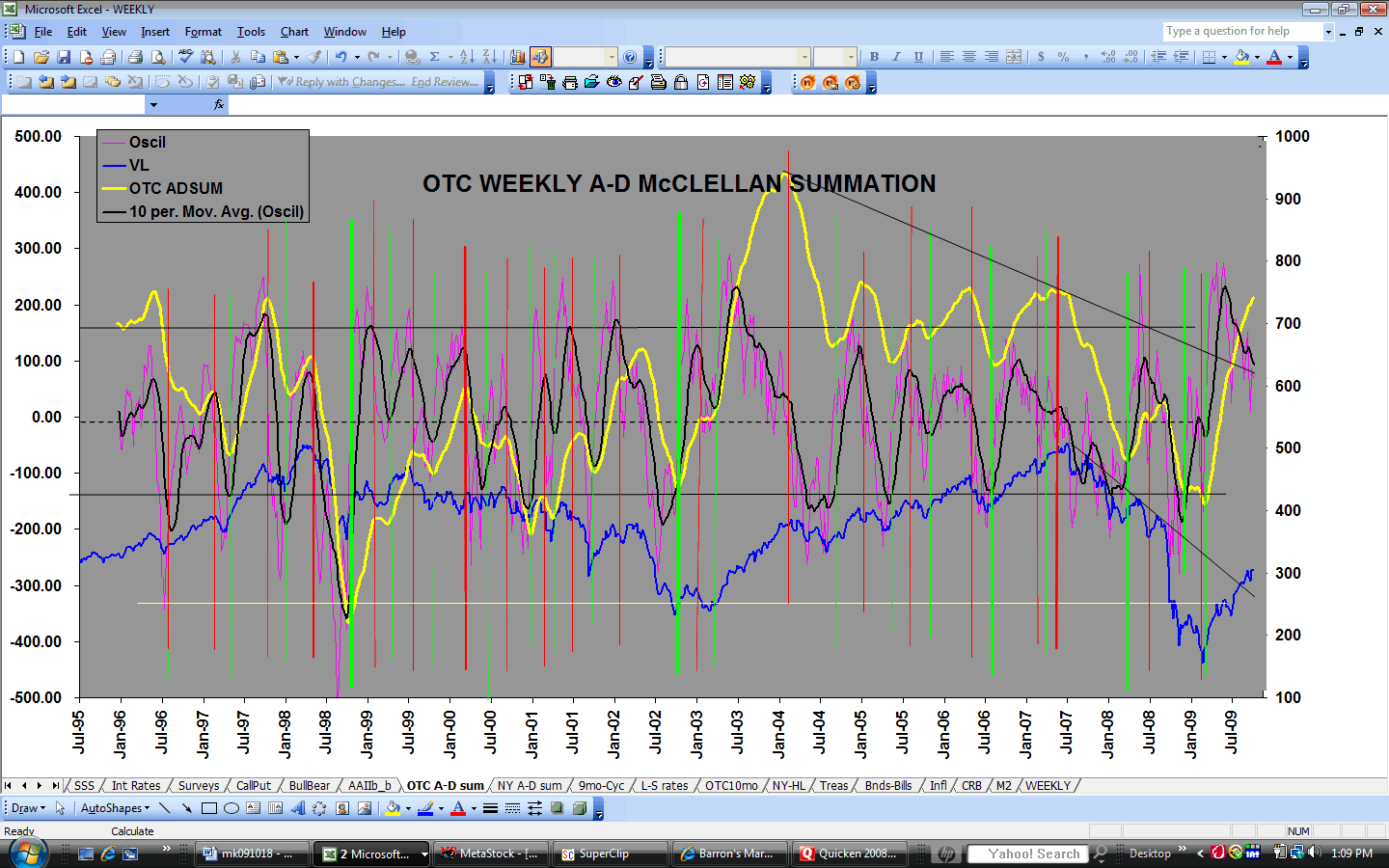
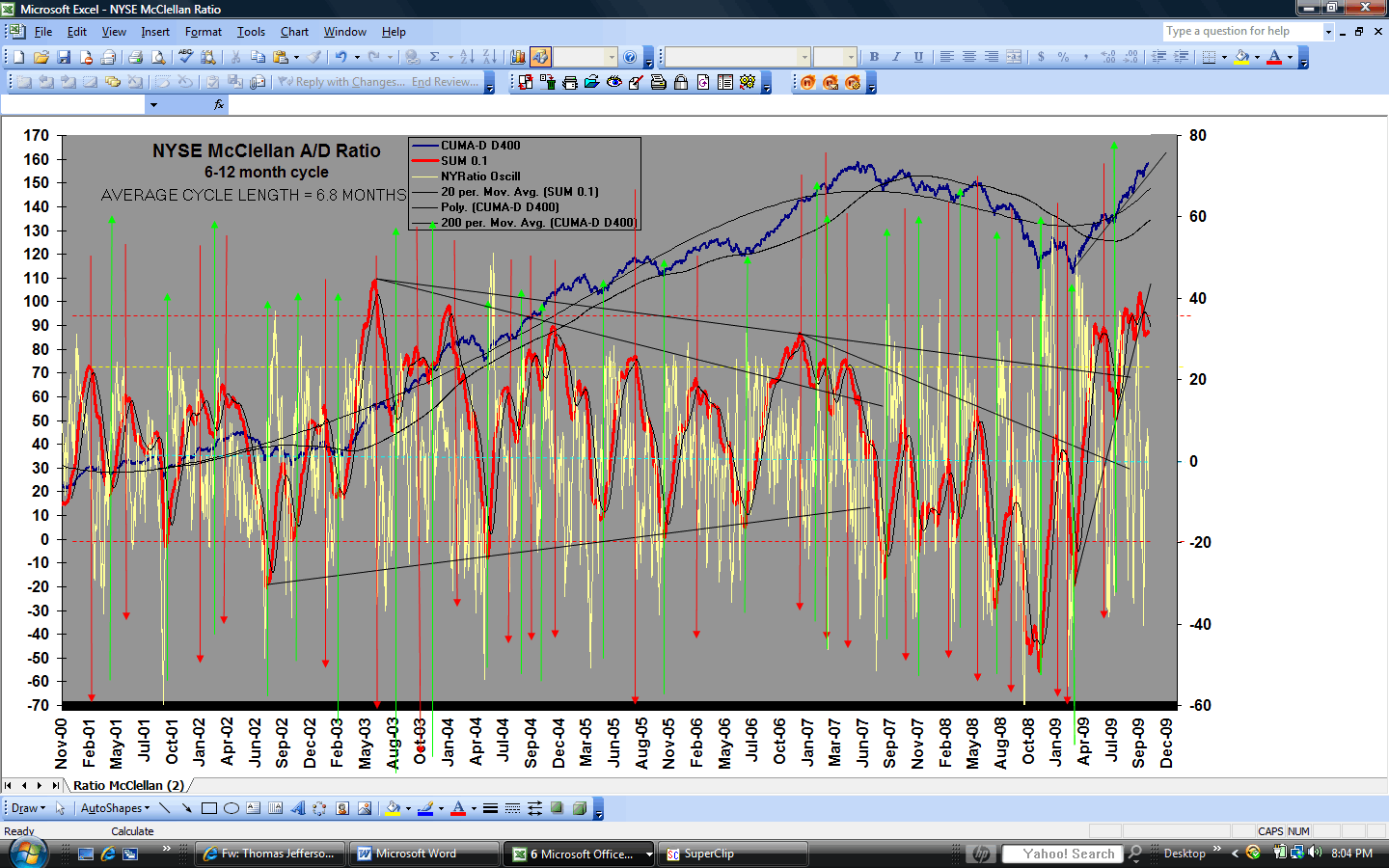
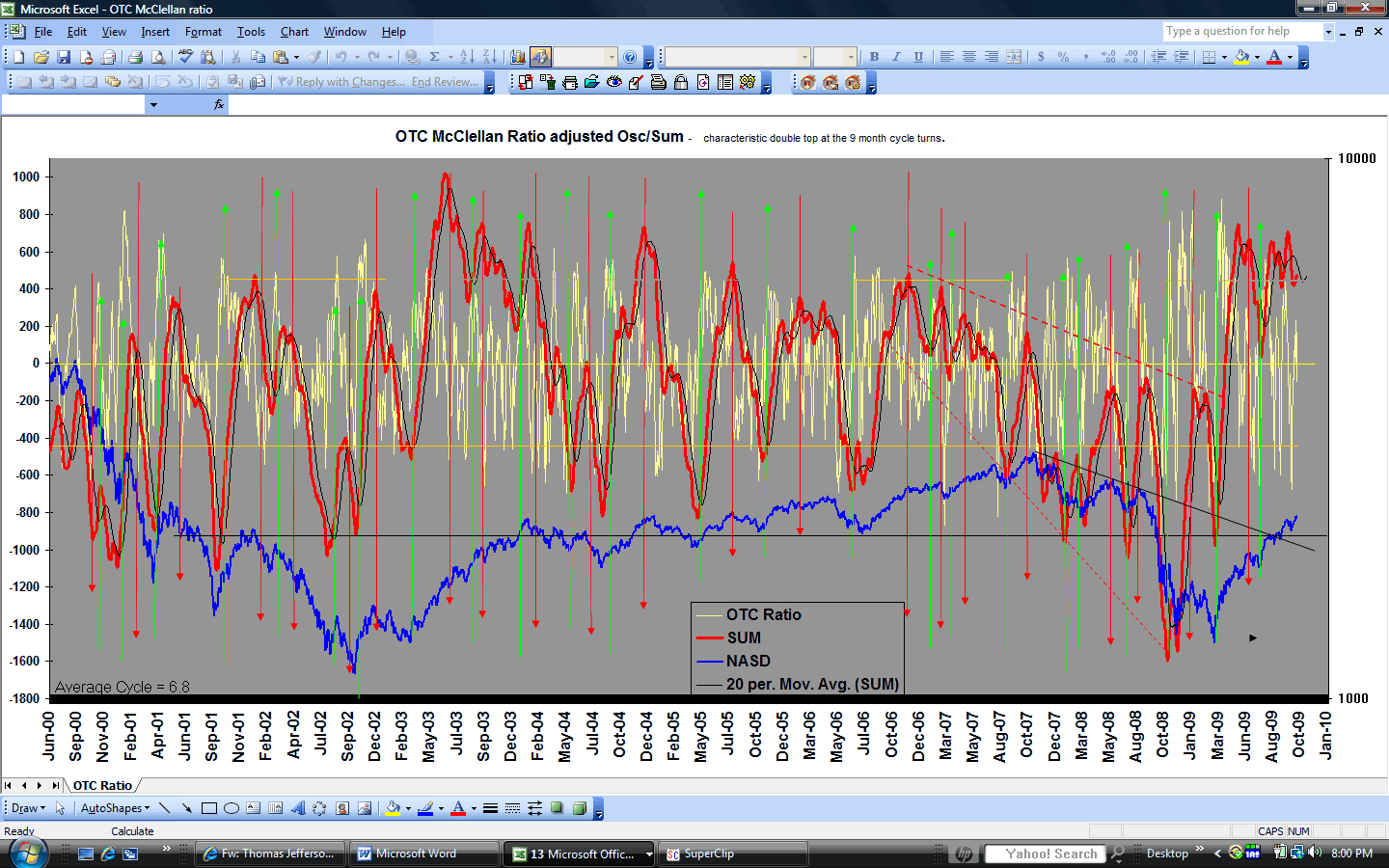
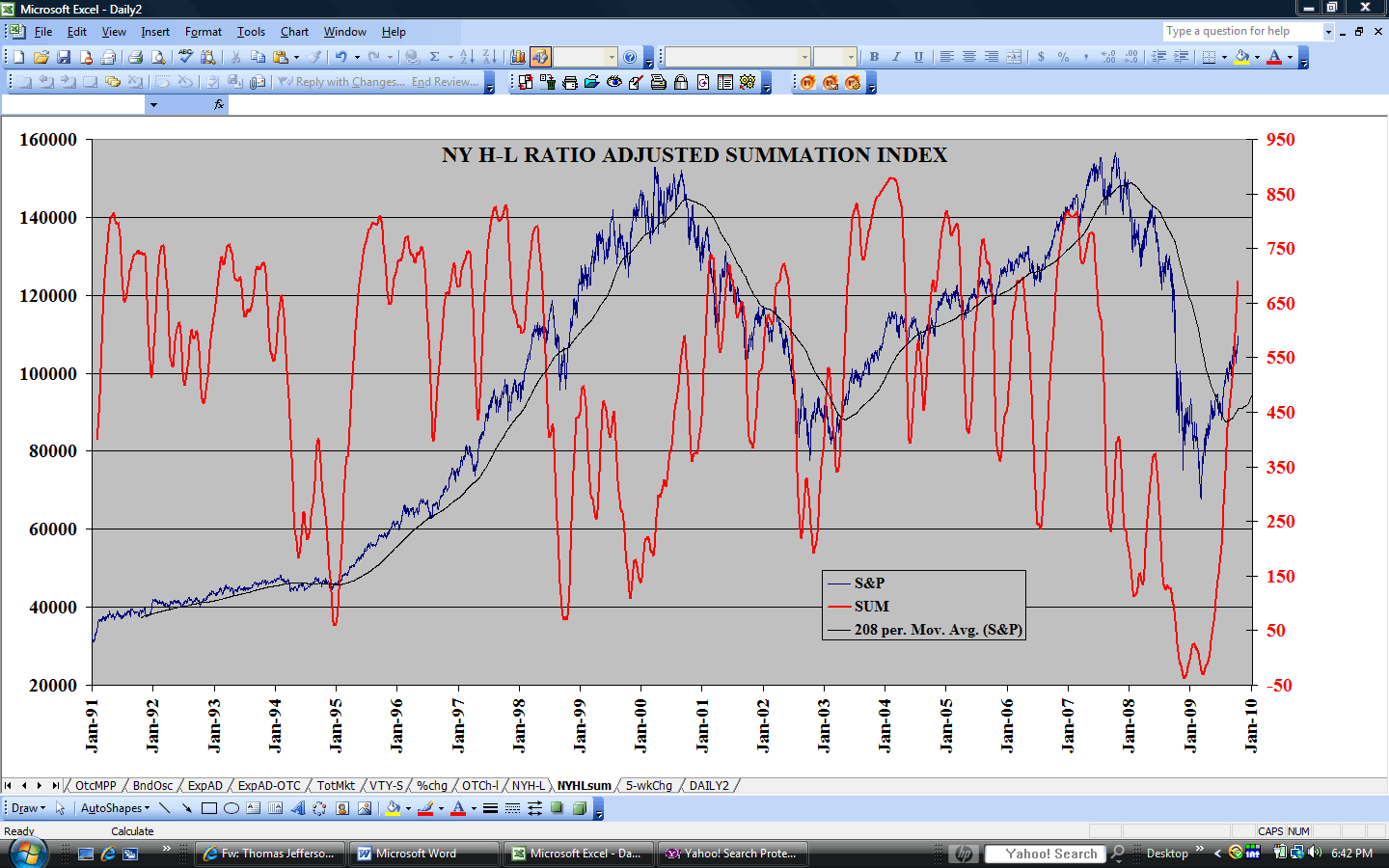
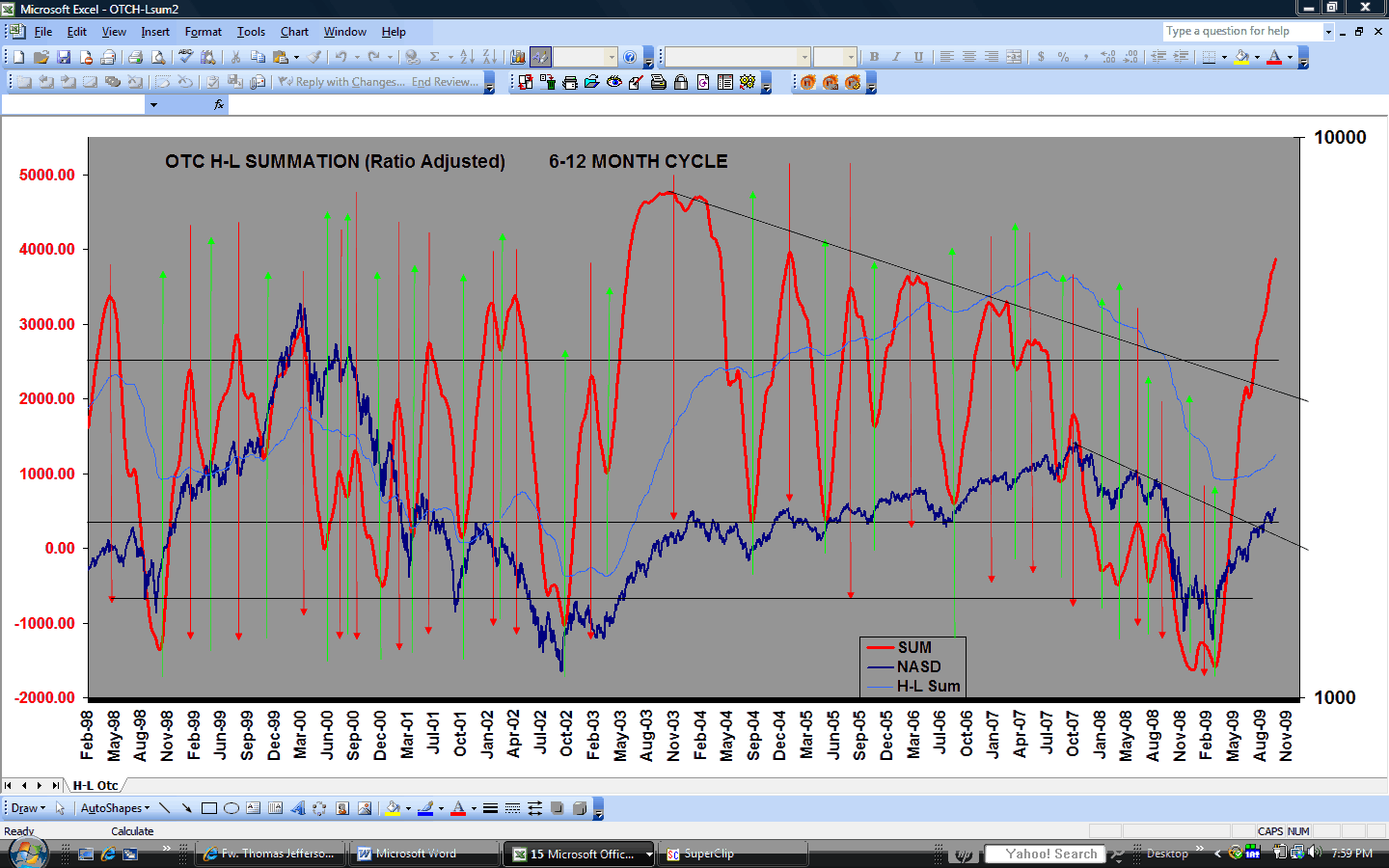
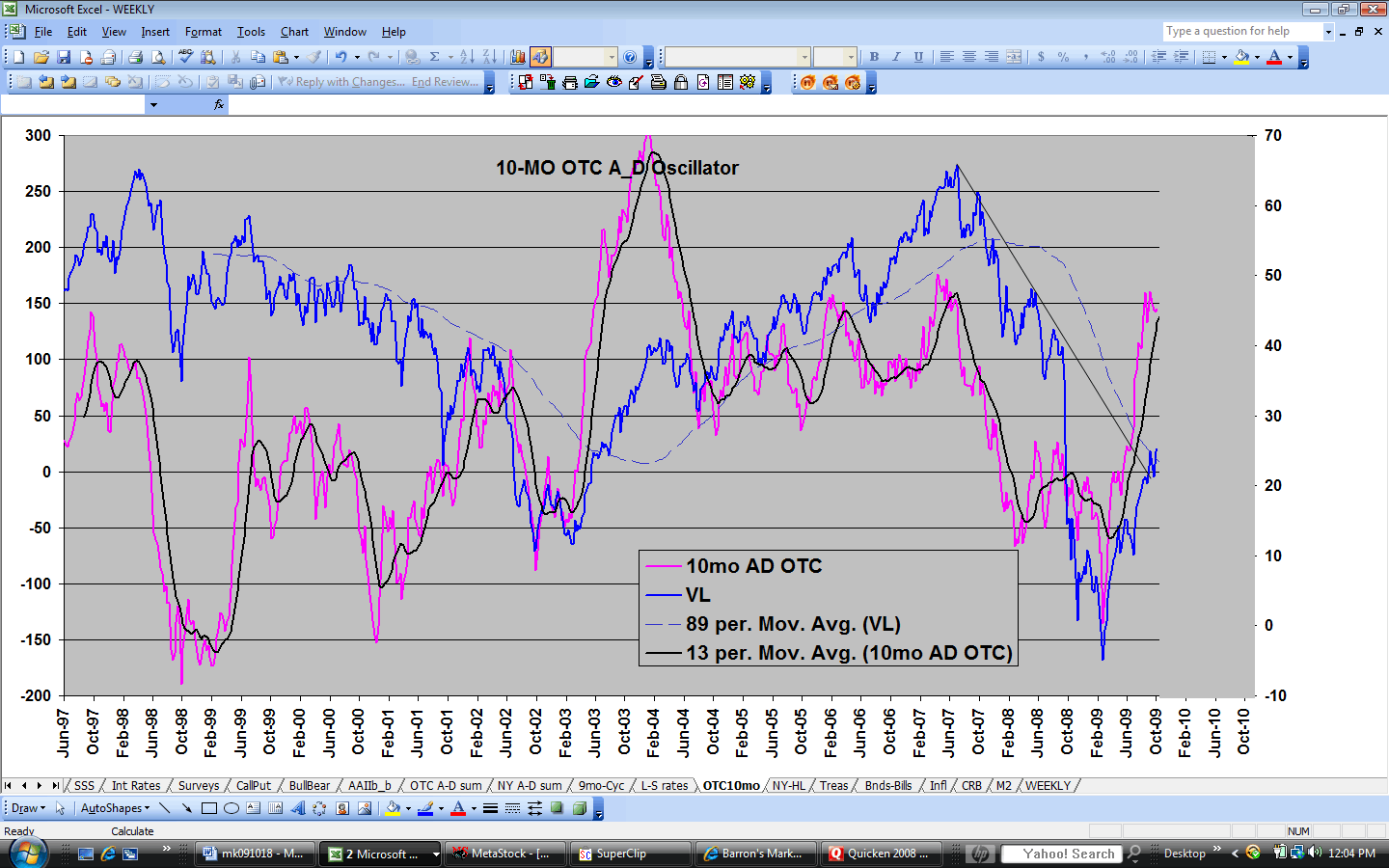
Last week, the weekly A-D summation indexes (http://www.geocities.com/petegersb/WeeklyNYSEbreadth.GIF, http://www.geocities.com/petegersb/WeeklyOTCbreadth.GIF ) joined the chorus of other breadth indicators that have confirmed the conclusion that the 9-month cycle has bottomed - the daily McClellan A-D Summation indexes (http://www.geocities.com/petegersb/A-Dsummation-NYSE.GIF, http://www.geocities.com/petegersb/A-Dsummation-OTC.GIF), and the High-Low Summation Indexes (http://www.geocities.com/petegersb/H-Lsummation-NYSE.GIF , http://www.geocities.com/petegersb/H-Lsummation-OTC.GIF ). However, the 10-month advance-decline oscillators (http://www.geocities.com/petegersb/10-mo_A-D_oscillator.GIF, http://www.geocities.com/petegersb/10-mo_A-D_oscillatorOTC.GIF) continued to maintain their bearish stance.
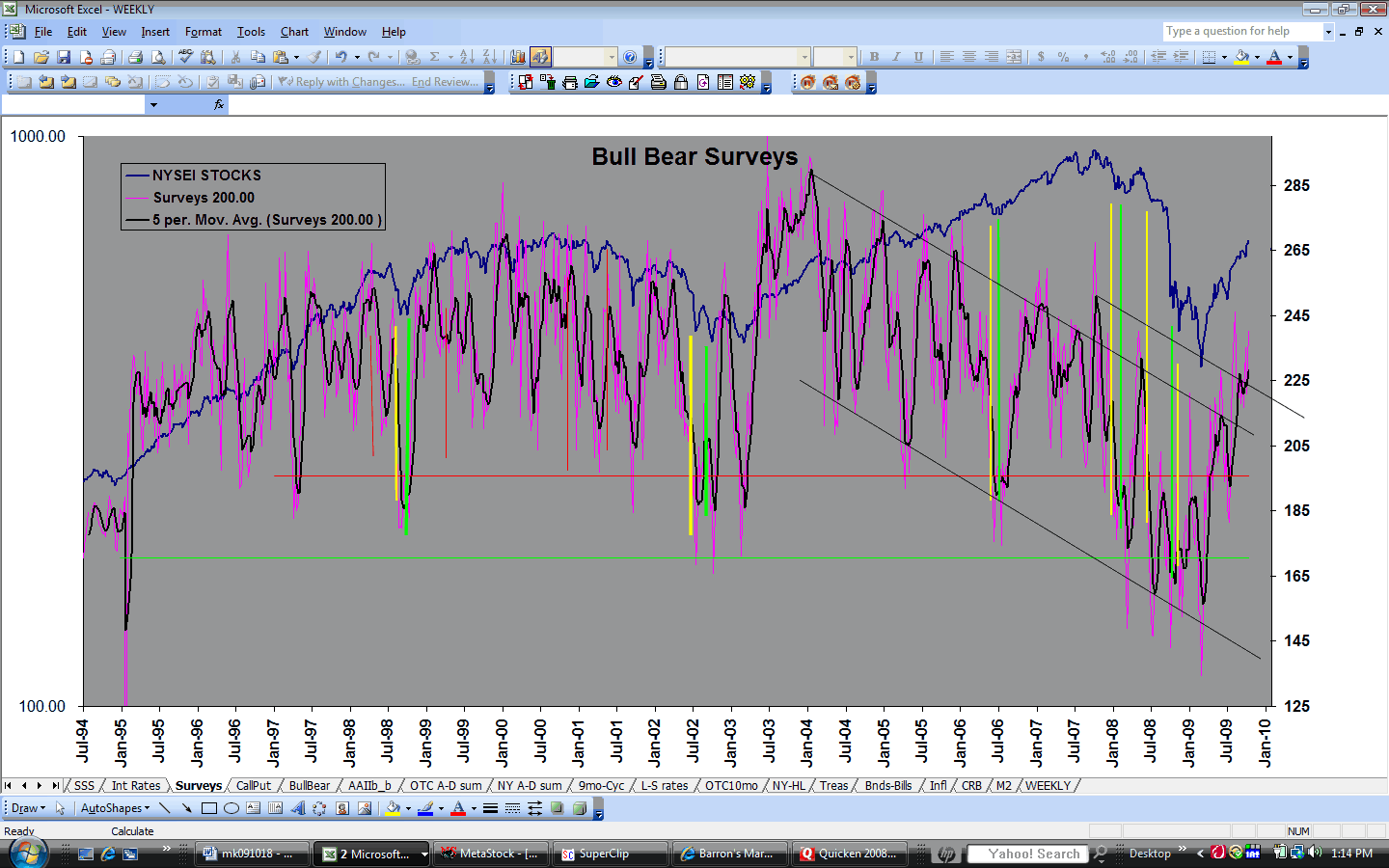
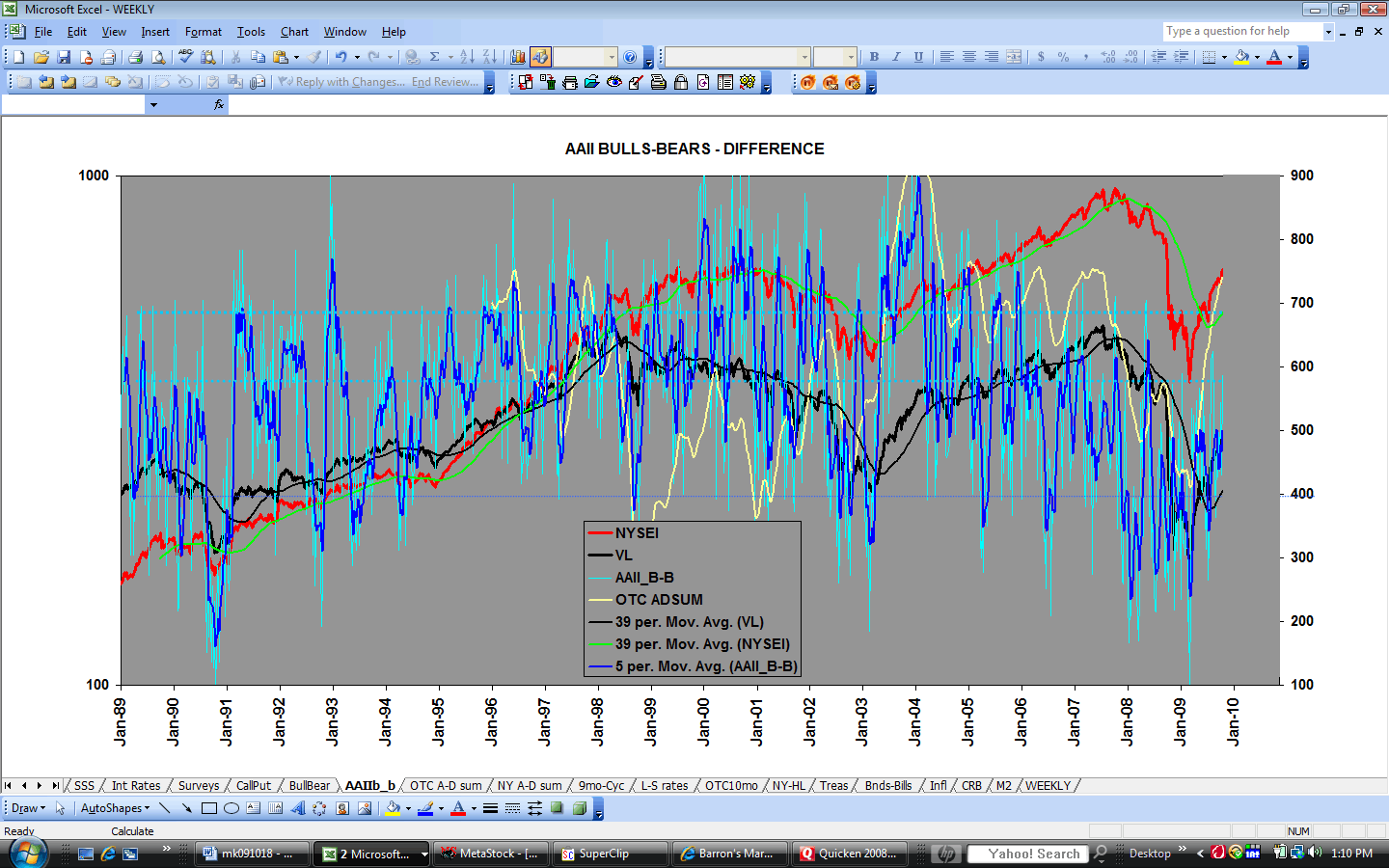
Advisory services (http://www.geocities.com/petegersb/InvestorsIntelligence.GIF) and AAII members (http://www.geocities.com/petegersb/AAIIsentiment.GIF) got in sync last week, and both now are favorable for a rising 9-month cycle.
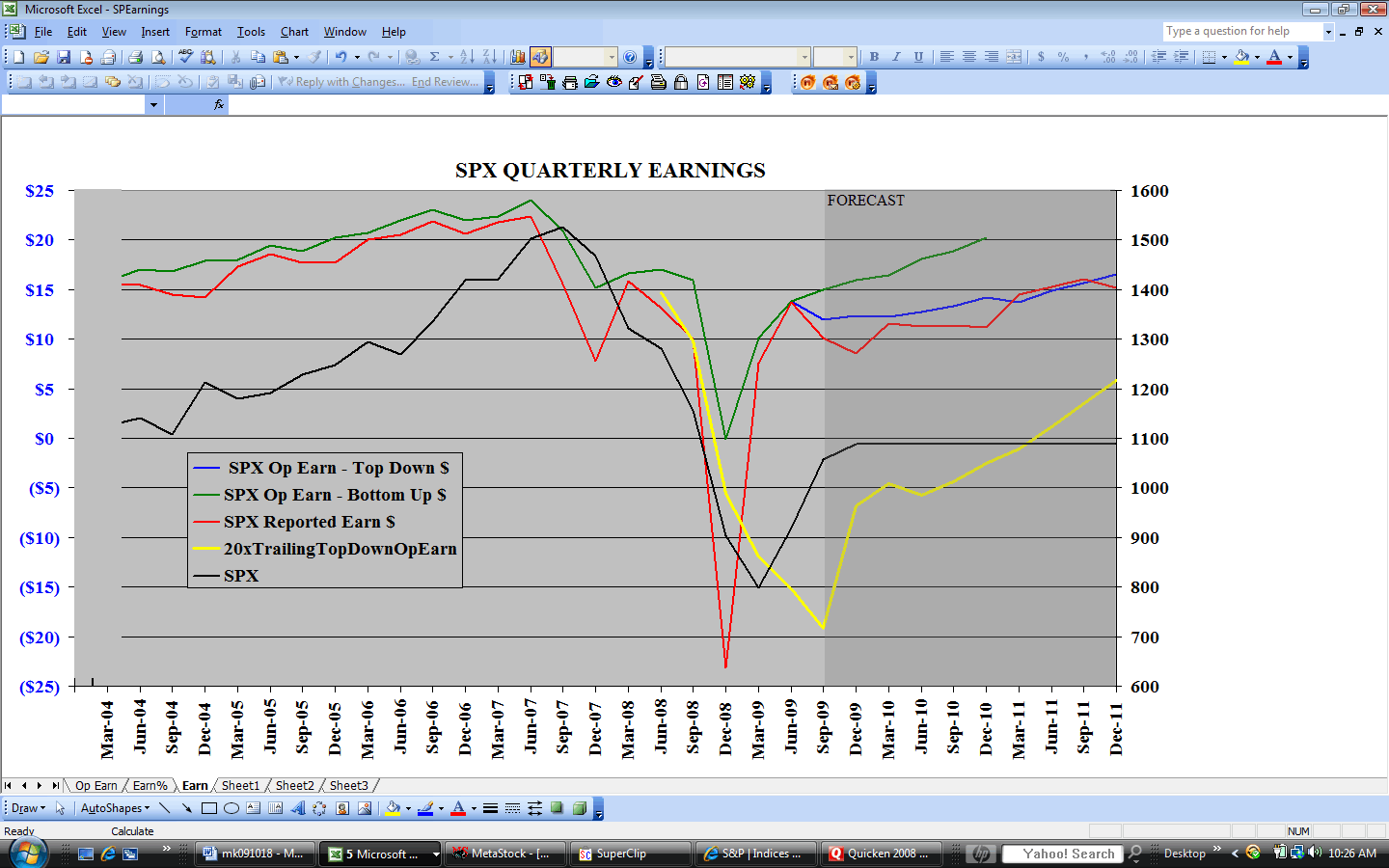
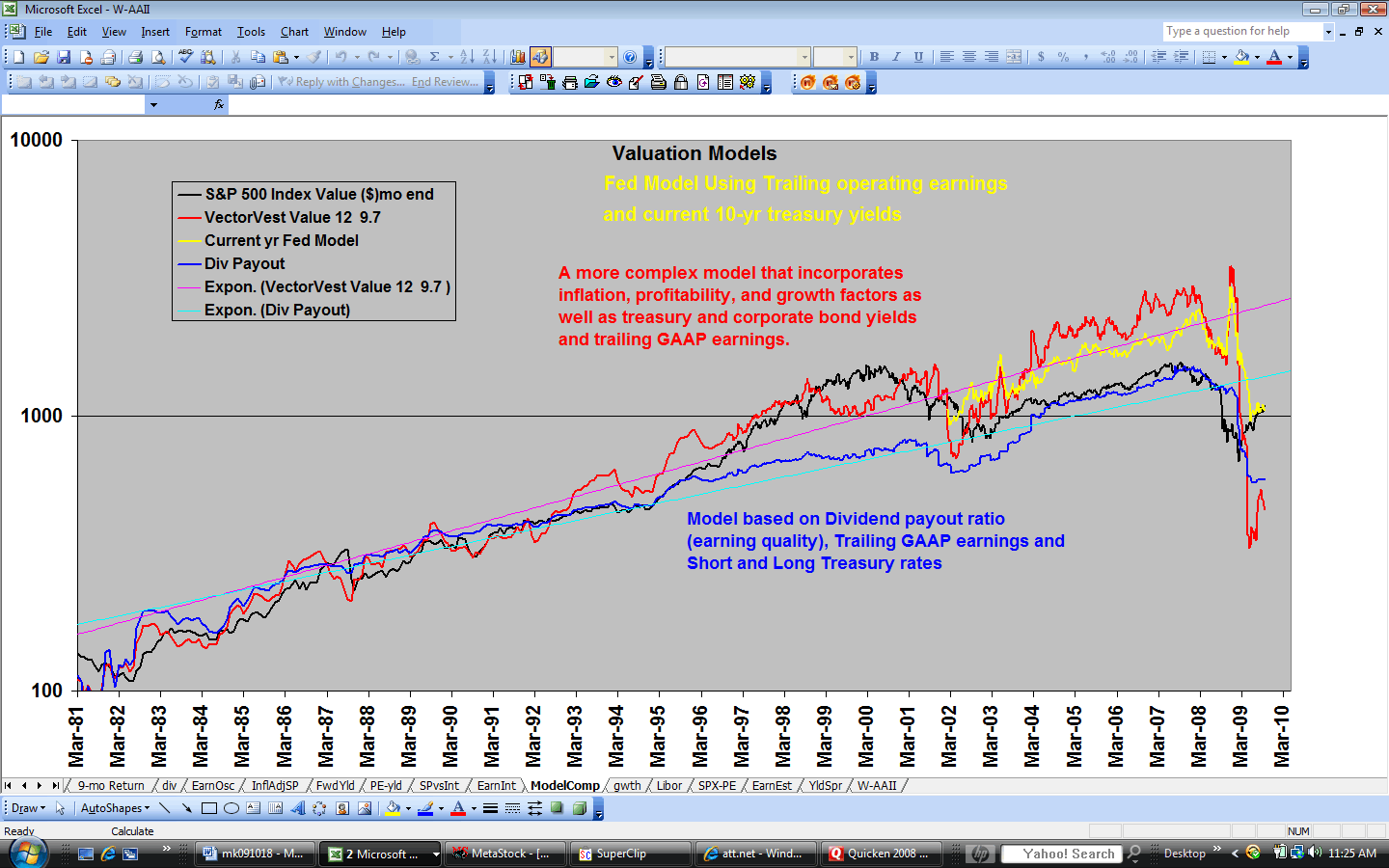
Last week’s rallies were again sparked by better-than-expected earnings from a number of big names. So why did Standard & Poors again lower earnings estimates for the first quarter and beyond (http://www.geocities.com/petegersb/EarnY-Y.GIF)? Probably because it uses the data from all of the S&P 500 stocks, not just the headliners benefiting mightily from the depreciating dollar. Since the end of the first quarter, estimated full year trailing earnings have dropped from $67.81 to $65.31. That’s with the benefit of a somewhat still foggy rear view mirror. During the last two weeks when most of those market inspiring earnings reports have come in, the estimate of year ahead operating earnings has dropped from $101.82 to $98.28. The latter figure would still be a very good result. In the unlikely event that it is actually achieved, it implies a forward P/E of 14.2 on operating earnings – a very reasonable number given the current 3.87% interest rate on the 10-year Treasury Bond (http://www.geocities.com/petegersb/TreasuryYield-10yr.GIF). However, continual downward revisions in earning estimates suggest that that an unchanged stock market would result in a higher P/E a year from now than currently estimated. Furthermore, interest rates are rising and a continuation of that trend would make a 14 P/E look less attractive. Finally, basing valuation on operating earnings, as the Fed model does (http://www.geocities.com/petegersb/ValuationModels.GIF), implies that the write-offs that depress reported earnings and stockholders equity are inconsequential – a concept I have difficulty accepting. The current rally in financial stocks (http://www.geocities.com/petegersb/Financials.GIF) and Home Builders (http://www.geocities.com/petegersb/Homebuilders.GIF) suggests the market is embracing that concept or concluding that those write-offs are behind us, but if you scroll to the end of John Mauldin’s latest epistle (http://www.2000wave.com/index.asp) you may come to believe that it’s only a temporary phenomenon. He makes a case that more huge write-offs are ahead for financials and homebuilders. The latter are digging their hole deeper as they continue building at twice the rate of sales. Rising long-term rates will help the Financials if the Fed keeps short-term rates low, but that would further depress home affordability. I have more anecdotal evidence of the depth of housing problems. On weekends when the gym is closed, I walk around the neighborhood for exercise, taking note of the for sale signs appearing and disappearing with no evidence of a sale, or turning into “For Rent” signs. Today I saw a new sign by an obviously desperate seller – a real estate agent who is selling his own home. He started at $1,850,000. In early April he dropped the asking price $300,000 and posted a sign that the price would be reduced an additional $50,000 per week until the property is sold. To date, the asking price has been lowered by 25%. This is a realtor who either is no longer earning enough to make his house payments or sees the handwriting on the wall for further price drops ahead.
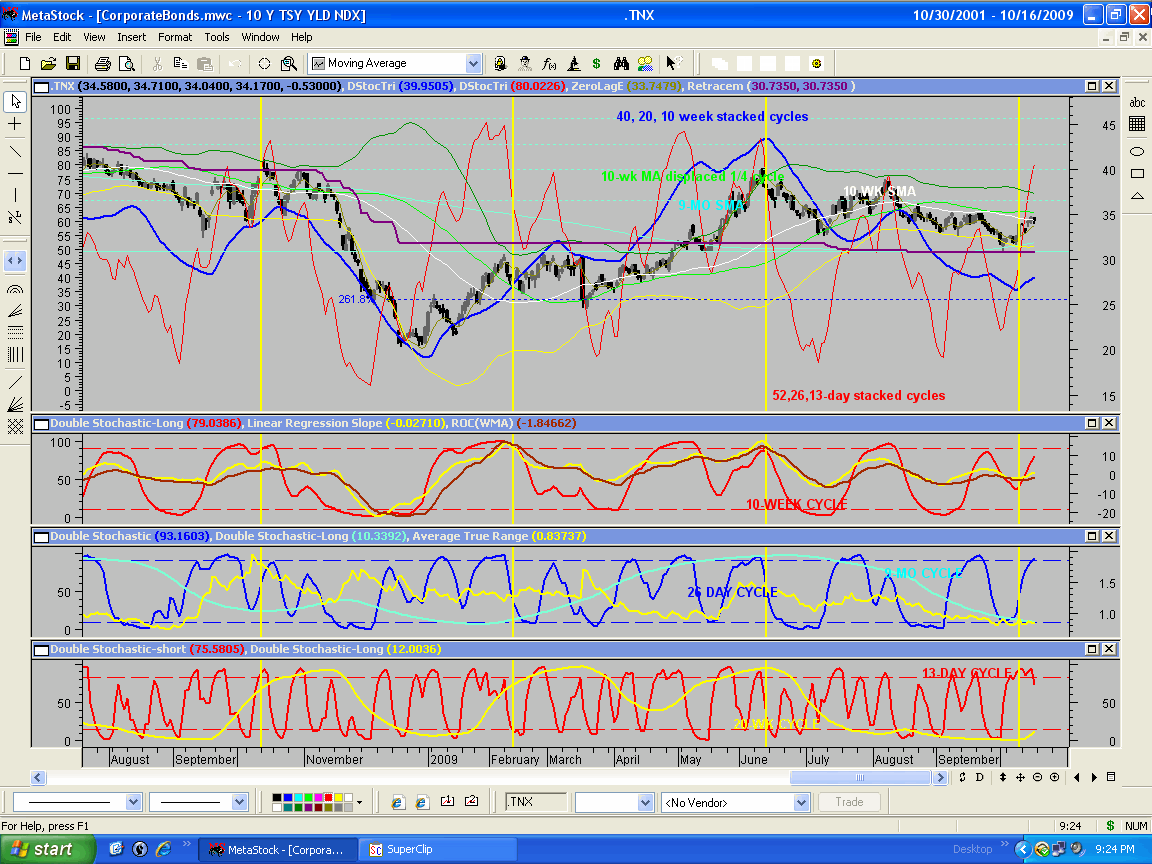
So where are interest rates going from here? The recent pullback in some commodities, the minor rally in the dollar, and the superior performance of corporate bonds relative to treasuries all suggest better economic performance ahead. I don’t think those reversals will be sustained for very long, but they did produce short-term trends that are usually accompanied by rising interest rates. Short-term rates, as measured by the LIBOR (to which many variable mortgages are pegged), and long-term rates have been rising steeply since stocks bottomed in March. The 3-month LIBOR rate has risen by 30 basis points, the 6-month by 54 basis points and the 1-year by 85 basis points – not good for variable mortgage rates. The 10-year Treasury yield (http://www.geocities.com/petegersb/TreasuryYield-10yr.GIF) has climbed by 54 basis points – also not good for home affordability because fixed mortgage rates are correlated to it. In the same time span, 30-yr fixed mortgage rates have climbed 42 basis points.
Rising rates are anything but stimulative, so investors are clearly betting on the tax refunds to turn the economy around. Of course, the stimulative impact will be somewhat reduced by the additional $150 billion of Treasury borrowing that will drive interest rates still higher. The rebate stimulus will be very temporary, but the added debt will be essentially permanent – ultimately to be made less burdensome to our children by rising inflation. This is just more deficit spending that will largely end up in the hands of those who lend us the money – the oil exporters as we continue to fill up our inefficient vehicles with nearly $4 gasoline, and the Chinese who manufacture most of the toys we don’t need but keep buying.
Speaking of debt, the non-partisan Tax Policy Center has analyzed the candidates’ economic plans and concluded that McCain’s tax and budget plans would add at least $5.7 trillion to the national debt over the next decade. The Obama and Clinton plans would add less than a third of the McCain plan. To put the numbers in perspective, during the first 7 Bush years the debt has risen by $3.5 trillion to $9.1 trillion, with at least another half a trillion destined to be added before he leaves office. So in absolute terms McCain appears even worse than Bush on deficit spending, but in percentage terms, he can argue that it’s just more of the same.
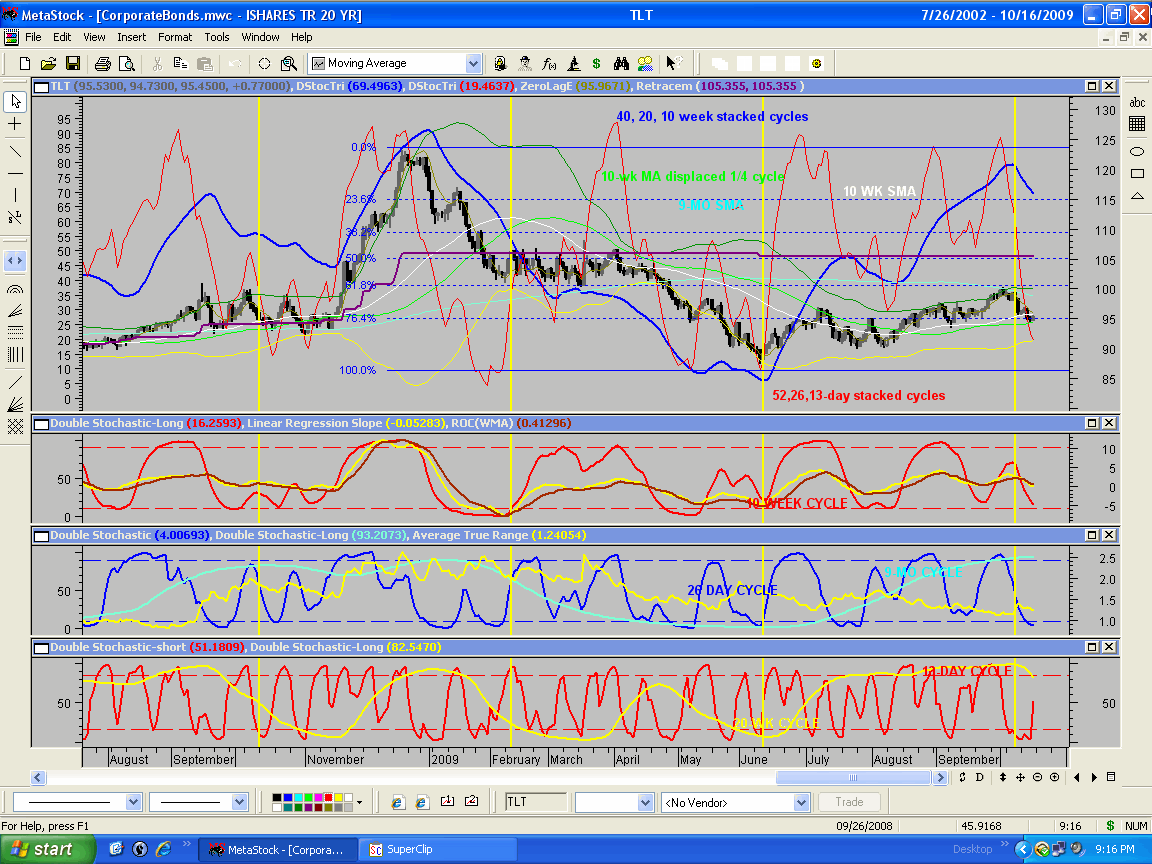
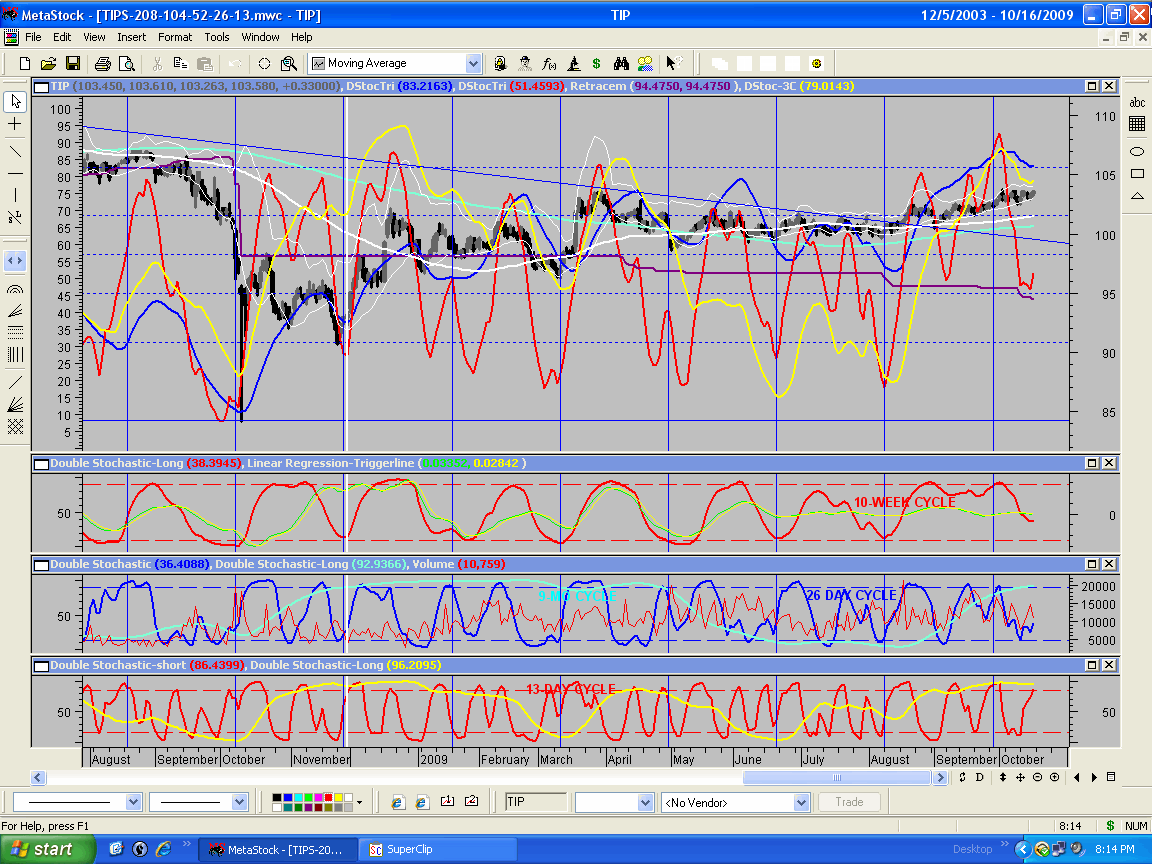
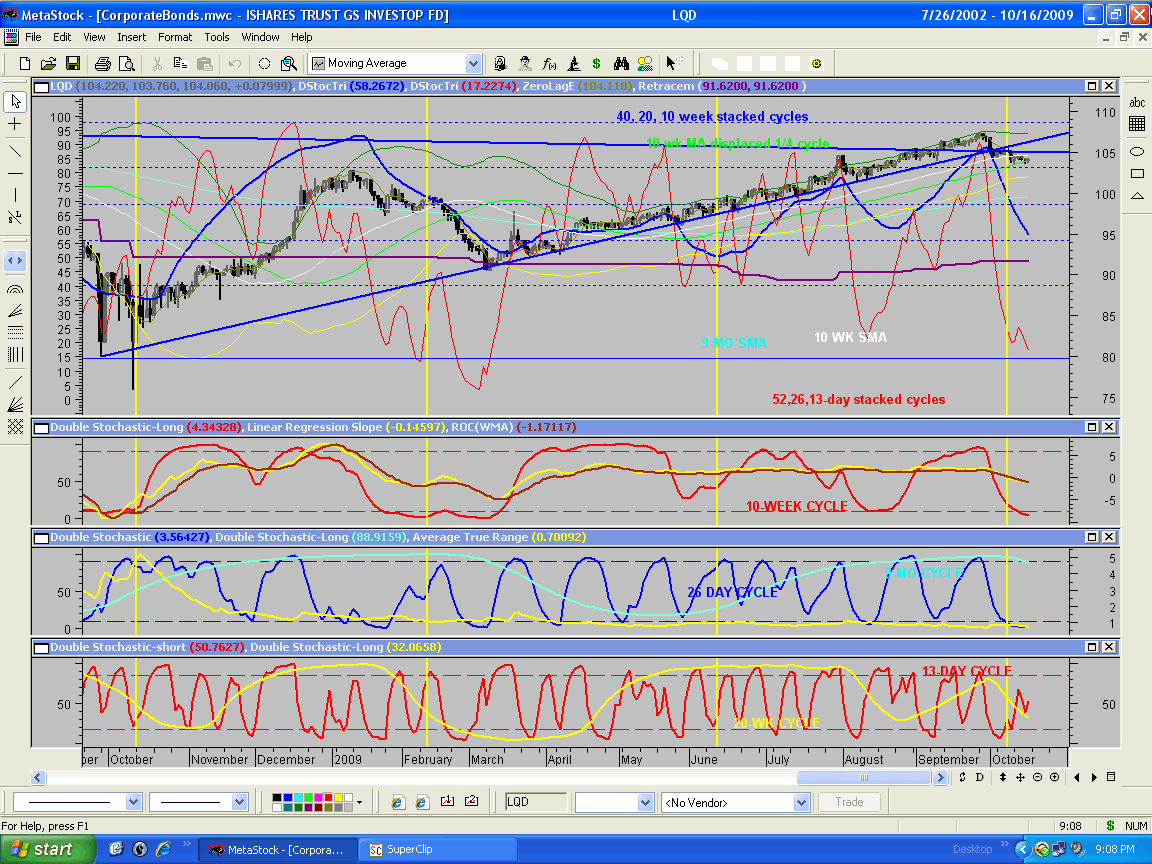
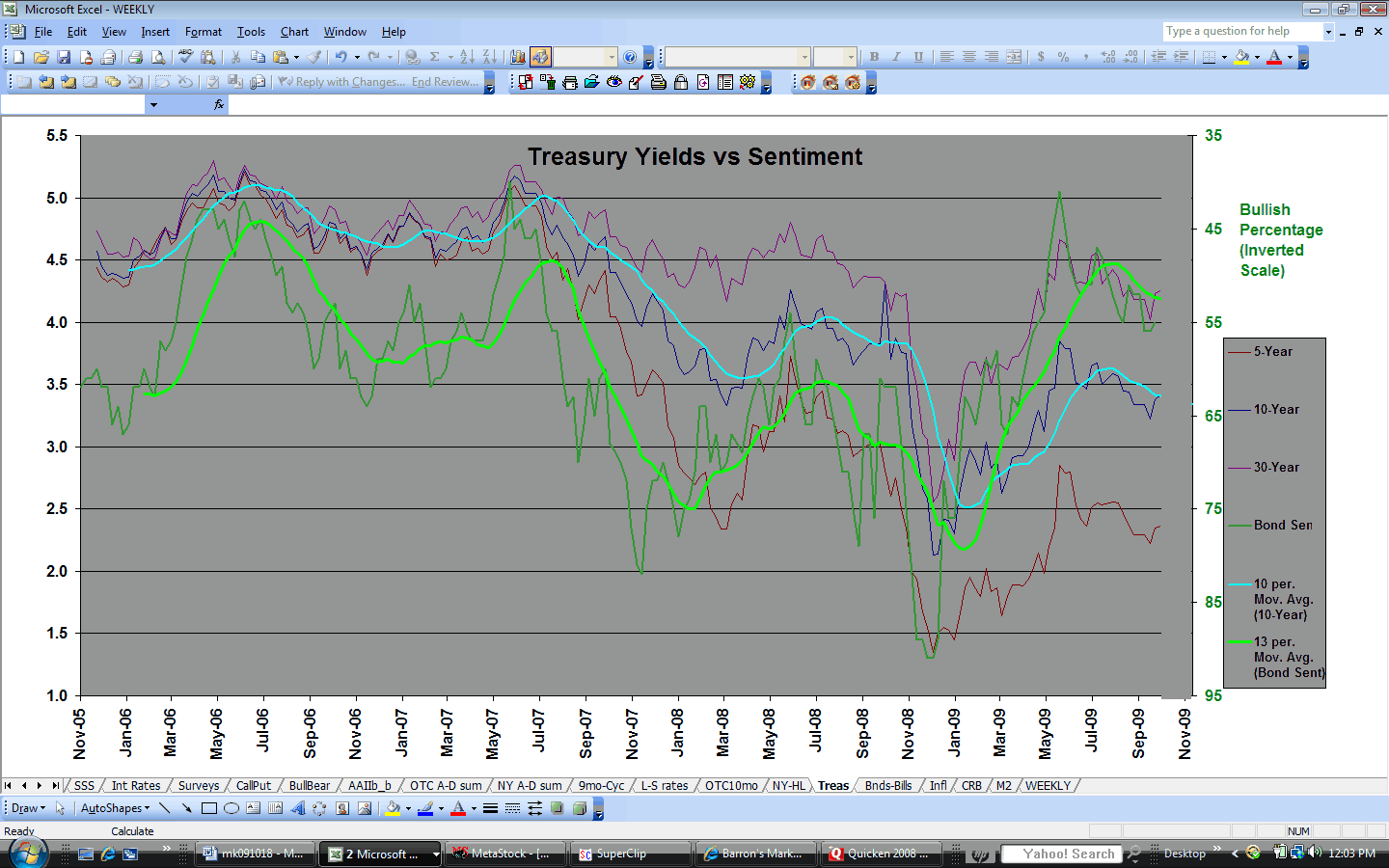
In the intermediate term, the interest rate picture doesn’t look so bleak. Conventional T-bonds (http://www.geocities.com/petegersb/Treasury-20yr.GIF) have pulled back to their 9-mo moving average, but the cycles suggest a little more downside before the 9-week-old 10-wk cycle reaches bottom. That should also be a bottom for the 10-month-old 9-month cycle. If these long-term treasuries do rally, it would portend more economic weakness. TIPS (http://www.geocities.com/petegersb/TIPs.GIF) remain comfortably above their 9-month moving average. They are struggling to hold support at the 38% retracement of the nearly 11-month rally, but they are oversold on both a short and intermediate basis. They should reach a 10-week cycle low this week. Corporate bonds (http://www.geocities.com/petegersb/CorporateBonds.GIF) did not decline with Treasuries last week. Instead they held just below the 9-month moving average. Unlike treasuries, they appear to be nowhere near a 10-week cycle low, so their brief period of superior performance is likely near an end. Bond sentiment (http://www.geocities.com/petegersb/BondSentiment.GIF) became significantly less optimistic in the latest report. It suggests that the 10-week cycle rally won’t amount to much, and that it will be followed by a continuation of the bond decline.
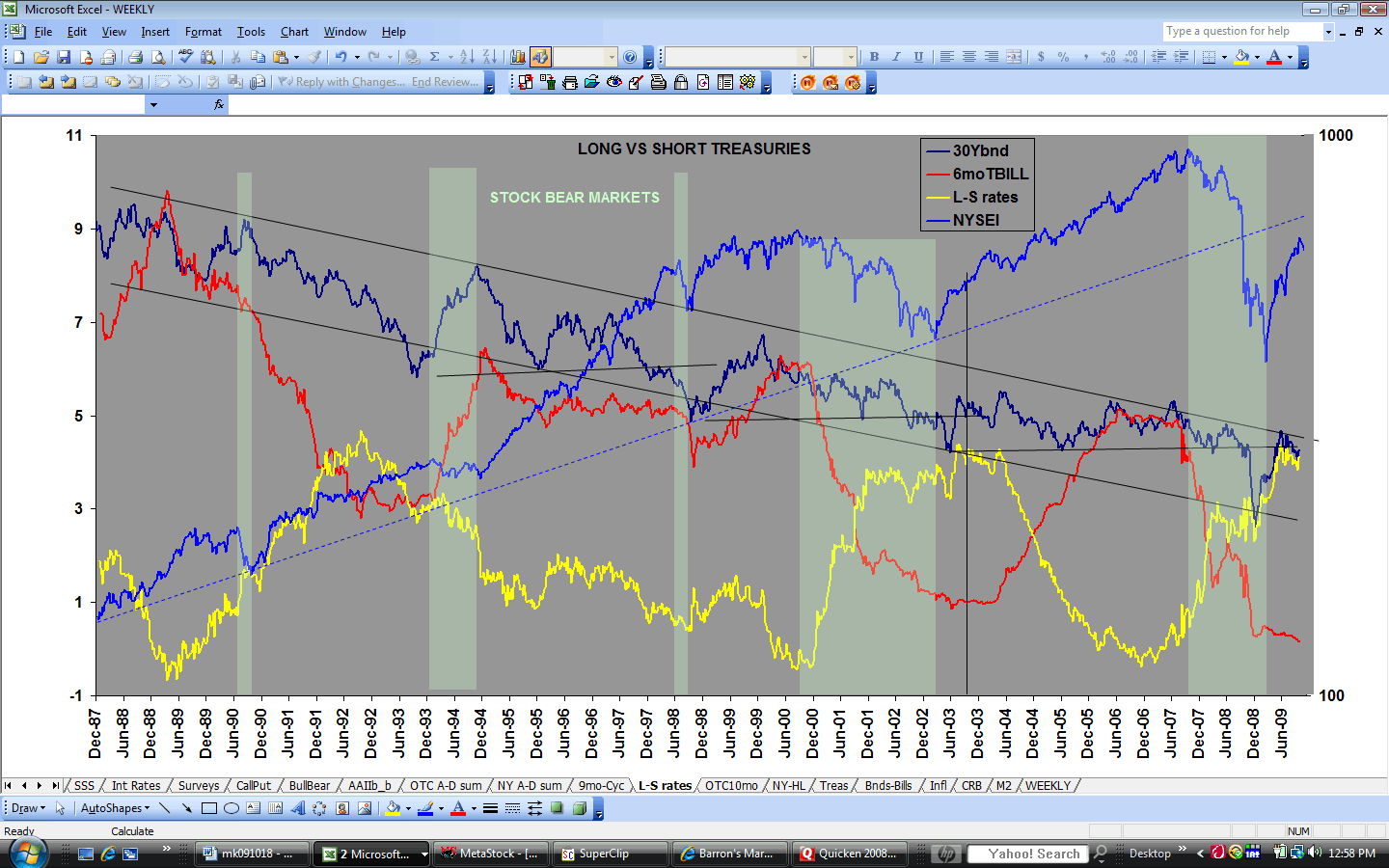
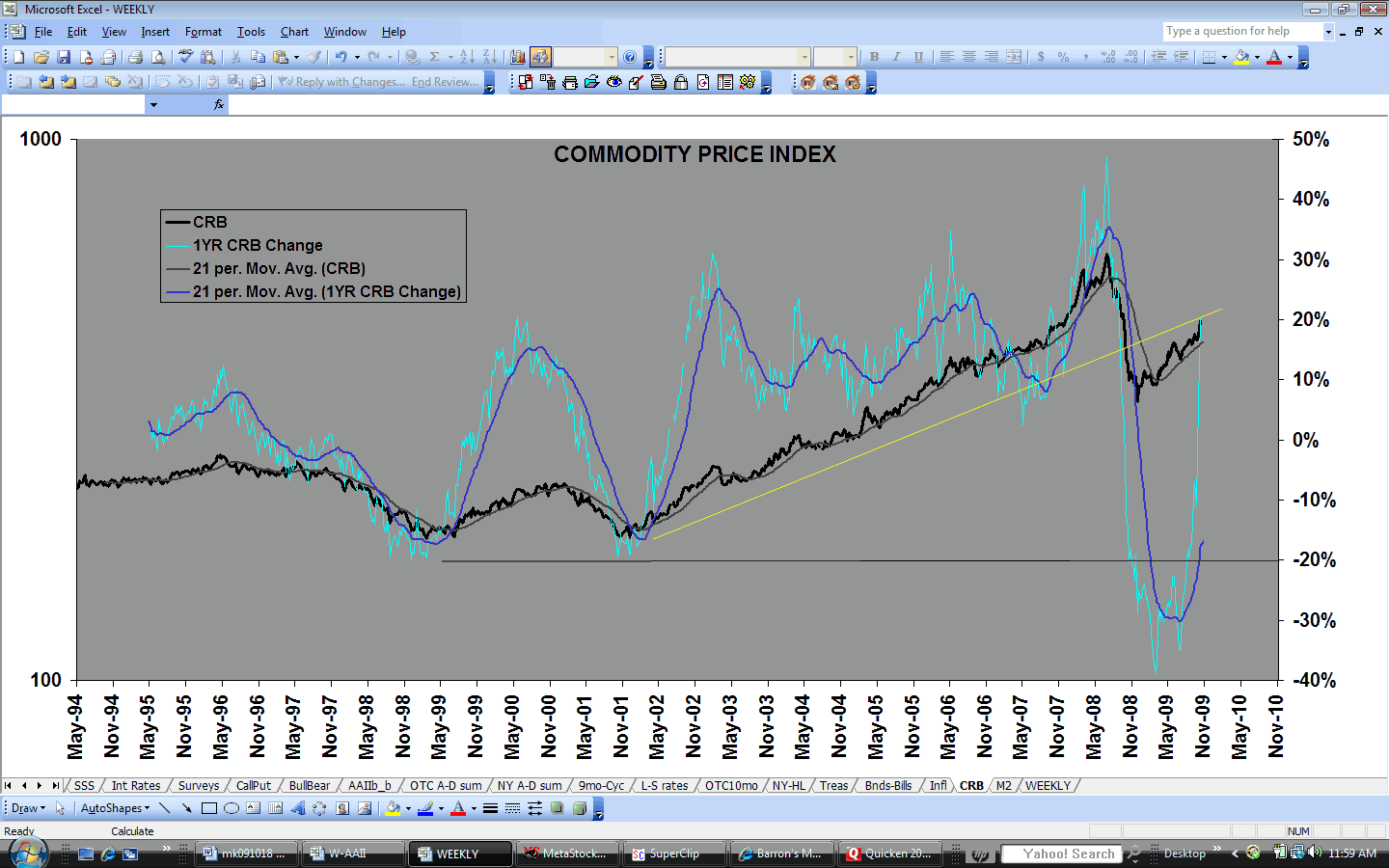
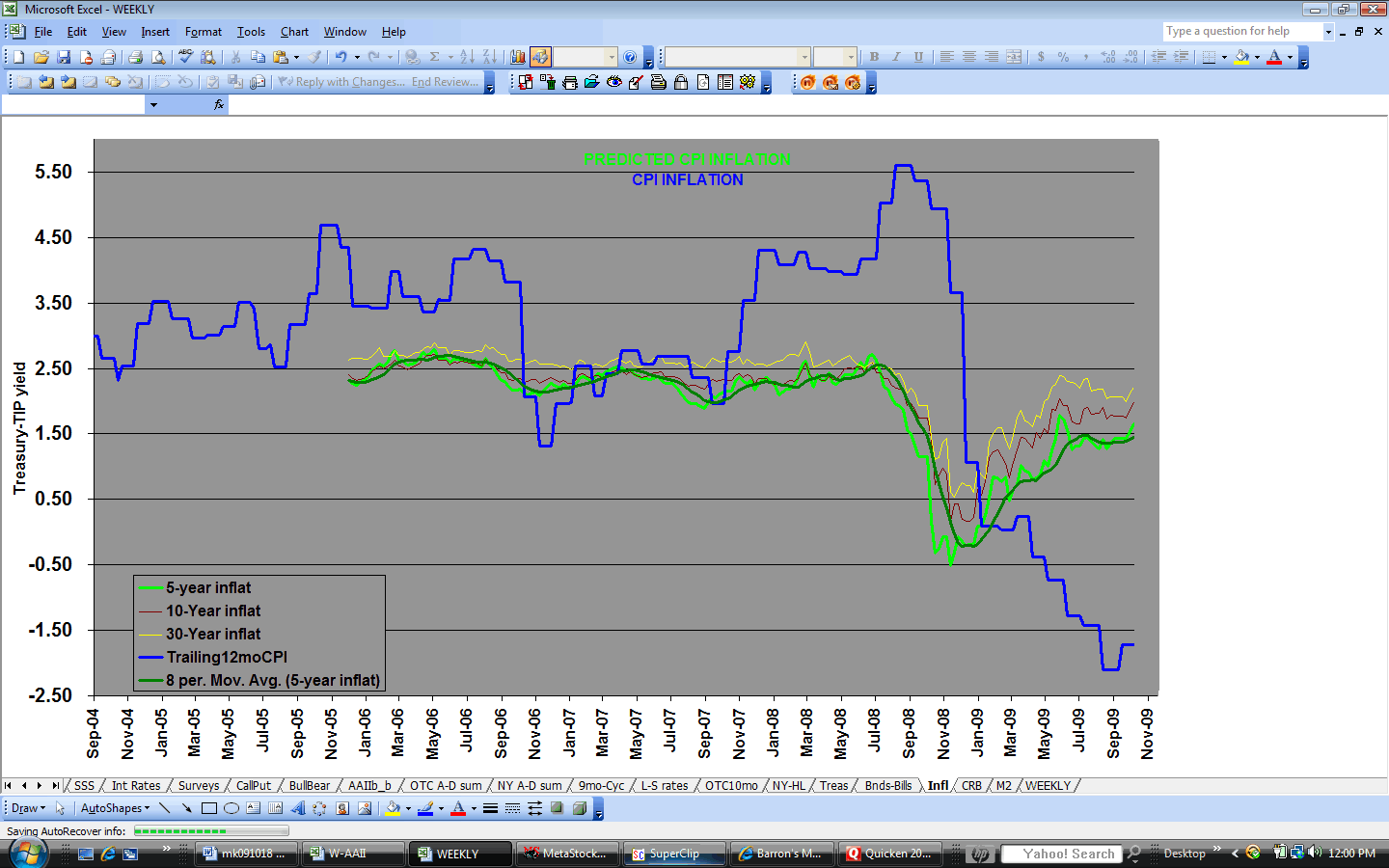
The rise of the yield curve (http://www.geocities.com/petegersb/Long-ShortYields.GIF) stalled last week as short rates rose more than long rates. Obviously the bond market has some significant doubts about the Fed cutting further this week, but the drop in the CRB index (http://www.geocities.com/petegersb/CRB.GIF) and the drop in inflation expectations (http://www.geocities.com/petegersb/CPI.GIF) suggest further economic weakness and a reduced inflation threat, so they provide some rationale for further cuts. Another quarter point seems to be the consensus expectation. Either way, the cycles suggest that stocks will respond negatively and bonds positively.
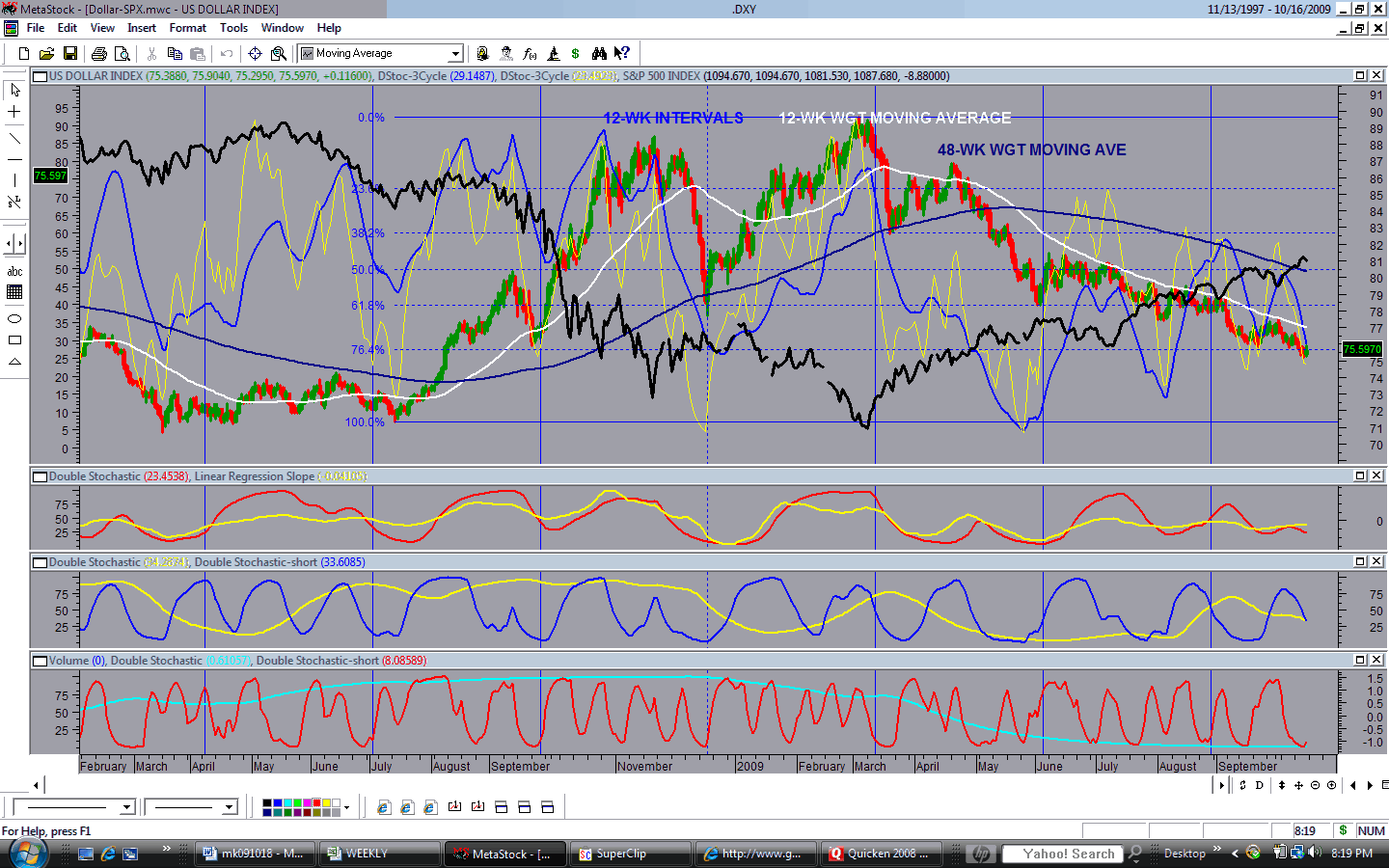
The dollar (http://www.geocities.com/petegersb/Dollar.GIF) moved back to the top of its very tight range last week, and Barron’s declared on its front page that “The dollar’s dark days are over”. It reached its downtrending 10-week moving average, and it appears to have some remaining upside potential. If it gets through this level, there doesn’t seem to be much resistance below the very formidable resistance at 75. Despite Barron’s optimistic declaration, I doubt if it will get that high even if the Fed stops cutting rates. But even if it does, it wouldn’t cause any technical damage to the downtrend.
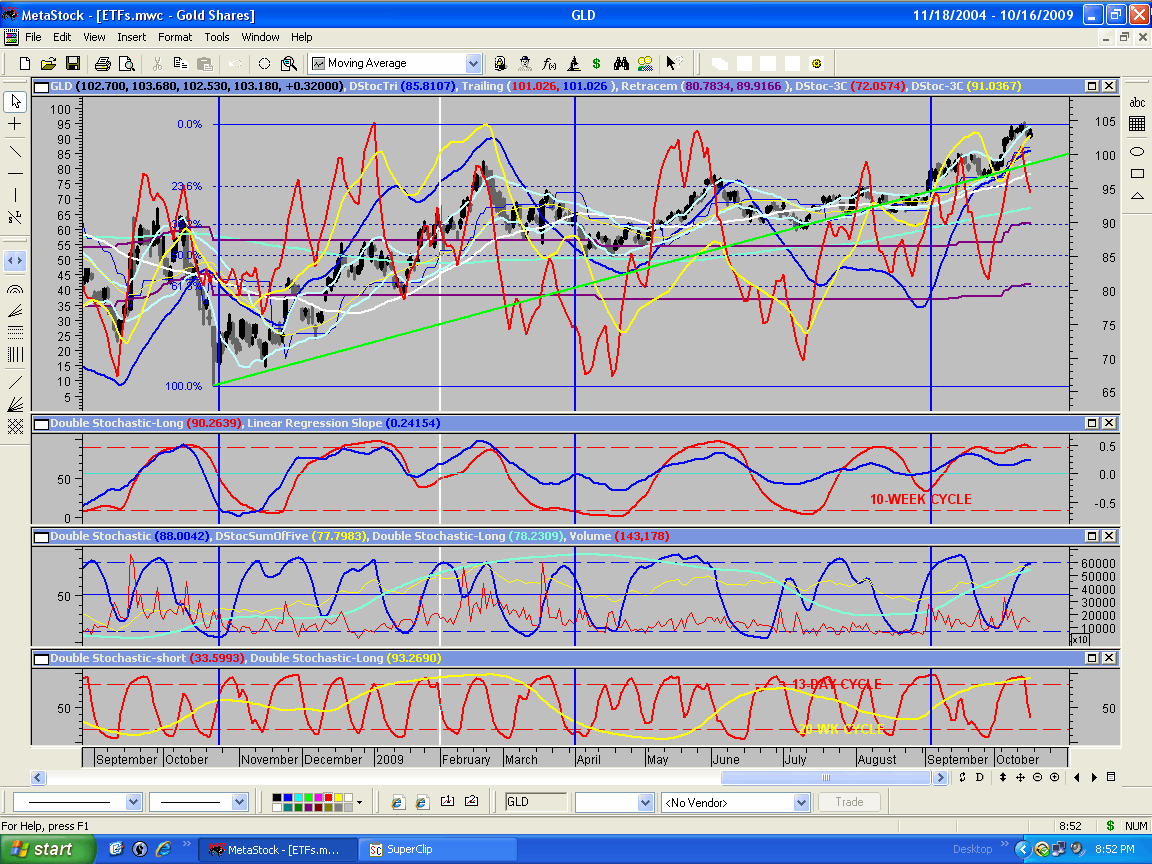
Gold (http://www.geocities.com/petegersb/GoldBullion.GIF) has almost pulled back to its April 1 correction low at
the 38% retracement of its 9-month cycle rally. It’s short-term composite is
oversold as are its 13-day, 10-wk and 20-wk cycles. The 9-month cycle is a
little older than 8-months, the 20-wk cycle is 19 weeks old, and the 10-wk
cycle is 11 weeks old. If gold holds the April low it’s a buy. Even if it dips
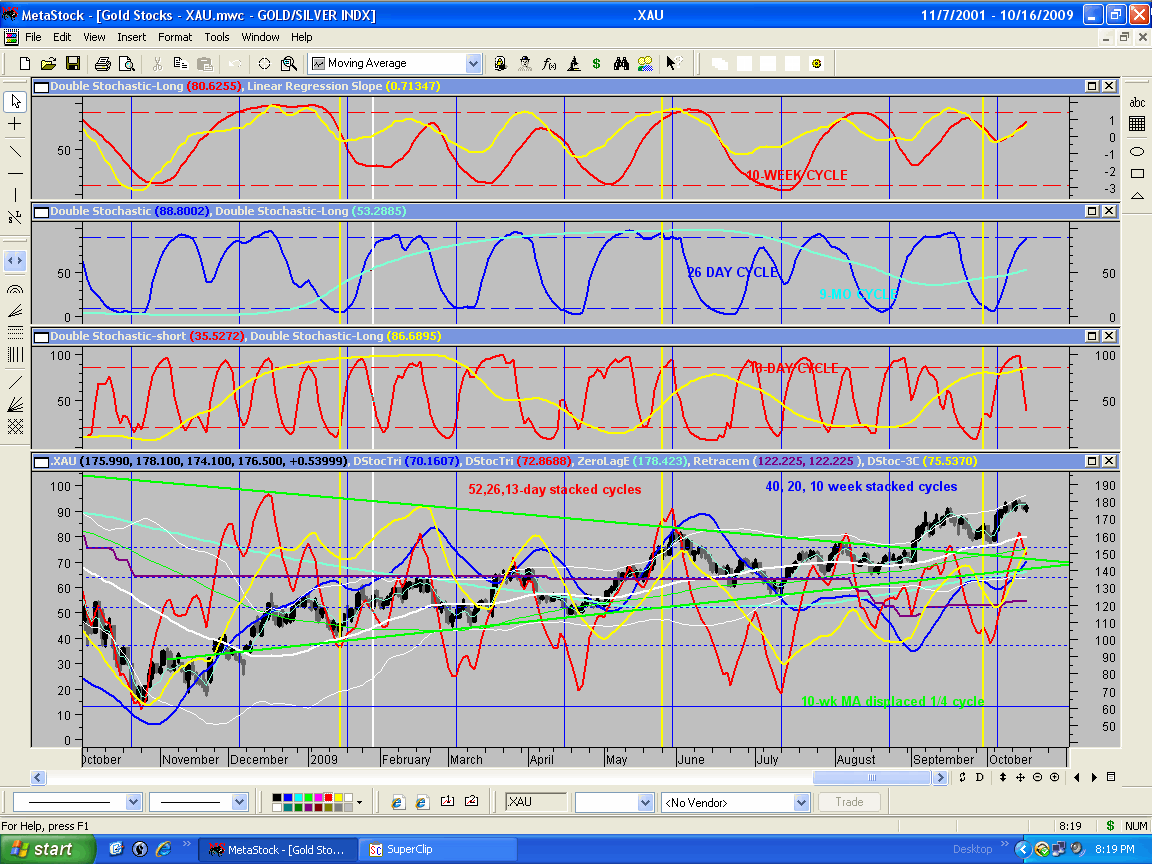
to the 50% retracement at the November high, it’s a buy. Gold stocks as represented by the XAU
(http://www.geocities.com/petegersb/GoldStocks.GIF) pulled back to the 9-month month moving average and held
on both Thursday and Friday. Both short and intermediate composites are
oversold, as are all of the cycles except the 26-day. Although gold stocks have
under-performed the metal for an extended period of time, they look ripe for a
buy if they can bounce off of this level.
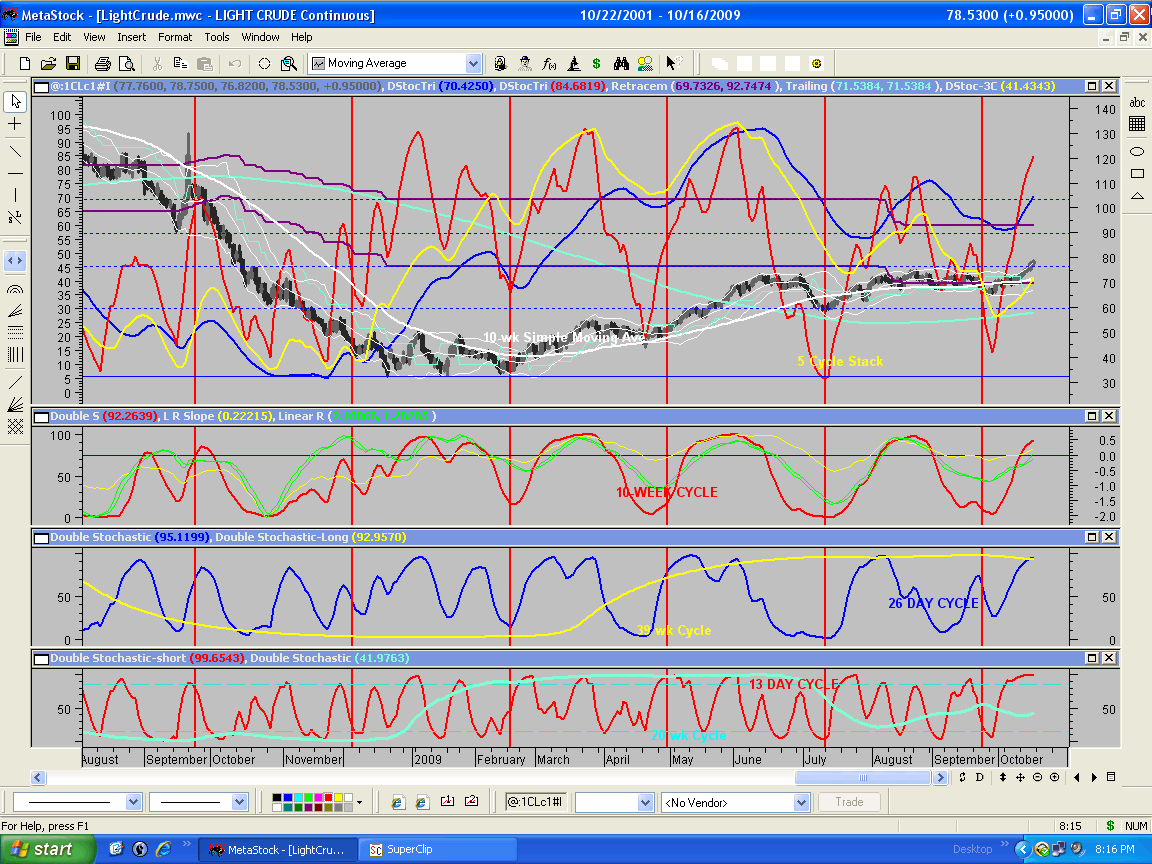
Crude oil (http://www.geocities.com/petegersb/CrudeOil.GIF) established a short-term peak just under $120 before pulling back a little. It looks like the first 26-day cycle peak inside the 4-week old 10-week cycle. Look for a mild correction this week to be followed by more new highs in a continuing intermediate uptrend.
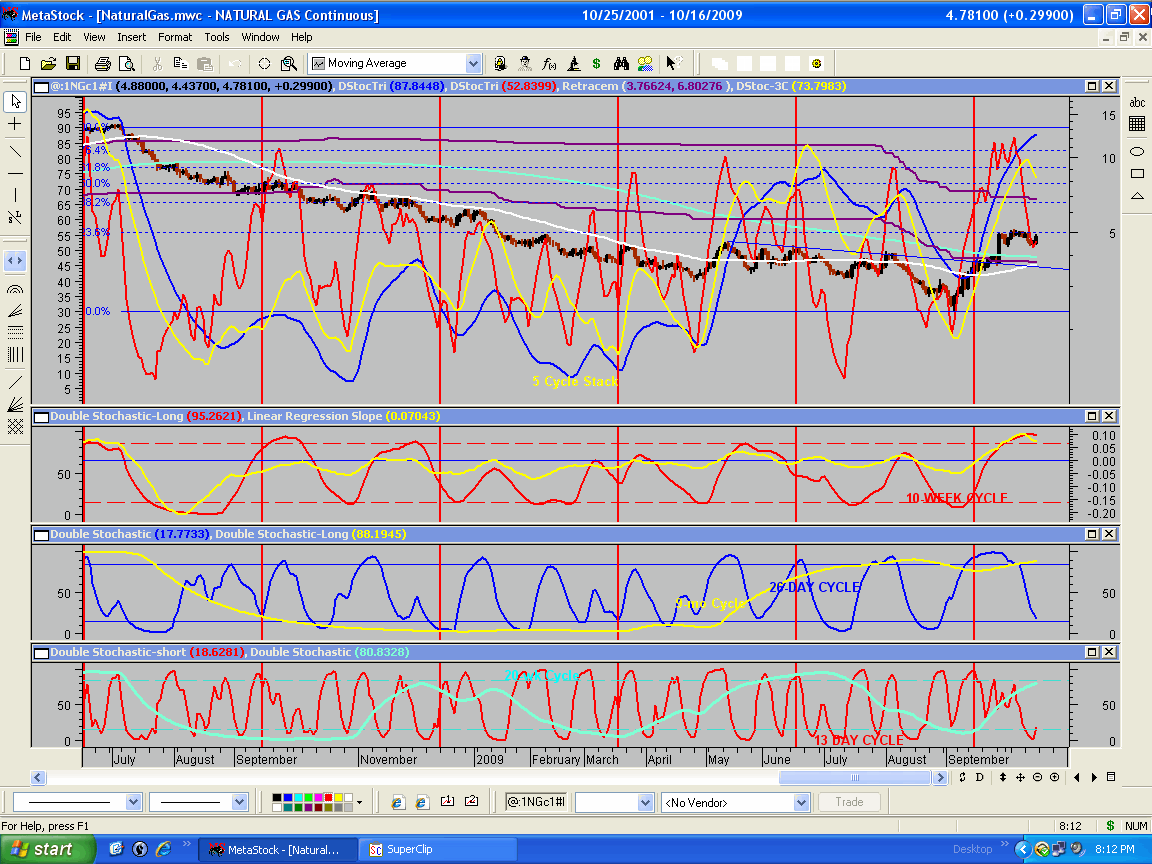
Natural
gas (http://www.geocities.com/petegersb/NaturalGas.GIF) is on the verge of cracking $11. It has now risen 111%
since its 9-month cycle low last August. While that should make it overdue for
a significant correction, the rising short and intermediate trends show no sign
yet of faltering.
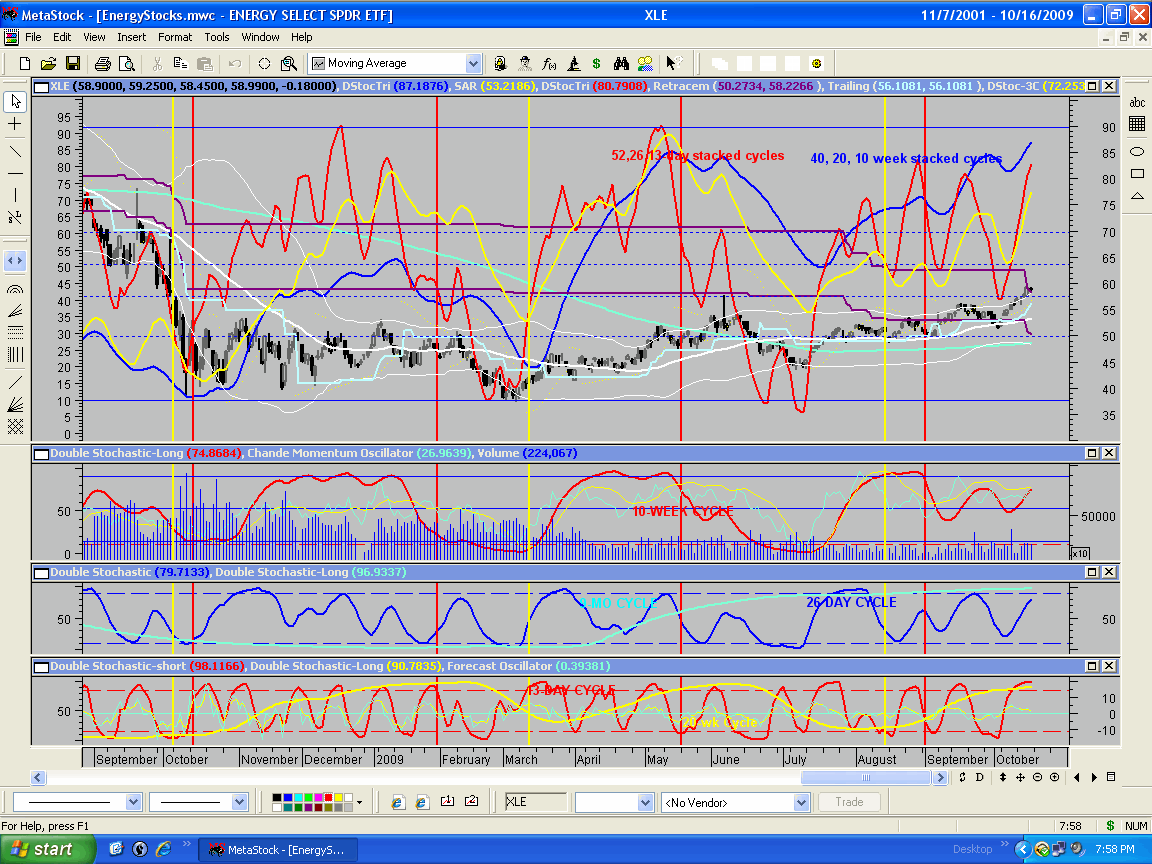
Not
surprisingly, Energy stocks (http://www.geocities.com/petegersb/EnergySPDR.GIF)
also moved to a new high last week before
establishing a short-term peak. Unlike oil and gas, however, the XLE declined
for the week and was actually one of the weaker sectors (http://stockcharts.com/charts/performance/SPSectors.html). It appears to
have been the first 26-day cycle peak in the 5-week-old 10-week cycle. With the
9-month cycle only 3 months old, and good reason to expect a right translated
peak, we can expect still higher prices to come.
Housing: The homebuilder ETF (http://www.geocities.com/petegersb/Homebuilders.GIF) has been walking down the 9-month moving average since reaching an intermediate peak early this month. I suspect that will prove to be a left-translated 9-month cycle peak at age 3 months.