My WCCC briefing on 3/25 will be posted on the Web shortly thereafter. A link will be posted on the website and a notice sent to those on my mailing list.
3/23/08
Happy Easter
The securities and investment industry, which normally directs the bulk of its political contributions to Republicans, has so far contributed $6.3 million to Hillary Clinton’s campaign, $6 million to Obama’s campaign, and only $2.6 million to McCain’s campaign. Has the market performance during G.W. Bush’s reign finally corrected Wall Street’s delusion that Republican presidents are good for stocks, or does the switch merely reflect Wall Street’s assessment of the likely election outcome in allocating its budgets for buying access? Either way, it’s certainly a good thing that relatively little money is flowing to a candidate who doesn’t even understand the difference between Al Qaeda and Shiite insurgents. Of course, that’s not all that confuses him these days. There was a time when he recognized that the Bush tax cuts were not good economic medicine. Now he wants to extend them even if the recession is over when they expire. There was a time when he denounced the religious right as “agents of intolerance”. Then he embraced them in pursuit of the Republican nomination. There was a time when he recognized that taxpayer-subsidized ethanol did not help our energy problem. Then he abandoned that position in pursuit of the farm vote. After urging invasion of Iraq in a 12/6/2001 letter to Bush, he later in the day told MSNBC that he didn’t think it would require as many as 100,000 occupation troops. To his credit, after seeing that more than 150,000 troops couldn’t get the nation-building job done under the Bush administration’s mismanagement, he recognized his mistake (without acknowledging that it was his own mistake, and not just the administration’s), defied the administration, and advocated a surge in the troop level. To his discredit, he now fails to recognize that the objective of the surge, giving the Iraqis time to solve their political problems, isn’t working. He now finally seems to recognize that there is little prospect that we can impose a stable democracy on the Iraqis in any reasonable period of time, even without the Bush mismanagement. So he is willing to extend the occupation for another 100 years – apparently still under the delusion that more of the same will eventually do the job. I don’t know if McCain’s flip-flops are just pandering to the right or evidence of increasing senility, but I do know that we can’t afford either in a president.
So much for my political editorial for this week, and on to the schizophrenic stock and bond markets, and the crashing commodity market.
Rallies in bear markets are steep and brief. Last Tuesday’s 400 point Dow rally was comparable to the prior Tuesdays 400 point rally. Not only was their magnitude and duration similar, but neither was marked by the typically high capitulation volume on the sell off before the rally started, and neither had the type of very high volume that usually marks a rally off of a major bottom. The Fed’s Bear Sterns bailout before the market opened on Monday, and its big rate cut the next day probably prevented the capitulation the market needed to find a bottom. To get a sense of how close the world came to a historic financial crisis on Monday, read John Mauldin’s latest missive at (http://www.2000wave.com/index.asp). When the market does reach bottom, a multi-hundred-point single day advance in the Dow will doubtless mark the liftoff into a new bull market. But for the first few days, new bull markets look much like the previous bear-market rallies. We have to look to the cycle status to tell us when a strong rally is likely to have staying power.
On Wednesday, it looked like the rally had met the same fate as prior rallies in this bear market, but the Government stepped in again by allowing more of the same elixir that caused the problem in the first place: more credit and leverage – in this case allowing Fannie Mae and Freddie Mac to further leverage their already excessively leveraged balance sheet to write another $200 billion in mortgages. On Thursday, it provided yet another dose of easy credit by loosening the quality of collateral it would accept for borrowing by the major securities firms. I guess it subscribes to the drunk’s adage that the best cure for a hangover is a bit more of the hair of the dog that bit you.
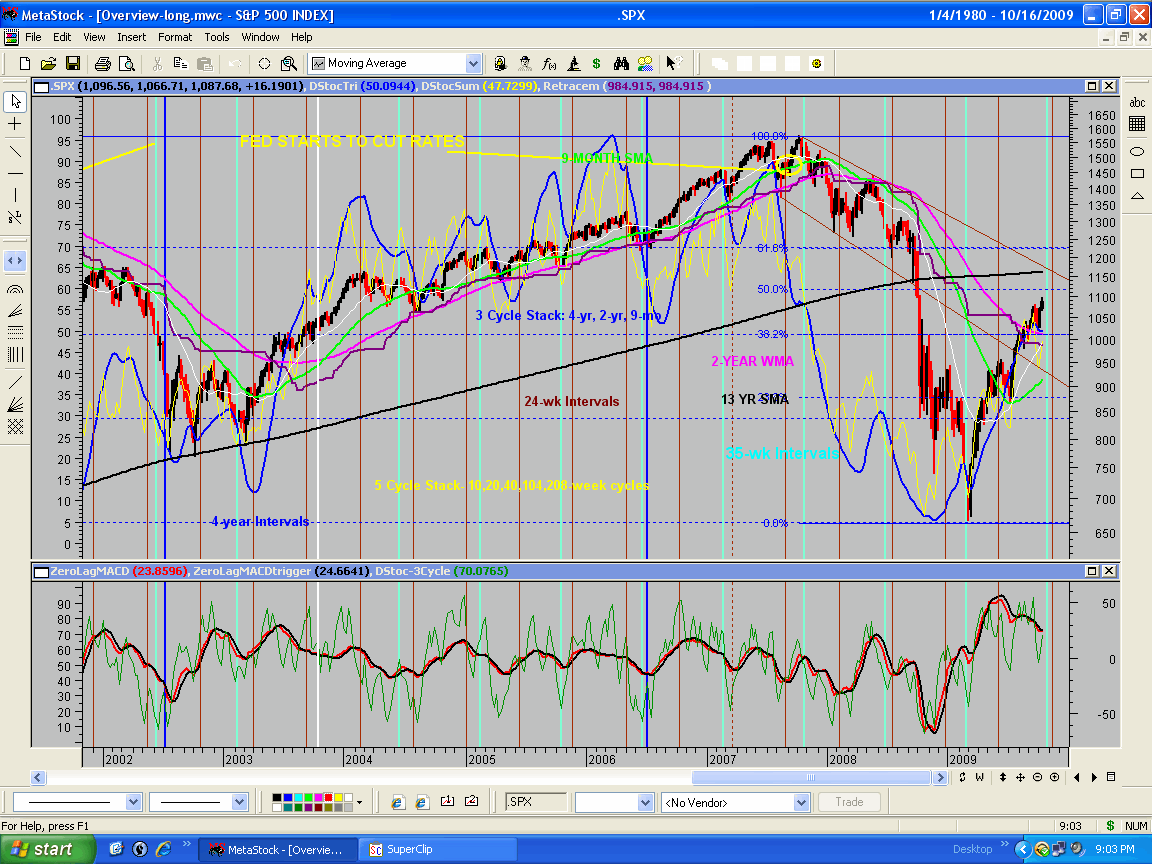
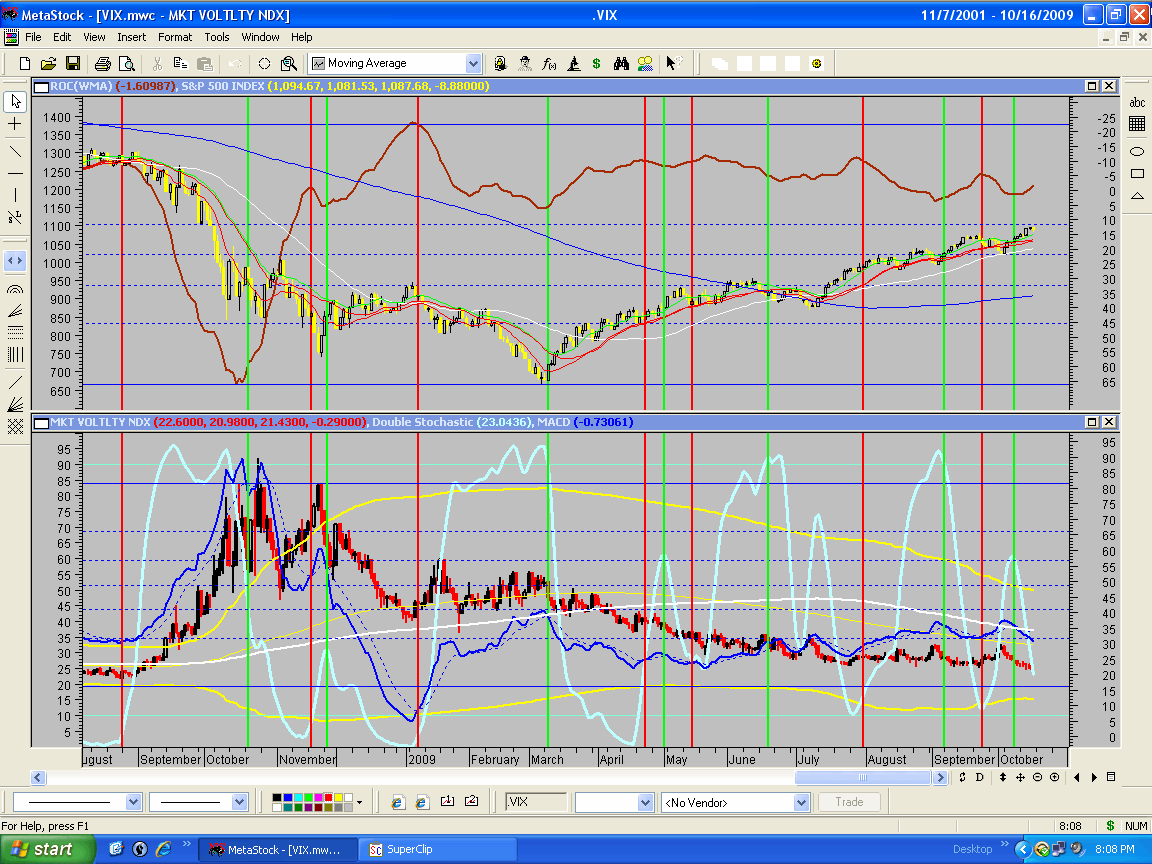
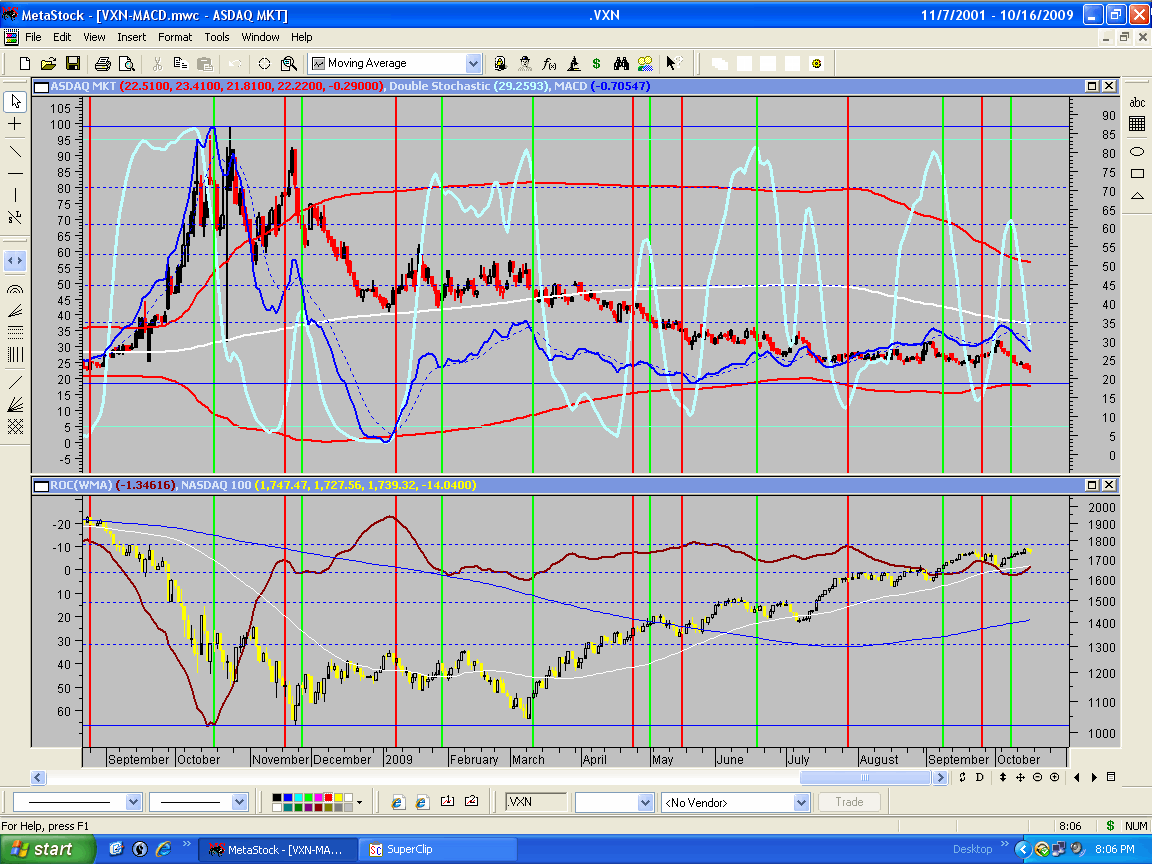
At least temporarily, it was effective medicine. By Thursday’s close there were indications of a difference from the prior week. A number of indicators suggest that Tuesday launched the second 10-week cycle rally of the current 20-week cycle from a slightly lower low (http://www.geocities.com/petegersb/Overview-med.GIF, http://www.geocities.com/petegersb/Overview-long.GIF, http://www.geocities.com/petegersb/VIX.GIF, http://www.geocities.com/petegersb/VXN.GIF). However, one has to wonder how the markets will react once the Fed stops injecting its daily dose of cheap and easy credit. My guess is that, if it hasn’t already done so, it will mark the top of this 10-week cycle rally and send the market into its capitulation bottom.
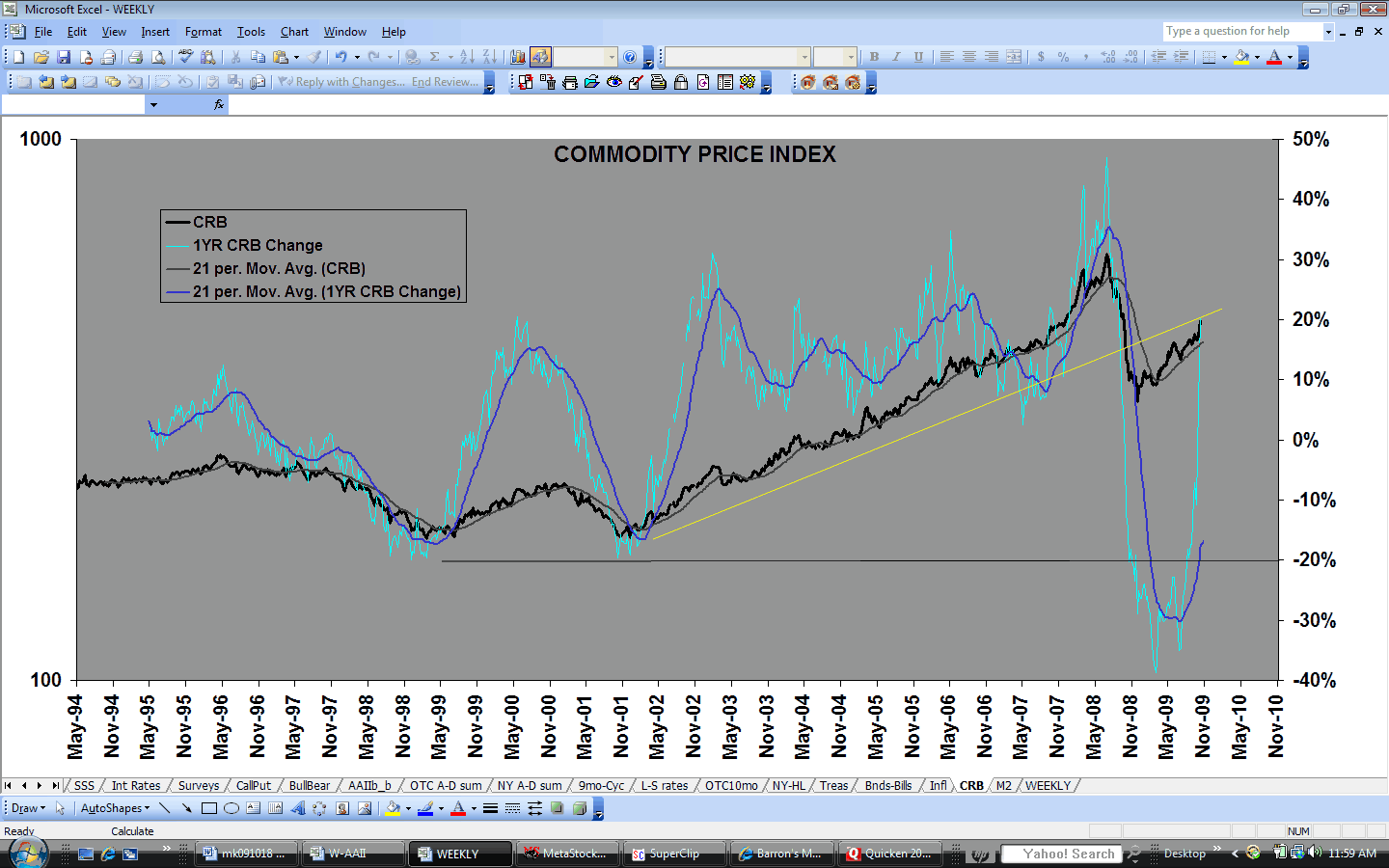
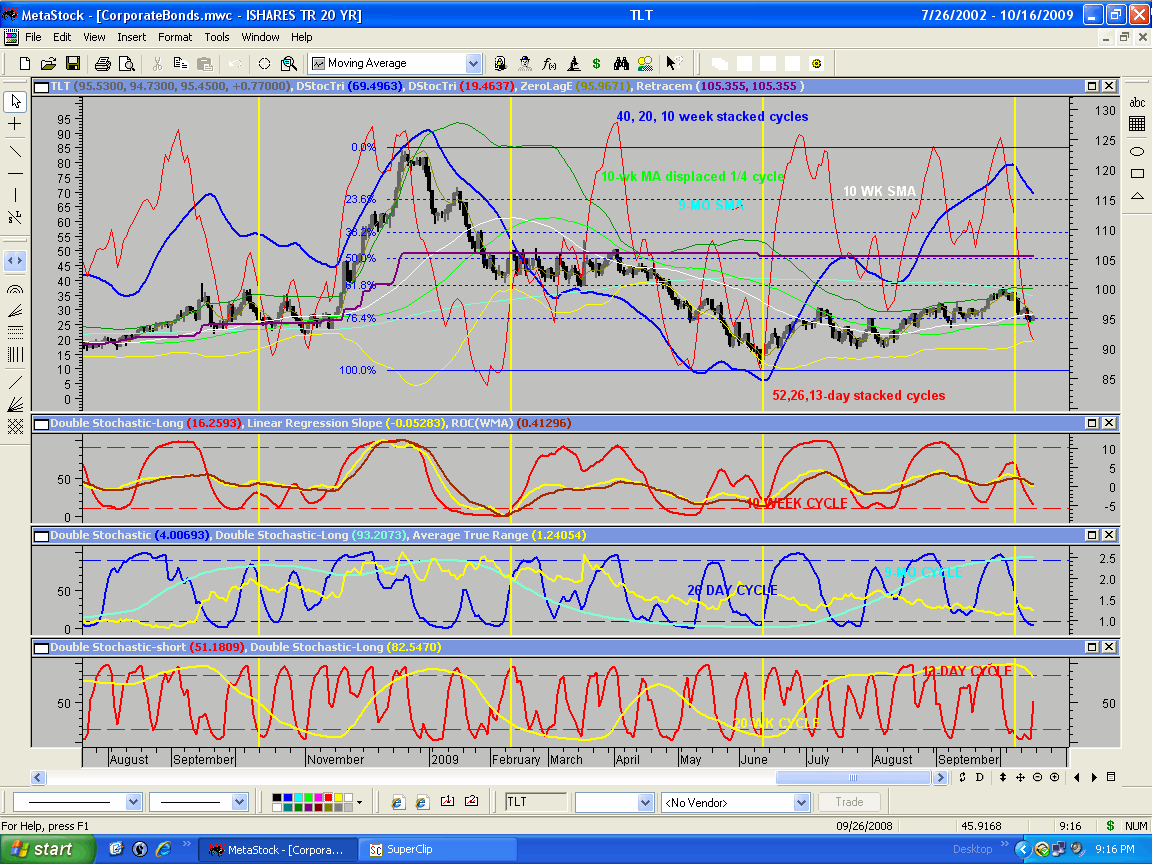
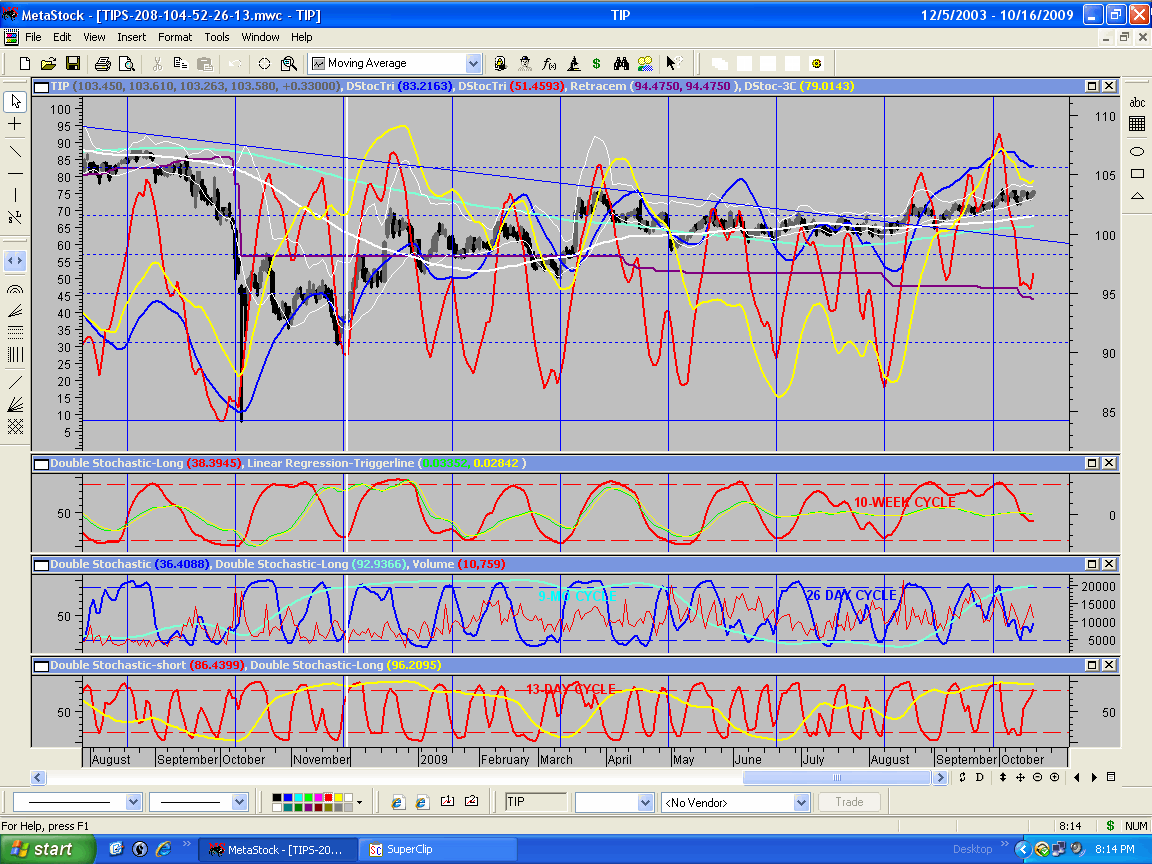
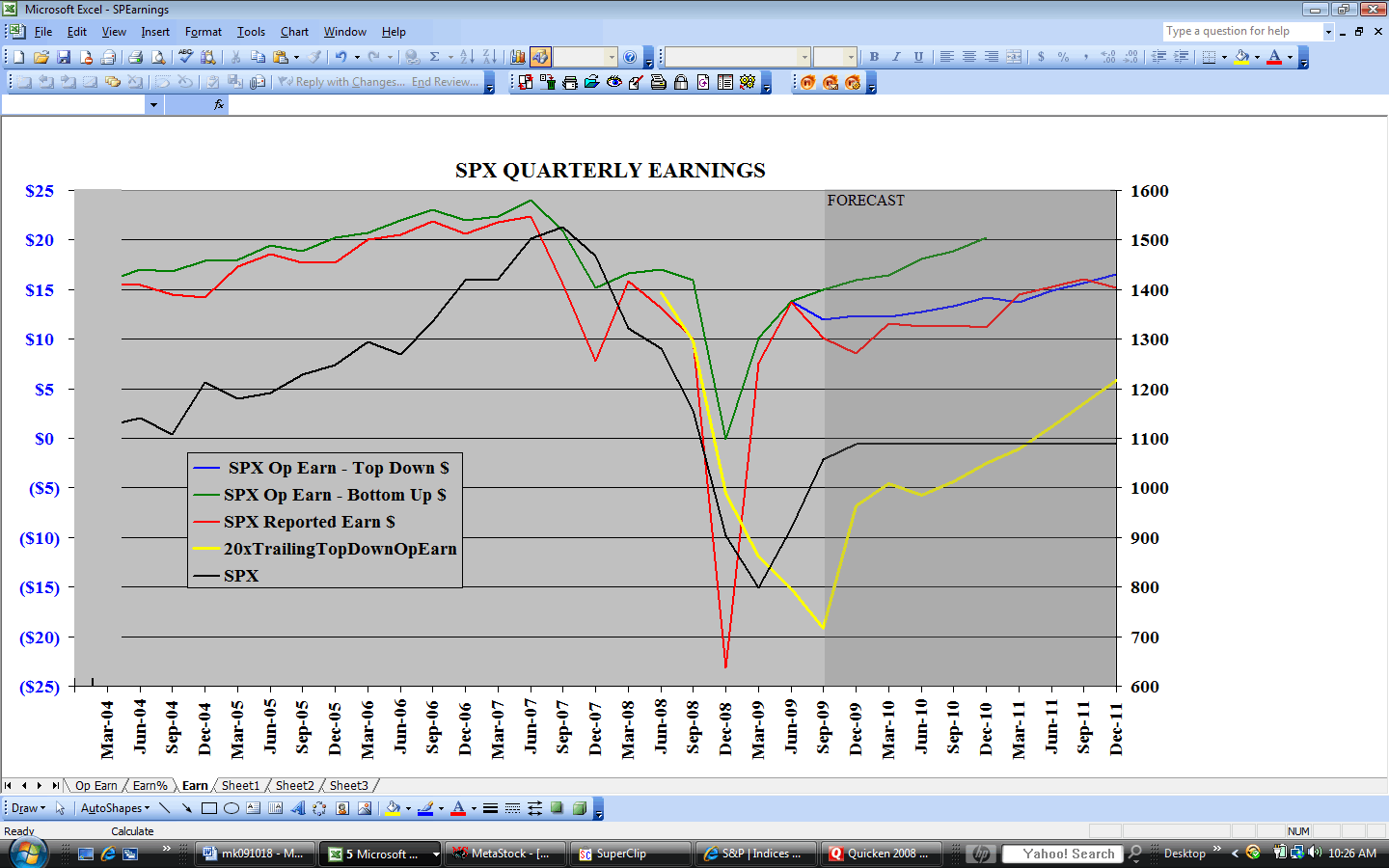
There was also a difference in commodities last week. They had been inflating at a furious rate, providing what little support the stock indexes had during much of the decline. They crashed last week (http://www.geocities.com/petegersb/CRB.GIF), apparently under the threat that the stagnation aspect of our stagflation will overwhelm the inflation aspect - despite the Fed’s abandonment of the fight against the latter. Similarly, the schizophrenic bond market, where inflation protected bonds had been outperforming conventional bonds, flipped that picture upside down. Conventional T-bonds (http://www.geocities.com/petegersb/Treasury-20yr.GIF) not only outperformed over the last couple of weeks, last week they rose while TIPS (http://www.geocities.com/petegersb/TIPs.GIF) declined. Both the bond and commodity markets point to a deflating economy. If 1st quarter earnings reports show that the analysts have again been too optimistic (http://www.geocities.com/petegersb/EarnY-Y.GIF), as I expect, the stock market likely will rejoin the chorus of gloom. If the Fed can continue to prevent a financial system collapse, those earnings reports should lead to a capitulation sell off of normal proportions in the second quarter. If not, a 1987 or 1929 type sell off still threatens.
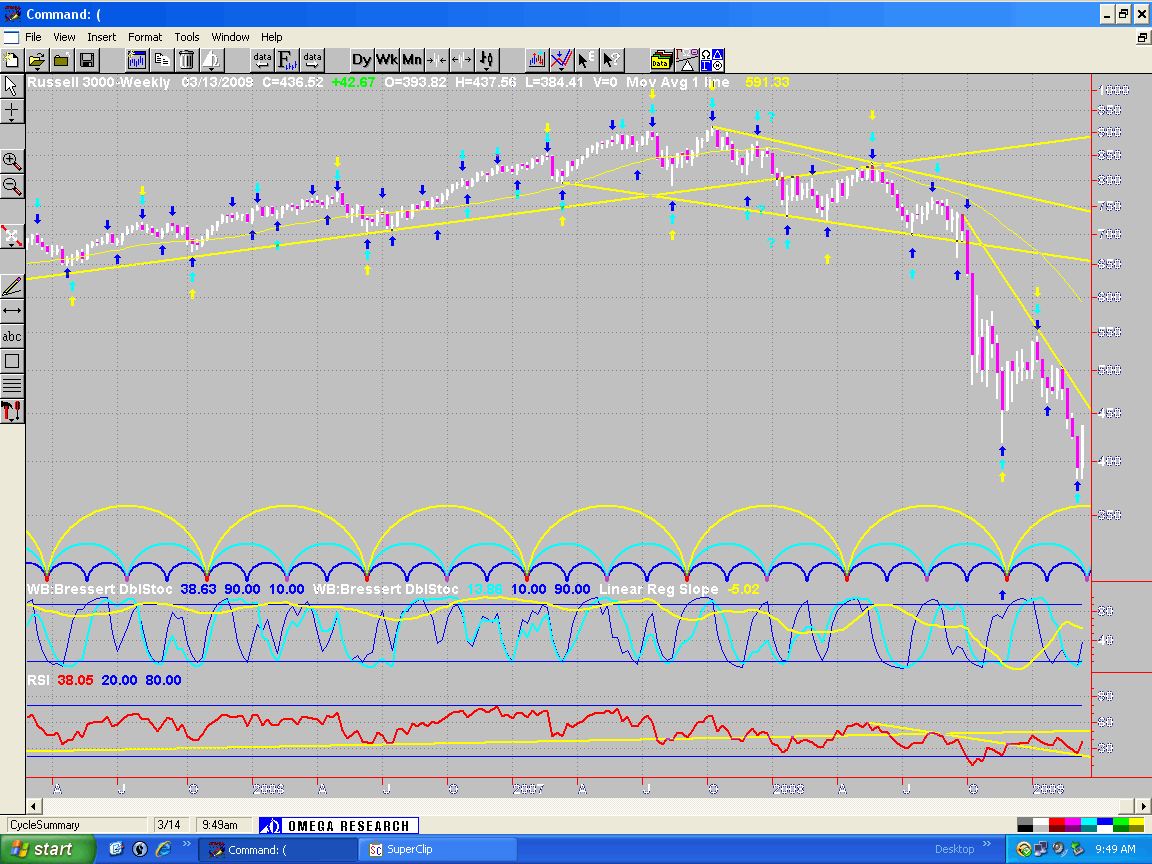
Is last week’s change in the market’s character a signal to become at least short-term bullish? Before we can become bullish even on the 10-week cycle, we need to see some significant follow through this week. At Wednesday’s peak, a level not matched by Thursday’s big rally on any of the major indexes, the direction of prices reversed right at the 10-week moving average on most of the indexes ((http://www.geocities.com/petegersb/SP500.GIF, http://www.geocities.com/petegersb/Russell2000.GIF), as it did in late February. (The Nasdaq (http://www.geocities.com/petegersb/NDX.GIF), which didn’t quite get that high, continues to underperform). If the 13-day cycle bottomed on 3/11, as indicated by the DStocs, it is now 7 days old, overbought, and likely to reverse direction next week. If a favorable 10-wk cycle cannot overcome an unfavorable 13-day cycle this week, and prices back off from the 10-week moving average again, we can conclude that the second last 10-wk cycle of this bear market has not yet reached its bottom, or that the last 10-wk cycle of this bear market established an extreme left-translated peak on Wednesday morning. If it vaults above that 10-wk moving average, we can become a bit more optimistic and expect a few more weeks of rising stock prices before again testing last Monday’s lows. Even if prices move above the 10-wk moving average, if the lower low on St Patrick’s day is matched by a lower high for this 10-wk cycle, we can expect yet another lower low or at least a test of that low. The SPX needs another 5% rally to match the last 10-wk cycle peak on 2/1. I expect a retest primarily because we have had a lower 10-week cycle low that came near the apparent midpoint of the 20-week cycle. Not until a 10-wk cycle rally launches from the end point of the 20-wk and 9-month cycles can we be confident that the bear market has reached bottom. The 9-month cycle is oversold and has endured long enough to reach bottom, but neither of those conditions applies to the 20-week cycle if I’ve assessed it correctly. Last week I was wrong about the market’s likely response to the Fed rate cut. I could be wrong about the 20-week cycle as well. We’ll have to wait for the market’s verdict this week.
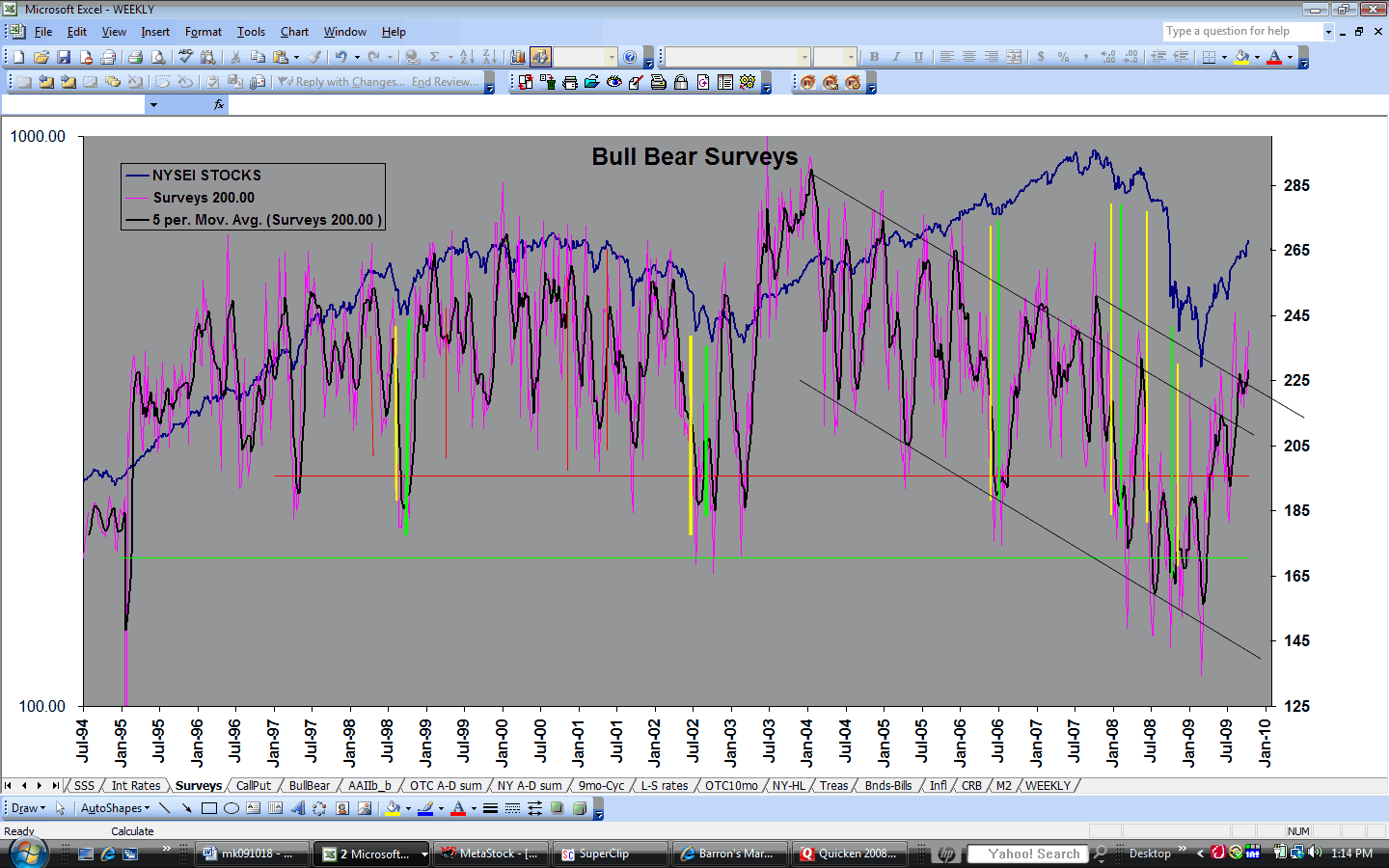
The sentiment survey data continues to provide some encouragement for a bottom soon. Pessimism of both individual investors (http://www.geocities.com/petegersb/AAIIsentiment.GIF) and advisors (http://www.geocities.com/petegersb/InvestorsIntelligence.GIF) is at or near 2-decade extremes. The more responsive AAII data has turn up slightly, but not yet enough to signal a bottom. This data calls for patience. The AAII data has given a couple of premature bottom signals on the way down; the Investor Intelligence data hasn’t. Wait for both to agree. You’ll miss the first few percentage points up, but preserve your capital.
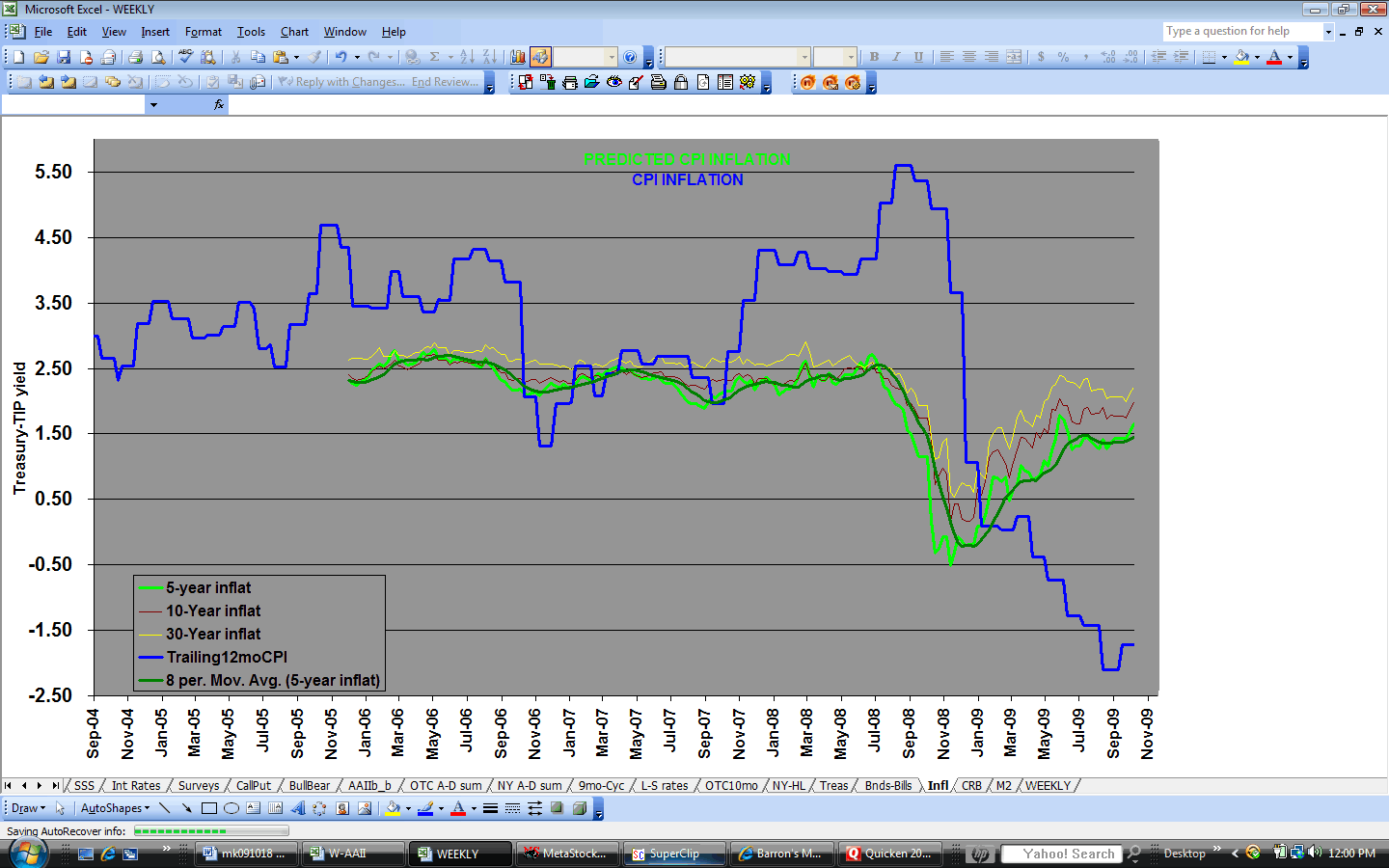
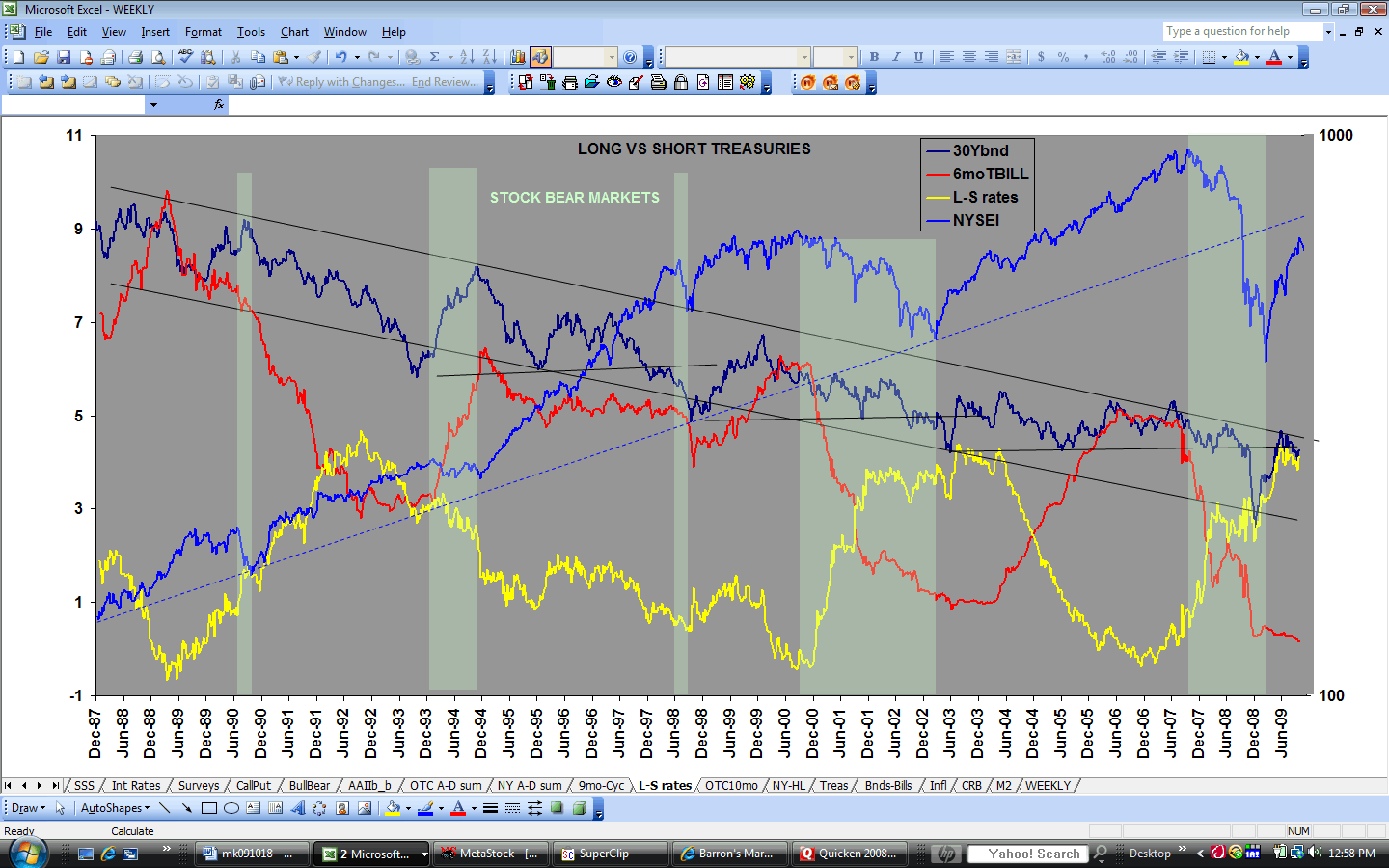
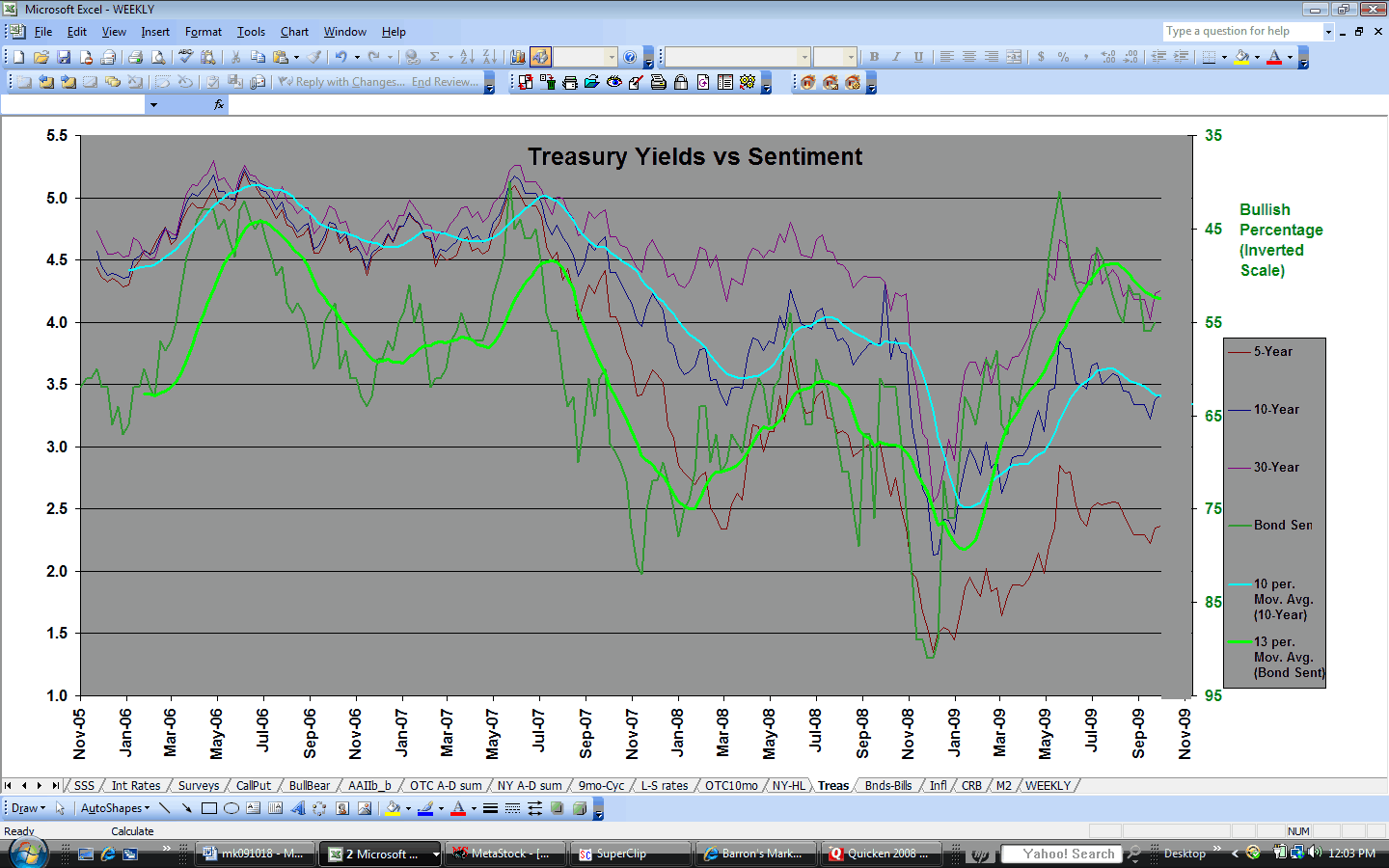
Some counter-intuitive things happened in the bond markets last week. Despite a February Producer Price index that indicates worsening inflation and very aggressive stimulus by the Fed that should work to aggravate inflation even more, inflation expectations (http://www.geocities.com/petegersb/CPI.GIF) dropped steeply for the second consecutive week, and long-term rates dropped more than short-term rates (http://www.geocities.com/petegersb/Long-ShortYields.GIF). There is only one reasonable explanation for these dichotomies: Bond investors have become even more pessimistic about the economy. Consequently, they are very optimistic about the bond market (http://www.geocities.com/petegersb/BondSentiment.GIF). That optimism suggests that they will soon be disappointed when bonds begin paying attention to the inflation data rather than the economic data.
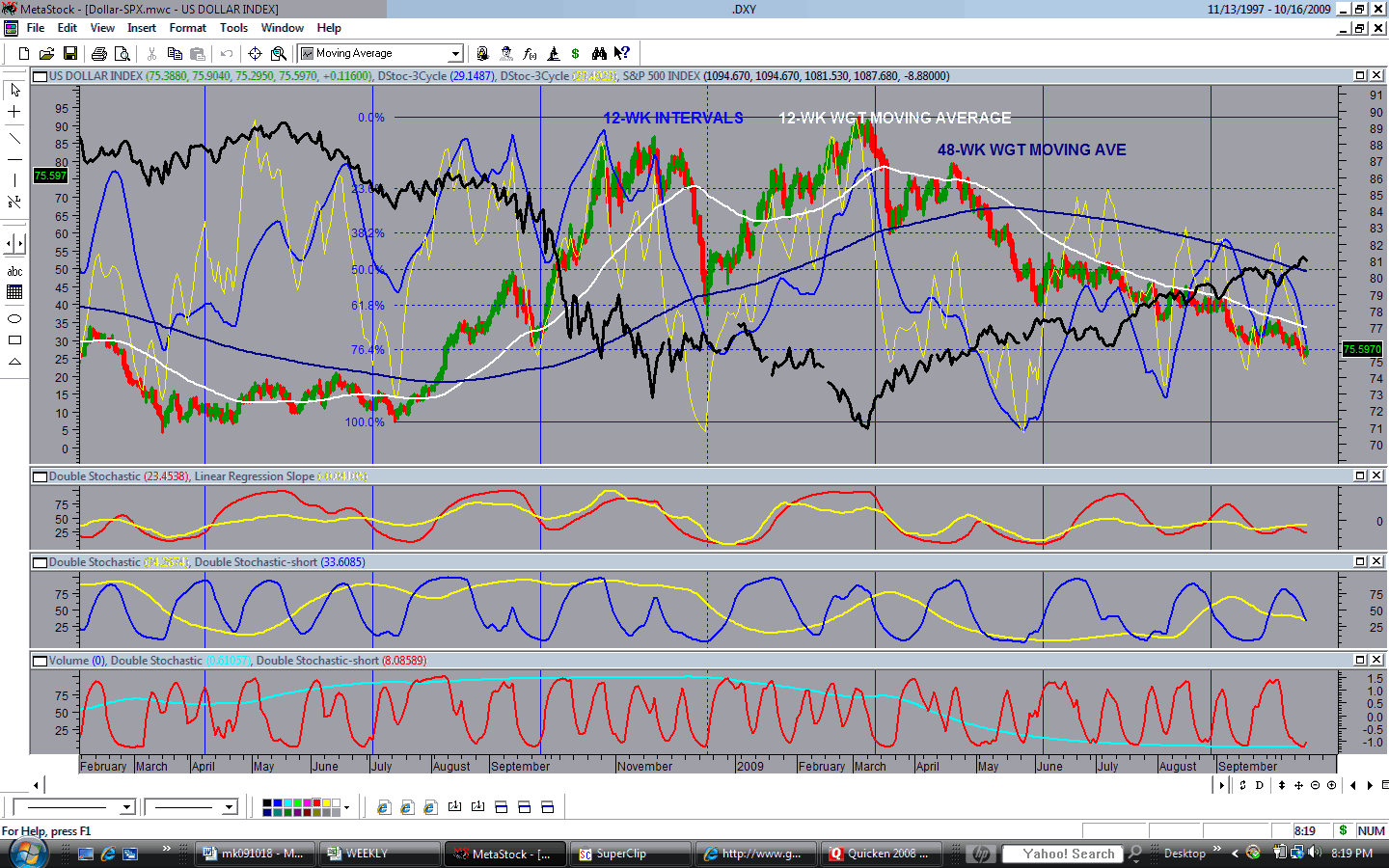
Commodity investors suddenly decided that the weak economy will drive demand for commodities downward, so they drove prices down big time (http://www.geocities.com/petegersb/CRB.GIF). As commodities tumbled the dollar (http://www.geocities.com/petegersb/Dollar.GIF) rallied, perhaps anticipating that lower priced oil imports would help the trade imbalance. Of course it cuts both ways. We are an exporter of agricultural products, and their lower prices will reduce the dollar value of exports. In any case, the dollar had its first good week since the beginning of February. The short-term bottom, which I expected to arrive late in the week, instead arrived on Monday. It was probably a 10-week cycle low. I wouldn’t expect it to rally past the declining 10-week moving average.
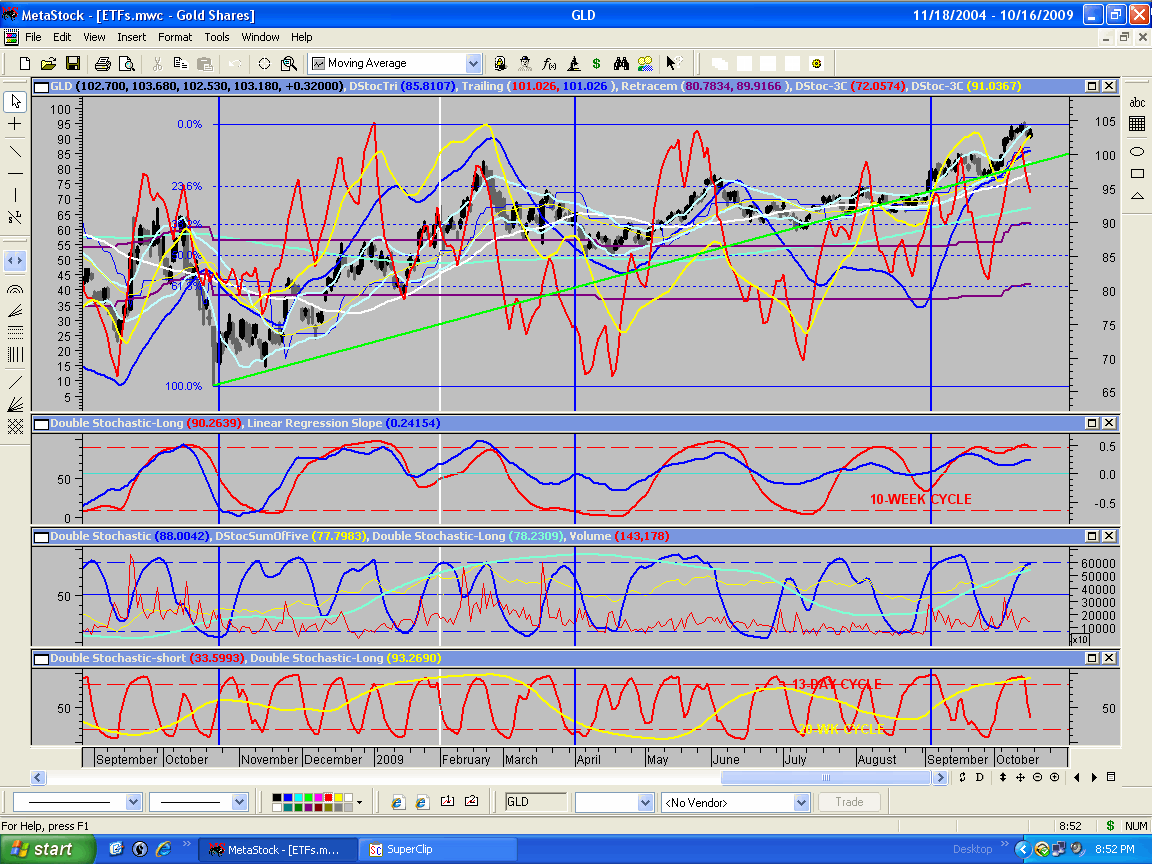
Gold (http://www.geocities.com/petegersb/GoldBullion.GIF)
peaked at the same time the dollar bottomed,
as appeared likely when I wrote last week’s letter. But its plunge has been
much steeper than I expected – moving 10% in only 3 days. Despite that steep
plunge, even the shortest cycles are not yet oversold. I expect that gold will
decline some more before reaching an intermediate bottom, but so far there is
nothing to suggest this correction is anything more than a normal bull-market
correction. Bear market rallies tend to be short and steep. So do bull market
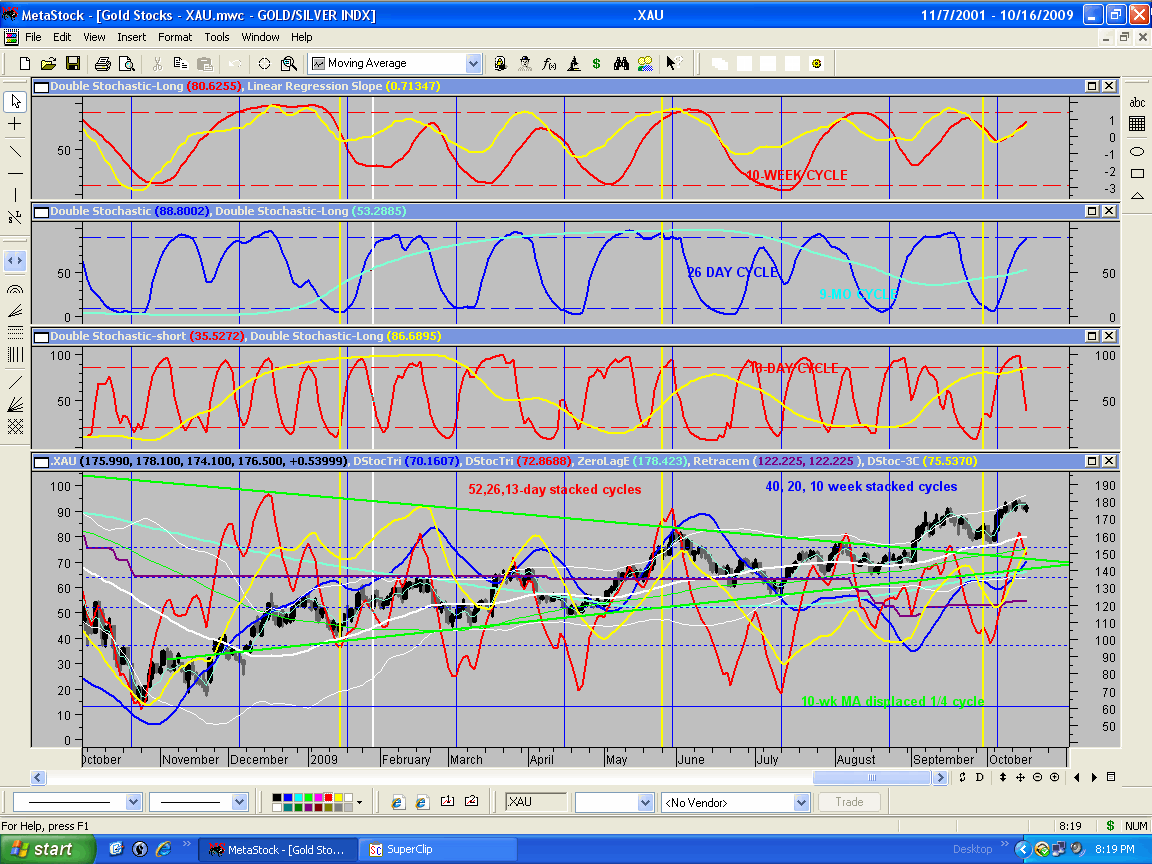
corrections. Gold stocks as represented by the XAU (http://www.geocities.com/petegersb/GoldStocks.GIF) peaked a day earlier and plunged even farther than the
metal – losing 17% in 4 days. Its cycles remain similar to those of gold, so we
can expect still lower prices. The gold stocks will probably continue to
underperform the metal until the broader stock market bottoms in spring. If you
are interested in a well-reasoned case why gold stocks should start
outperforming the metal, read (http://www.frontlinethoughts.com/txt/jmotb022508.htm).
It hasn’t happened in the month since that article was posted, but trends
always seem to last longer than we expect.
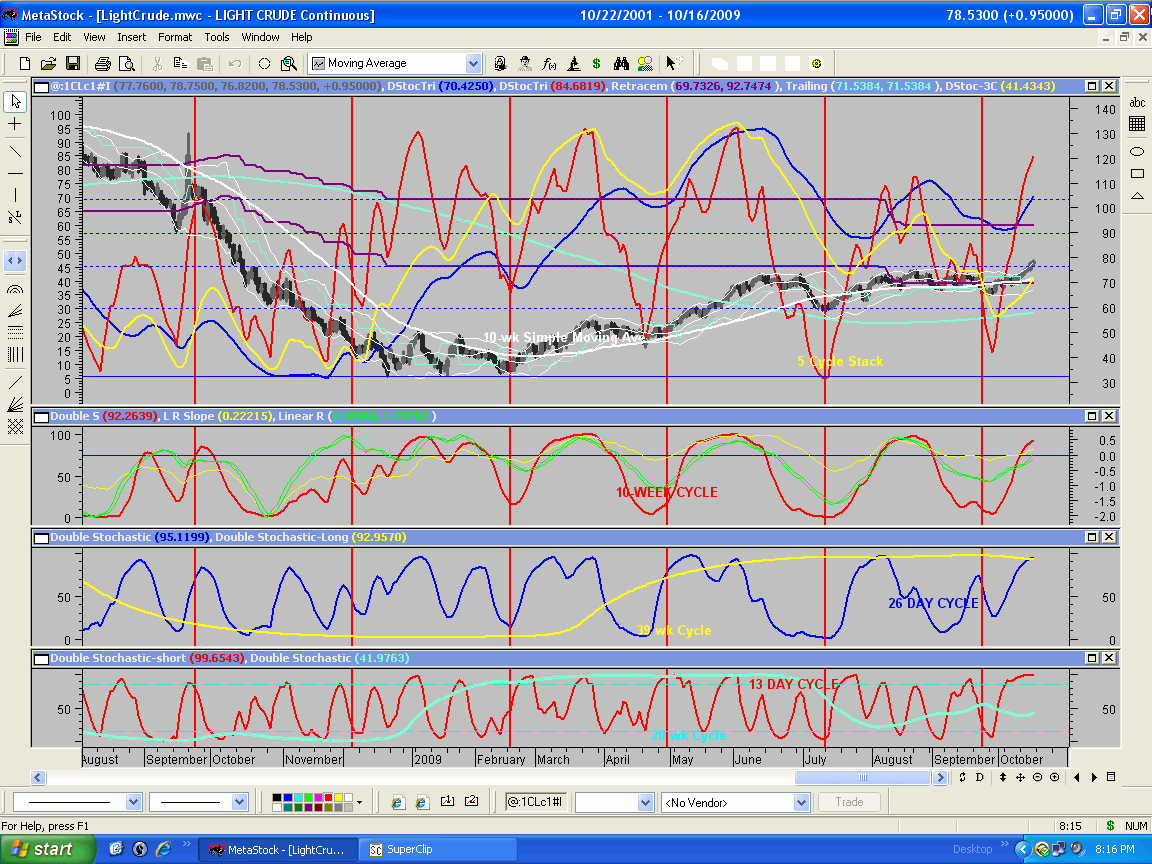
Crude oil (http://www.geocities.com/petegersb/CrudeOil.GIF) dropped nearly 8% for the week despite a good rally on
Tuesday and a nice recovery on Thursday when it bounced off of the 50%
retracement of the February-March rally. The 10-wk cycle peaked when it was 5
weeks old. I expect a little more downside, but there appears to be good
support in the $97-$100 range that contains the November and January peaks and
the 10-week moving average. I suspect we’ve seen the worst of the decline.
The
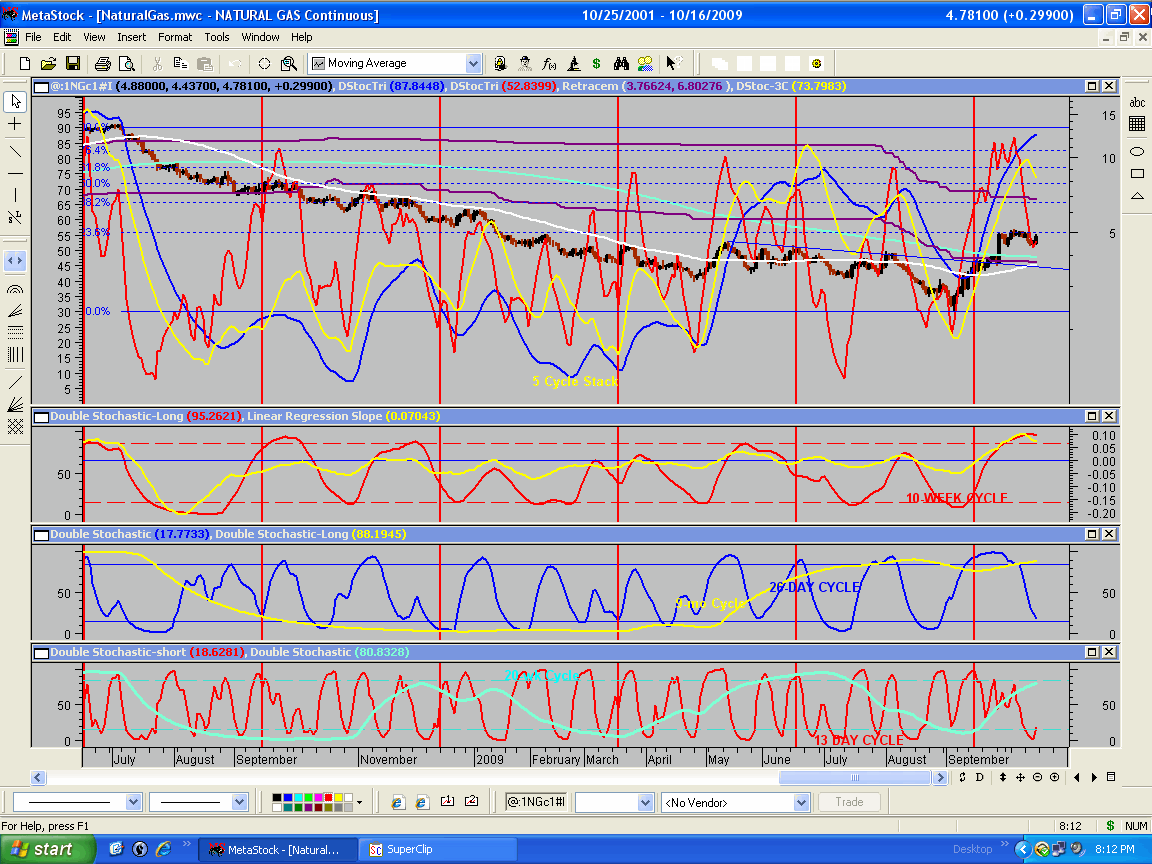
correction in Natural gas (http://www.geocities.com/petegersb/NaturalGas.GIF)
has also been steeper than I expected, but on Thursday it bounced
off of its 10-wk moving average that coincides with the November peak. It too
looks like a normal correction in a bull market, but it probably has further to
go despite a likely 13-day cycle bounce this week.
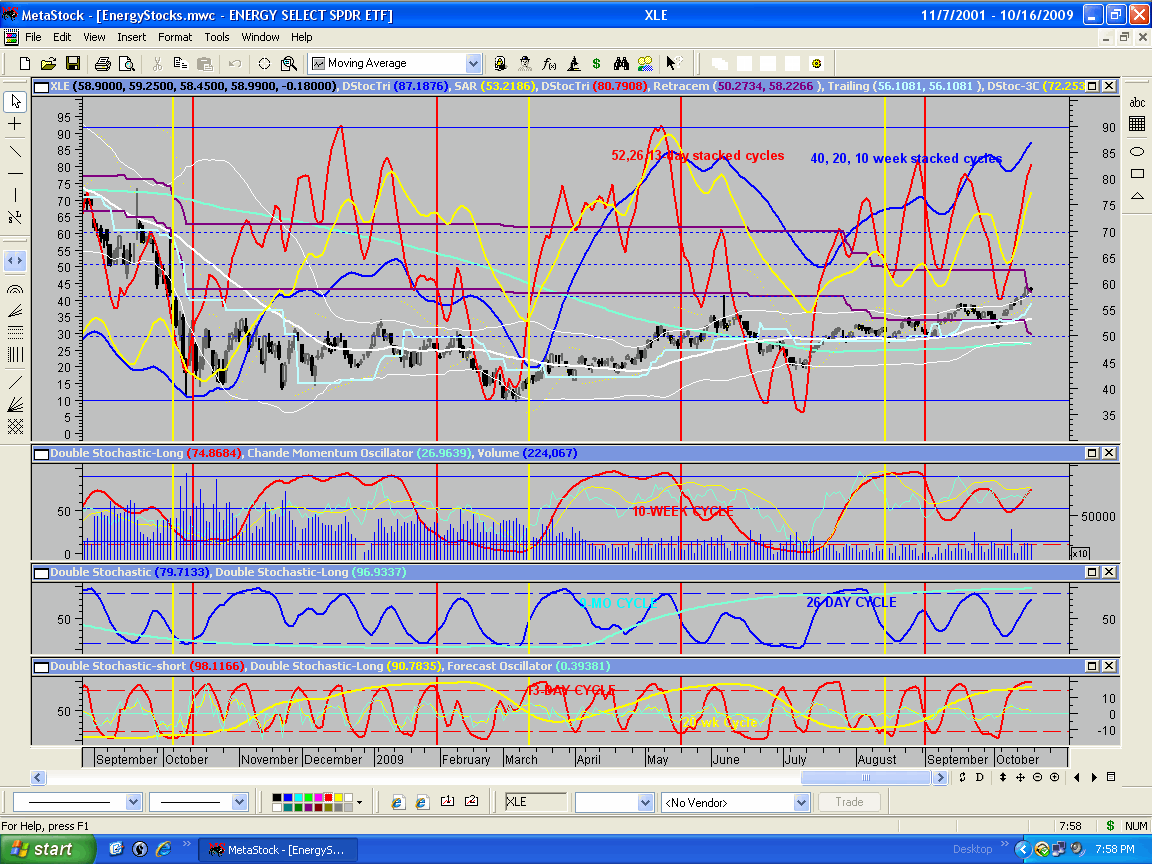
Energy stocks (http://www.geocities.com/petegersb/EnergySPDR.GIF)
didn’t follow the script last week. The
9-week-old 10-wk cycle turned down, the oversold 26-day cycle failed to reach
the anticipated bottom, and the 13-day cycle turned down prematurely. The XLE
price moved below both the 10-wk and 9-mo moving averages. It was the second
worst performing sector of the S&P 500. Only the Materials sector was worse
(http://stockcharts.com/charts/performance/SPSectors.html). Nevertheless, unlike Financials (http://www.geocities.com/petegersb/Financials.GIF)
and Health Care (http://stockcharts.com/charts/performance/SPSectors.html), both energy and materials remain above their January
lows. A little more downside appears likely before reaching a short-term
bottom, and the intermediate trend is now unfavorable. It appears that Energy
stocks and materials will be a drag on the averages for a while. The strong
growth in China (http://stockcharts.com/charts/gallery.html?$HSI
) and India has been a big demand driver for these commodity sectors, but
judging by the weakness of those markets last week (both down over 6%) that
growth is probably slowing significantly.